Chocolate Ranchu

Chocolate Ranchu updates Dec 25th

chocolate ranchu

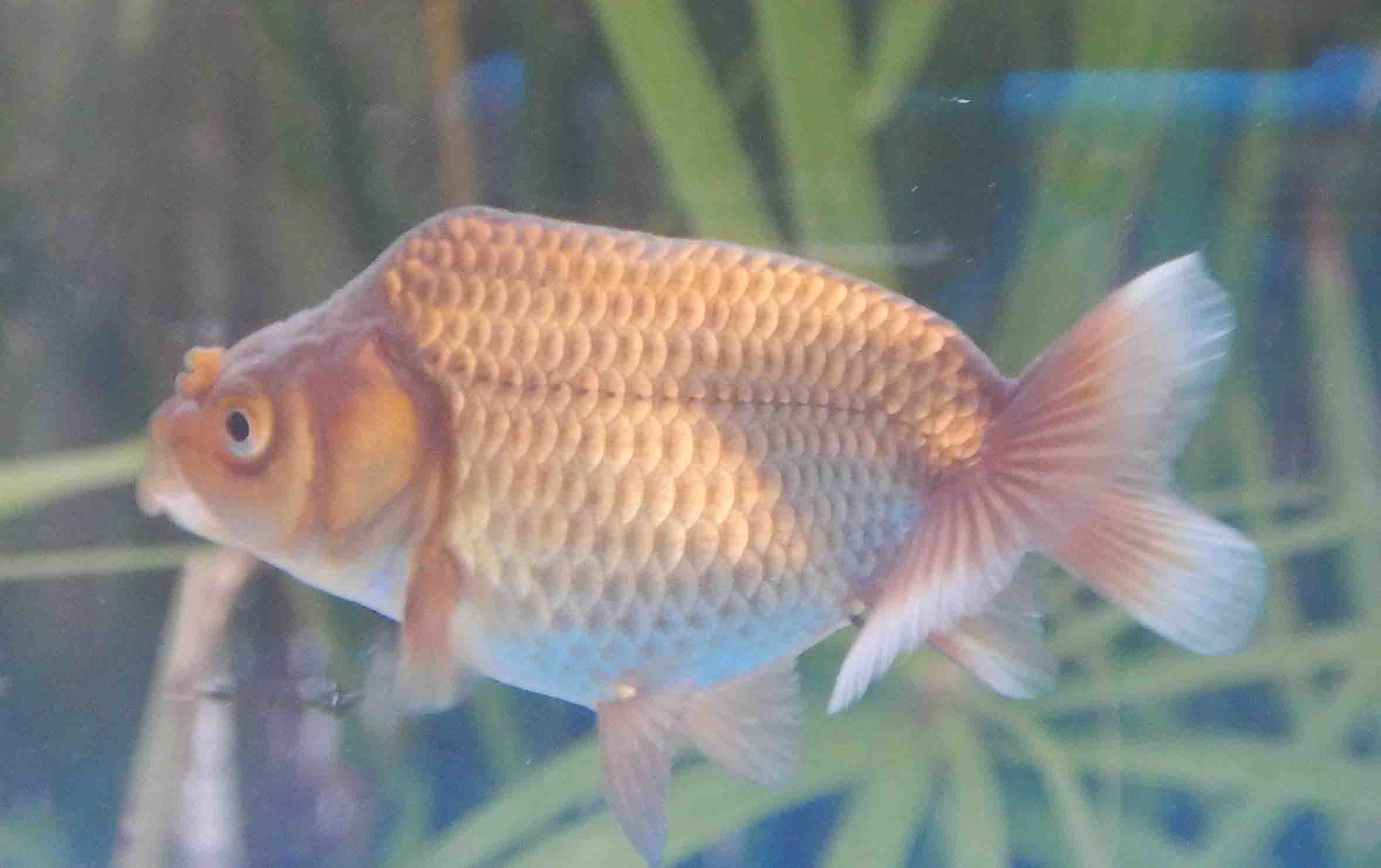
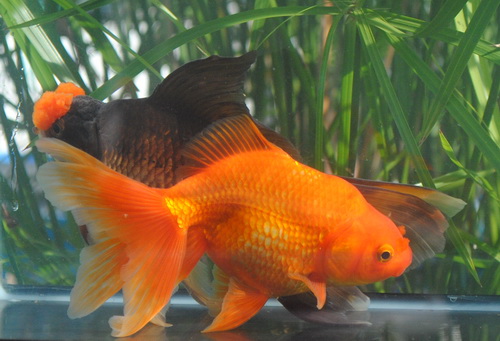
This is the F2 of the chocolate ranchu project. I am glad to see this fish, since it is totally free from any trace of dorsal fin, and the chocolate color is present. In this F2, very few chocolate color occurs. Most of them have abominable traces of dorsal, and weak compared to the wild color ones. To find such a piece, though only one, is a joy to me.

In terms of shape, this one has a high hump, which must be tackled on though it is not so easy. Glad I have experienced this in my panda ranchu project. This hump might be the last thing to tackle.

The tail is a bit long. I do not worry about this. Crossing back to ranchu will eventually shorten the tail. But I think, as an excess, long tail chocolate ranchu with pom pom will be nice πŸ™‚

The pompom is also something to tackle on. Actually, I am not sure to retain this pom pom or not. According to standard, a ranchu should not have the pom pom. But it might indeed look nice in this chocolate breed. Well, let it be what it will be. I might not bother to tackle it.

From this point, I think to create a decent chocolate ranchu, I will need at least four more breeding step. This will mean 2 years at least. But the result of the 1st year might yield unique breeds saleable to collectors πŸ™‚

There are two worries. First, since there is only 1 fish, this project is in jeopardy if something happen to it. So, I have prepared the second batch for spare. Second, the chocolate color occurs so few in the batch. Fewer than the blue I create from a cross between blue and common color. Does this mean that the chocolate color behave differently genetically from the blue? If yes, then there might be some complication I have not yet understood. I hope there won’t be such complication.

Merry Christmas and Happy New Year

Standard
Panda Ryukin

Update on Panda Ryukin Dec 25th, 2014

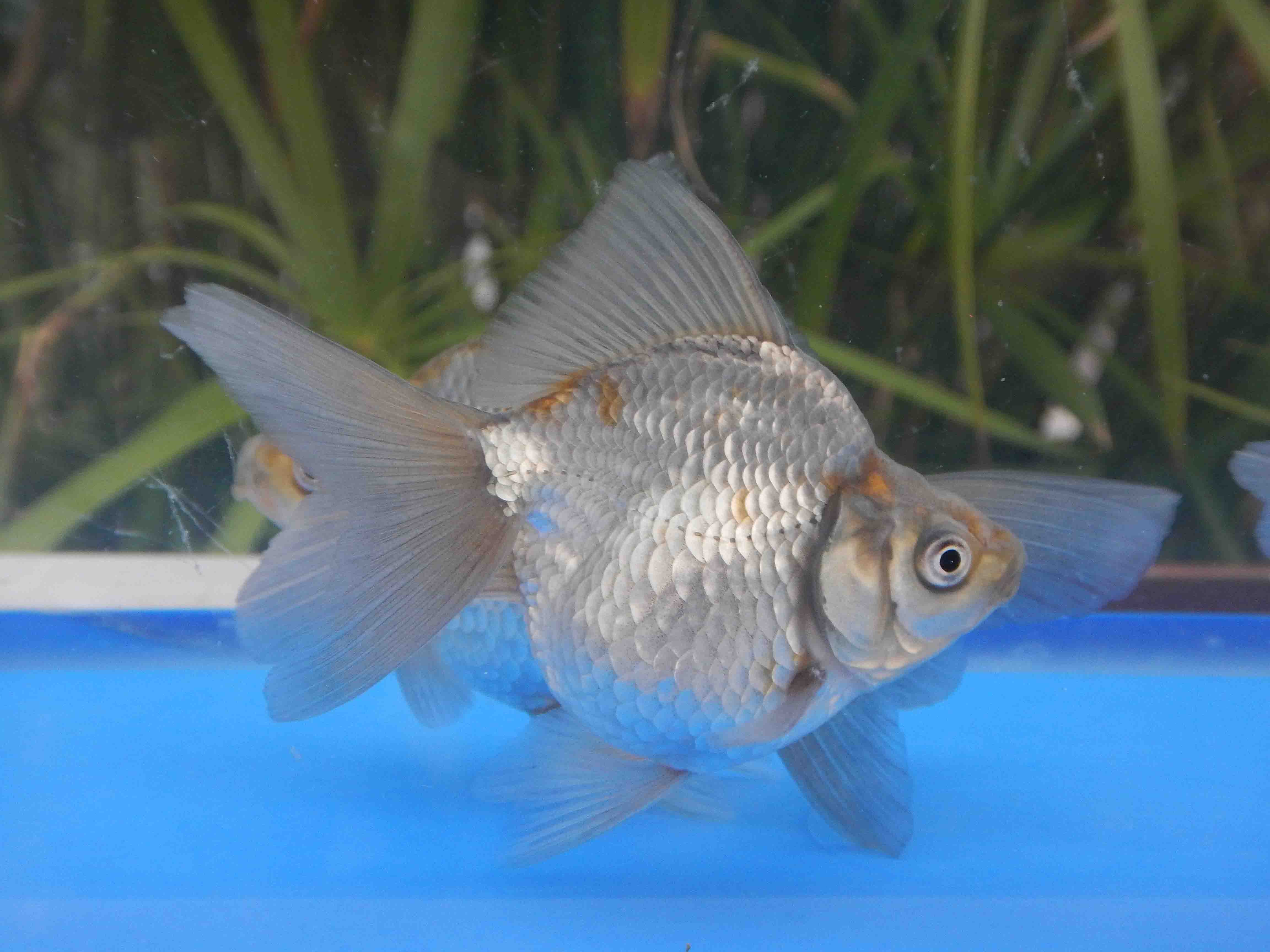
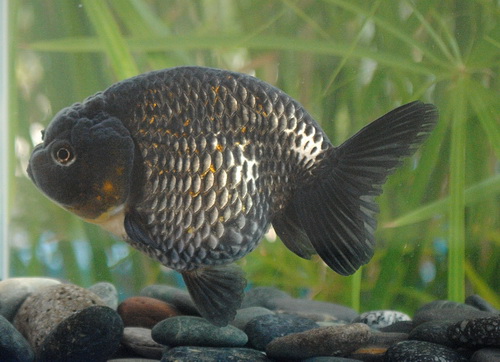
This article is the update on my panda ryukin breeding project. The fishes here are the F2.

blue ryukin 1

blue ryukin 2

The first fish has the best shape resembling ryukin.Β  The second one is a bit elongated and has smaller hump. The rest of the batch have almost no hump. So, in term of the body shape, there is a need to cross once again with a good and decent ryukin. But this cross will sacrifice the color. So, to finish this project, I need two more breeding step: to enhance the body shape, and then to enhance the color.

The fish might be ready to spawn in perhaps two months later. I am glad for the progress so far.

Merry Christmas, and Happy New Year.

Standard
Purple goldfish

Update On Blue X Brown

I wrote before that I am redoing the work of Shisan C. Chen in crossing brown and blue goldfish. The offspring are all grey. As they mature, some become orange, and orange black, and some remain grey. I have mated the F1 with F1 and would like to share the interesting result.

But first, I would like to mention that there are two kinds of brown or chocolate in goldfish. One is the brown stain we usually find in blue fish. In this kind, the brown can coexist with blue. In fact, it is a blue fish that has the red pigmen in parts of its body. The red looks brown. Β If the black pigmen disappears, the brown becomes red. Even when the fish is totally brown, it is still identical with the blue genetics. When this kind of brown is mated with blue fish, the result is blue, or blue with brown stain, and all brown. This is because they are of the same type. Basically, this kind of mating is a mating of the same color genetics.

The second type of brown is the one we find in chocolate pompom. This has nothing to do with blue, and cannot coexist together. They are unrelated. When the black pigmen disappear, the brown will turn into orange. It is this second type of brown that Shisan C. Chen use. I know this after comparing his result with mine. And this mating is what I am interested in. I have shown before that the result is perplexing. The cross between this type of brown and blue does not result in any blue or brown fish at all. The result is uniformly wild color! Some like to call it green or grey. When mature, some of them become orange, or orange and black, or wild.

More amazing is the result of F1 x F1. Just as Shisan C. Chen reported, we have blue, and brown (which should be the second type of brown), and grey (which Chen did not report), and Β … something intermediate between brown and black which can be clearly distinguished from both. This is the mysterious color I want to know. What color is that?

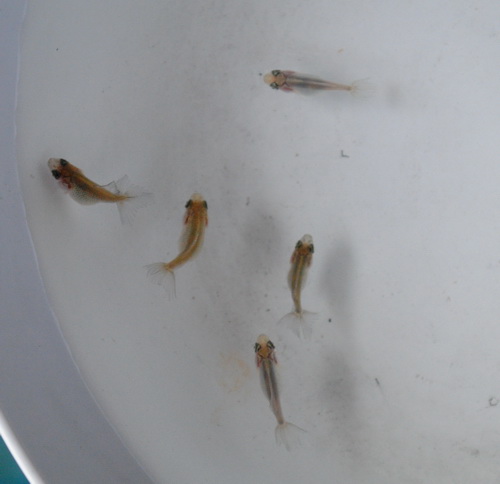
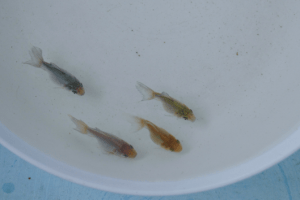
Now let us look at the picture of my offspring that represent the four color.
DSC_1699 (2)

The one in the ten o’clock position is obviously the blue. The one in the four o’clock is the wild / green. Below that in the five o’clock is the brown. And the mysterious color is the one remaining. What color is it?

Yes, it is clearly differentiable from the rest. In my observation, the fish looks like pinkish, or purplish. I do not know what it will be in its maturity. Truly, I want to know. Unfortunately, this color is the rarest in the batch. There are only one or two when I search them in a glance. I will know the details when it is time for the next culling.

I have heard before that there are claims of purple colored goldfish. But some people think that the one who call it purple was too imaginative. But if this one in my offspring turns into pinkish or purplish goldfish, then I will know that the purple goldfish is real, and it is truly different from blue or brown, and when in early stage, the color is reasonably pink / purple. Still need time to observe the result.

meanwhile, I will try to cross the F1 with F1 again. This time I will concentrate on that mysterious color. I will increase their numbers.

Enjoy.

Standard
Panda Ryukin

Panda Ryukin – growth progress

DSC_1660R

Now the body parts can be seen clearly already. The color is light blue. I am glad that I can see the hump potential on them, since I do not think that the hump will be decent in them even when they are mature later on. If the hump is good in this batch, then it will be a pleasing surprise for me. There is not much to do right now other than feeding them well and wait till they are ready to spawn – which is about 5 months from now. There is not much to sort anymore. If i sort them based on the single anal tail, then I will be left with none. Their number has been reduced to 9, so I think I will not sort out anything anymore. I might need only 2 or 3 later on for breeding, so I will choose the best shape among them. Sex won’t be a matter, since I will cross it back with red and white ryukin. If I have a male panda ryukin from this batch, then I will find a female red-white ryukin; if I have a female panda, then I will find a male red-white one to mate with. Next update will be some more months to come, to see whether there is any that will have a decent ryukin body or not, and also about the color, whether they become panda, or they are staying blue.

Standard
Panda Ranchu

Panda Ranchu – best so far

My panda ranchu female parent has deceased due to disease. It is a great loss for me. Luckily, I have this one offspring as my consolation.

DSC_1385Rpanda

This one is 12cm approximately now, and is a female. The birthdate is April 7, 2014. So it is six months old now. Hopefully she will be a productive parent.

The white color is appearing now, in a very slow rate. This is a good sign for me. The panda color produced later on by the fish will be longer lasting. And it is good for a panda parent fish.

Whenever I see the face of this piece, I always feel delighted. The face is cute, with decently grown headgrowth. Not excessive, but not lacking either. Hopefully I can retain the headgrowth as neat as this as long as possible.

There is a shiny yellowish color among its scales, glimmering like gold lightning streaks. It enhances the beauty of the fish, in my opinion. But I wonder, in which layer of scale is the yellowish color reside? It does not seem to be in the outer scale. It occurs only in the area between the scales. Unusual for me.

Wish me luck in producing the offspring of this one, though which male to use is an issue I need to resolve also.

Standard
Uncategorized

If your comments does not show up here …

I do not usually check my blog unless I am writing new post. Today, when I open this blog, to my surprise, I get a message saying that “Akismet” has saved me from 420 spams! Now there is one spam left in the spam folder. And when I checked that one spam, it is not a spam at all. It is a comment from one of you, my friend! So I un-spam that comment. Now I wonder if all the 420 spams being cleaned automatically by the Akismet were actually comments and letters from the people who read my blog!

If this happens, I can only say sorry for that. I do not get a chance to see your comments. But if you are willing, do write again. I will check the blog regularly every week. Or if there is a suggestion how to turn off the Akismet, I will be glad to learn.

Thank you.

Standard
Panda Ryukin

Panda Ryukin – culling the color

In this two weeks old offspring, I can see clearly the color now to differentiate between the bluish and the usual greyish.

Grey and blueR

To stay faithful to my goal, I let go the grey, which in the picture here looks more like brown. I keep the paler color since they are the blue or panda fish. This culling has given me a small manageable batch, less than 15 fishes.

The complication here is that all of them, if my eyes does not lie to me, are single anal fin. This is bad news. But since I do not keep a back up plan for this, I will just use them. My plan is when they are matured, I will cross them back with a decent ryukin. That cross will hopefully correct the single anal fin.

From here, it will take a longer time to update this project. Be patient with me πŸ™‚

Standard
Chocolate Ranchu

Chocolate Ranchu – change of plan

The attempt I posted last week has resulted in an unwanted offspring. I was looking for defected dorsal. As the offspring enters the second week, I can see the dorsal part clearly:

Brown dorsalR

This sample shows brown fishes with the complete dorsal. So, the crossing back to its pompom parent has resulted in normal dorsal offspring in majority. I can say that 95 percent have the normal dorsal. At this culling stage, I also cull the ones with single anal fin. This leaves me with zero fish with defect in dorsal. So, I do not get the result I want from this crossing. My project is in jeopardy.

Luckily, I have a back up plan. Some months ago, I have predicted this problem when I realized that all my F1 were female. So I did another crossing between ranchu and pompom just for back up plan. This second crossing provides me with male defected F1 I needed, carrying the chocolate genetic in the recessive. They are still very young, too young to breed, I think. They are about 4 months old now. Can breed, but still too young. But I take my chance. Now, I breed the mature F1 female from, with the young immature F1 males.

DSC_1345R

Compared to the previous attempt of crossing F1 with pompom, this crossing will yield more defected dorsal. Hopefully. But will also yield less chocolate color. So, hopefully there will be enough chocolate with defected dorsal for me to choose for the next parent.

The eggs hatched yesterday πŸ™‚

Standard
Chocolate Ranchu

Chocolate Ranchu

I have started these project probably more than 6 months ago. What I did was to cross a sideview ranchu with a chocolate pompom. My wish is to get the chocolate color from the pompom. The final result is to get a chocolate ranchu, or better still, a chocolate and white ranchu!

The result of the first cross was orange, long tail, bald head with little pompom goldfish with under-developed dorsal. Concerning the body shape, some come with normal dorsal fins, but they are not what I wanted. They are being culled out. The ones with abnormal dorsal fins are what I wanted in this stage, which I have already posted under the title β€œSea Horse” in this blog. Concerning the orange color, it is expected, since I assume that the chocolate color is recessive to the orange color. So far so good. I was thinking that I only need to raise them to be mature parents, and I can mate F1 x F1 to produce chocolate semi ranchu goldfish.

Complication arose when I found out that all of the F1 were females. Now, I must find another way to continue this project.

My best available solution is to cross the F1 back with the chocolate pompom again. The result will be 50% chocolate color theoretically. But the long tail genetic and the pompom genetic will also get stronger, which are undesirable to create my goal. And the dorsal genetic will get stronger also, which will give me a lot of chocolate goldfish with normal dorsal. These are undesirable, but I might still be able to sell them. What I want here is chocolate goldfish with defected dorsal.

So, I crossed these two fishes about a week ago, one day earlier than my panda ryukin parents:

DSC_1205R

These are the offspring:

DSC_1187R

As you can see, some show darker color and some lighter color. I will cull out the darker color. The lighter color will be chocolate.

I have done my first culling, which was the color culling, in day 5 since hatching. These picture are taken two days ago, the day when the first culling began.

The next step in this project is to cross the chocolate (with defect dorsal fins) with sideview ranchu once again, which can be done as early as 6 months from now.

Standard
Panda Ryukin

Update Panda Ryukin Project

My cross between blue/panda plain fish with ryukin has resulted these two fishes:

DSC_1199R

Since the red white genetic is dominant to the blue/panda, the appearance (phenotype) is red white. About a week ago I mated these two. My hope is to get some blue/panda colored offspring. Theoretically, the percentage should be 25%. But due to many factors (only small portions of the eggs were collected, the hatching rate, and the several culling steps), the result might not be so.

The offspring were 4 days old in these pictures. Taken two days ago. I have done the first culling, which is to separate the under-developed tails from the normally developed tails observable at this stage. These are the under-develped tails being culled out:

DSC_1188R

And these are being kept for now:

DSC_1189R

As for the appearance of the blue/panda color, I am very sure they will appear. But, as for the body shape, since the parents are having little or almost no hump, the chance that I will get a decent ryukin body with hump is small. There might be a need to cross back with a ryukin with good hump once more.

I will try to report the progress here.

Standard