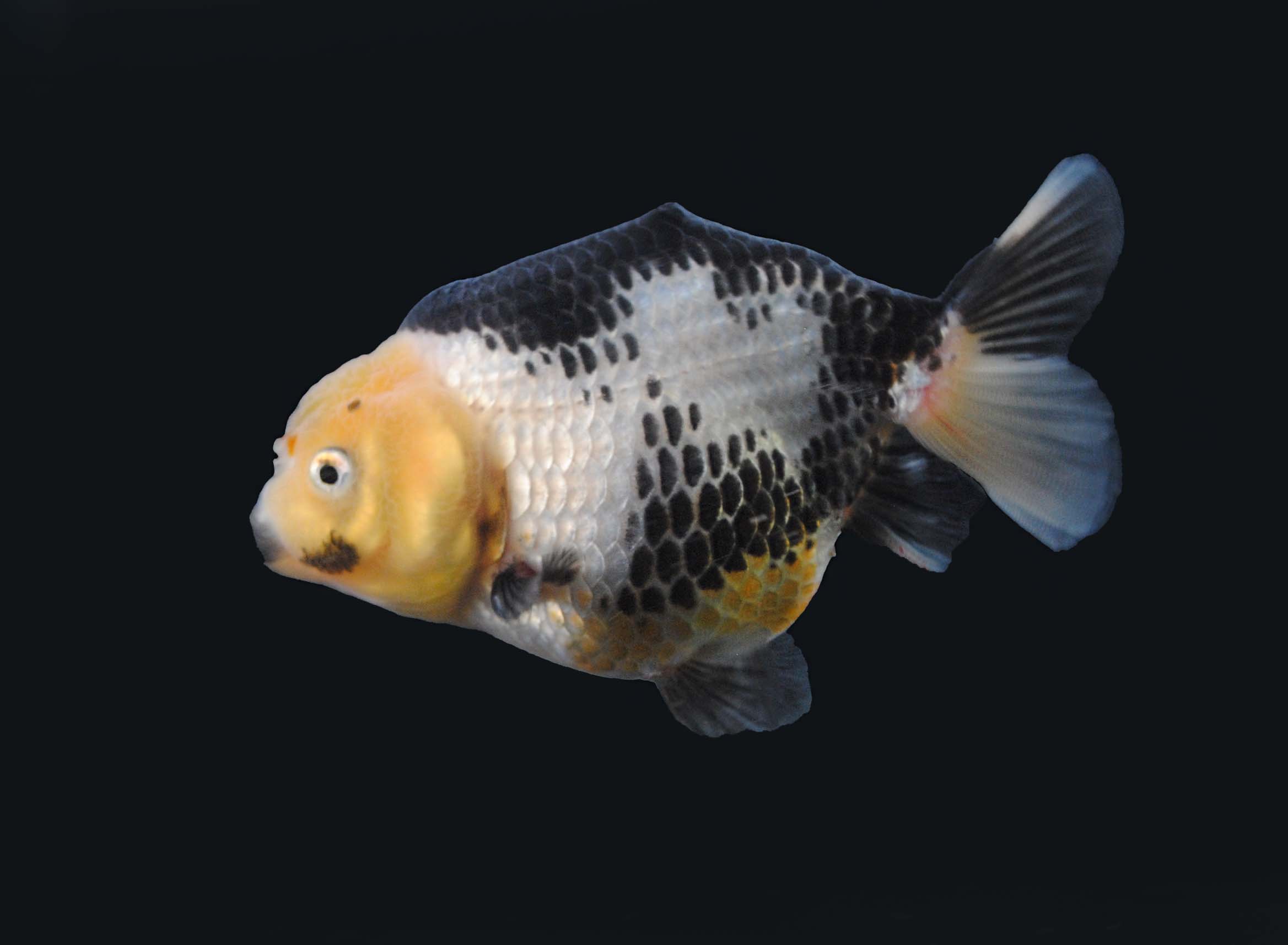
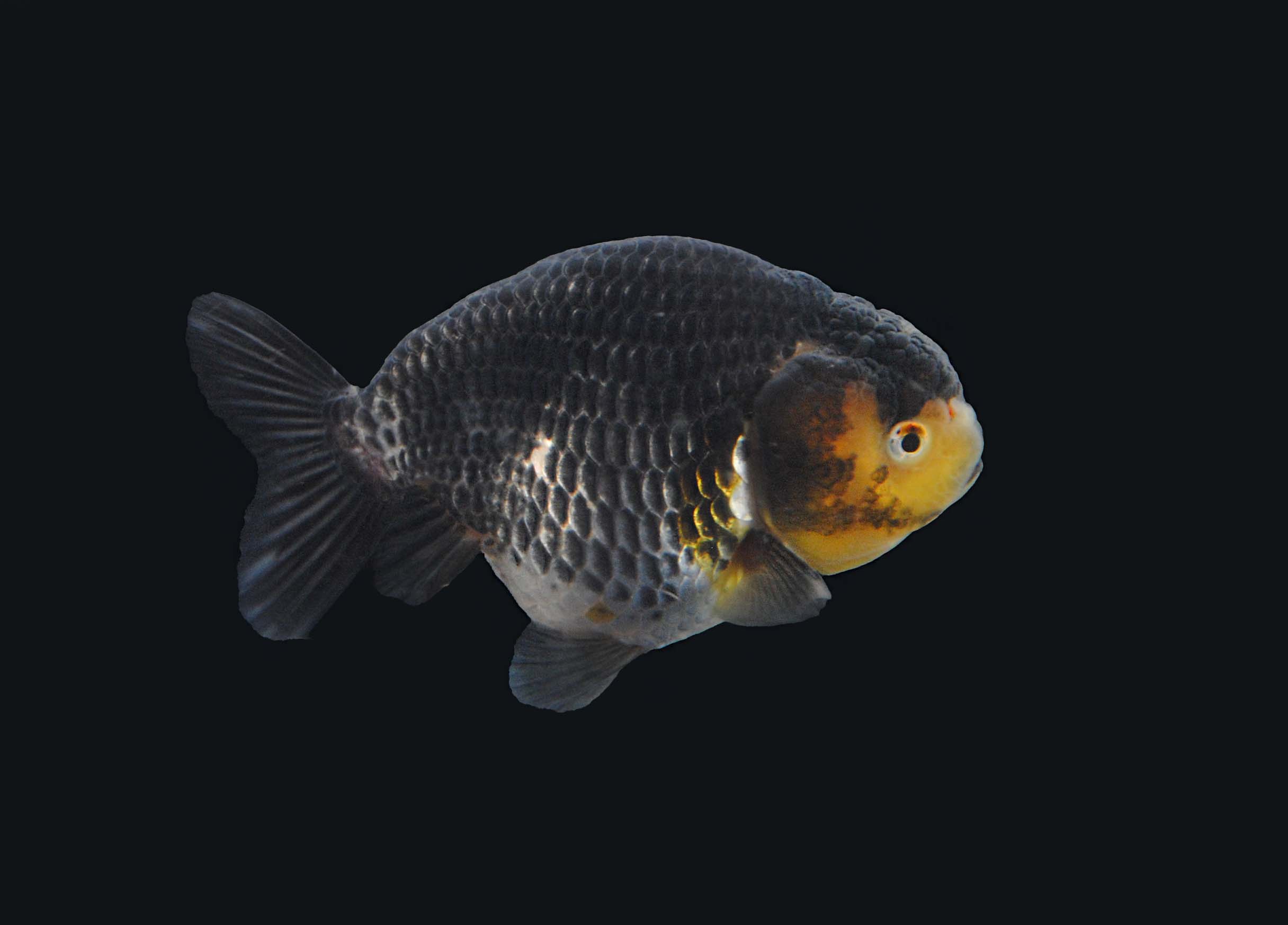
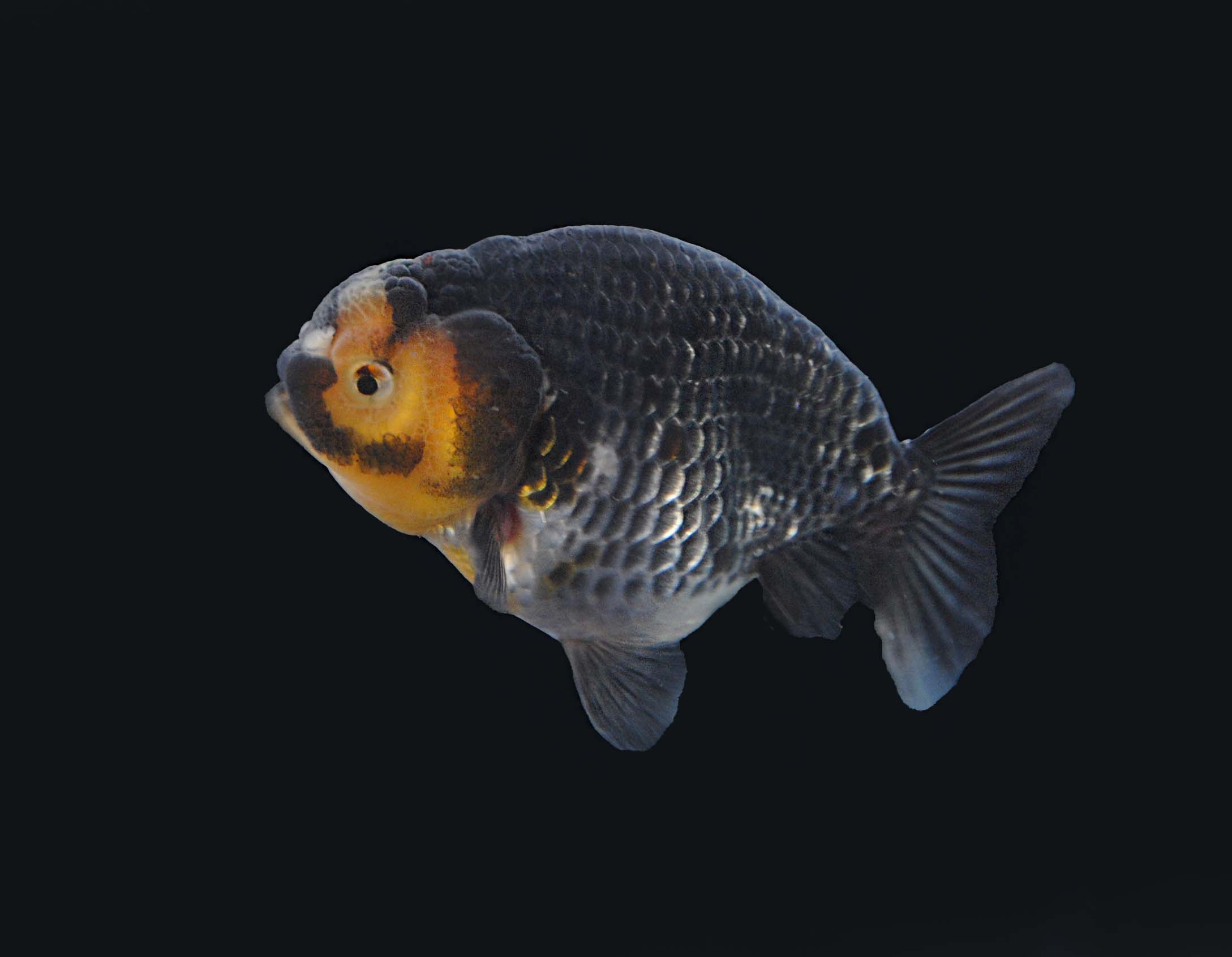
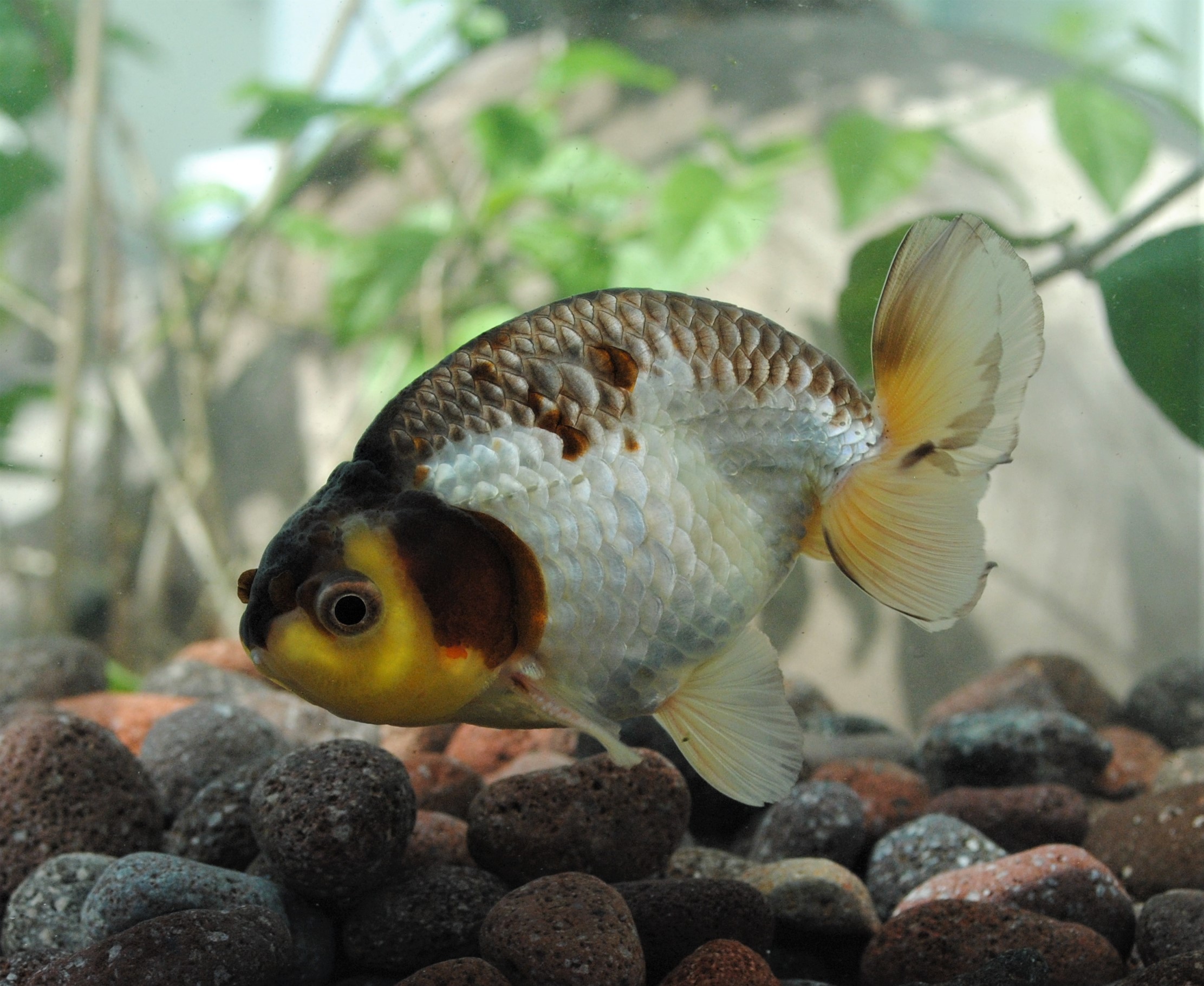
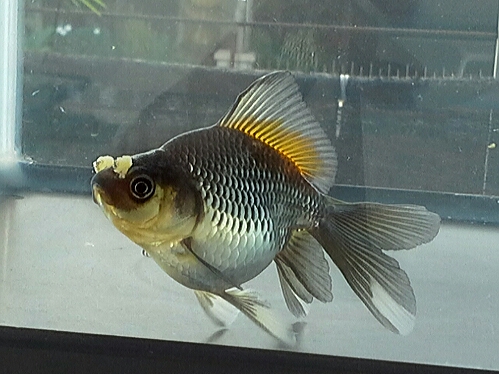
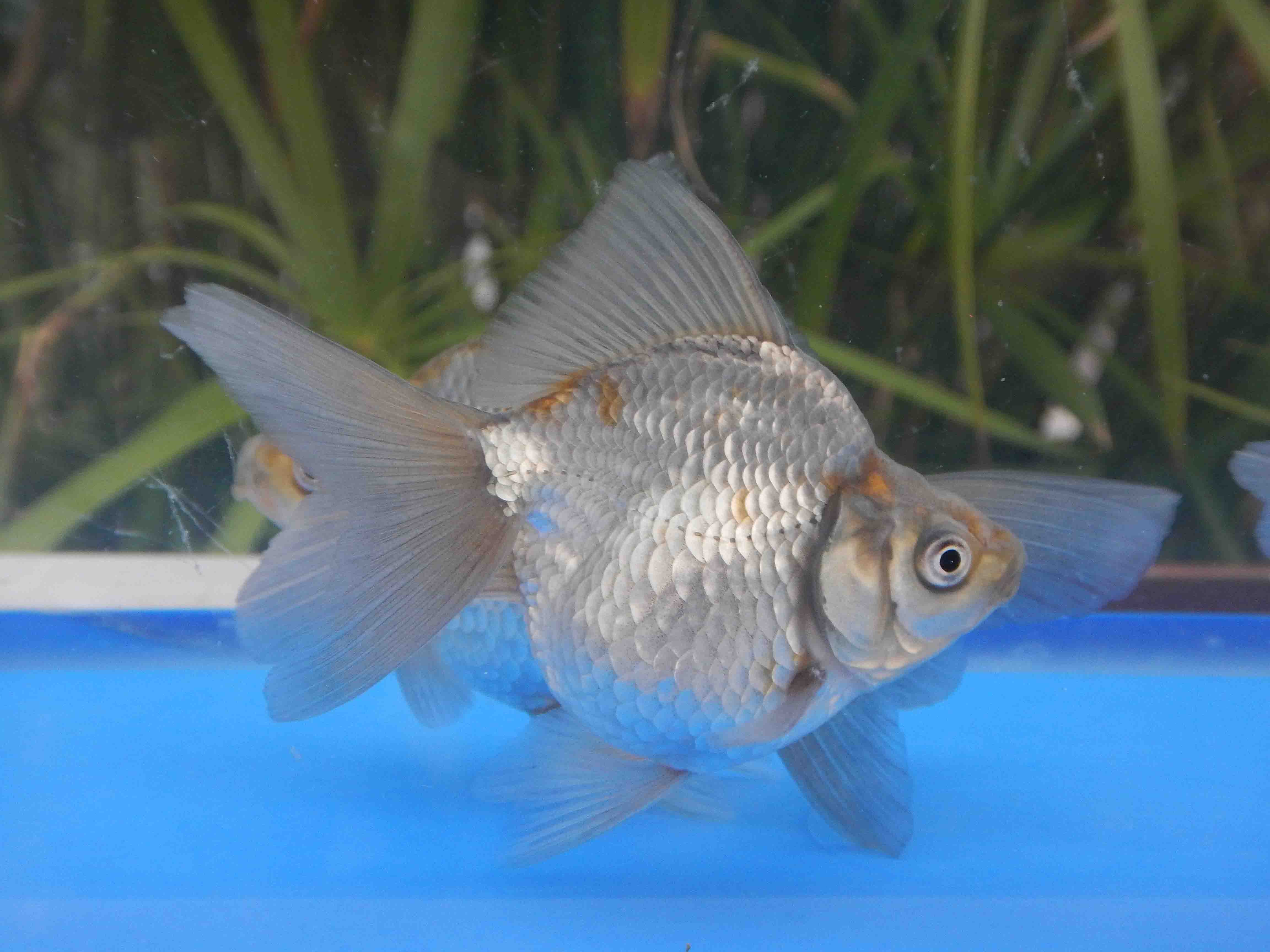
Panda Ranchu, tricolor ranchu

The Diary of a Goldfish Breeder 2025 (#4)

Update on: Tricolor Ranchu Project

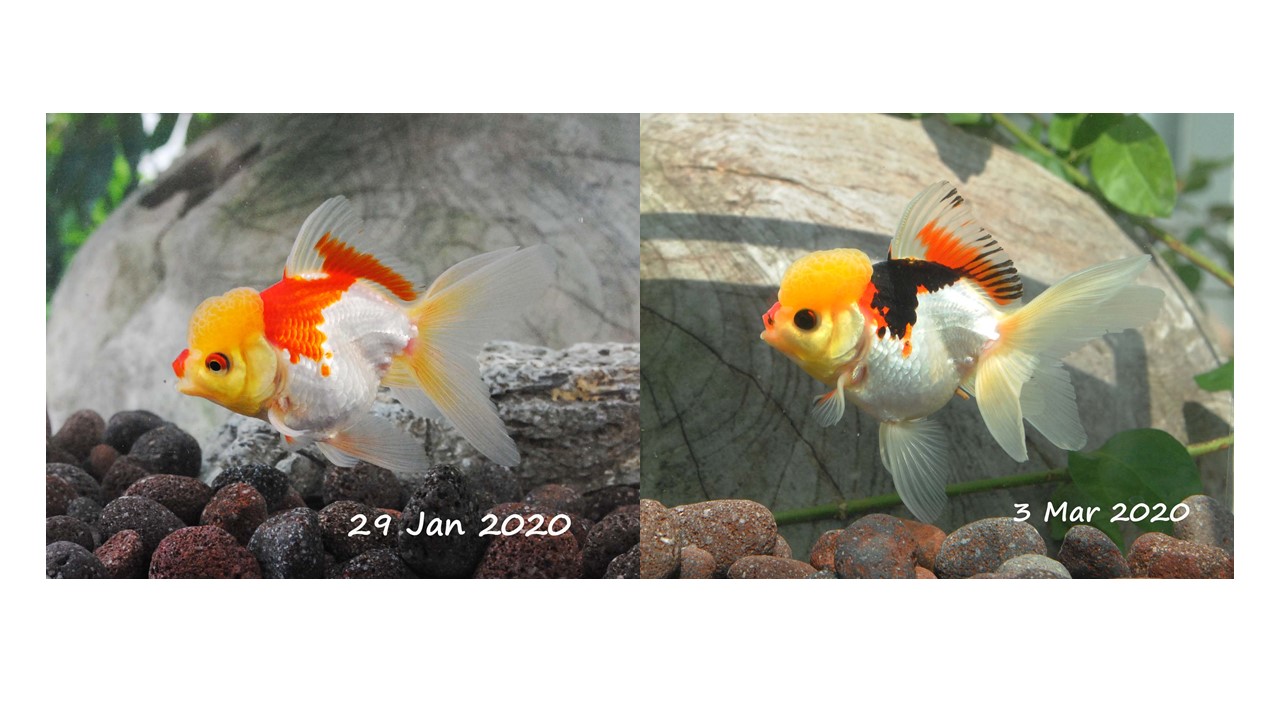
In my Diary #8 2024 I mentioned the emergence of a beautiful tricolor Ranchu out of nowhere. Well, it is not really from nowhere, but from (unexpectedly) my cow ranchu project. From that moment on, my tricolor breeding strategy diverged into two separate paths. The first path was to follow the inbreeding of my initial stocks. The second path was to cross the unexpected tricolor ranchu with my initial stock. In this diary, I will talk about the second path, that is from the cross between these two:

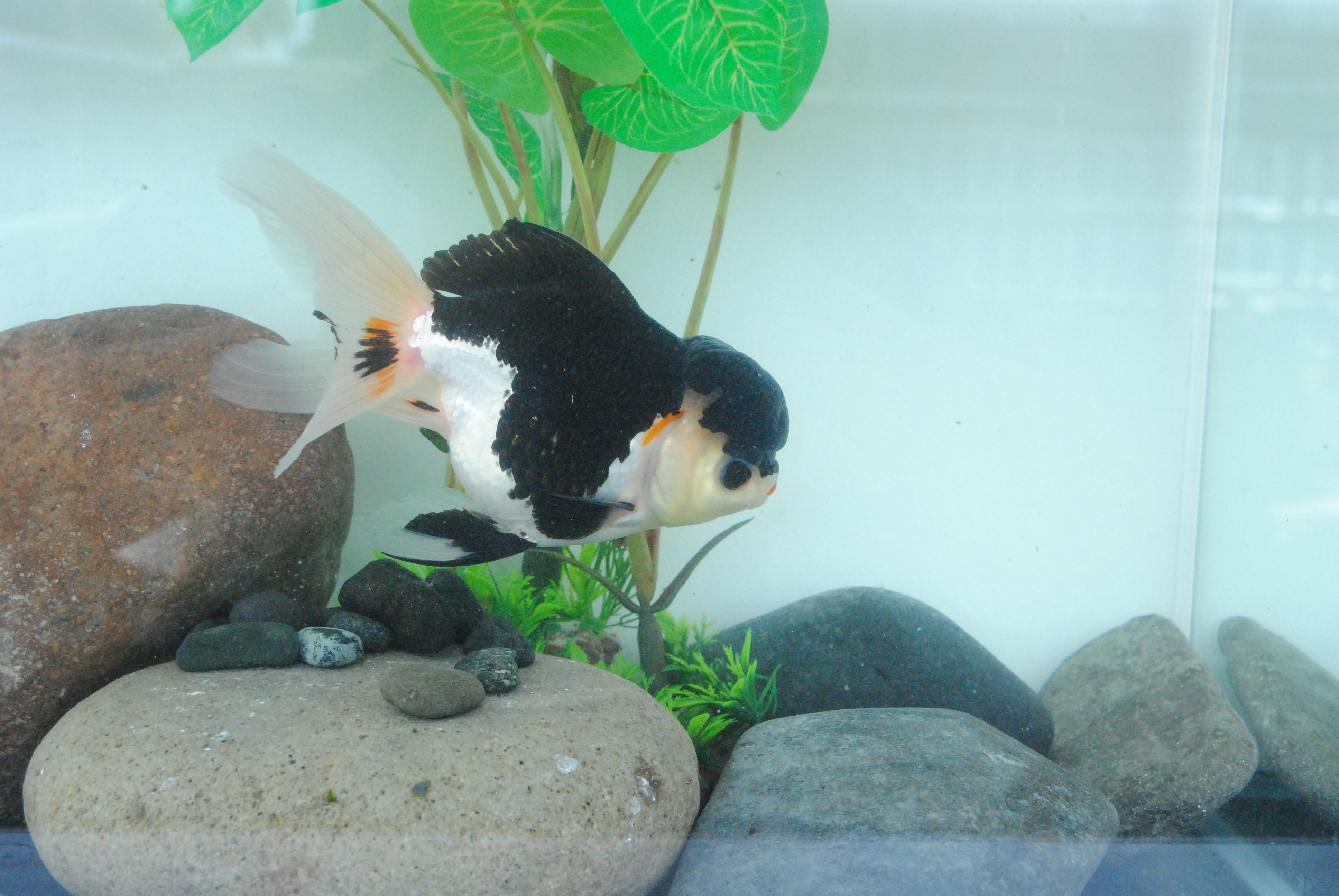
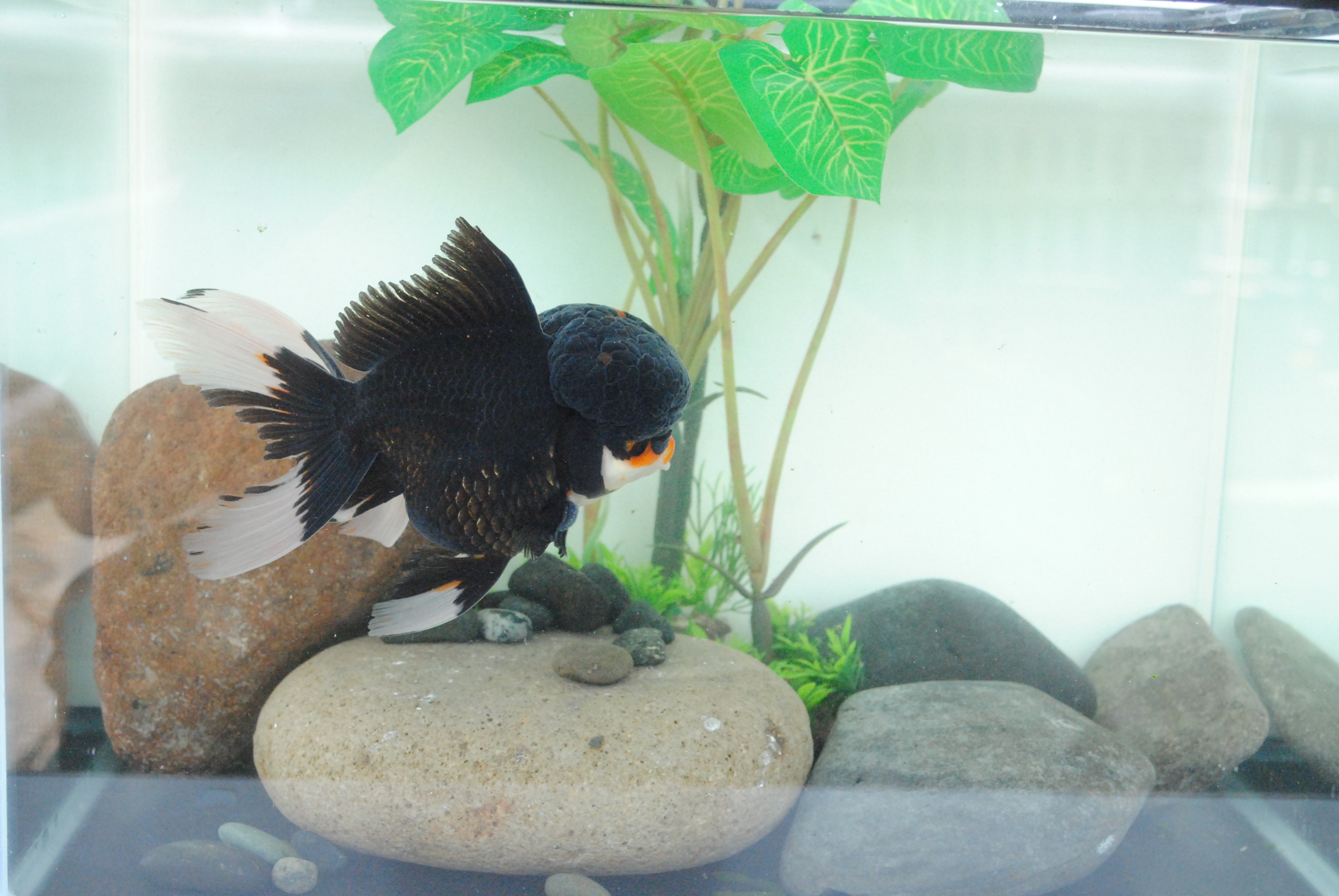
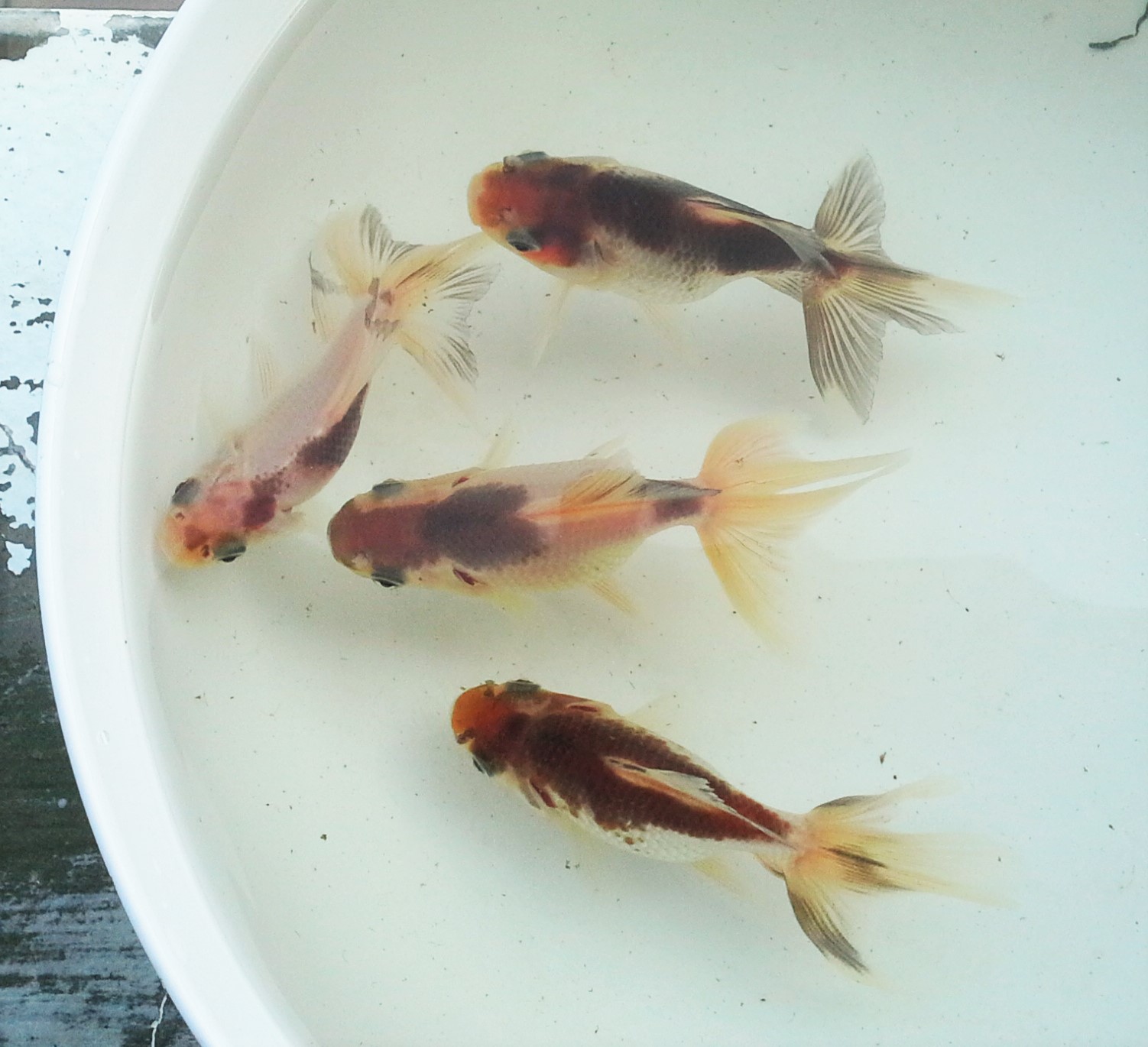
The offspring shows some interesting result in terms of coloration. Some exhibits strong black pigmentation on top of white or red-white color. This leads me to think that they are decent panda / tricolor ranchu! The quality of the body form varies. But as long as I can get the color genetics right, it is not that difficult to improve, I think.

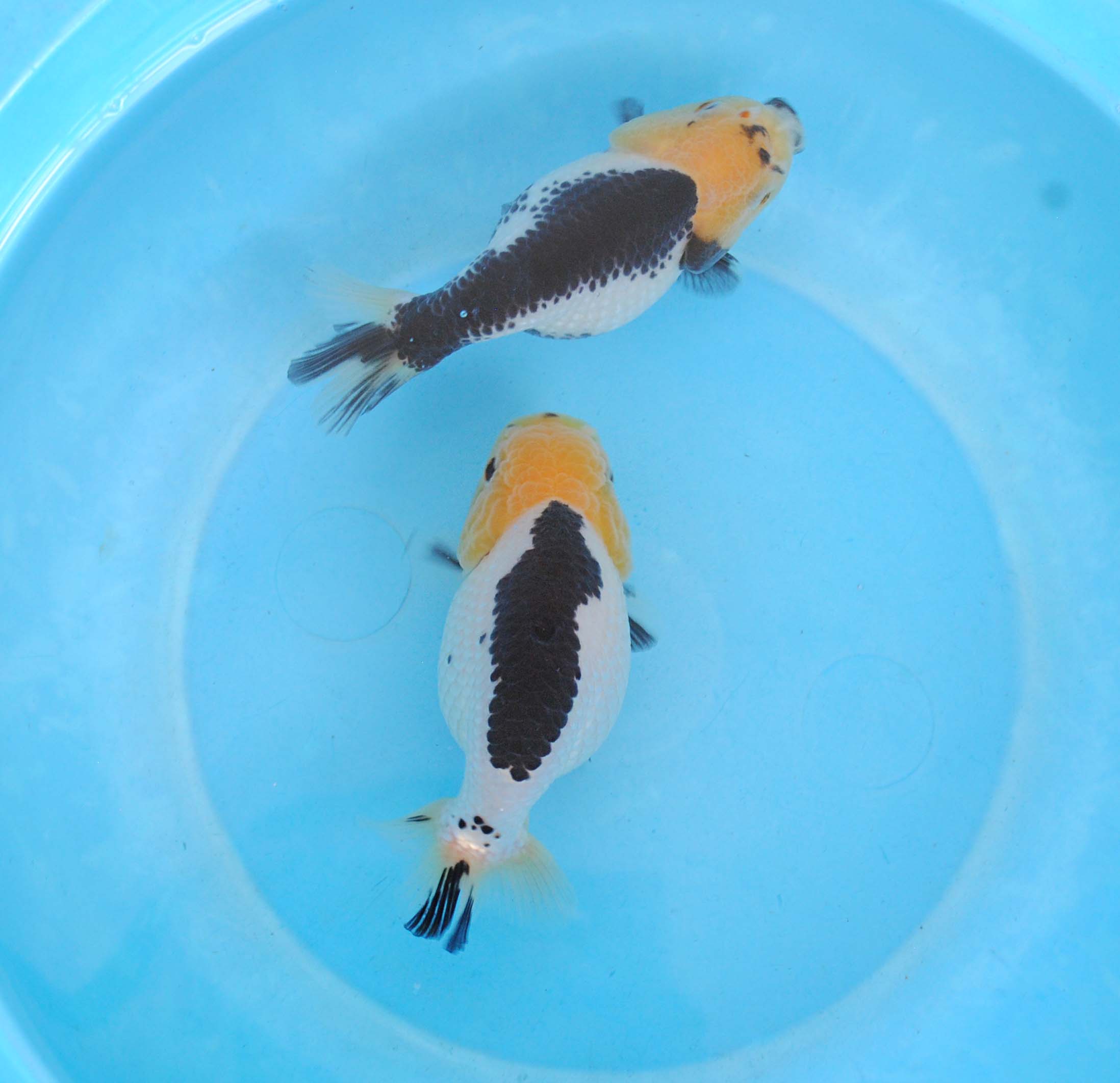
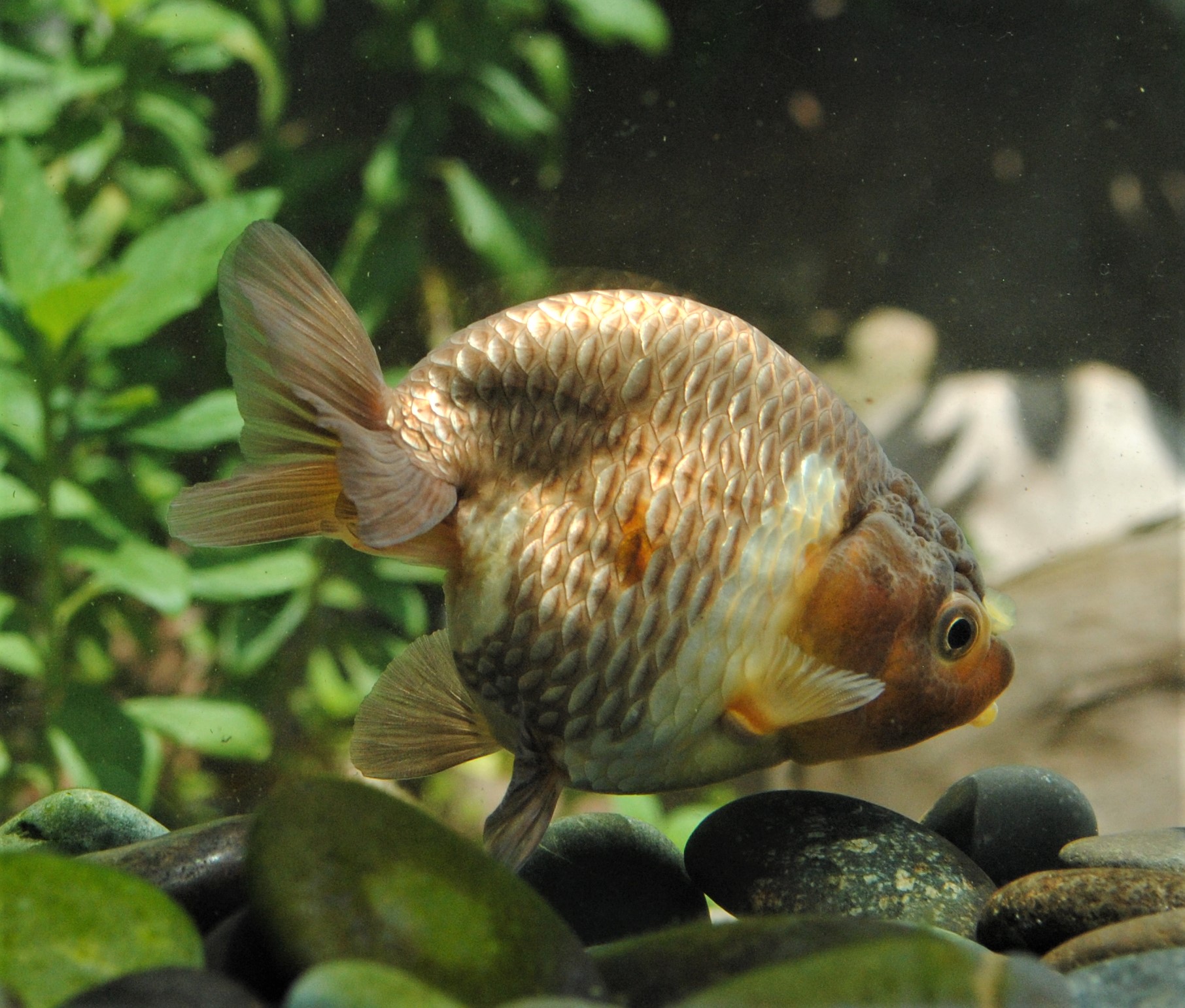
Here are four of the results. In fact, one of them has become a decent tricolor ranchu!

From the topview, some of the black and white color look startling!

I do hope I can realize my goals of creating panda / tricolor ranchu from these fishes.

The video is available in my youtube channel:

Standard
cow ranchu

Cow Ranchu Crossing

Cow Ranchu is a variant of the transparent scale ranchu that has black and white color. Sometimes the black pattern can expand. The black comes in large patterns and small dots. Red color might be present in small areas of the body. If the red is too much, it cannot be called cow ranchu anymore. I do not know if it is the International standard name of not, but we Indonesian calls it Cow Ranchu since it resembles the color of black and white cow. This breed was rare before (especially in Indonesia), but it is available recently through imports from Fuzhou, China (if my information is correct). How people come up with this pattern is still a mystery for me. A breeder friend told me once that when he bred them, he got a variety of transparent color ranchu including calicos. So, in his view, the cow is just the offspring of the usual calico which then being separated purposely based on the color. So, it will not breed true. I doubt this explanation. In my understanding, the usual calico does not have the ability to expand its black pigment like this cow ranchu. And the black in calico usually comes in dots, not large patterns or blocks as in this cow ranchu. So, I decided to buy some cows at the end of 2019 with three purposes: first, to breed them to see if they breed true, second, to observe the expansion of the black pigment, and third, to cross them with other colors to see what will happen. Well, the 1st and 2nd purposes was facing hindrances. My first attempt to breed them resulted in so few offsprings. I think I need to breed more of them. And then, three out of five that I bought died, sadly. Gladly, I managed to crossbreed them with the common calico and with the blue metallic scale ranchu. This writing will mainly talk about the crossbreeding result.

These are the five I bought (I show them the left and right side for each):

The first three are the males. And the last two are the females. My favorites are number three and four. Too bad, they are gone. The remaining two are number one and five. I am trying to buy some more to replace them.

Their offspring in my first attempt to breed them was few, and they were weak in quality. Yet, my initial conclusion is that they breed true. Majority of the offsprings were cow ranchu. Few had minor red stains. No calico observed. Yet, I need to confirm this with my next breeding. I could not stand the quality of the offspring, so I culled most of them. I come out with these two left:

The first one has a yellowish stain in the area of its left pectoral fin. The rest are white with black pigment under the skin. The first one also has an outer black pigmen in its pectoral fin. I think they are good specimen to observe whether the black pigment will expand or not. These two are the reason for my initial conclusion that they can breed true.

Next, I mated the cows with these calicos:

I bought them from an importir friend who acquired the parents from China. So far, he has bred them true. I saw myself the offspring in his pond was pretty much similar in color characteristic. I asked for one female and two males. Too bad, he mistakenly sent me all females. Anyway, I could still pair them with my cows.

Here are the results of the cross between the calicos (female) and the cow (male) – after hard culling, ten of them remain:

The quality is far below my standar, so I cull them hard. Even these ten will be culled again after they serve the illustration purpose. (Mostly, my wife’s pupils will adopt them.) The offsprings resulted in different eye type, and different color variation: tiger, calico, sakura, and cow (the last one). I kept the cow one to see the progress of the black pigment.

I also use this blue metallic ranchu which comes from my own previous project to breed with the cows:

And the result of the cross between the blue metallic (female) and the cows are:

cowblue 7

The offspring consists of blue metallic scales and grey metallic scales, but I want to focus on the transparent scale offspring. After much culling due to the low quality, I keep these to represent the range of transparent color emerged from this cross: tiger, calico, and kirin-like ranchu (the last one). Kirin is another variation of transparent color where the dark color and the light color seemed to separate in half. The dark color (purple, blue, grey, black) always dominates the upper part of the body, while the light color (white, yellow, red, orange) is more in the lower part. Actually, a more accurate description I think is that the light color is all over the body in the background, while the dark color exists in the foreground and occupies only the upper part of the body. The dark color usually looks with scales, or looks like a net, while the light color is transparent. Some shiny and big metallic scales are usually seen scattered all over the body.

Comparing the two crossing, it is obvious that there are overlaps: the tiger, calico, and sakura (perhaps some of the calico will turn into sakura when they lost their black pigment, or it will never happen in this cross, I do not know and do not focus on that). But interestingly, the cross between the cow and the calico produces cow-like offspring, where the other cross does not. And the cross between the cow and the blue metallic produces the kirin-like offspring, where the other cross does not. It is a hint, I think, that kirin pattern involves the blue metallic scale in the making. I kept the kirin-like one to see or use in further project.

That’s all that I can report so far. Thank you for reading. Enjoy!

Standard
Panda Oranda

Re-melanization process

Some people complain about their black and white goldfish losing their black pigment. This is common in goldfish and the process is called de-melanization process. Well, my late experiment with breeding black and white oranda from Thailand (not from the blue metallic scale, but from the grey metallic scale as I wrote in my last post) shows quite a strong character of melanin (black pigment). The black pigment can reappear or grow. This is different from stress fish which often shows some temporary black pigment which will be gone on several weeks (or months). I am tempted to call this phenomena as re-melanization process. I notice that this changing pattern also happens in koi world in the kumonryu variety.

Well, not all black and white oranda from Thailand shows this characteristics. It just happen that the line on my hand is very strong in this unique character, and it happens in my ponds at least five times (as I noticed), which is quite often compared to my previous twenty years of experience in the goldfish world. I think I should preserve this gene and hopefully introduce it to other goldfish varieties. Below shows two fishes, one had lost all its black pigment and then regained it in just one month, and the other had a growing black pigment in the same time period.

remelanization process 2 mar 2020remelanization process mar 2020


Standard
Panda Oranda

Panda That Humbled me down

Years of my experiment brings me the conclusion that the panda coloration (or the tricolor as its side effect) is actually the blue coloration in metallic scale fish that undergoes demelanization process. That process can happen quickly in certain blue fish, turning it into a totally white fish or red and white one. But it can also happen slowly, even to the point of being halted forever, producing the beautiful panda / tricolor goldfish.

Recently, since 2018, breeders from Thailand storm the market with panda / tricolor oranda which seems to be strong in its coloration. I acquired some and breed them to see if they conformed to my understanding. And what did I find?

The offspring were not blue in color!

They were grey just like the common metallic goldfish!

I raised them to see if they will become panda like their parents. And yes, with mix results, I got several decent panda oranda. The results consist of grey (which does not seem to turn into black nor panda), black, panda, tricolor, and some who loses the melanin totally.

Here are some of the results that I raised until maturity:

DSC_9166DSC_9362DSC_9467 (2)

So, panda does not come from blue fish only. My previous conclusion was wrong. I still does not know how the grey fish can become panda, since the common grey fish (red white fish) cannot do so. Actually, I experience this once a long time ago. But I dismiss it as an exception. Perhaps next time I can find my documentation and write about it. For now, I must humbly admit that there are panda color that does not come from blue fish.

Standard
Brown Panda Ranchu, Chocolate Ranchu, Panda Ranchu, Purple goldfish

Brown Panda Ranchu

As a side result of the Purple Ranchu Project, I also get the Brown Panda Ranchu. Actually, it is the Purple Ranchu who demelanizes to produce a purple and white fish. The purple gets darker to produce the appearance of brown / light brown. This process is exactly the same as the demelanization process in the blue ranchu to become panda ranchu (Black and White Ranchu).

As this variety is still rare, I think it is better to document it here for future reference. Here are some pictures:

bp1wpbp2wpbp3wpbp4wpbp5wpbp6wp


Standard
Purple goldfish

Updates on purple goldfish (Dec 11th, 2015)

As an overview, I was repeating the classic experiment by Shishan C. Chen. The experiment was crossing a blue metallic scale goldfish with a chocolate metallic scale goldfish. My slight modification was that I use the panda metallic scale goldfish instead of blue, noting that panda and blue color has a close relationship. I crossed a panda tosa with a chocolate pompom. I got the panda tosa from crossing panda telescope eyes (which is available in the market) with blue oranda.

The F1 was wild in color. Some turned into wild and orange, and some turned into totally orange color. No blue, no panda, no chocolate appeared at this stage. All have small pompom balls. Interestingly, their size became giants! I took my lesson that crossing far related types of goldfish may trigger the production of large sizes. (This inspires the possibility of doing projects on giant sized goldfish!)

This is the picture of the F1. Picture was taken 5 months ago, and the fishes have grown larger since. The bowl is 40cm in diameter.
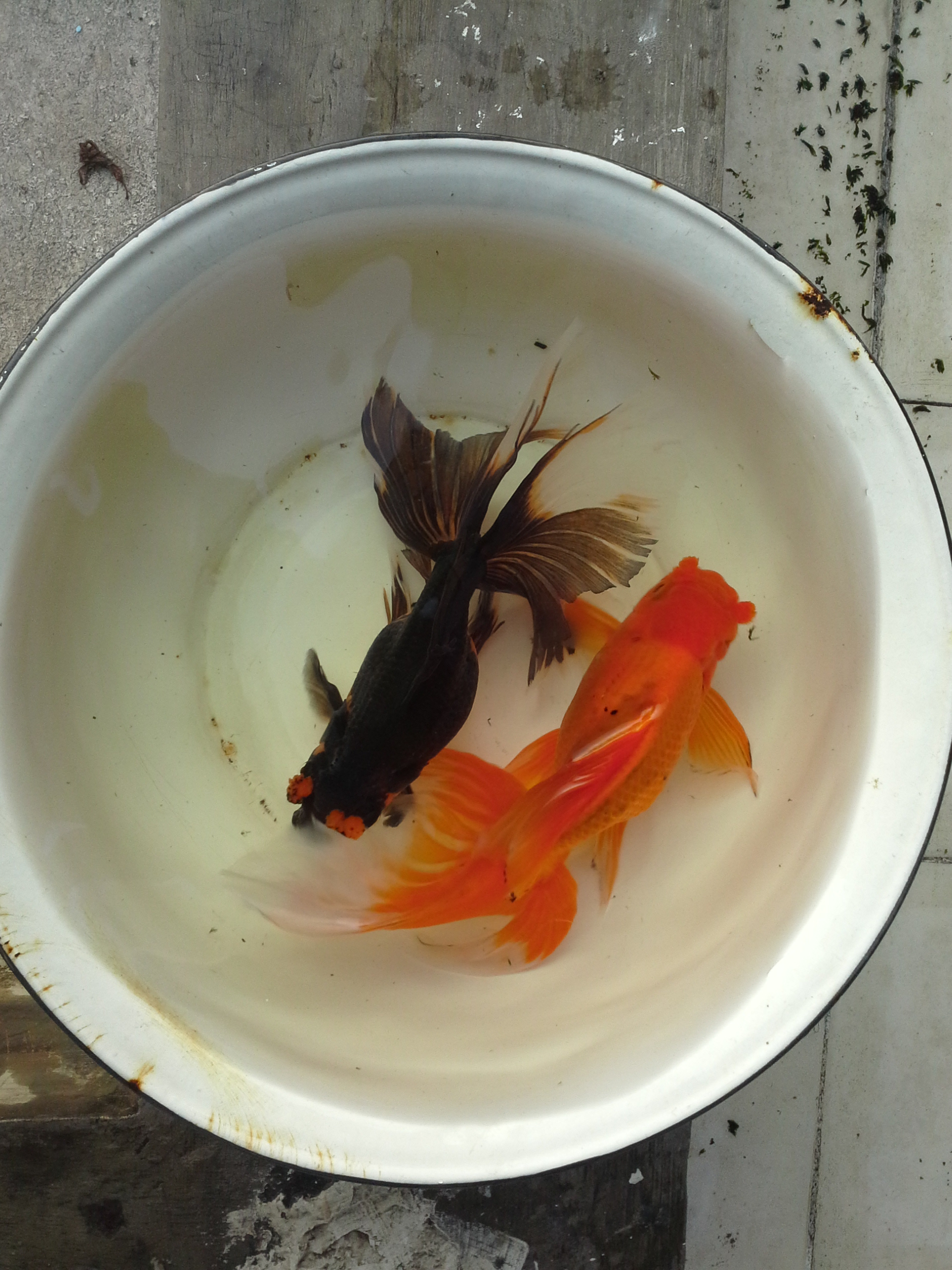
20150811_061647

Then I did F1 x F1. The results were amazing! I got:

1st category: blue, blue-white combination (or we call it panda) and white (as the blue color totally disappeared)

2nd category: chocolate, chocolate-orange combination, and orange

3rd category: purple (the color in between blue and chocolate), chocolate-white combination (!), and white (as the chocolate color totally disappeared)

4th category: wild color

The shape were all pompom goldfishes. Some with large pompom balls, some with small ones.

I got rid of the wild color early. (And now I regret it, since I would like to know whether it can be used to create red-white pompom combination or not). So, I focused on in-breeding those 3 categories. My utmost desire was to breed and stabilizes the chocolate-white combination, since it is a rarer color compared to the panda. Unfortunately, they do not lay eggs till now even when all the other categories have spawned. My project of creating chocolate-white is in jeopardy! It is not funny to start all over again from the beginning.

The first pair to spawn was the panda. I am happy, since panda pompom is nowhere to be seen nowadays. I was thinking that these panda will produce 100 percent genuine panda color. That is what happen when I crossed panda color with red-white. When I crossed panda with red-white, the F1 was red-white/red. The F2 yield roughly 25 percent of panda. And when I crossed these panda with its panda sibling, the result was 100 percent panda / blue. So, I was hoping the same to happen in this project. Interestingly, the result is different!

Panda color produced from the cross between panda and chocolate, when mated with its panda sibling, does not only yield panda / blue color, but also purple / chocolate-white color in small percentage! I think this is an important matter. It needs someone knowledgeable in genetics to explain this. I do not have that expertise.

These are the chocolate-white goldfish aged roughly three months old. Some have turned totally white. These are the ones that still retain the chocolate color. Aren’t they lovely?
20151209_061256 (2)

20151209_061251 (2)

First, I am glad that I do not need to rely on my 3rd category that do not spawn till now. I can still get chocolate-white combination from the panda pair.

Second, let me make clear of the relationship between purple and chocolate-white. For the start, it is better to understand that there are three color involved here: blue, chocolate and purple. Shishan Chen has discussed the difference between them. It involves the black pigmen, the red pigmen, their combination and distribution. Though I do really want to understand more about it and what involves that create the difference between blue and black, chocolate and red, they are not really my stuffs. (I am too stupid for that.) It is enough for me to know that purple is a color between blue and chocolate.

It is also important to understand that there are “base” color in goldfish. I have never read about this. This is my own terminology, that will need help from friends who understand more. This “base” color is what makes the difference betwen black and blue, and between chocolate pompom and purple. Let me explain. In the case of black and blue, we know that differences happen in the melanin pigment. Black ranchu has melanin pigment, so also blue ranchu. But somehow, that same pigment behaves differently in those two. One factor is the different pigment distribution. Is it the only factor involved? I do not think so. But I cannot say anymore about this. There is a second important differentiation between the black and blue, and I want to draw the attention to this. Their “base” color is different. In black ranchu, if the black color fades, we will see an orange color. That is what I mean by base color. Even in Thai black ranchu where the black color does not fade, if we try to scratch the black skin, we will see the orange color underneath the black coat. But in blue color, if the black (or blue) pigment fades, what we will see is white color. So, this is the base color of blue fish. In black ranchu, as the melanin fades, we will have black-gold color (or black-orange), while in blue ranchu, as the melanin fades, we will have black-white color (or panda). So, the base color is different.

The relationship between chocolate pompom and purple pompom has something to do with this “base” color. The base color of chocolate pompom is orange. That’s why, when the chocolate color fades, we will see the orange as the base color. The fish can turn into chocolate-orange,or totally orange fish. We witness the same behavior with black and black-gold fish. In purple goldfish, the base is not orange, but white! So, when the purplish color fades, the fish will have purple-white color combination. And in this kind of combination, the purple color will be more intense, the pigmen distribution will be thicker, and the purple will look like chocolate. That is why I call the purple-white color combination as the chocolate-white. It is the same case with panda, where the blue-white combination is called black-white since the blue is getting thicker and looking like black.

This answers my second point, that is about the relationship between purple and chocolate-white. When the purple color does not fade, the fish will stay purplish. When the purple fades, the fish will become chocolate-white, and some will even turn into totally white.

Third, there seems to be several spectrum of chocolate color in the chocolate-white combination. I am still not sure about this. I am not sure of whether they are worthy to be identified separately.

Fourth, the good news is, when I crossed chocolate pompom with chocolate pompom resulted from this project, the result is not 100 percent chocolate, either! There are purple color also! The same behavior I examined from crossing panda with panda from this project.

Fifth, I have not had chance to cross purple with purple, or purple-white with purple-white. If I do this, will the result yield several panda and chocolate also, or will they be 100 percent purple and purple-white?

Sixth, it will be nice to create purple-white ranchu! A project that is enough to occupy my time for several years ahead!


Standard
Purple goldfish

Update on purple goldfish, September 16th, 2015

Telescope eyes occur in my breed once and a while, though I have never intended to breed them. These three telescope eyes are from one batch, from the same parent, yet they differ widely in their color. The left one is a panda. The middle one is the purple goldfish – I think it is still rare, and perhaps the only one in Indonesia currently. Hopefully this pose highlights the purple color from the rest. The right one is the chocolate with some beautiful stain of orange, also a rarity, I think. Enjoy,

colorful telescopes

Standard
Panda pompom

Panda pompom

From my experiment to create purple goldfish, I accidentally create panda pompom. This is predictable, since I use chocolate pompom and metallic blue fish as the grandparent. Some blue fishes appear in the offspring. Some have pompom, some do not. But most of the pompom feature are blue also. This one is extraordinary since the pompom feature is white, giving it a good contrast. If today we usually find pompom goldfish with chocolate body and orange pompom features, hopefully we will see more of blue or panda body and white pompom features. I can’t wait to see this piece mature. Enjoy.

20150723_072638(1)

Standard
Panda Ryukin

Update on Panda Ryukin Dec 25th, 2014

This article is the update on my panda ryukin breeding project. The fishes here are the F2.

blue ryukin 1

blue ryukin 2

The first fish has the best shape resembling ryukin.  The second one is a bit elongated and has smaller hump. The rest of the batch have almost no hump. So, in term of the body shape, there is a need to cross once again with a good and decent ryukin. But this cross will sacrifice the color. So, to finish this project, I need two more breeding step: to enhance the body shape, and then to enhance the color.

The fish might be ready to spawn in perhaps two months later. I am glad for the progress so far.

Merry Christmas, and Happy New Year.

Standard
Panda Ryukin

Panda Ryukin – growth progress

DSC_1660R

Now the body parts can be seen clearly already. The color is light blue. I am glad that I can see the hump potential on them, since I do not think that the hump will be decent in them even when they are mature later on. If the hump is good in this batch, then it will be a pleasing surprise for me. There is not much to do right now other than feeding them well and wait till they are ready to spawn – which is about 5 months from now. There is not much to sort anymore. If i sort them based on the single anal tail, then I will be left with none. Their number has been reduced to 9, so I think I will not sort out anything anymore. I might need only 2 or 3 later on for breeding, so I will choose the best shape among them. Sex won’t be a matter, since I will cross it back with red and white ryukin. If I have a male panda ryukin from this batch, then I will find a female red-white ryukin; if I have a female panda, then I will find a male red-white one to mate with. Next update will be some more months to come, to see whether there is any that will have a decent ryukin body or not, and also about the color, whether they become panda, or they are staying blue.

Standard