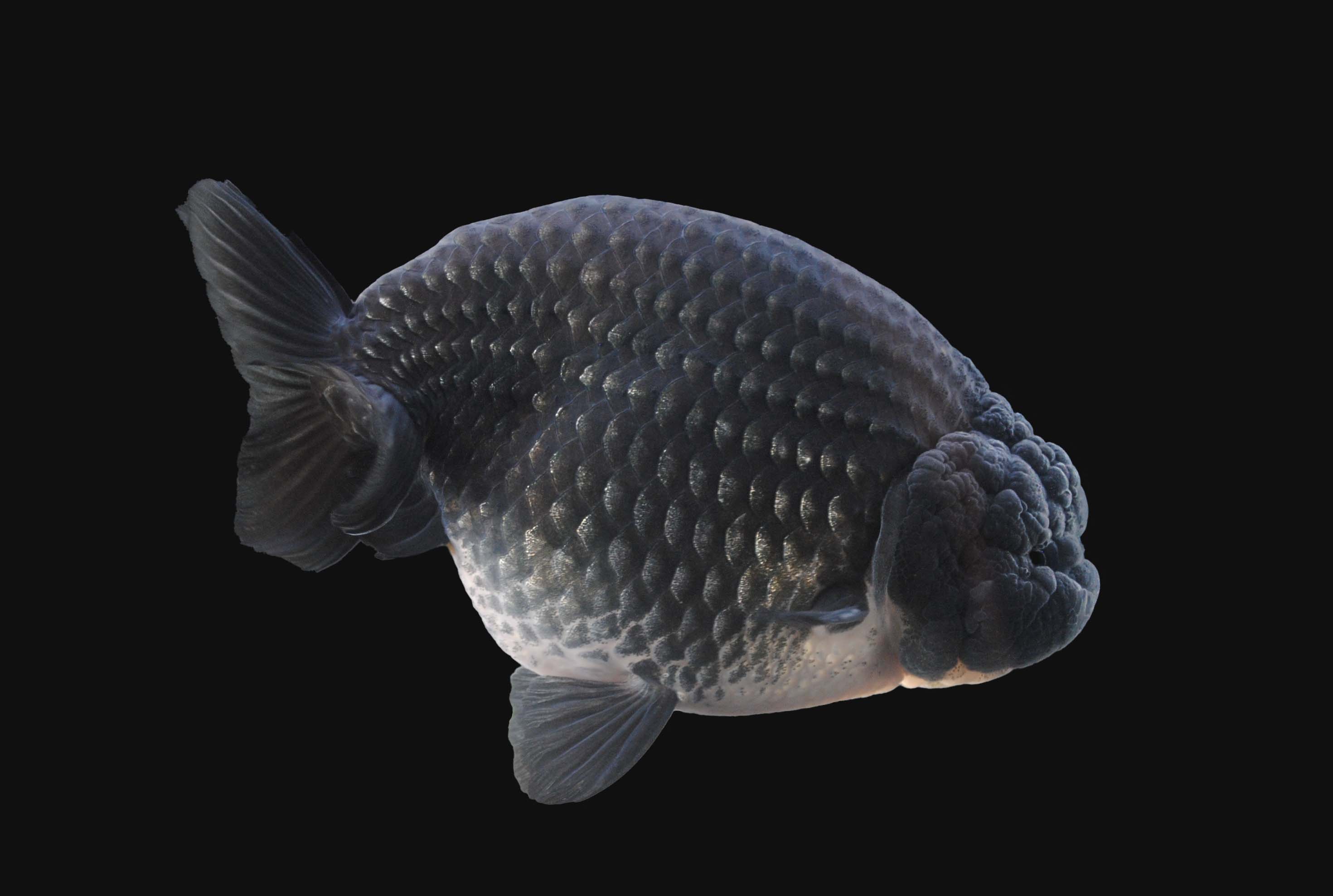
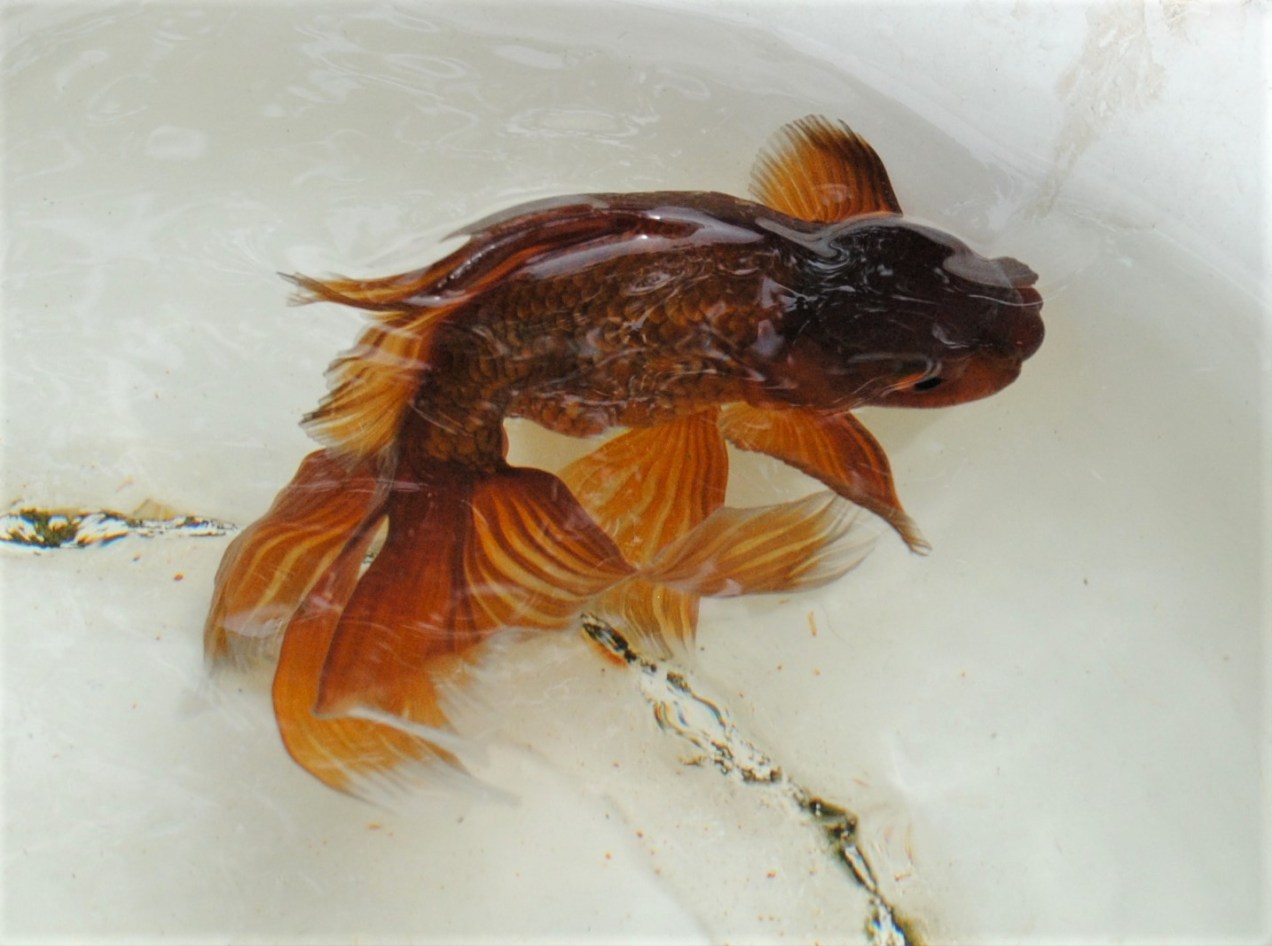
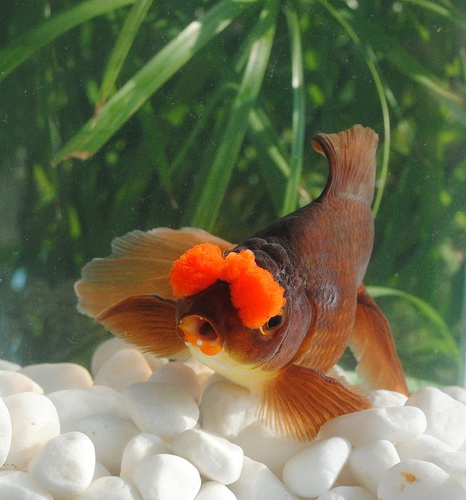
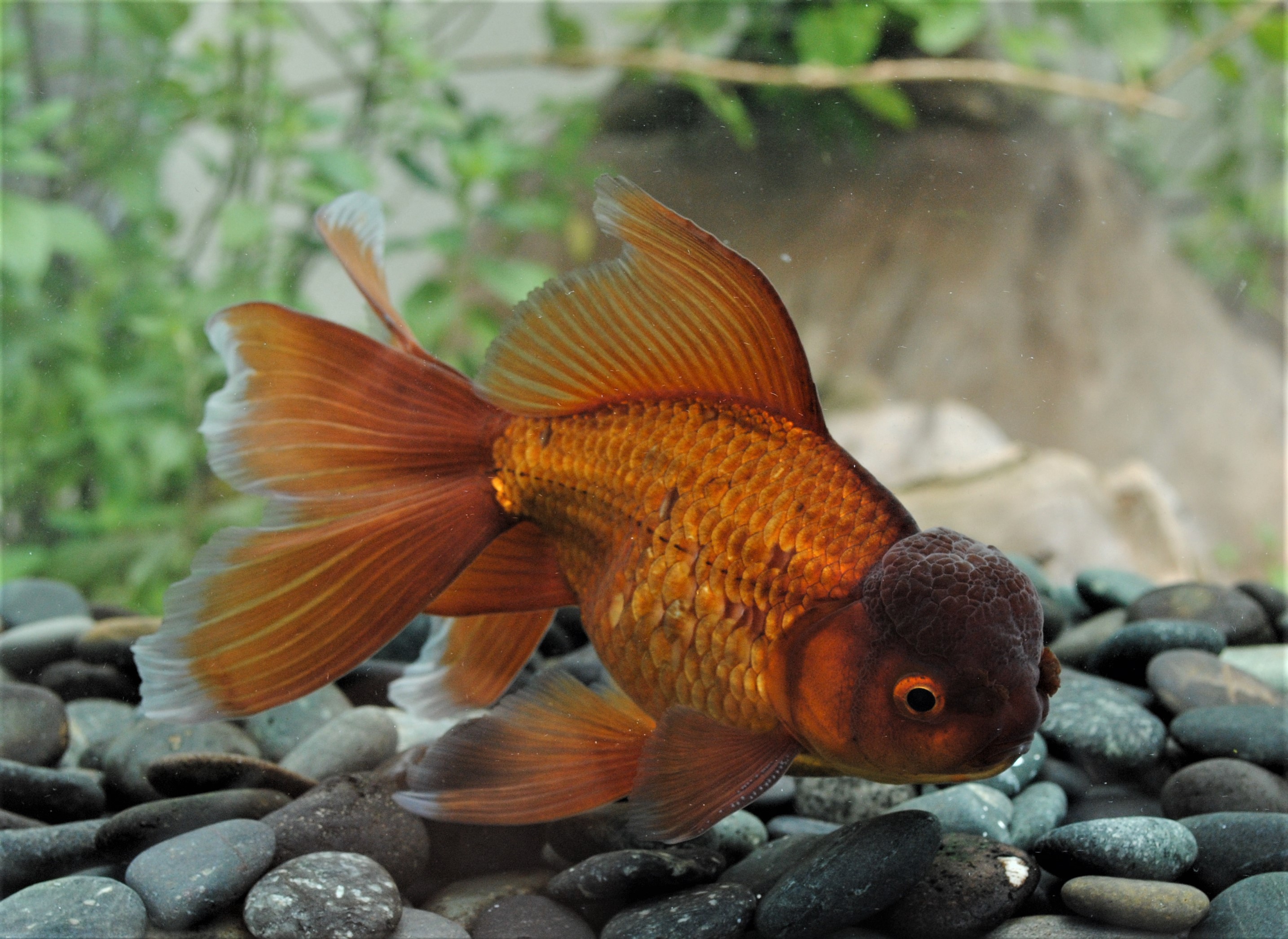
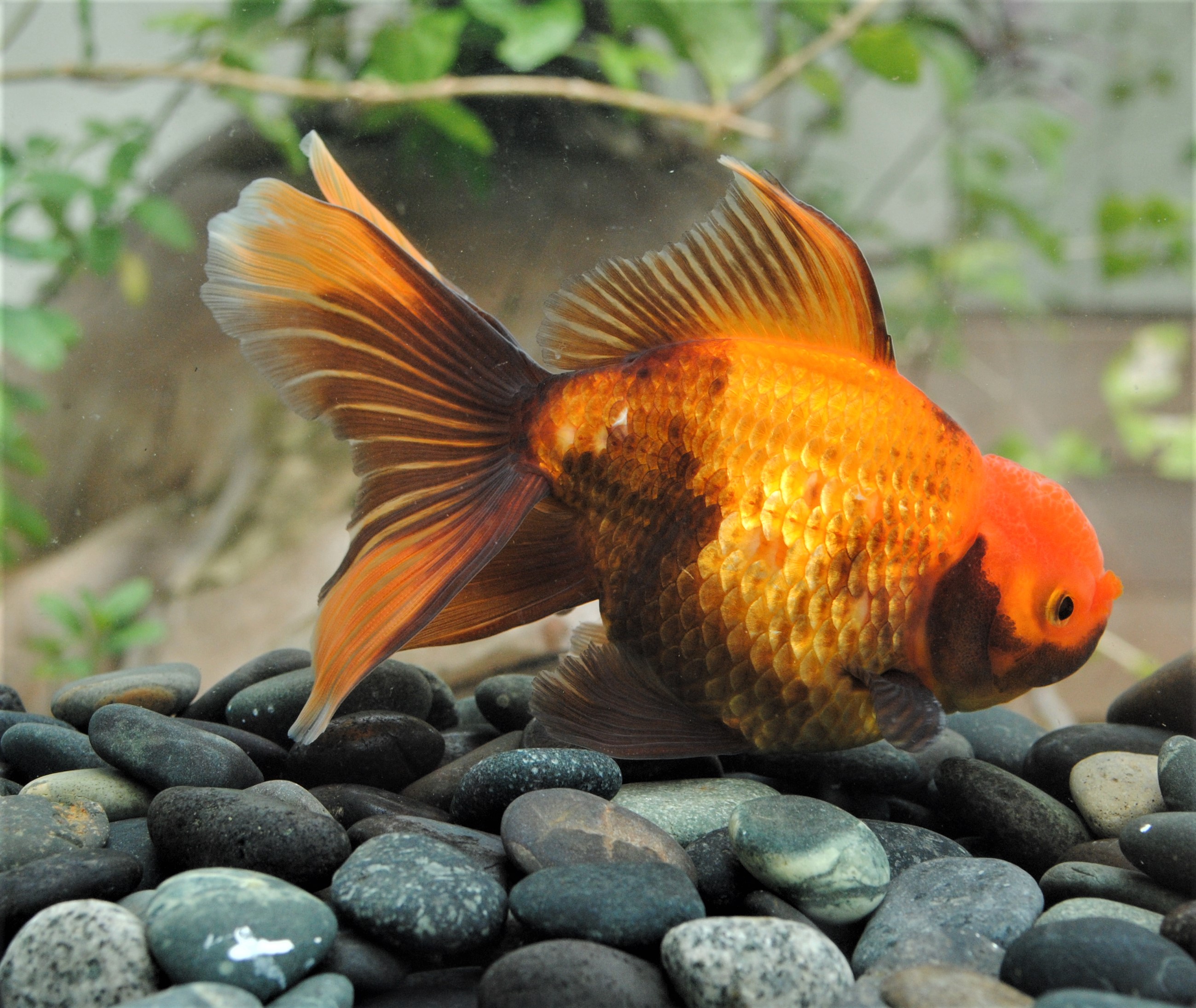
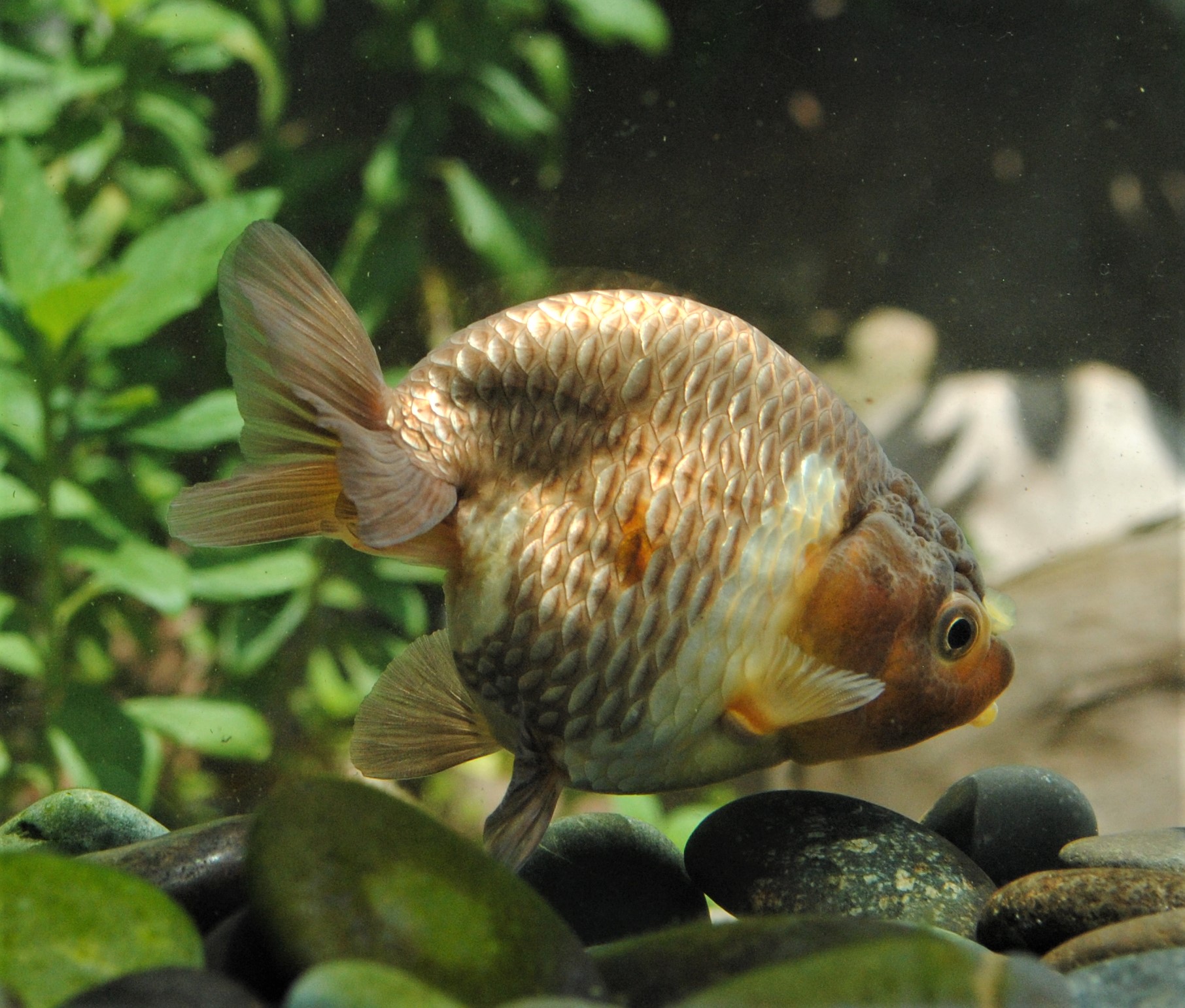
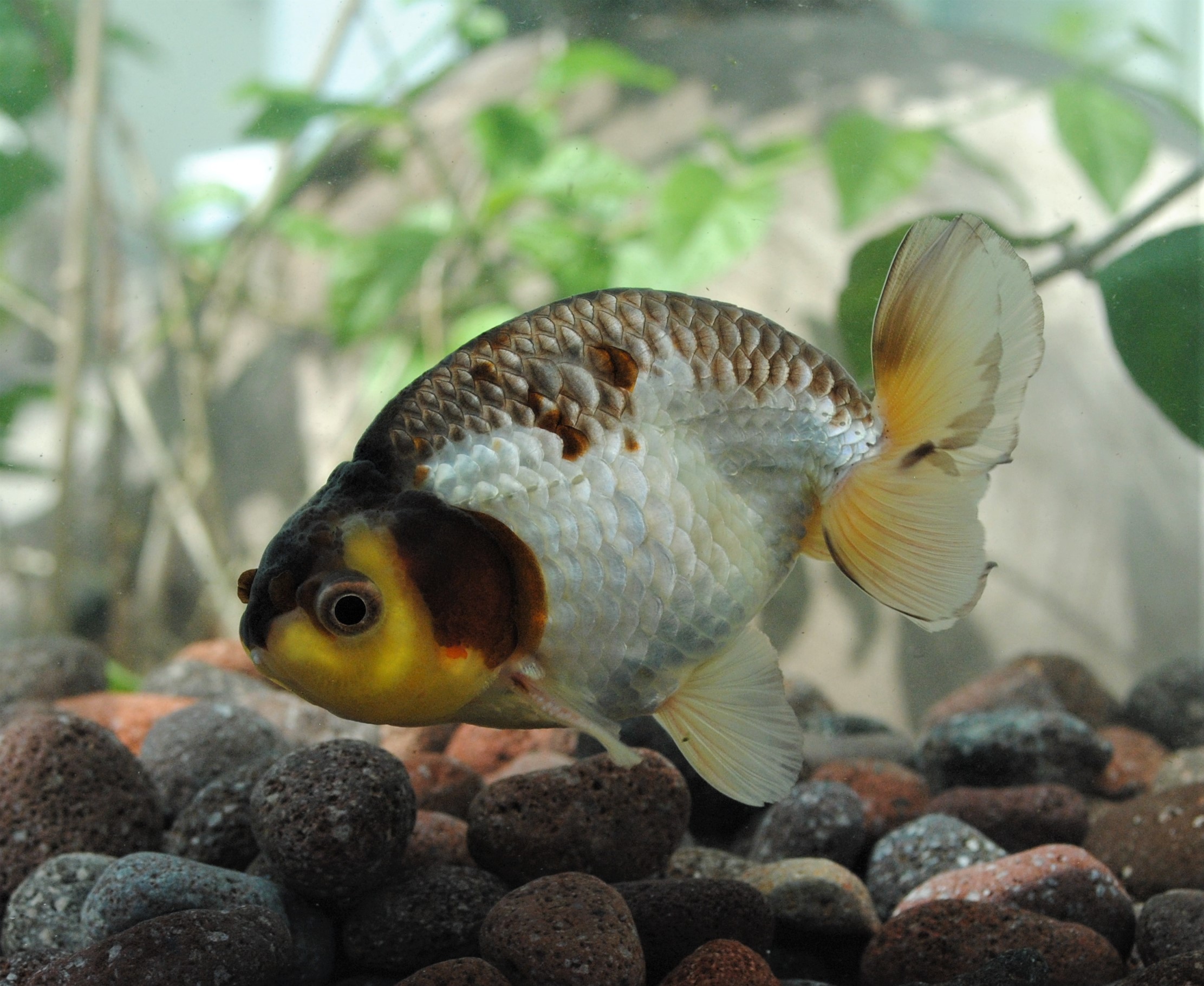
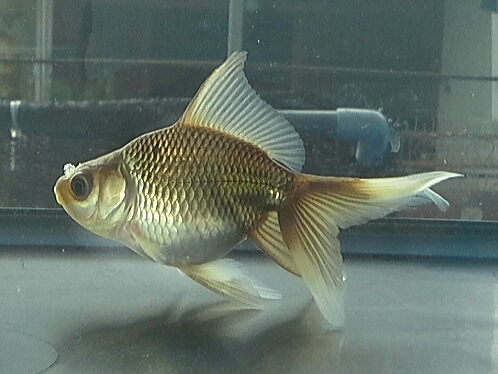
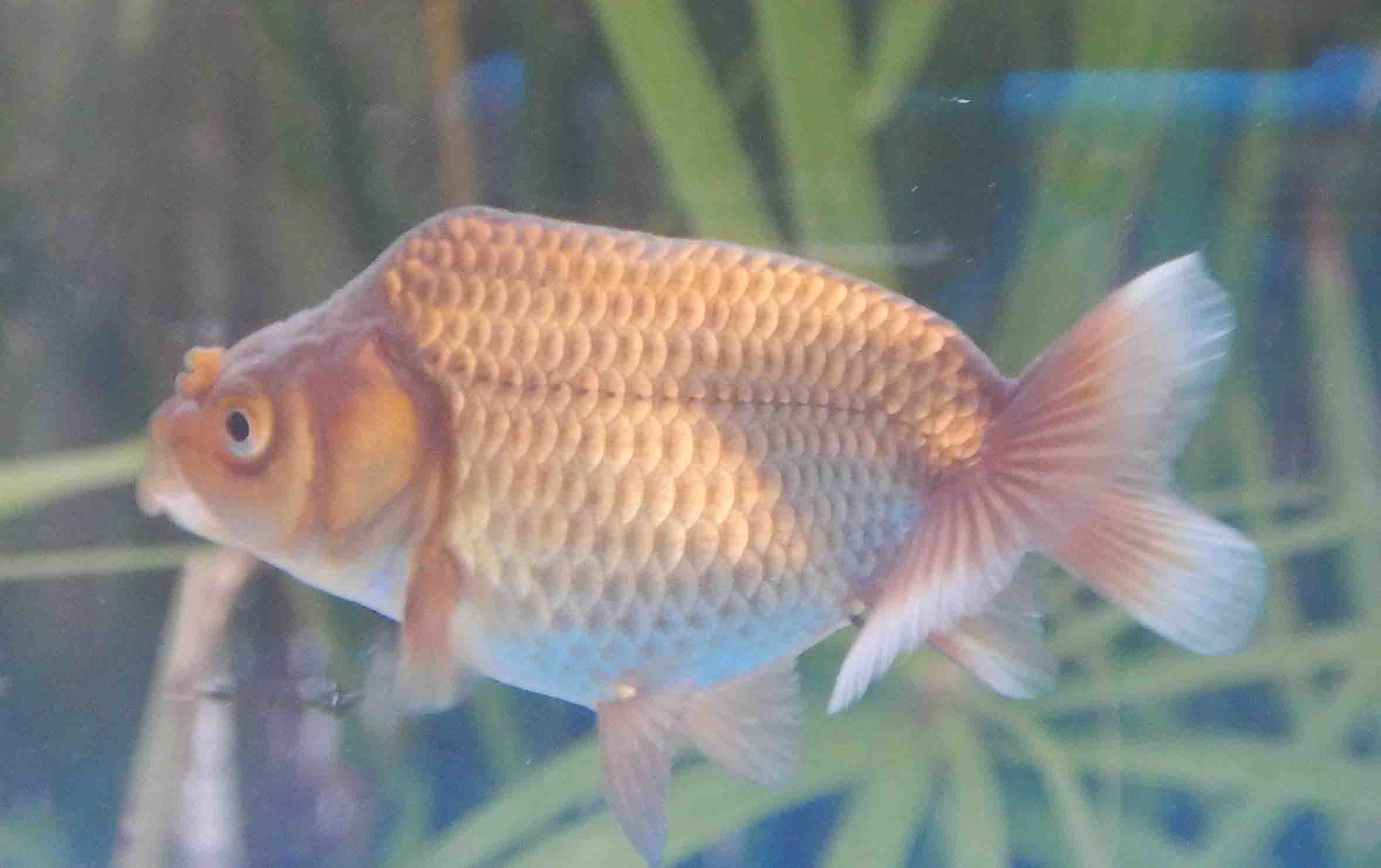
blue ranchu, brown ranchu, purple ranchu

The Diary of a Goldfish Breeder 2024 (2)

For the last several years I focused too much on developing my Blue, Brown, and Purple Oranda line. I postponed the Ranchu projects on the same color to the point of neglecting them. I must confess that all my Blue, Brown, and Purple Ranchu line were wiped out almost completely. There is only a single old male Blue ranchu left. I can hardly do anything with that. So, basically, these projects must be restarted from zero.

Is he not handsome? He is a large fish. Personally, I like his strong body type. It is a bit long but with a balanced body width. And he has a thick waist. His headgrowth is decent. Yes, he has some obvious weaknesses in the smoothness of his back curve and the angle of his tail. Hopefully I can still have his offspring that carries the positive features. But I must act quickly, because he is losing his vigor due to old age.

I tried to find other breeders that might carry the blue and brown genetics. I do not worry about the purple, since if I can get blue and brown, I can recreate the purple. Gladly, I find breeder friends who bought from me before and are still keeping the genetics of these rare colors.

From Mr. Malek I bought some of his Blue Ranchu. He acquired the gene from my line before, and he crossed it with his own fishes. These two females are in my possession right now.

They are very fertile, and that is the most important thing for me. I also bought a male blue from him just for a reserve. But since these two females are good at laying eggs, I do not want to mate the male with them. Looking at the specimen here, I must admit they have their charm. I do not want to produce the same line. I want to differentiate a bit.

These two females show two spectrums of blue color, the lighter and the darker ones. Their body type can be considered medium short. This is the first point of difference with my male. The curve is varied, but I believe my friend has lots of good quality ones. The tail is also varied. The headgrowth is more well -developed than mine. This is the second point of difference. I make a cross between my line (the old male) with these two. I am tending their newly hatched offspring right now. Wish me success.

From Mr. Aji Linting I acquired this Brown Ranchu:

He acquired the brown (and also purple) from me a long time ago when I have just started. At that time, my line was of low quality. My friend crossed it with the previous type of Thailand’s Black Ranchu since he appreciated that variant very much. We can see the trace of the Black Ranchu feature in this male specimen. I was breeding that Black variant twenty years ago, so I am familiar with the features. New hobbyists might not be familiar with it. Anyway, looking at the bright brown color, I am very enthusiastic!

I acquired several male and female. Some with purple combination. But I focus on this brown male Ranchu as my material. I already crossed him with the two female Blue Ranchu and am waiting for the offspring to grow. Wish me success also on this project.

I also acquire a red and white Ranchu from local breeder to use in my crossing:

He is an enormous fish. He is handsome in his own way. But for me, I do not like the indentation in his upper neck and his excessive headgrowth covering his eyes. But still, this is the best I can find so far. I plan to cross him with the two Blue Female to enrich the blue genetics I have. The richer the gene pool the more choices I have to work on improving my Blue Ranchu quality. And also, I think I might need to have my own red and white lineage. Hmmm, let’s see ….

That is the update so far. Stay tuned.

Standard
Brown Oranda

Brown Oranda

DSC_6510 (2)

It all started with some chocolate pompom I bought from China. The brown color captivated my attention. Most of them had orange fluffy nostrils to make them adorable. To my knowledge so far, chocolate color like this was rarely found in other goldfish variety. Well, I saw a brown butterfly sometimes on the internet, but I have never seen one alive. I remembered seeing a brown oranda nicknamed chakin in an encyclopedia I had during my childhood. But I cannot find one live specimen of chakin (teh-kin, or tea-kin, the tea colored goldfish) here in Indonesia. Even the chocolate pompom had to be imported from China. I was entertaining a project to recreate brown oranda from this chocolate pompom I had.

This is one chocolate pompom I bred from the imported parents. I had many of this several years ago.

DSC_7809R

I crossed it with an oranda. I am sorry I forget about an important fact regarding this matter. I could not recall whether I used a common oranda or a redcap oranda for this cross. The result was all orange goldfish, with small head growth, and the small pompom in some. Those were my transition fish. I did not bother to take a picture of them.

Then I inbred those transition fish to get the desired result. I chose the few brown colored offspring and mated them with oranda again to improve the oranda characteristic. Once again, I got all orange color, but this time, they were decent oranda, with no or insignificant pompom. My final result should come from inbreeding them.

And yes, I got what I wanted! The brown oranda! From the start, I picked up the fry which showed light brown color right after they hatched. I grew them up. Yet, to my disappointment, only one remained brown until maturity. The rest turned into orange.

I mated this only brown with its orange sibling. The hatchlings were all brown in the beginning. And only two remained brown until now. I still keep them and now they are roughly 20 cm long with no hint of turning into brown. Unfortunately, both of them are male. All the female has turned orange. Below is one of current brown oranda I had, which I consider as my throphy.

DSC_6474 (2)

One strange phenomenon is this. Actually, there was a third male brown oranda, which slowly turned into orange. It retained less than 10 percent of its brown color. I was about to cull it out. Yet, I did not know how, it started to regain its brown color. This is one of the phenomenon I call the reverse demelanization. I managed to take the picture when it regained its brown color after being almost all orange:

DSC_6516 (2)

At first, I thought the increasing brown color might due to stress. If that is the case, the brown color will be temporary. But, it continued to grow to cover the whole body of the fish, leaving out only its cap. It grew into a beautiful fish: a brown red cap, if I may say! And then the reversing process stopped. Until today the fish is still alive, and has been almost a year in this state of pattern!

DSC_6633 (2)

Beautiful, isn’t it?

Any explanation?

That is my project to recreate the brown oranda. I think the project is finished. The only thing left is to multiply them, and to get the market to appreciate them.

Have a good day!

Standard
Brown Panda Ranchu, Chocolate Ranchu, Panda Ranchu, Purple goldfish

Brown Panda Ranchu

As a side result of the Purple Ranchu Project, I also get the Brown Panda Ranchu. Actually, it is the Purple Ranchu who demelanizes to produce a purple and white fish. The purple gets darker to produce the appearance of brown / light brown. This process is exactly the same as the demelanization process in the blue ranchu to become panda ranchu (Black and White Ranchu).

As this variety is still rare, I think it is better to document it here for future reference. Here are some pictures:

bp1wpbp2wpbp3wpbp4wpbp5wpbp6wp


Standard
Purple goldfish

Final Chapter on Purple Ranchu Project

I think I have come to the final stage of my project on purple goldfish. Starting with the report by Shisan C. Chen as my inspiration, I am finally able to create the purple ranchu. I called the color purple, since I heard that term being used when I was young and naive in goldfish breeding. Shisan C. Chen did not use that term. He just said that it is an intermediate color between brown and blue. I remembered my heart yearned for a more definite description or picture, “what sort of color is that? I would like so much to see it!”

In doing this project, I learned that there are two kinds of brown color in goldfish, and they are genetically different. I am sorry I cannot speak in a more scientific term since my training in genetics is very limited. But I know from my observation that when the two different brown are mated with blue, the result is totally different. I will not elaborate more on this since I have written about it several times on this blog.

So, this is the result:

Left side view:

Yes, it has brown stain, to make it a purple and brown ranchu. Some friends prefer to use the koi terminology to address this breed and call it ochibaΒ ranchu. Yes, the head and perhaps the body could still be improved. I have focused much on the color and sort of neglecting the body conformation. But, for the color experiment, this is final.

Right side view:

Less brown stain on the right side views to make it a decent purple. I know for most people who are not familiar with this project, it is hard to differentiate this purple color with blue. So, let me give some comparison picture.

Comparison between purple and blue:

Yes, the purple has a reddish color compared to the blue.

Comparison between purple, blue and brown:

Hopefully, this project will be useful for the coming generation of goldfish breeders and hobbyist. Thank you for all the motivational support for this project. It is finished now πŸ™‚

Standard
Purple goldfish

Updates on purple goldfish (Dec 11th, 2015)

As an overview, I was repeating the classic experiment by Shishan C. Chen. The experiment was crossing a blue metallic scale goldfish with a chocolate metallic scale goldfish. My slight modification was that I use the panda metallic scale goldfish instead of blue, noting that panda and blue color has a close relationship. I crossed a panda tosa with a chocolate pompom. I got the panda tosa from crossing panda telescope eyes (which is available in the market) with blue oranda.

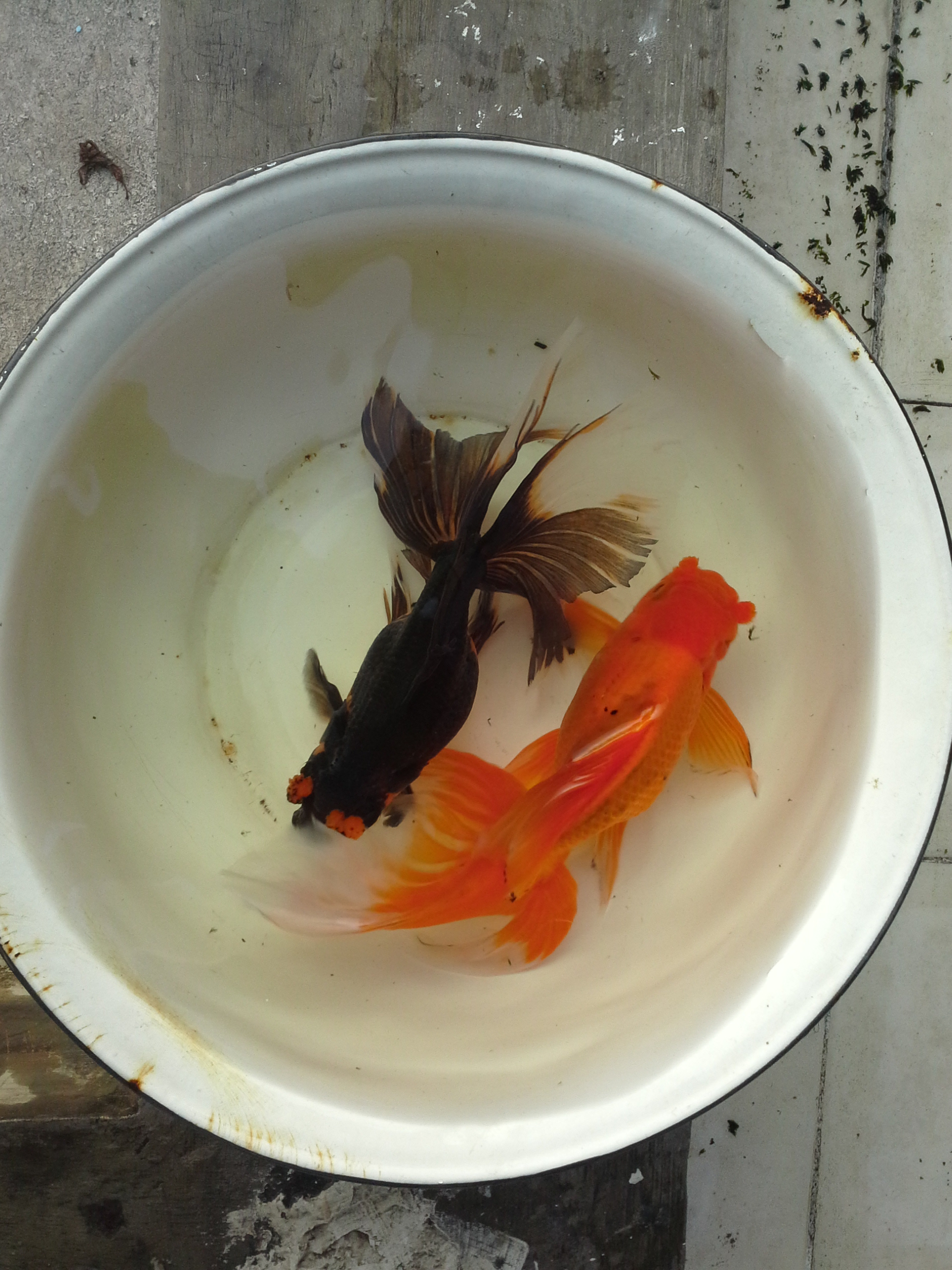
The F1 was wild in color. Some turned into wild and orange, and some turned into totally orange color. No blue, no panda, no chocolate appeared at this stage. All have small pompom balls. Interestingly, their size became giants! I took my lesson that crossing far related types of goldfish may trigger the production of large sizes. (This inspires the possibility of doing projects on giant sized goldfish!)

This is the picture of the F1. Picture was taken 5 months ago, and the fishes have grown larger since. The bowl is 40cm in diameter.
20150811_061647

Then I did F1 x F1. The results were amazing! I got:

1st category: blue, blue-white combination (or we call it panda) and white (as the blue color totally disappeared)

2nd category: chocolate, chocolate-orange combination, and orange

3rd category: purple (the color in between blue and chocolate), chocolate-white combination (!), and white (as the chocolate color totally disappeared)

4th category: wild color

The shape were all pompom goldfishes. Some with large pompom balls, some with small ones.

I got rid of the wild color early. (And now I regret it, since I would like to know whether it can be used to create red-white pompom combination or not). So, I focused on in-breeding those 3 categories. My utmost desire was to breed and stabilizes the chocolate-white combination, since it is a rarer color compared to the panda. Unfortunately, they do not lay eggs till now even when all the other categories have spawned. My project of creating chocolate-white is in jeopardy! It is not funny to start all over again from the beginning.

The first pair to spawn was the panda. I am happy, since panda pompom is nowhere to be seen nowadays. I was thinking that these panda will produce 100 percent genuine panda color. That is what happen when I crossed panda color with red-white. When I crossed panda with red-white, the F1 was red-white/red. The F2 yield roughly 25 percent of panda. And when I crossed these panda with its panda sibling, the result was 100 percent panda / blue. So, I was hoping the same to happen in this project. Interestingly, the result is different!

Panda color produced from the cross between panda and chocolate, when mated with its panda sibling, does not only yield panda / blue color, but also purple / chocolate-white color in small percentage! I think this is an important matter. It needs someone knowledgeable in genetics to explain this. I do not have that expertise.

These are the chocolate-white goldfish aged roughly three months old. Some have turned totally white. These are the ones that still retain the chocolate color. Aren’t they lovely?
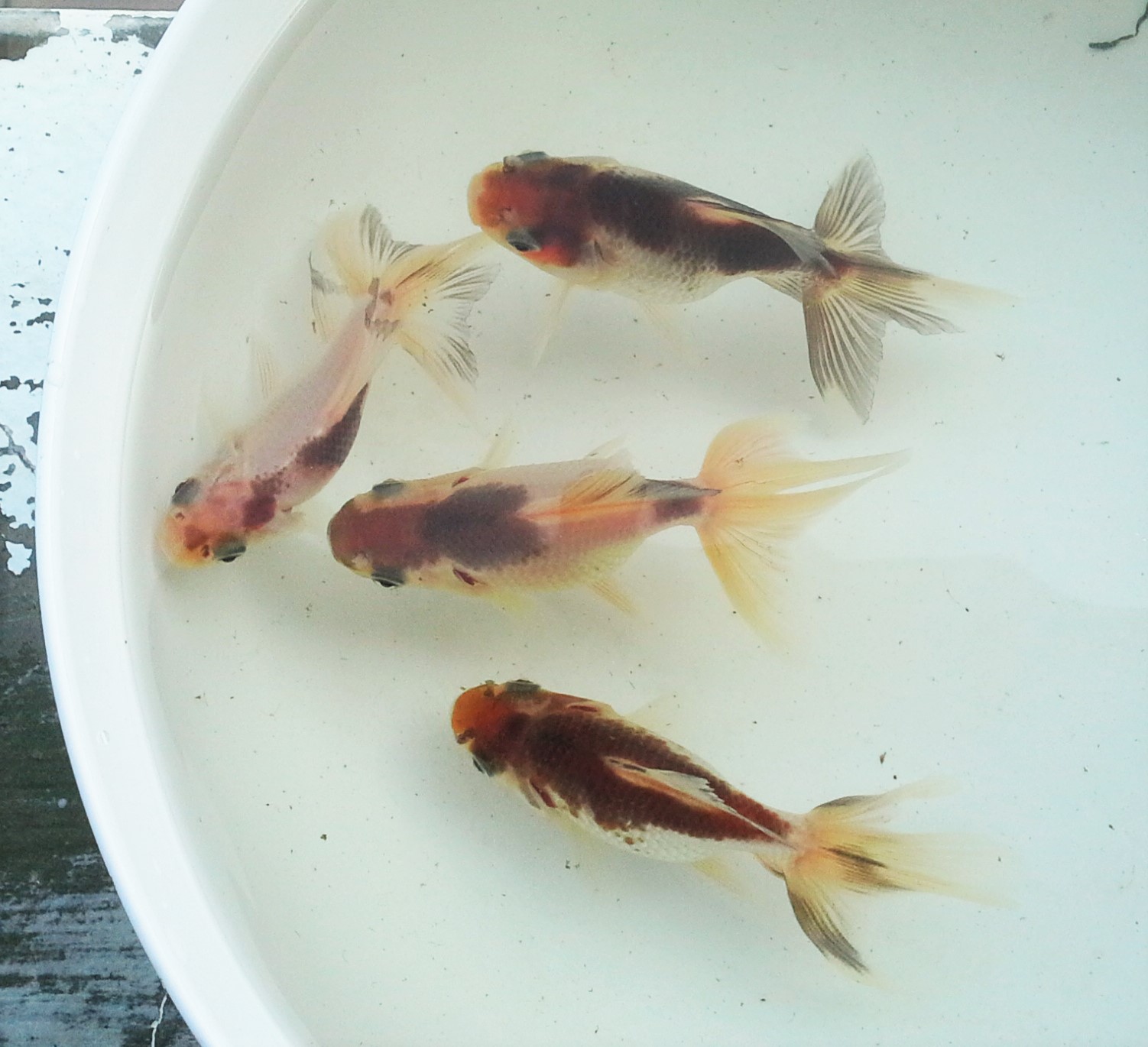
20151209_061256 (2)

20151209_061251 (2)

First, I am glad that I do not need to rely on my 3rd category that do not spawn till now. I can still get chocolate-white combination from the panda pair.

Second, let me make clear of the relationship between purple and chocolate-white. For the start, it is better to understand that there are three color involved here: blue, chocolate and purple. Shishan Chen has discussed the difference between them. It involves the black pigmen, the red pigmen, their combination and distribution. Though I do really want to understand more about it and what involves that create the difference between blue and black, chocolate and red, they are not really my stuffs. (I am too stupid for that.) It is enough for me to know that purple is a color between blue and chocolate.

It is also important to understand that there are β€œbase” color in goldfish. I have never read about this. This is my own terminology, that will need help from friends who understand more. This β€œbase” color is what makes the difference betwen black and blue, and between chocolate pompom and purple. Let me explain. In the case of black and blue, we know that differences happen in the melanin pigment. Black ranchu has melanin pigment, so also blue ranchu. But somehow, that same pigment behaves differently in those two. One factor is the different pigment distribution. Is it the only factor involved? I do not think so. But I cannot say anymore about this. There is a second important differentiation between the black and blue, and I want to draw the attention to this. Their β€œbase” color is different. In black ranchu, if the black color fades, we will see an orange color. That is what I mean by base color. Even in Thai black ranchu where the black color does not fade, if we try to scratch the black skin, we will see the orange color underneath the black coat. But in blue color, if the black (or blue) pigment fades, what we will see is white color. So, this is the base color of blue fish. In black ranchu, as the melanin fades, we will have black-gold color (or black-orange), while in blue ranchu, as the melanin fades, we will have black-white color (or panda). So, the base color is different.

The relationship between chocolate pompom and purple pompom has something to do with this β€œbase” color. The base color of chocolate pompom is orange. That’s why, when the chocolate color fades, we will see the orange as the base color. The fish can turn into chocolate-orange,or totally orange fish. We witness the same behavior with black and black-gold fish. In purple goldfish, the base is not orange, but white! So, when the purplish color fades, the fish will have purple-white color combination. And in this kind of combination, the purple color will be more intense, the pigmen distribution will be thicker, and the purple will look like chocolate. That is why I call the purple-white color combination as the chocolate-white. It is the same case with panda, where the blue-white combination is called black-white since the blue is getting thicker and looking like black.

This answers my second point, that is about the relationship between purple and chocolate-white. When the purple color does not fade, the fish will stay purplish. When the purple fades, the fish will become chocolate-white, and some will even turn into totally white.

Third, there seems to be several spectrum of chocolate color in the chocolate-white combination. I am still not sure about this. I am not sure of whether they are worthy to be identified separately.

Fourth, the good news is, when I crossed chocolate pompom with chocolate pompom resulted from this project, the result is not 100 percent chocolate, either! There are purple color also! The same behavior I examined from crossing panda with panda from this project.

Fifth, I have not had chance to cross purple with purple, or purple-white with purple-white. If I do this, will the result yield several panda and chocolate also, or will they be 100 percent purple and purple-white?

Sixth, it will be nice to create purple-white ranchu! A project that is enough to occupy my time for several years ahead!


Standard
Purple goldfish

Update on purple goldfish, September 16th, 2015

Telescope eyes occur in my breed once and a while, though I have never intended to breed them. These three telescope eyes are from one batch, from the same parent, yet they differ widely in their color. The left one is a panda. The middle one is the purple goldfish – I think it is still rare, and perhaps the only one in Indonesia currently. Hopefully this pose highlights the purple color from the rest. The right one is the chocolate with some beautiful stain of orange, also a rarity, I think. Enjoy,

colorful telescopes

Standard
Purple goldfish

What color is this?

This is the most unique color I find in this purple goldfish project. It started as purple fish. But then it develops white coloration. The purple color becomes darker, to make it look like light brown. I do not know what to call this combination. Purple and white? Chocolate and white? It surely looks like brown magpie bird to me.

20150723_072508(2)

20150723_072449(1)

Many of the purple develop the white color, but most turn into totally white. So, I guess the behavior of this pattern is basically similar to the panda. That means there is a room for stabilizing the pattern through selective breeding.

unfortunately, there is only one with this kind of pattern. I hope the pattern will stay, though it is very probable that it will fade. And the purple goldfish is always the smaller compared to the blue and brown in the same batch.

My plan is to strengthen this pattern and multiply them in the form of pompom goldfish. Next, I would like to develop ranchu in this pattern. Wish me the best πŸ™‚

Standard
Purple goldfish

Purple, really?

My last attempt in Nov 2014 to cross bluegoldfish and chocolate one resulted on one purplish goldfish in the second generation. I was so excited to see it grow. Unfortunately it died early, taking away all my hope with it. Then there was also a problem with my facilities which required a couple of months to repair. My breeding activity was halted.

But now, things are settled, and I can resume my breeding activity. I try to cross parents again. Just for reminder, the parents are the F1 of blue x chocolate. It must be admitted that the purple is always a minority in the offspring. But this time, instead of one, I get about 10 purple! What a joy!

DSCN1562(2)

To see the variation of color, I take this picture this morning. The fish in the top position is the blue. Three fishes in the middle are the purple. E one in the bottom left is the grey/green/wild color. The bottom right one is the chocolate. Hopefully you can see their color differentiation.

the purple is what Shishan Chen in his writing reported as the intermediate color between blue and chocolate yet distinguishable from the two. Some other ancient books labeled it as purple, and I will use that name for this particular color.

Three of the purple fishes have turned into white, perhaps due to the warm temperature of my tub. Hopefully not all of them turn white. But this shows that the purple have the capacity to become purple and white, which might be interesting. I do not know yet how it looks like.

Well, hopefully everything is allright, and we can see the mature result of the purple goldfish. After that, I think I will aim at creating purple ranchu.

Standard
Chocolate Ranchu

Chocolate Ranchu updates Dec 25th

chocolate ranchu

This is the F2 of the chocolate ranchu project. I am glad to see this fish, since it is totally free from any trace of dorsal fin, and the chocolate color is present. In this F2, very few chocolate color occurs. Most of them have abominable traces of dorsal, and weak compared to the wild color ones. To find such a piece, though only one, is a joy to me.

In terms of shape, this one has a high hump, which must be tackled on though it is not so easy. Glad I have experienced this in my panda ranchu project. This hump might be the last thing to tackle.

The tail is a bit long. I do not worry about this. Crossing back to ranchu will eventually shorten the tail. But I think, as an excess, long tail chocolate ranchu with pom pom will be nice πŸ™‚

The pompom is also something to tackle on. Actually, I am not sure to retain this pom pom or not. According to standard, a ranchu should not have the pom pom. But it might indeed look nice in this chocolate breed. Well, let it be what it will be. I might not bother to tackle it.

From this point, I think to create a decent chocolate ranchu, I will need at least four more breeding step. This will mean 2 years at least. But the result of the 1st year might yield unique breeds saleable to collectors πŸ™‚

There are two worries. First, since there is only 1 fish, this project is in jeopardy if something happen to it. So, I have prepared the second batch for spare. Second, the chocolate color occurs so few in the batch. Fewer than the blue I create from a cross between blue and common color. Does this mean that the chocolate color behave differently genetically from the blue? If yes, then there might be some complication I have not yet understood. I hope there won’t be such complication.

Merry Christmas and Happy New Year

Standard