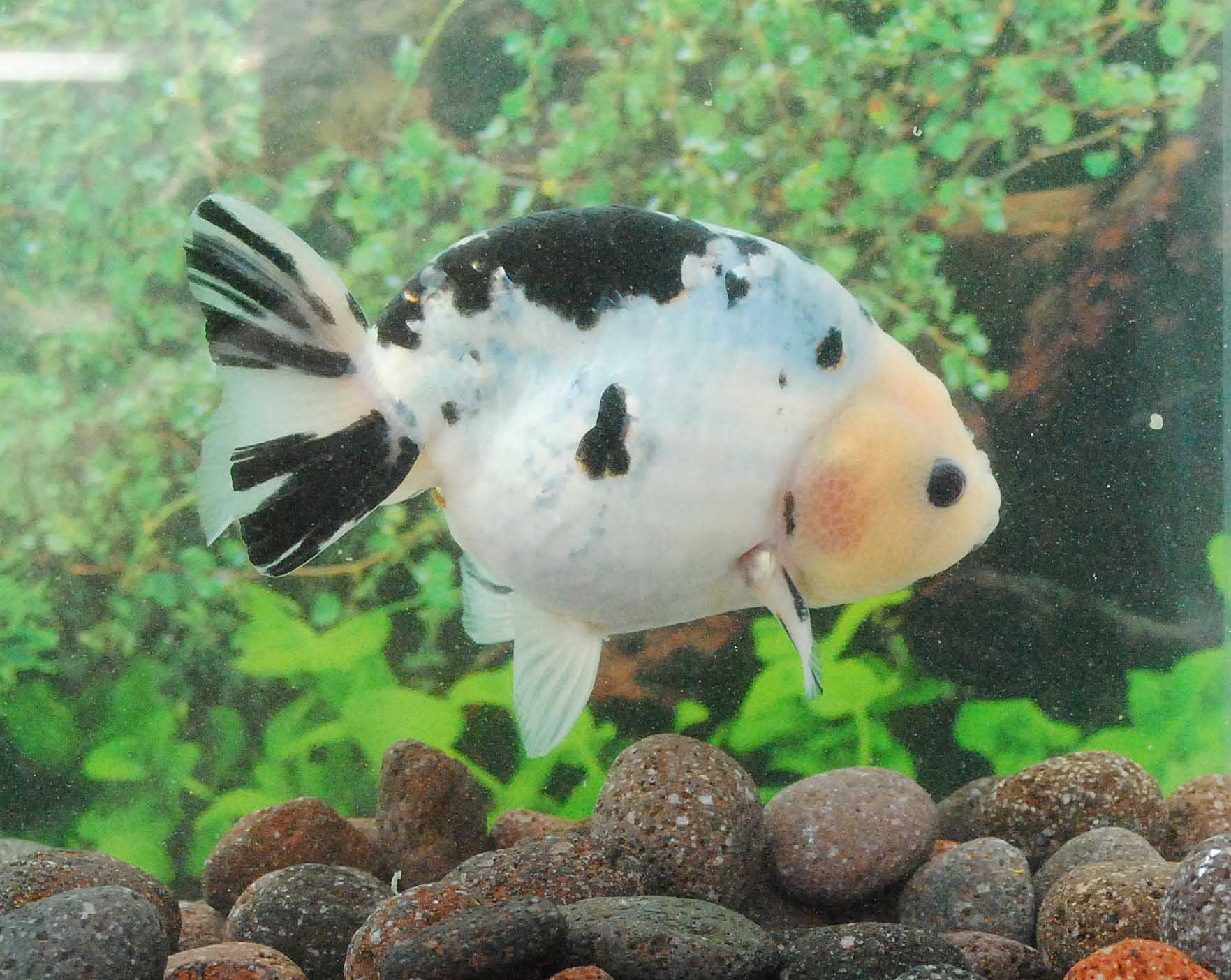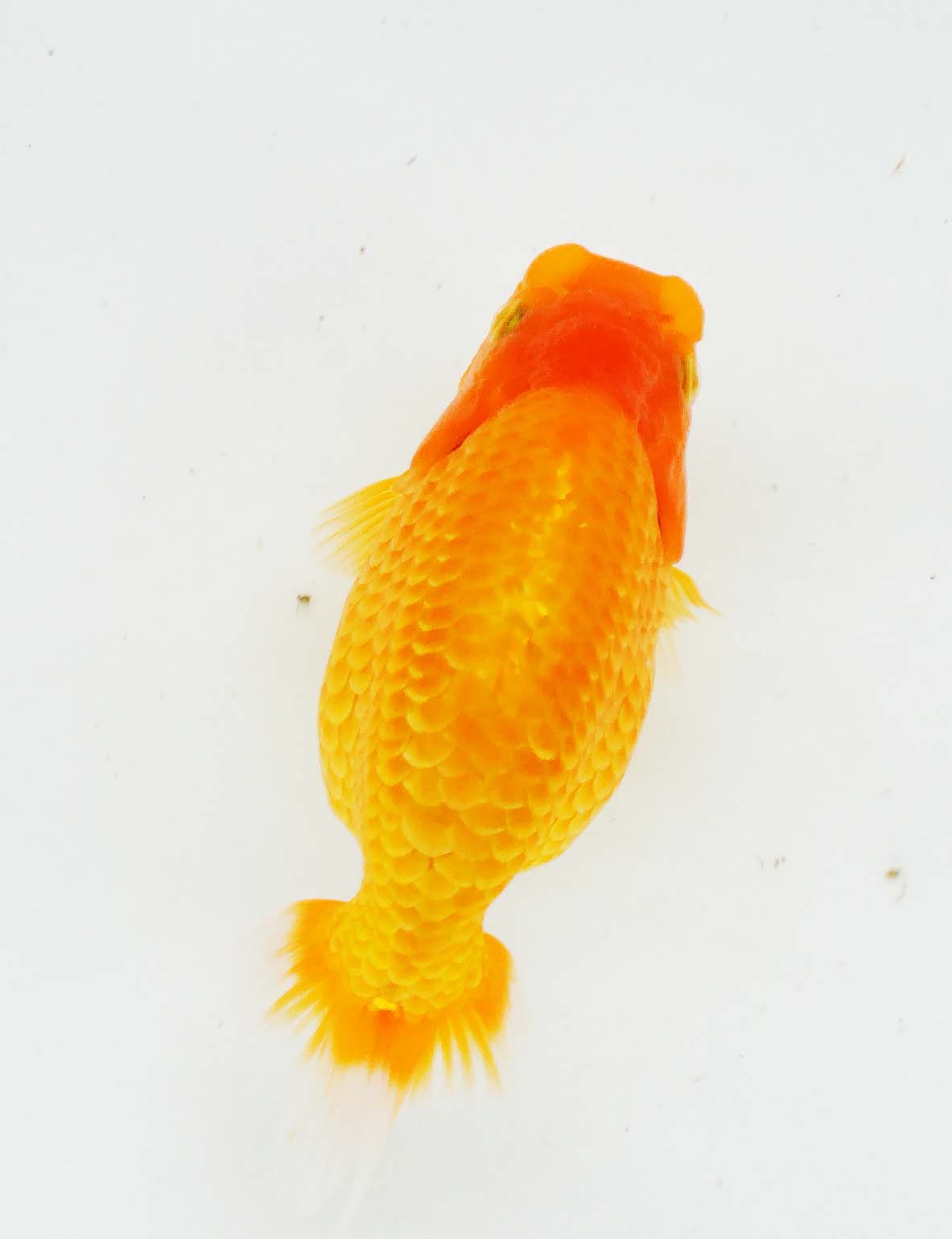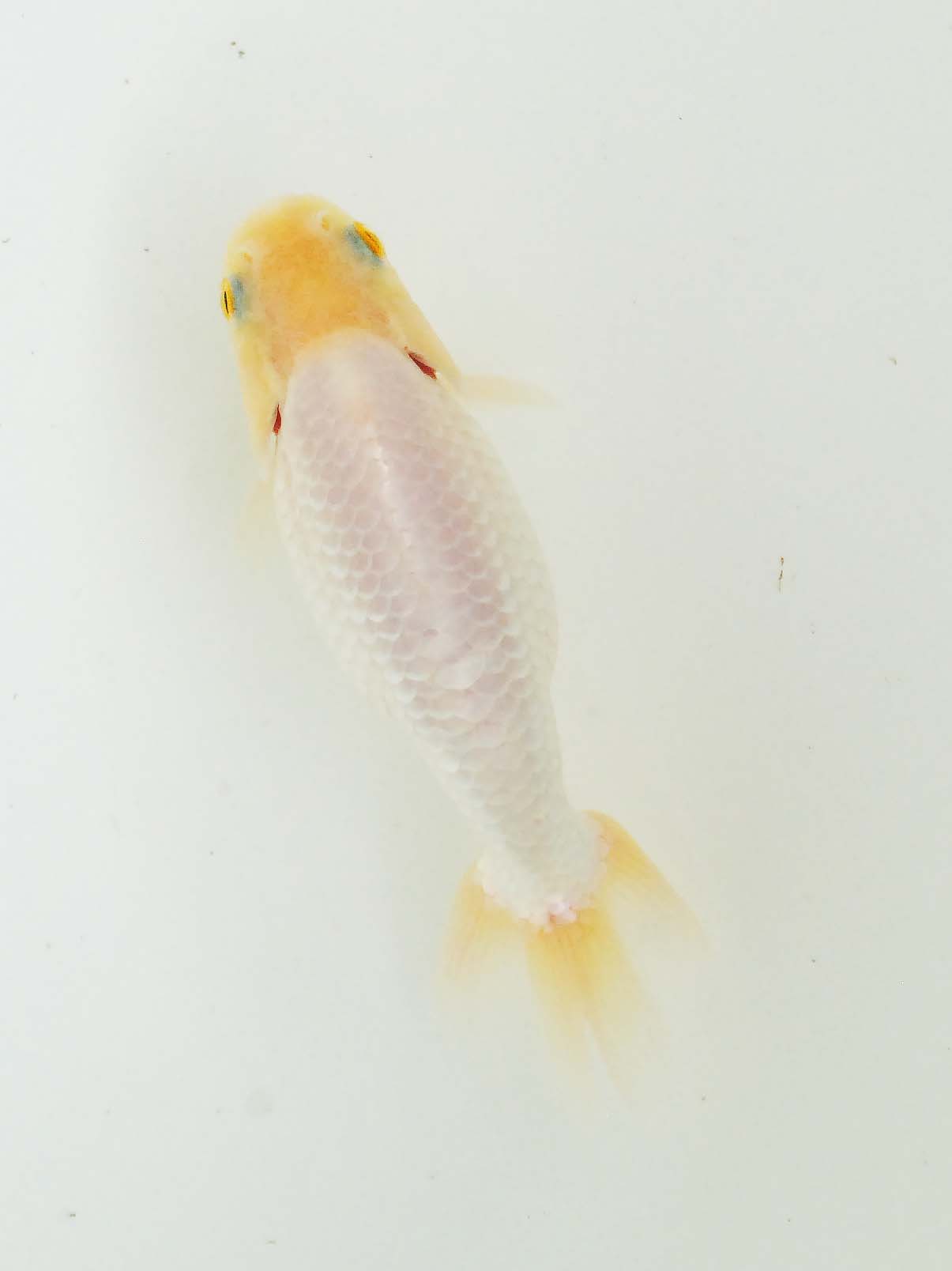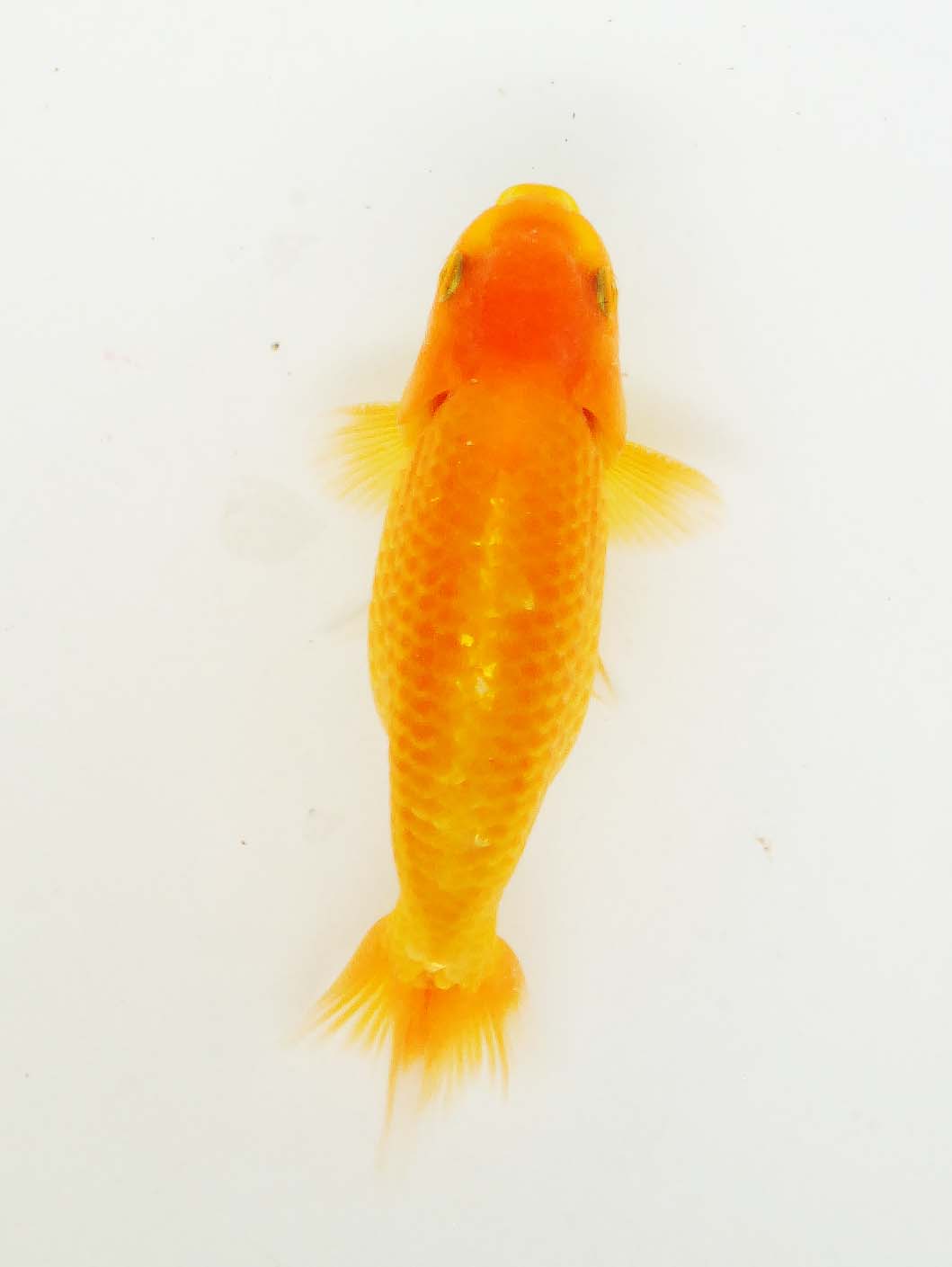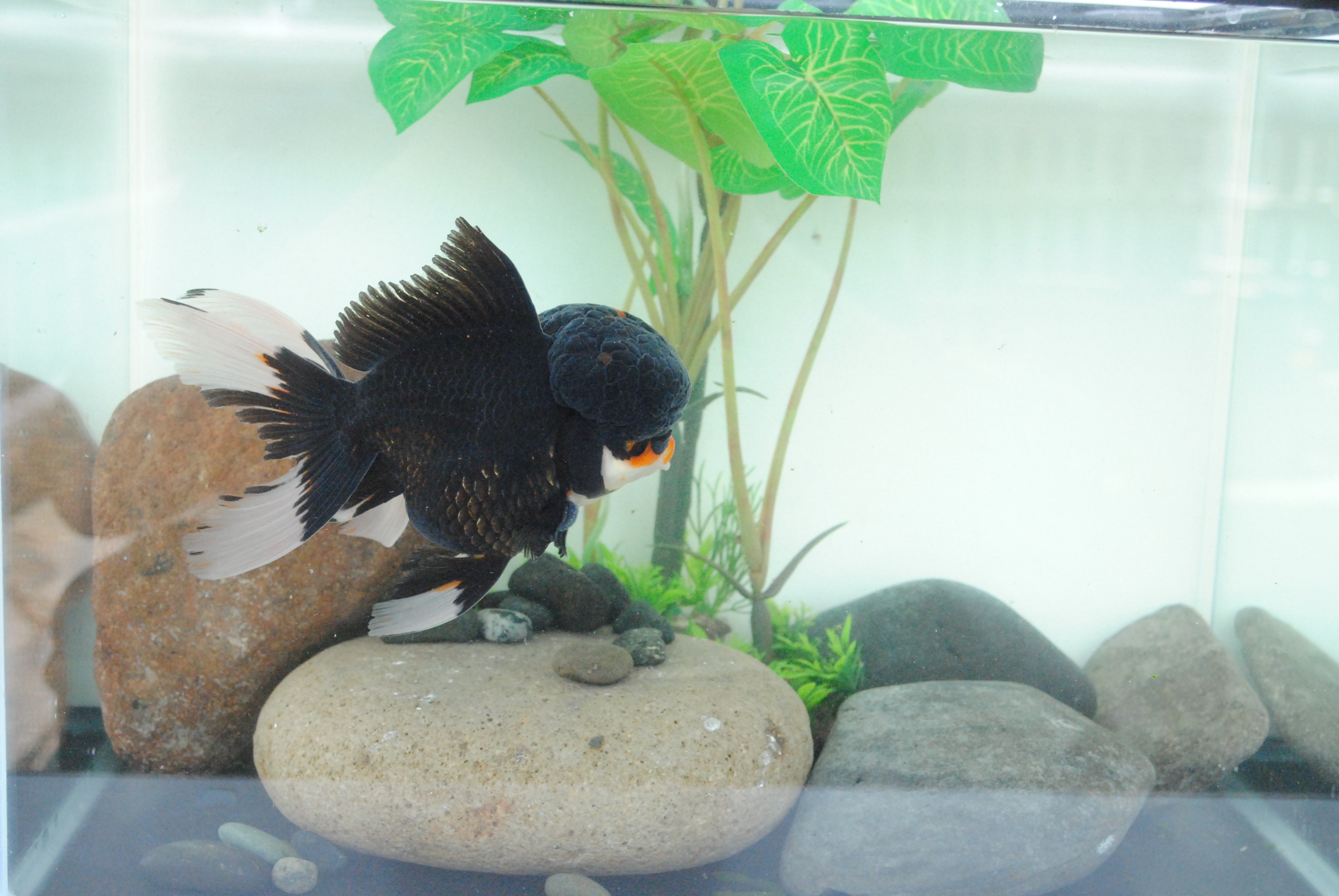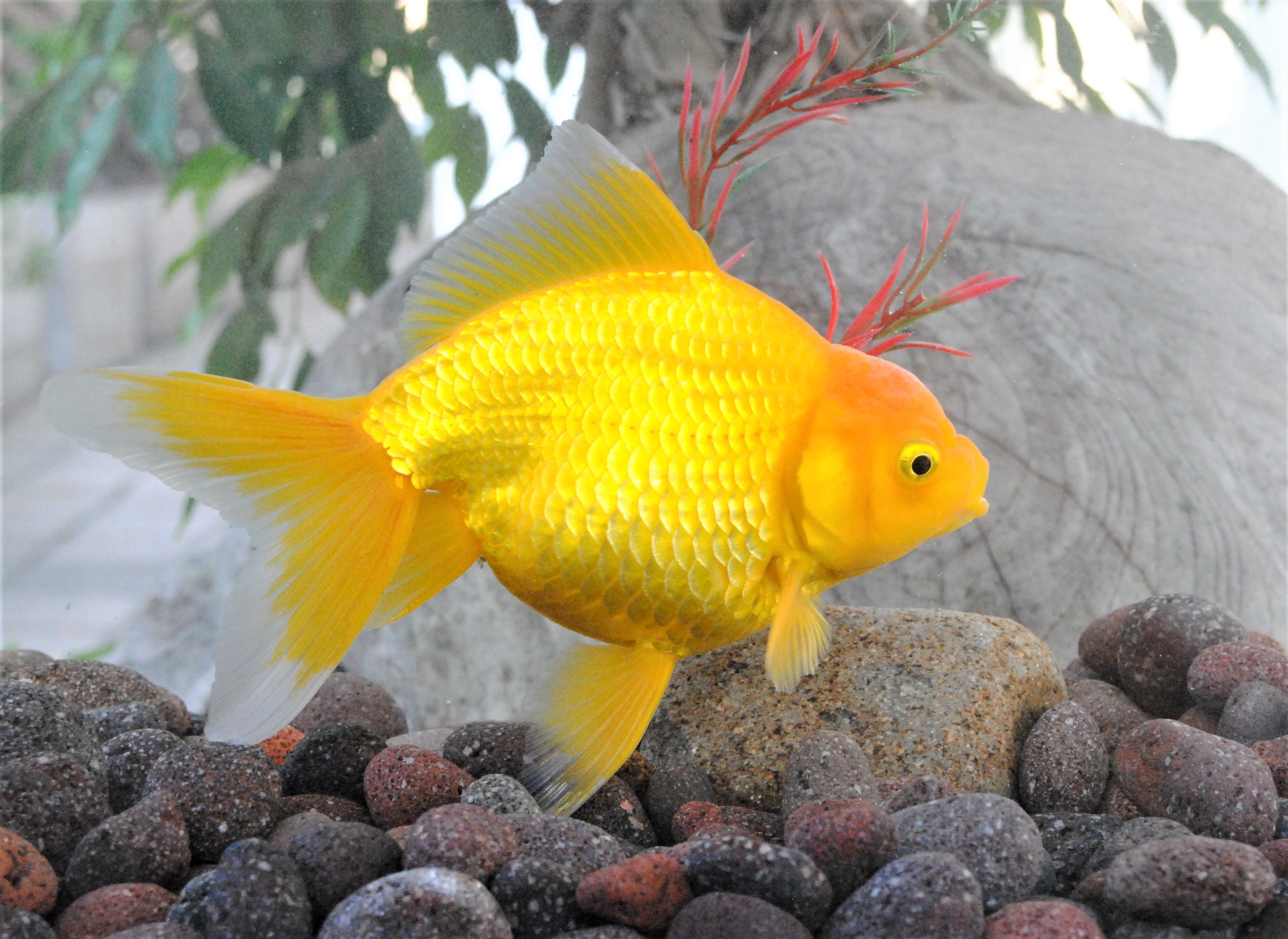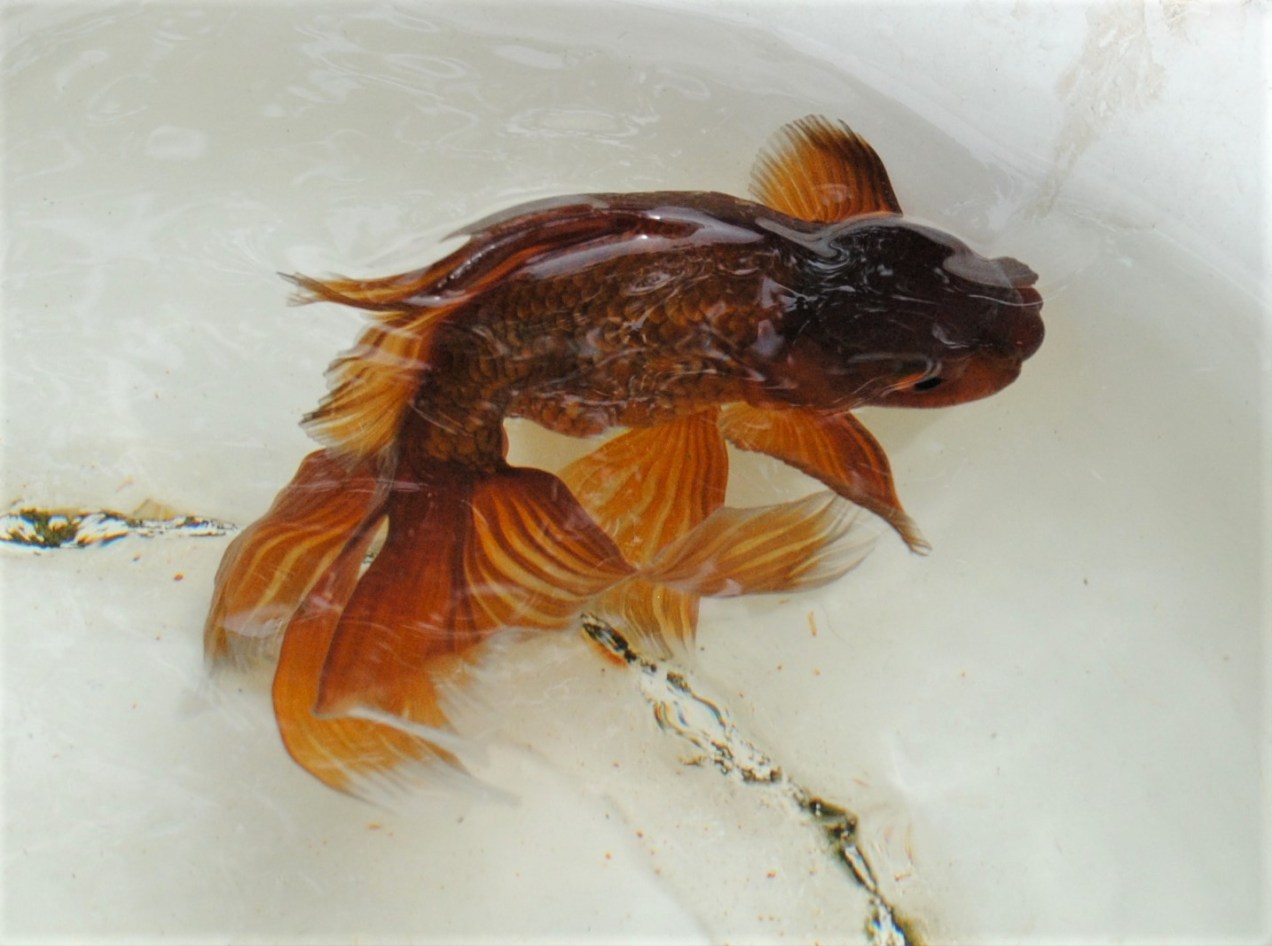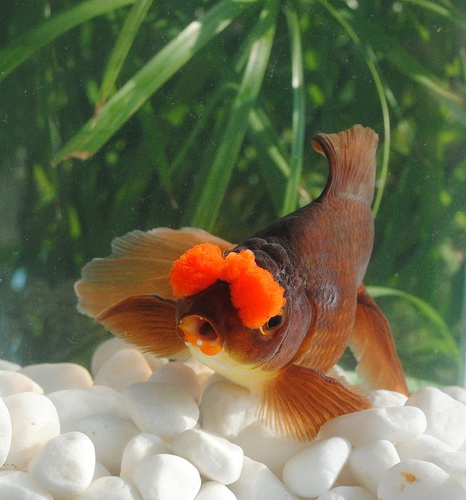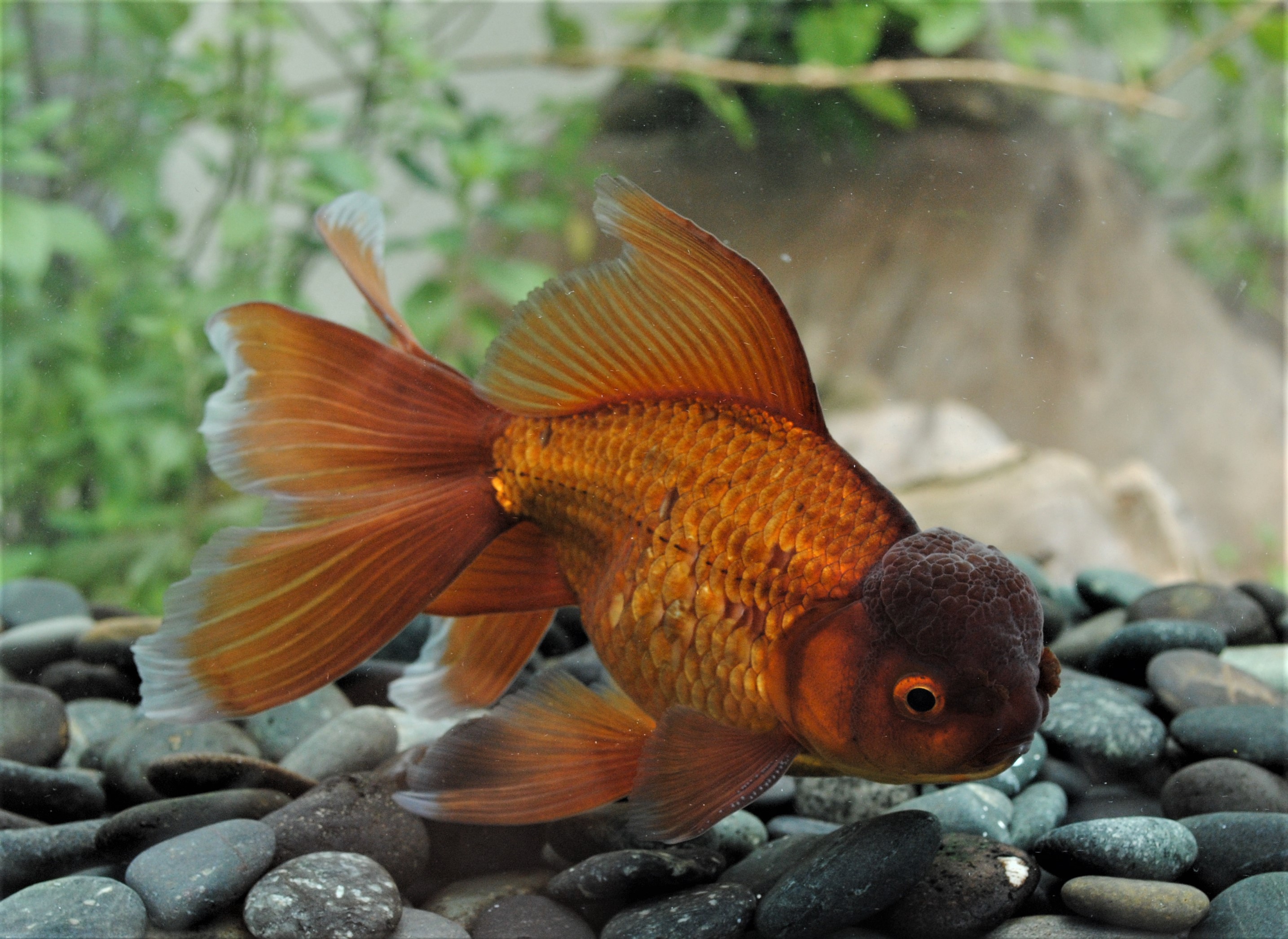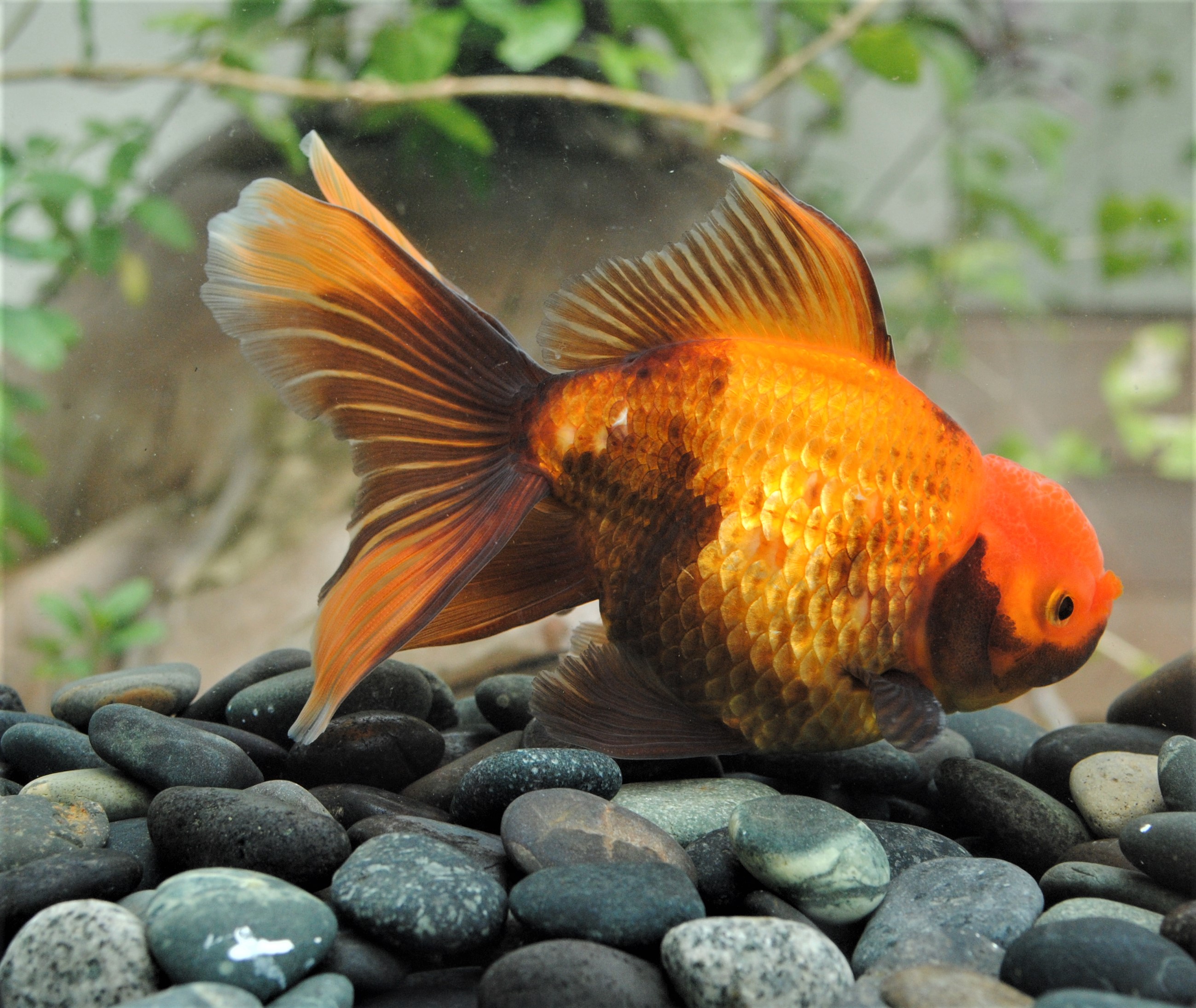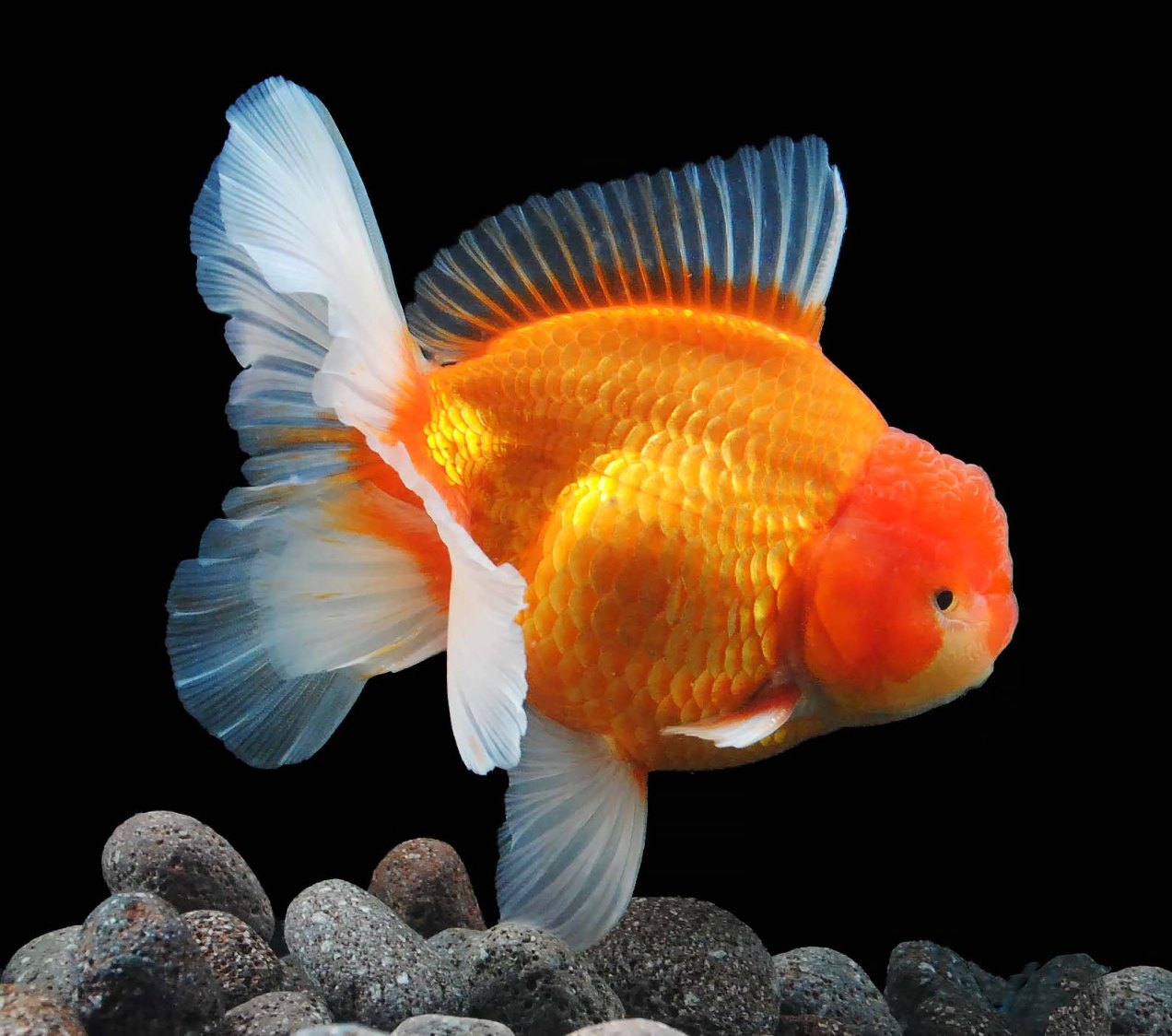
cow ranchu, Purple goldfish

Cow Projects 2020

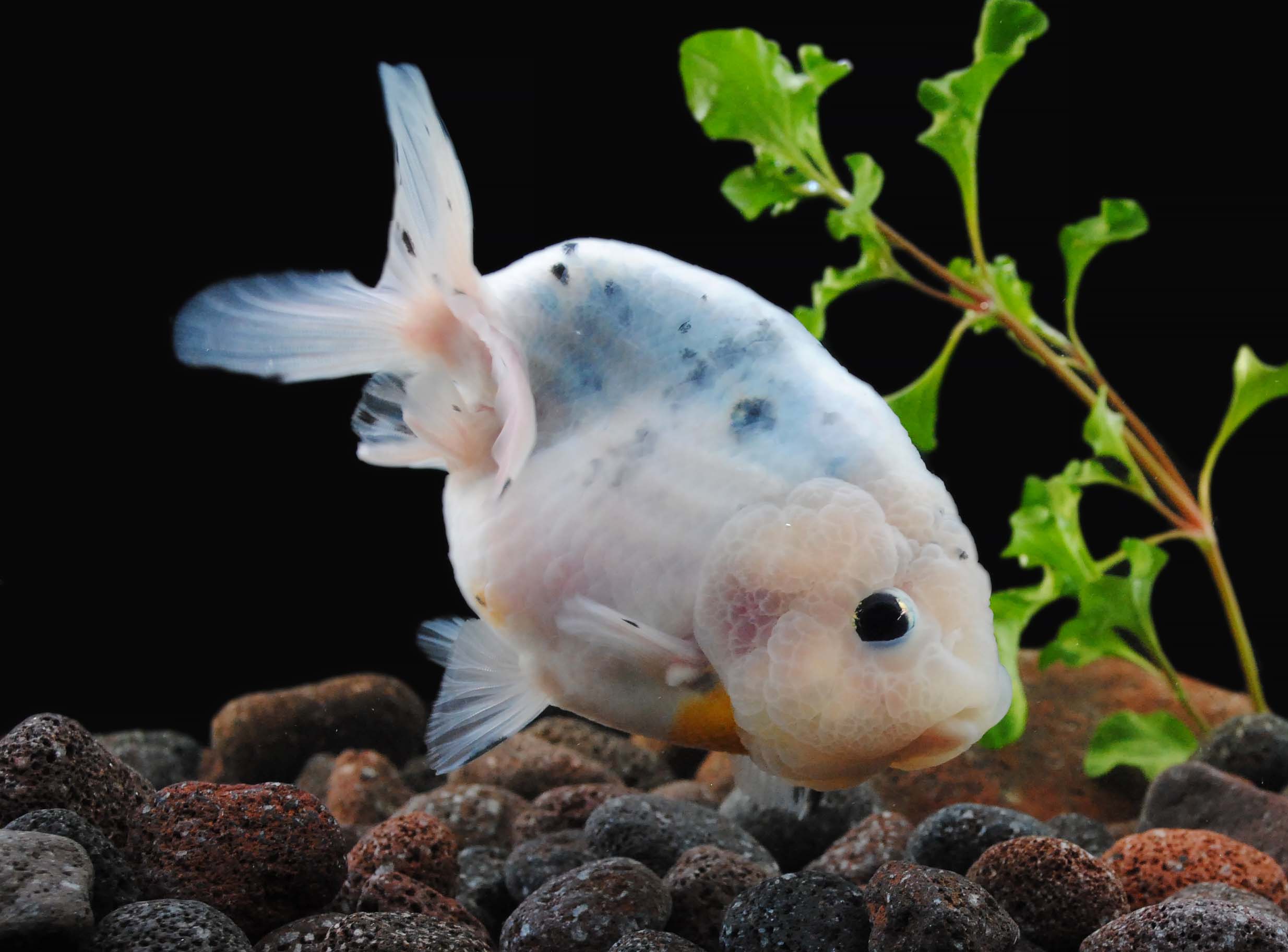
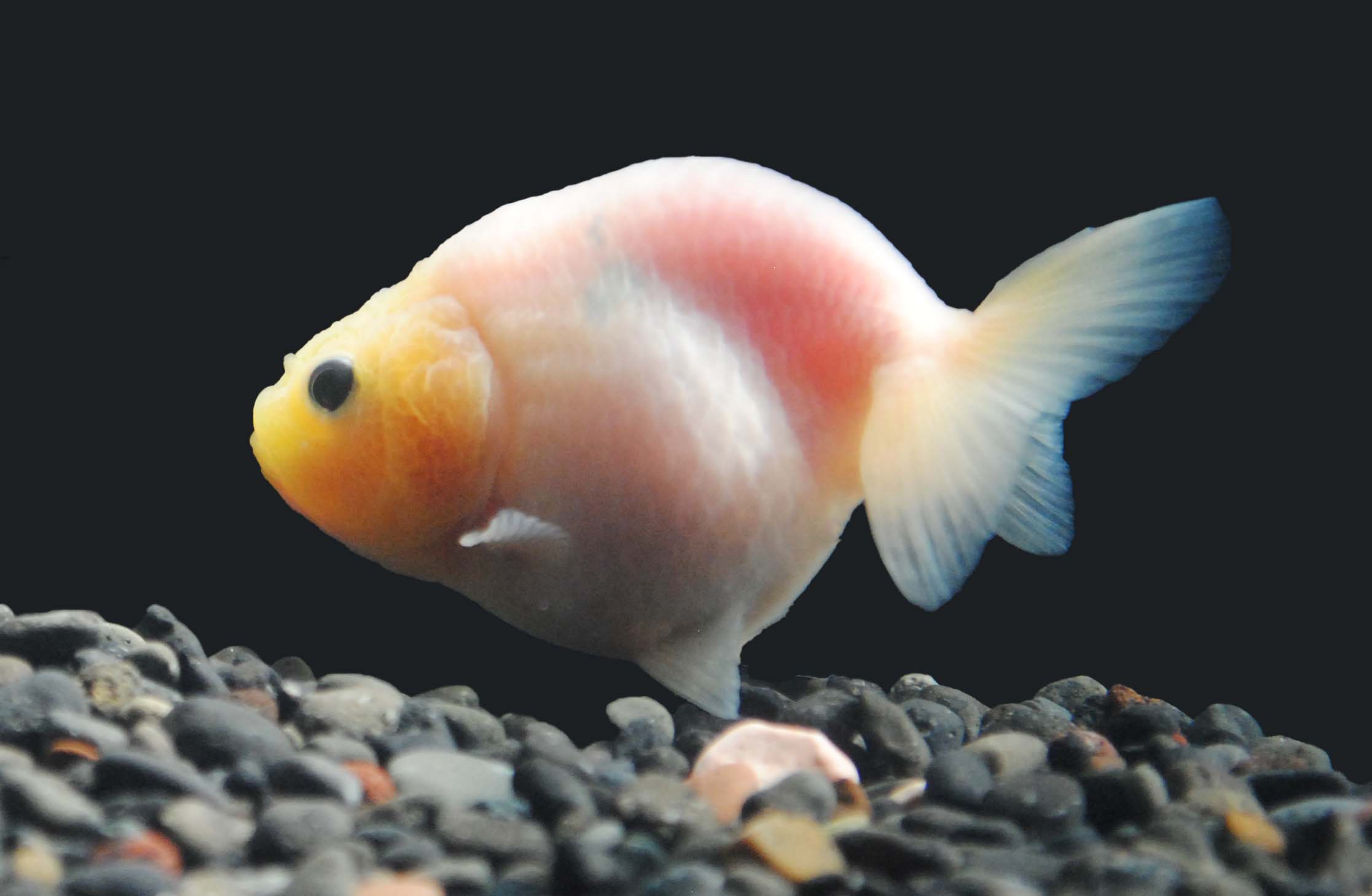
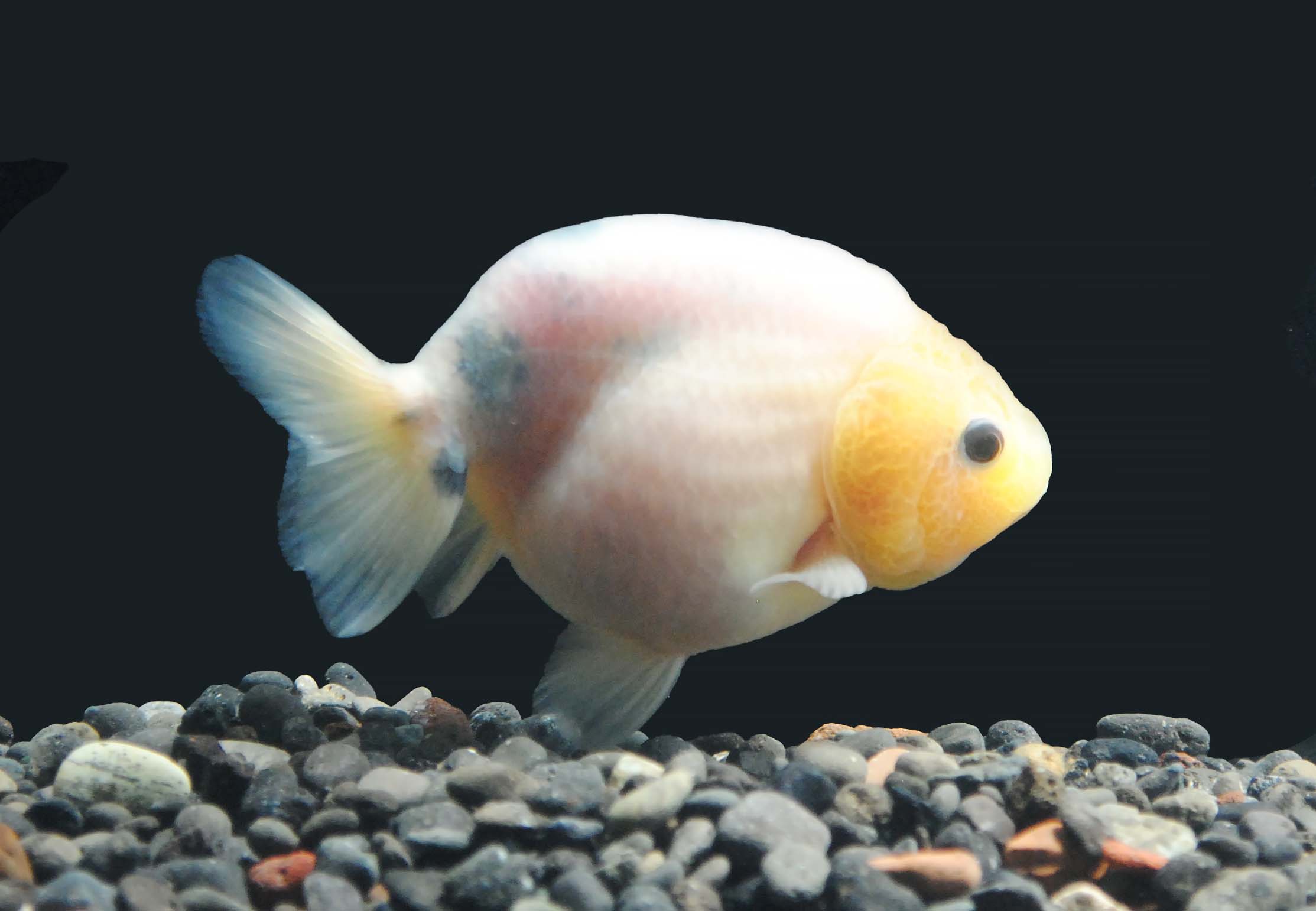
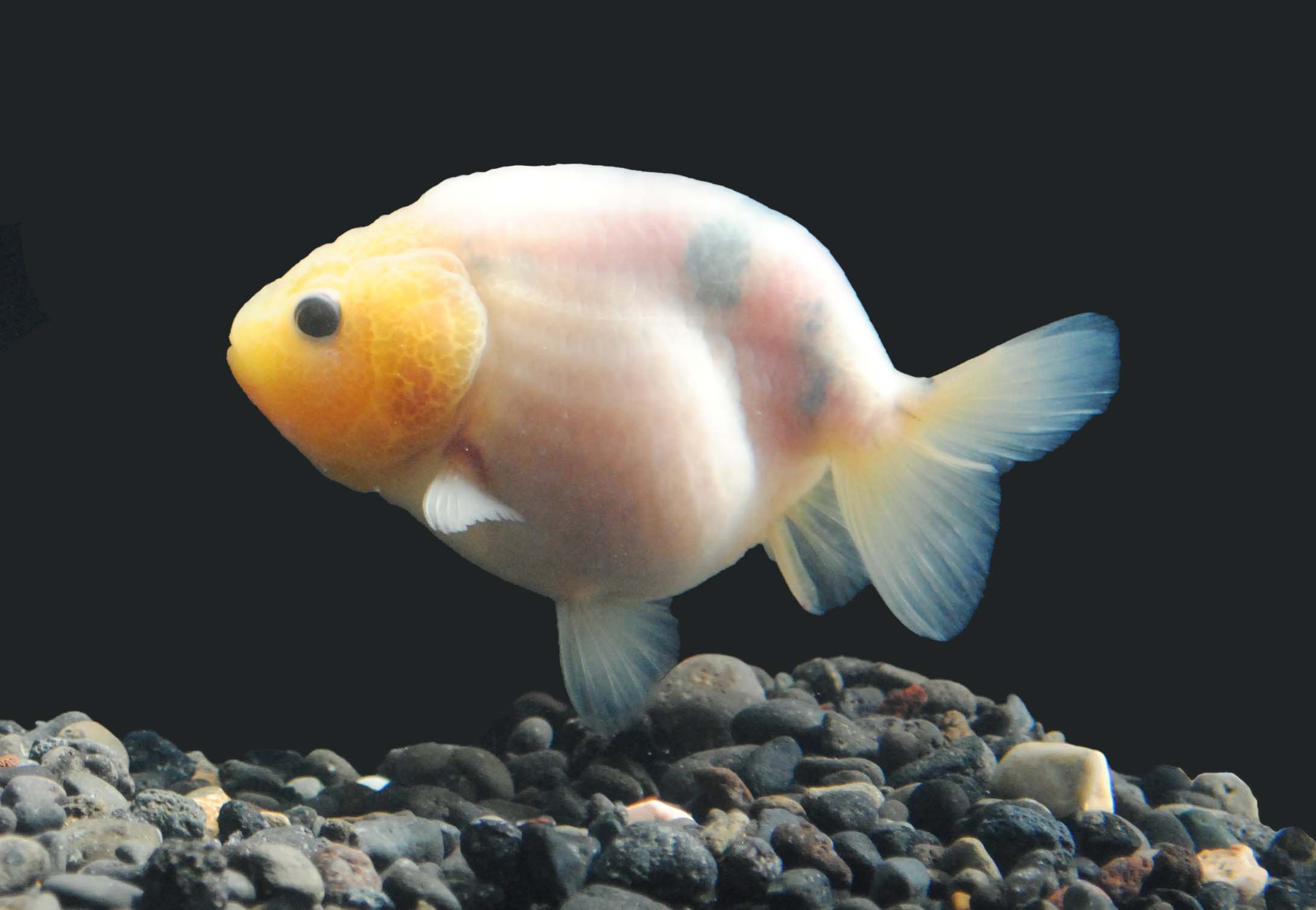
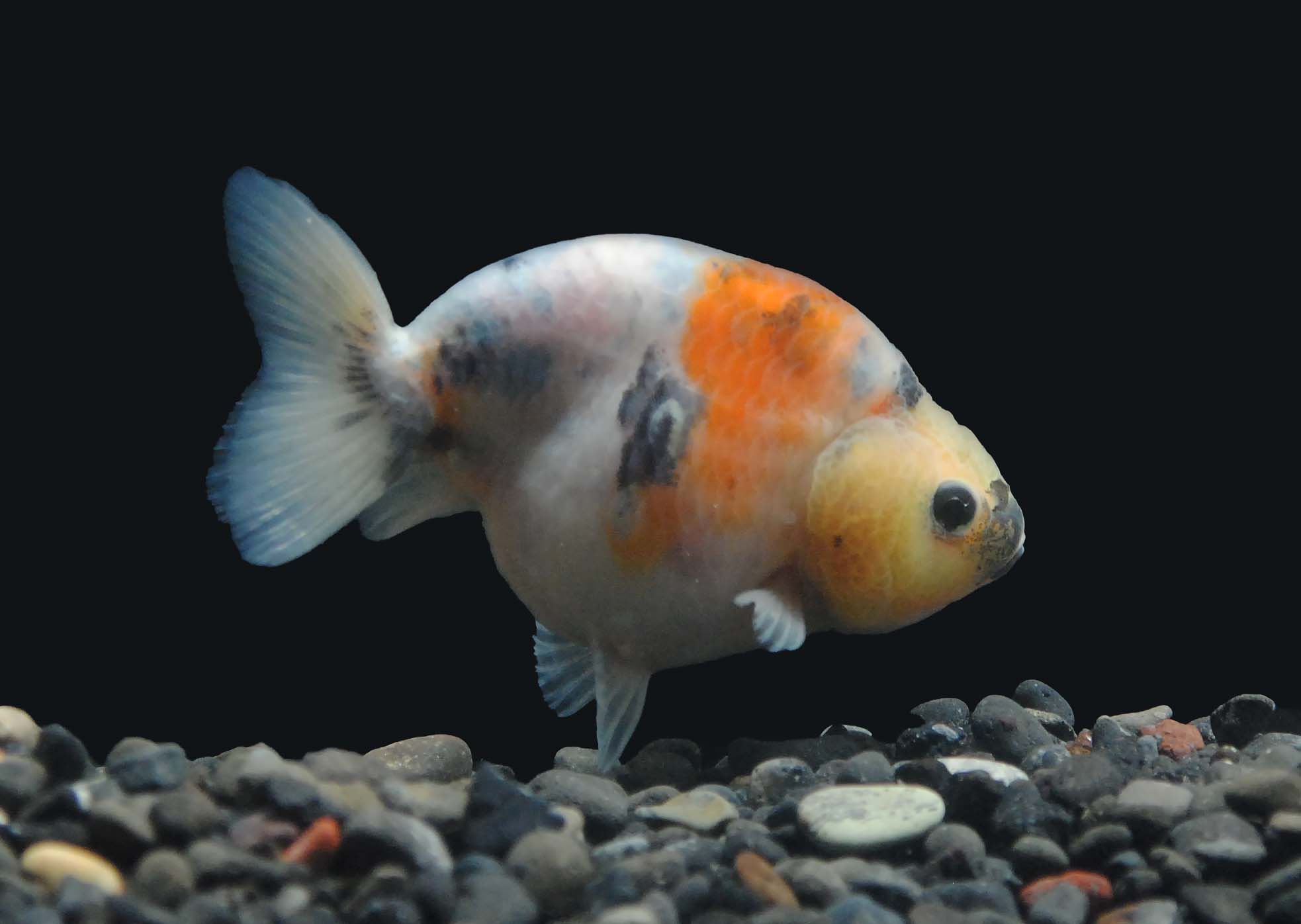
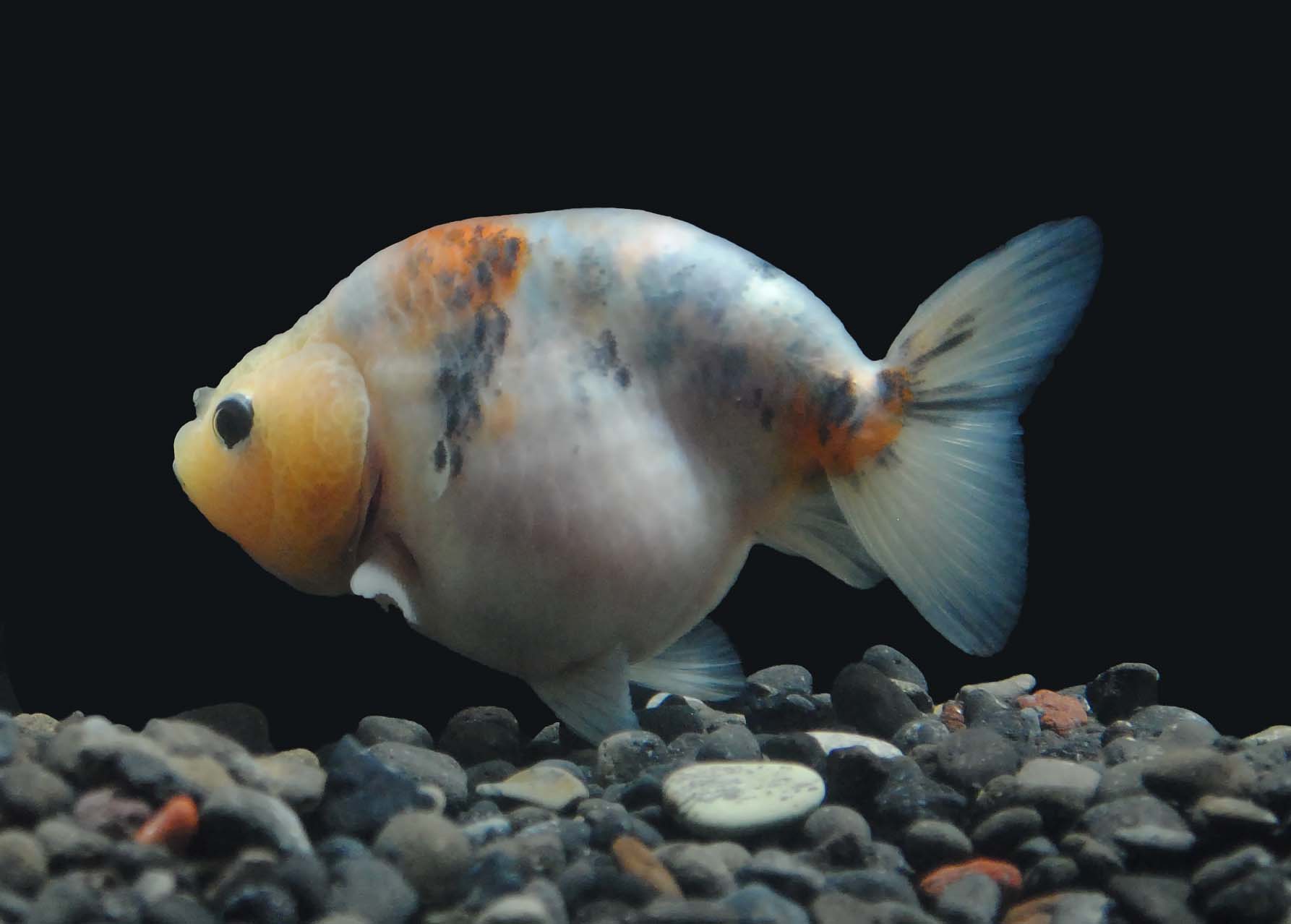
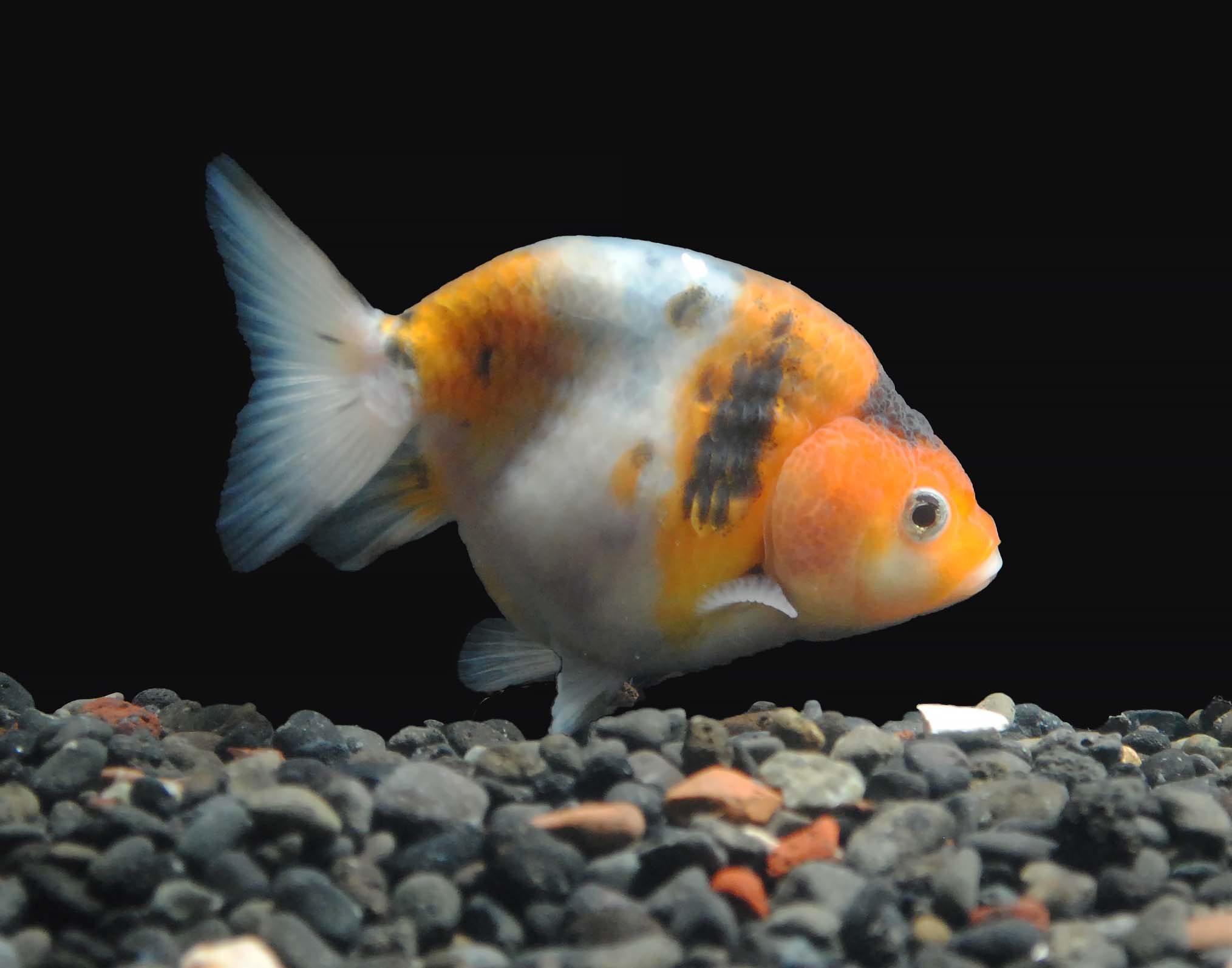
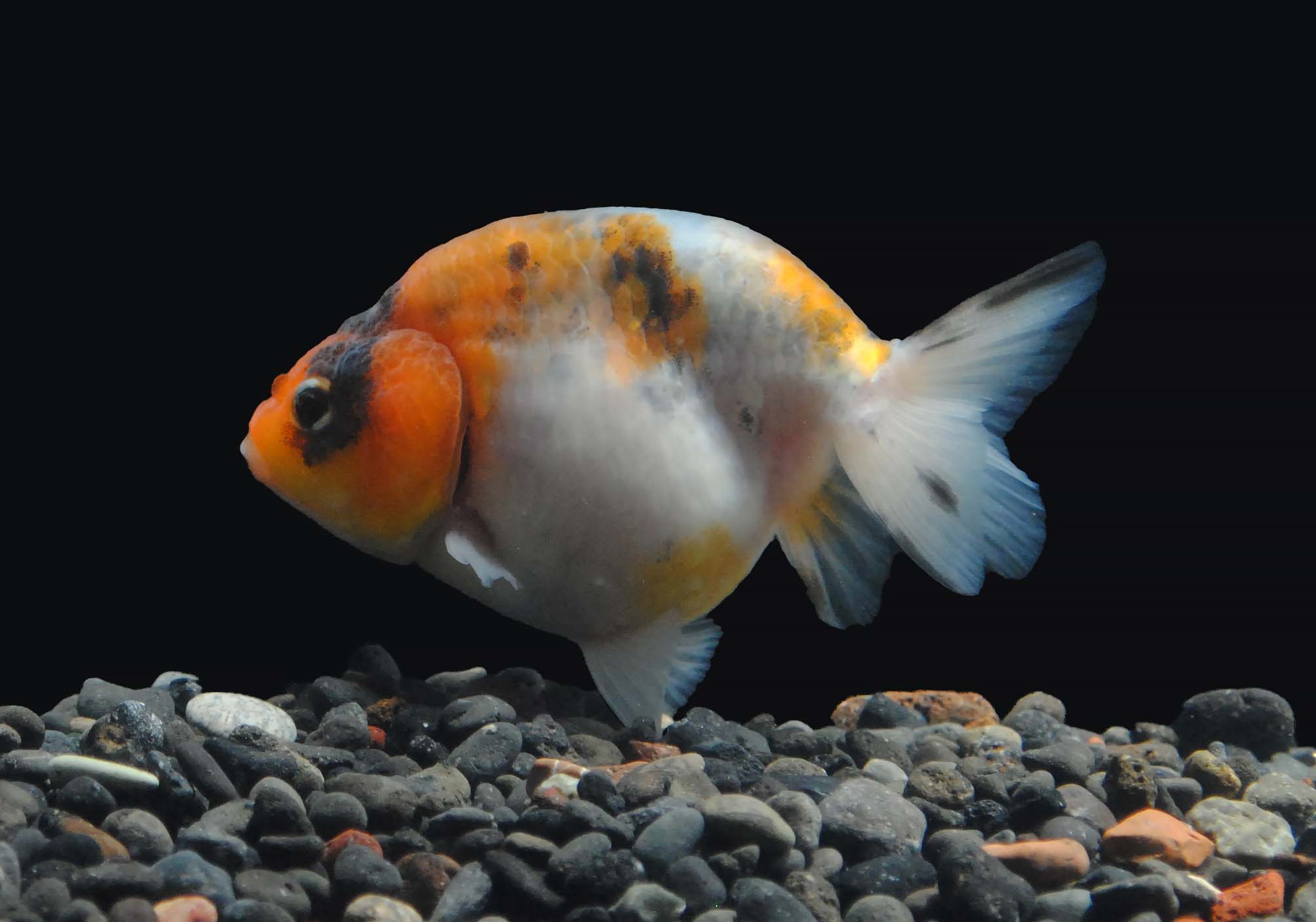
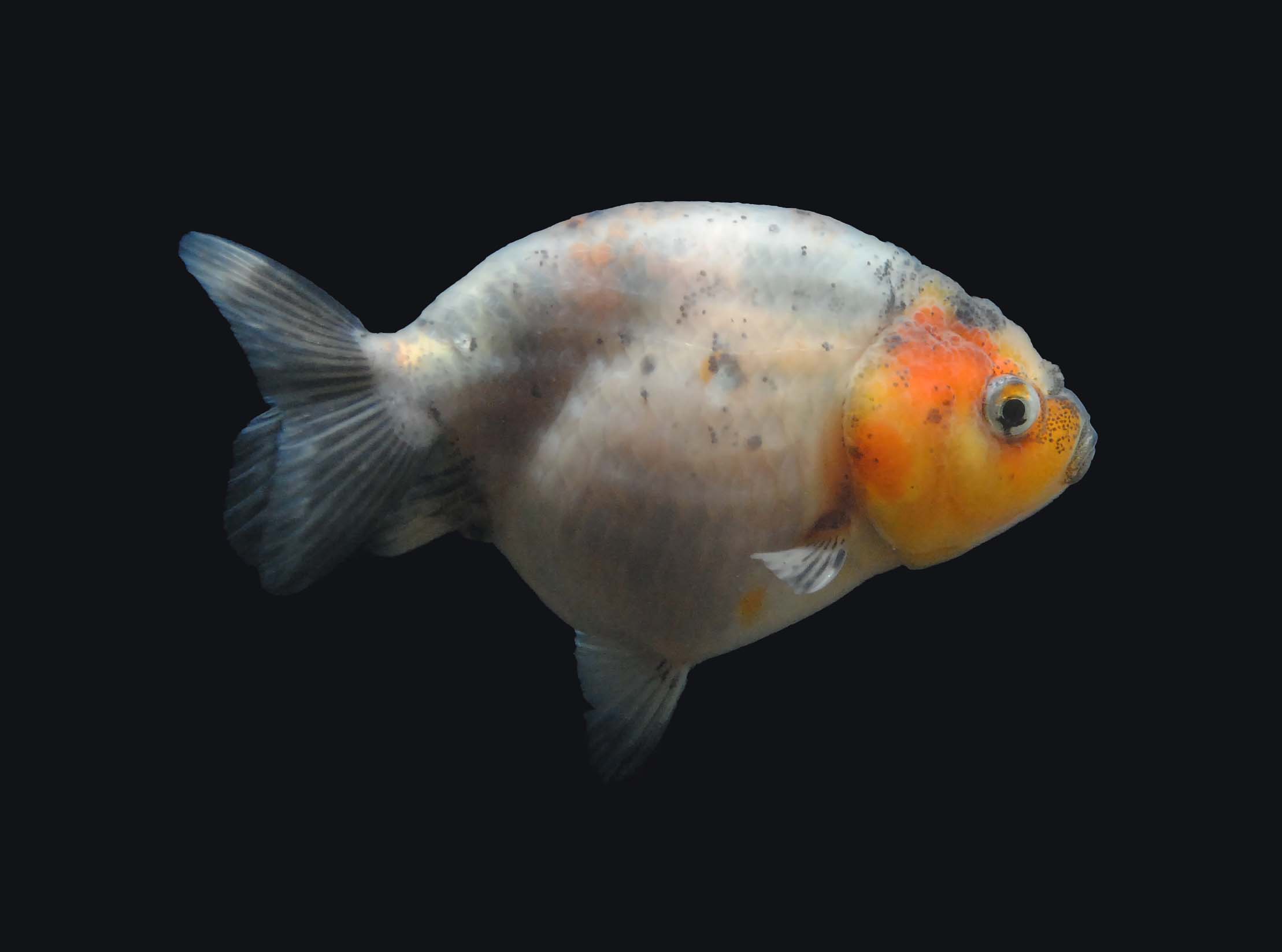
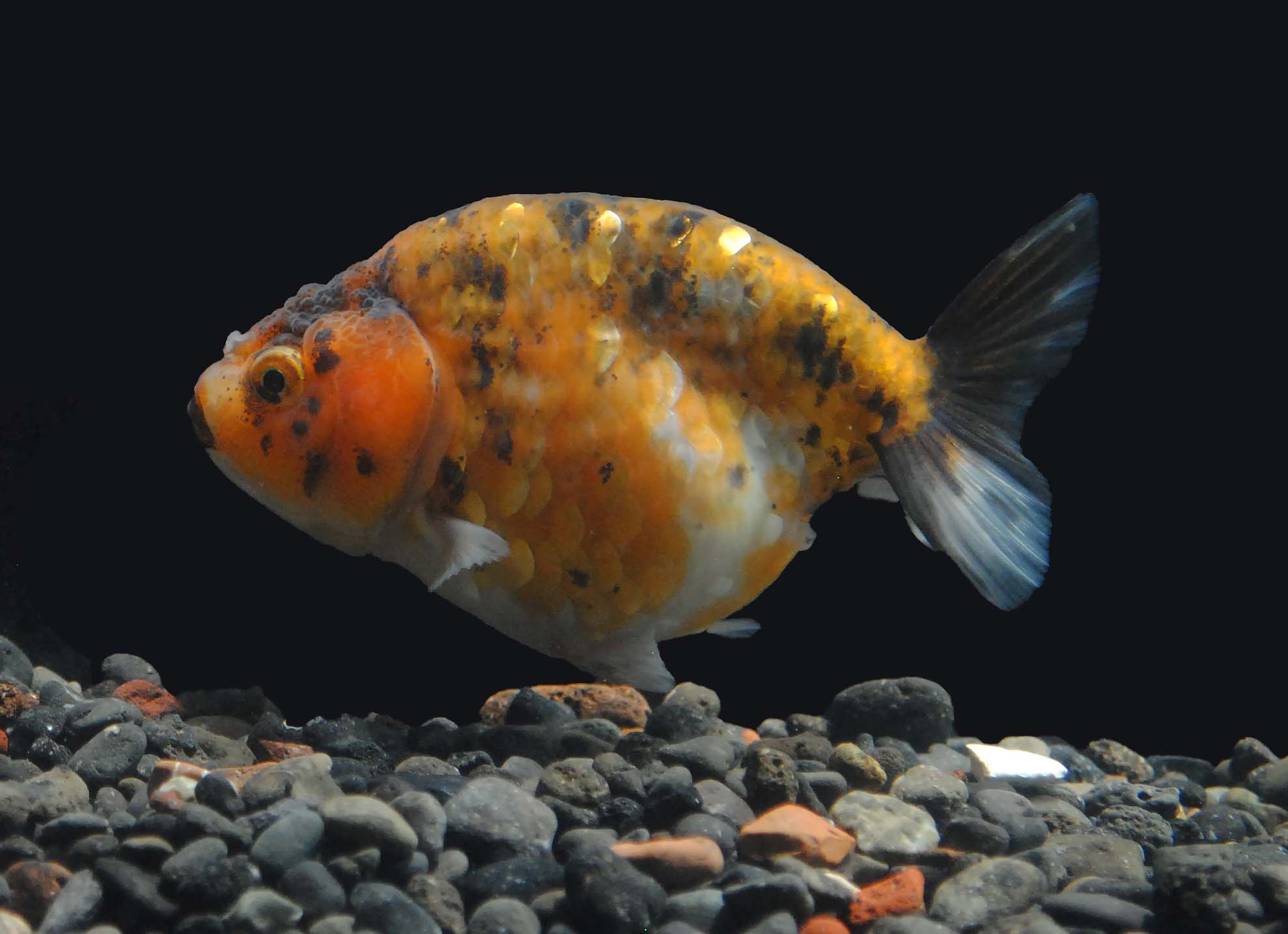
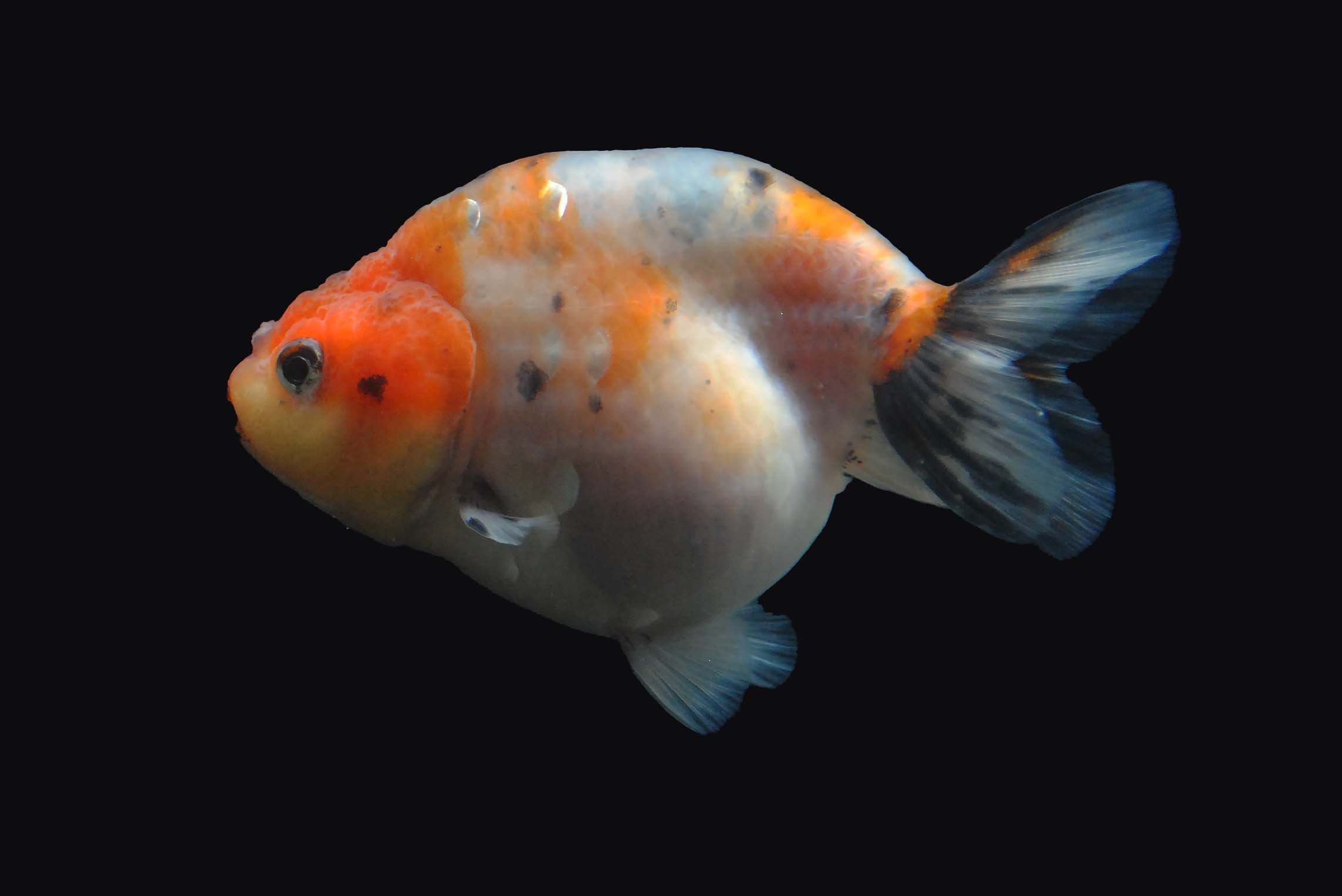
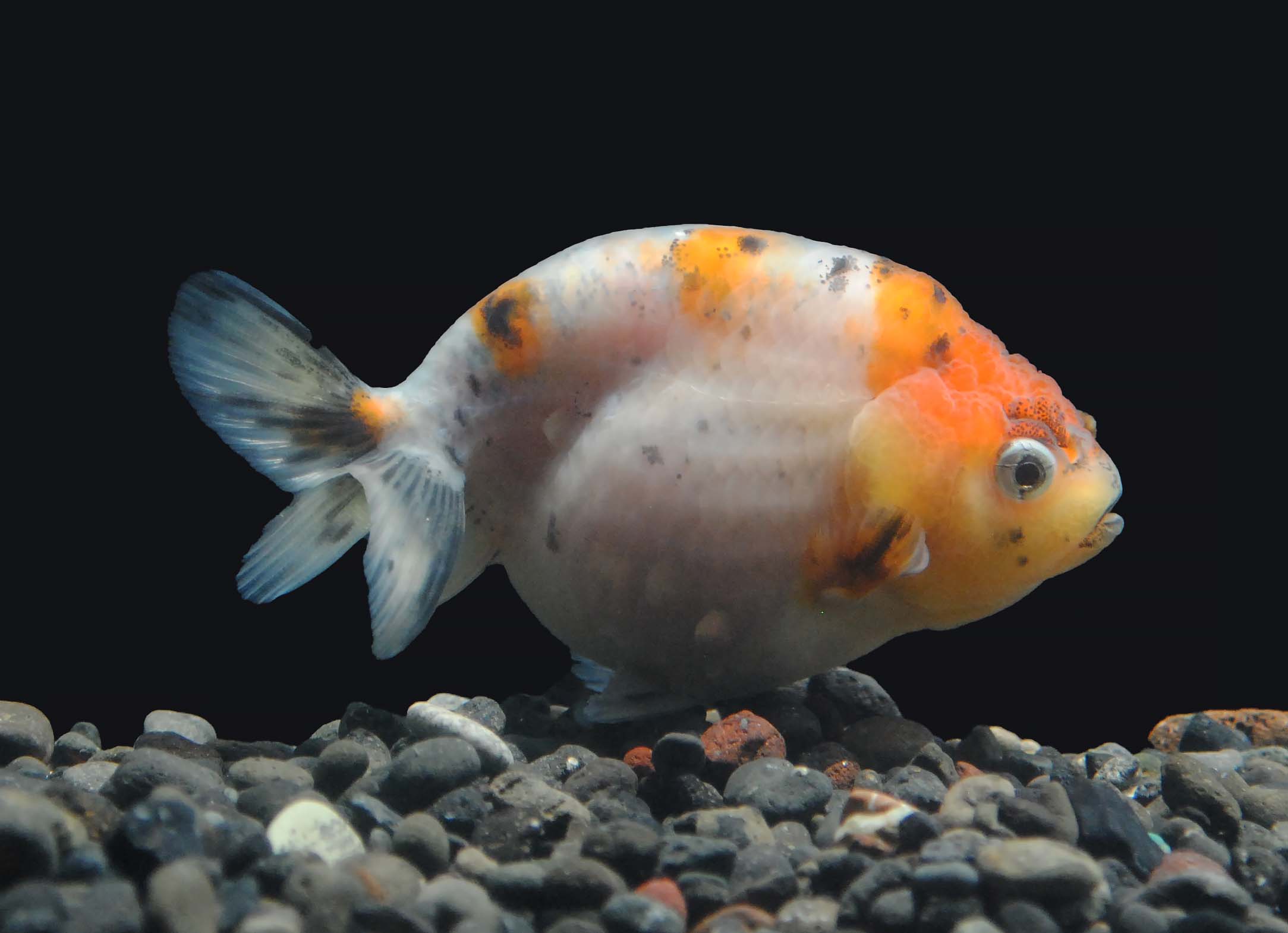
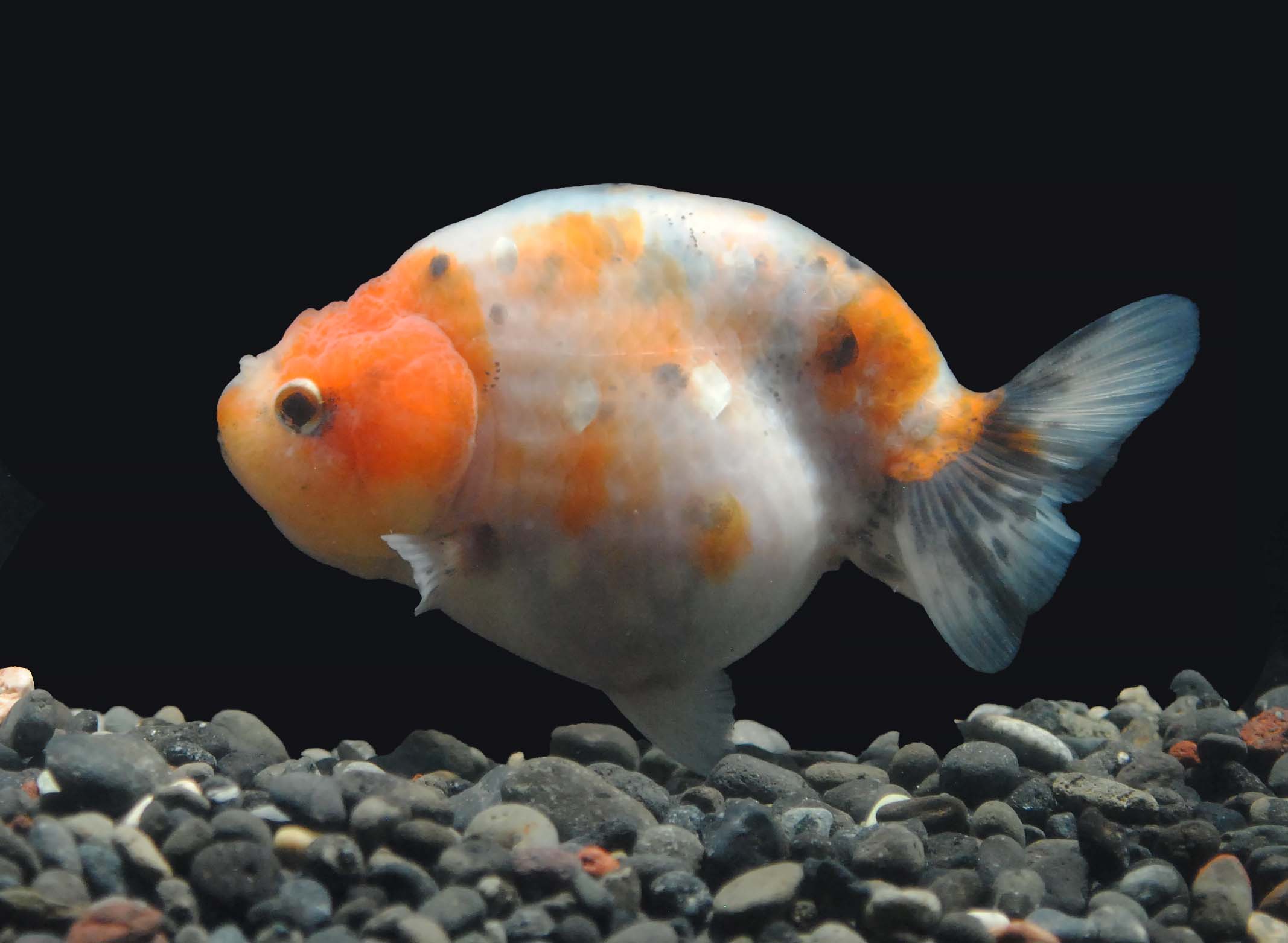
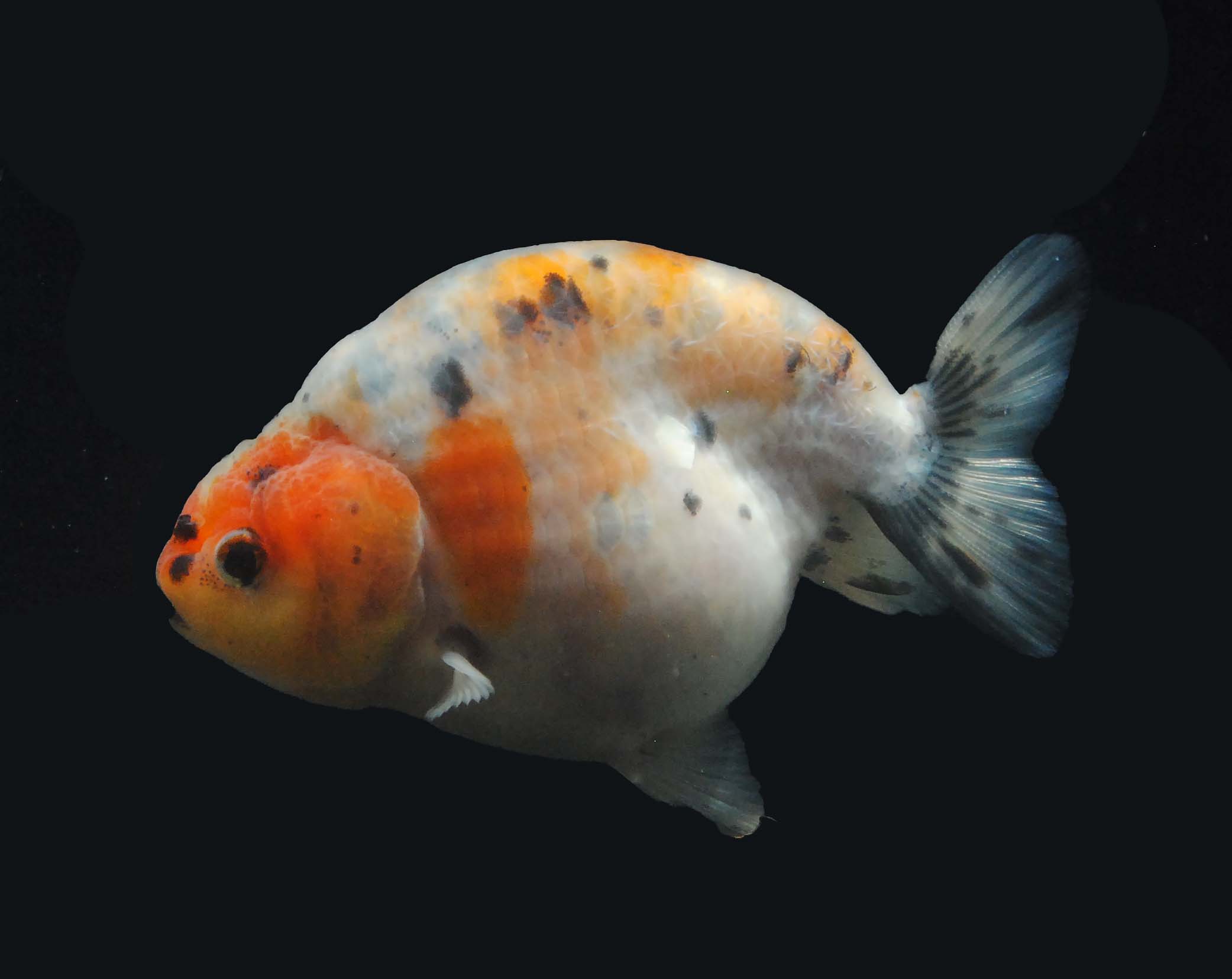
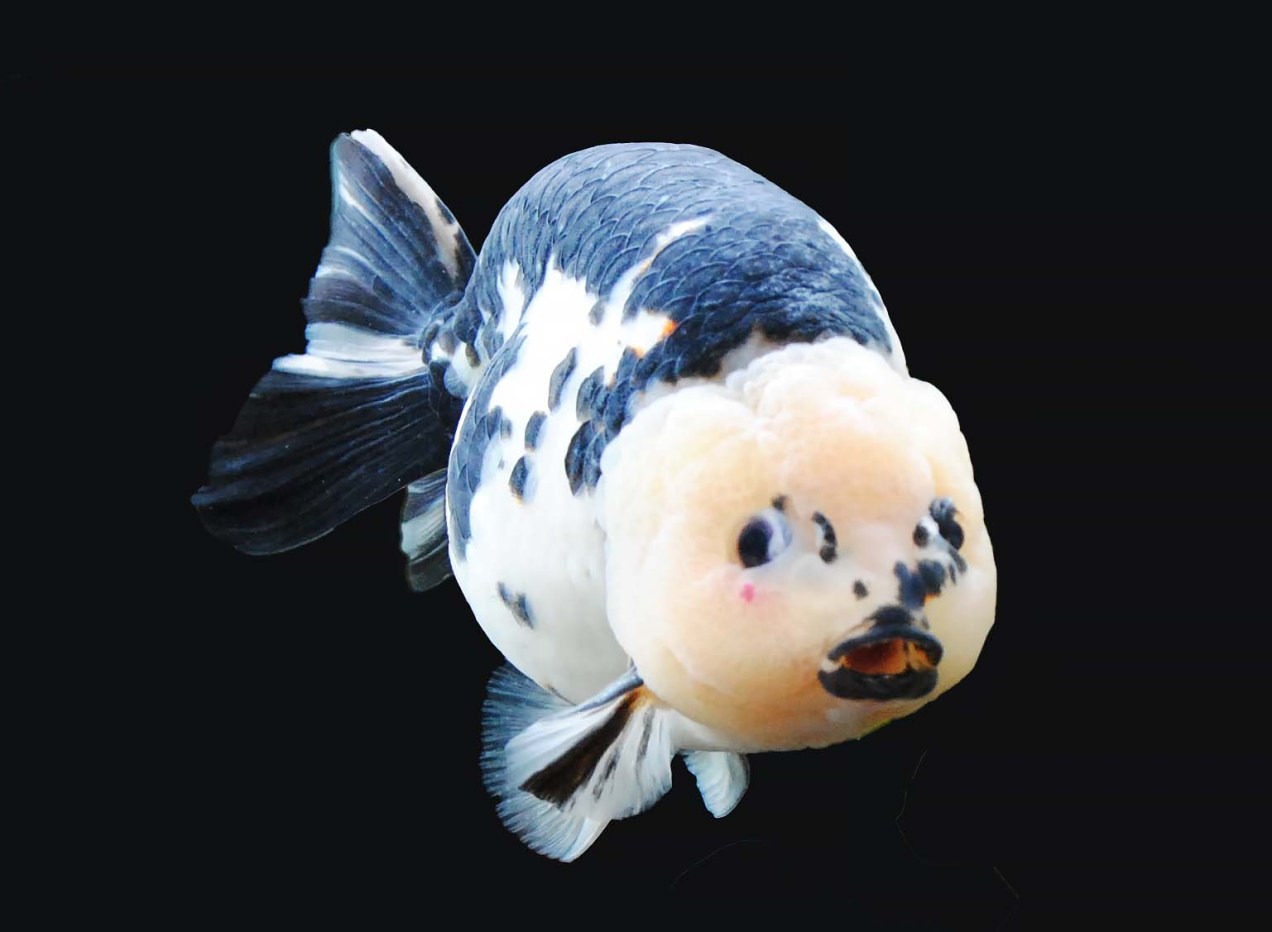
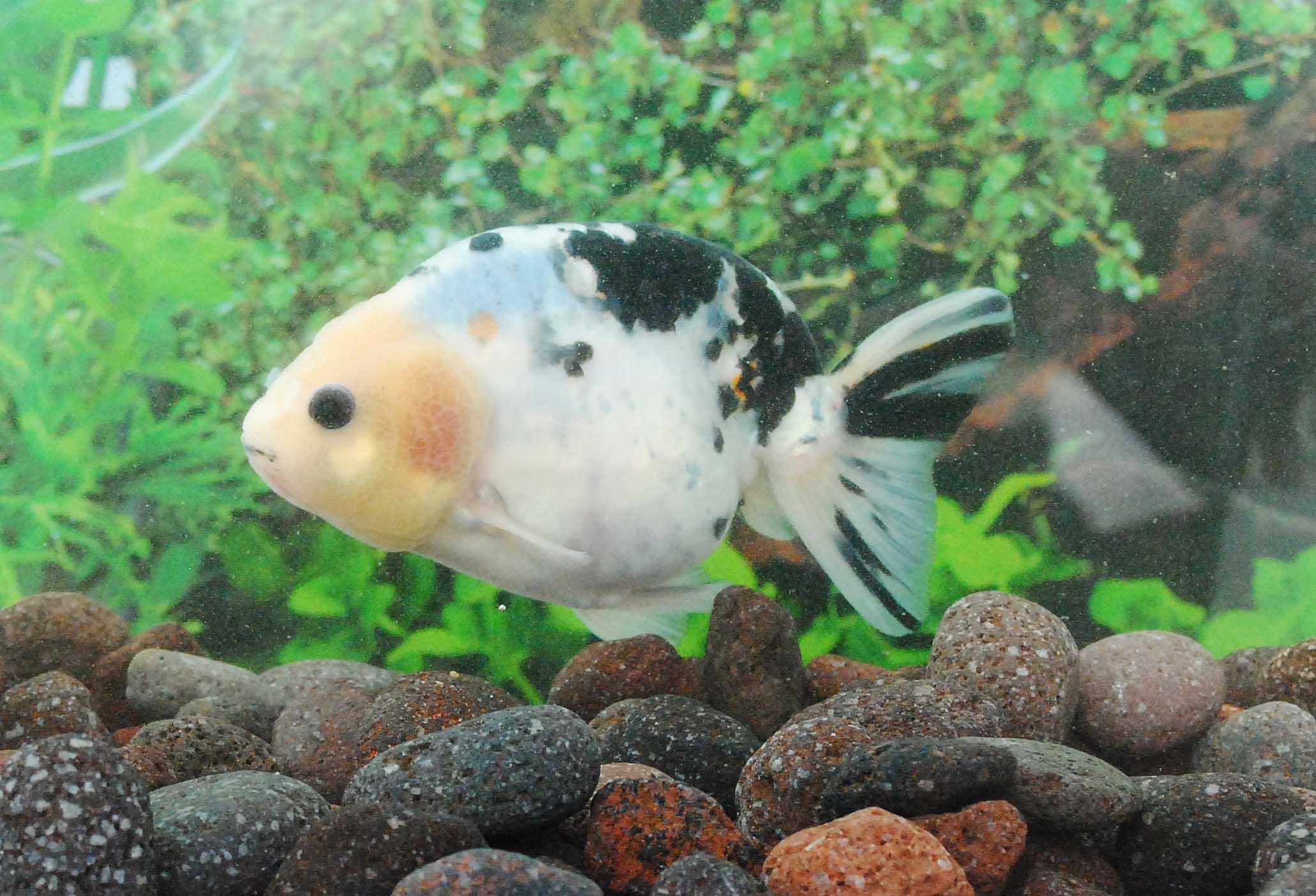
This is the second time I breed my cow ranchu. There are two ongoing projects. First, I cross my remaining cow ranchu (male) with his own offspring (or niece – since I used several male to produce her). Second, I cross the same cow ranchu with a female purple ranchu out of curiosity.

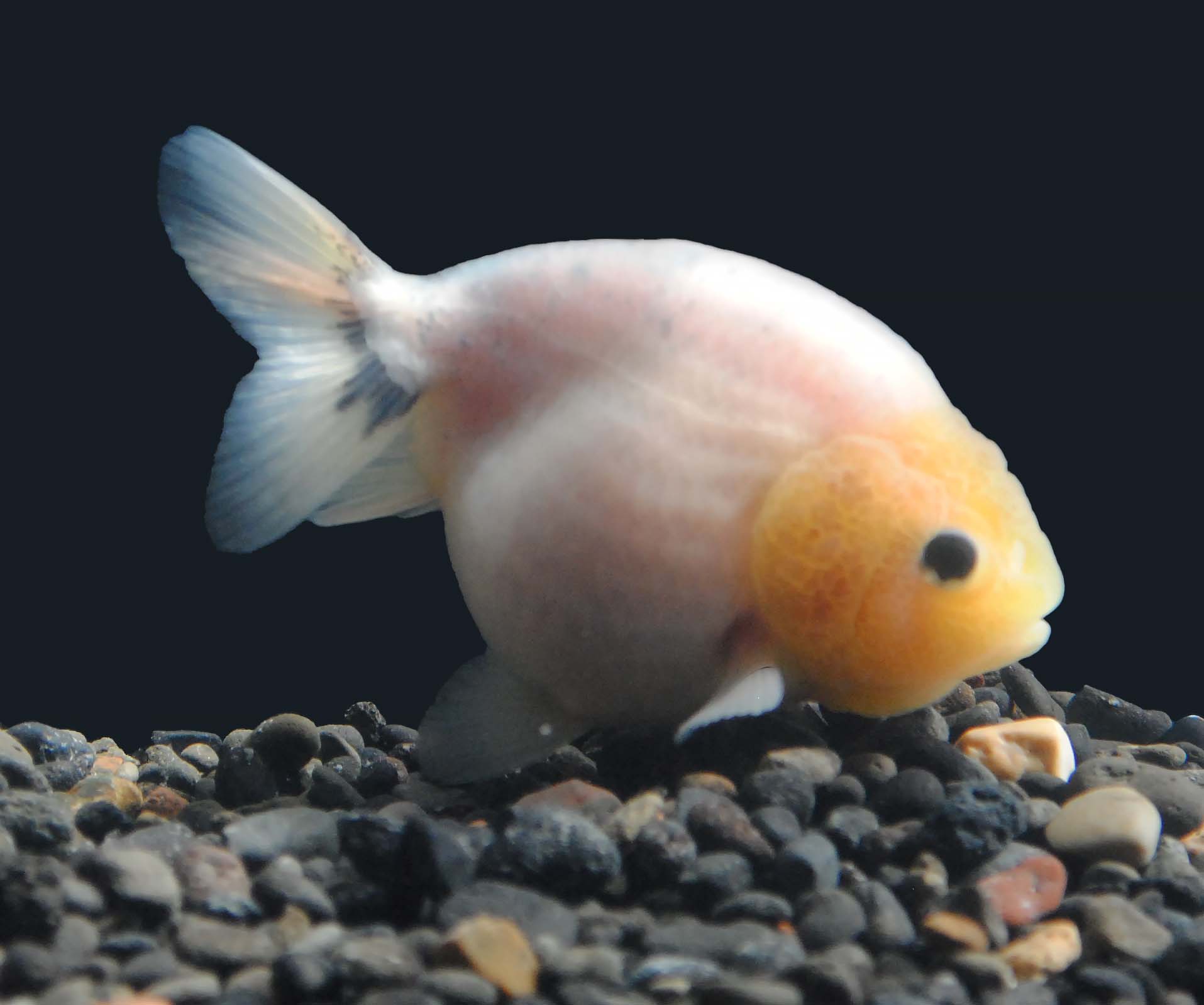
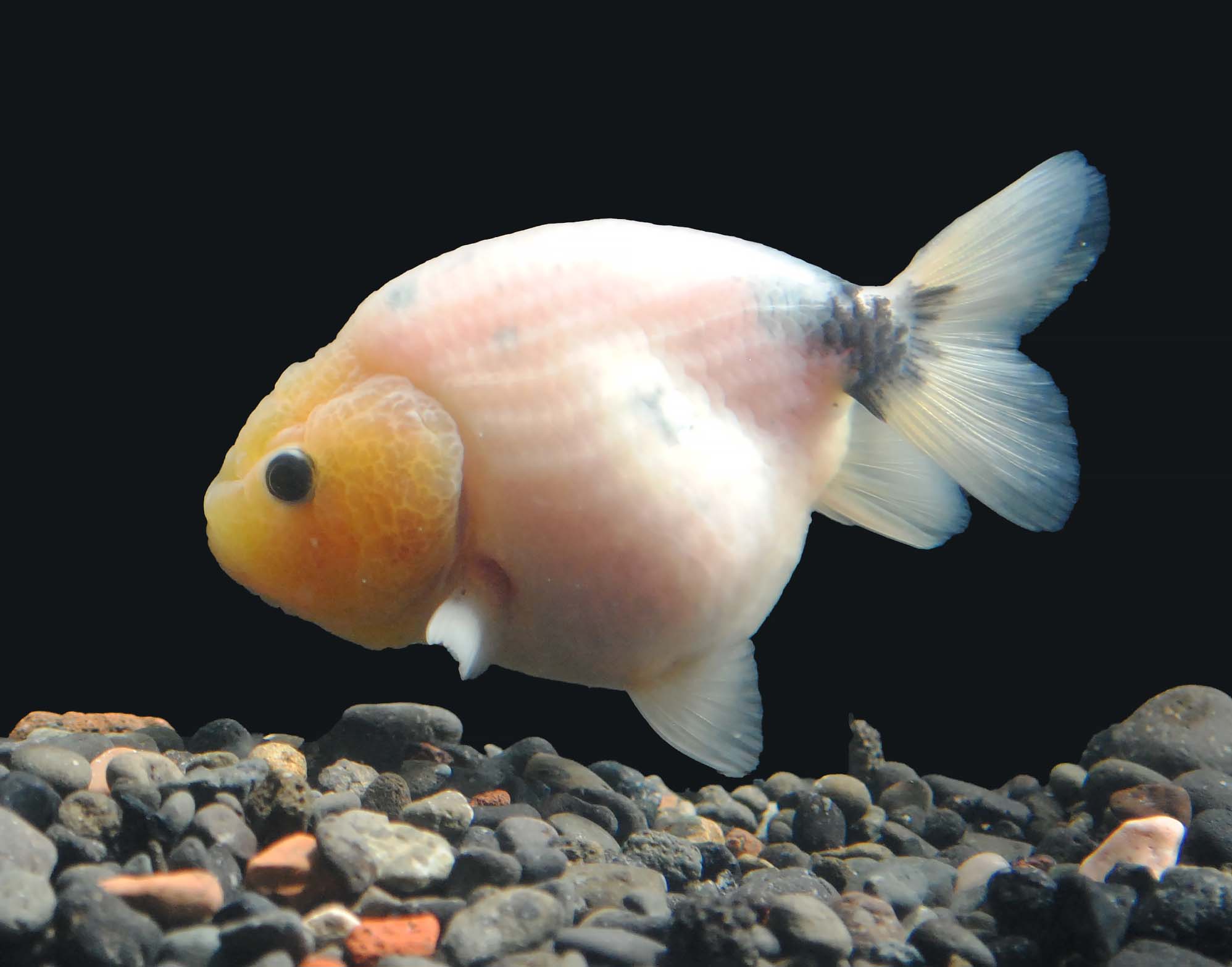
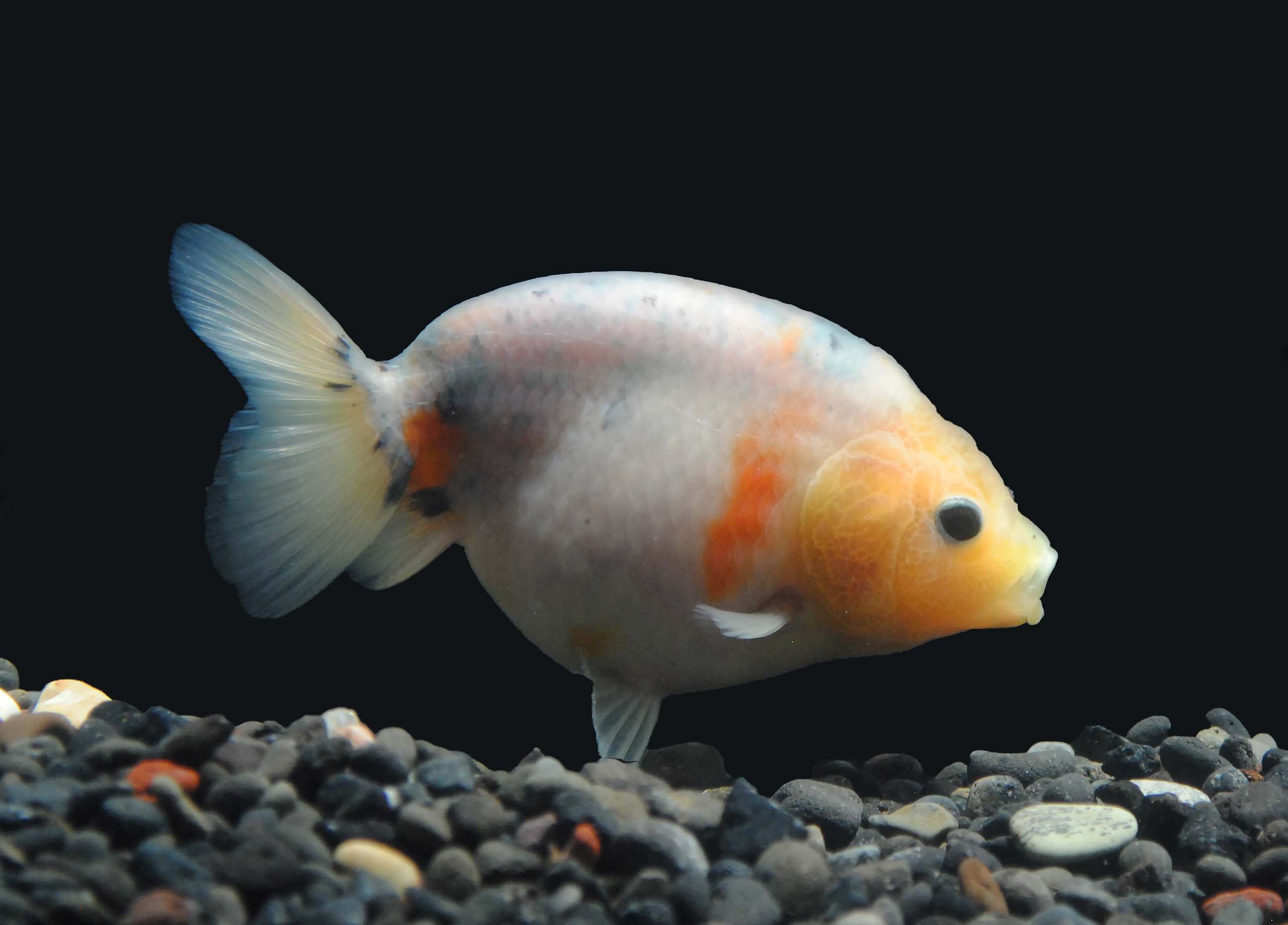
The first project (cow x cow) resulted in weak body shape offspring. But it is not my main interest. My interest is in the coloration of the offspring. At the age of roughly three months old, they are still mostly transparent white. Few have red patches. Some have black little dots and / or black patches “inside” (beneath the scale). Black marking on top of the scale (outside) is rare in these offspring. If they do, the black marking is in the shape of patches, not dots.

The fully white ones are nicknamed Casper by my friends. I was informed that these Caspers and the ones with black dots inside will develop the black color outside later on. It is certainly my hope to see it comes true. But so far, I do not see it coming. None of them can be claim as cow ranchu yet.

Let me refresh our memory with the pictures of the parent:

The male cow ranchu
The female

I do this first project twice. So I have collected two batches. Since the first batches were on medication when I took these photographs, I only managed to take pictures of the second batches. And these are the results. Each fish is displayed from left and right side.

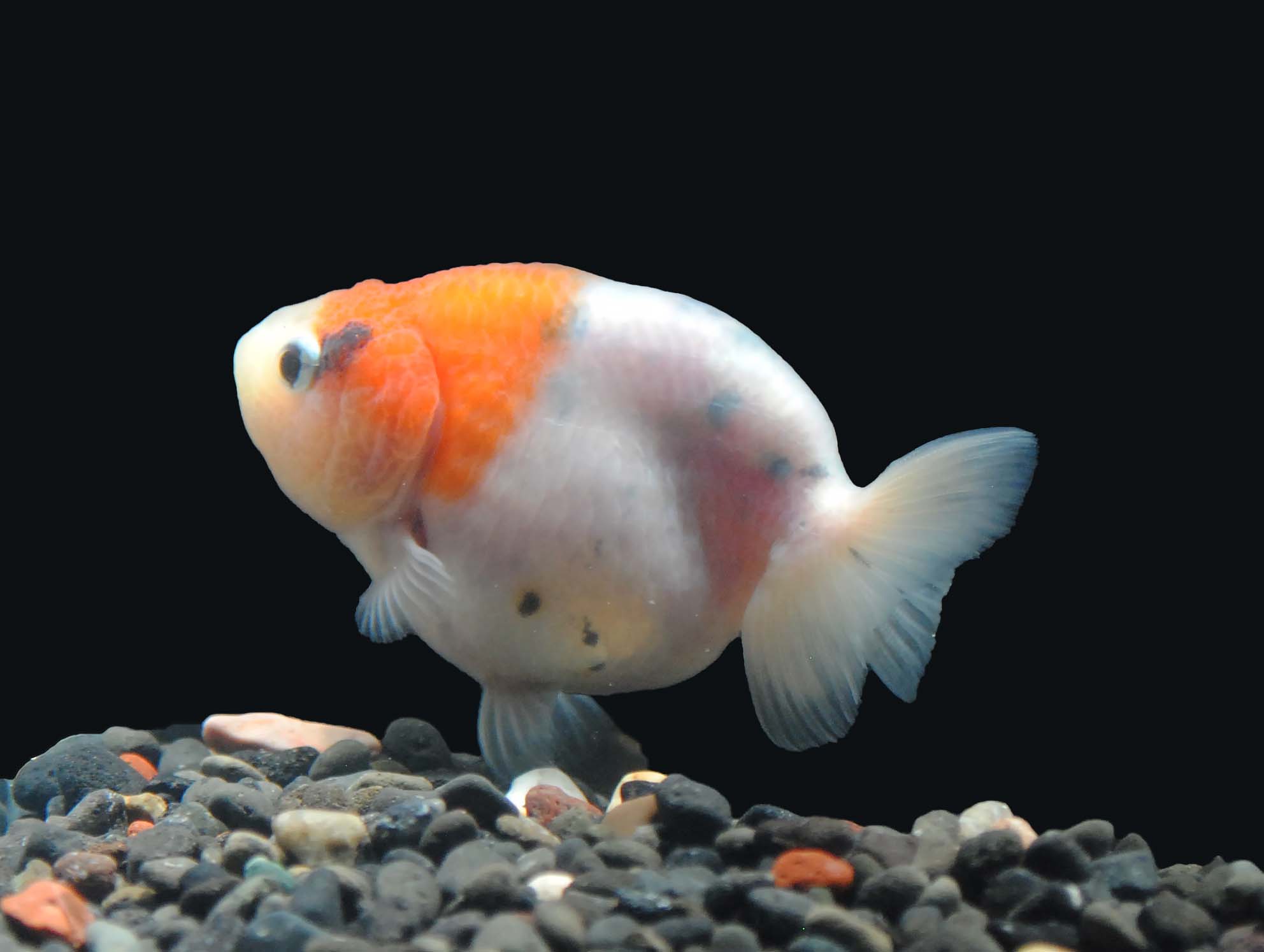
The second project (cow x purple ranchu) has a different result. The offspring looks more like calico with a satisfying color composition. To compare this with the above project, this second project does not produce Caspers. They have black patches inside (not dots), but also white dots outside (not patches at this stage). I am eager to see how these dots will develop later on. And to compare with my previous project of crossing the cow with blue ranchu, I do not get any kirin-like color in this crossing (cow x purple) as I get one in the previous crossing (cow x blue). This comes as a surprise to me, since the blue and purple color are closely related. I expected to see a kirin-like coloration in this project, but it does not happen. I am still curious though about what will happen if I cross these offspring back to a purple ranchu.

These are the parent fishes:

Male parent
female parent

And the offspring are:

I already cull out the fishes from these two projects. Those with weak body shape are eliminated (I give them freely to friends). So, the next update will not contain all of the fishes portrayed here.

Enjoy.

Standard
cow ranchu

The Transformation of my Cow Ranchu (2019 – 2020)

As I mentioned before, I bought five cow ranchu from an importer in Indonesia (Jakarta Goldfish Centre). They came from De Quan Farm in Fu Zhou, China. Only one male survives until now and he has been my favorite so far. One amazing feature of the fish is the growth of its black pigment. When I compared the fish before and after, I can hardly recognize him. So, it is confirmed that the black pigment in cow ranchu can grow.

This is the picture taken on December 2019:

And this is him in October 2020:

Marvelous, isn’t he?

However, the growth of the black pigmentation on the offspring is quite challenging. Until now (almost 4 months old), the black pigment does not seem to grow at all. Most of the offspring are white with some black spots underneath the transparent scale, which look like bluish or shadowy color. I am hoping that the black pigment can come out to the outer layer of the transparent scale. Some people reported that it usually happens late on the fish. Hopefully they are correct. The rest of the offspring resemble calico. I will post their pictures on the next posting.

Feel free to share what you think about the transformation of this cow ranchu on the comments below 😊 Thank you.

Standard
kinranshi

Kinranshi version 2.0

In my previous attempt, I crossed topview ranchu (Andou line) with wakin. I called the offspring Kinranshi since they looked similar to the Kinranshi goldfish type I saw in a book. I already made a post about that project.

Now, to move the project forward, I crossed the Kinranshi back to topview ranchu. I used three lines such as Andou, Kudou / Murakami (the seller was not sure about the line of this particular fish), and my own line (forgot to record). The results are varied. They are not yet conformed to the standard of topview ranchu, so I called them Kinranshi version 2.0.

Some of them are thin and long, some have thickness on their backbone, and some are shorter. Some have collapsed tail and some have wide-spread tail. The head growths are also varied. I am glad to see these rich variations. It triggers my imagination how to direct the next development of them.

Here are the Kinranshi 2.0:

Standard
Uncategorized

How to Induce Spawning

First, it is useful to categorize female fishes into four categories: very productive, normal productive, and less productive, and infertile. In the case of a very productive fish, we do not need to do anything and the fish will lay eggs by its own everywhere and anywhere. Even when there is no male partner, it will lay its eggs. But most fishes fall under the category of normal productive, which will usually lay eggs in a comfortable environment with the presence of male partner. The problem arises when we have the less productive fishes. We need tricks to induce the spawning. In the case of the infertile fishes, nothing can be done. The infertility can be of two kinds: the fish cannot lay eggs, or the fish can lay eggs but the eggs cannot hatch. So, our focus is how to induce spawning in the less productive fishes, which of course the tricks will also applicable to the normal productive fishes.

Basically, I use two ways to induce spawning: to make the fish comfortable or to make the fish uncomfortable (or introduce changes). I will try the first method before considering the second one.

I live in the tropical area, so my methods might not work for other areas. Each breeder need to find his / her own ways in the two frameworks.

If we use biological filtration pond or tank, then the fish will be comfortable in a mature filtration. If we use water change method, then it is better to have a routine schedule. Male partners should be present. Outdoor or semi outdoor environment will be good since it is in accordance with the fishes’ internal clock. Enough sunlight. Introduce plants. Do not feed with growth pellets or tubifex worms. Feed with wheatgerm-based meal. Use live food such as frozen bloodworm and daphnia. Mosquito larvae is a superb food for this purpose. Normally, these actions will suffice to induce breeding. The fishes will mate at around 5 am. It is an advantage to be in the tropical area that I do not need to take into account the winter season or the water temperature.

For the less productive fishes, to make it comfortable, we can introduce a productive female one in the tank. After the productive one lay eggs, we can remove her. We can hope that the less productive one will follow to lay eggs.

Another way to make her comfortable to spawn is to put bricks or clay pots in the pond. Somehow it is believed that the smell of the soil can induce the fish to breed. I do not know how true it is, but I sometimes use this method combined with other ways.

If the comforting methods do not work, we might consider to make the fish uncomfortable by introducing change / surprise. Why uncomfortable methods might induce breeding? I read it somewhere that in the presence of death the fish might naturally think she need to lay eggs to preserve her descendants. So, the change might make the fish think she is going to die (smile). The mild measure in introducing change includes moving the fish from indoor to outdoor. Or if the fish is kept in outdoor, put her for several weeks indoor before moving her to outdoor again. We can also play with the water temperature. Try to keep the fish in a colder temperature for several weeks, then move to a warmer environment. Total water change can also be a surprise to the fish. Drastic water parameter change might be introduced also, mimicking the rain fall. Fasting (deprived of food) and then pumping the fish with good food can also be tried.

A more risky way that I sometimes use it to lay the fish in insufficient water level. This is the way I do it. As I make a total water change, when I fill the tub again, I put the fish in when the water level is still insufficient to submerse her. So the fish will be a bit stressful for a minute or two for lacking water, but will not be hurt / damaged. It is enough to make her think she is going to die for a while. This is the most extreme measure I take. But I seldom use it and I only use it for a hard case.

The breeding can also be induced by injecting substances such as Ovaprim to the fish. But I do not use this method.

These are the methods I use to induce spawning. My methods are simple. I am sure there are many more advanced and creative ways. I will encourage the readers to explore and to share their ways.

Standard
cow ranchu

Cow Ranchu Crossing

Cow Ranchu is a variant of the transparent scale ranchu that has black and white color. Sometimes the black pattern can expand. The black comes in large patterns and small dots. Red color might be present in small areas of the body. If the red is too much, it cannot be called cow ranchu anymore. I do not know if it is the International standard name of not, but we Indonesian calls it Cow Ranchu since it resembles the color of black and white cow. This breed was rare before (especially in Indonesia), but it is available recently through imports from Fuzhou, China (if my information is correct). How people come up with this pattern is still a mystery for me. A breeder friend told me once that when he bred them, he got a variety of transparent color ranchu including calicos. So, in his view, the cow is just the offspring of the usual calico which then being separated purposely based on the color. So, it will not breed true. I doubt this explanation. In my understanding, the usual calico does not have the ability to expand its black pigment like this cow ranchu. And the black in calico usually comes in dots, not large patterns or blocks as in this cow ranchu. So, I decided to buy some cows at the end of 2019 with three purposes: first, to breed them to see if they breed true, second, to observe the expansion of the black pigment, and third, to cross them with other colors to see what will happen. Well, the 1st and 2nd purposes was facing hindrances. My first attempt to breed them resulted in so few offsprings. I think I need to breed more of them. And then, three out of five that I bought died, sadly. Gladly, I managed to crossbreed them with the common calico and with the blue metallic scale ranchu. This writing will mainly talk about the crossbreeding result.

These are the five I bought (I show them the left and right side for each):

The first three are the males. And the last two are the females. My favorites are number three and four. Too bad, they are gone. The remaining two are number one and five. I am trying to buy some more to replace them.

Their offspring in my first attempt to breed them was few, and they were weak in quality. Yet, my initial conclusion is that they breed true. Majority of the offsprings were cow ranchu. Few had minor red stains. No calico observed. Yet, I need to confirm this with my next breeding. I could not stand the quality of the offspring, so I culled most of them. I come out with these two left:

The first one has a yellowish stain in the area of its left pectoral fin. The rest are white with black pigment under the skin. The first one also has an outer black pigmen in its pectoral fin. I think they are good specimen to observe whether the black pigment will expand or not. These two are the reason for my initial conclusion that they can breed true.

Next, I mated the cows with these calicos:

I bought them from an importir friend who acquired the parents from China. So far, he has bred them true. I saw myself the offspring in his pond was pretty much similar in color characteristic. I asked for one female and two males. Too bad, he mistakenly sent me all females. Anyway, I could still pair them with my cows.

Here are the results of the cross between the calicos (female) and the cow (male) – after hard culling, ten of them remain:

The quality is far below my standar, so I cull them hard. Even these ten will be culled again after they serve the illustration purpose. (Mostly, my wife’s pupils will adopt them.) The offsprings resulted in different eye type, and different color variation: tiger, calico, sakura, and cow (the last one). I kept the cow one to see the progress of the black pigment.

I also use this blue metallic ranchu which comes from my own previous project to breed with the cows:

And the result of the cross between the blue metallic (female) and the cows are:

cowblue 7

The offspring consists of blue metallic scales and grey metallic scales, but I want to focus on the transparent scale offspring. After much culling due to the low quality, I keep these to represent the range of transparent color emerged from this cross: tiger, calico, and kirin-like ranchu (the last one). Kirin is another variation of transparent color where the dark color and the light color seemed to separate in half. The dark color (purple, blue, grey, black) always dominates the upper part of the body, while the light color (white, yellow, red, orange) is more in the lower part. Actually, a more accurate description I think is that the light color is all over the body in the background, while the dark color exists in the foreground and occupies only the upper part of the body. The dark color usually looks with scales, or looks like a net, while the light color is transparent. Some shiny and big metallic scales are usually seen scattered all over the body.

Comparing the two crossing, it is obvious that there are overlaps: the tiger, calico, and sakura (perhaps some of the calico will turn into sakura when they lost their black pigment, or it will never happen in this cross, I do not know and do not focus on that). But interestingly, the cross between the cow and the calico produces cow-like offspring, where the other cross does not. And the cross between the cow and the blue metallic produces the kirin-like offspring, where the other cross does not. It is a hint, I think, that kirin pattern involves the blue metallic scale in the making. I kept the kirin-like one to see or use in further project.

That’s all that I can report so far. Thank you for reading. Enjoy!

Standard
Panda Oranda

Re-melanization process

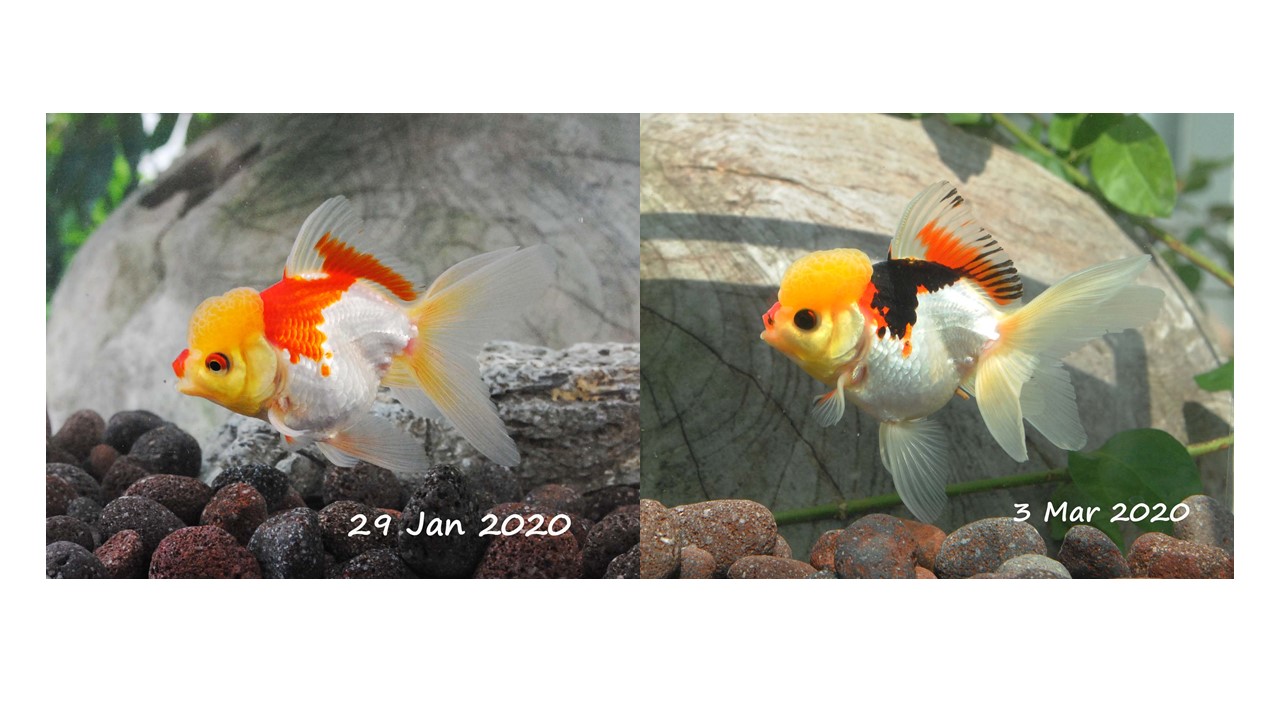
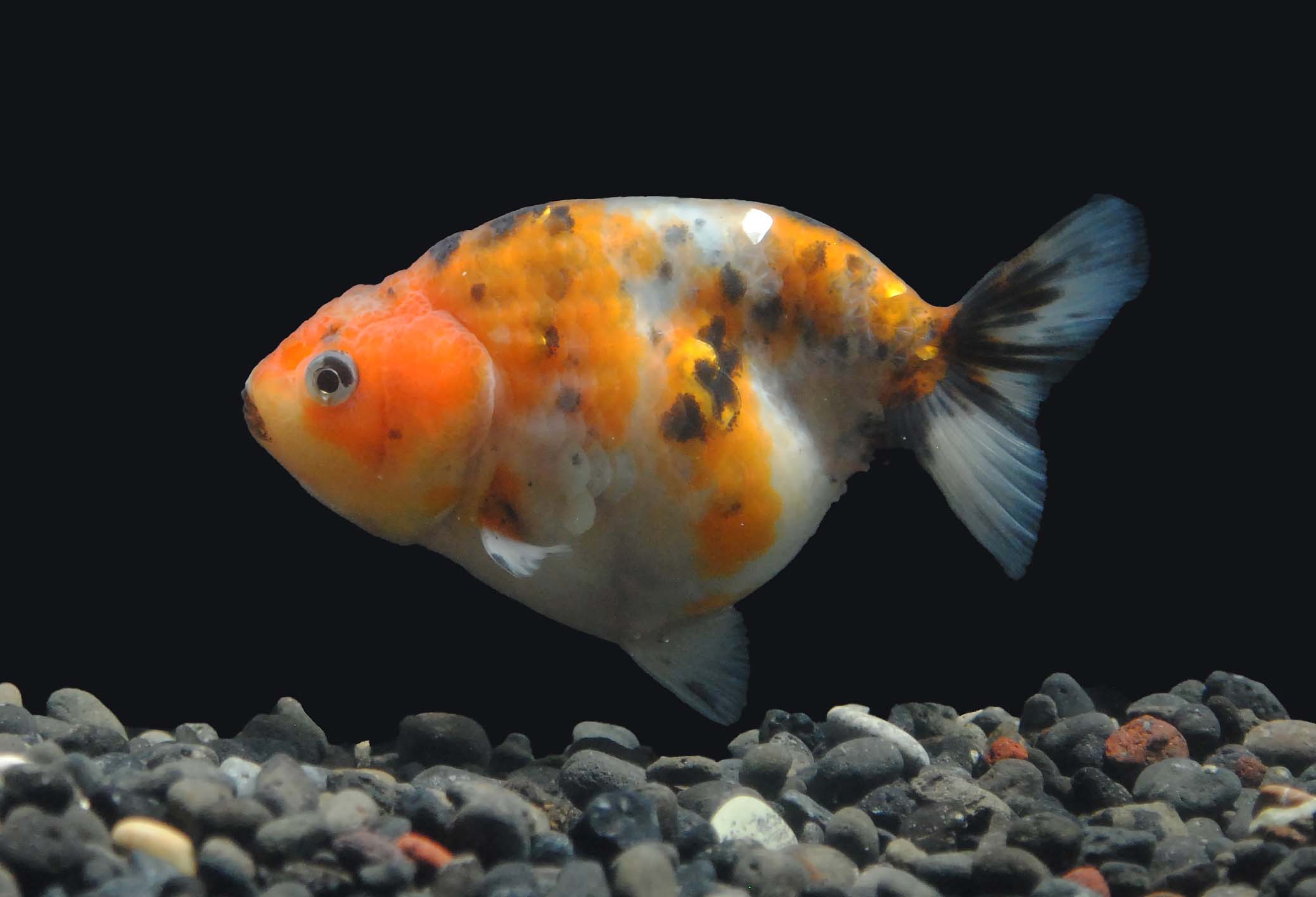
Some people complain about their black and white goldfish losing their black pigment. This is common in goldfish and the process is called de-melanization process. Well, my late experiment with breeding black and white oranda from Thailand (not from the blue metallic scale, but from the grey metallic scale as I wrote in my last post) shows quite a strong character of melanin (black pigment). The black pigment can reappear or grow. This is different from stress fish which often shows some temporary black pigment which will be gone on several weeks (or months). I am tempted to call this phenomena as re-melanization process. I notice that this changing pattern also happens in koi world in the kumonryu variety.

Well, not all black and white oranda from Thailand shows this characteristics. It just happen that the line on my hand is very strong in this unique character, and it happens in my ponds at least five times (as I noticed), which is quite often compared to my previous twenty years of experience in the goldfish world. I think I should preserve this gene and hopefully introduce it to other goldfish varieties. Below shows two fishes, one had lost all its black pigment and then regained it in just one month, and the other had a growing black pigment in the same time period.

remelanization process 2 mar 2020remelanization process mar 2020
 

Standard
Panda Oranda

Panda That Humbled me down

Years of my experiment brings me the conclusion that the panda coloration (or the tricolor as its side effect) is actually the blue coloration in metallic scale fish that undergoes demelanization process. That process can happen quickly in certain blue fish, turning it into a totally white fish or red and white one. But it can also happen slowly, even to the point of being halted forever, producing the beautiful panda / tricolor goldfish.

Recently, since 2018, breeders from Thailand storm the market with panda / tricolor oranda which seems to be strong in its coloration. I acquired some and breed them to see if they conformed to my understanding. And what did I find?

The offspring were not blue in color!

They were grey just like the common metallic goldfish!

I raised them to see if they will become panda like their parents. And yes, with mix results, I got several decent panda oranda. The results consist of grey (which does not seem to turn into black nor panda), black, panda, tricolor, and some who loses the melanin totally.

Here are some of the results that I raised until maturity:

DSC_9166DSC_9362DSC_9467 (2)

So, panda does not come from blue fish only. My previous conclusion was wrong. I still does not know how the grey fish can become panda, since the common grey fish (red white fish) cannot do so. Actually, I experience this once a long time ago. But I dismiss it as an exception. Perhaps next time I can find my documentation and write about it. For now, I must humbly admit that there are panda color that does not come from blue fish.

Standard
Yellow goldfish

Yellow Oranda 2019

It has been a long time I do not update on my projects. Now is the time to catch up. First, lately, I have successfully developed yellow wakin from the yellow comets I bought from Japan. However, I found out that the yellow color is most striking when seen from the side-view. So, I crossed my yellow wakin with Oranda. The yellow and red white color cross is pretty straight forward, the yellow color is recessive and the red / red white is dominant. The F1 had no yellow color. The yellow occurred as the result of F1 x F1. And after sorting hard, I kept a few as my next parent fish. This is the main female:

DSC_9571 (2)

Some of them have white marks. It is an interesting combination. This is the 2nd female which has few white color on its head and fins:

DSC_9592 (2)

Analyzing these fishes, I think it is too early to call them as Oranda. The headgrowth is there, but too small. And the tail will be more beautiful if it is more erect, as the current Asian preference dictates. So, I am not satisfied yet. I have done further projects to improve this features. I made two crosses. First is to cross these yellows with large-head Oranda (as a record, I use a Thai tricolor Oranda with goosehead type of headgrowth, with the not-so-spectacular tail shape). Second is to cross these yellows with superb body and superb tail type oranda, yet with not-so-spectacular headgrowth). As I am writing this blog, they are 3cm already. Of course, they will not be yellow. Their offspring will. So, it will take about another year to see the result. Well, let’s see ….


Standard
Brown Oranda

Brown Oranda

DSC_6510 (2)

It all started with some chocolate pompom I bought from China. The brown color captivated my attention. Most of them had orange fluffy nostrils to make them adorable. To my knowledge so far, chocolate color like this was rarely found in other goldfish variety. Well, I saw a brown butterfly sometimes on the internet, but I have never seen one alive. I remembered seeing a brown oranda nicknamed chakin in an encyclopedia I had during my childhood. But I cannot find one live specimen of chakin (teh-kin, or tea-kin, the tea colored goldfish) here in Indonesia. Even the chocolate pompom had to be imported from China. I was entertaining a project to recreate brown oranda from this chocolate pompom I had.

This is one chocolate pompom I bred from the imported parents. I had many of this several years ago.

DSC_7809R

I crossed it with an oranda. I am sorry I forget about an important fact regarding this matter. I could not recall whether I used a common oranda or a redcap oranda for this cross. The result was all orange goldfish, with small head growth, and the small pompom in some. Those were my transition fish. I did not bother to take a picture of them.

Then I inbred those transition fish to get the desired result. I chose the few brown colored offspring and mated them with oranda again to improve the oranda characteristic. Once again, I got all orange color, but this time, they were decent oranda, with no or insignificant pompom. My final result should come from inbreeding them.

And yes, I got what I wanted! The brown oranda! From the start, I picked up the fry which showed light brown color right after they hatched. I grew them up. Yet, to my disappointment, only one remained brown until maturity. The rest turned into orange.

I mated this only brown with its orange sibling. The hatchlings were all brown in the beginning. And only two remained brown until now. I still keep them and now they are roughly 20 cm long with no hint of turning into brown. Unfortunately, both of them are male. All the female has turned orange. Below is one of current brown oranda I had, which I consider as my throphy.

DSC_6474 (2)

One strange phenomenon is this. Actually, there was a third male brown oranda, which slowly turned into orange. It retained less than 10 percent of its brown color. I was about to cull it out. Yet, I did not know how, it started to regain its brown color. This is one of the phenomenon I call the reverse demelanization. I managed to take the picture when it regained its brown color after being almost all orange:

DSC_6516 (2)

At first, I thought the increasing brown color might due to stress. If that is the case, the brown color will be temporary. But, it continued to grow to cover the whole body of the fish, leaving out only its cap. It grew into a beautiful fish: a brown red cap, if I may say! And then the reversing process stopped. Until today the fish is still alive, and has been almost a year in this state of pattern!

DSC_6633 (2)

Beautiful, isn’t it?

Any explanation?

That is my project to recreate the brown oranda. I think the project is finished. The only thing left is to multiply them, and to get the market to appreciate them.

Have a good day!

Standard
Brown Panda Ranchu, Chocolate Ranchu, Panda Ranchu, Purple goldfish

Brown Panda Ranchu

As a side result of the Purple Ranchu Project, I also get the Brown Panda Ranchu. Actually, it is the Purple Ranchu who demelanizes to produce a purple and white fish. The purple gets darker to produce the appearance of brown / light brown. This process is exactly the same as the demelanization process in the blue ranchu to become panda ranchu (Black and White Ranchu).

As this variety is still rare, I think it is better to document it here for future reference. Here are some pictures:

bp1wpbp2wpbp3wpbp4wpbp5wpbp6wp


Standard