The Diary of a Goldfish Breeder 2021

The Diary of a Goldfish Breeder 2021 (11)

I have refined my breeding strategy.

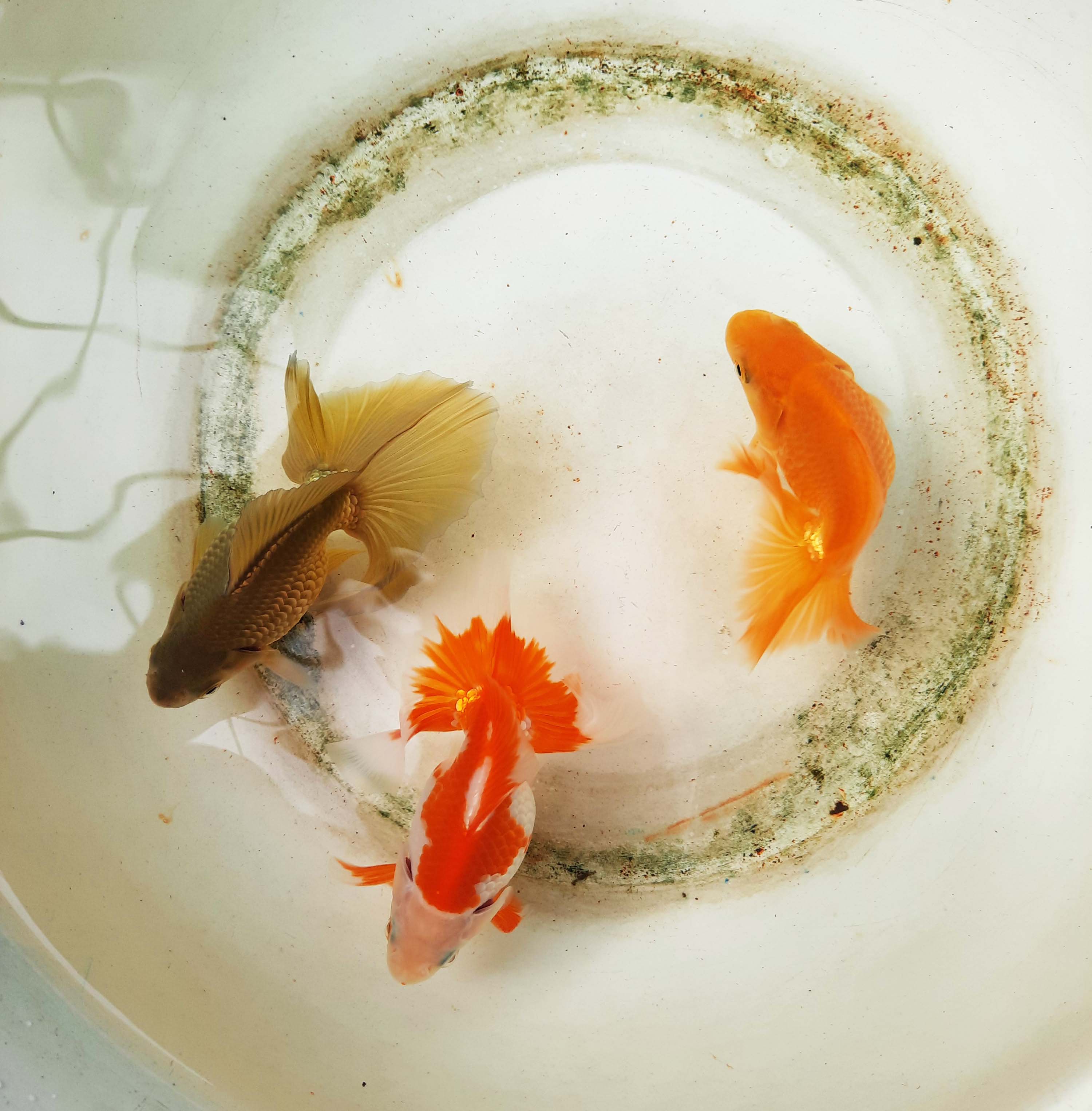
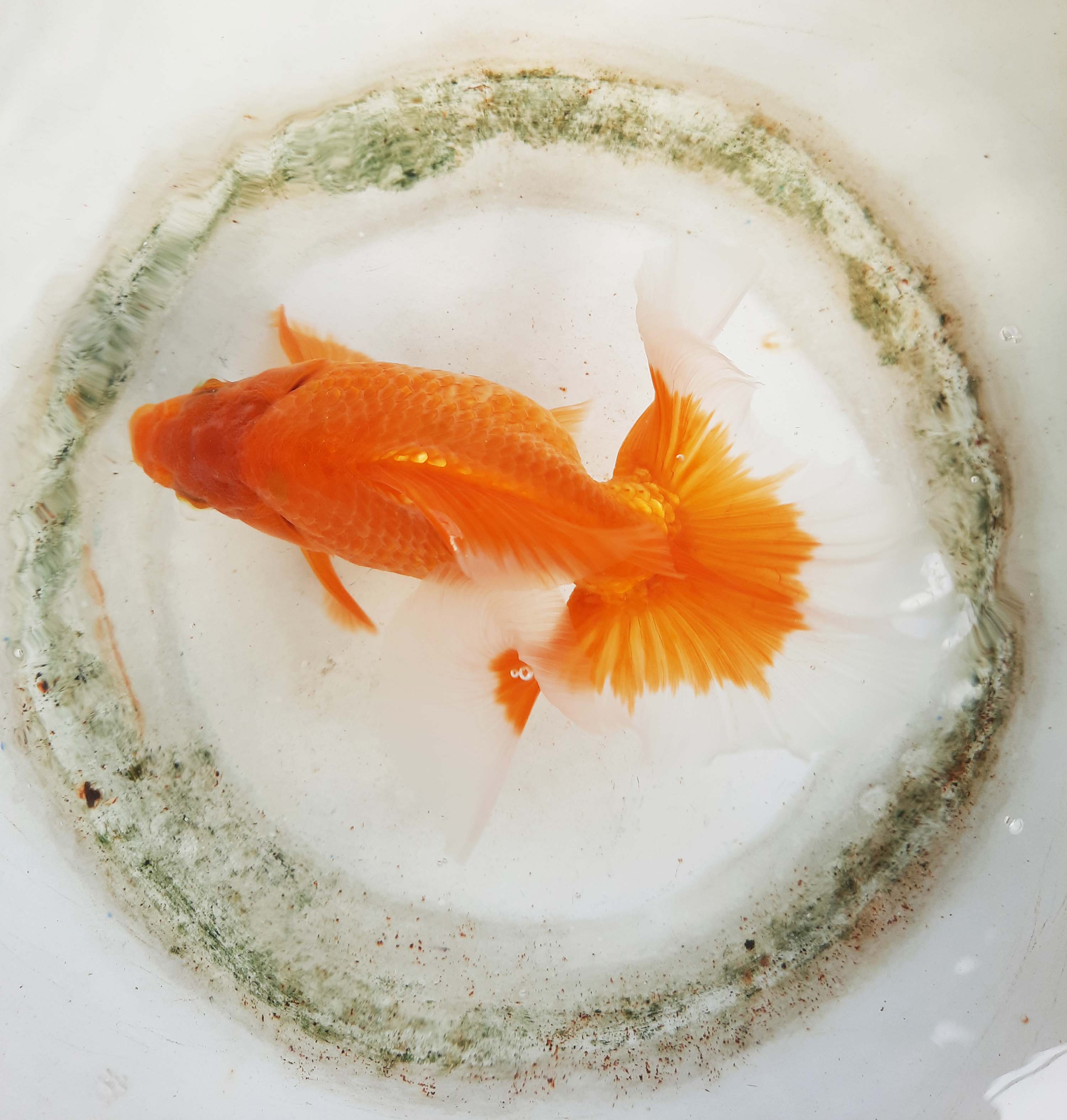
First, let me update the projects I have started at the beginning of this year: the blue, brown, purple, and yellow oranda. I have crossed my original fishes with the better quality oranda which I labeled as my Basic Material (orange in color). The purpose of the project is to improve the quality of my blue, brown, purple, and yellow oranda.

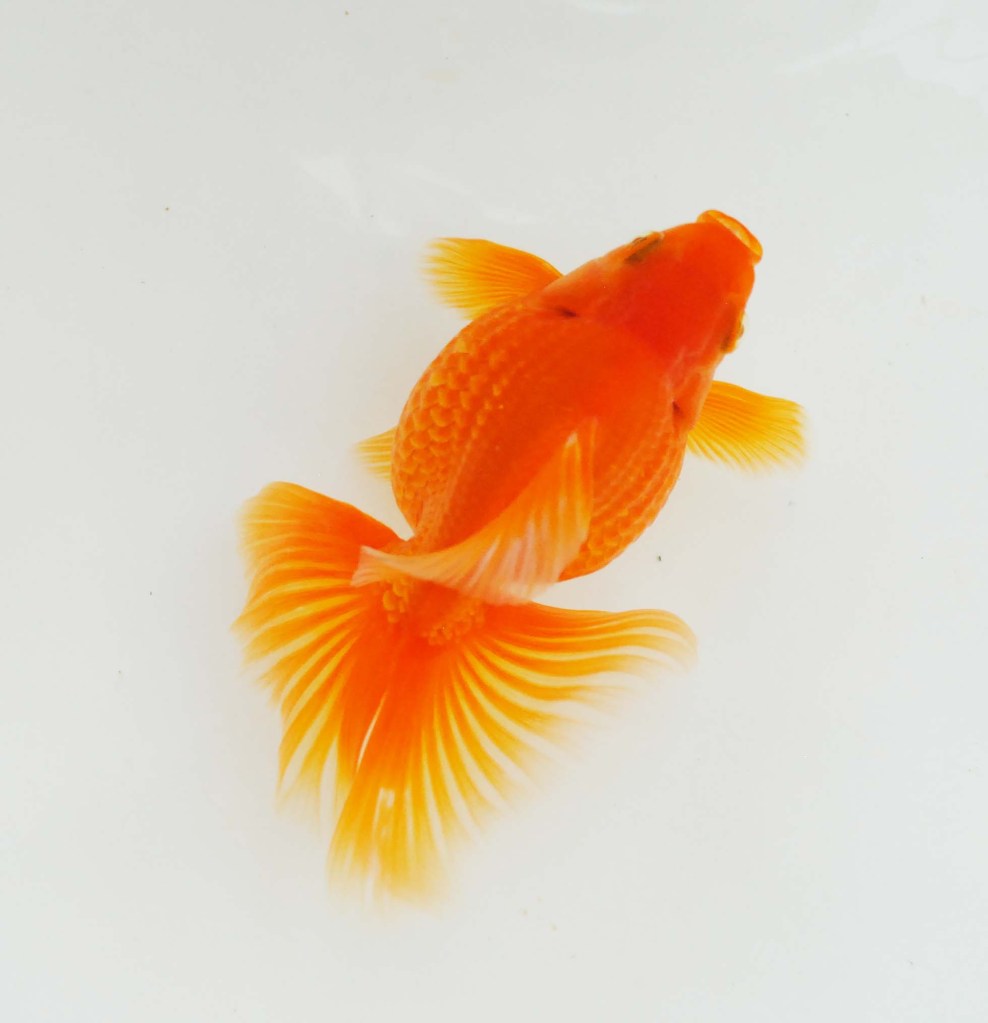
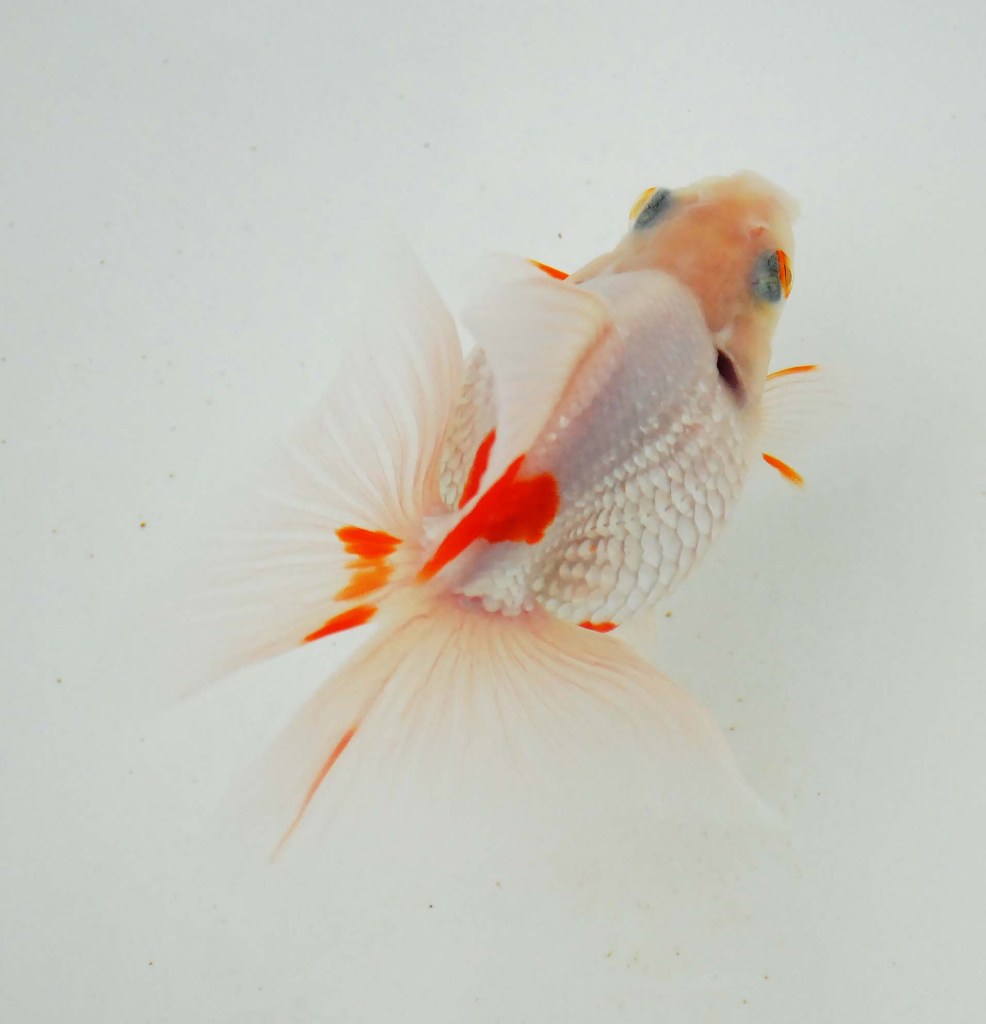
I have crossed each type of color with the Basic Material. Unfortunately, not all went as planned. The successful one is the purple oranda project. The crossing produced male and female semi purple oranda (right now they are in orange and red white color). I have mated these F1 x F1 on this June and have kept the purple fry only. So far so good. It is a different story with the blue cross.

The cross between blue and basic material yields good quality semi blue offspring. Sadly, they are all male. I cannot continue the project with this condition. (I still keep one female blue oranda from my original line as a back up, though.)

The brown and basic material cross failed miserably. Due to the overload in my capacity, I could not take care the offspring well. I must let them go. (I still have brown oranda from two other lines which I can use as back up.)

The yellow project produced so many single tail, which I must cull out. So, this project also failed. (Of course, I still keep some yellow for back up plan.)

Besides these crossing, I also paired my Basic Material with each other because I might use them later on. This line is important for me. I must manage them well.

Second, I just realize that I do not have to make four separate projects as mentioned above, actually. The blue, brown, and purple are somewhat related. This fact can simplify my breeding strategy a lot. Let me explain.

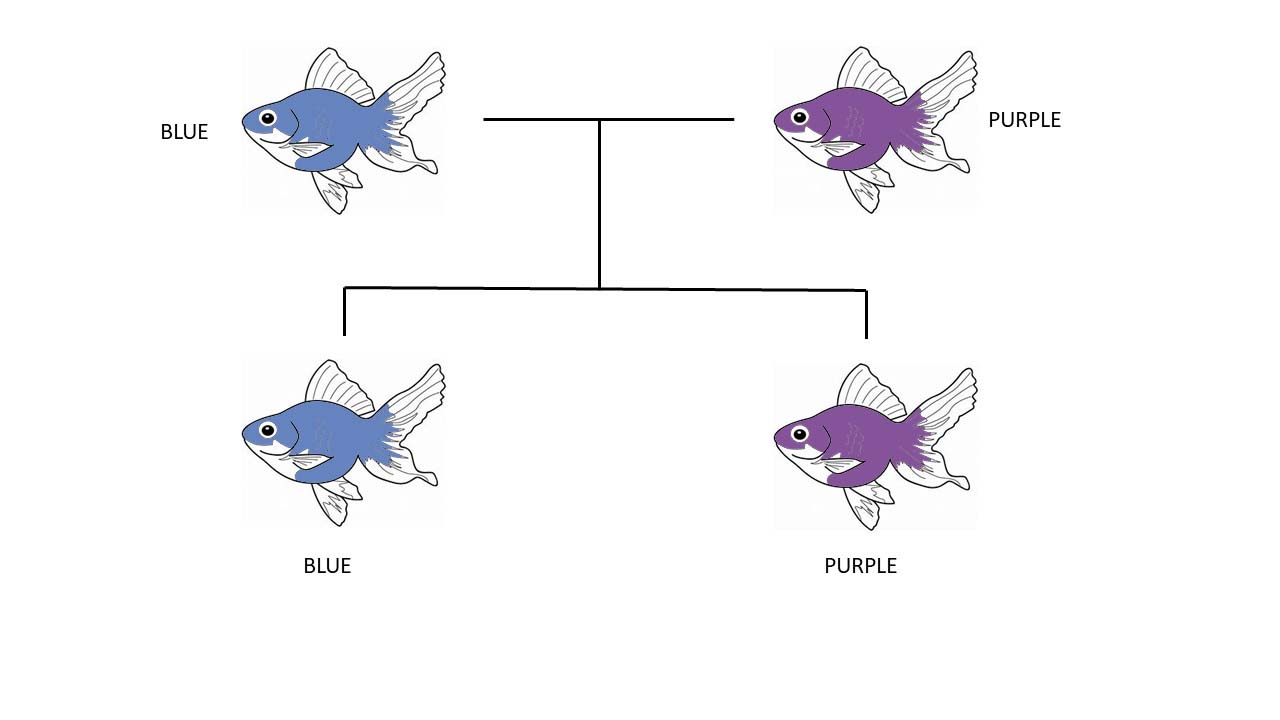
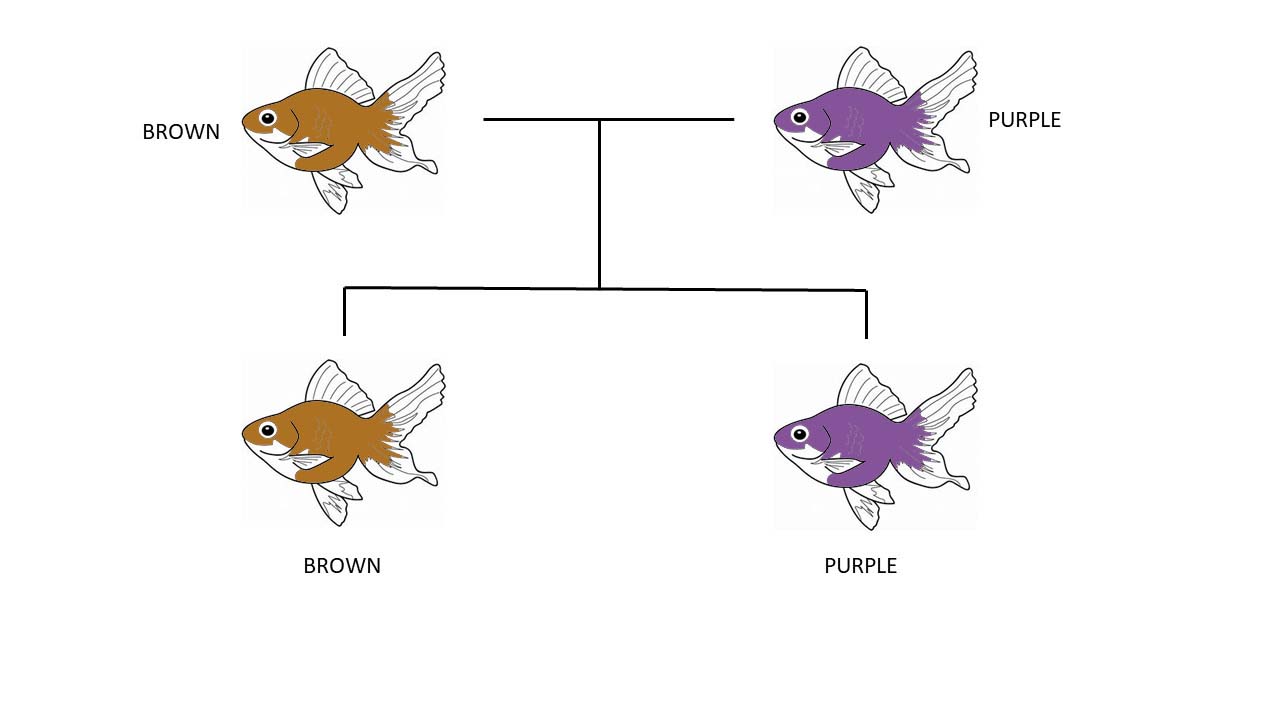
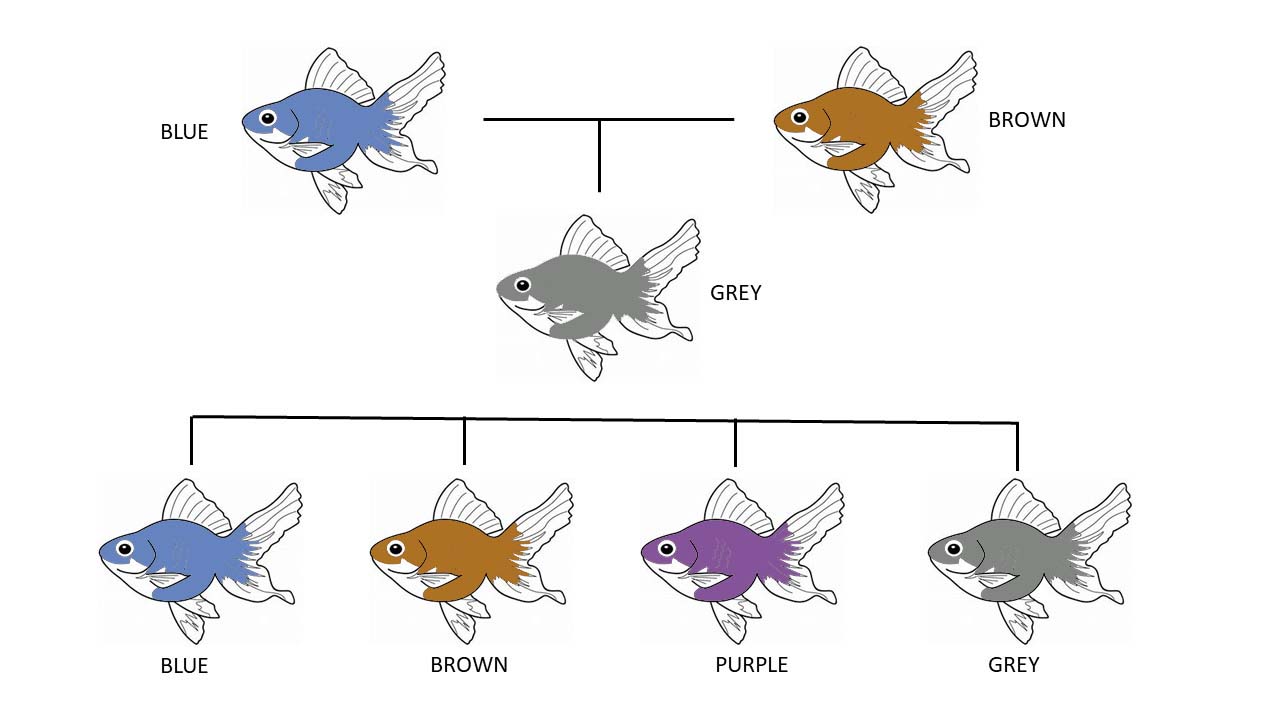
To review a bit, this chart explains the basic:

The blue and brown are not related. When they are crossed, the F1 is grey in color, which sometimes turn into orange fish. But when the grey is paired with each other (F1 x F1), the result will be blue, brown, purple, and grey. I always cull out the grey. This is how I get my purple goldfish.

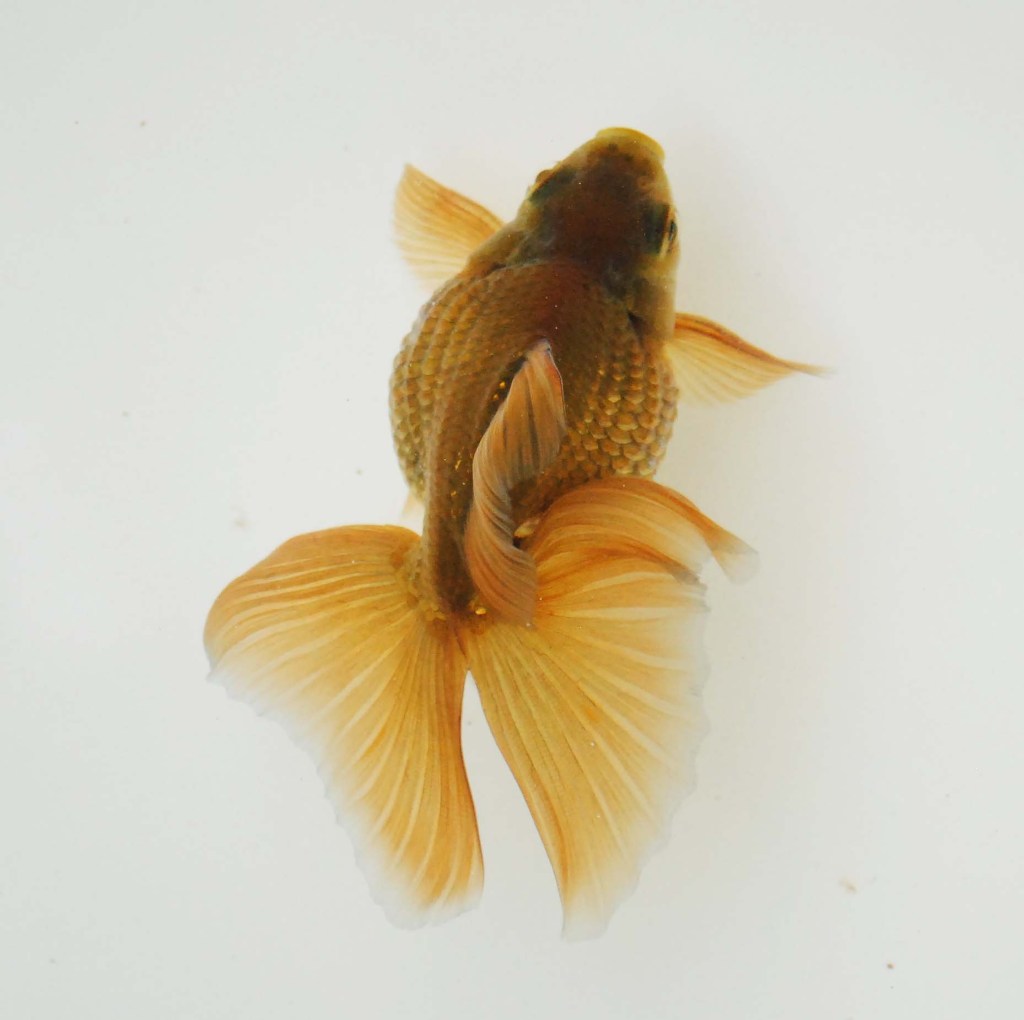
So, although the blue and brown are not related, the blue is somewhat related to the purple. The brown is also related to the purple. Here we see that the key is the purple goldfish. When we crossed the blue and purple, the result will be blue and purple right on the F1. The same case happen in the cross between brown and purple. We will immediately get brown and purple.

So, what I need to cross with the basic material is actually only the purple. When I get the desired result (the purple with higher quality), I can cross the purple with the blue and the brown. Instead of mating each color with the basic material (three projects), it is sufficient for me to cross the purple only. This simplify my projects a lot, doesn’t it? This is the refinement of my breeding strategy.

The yellow oranda is a different case. This color has no relation at all with the blue, brown, or purple. So, this project must stand on its own. I must cross the yellow with the basic material.

Thank you for reading 😊

Standard
The Diary of a Goldfish Breeder 2021

The Diary of a Goldfish Breeder 2021 (10)

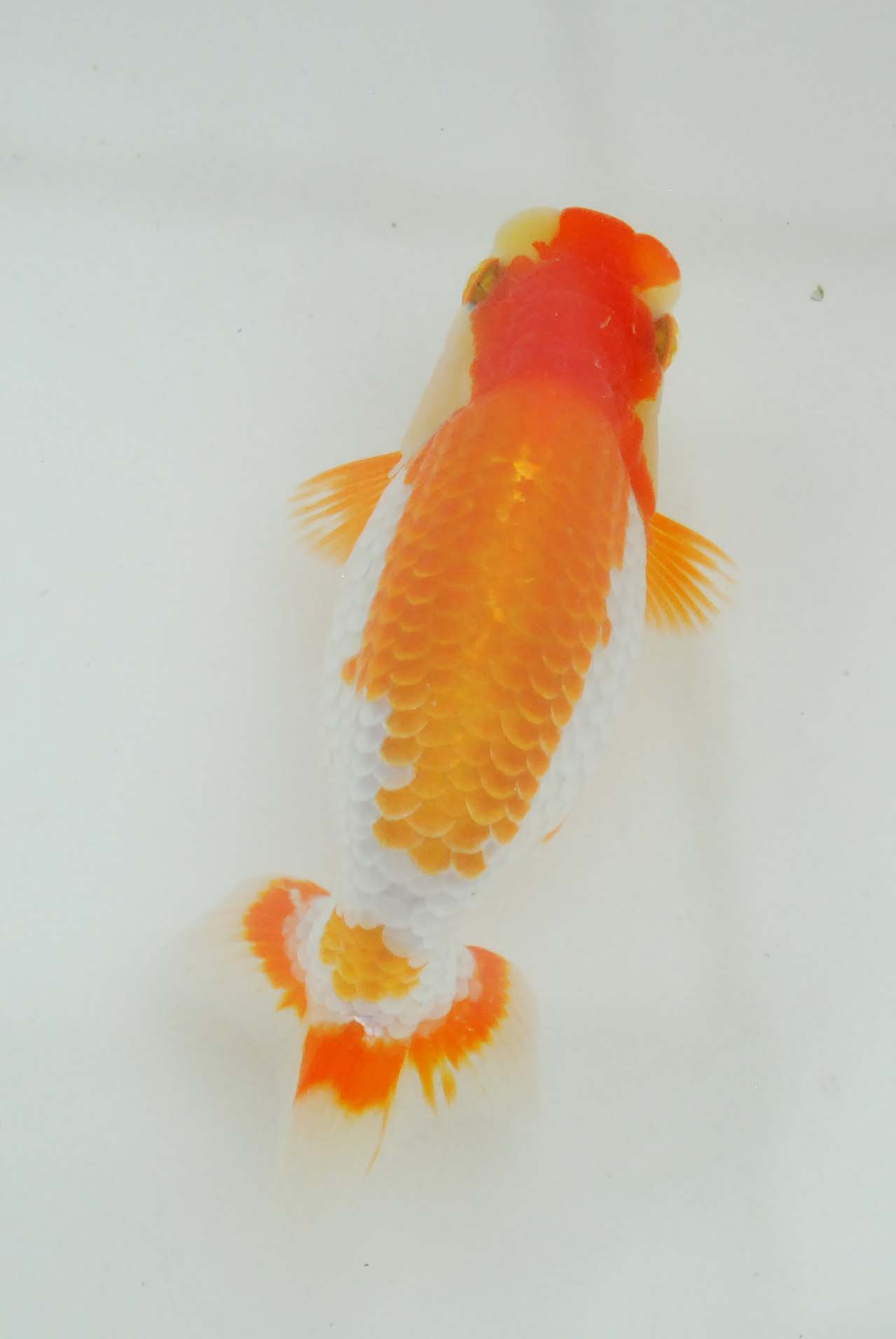
I think it has been more than two years I have tried to breed Cow Ranchu but with no success. Not only it is rare to obtain the expected color, to get a decent body quality in the offspring needs lots of luck. Most of them are defected, either totally missing the anal fin or having ugly backbone. I was tempted to give up many times.

Last week I lost the first Cow Ranchu I bought due to disease. It was a handsome Cow.

I was thinking about trying to breed him one more time, pairing him with his own offspring that show decent color. But now that hope is lost.

Well, after so many failures, I currently have four offspring. One does not count, since it is such an ugly fish though the color is decent. I will just keep it as back up. I do not take her picture. The other three are promising, though they are far from perfect. All of them are female.

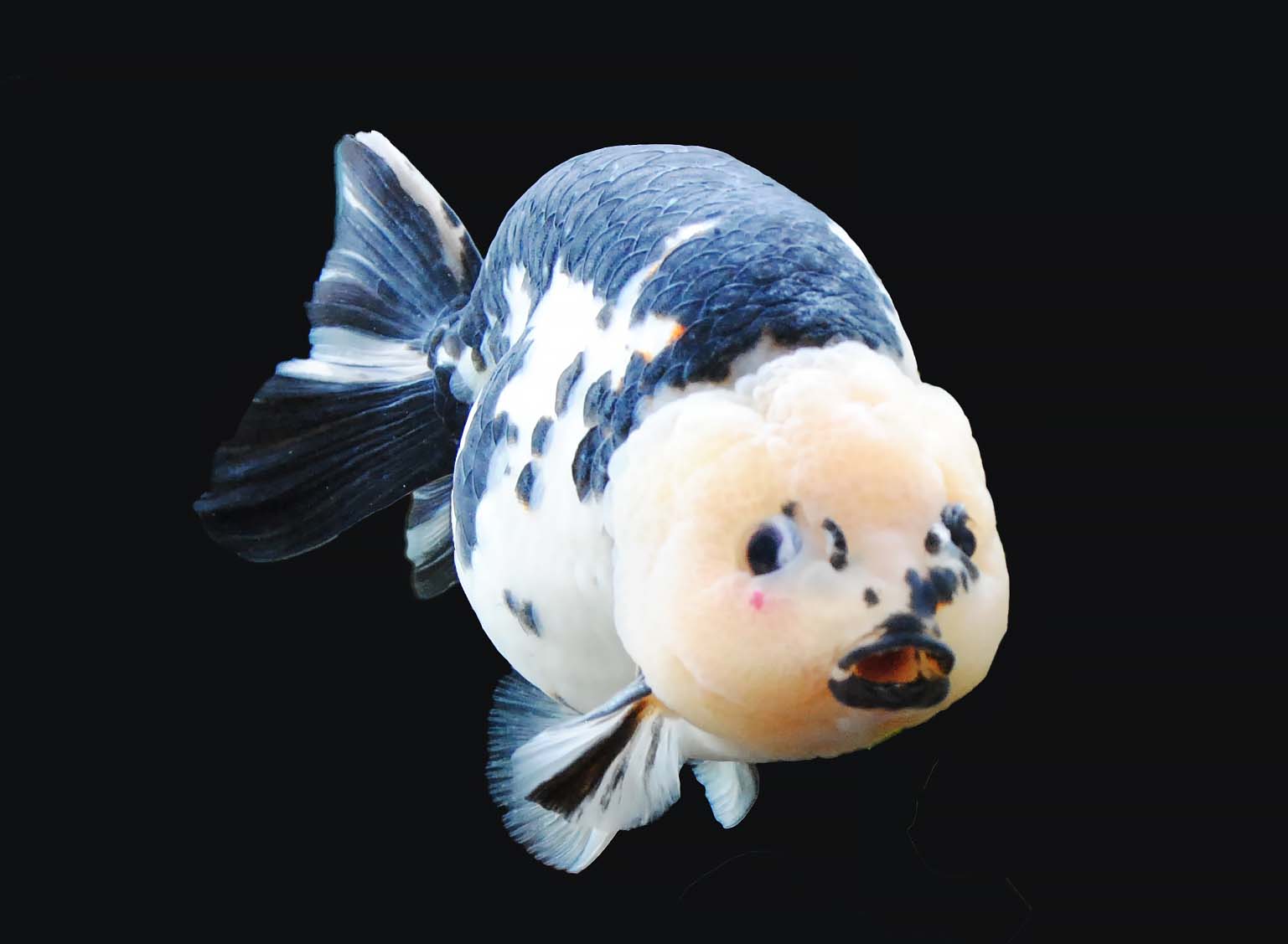
This one is the best:

The black marking is visible clearly from the top. Based on my experience with the parent, the black marking will continue to grow. I am excited to see what she will become. Hopefully this fish is fertile. It will take another two months or more for her to start producing eggs.

Another one is this:

The tail of this fish is too wide and flat. This tail type hinders the fish to swim well. The curve is not smooth enough. Yet the color is lovely. Yes, it has red color, which make her unqualified to be called Cow. Yet, the black dots look beautiful. I am certain this black dots will also grow.

I have a suspicion that this fish is not the offspring of my first ranchu I posted above. During this two years I bought some more Cows from different lineage. And they look different from my first purchase. I am sorry I have not taken pictures of the 2nd type of Cow Ranchu. From this observation, I conclude that there are more than one lineage of Cow Ranchu in the market. This 2nd fish looks closer to the second lineage I keep.

If we examine the 2nd fish closely and compare it with the 1st, we will see that the eyes are different. The 1st fish has totally black eyes, just like her father. The 2nd one has normal eyes. The behavior of the black markings look different, also. The black marks in the 1st fish tend to be whole, forming a large block, while the black marks of the 2nd fish tend to be in the shape of dots. Those are two differences I observe.

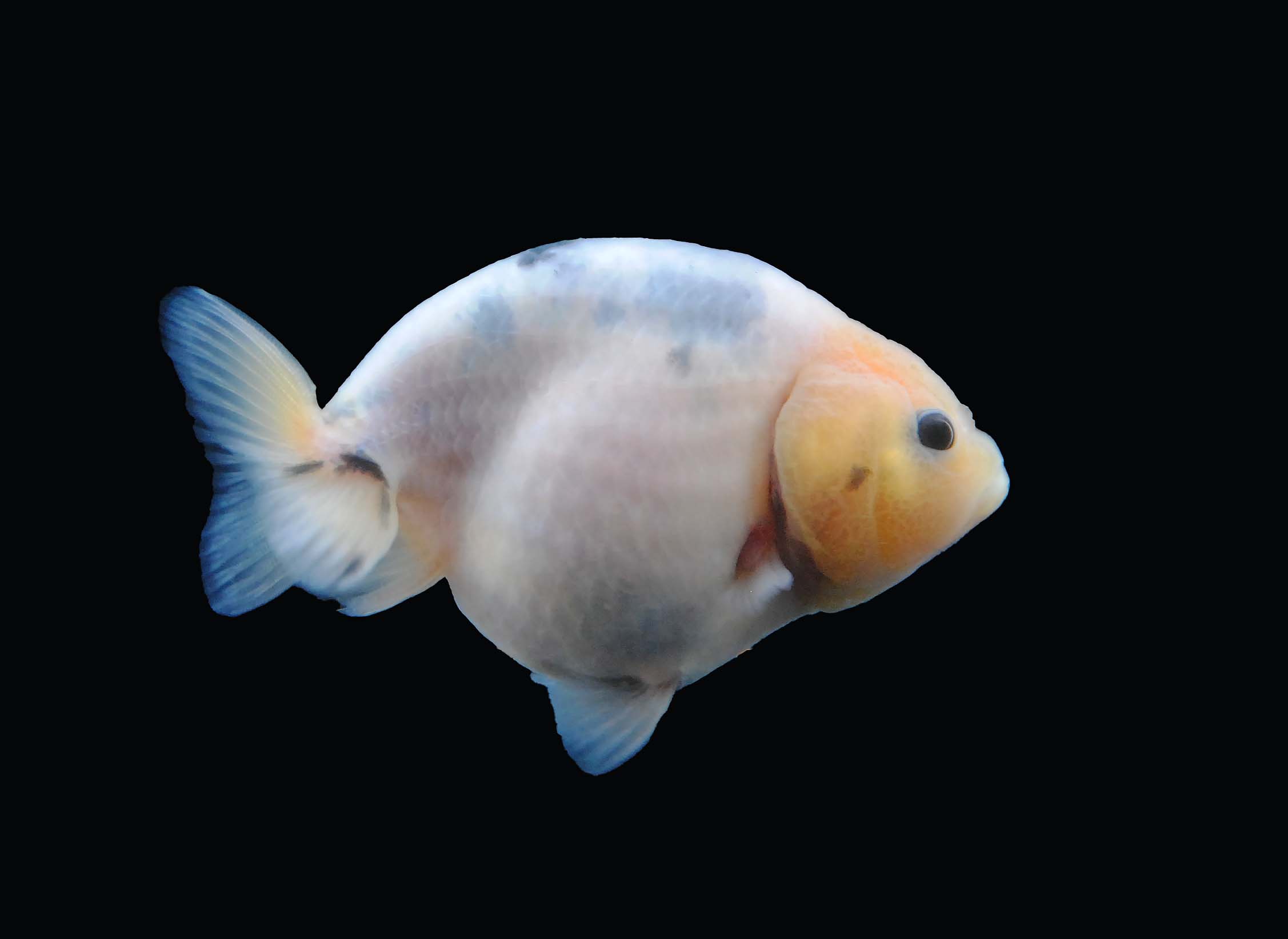
The third fish is interesting:

Yes, this is a wild color metallic ranchu. And this is also the offspring of Cow Ranchu! I begin to speculate that the making of Cow Ranchu might involve metallic scale fish! Perhaps a wild color one, or even black ranchu! Well, this is still my guess. Hopefully my future projects will give me a more solid answer.

So much is the update of my Cow Ranchu project. At this point, I can not do anything other than waiting for them to mature sexually. I will post the update. Wish me success.

Standard
The Diary of a Goldfish Breeder 2021

The Diary of a Goldfish Breeder 2021 (9)

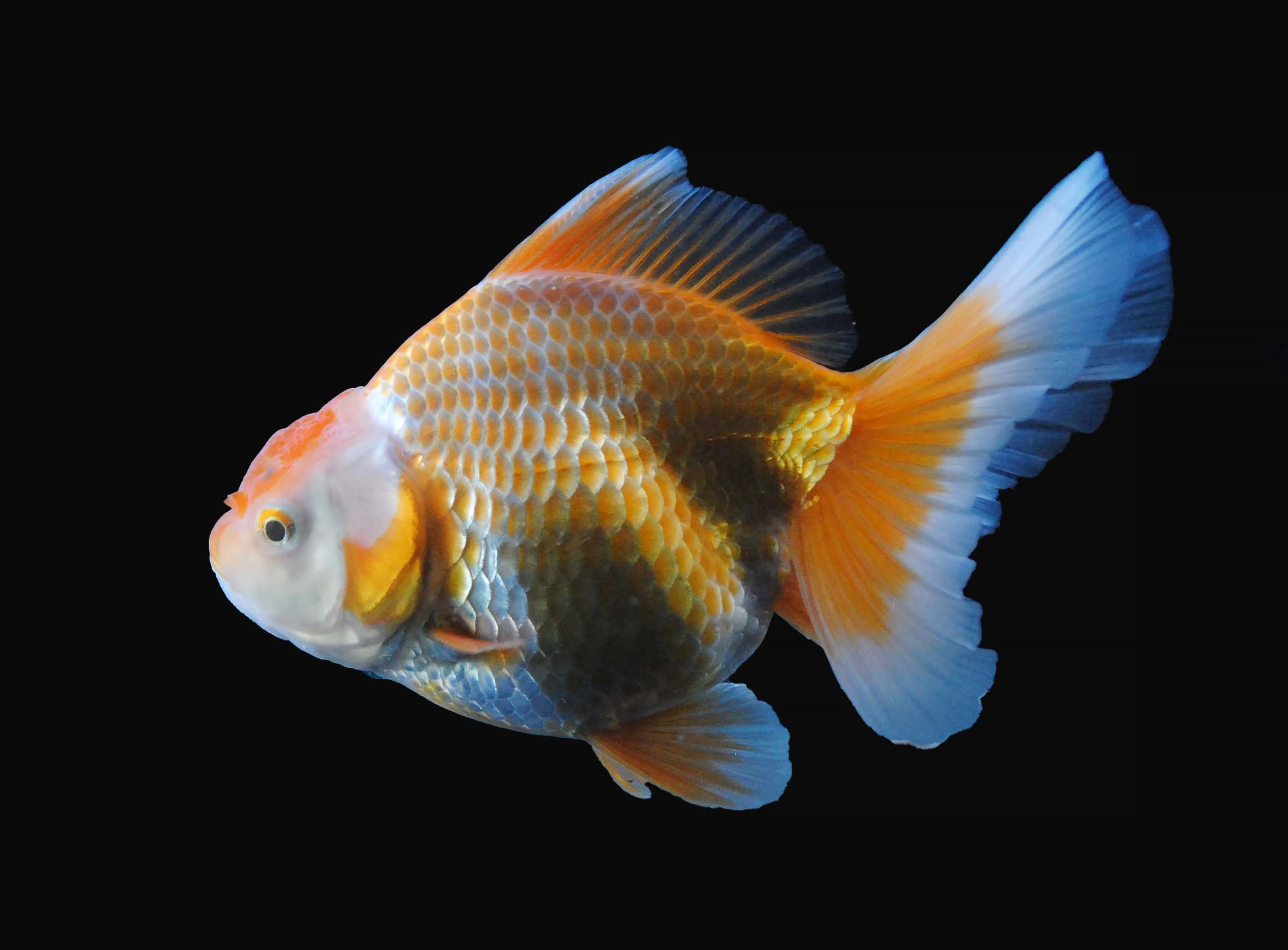
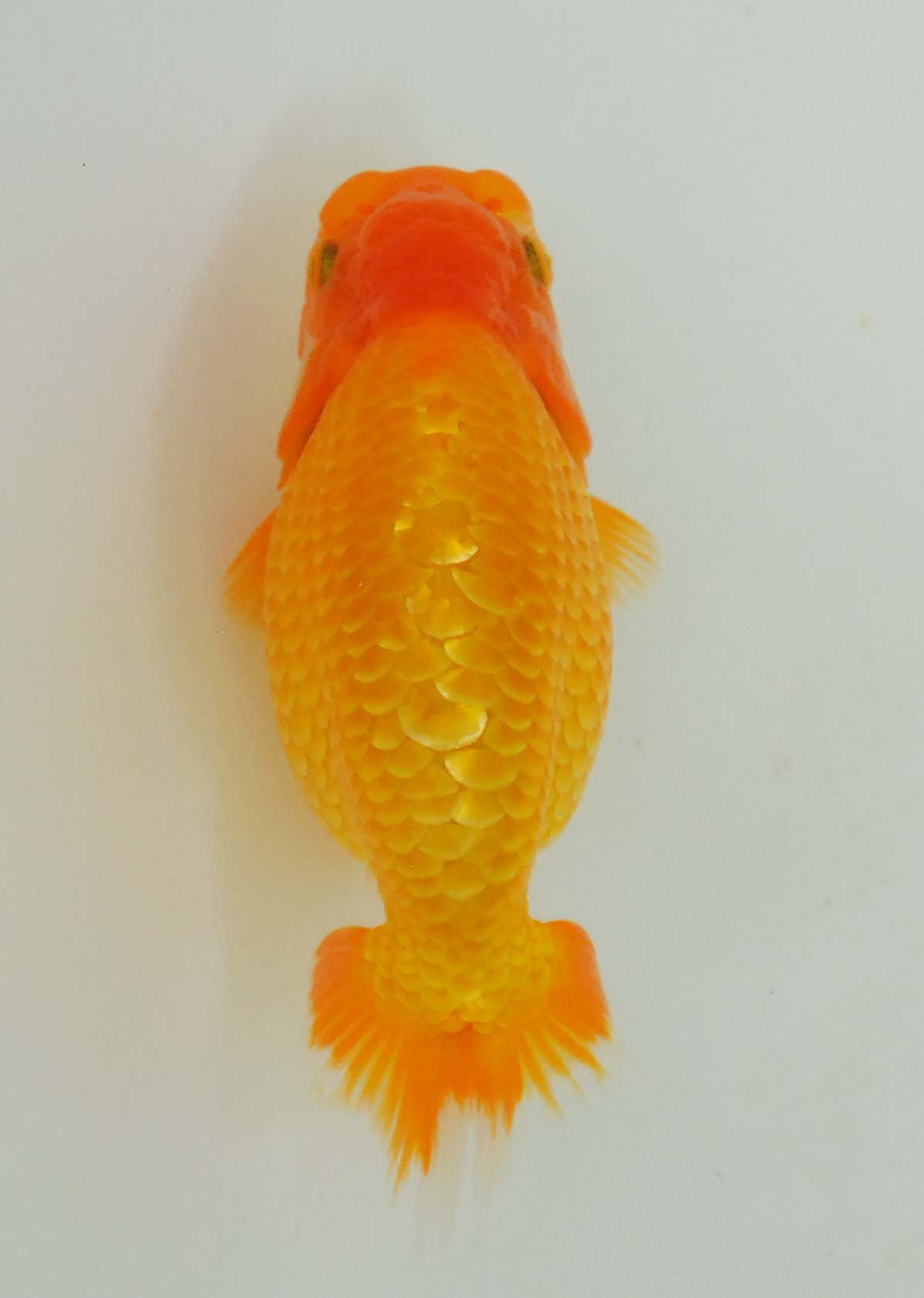
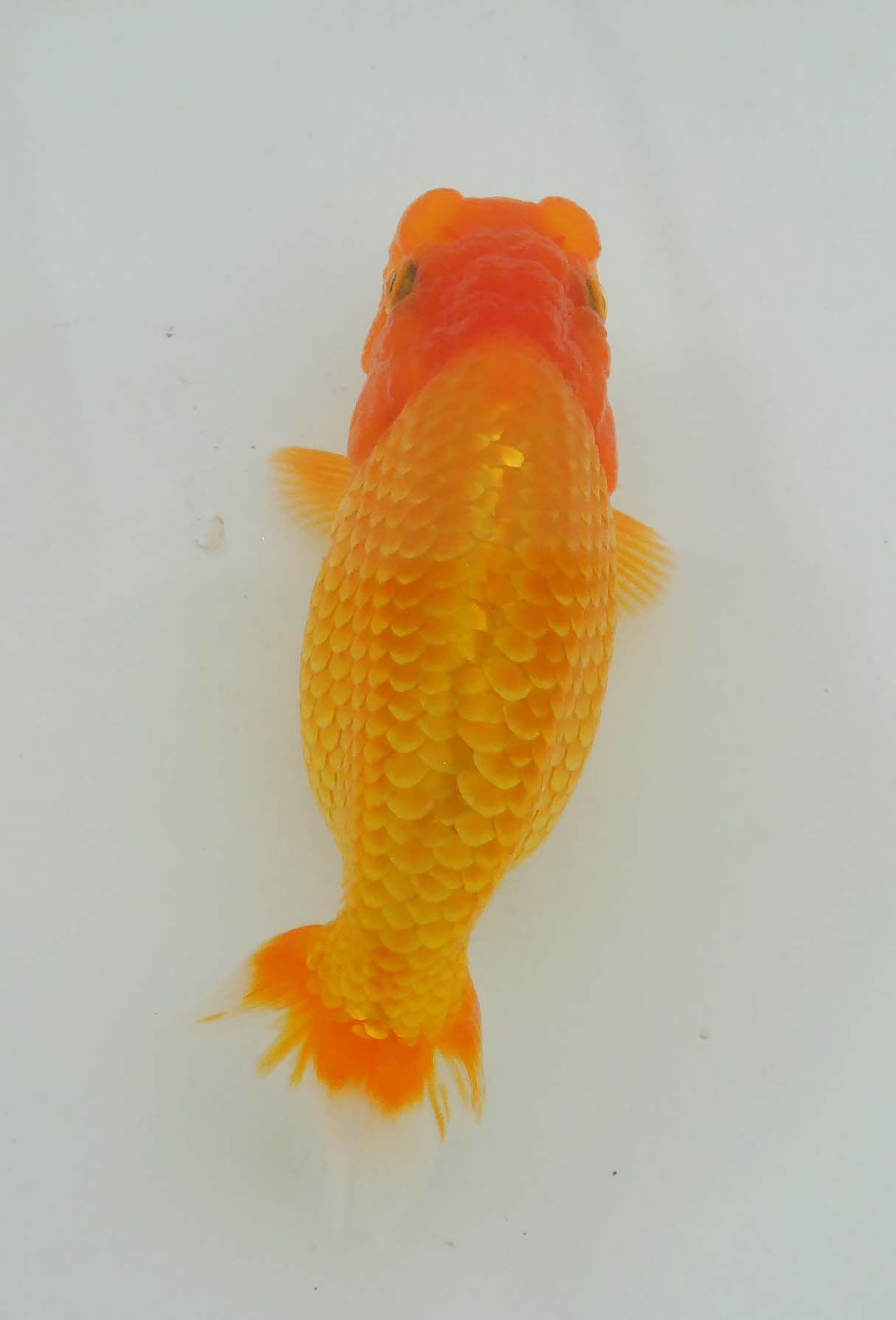
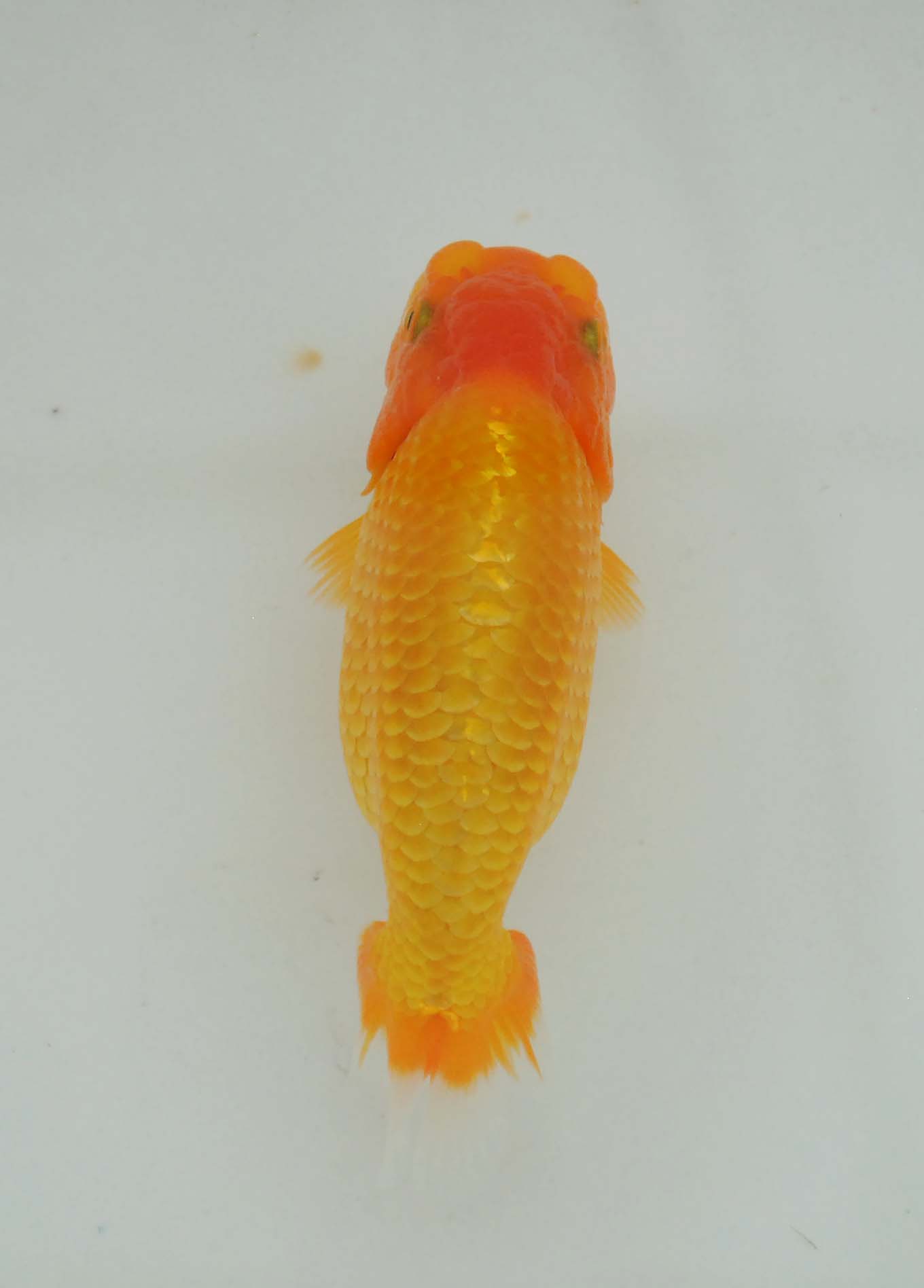
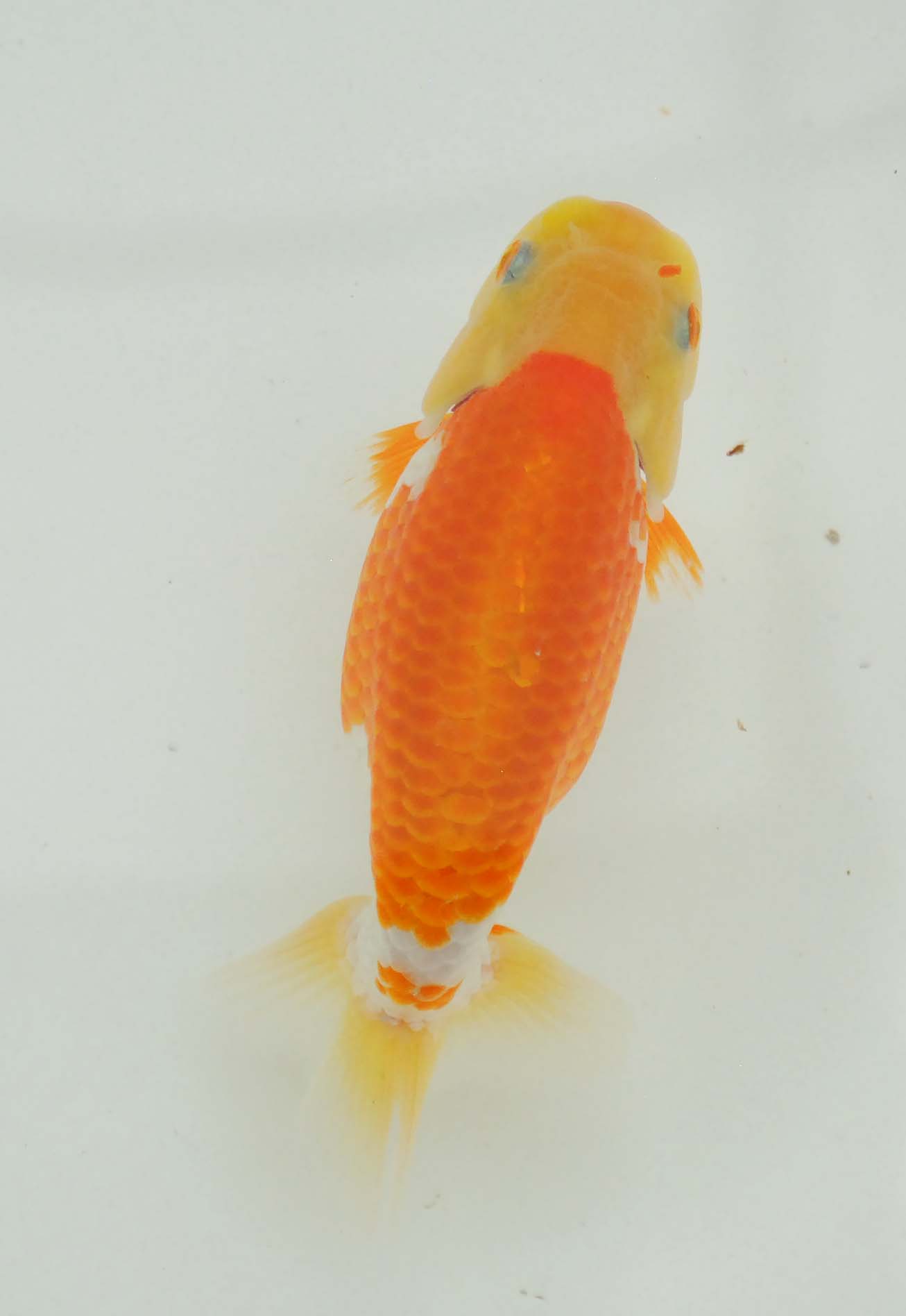
Yellow Color in goldfish is a fascinating project for me due to its rarity. My main project is to create Yellow Oranda (or better, Yellow and White Oranda), which I have succeeded. This variant falls in the category of Metallic Scale. Now my task is to improve the quality of the fish in terms of its headgrowth, body shape, and tail.

A side project in this Yellow Adventure is to create Yellow and White Transparent Scale Oranda. I nickname the variant as the Yellow Sakura Oranda. I did this out of curiosity to satisfy my imagination. In fact, I have a doubt about its market acceptance. Can the fish be clearly differentiated from the common Calico Oranda and its variations?

I started this project last year. I mated my Yellow Oranda (metallic scale) with a Calico Oranda. The F1 were Sakura in its Phenotype. I had a chance to inbreed the F1 this January. Too bac, most of the offspring have single tail and I must cull them out. I was left with only four fishes, which grow into different colors. One become Sakura with strong red color, one is a black and white fish, another one is a color between yellow and orange, and the best one is clearly yellow with white and black / blue spots! This last one is what I am interested in.

The yellow color is pale, but it is clearly yellow. However, it is a bit hard to capture in camera. I must do some editing to try to bring out the real color. I cannot say it is nice, but surely it is an interesting combination when combined with the white color. My surprise comes from the melanin showing up in the combination in the form of blue and black spots. I thought the melanin pigment will go away when the fish grows up. But it stays.

Well, the fish is not a perfect one. The middle tail does not split (but invisible from the side viewing). Yet the body and tail shape are not bad. Concerning the color, let the reader be the judge.

Standard
The Diary of a Goldfish Breeder 2021

The Diary of a Goldfish Breeder 2021 (8)

One type of goldfish that I avoided in the twenty years of my breeding activity is the Pearlscale. Not because I dislike them. I just think they are hard to keep. In my three attempts to keep them (and to breed them once), all of them ended up developing bubble-like disease in their bodies. I do not know what disease it is. I do not find such disease in other goldfish varieties. The fishes that developed that bubble seemed to suffer. My heart ached when I saw them that way. That is the reason I avoided breeding Pearlscale.

But Pearlscale was always in my heart. I remembered my childhood day when I had a Pearlscale in my tank. At that time, the Pearlscale was of the old style. It had a long flowing tail. This type is hard to find nowadays in my country. The market is now dominated by the Mutiara Tikus (translated as Mouse Pearlscale, developed by the Malaysian with the round body, sharp pointed head like a mouse, and short tail features). As a boy, I loved to watch my Pearlscale until I fell asleep in front of the tank. That fish became the model for my first goldfish childhood drawing.

In my teenager, my uncle gave me his giant Pearlscale. I could remember vividly, it was as big as a small-sized coconut, larger than a tennis ball! I put the fish in my pond only to find it floating dead the next morning. My happiness turned into sorrow. Concerning the size, I do not know if it was an exaggerated memory or if it was really that big. But it was always my desire to grow a Pearlscale someday towards that size. I never succeed to achieve it with all my Pearlscale during my life up to now.

My breeding projects so far was to experiment with unique varieties or color. I made sketches of new goldfish types. One of my imagination was to create a round-belly goldfish, such as Pearlscale, but without the Pearlscale. So it was just a round fish with metallic scale – a metallic ball. But it is a project that I never start. Just a wild imagination. Yet this shows that Pearlscale is always close to my heart.

Last year, out of nowhere, I found several Pearlscale in my offspring.

I was surprised. I did not keep Pearlscale for so long already, so there was no Pearlscale genetics in my fishes. I did not intend to breed any. How come they suddenly appeared in my collection?

These Pearlscale was a natural mutation from the Tosakin – Butterfly cross which I had done for several years. I did a lot of inbreeding and backcross breeding with Tosakin and Butterfly. For many generations, they never yielded Pearlscale, which was normal. I do not know why, suddenly there was a whole batch that turned to round belly, some with obvious pearlscale, some not so obvious. Well, I found this weird. But I welcome them.

So, now, I have Pearlscale again as a gift from heaven. Never ask, but I receive. And they are different from the Pearlscale in the market. The popular Pearlscale is transparent scale type. Mine is metallic scale type – a variant seldom seen nowadays. The popular one is the short tail variant. Mine is towards the butterfly tail type. They are unique. I am happy with them. Since they are metallic scale, the Pearls are not so eye-catching. Some doesn’t even seem to have the protruding scales – and this will be my imagination come to reality without any effort! And more, they do not seem to develop the bubble disease!

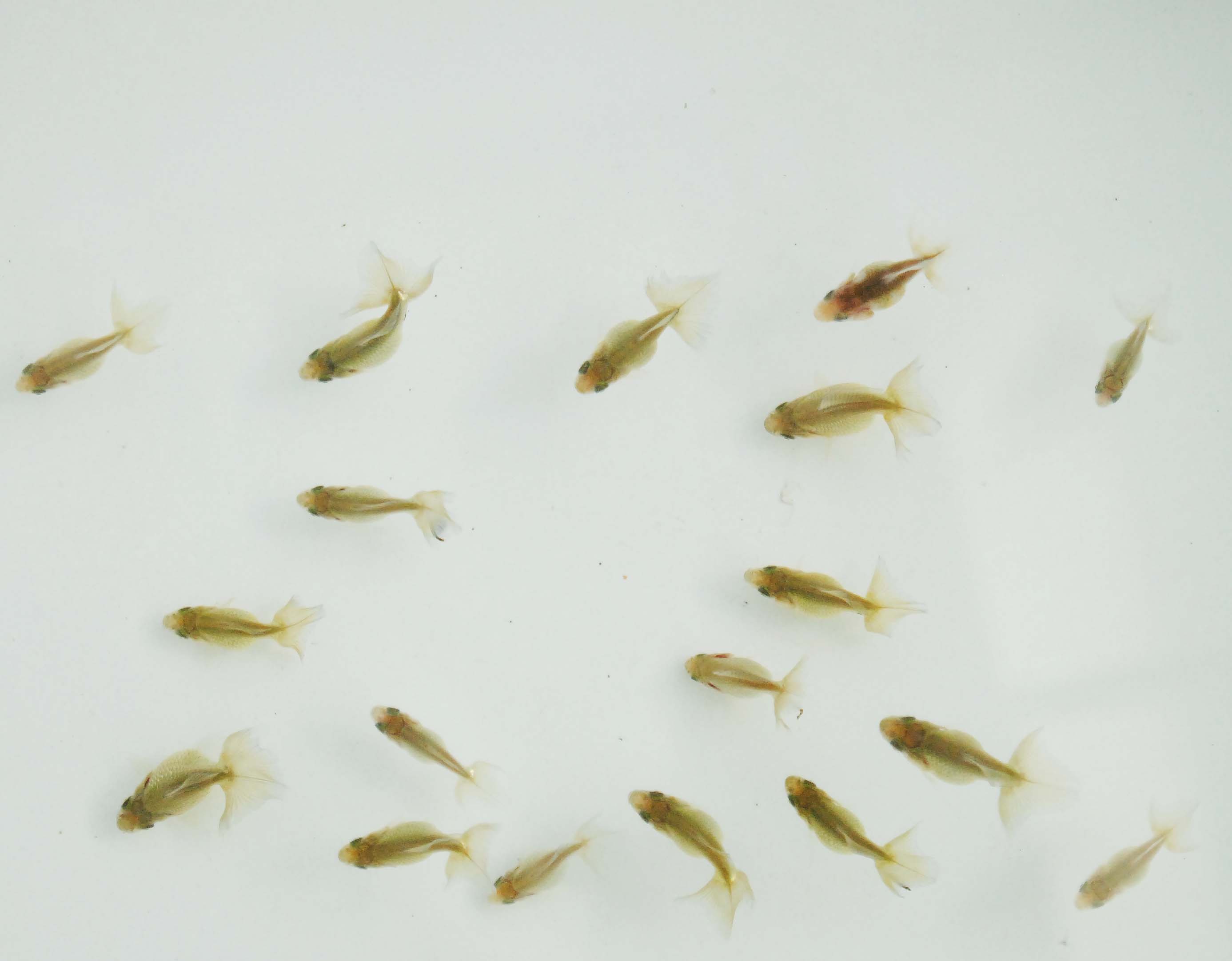
From the offsprings, only four I found to be vigorous. The rest were weak or stunted. From this four, only one is male (the grey one).

I still do not know if they can produce true. Will their offspring be just normal butterfly without the telescope eye? Or will they become true metallic Pearlscale with butterfly tail? Or will they be the Steel Ball of my imagination? The first mating attempt produce infertile eggs. The second attempt produce less than ten hatchlings. This morning they breed for the third time, and hopefully produce a better result. Let’s wait for the updates!

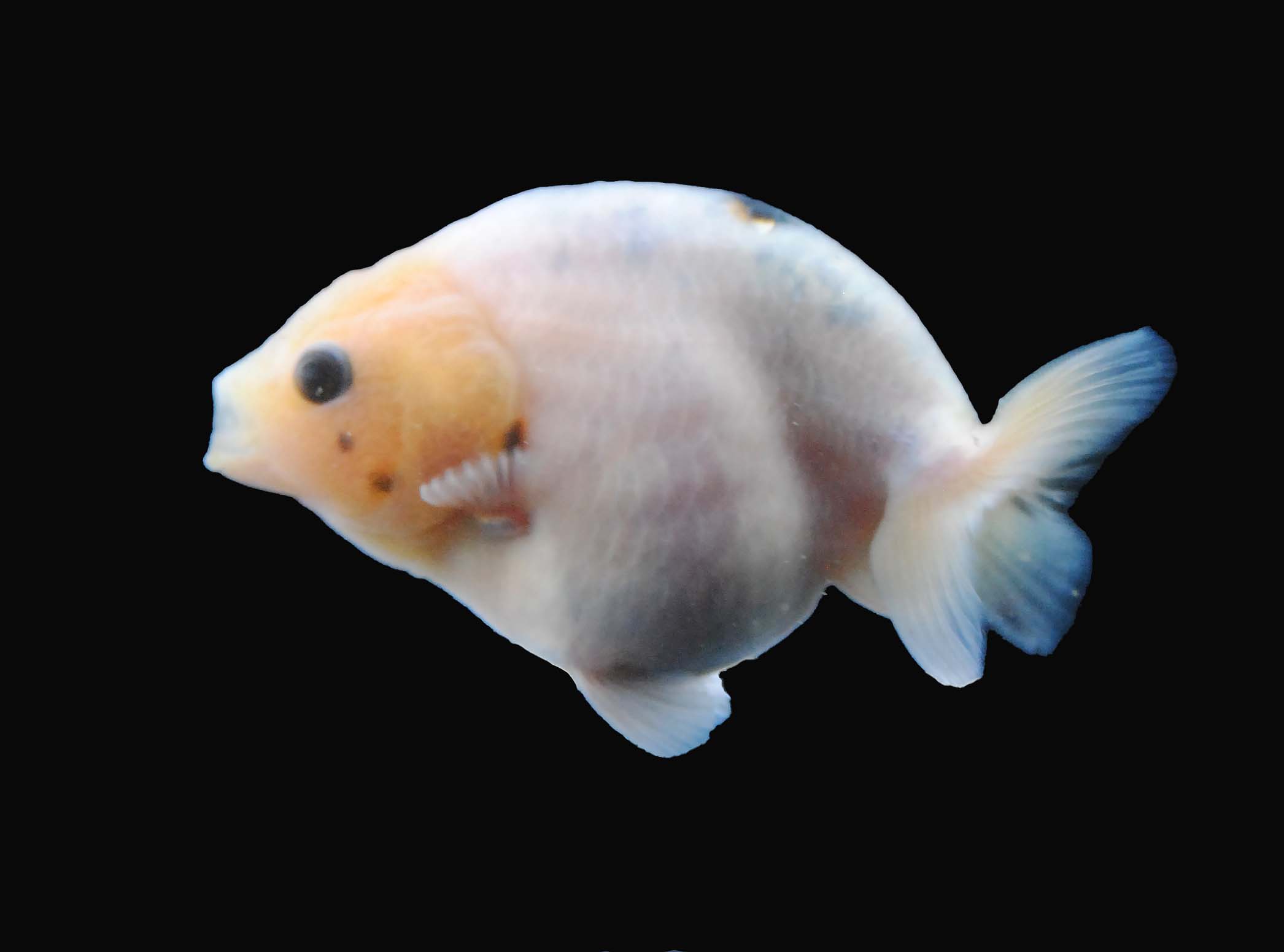
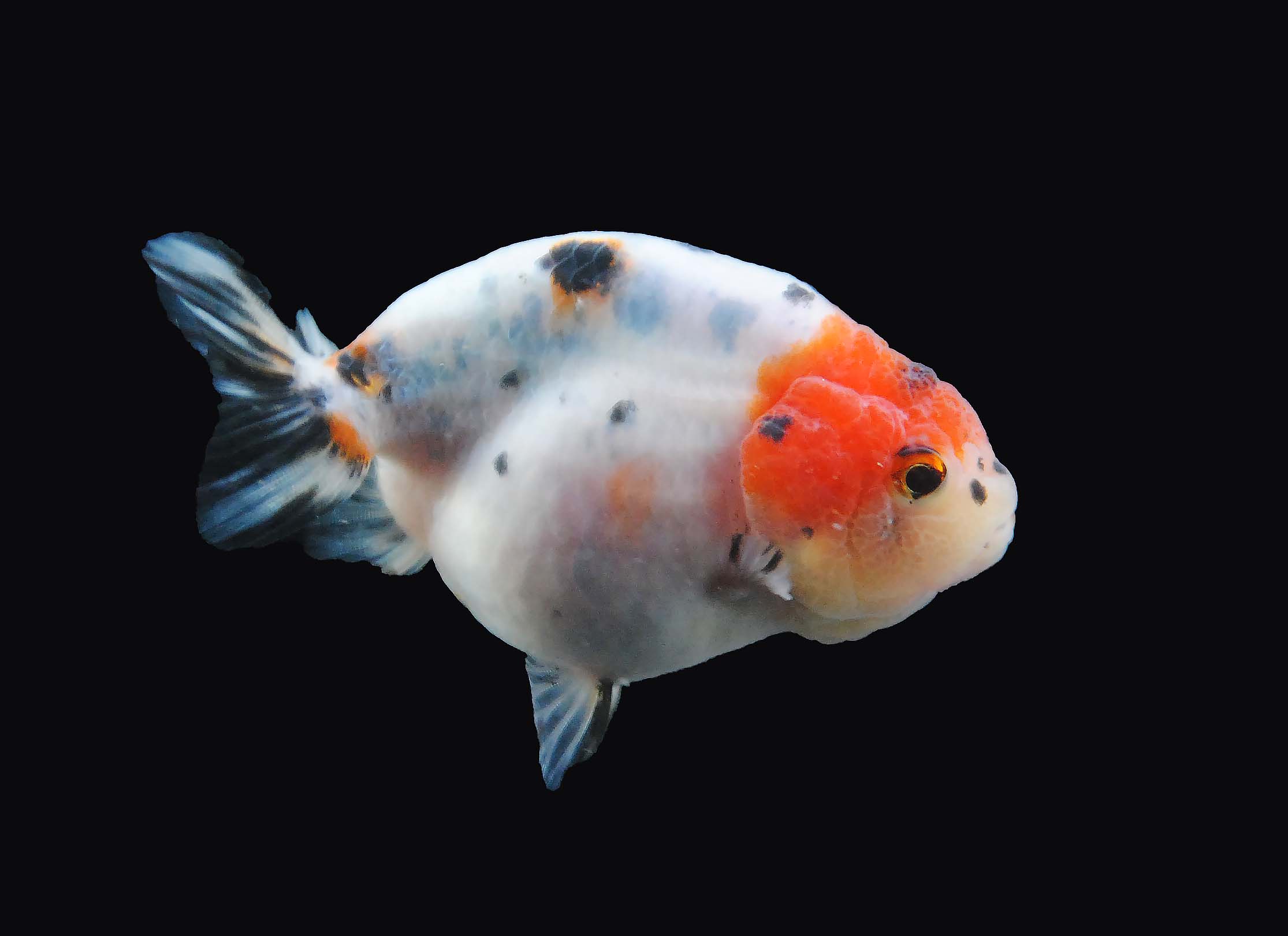
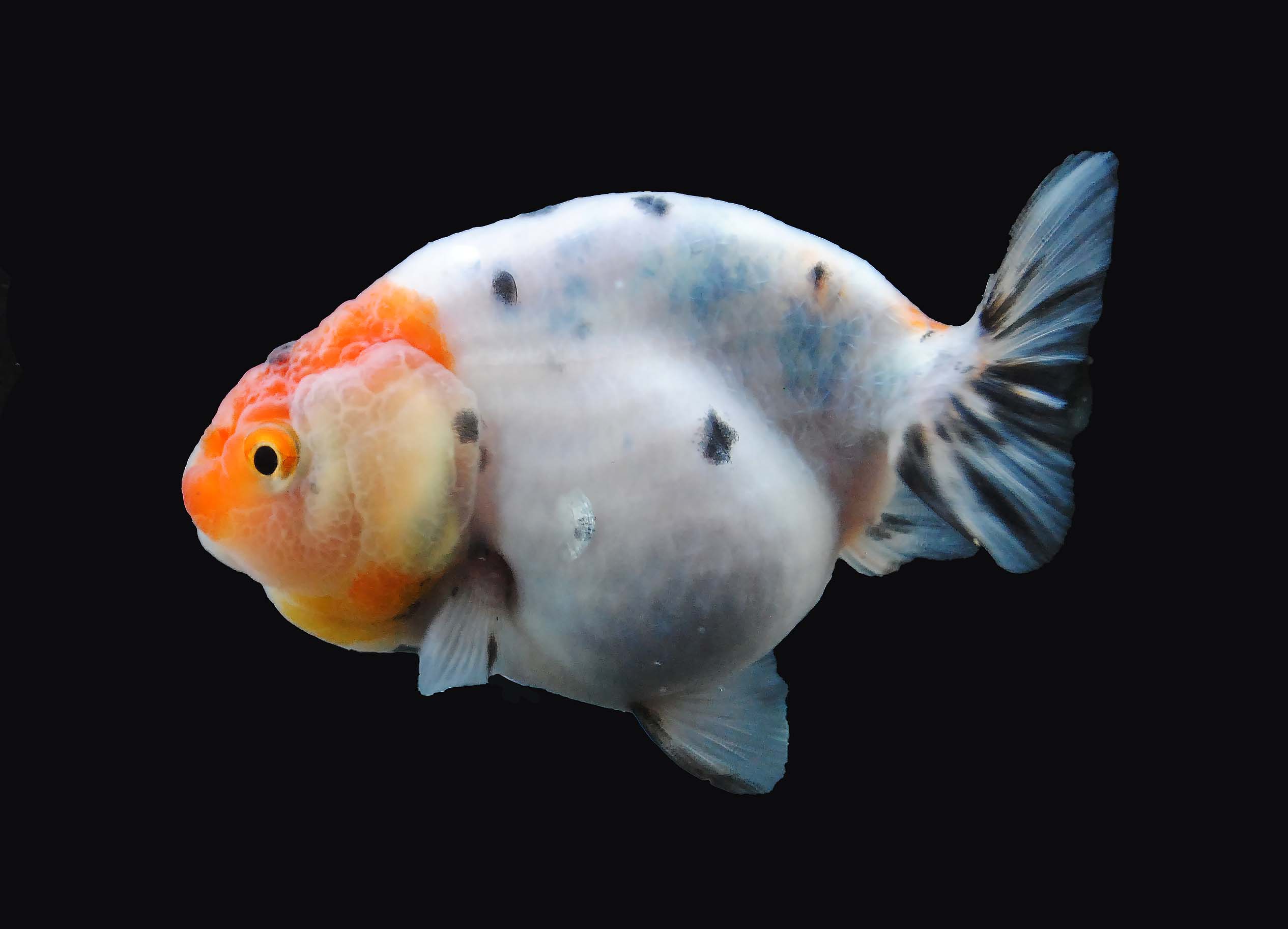
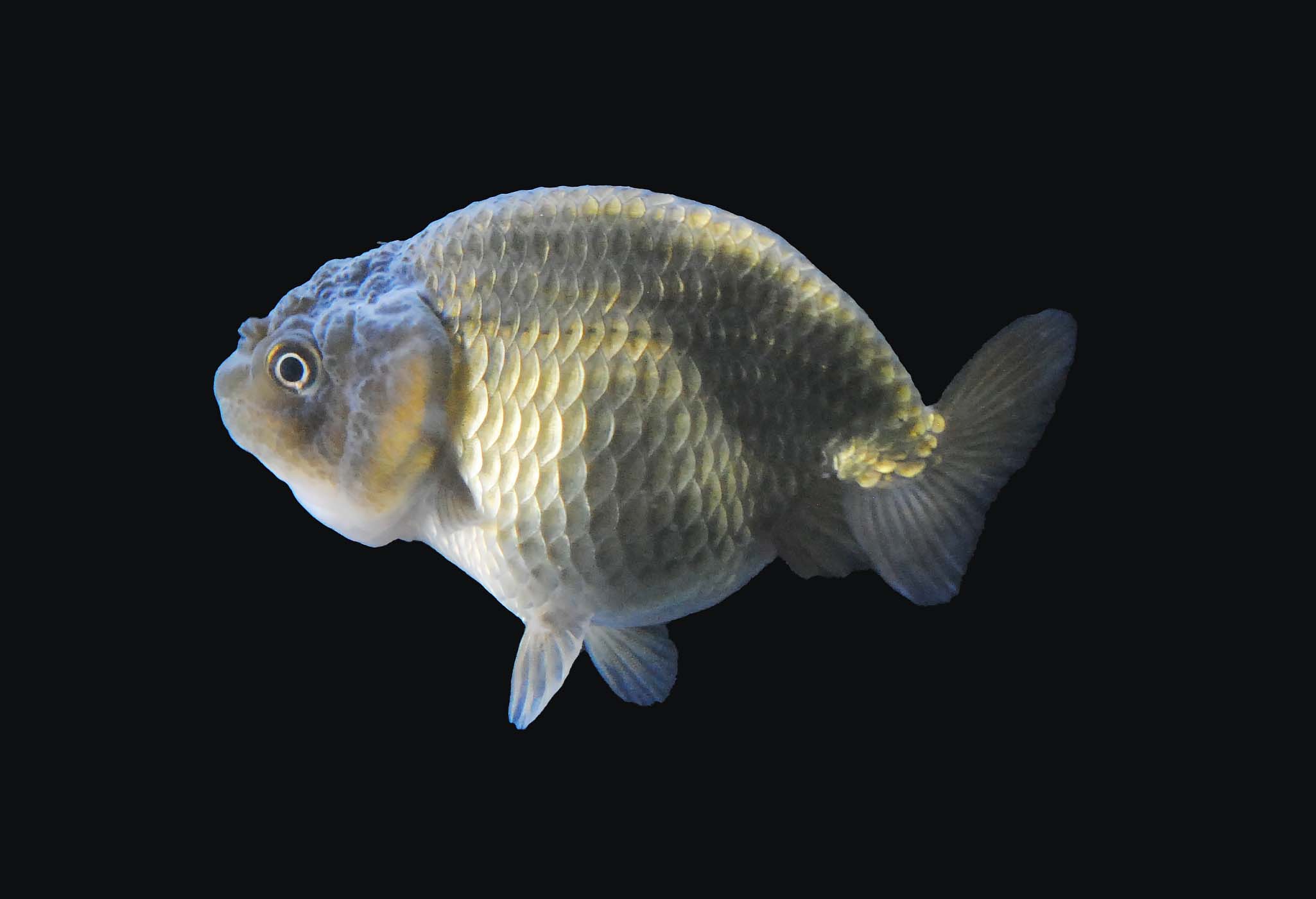
Here are the four metallic Pearlscale with (semi) butterfly tail:

Standard
The Diary of a Goldfish Breeder 2021

The Diary of a Goldfish Breeder 2021 (7)

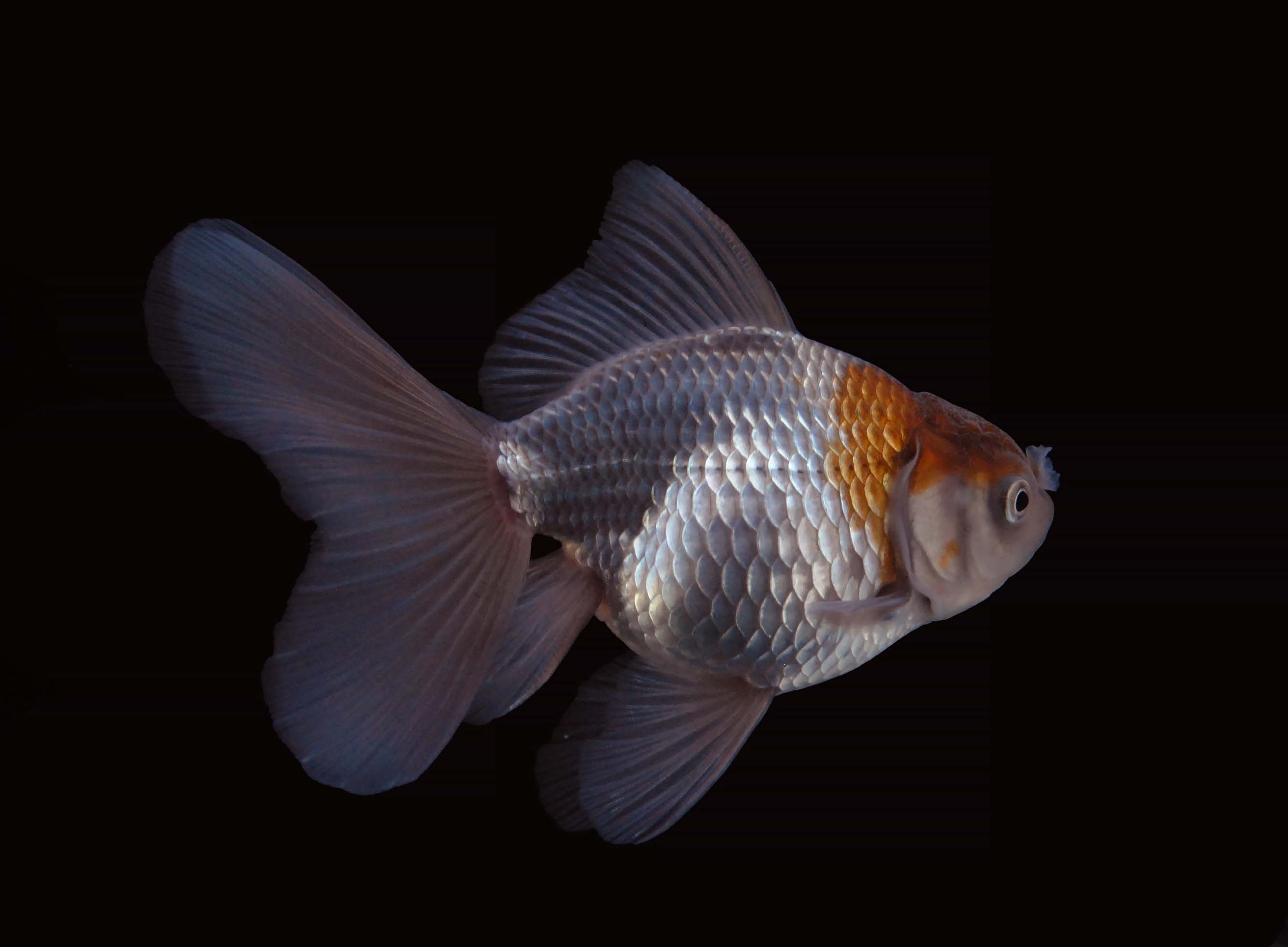
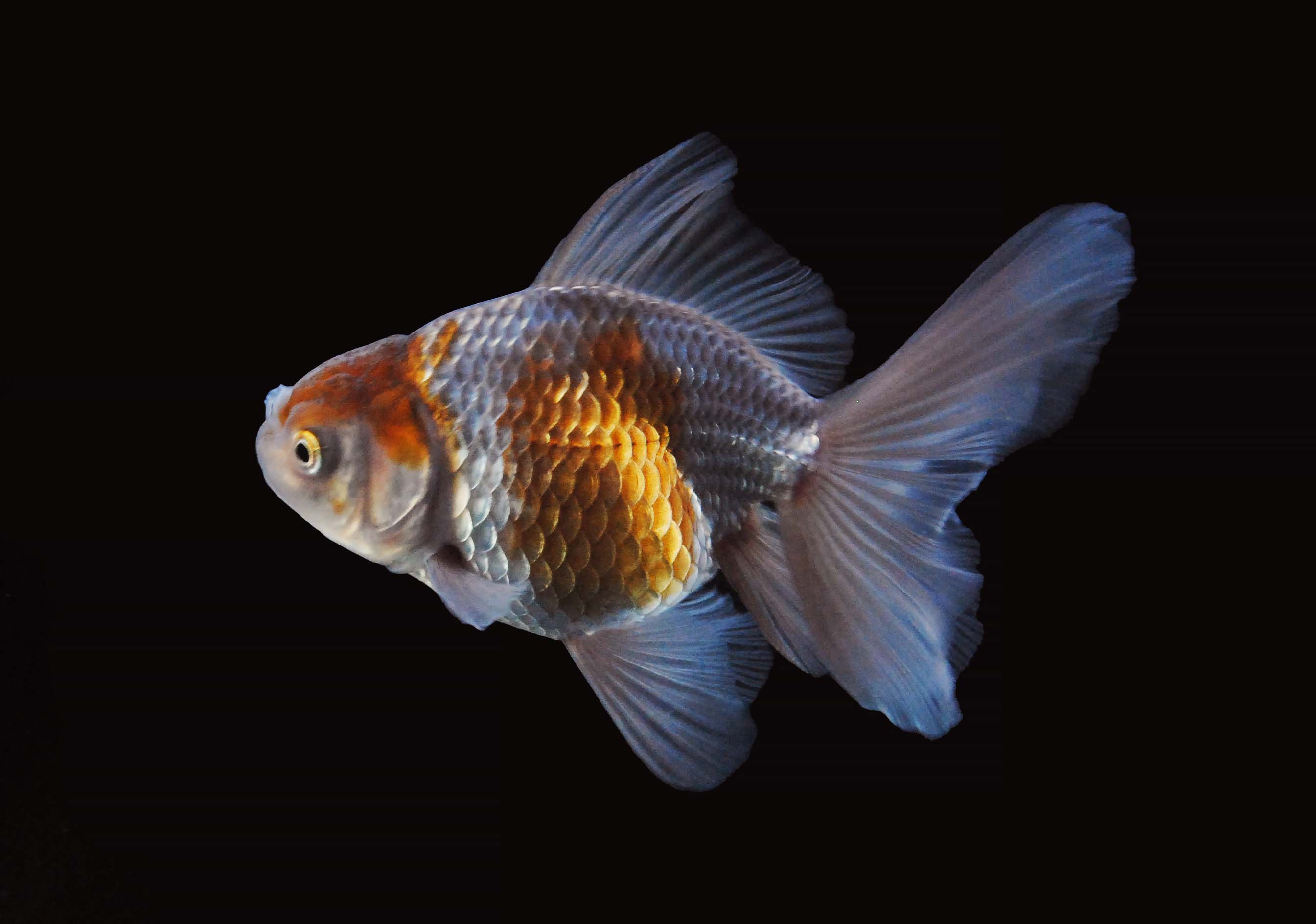
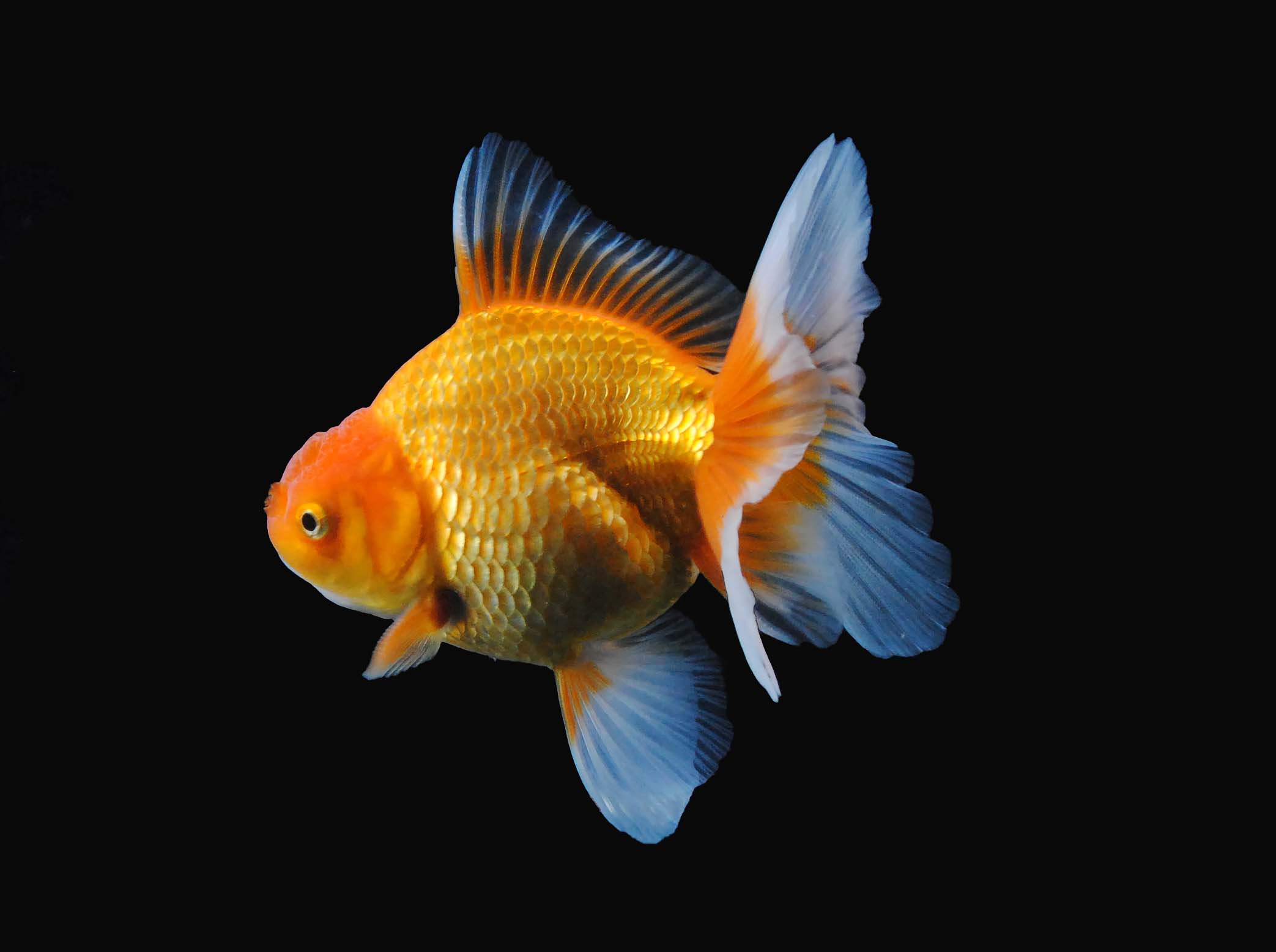
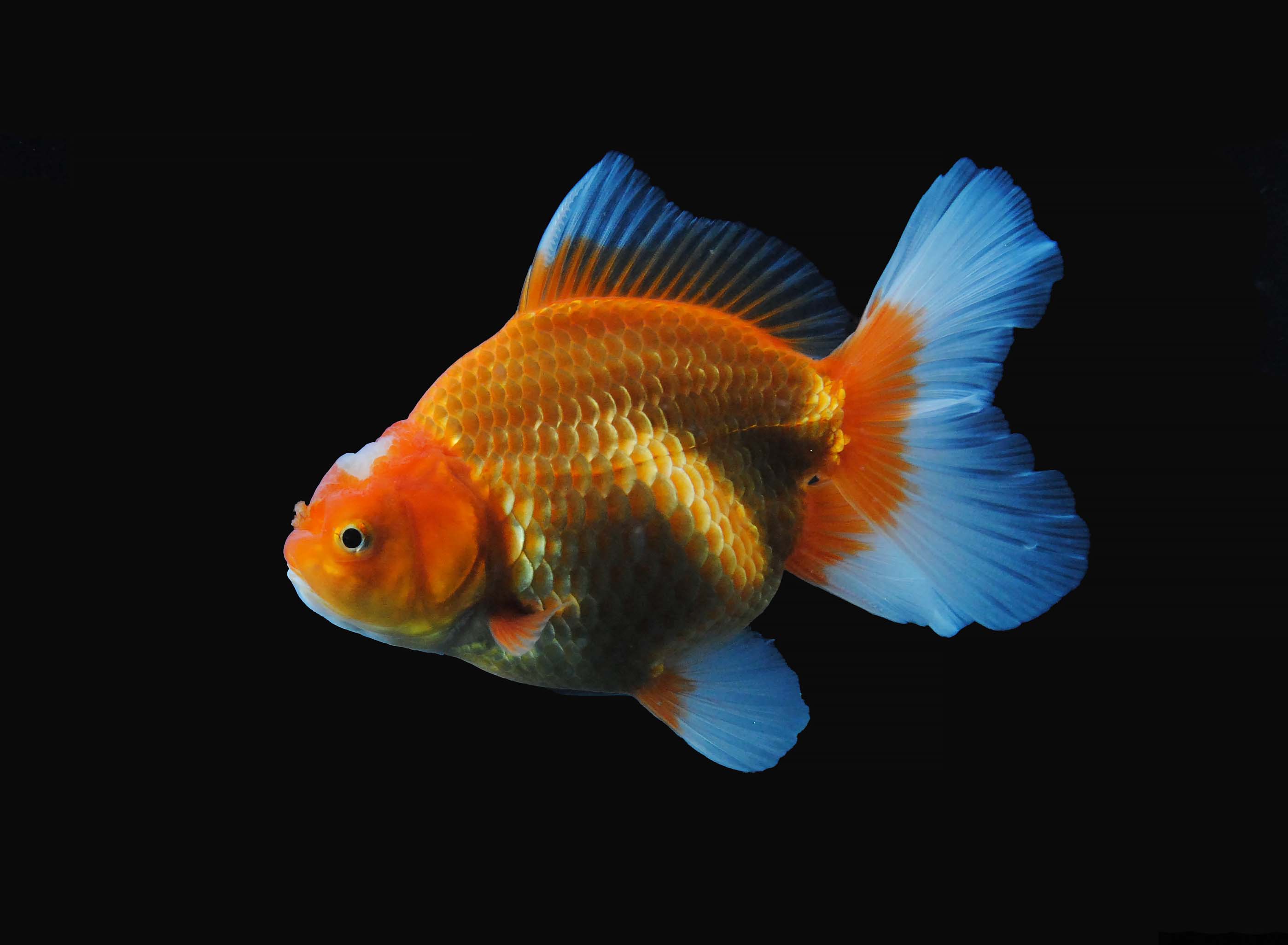
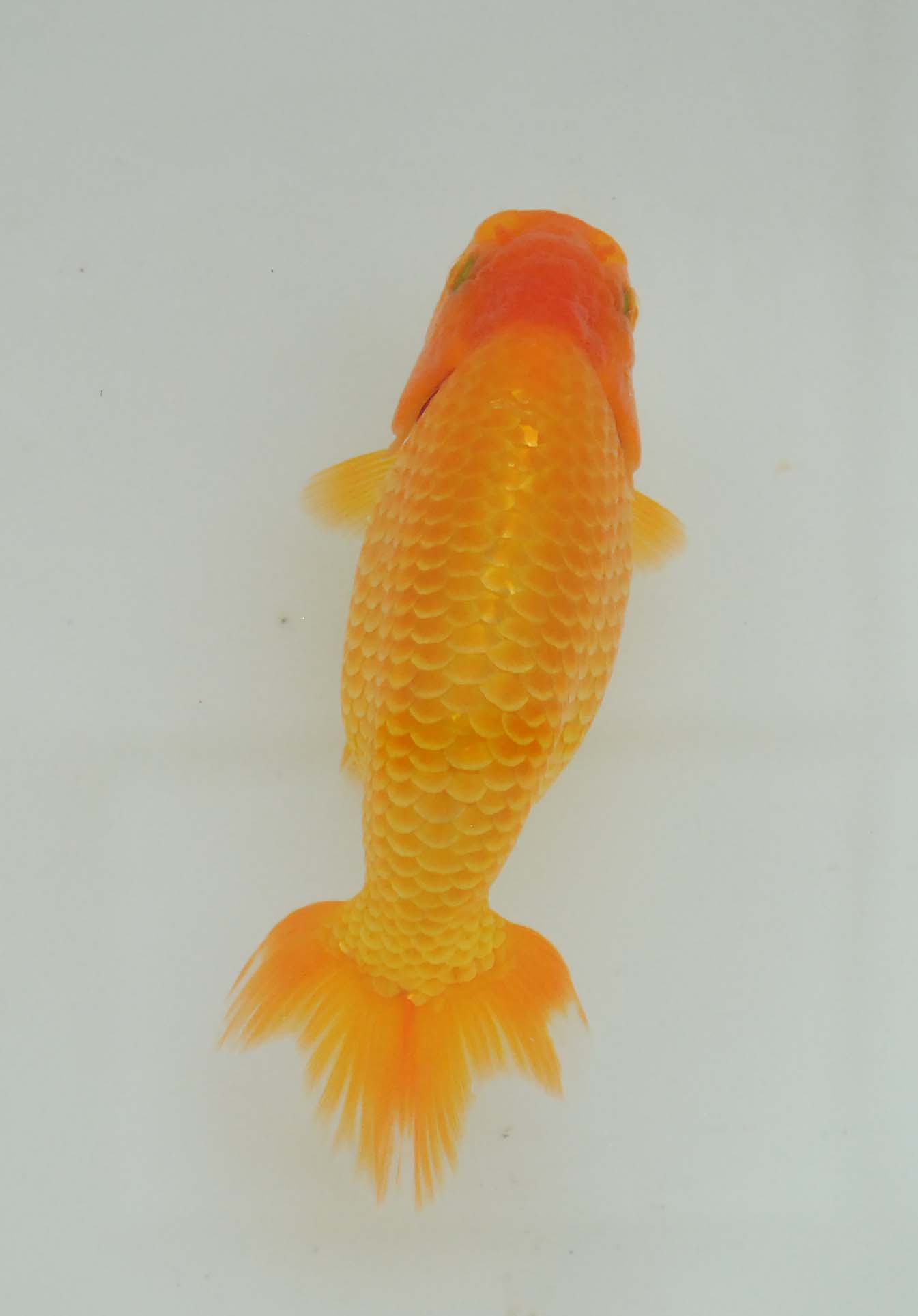
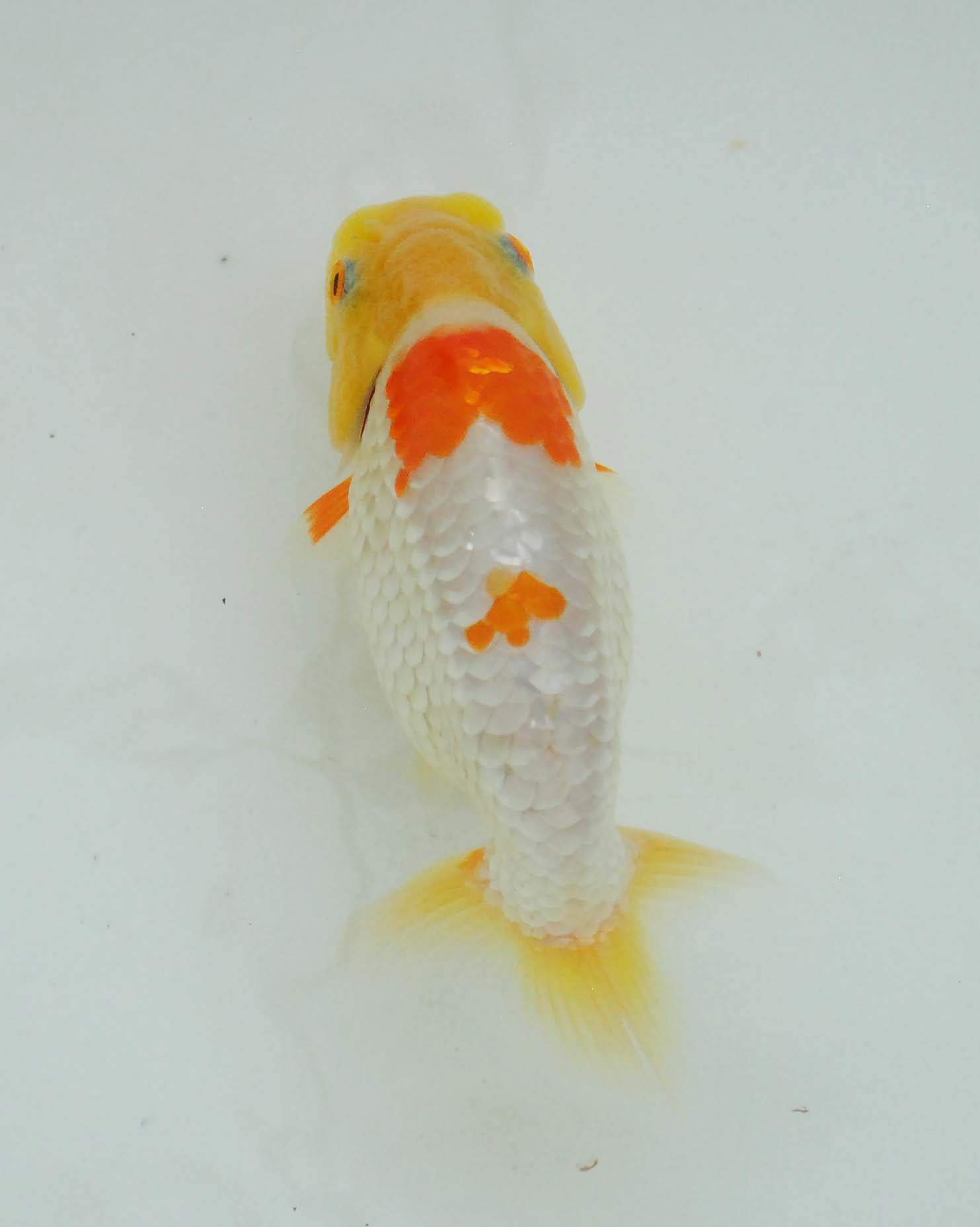
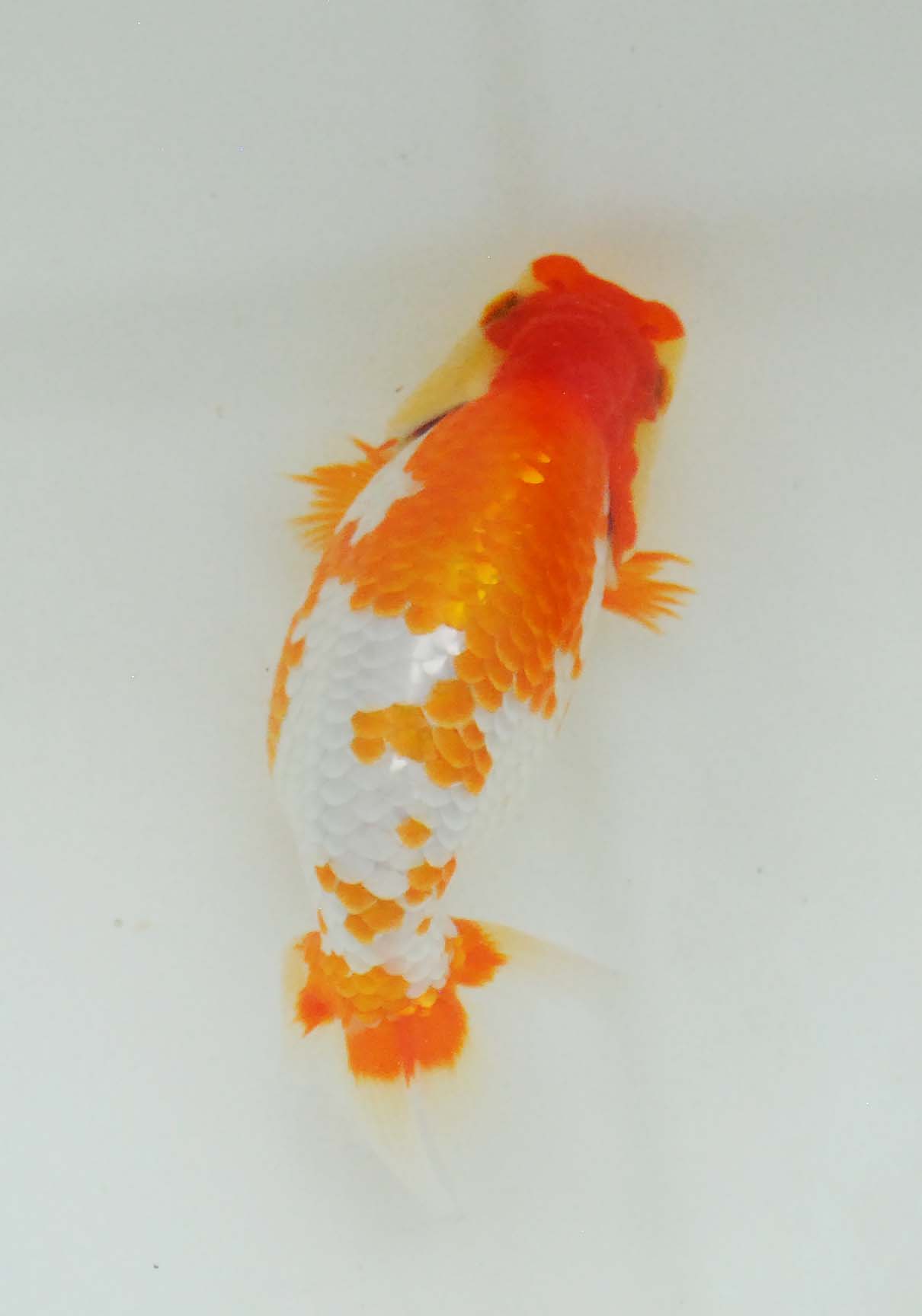
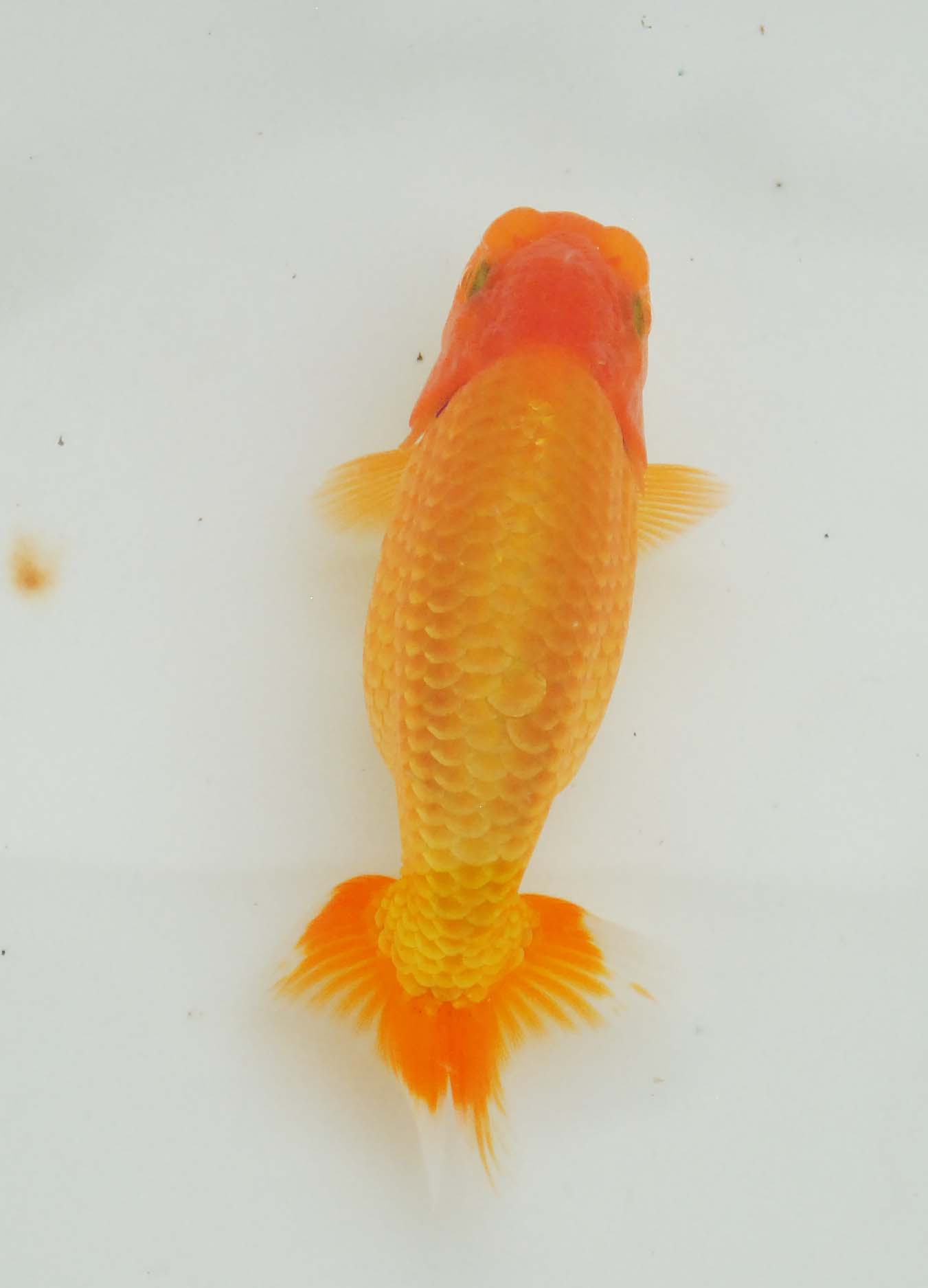
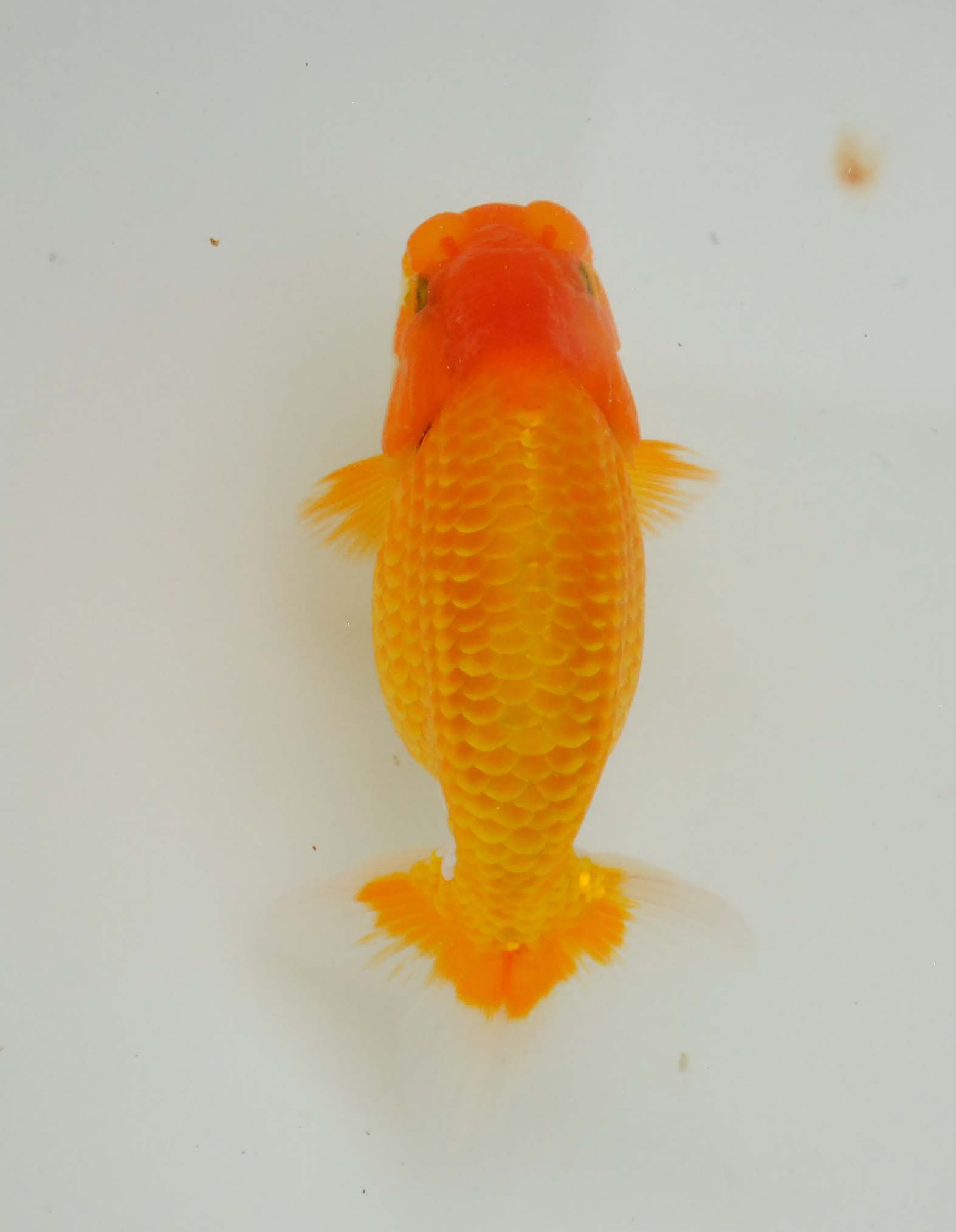
This is the update of my Purple Oranda Project. The aim of the project is to improve the quality of my Purple Oranda. The quality of my previous Purple Oranda was skinny fish with minimal headgrowth and ordinary tail. On January this year, I started to cross it with a bulkier Red (Orange) Oranda that has a better headgrowth and the so called rose-tail, which I called my Basic Material. Since the Purple Color is recessive to the Red color, the offspring are either red (orange) or red-white (orange-white) in their phenotype. The F1 show improved body, headgrowth, and tail quality. But the quality is not uniform as will be seen in the pictures below. The Basic Material quality has not been achieved at this stage.

The current results are fast growing. I moved them outdoor last week to see if they were ready to mate. I am a bit worried that I cannot see any visible female when I inspect them. I can see some males with white particles on the pectoral fins. But I do not see any protruding anal in the rest of the fish without the white particles. I do not know if they are immature males, or females, or infertile fish.

The current state does not produce Purple Color yet. My main strategy to produce an improved Purple color is to mate F1 x F1. Yet, the worry I mention above might be a hindrance. For the back up strategy, I still keep a productive female from my previous Purple Oranda. I can mate her with the F1. But this move might decrease the quality I have seen in the F1. Well, at least I still have the back up plan intact. In the next six months or less I might be able to update the results.

This is the productive female from the previous breed. Notice that the body tends to be slim, the headgrowth is minimal, and the tail shape is ordinary. It is considered a poor quality Oranda. But the color is beautiful.

And these are the F1. Notice that the bodies are bulkier, and the headgrowth are better thought still small. The tail show some wrinkles in some of them, as the characteristic of the rose tail (or semi rose-tail). One of them (number 4) shows a large hump as in Ryukin. I think this is an outlier and I will not use it if I do not have to.

Standard
The Diary of a Goldfish Breeder 2021

The Diary of A Goldfish Breeder 2021 (6)

It turns out that I did not write as often as I expected. Now in this holiday season (Ramadhan), I would like to catch up with my diary. For a brief update, I did not do intense breeding activity on March. I slowed down since my facility was fully utilized to raise the offspring from January and February. I redid some unsatisfactory projects on Oranda and Tosakin. My main activity on March was to sort out the result of my topview ranchu projects, and this will be the content of this essay. I also refined my way of culturing daphnia. On April, I had some liberty to breed my side projects such as butterfly, celestial, pearlscale butterfly, and some ranchu. I also had the opportunity to start my next big project to create a celestial butterfly goldfish. I will write more on these in the next occasion.

As I said, I would like to update on my tvr project in this essay. Let me refresh the reader’s memory that this project was started by crossing Wakin and Topview Ranchu. My dream was to create a longer version of Topview Ranchu. The result today is the third generation from that initial crossing. The initial Topview Ranchu being crossed with Wakin was from the Andou line. The result was crossed back again to another Topview Ranchu from the same line. Then I crossed the result back to Topview Ranchu from the Murakami Line.

At this point, I cannot say that I am satisfied with the result. Yet, for sure, I am happy with the progress. The results are varied. Some resemble TVR, but some are arguable. In my opinion, one more crossing to TVR will be needed to finish the project. That is my plan. But I might still inbreed the current result with each other, perhaps to create a slightly different version of TVR. I understand that I will have little support to take this “out of tune” project. Yet, I love to be different.

These are some of the best results so far. Do enjoy.

Standard
The Diary of a Goldfish Breeder 2021, tosakin

The Diary of a Goldfish Breeder 2021 (5)

Date: March 9, 2021

               I try to take better pictures of my tosakin this morning. I realize that it is a bit hard to get a clear view of red-white tosakin in a white bowl. I wish I had a black one. Anyway, enjoy the pics.

This is the only productive female tosakin I have right now. She is an offspring of my Nagoya tosakin and my own tosakin line. She has a defect on the dorsal fin, namely, the dorsal fin does not cover the whole backbone.
This is the male tosakin I paired with the red-white female above. He is also a young tosakin.
These are the offspring of the two above, approximately three weeks old. They were many, but I culled out a lot since the flatness of the middle tail (as seen from side-view is not desirable. The angle of the tail is too upward. I also expect that some of the offspring will become all white since both parents are dominantly white. This is a feature I want to correct in the other pairing.
This is the original tosakin I bought from Nagoya, Japan. The growth in the head is a sign of his old age (more than two years old). He is the uncle of the two red-white tosakin above.
This is the offspring of the Nagoya tosakin and the redwhite female. So, this is a marriage between uncle and niece. The angle of the middle tail (as seen from side-view) looks better. And to me, they look more uniform. Promising. I think if I still have the chance, this is the pair I need to breed again.
This is a male grey tosakin, as a sibling to the two red-white tosakin above. My own previous tosakin line (as one of the ancestor of the two red-white and this grey) was a grey thailand tosakin, so it is not surprising to get grey fishes in the descendants. I mated this grey with the red-white female also. i cannot produce the picture of the offspring since they are still very small (less than two weeks old).
This is my male improved flysakin (a cross between tosakin and butterfly) that has been crossed back to tosakin. The flips are definitely tosakin. The thousand rays in the tail are also the trait of tosakin. But the middle tail is still split, and the whole tail looks soft (feasible only when they are swimming). I also pair this with the female red-white tosakin in the hope to create a tosakin with longer tail as my line’s uniqueness.
These are the two fishes with intense red coloration that I would like to be the characteristic of my tosakin line also. My friend and me call these two the two Beni, since Beni is a koi terminology to refer to the deep red coloration (if I am not mistaken). I already have the offspring of these two Beni with my red-white female tosakin. It will still be a long process to create a true tosakin from this cross.
These two are fertile female improved flysakin. The tail characteristics vary from soft to hard, from medium size to long. Yet, we can see a resemblance of tosakin in them. I mated these two with the original Nagoya.
Standard
The Diary of a Goldfish Breeder 2021, tosakin

The Diary of a Goldfish Breeder 2021 (4)

Date: March 8, 2021

               If I was occupied with Oranda breeding in January, I was busy with Tosakin breeding in February.

               Tosakin is very rare in Indonesia. Over the past decade, several people tried to breed it, some with no success, some with a temporary success but then discontinue for unknown reason. I was among those who passionately try to breed tosakin with no long-term success. Somehow the original line that I bought eventually being wiped out, and I must wait for another opportunity to acquire tosakin again. This happened several times in my breeding history.

               About five years ago, I bought five tosakin from Thailand through a friend. Four of them could not make it. I was left with one grey tosakin. It is a male, and indeed, a beautiful one. My friend and me call him Grey. I had no choice but to breed him with Butterfly goldfish. The offspring was unique with many tail variation in-between tosakin and butterfly. We called the offspring the Flysakin (Butterfly – Tosakin). I did two or three generation backcrossing of flysakin to Grey, since this guy lived a long time. The backcrossing ended up with low quality tosakin that I did not proud of. None was close to the quality of Grey. I knew I took a great risk to the genetics health by doing many backcrossing to a single fish for several generation. Then the Grey got very old and a friend cared for him well until his death. I was left with two lines: flysakin (mostly grey) and low-grade tosakin as the descendant of Grey. At this point, the tosakin project became a hopeless case for me. I got used to failure.

               Then a new opportunity came two years ago.

               My friends and I had the opportunity to buy several baby tosakin from Nagoya, Japan. We were so excited to see the prospect of reviving tosakin in Indonesia. We divided the babies among us and grow them till adulthood. Too bad, it was not easy to breed them. Unlike other goldfish type, it was hard to differentiate between male and female tosakin by examining their anal. And none of them laid eggs in the first year. I prepared my courage to accept the worst: they might be sterile. Fortunately, in the second year, one laid eggs. The sec became obvious at this stage. I had several females with me, but only one laid eggs. I quickly paired her with the siblings. It was a happy moment to have so many tosakin eggs at last. Yet, another disappointment awaited. Almost all of the offspring had defect dorsal fins! I tried to breed her the second time, with the same result. There was something wrong with the genetics. Suspicion mingled with disappointment. But I know anger could not change the situation. I threw all of the offspring and decided to start over. At that moment, I launched three sub projects altogether. I mated the Nagoya with my low grade tosakin (descendant of Grey); I also mated the female Nagoya with my male flyaskin, and my female flysakin with male Nagoya. After executing these projects, the female Nagoya stopped laying eggs forever. What a close call!

               Surprisingly, the cross between the Nagoya and my own tosakin produced decent tosakin. They were not extraordinary, but good enough. There were only seven of them, but they made me happy. Concerning the offspring of Nagoya x flysakin, some of them became very close to tosakin: some with long and soft tail (perhaps it still carries the genetics of butterfly) and some with medium and hard tail. Some more had split tails and large flips; they were very beautiful in their own way – I sold them because I did not use them to improve my tosakin project anymore.

               This February, these offsprings began to lay eggs.

               From the seven tosakin offspring I had, there were four females but only one laid eggs!. My alarm rang aloud. She was not perfect. She had a defect in the dorsal fin. The dorsal fin only covered 80% of the backbone. Yet she was the best shot I had. I could not postpone her breeding since I had no confidence if she would have another breeding season.

The productive female tosakin

               So, I mated her with her siblings (two out of the three males from the seven set). I left one male out since its tail was ordinary. Then it occurred to me that pairing her up with his uncle (the male from the original Nagoya set) will be a good option, so I did this in the next occasion. A goldfish usually lays eggs every five days in my place. So, I can have many rounds of breeding in a season. I can pair a single fish with different males. The combinations above already took three rounds of breeding.

The three male tosakin offspring. I used only the red white and the grey.
The male original Nagoya tosakin

               I did not stop the breeding there. I continued to pair her with another males. Since I did not know how the result would turn out, I thought it was better to pair her with many different males in the hope of having good offspring from at least one of the combinations. In the fourth round of breeding, I mated her with the best of my improved flysakin, that is, the flysakin that had been crossed back to the original Nagoya tosakin line. At this point, I thought I already had sufficient combination of offspring to secure a good result.

               But then, temptation creeped.

               My goal is not just to breed tosakin, or to create the quality as close as to the original Nagoya. My goal is to create my own line of tosakin, hopefully with clearly defined uniqueness. What I had in mind is to create a tosakin with longer tail and bigger flips (who doesn’t want that?), and a strong red white color. The current productive female tosakin I had was already red and white in coloration. And the red color was not bad. It was already a dream came true. But, among my goldfish collection, I had two fishes with very intense blood red color in a red and white fish. Both were male. One of them was a butterfly, and one was a flysakin. They emerged randomly from my offspring without me remembering the genealogy. I was tempted to pair these two with the female tosakin. I knew the timing was not at its best, since my space were already occupied by so many oranda offspring and tosakin offspring. Could I afford two more projects? Or should I postpone this sub-project to the next breeding season, provided that the female could stay productive? It was risky. I remembered well about her mother stop laying eggs forever. Or could I delay this sub-project until the next generation? Well, would I still have my intense deep red goldfish at that time?

               After pondering for a while, I decided to execute the project.

The butterfly with the deep intense deep red coloration and the female tosakin. Notice the slight difference in the intensity of the red color.

               I must confess that I made another sub-project in this Tosakin category. Along with the female tosakin being productive, some of the females from my improved flysakin collection also came to age. I mated them with the original male Nagoya line. My reason was that my Nagoya was getting old. There was not much time for him to be productive. And his gene was so important to be paired with the improved flysakin, since this one cross would make my improved flysakin into a complete tosakin. I could not waste this opportunity.

               So, I was very busy in breeding this January and February. My space was cramped and I need to exercise strict management to my little city farm. Pray to God that He will grant me success with these two projects. The question is: what will I do in March?

Standard
calico ranchu, cow ranchu, The Diary of a Goldfish Breeder 2021

The Diary of a Goldfish Breeder 2021 (3)

Date: March 5, 2021

               My ranchu projects are not as well planned as the oranda projects. For several years I have worked with blue, brown, and purple ranchu. I develop them from scratch. I got my blue ranchu from the panda moor x ranchu. My brown ranchu came from chocolate pompom x ranchu. And my purple ranchu was a cross between the blue and the brown ranchu. It took years for me to get those colors into the decent ranchu shape. But until now, I have not had a clear vision of how to develop my line’s basic ranchu shape.

               The oranda projects consume a lot of my space. It is the fate of a city breeder like me to work with limited space. I must think of the management of my tubs in a daily basis: moving fishes around from tubs to tubs, maintaining a manageable hatching size, culling as early as possible in the strictest way I can. With this lack of vision and space in developing my ranchu line, I plan to reduce my activity in ranchu projects for now. I will only breed just to make sure they are not extinct from my collection. By doing this, I can save my space. The good thing is that I can always put ranchu in the same tubs / ponds with oranda without the risk of losing track of the lineage. I cannot do this for the hatches between semi brown, semi blue, semi purple, and semi yellow oranda. They all will mutate into the same color (namely red, red-white, or wild color). They must be kept in separate tubs to keep track of which one is which.

Hopefully later on I will be able to develop my own ranchu line’s shape. But for now, they are not my priority.

Actually, there were two main sub projects in my ranchu planning. They were the cow ranchu and the tricolor ranchu.

Last year I was resolved to breed the cow ranchu. I have acquired at least three different line associated with cow ranchu from China (one from De Quan farm, one from Pan Xi, and one from unknown). I even mixed them with my blue and purple metallic scale ranchu. Yet, the results are far from satisfying. I have bred them several times with similar results. Most of the offspring have no anal fins. The rest have horrible back shape. Sometimes I got only one or two decent shape from a batch. The surviving ones mostly become either calicos or casper (the full transparent white fish).

Right now, I revise my cow ranchu project. First, my aim is not to acquire cow ranchu offspring anymore. I revise my aim into producing my calico ranchu line instead of cow ranchu line. So, I will cross whatever transparent scale I have, be it cow ranchu, calico, or a mix with other ranchu type. I will not keep track of the lineage of the offspring anymore. And later on, I will see if there is a good body shape and color from my mix collection that I can develop into my own transparent scale ranchu line. Just surrender myself to the force of randomness. Second, I will sort of postpone this project for later. Right now, I will just breed them only when I have space and time, and to collect few decent fishes from each batch. I will raise them together with my oranda. So, this project will not occupy a lot of my space and energy for now. Hopefully I will have some beauties to work with later on.

It seems that in life, one must choose one’s priority. One cannot have everything, at least in the same time. So, I think I am correct in postponing the priority of my ranchu projects for now to concentrate on my oranda.

The second sub project was the tricolor metallic scale ranchu. I was trying to develop this kind of ranchu from my tricolor goosehead oranda. I have made several attempts for some generations, with no success. I think failure is part of a breeder’s life. But I am still trying and learning from my mistakes. I am still restarting again and again.

Right now, I have three batches of different cross between the tricolor oranda (and also her cross) and ranchu. I dedicated three large ponds for the offspring (roughly 10 weeks old now). They are space-consuming and this project is far from being successful. I am still watching how the offspring turn up (whether they will carry the tricolor genetics or not) and thinking of another way of doing this in case the current project fails.

This sub project of tricolor ranchu is so dear to me. I can postpone the blue, brown, purple, and cow ranchu projects, but not this one.

Standard
Blue Oranda, Brown Oranda, Purple goldfish, The Diary of a Goldfish Breeder 2021, Yellow goldfish

The Diary of a Goldfish Breeder 2021 (2)

Date: 24 Feb 2021

               Out of the four projects to establish my line of blue, brown, purple, and yellow oranda, three are already on the way since January. Each project presents its own difficulty.

Blue Oranda

               My previous line of blue oranda was not bad, though they have not acquired the Basic Material’s body form. But the quality was declining at the end of last year. Somehow, my latest offspring regained the old version of blue oranda form with its long and slim body shape. Well, it is not bad. Just that it goes out of my plan. I decided to let most of them go. I was surprised to find myself with only single blue oranda left in my pond. I think I took a great risk in selling them. If something bad happen to this last Mohican, I will lose my line.

               It is a great relief when this blue female oranda laid eggs this January. I quickly paired her with my male Basic Material. I collected the second batch of the eggs and not the first batch since I believe the first batch is usually weak. I will not expect the blue oranda directly from this cross. The blue oranda will appear in the F2. So far, the offspring has a good body shape and erect tail. But it is too early to judge them. In my calculation, this F1 (and also F2) will not have the complete Basic Material body form yet. Their shape will be transitional. I will need to mate the F2 with the Basic Material form again (probably the offspring of the current Basic Material) to have my objective realized in the F4. The plan is so straight forward. If everything is on course, then this project will be successful in two years (assuming that each step needs 6 months for the fish to mature and ready to mate).

               At least, the first step has been done, and is on the right track. What can go wrong is if all the offspring die, or all of them turn out to be of the same sex. That is why I think the wise course is to keep the female blue oranda with me till the production of F2.

Brown Oranda

               This project is behind the schedule.

               I kept a pair of brown oranda from my previous line. In January, I mated my female brown oranda with the male Basic Material. Yet the result was weak. In my analysis, the bad result was due to the female brown oranda getting old. So, I got rid of the offspring and executed plan B. Actually, I had the option to cross the male brown oranda with the female Basic Material. Unfortunately, the female Basic Material was unproductive at that time. Glad that I had plan B.

               My plan B depends on the offspring from the previous brown oranda. Somehow, I managed to breed the pair before they became weak, and I raised six youngsters. Six was more than enough, I thought. Right now, they are three months old, not ready to breed yet. So, I need to postpone this brown oranda project perhaps for three more months until the young brown oranda mature. Sounds like a good plan, isn’t it? Too bad, two of them died last week due to disease, and three more died this morning. I am left with one youngster, which is still in medication right now. I do not know whether it will survive or not. And I have not checked its gender yet. Hopefully, this last fish will survive and I can run the plan B three months from now. But I must admit, this plan B is not safe right now.

               What happens if plan B fail, that is, if the last fish dies also? I have plan C.

               Last year, I did not make a clear plan for my breeding project yet. So, I bred whatever project that came to my mind. One of them was making a brown oranda with large headgrowth without bothering about the body shape. So, I crossed the brown oranda with my tricolor goosehead. The offspring have red white and grey coloration, and is now five months old, almost ready to breed. When I decided to establish my line using the Basic Material body form, I thought about getting rid of this brown goosehead project, since I did not want to have too many overlapping projects. Glad I have not done that. So, if plan B fails, I still have this plan C. If I need to execute this back up plan, then this project will take six to nine months longer. It will take two and a half or even three years to complete.

Purple Oranda

               Things get a bit messy here. Before this project to establish my purple oranda line, I already started several projects. First, I already bred my original line and now I have six young purple oranda about three months old (the same age as my young brown oranda). Second, I already mated my original purple oranda with my tricolor goosehead oranda to create purple oranda with large headgrowth. Right now, the F1 is already five months old and ready to spawn. Third, I already crossed my original purple oranda with the Basic Material body shape (I use the parent of my current basic Material in the cross) and the F1 is seven months old. So, with these stocks, I can have plan A to C in readiness. But it is hard work to maintain all of them.

               From these collections, which one should I use as my plan A?

               Of course, the most logical thing is to use the third project. I already have the F1. I will just need to breed the F2 and it will yield purple oranda with transitional body form. Then I will continue with crossing the F2 and the Basic Material again, and will achieve my goal in the F4. This will make the project be finish in one and a half year! Sounds great!. And that was what I did. I mated F1 x F1 in January and came up with the F2. But I anticipate two problems.

               I only have one female in the F1, and she has a defect in her tail. The tail is folded. And I am worried that this trait might be carried forward to the offspring. So far, the offspring (F2) looks fine. But it does not mean that they will be free from defect, since folded tail might occur later. Hopefully the result will be mixed, so I can select the non-defect one to use. If all of them are defect, then I have some options. I might still mate them with the Basic Material line in the hope that the gene from the Basic Material will correct the defect. Or I can start over using the original line, mating them with the Basic Material (basically, this means I redo what I have been doing half a year earlier) with the consequence of taking a longer time for this project to accomplish. I do not know which one is a better strategy yet. I think for now I will just observe, and decide later according to the situation.

               The second problem has happened. Some of the F2 are losing its purple color and are turning into white! This is bad. How can this happen? In my analysis, it is because I use red-white Basic Material fish in the previous cross. The purple color is basically a variant of black pigmentation. It will be stronger if I use black fish in the cross instead of red-white fish (let alone a dominantly white one). Actually, there were some grey fish in the F1, but I got rid of them, thinking that the colored one (red-white one) is better. Now I realize my mistake. The grey one might yield a more long-lasting purple color (this is still my guess). Yet, this is already happening. I have the option to continue with this F2, hopefully selecting the strong purple color if possible; or I can introduce black oranda to the project. But the introduction of black fish will complicate the project, since the black fish is not the Basic Material.

               Well, so far, I need to observe how the F2 turns out. Will they have folded tail? Will they become all white? And I will think of solution later on after the observation.

Yellow Oranda

               About seven months ago I crossed my original yellow oranda with the parent of the Basic Material. I kept two females from the offspring (F1). The first one is free from defect and is my first choice to breed. The second one develops a folded tail. As weird as it may seems, my first choice does not lay eggs up to now. The productive one is one with defect. I have no choice but to breed the defect one (F1 x F1). Unfortunately, more than 90 percent are single tail! I do not know why. But my guess this has something to do with the original yellow goldfish that I use (yellow comets – single tail). So, I discarded this batch. Now I am waiting for the first choice to lay eggs. Meanwhile, I run the back-up plan.

               The key to my back up plan is my original female yellow goldfish (actually, she is yellow-white, very interesting color). She is very productive. I have several options:

  1. I can breed her with another original yellow goldfish
  2. I can mate her with the existing F1 (which already contain part of the Basic Material genetics)
  3. I can cross her with the Basic Material

Which strategy is the best? Option 1 is to retain the original yellow goldfish in case something happens and I need to start from scratch. Option 2 has the same purpose but with a better body shape (since the result will have 25% of the Basic Material genetics). So, by this logic, option 1 can be discarded. Option 2 is even better than the option 3 in terms of the lesser time to complete the whole project. It seems that option 3 can be discarded also. But there is one possible problem to worry about. How if option 2 results in many single tail goldfish? If that happens, then option 2 cannot be used. But at this state, I do not know what will happen. So, I just do both option 2 and 3 simultaneously. And I have done them last week, with good egg hatches. So, now there are two sub-projects going on in this yellow oranda project, while waiting for the F1 x F1 to happen.

               To complicate the matter, I also have another side project, which is the yellow sakura project. My aim here is to create transparent scale oranda with yellow and white color. I do not know how they will look like. I am not sure if this can be achieved as I expected. But it is nice to try. I have started this project about six months ago and already have the F1. The appearance of the F1 is just a red-white sakura with a few black stains. But the genetics is half yellow. I already breed this F1 x F1 and has one yellow white transparent color oranda (with a few black stains). It is very young, still less than two months old, but it already looks yellowish-white. I need more time to confirm the color. Apart from this F1 x F1, I also mate the original female yellow in the option 2 and 3 with this male F1! I am hoping to get some more yellow sakura with less black stains. But this project does not incorporate the Basic Material’s body shape. So, this will be a side- project. I do not know if I am too greedy or if I can be justified doing this. But this certainly complicate my yellow oranda project – an interesting complication.

Standard