For these several years, my most intense breeding projects were Blue, Brown, and Purple Oranda. Second to them was the Tosakin Project. I got many different tail types from the cross between Tosakin and Butterfly. From that point on, I made many combination pairings and carefully selected the offspring. I did these for many generations of Tosakin. And I think the quality has improved a lot right now.
Interestingly, there are two main distinct tail types in my current collection: the medium tail, and the long tail. I am still in the process of combining their features to create an improved version. Right now, I only take the pictures of male ones since they display the best of these features for the time being.
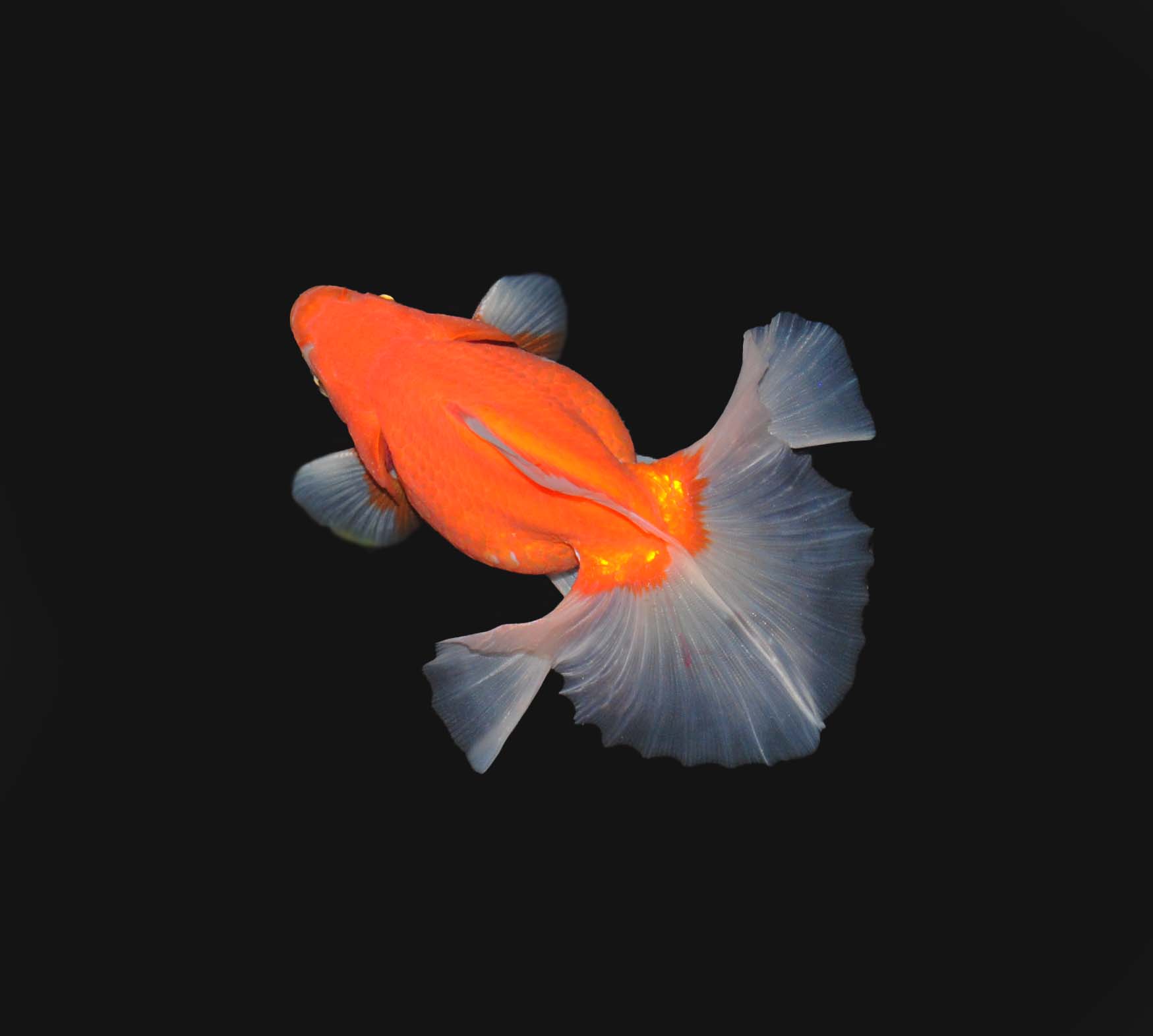
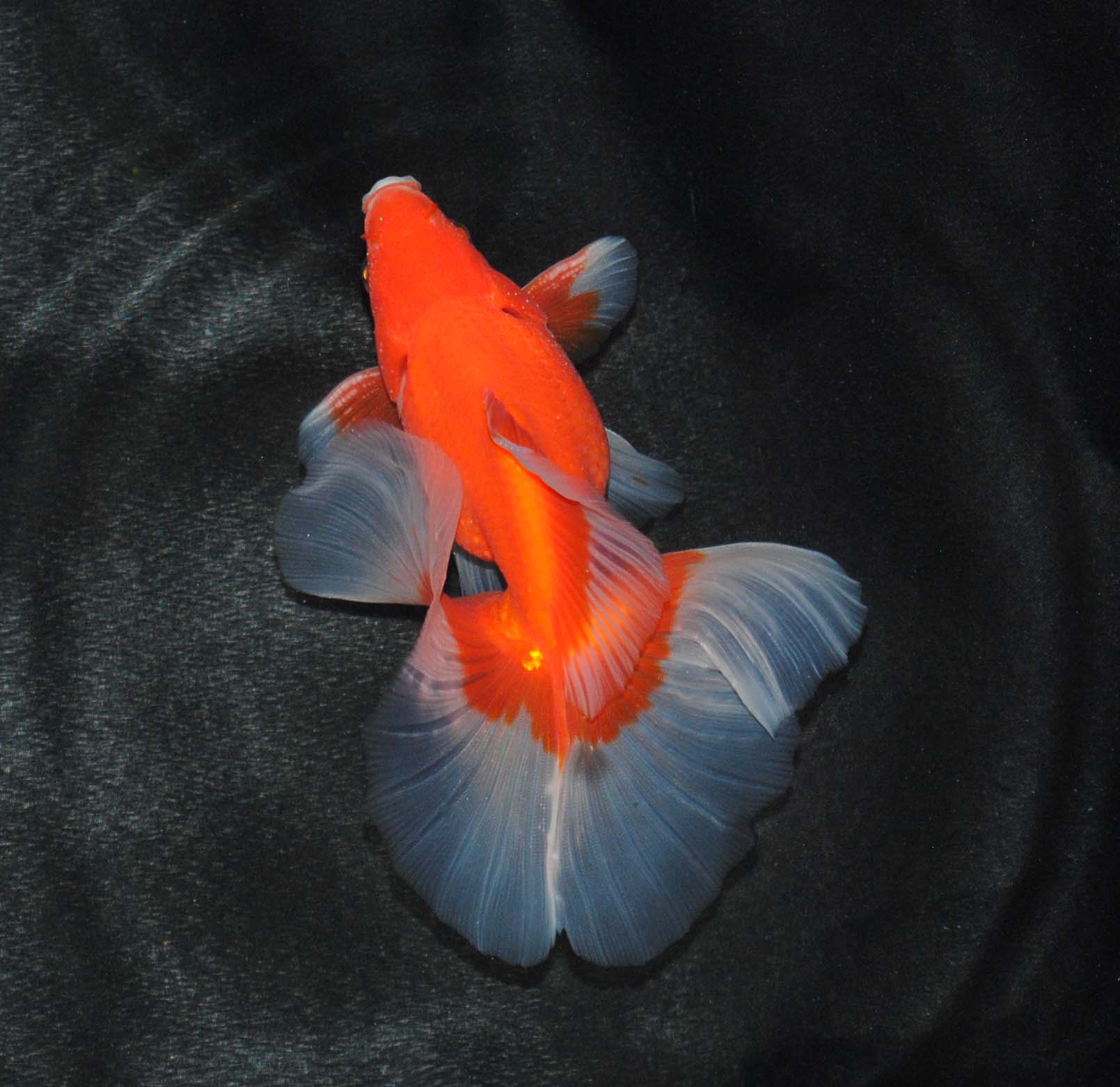
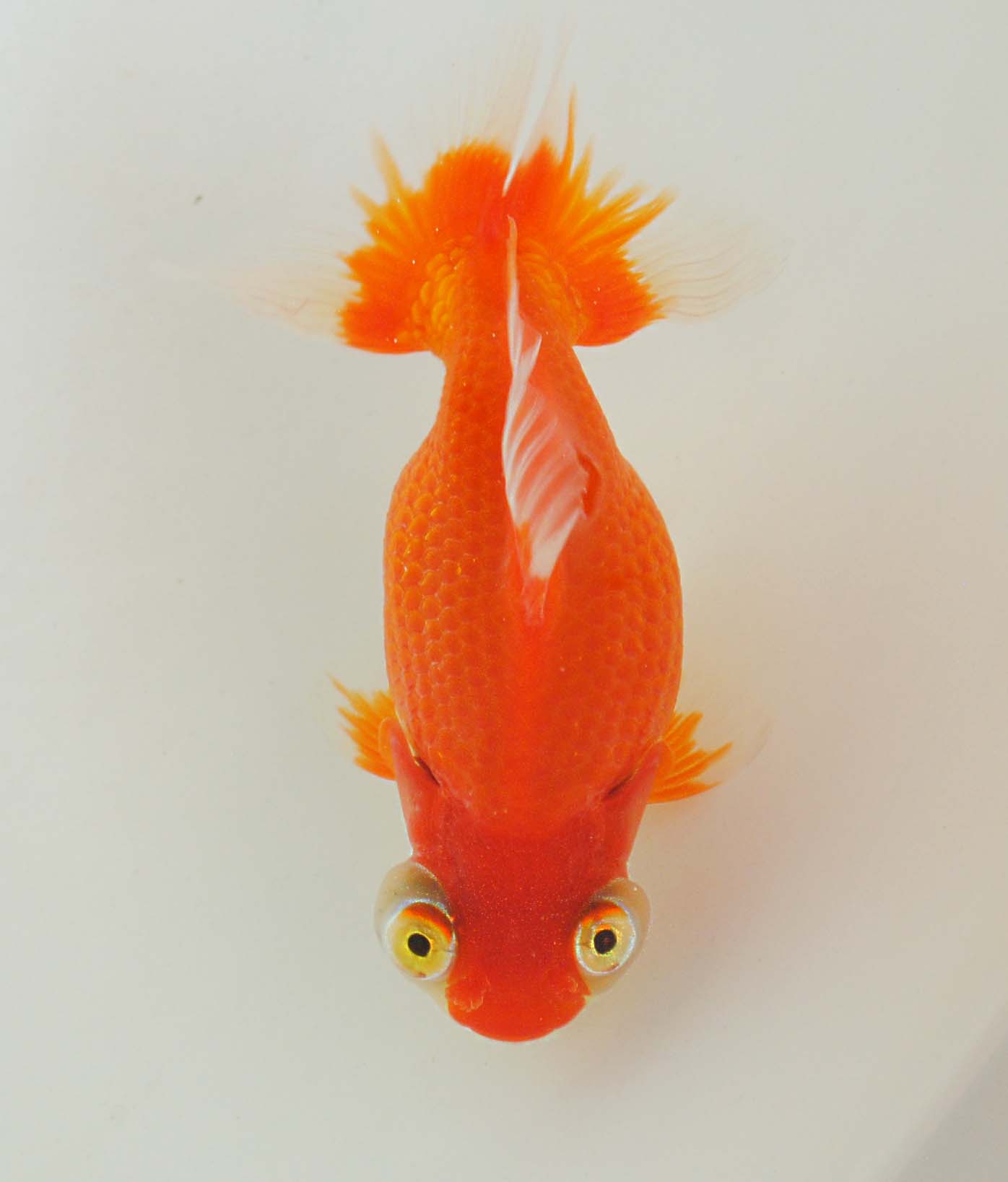
Male 1: The medium tail (two pictures of the same fish)
I think this type is the most faithful I have to the Tosakin tail standard. First, I am talking about the strength of the tail, or … I do not know the right terminology. Perhaps it is better to refer to it as the hardness of the tail. The tail does not collapse easily and can maintain its form well (its flips and its middle tail). Second, I have improved the middle tail shape a lot, from the V shape I had before to the horse-shoe shape right now. Third, the “thousand-rays” are visible. Fourth, the flips are clearly visible, of medium size, and always maintain its open position most of the time. I am satisfied with these improvements. The next improvement I am aiming at is to lengthen the tail size without sacrificing all the positive features I mention above. And one more good point of the fish is its thick backbone!
Video of Male 1:
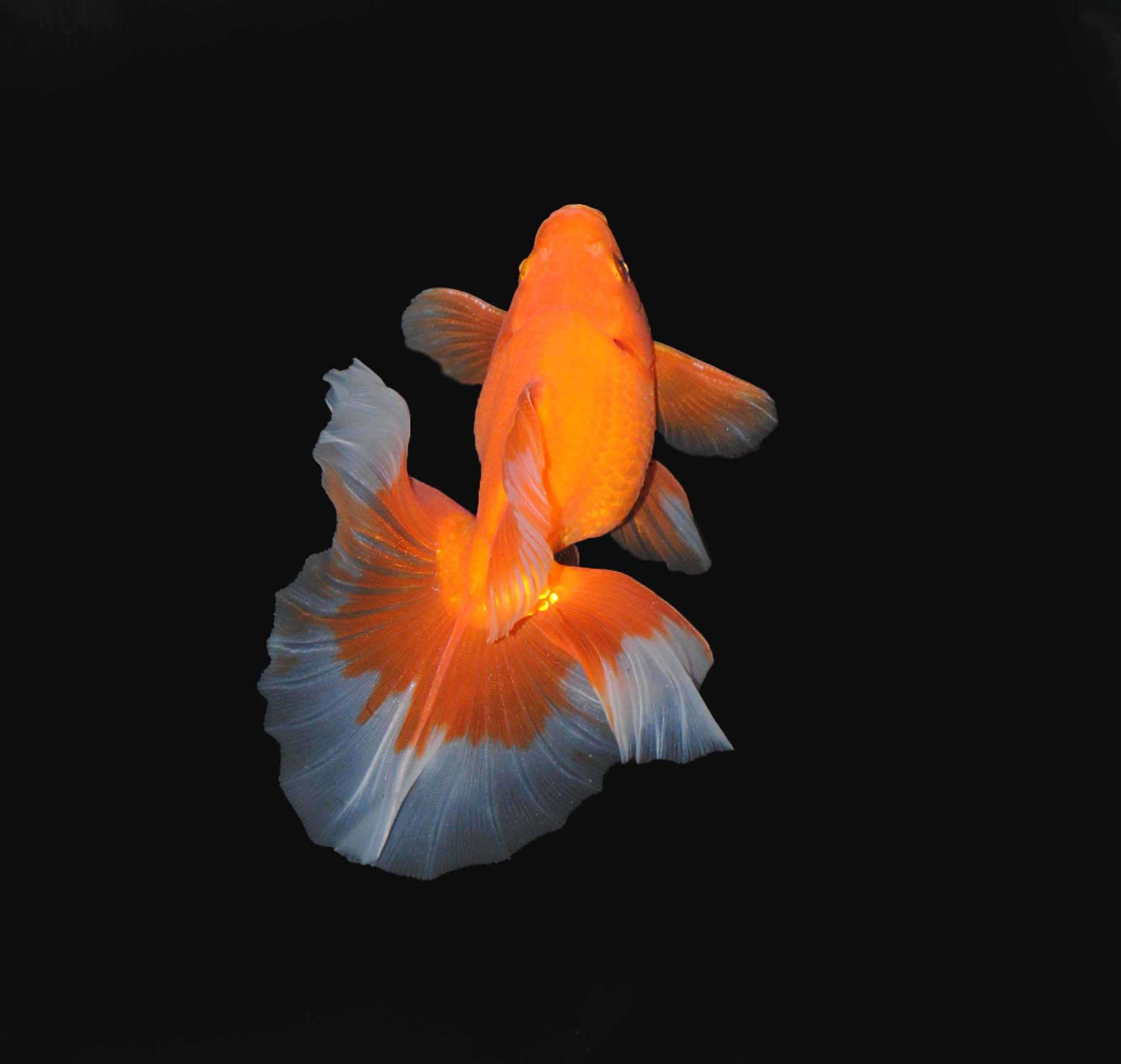
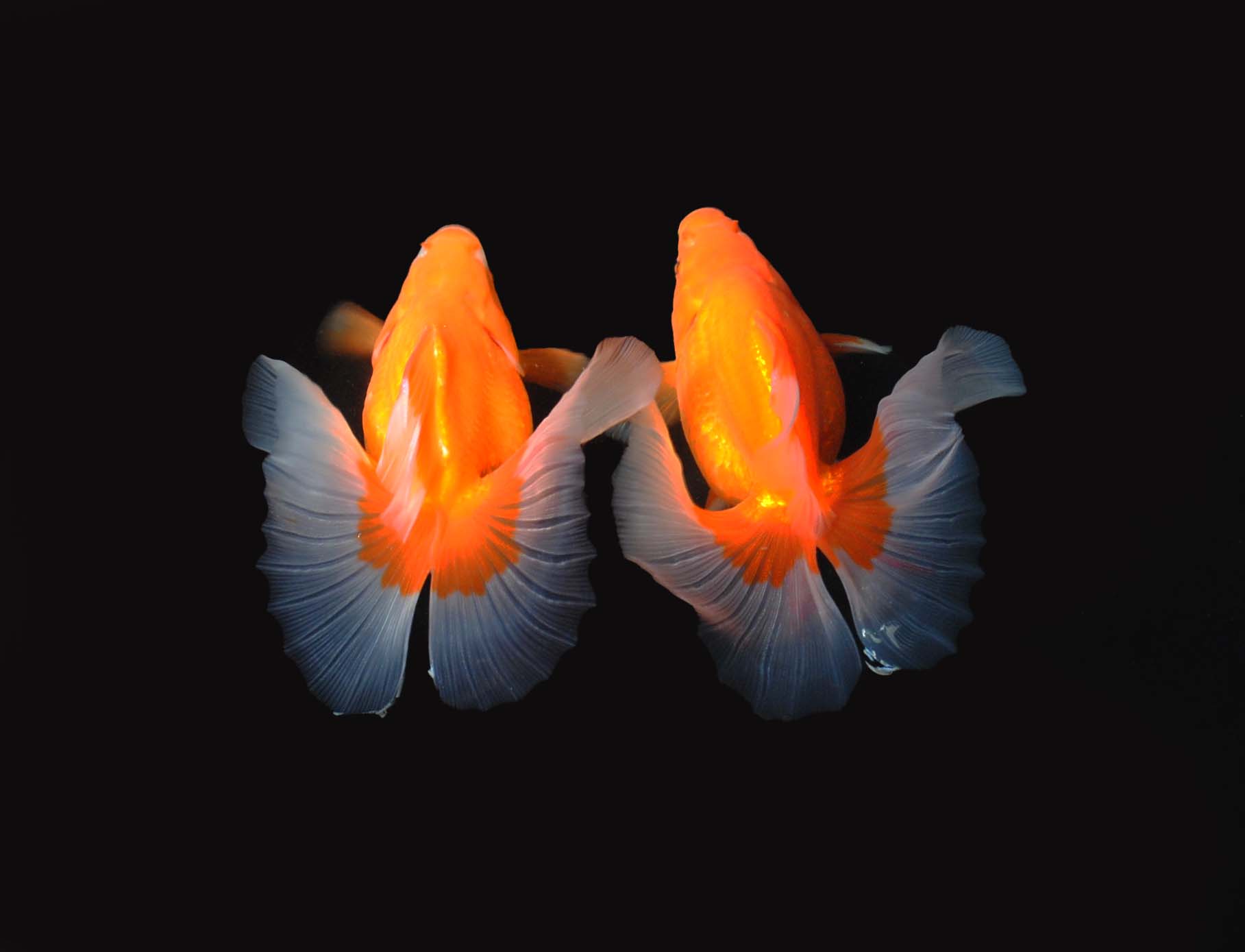
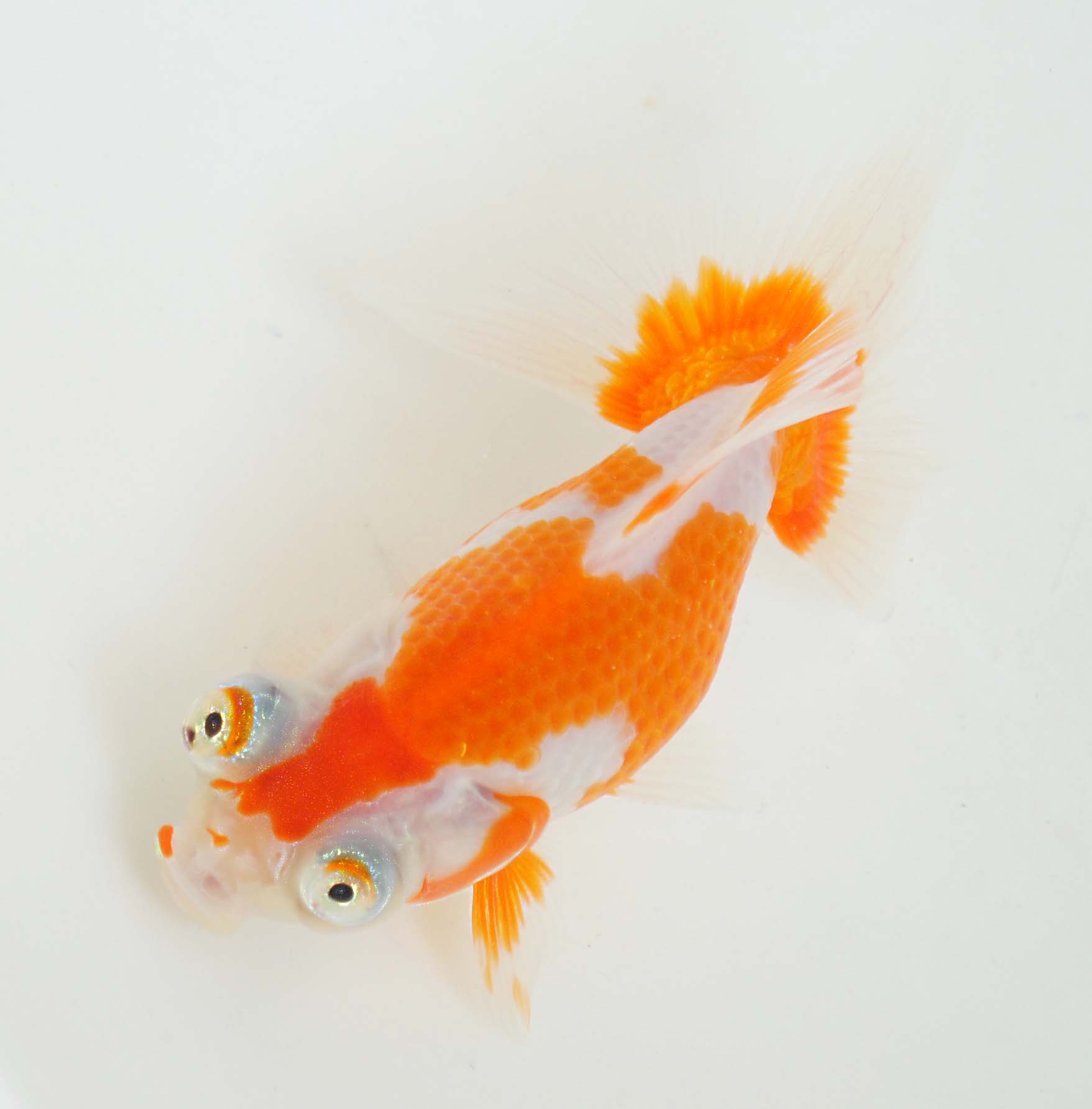
Male 2: the long tail
The length of the tail is impressive. But the tail is soft. Though the middle tail only collapses a little, the flips totally collapse a lot. The “thousand rays” are not clearly defined. The fish still looks gorgeous especially when it spreads its tail fully.
Video of Male 2:
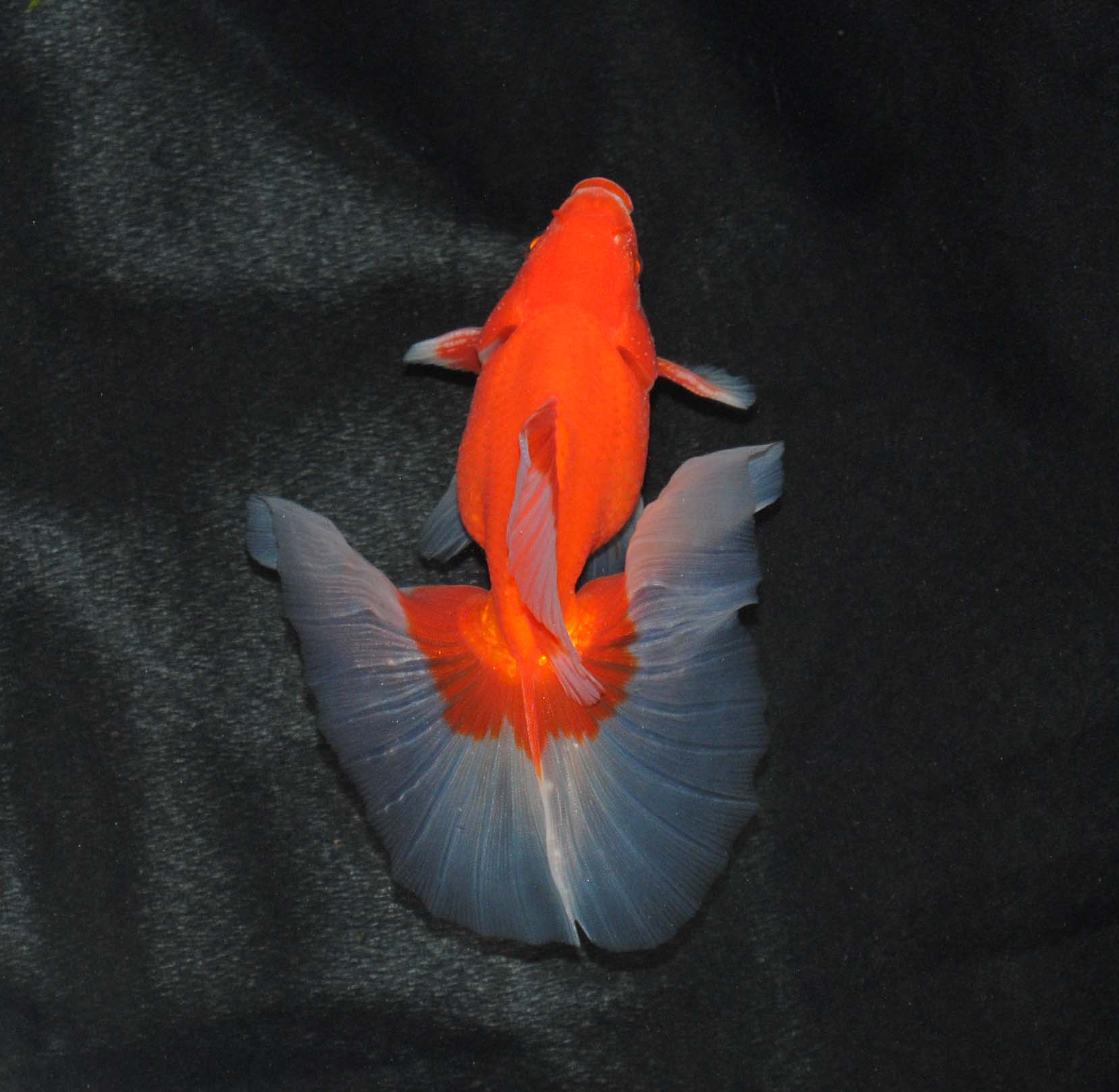
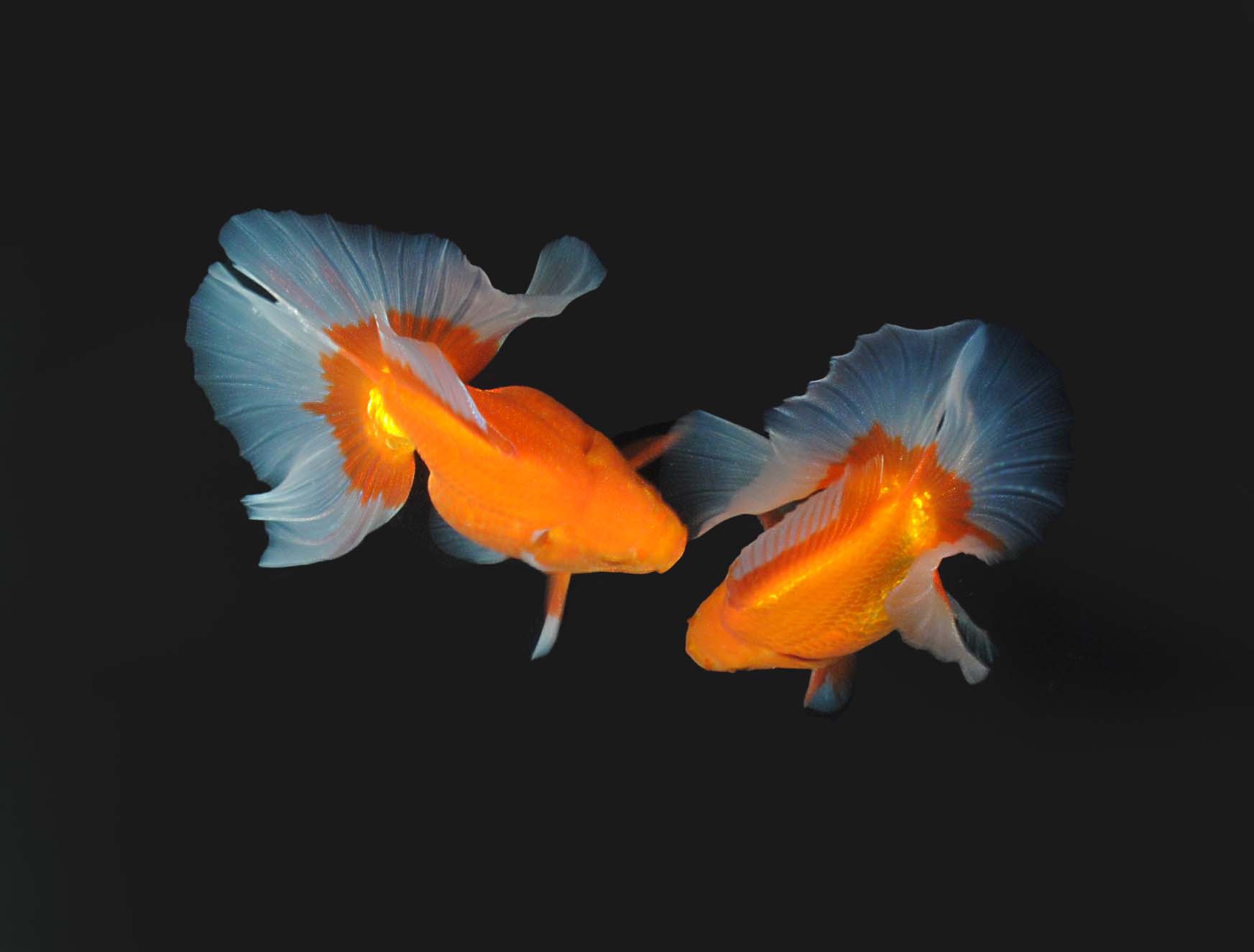
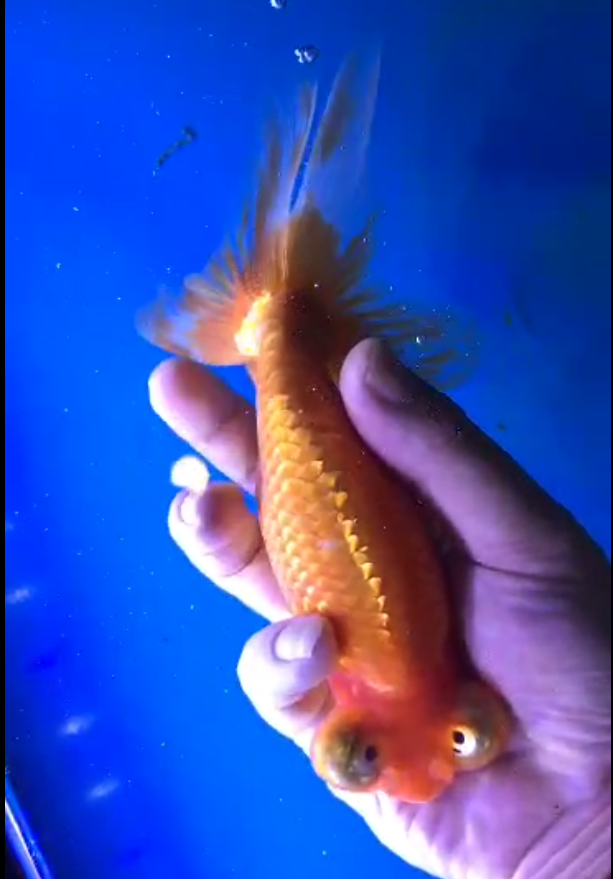
Male 3: another long tail
The same explanation applies to this fish. But there is more hint of Butterfly flavor in this specimen.
Video of Male 3:
Well, that is all my update on Tosakin. Hope you like my current collection. And do expect another quality upgrade in my next Tosakin update!
Flysakin is a term my friend (mr. Harlim) gave to my Tosakin – Butterfly cross. At first, I objected. I would like to give a more creative name. But I could not come up with one. So, since this variety was just a transition fish to reject, I did not think I need to put effort in thinking about a more proper name. This name was used since.
It is a transition fish. Tosakin was (and is) rare in Indonesia. When I imported some from Japan, I had limited success in breeding them. Most of the offspring had partial or no dorsal fins. That was a disaster. My guess, the gene might be saturated due to inbreeding. So, my strategy was to cross the fish with a different line. But different line of Tosakin was nowhere to be found at that time. Importing again was costly. As an alternative, I had my line of Butterfly that I had been working for several years. I think Butterfly is the best match to cross with Tosakin. From that point, I would cross the offspring back to Tosakin to produce genetically more vigorous Tosakin.
The transition fish mostly did not display the telescope eyes in F1. Later on, the F2 would produce some small telescope eyes. I used them for my Butterfly project. Those without the telescope eyes are used for the Tosakin projects.
Concerning the tail, these transition fish (Flysakin) displayed many different tail characteristics. Some were quite astounding. Yes, they were meant to be rejects. Yet, my mind could not get rid of the impressive tail displayed. They were like paintings! As I looked back to my breeding activity, I had encountered these beautiful tails over and over again, without being purposefully breed them. And they always captivated my mind. It is true that they have no standard worth – they are out of standard. Yet, they carry rough beauty.
Here are some from my archieves:
The year 2020 was the most intense time of my Flysakin breeding.
The color was mainly grey since I used black Butterfly as one of the parents. There was a need to improve the color.
And this year (2024) I think I have come to the peak of my Flysakin projects. There are still several different tail types, but I chose the closest to Tosakin yet with tail split. Why tail split? The split will make it easier for the fish to open wide and develop its flips. So, it is easier to create a quality one than Tosakin.
Of course, the difficulty increases its worth. The more difficult to get, the more we value the object. In this case, quality Tosakin is much harder to get than Flysakin. So, Flysakin is not meant to be a rival to Tosakin. It is just meant to be a less expensive alternative.
There are four individuals that really stand out this year. I have taken some pictures and videos of them. I hope you will enjoy watching these painting-like goldfish.
The Female:
The Male:
And here are their videos so that we can see their beautiful swimming.
There is an interesting update on this project. I might succeed in a year or less.
I think it is time to tell the more complete story of this project. My original source were Celestial Pompom I bought in 2017. They are a variant of Celestial variety that has pompoms in their nostrils. Their other features are thick bodies and short tail. These were my collections:
I know this variant is adorable in its own way. But I do not plan to keep this line. My plan is to create Celestial Butterfly, that is a goldfish with celestial eyes, dorsal fin, and butterfly tail. I saw a specimen of it somewhere in the internet years before and was captivated by it. I do not know any who sells this variant in the whole world. I have never even seen anyone post a picture of this variant anymore nowadays. So, it is quite an interesting challenge to create one.
Before I go on, one important observation about the genetics of the eye is worthy to note. I crossed a celestial eye with ranchu before. The first attempt resulted in 100% normal eyes. I kept them till adulthood and there were no sign that the eyes will change. I did the same crossing a second time, and the result was totally different! There were normal eyes, telescope eyes, and imperfect celestial eyes! What I mean by imperfect celestial eyes are celestial eyes which are not looking upward 100% (there is an angle a bit to the front) or one eye being celestial but another being telescope. I was glad to see these results. But I was puzzled – and still am – about what was going on. I do not have an explanation of the two totally different results from a similar crossing.
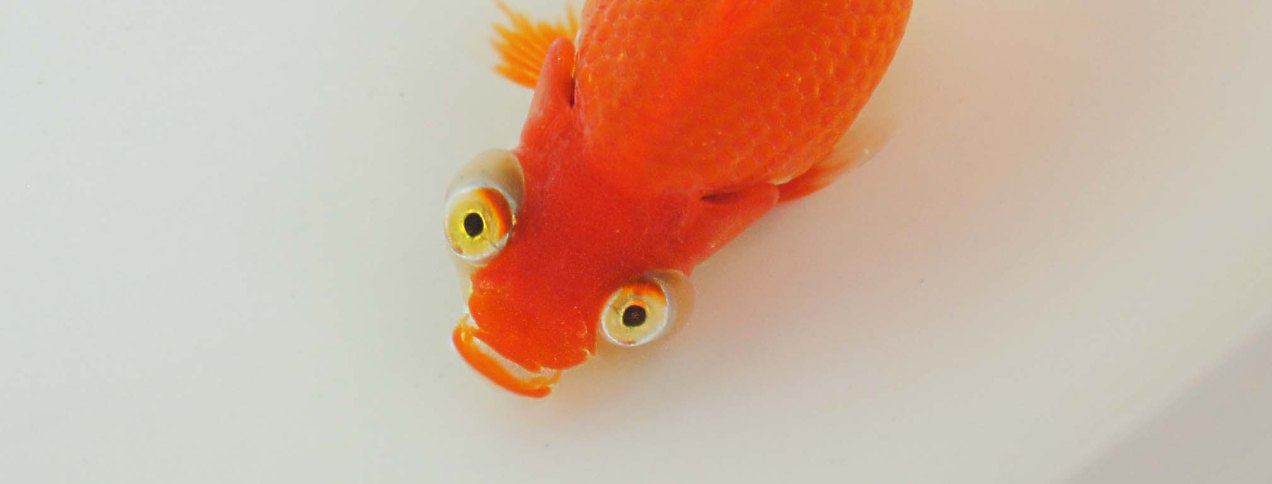
The second important observation is about the development stages of the celestial eye. The offspring start from normal eyes (stage 0). Then the eyes will change into telescope eyes first – and this is what I want to highlight (stage 1). Then the telescope eyes will turn – not directly upwards, but – somewhat between frontward and upwards (so, not totally frontward, either) (stage 2). Then the eyes will continue its movement upwards to complete the process of being celestial eyes (stage 3).
This piece of information, especially stage 1, gave me confidence that crossing Celestial Eyes directly with Butterfly (Telescope Eyes) might result directly in few Celestial Eyes. The rest will be telescope eyes and no normal eyes. And my crossing (Celestial Eyes x Butterfly) proved this to be the case. We can say that being a telescope eye in this case is halfway towards being a celestial eye. When the process of stage 1 is halted, then the eye stays as telescope eye.
My confidence let me to cull the fry in stage 0 (normal eyes) based on the tail shape. I did not expect to get decent butterfly tail directly in F1, but I was expecting to get wide spread tail. So, I culled out all the collapsed tail. And this was a grave mistake. Most of the fry I kept turned to be only Telescope Eyes and only one or two fishes being imperfect Celestial. I think a safer strategy is to wait until the fry reach stage 3 and then cull out based on the tail spread. But it happened already.
So, the best thing to do with the mistake was to do inbreeding. I crossed the imperfect Celestial Eyes with his Telescope Eyes sibling. This time, I kept all the tails in stage 0 provided they had no defect. I raised them all, occupying lots of facility space. And now, I have with me all sorts of stages from 1 to 3. And there is one with almost perfect Celestial Eyes feature! And it comes with wide-spread tail, though still cannot be categorized as butterfly tail. Let me show my beautiful baby:
The two picture above is a pic of the same fish. Adorable, right? There is a slight imperfection on the left eye (the angle). I am still hoping that the angle is still in the unfinished process. And I do notice that the size of the eyes are not as big as the original Celestial Pompom Eyes I bought. I do not know whether in the coming descendants the size of the eyes can improve or not, I do hope so. But for now, I am satisfied with this boy (I suspect this one is a male).
The second best result from this batch is this one:
The eyes do not align perfectly upwards. There is a slight angle towards the front. So this one is at the end of its stage 2. I do not know whether it will stuck at this stage or will achieve the final stage. But surely it will be a candidate to be the next parents.
The fishes in this batch show thick peduncles. But lots of them have a bit tilted upwards middle tail. And the combination of such feature with wide spread tail spells disaster. The fish will swim in a rotating movement! I culled out lots of them with that tail trait.
Meanwhile – and this is another story that will merge into my story – my friend mr DBS (Dibyo Sasmita) acquired a different variant of Celestial Eyes. He bought the common Celestial Eyes goldfish which has no pompom, having slim peduncle and long tail. Here were his collections (I get permission from him to use the picture here):
A bit different from me who wants to create Celestial Butterfly, mr. DBS would like to create Celestial Tosakin. So, our final goal will be different but might appear closely related. But there was a problem. The fish did not lay eggs in his place. So, I tried to induce his fish in my facility and successfully mate one of his female with my Celestial Pompom (still without dorsal). Well, success might be an over statement since we only got two fry! This is one of them:
Do notice that the peduncle is thicker than the original Celestial Eyes. The tail still a long one but wider. And it has a small pompom! The Celestial Butterfly I created has lost its pompom feature.
From this specimen, mr. DBS crossed it with his tosakin, and once again managed to get two offspring only. I do not have their pictures, but they have dorsal fins already. Then he lends me the female to cross with my project.
So, to complicate the matters, I had several branches on this project:
My Celestial Pompom x Butterfly (which I have told above)
My semi Celestial Butterfly x mr Dibyo’s semi Celestial Tosakin
My semi Celestial Butterfly x Butterfly (crossback to Butterfly again)
From branch number two, there is one interesting result:
The pompom appears again on this specimen!
The tail is collapsed. The peduncle is thin. Well, I have not observed others in this batch. I do not know whether the others have the same features or not. At a glance, they look widely varied. Some do not have split in the tail, for sure.
I still do not know whether to keep this pompom feature or not. I will decide later. My concern is to have too many variants from a project. My facility cannot afford that.
To wrap up this update, these are the links of the current fishes for you to enjoy:
First let me update the offspring of Mr. DBS line in my place. Since it has become the basic ingredient for my tosakin project, I see the need to preserve it. Here are two very different siblings from this line:
My purpose in this tosakin project is to create tosakin with deep red color. I have posted this in the diary #11 this year. From my crossing to get a deep red color, I get two surprises which I have not posted before.
The first one is a red-white fish with a better red color (though not so intense yet) which has a tail shape closer to a decent tosakin (with a shorter tail). But I do think this fish is the key that will bring me one step closer to my goal. That is why I named her the Key. She looks like this:
In the pond, the red color is a bit more intense than this picture. Somehow, I cannot get the color right during my photo session. But the color difference is visible when she is paired with the DBS line as shown below:
I do think that the cross between the DBS line (male) and the Key (female) will produce a decent tosakin with better coloration. So, I mated the Key with several male from DBS line. These are the male fishes:
The one on the right is not the DBS line. He is the deep red semi tosakin fish. I mated him with the Key to preserve the intense red color to be used for the next step of the project. I cannot wait to see the result!
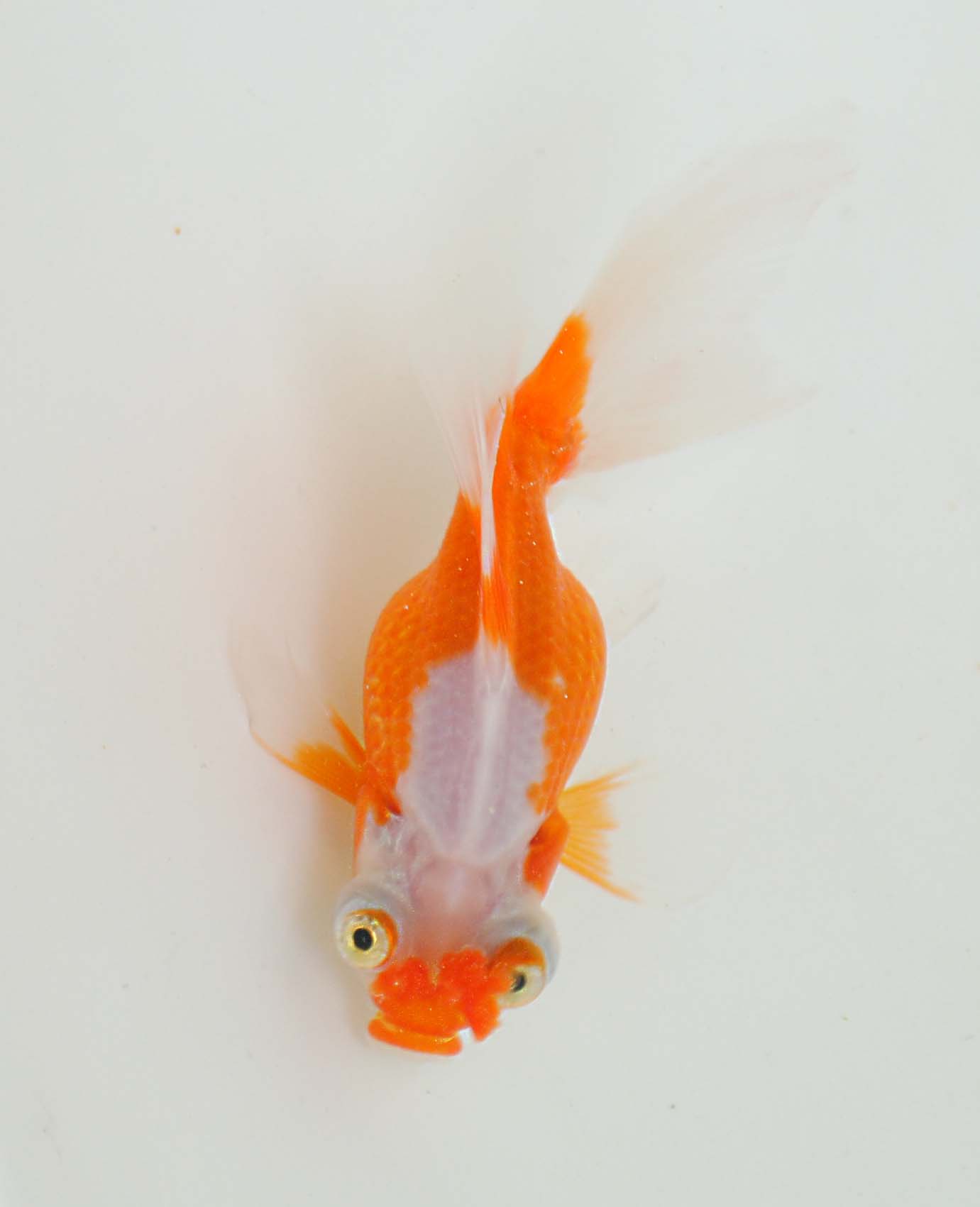
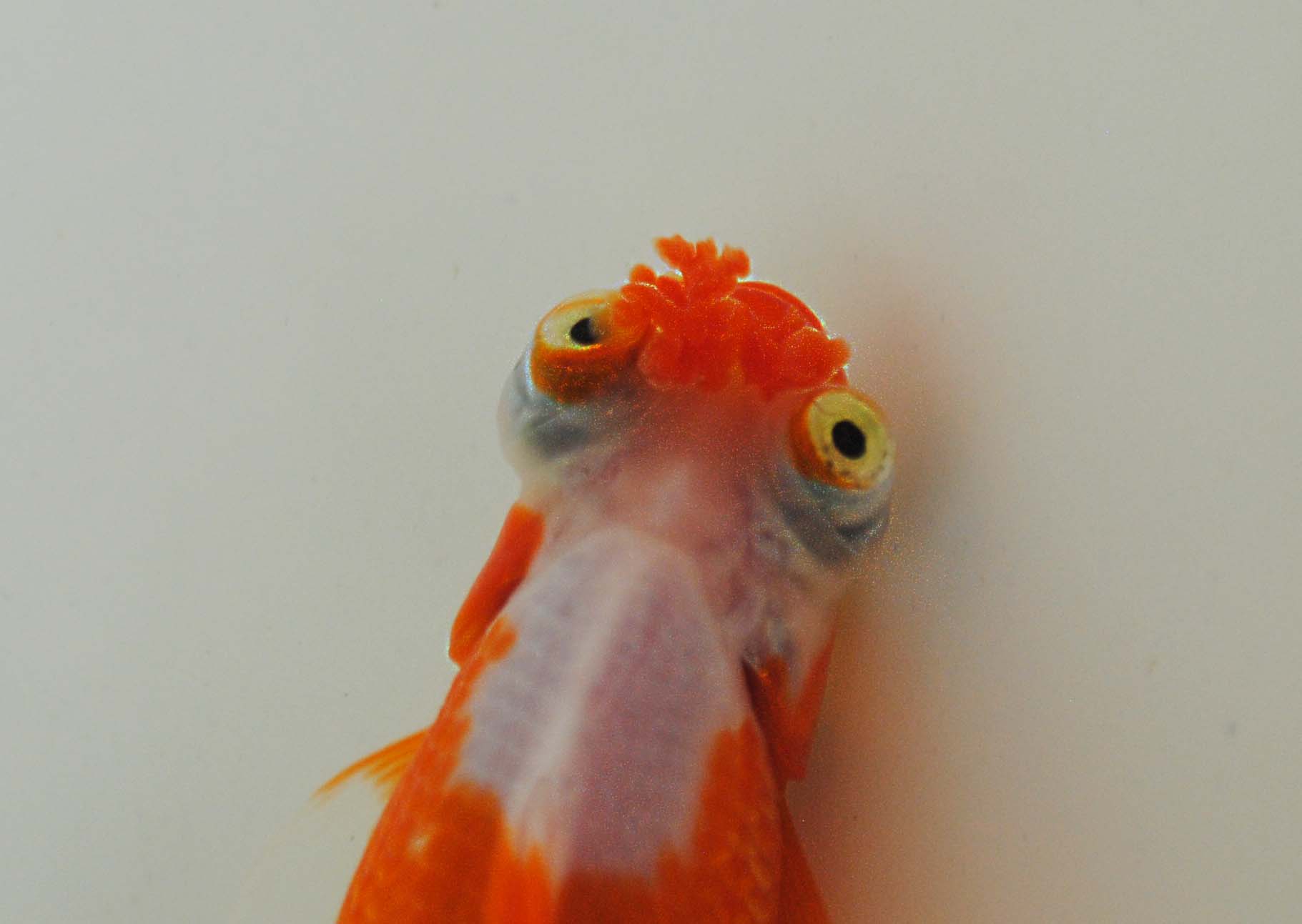
The second surprise is the appearance of a different kind of tosakin. The characterstics are a softer tail, but longer. And a better red color than the DBS line. I do not recall what crossing that produces them. I suspect the butterfly is responsible for this. There are two of them, both are male:
The first fish:
The second fish:
Aren’t they beautiful?
Well, can we call them tosakin? Perhaps not. Not in the standard sense. But, can we create a different strain of tosakin? A softer and longer type of tail. Or is it a sin? Frankly, my mind runs wild imagining a possibility to put my signature on a new strain of tosakin!
But I do not have female fish with their characteristics.
What I will do for sure is to cross them with the female tosakin from the DBS line above:
And what will the result be? I can only imagine something good and beautiful! 😊
To refresh a little bit, I had bred Tosakin for many years alone with not much success. Then a friend of mine, mr Dibyo, offered his support in acquiring some good quality tosakin babies from the Izumi Line, Japan. We bought 40 in total. Sadly, they were hard to breed. Mostly the eggs did not hatch, or hatched in a weak condition and died immediately. There were rare occasion when the eggs hatched properly, but when it was time to cull, it became apparent that most of the offspring had defected dorsal fins. The defect could amount to more than 90%. It was a hopeless case.
But by that time, I had a male grey tosakin from Thailand which I acquired before. Since it was the only male I had, I crossed it with butterfly goldfish, and did backcrossing to the father for several generations. I tried to acquire decent tosakin by doing so, but it never happened to my satisfaction. Finally, I gave up the grey old fellow. He was very old and unable to swim. Mr Dibyo asked for the fish, gave him extraordinary care which I could not give, and he even succeeded to mate him with the Izumi line! And the result was fantastic! We called it the DBS line, under mr Dibyo’s name.
Mr Dibyo gave me lots of the F2 of that line, which he let me pick by myself. Mr Dibyo and I had different preferences concerning the tail. He would like to breed those with beautiful large middle tail, while I would like to focus on the fish with strong flips. I picked up those with flips always open even when swimming, with less regard on the beauty of the middle tail. Well, it was hard to get both features at that moment. But surely, it was our dream.
These are the four I kept for my parent fish: one male and three female.
The male:
The three female:
The mating is still hard for me. The fertile eggs are few. But anyway, I manage to have my own Tosakin babies! But I do not update on the babies for now. What I would like to update was my project to create better red color in the Tosakin. As you see, they are all orange in color.
As I mentioned before in another post, I had a very strong red color in a red and white male butterfly goldfish. I called him Beni. He died already. But I managed to cross him with tosakin. Of course I do not get tosakin tail-shape right away. The tail is between tosakin and butterfly. I saved only the fish with the best red color. And this guy is the champion:
He has split tail. Sometimes he shows small flips, but mostly he doesn’t. I am very eager to mate him with those female tosakins as soon as possible.
I have several different color in red spectrum in his siblings. But he is the most red. The picture below highlight how red he is compared to the tosakin. And this is the end of my diary today. Wish me success in creating a decent deep-red tosakin in the near future!
This is a tribute to my Dancing Queen. Several years ago I tried to create a side-view version of Tosakin. I nicknamed the fish as the Dancing Queen to appreciate the beautiful playfulness of the tail. I successfully created an erect tail with split, and the tosakin flips could be enjoyed from side-viewing.
The tail was really a beauty. Yet, the body was weak and plain. The color was just orange or grey. I tried to improve the body and the coloration with this result:
The body was improved. The orange and white color was certainly an improvement. The tail seemed to be slightly smaller, yet still a decent one. However, it seemed that the market did not respond well. Besides that, I have a lot of other projects on goldfish. So, I struggled hard to let the project go. This fish was the last (and best) Dancing Queen I had, and I let a friend adopted her without leaving any offspring.
Well, perhaps it is natural for a breeder to have a deep attachment to his creation. I was ready to let go. But I still mated the uncle of the last Dancing Queen (a grey one, and sorry I did not take any picture of it) with an Oranda. I did not even remember which Oranda I used. This was not a planned project. And I did not expect anything. Such a cross might yield nothing of any worth. So, this cross was an uncalculated project, ready to be discarded at any moment.
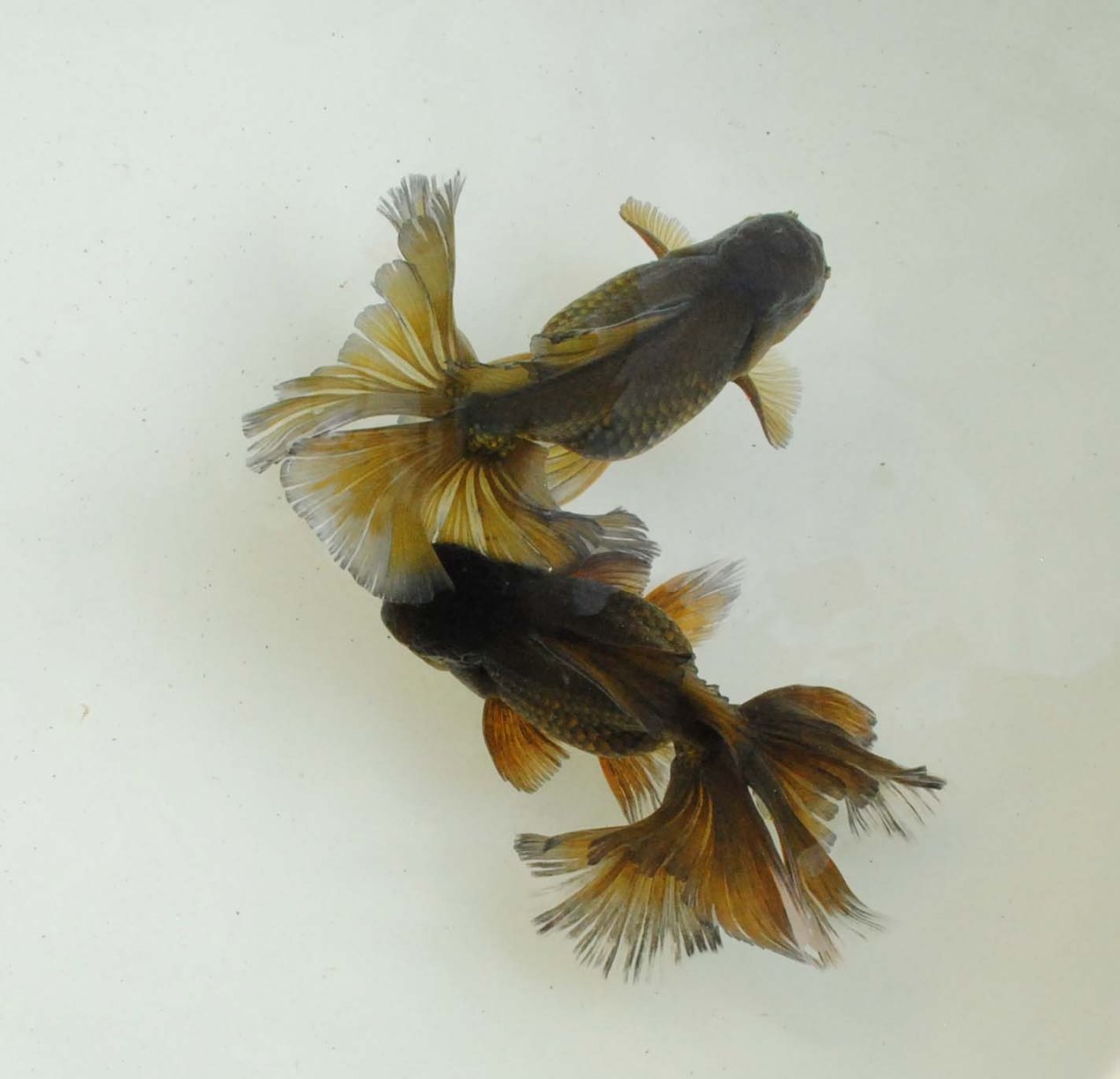
Surprisingly, something good came out of this project! I did not expect to be able to get a decent oranda with dancing queen tail from the first attempt of the crossing. It was almost impossible, I thought. But the fact speaks otherwise. I ends up with two decent oranda with very beautiful Dancing Queen tail style! Yes, the color was only grey, but I think they are lovely.
This one is the first fish:
This is how the tail looks like when swimming (when the tail collapsed)
And this is the second fish:
This is the tail when swimming
There are oranda with similar type of tail in the market produced by Thailand breeders. They named the tail as Orchid tail. I do not know about the history of it, but I might walk in the same path as them.
This is the topview appearance of the fishes:
The appearance of these two disrupted my current oranda project. I already had my Basic Material Oranda. But the tail was Rosetail type (wrinkle tail). Compared to this Dancing Queen tail style, I think I face a great temptation to incorporate this type of tail into my Oranda. There is no way I ignore such a beauty.
So, last week I mated Helen the Oranda with these two 😊
Remember Helen?
This is Helen
Sometimes Helen shows a bit of tail flips similar to the Dancing Queen, though not always. I think this is a good sign. The mating between these fishes might yield an outstanding result.
This is Helen doing her flips
I am enthusiastic to see the results 😊 Perhaps my Dancing Queen will evolve into Oranda with Dancing Queen tail shape.
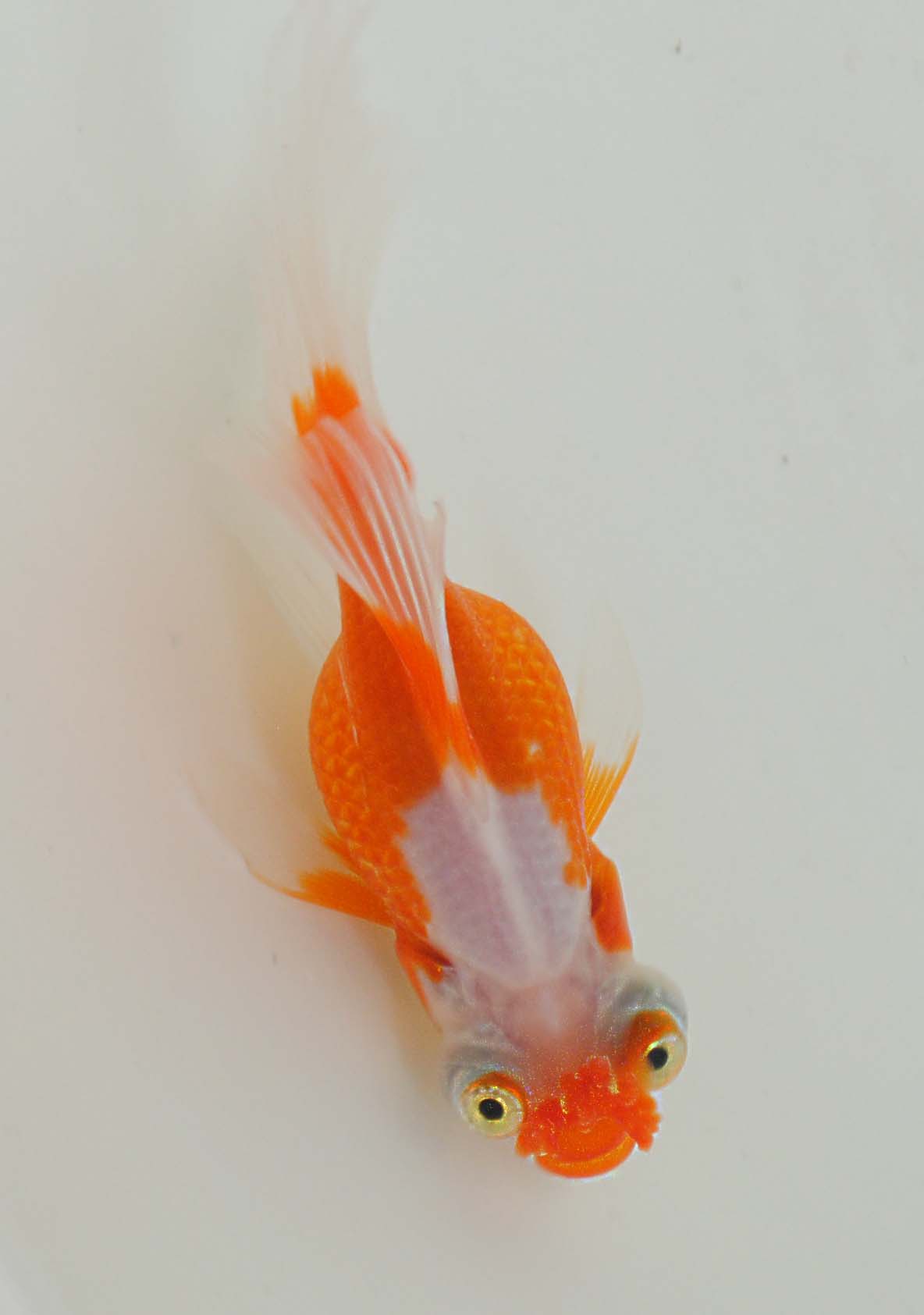
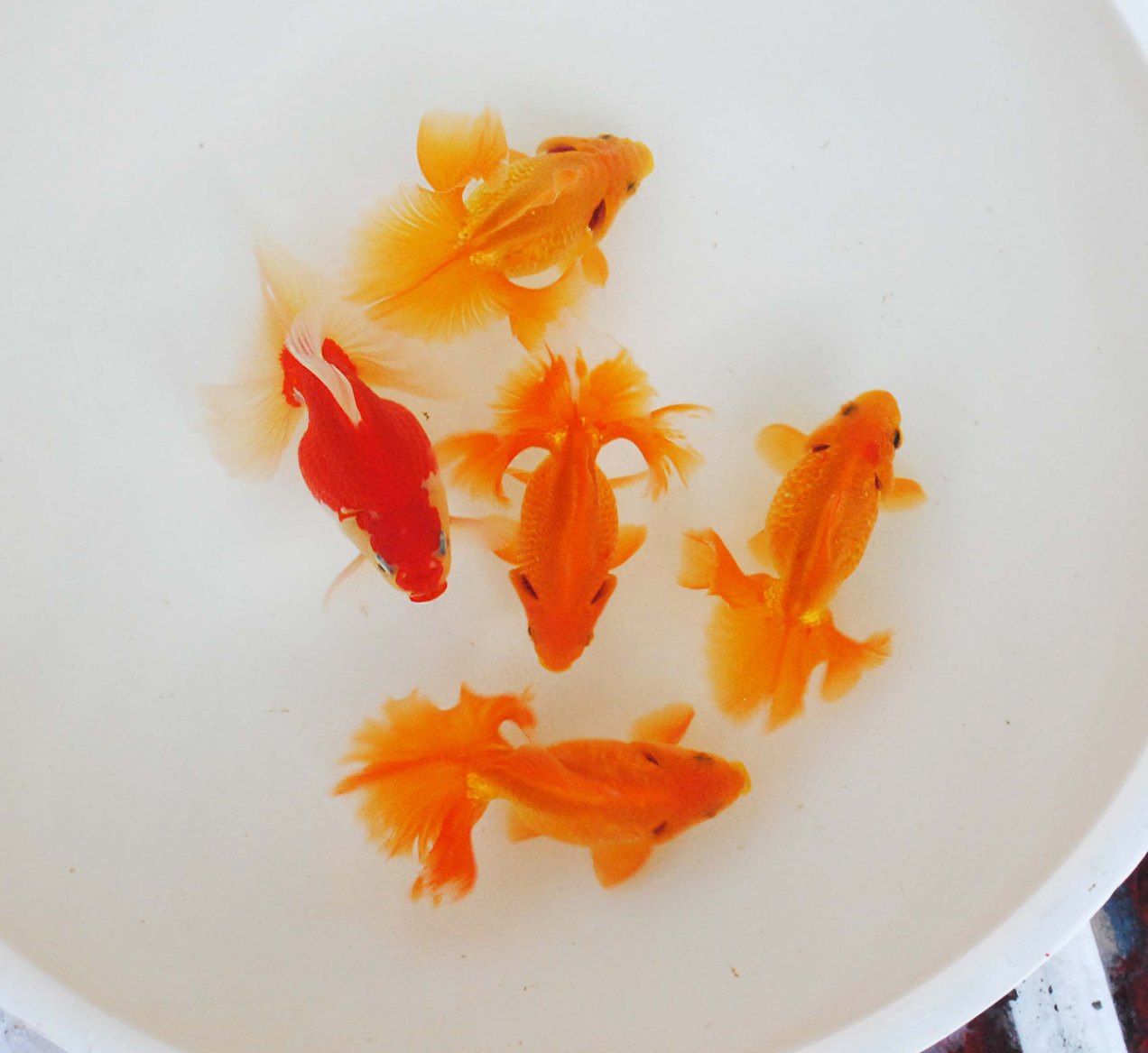
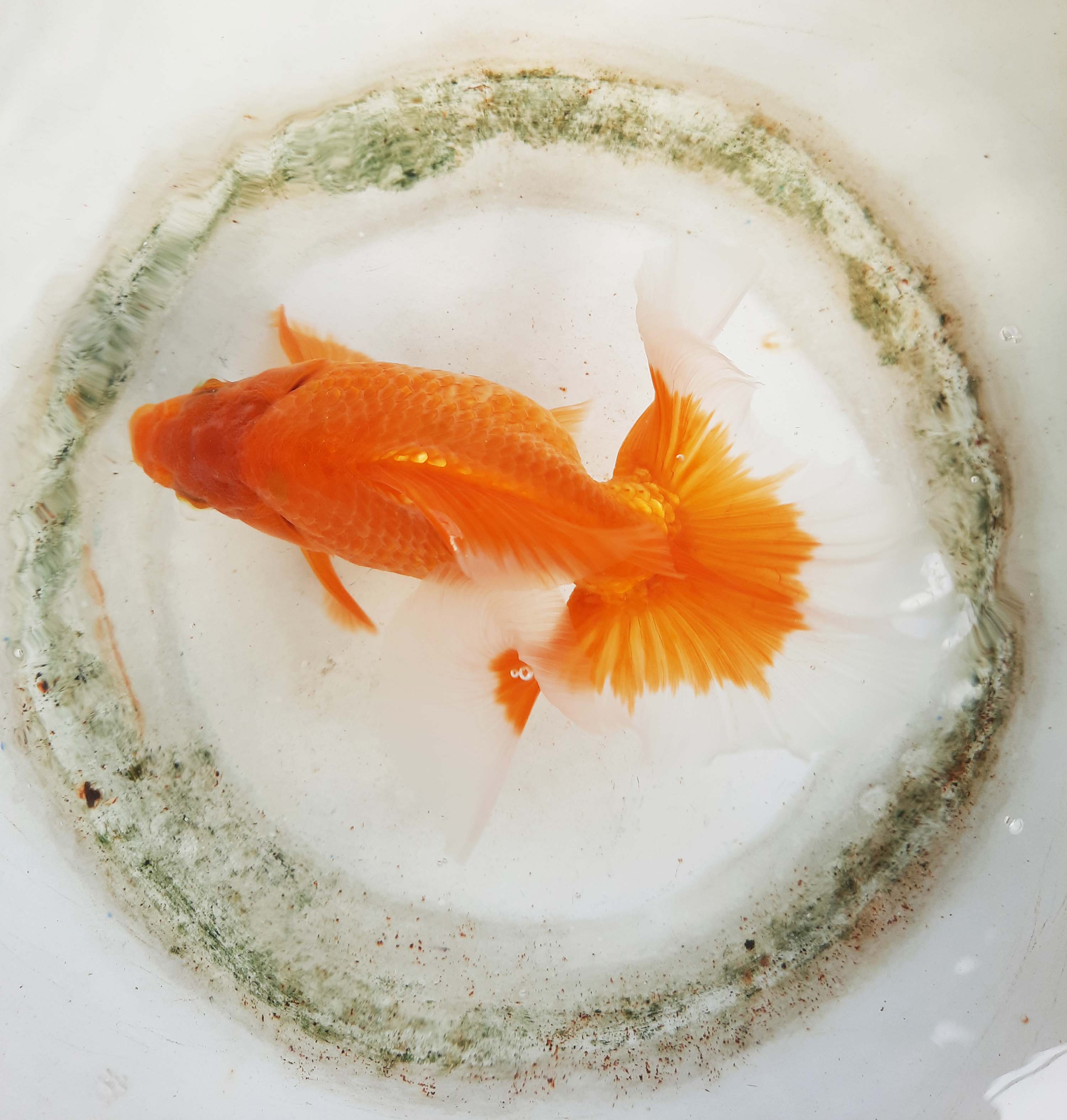
I try to take better pictures of my tosakin this morning. I realize that it is a bit hard to get a clear view of red-white tosakin in a white bowl. I wish I had a black one. Anyway, enjoy the pics.
This is the only productive female tosakin I have right now. She is an offspring of my Nagoya tosakin and my own tosakin line. She has a defect on the dorsal fin, namely, the dorsal fin does not cover the whole backbone.This is the male tosakin I paired with the red-white female above. He is also a young tosakin.These are the offspring of the two above, approximately three weeks old. They were many, but I culled out a lot since the flatness of the middle tail (as seen from side-view is not desirable. The angle of the tail is too upward. I also expect that some of the offspring will become all white since both parents are dominantly white. This is a feature I want to correct in the other pairing.This is the original tosakin I bought from Nagoya, Japan. The growth in the head is a sign of his old age (more than two years old). He is the uncle of the two red-white tosakin above.This is the offspring of the Nagoya tosakin and the redwhite female. So, this is a marriage between uncle and niece. The angle of the middle tail (as seen from side-view) looks better. And to me, they look more uniform. Promising. I think if I still have the chance, this is the pair I need to breed again.This is a male grey tosakin, as a sibling to the two red-white tosakin above. My own previous tosakin line (as one of the ancestor of the two red-white and this grey) was a grey thailand tosakin, so it is not surprising to get grey fishes in the descendants. I mated this grey with the red-white female also. i cannot produce the picture of the offspring since they are still very small (less than two weeks old).This is my male improved flysakin (a cross between tosakin and butterfly) that has been crossed back to tosakin. The flips are definitely tosakin. The thousand rays in the tail are also the trait of tosakin. But the middle tail is still split, and the whole tail looks soft (feasible only when they are swimming). I also pair this with the female red-white tosakin in the hope to create a tosakin with longer tail as my line’s uniqueness. These are the two fishes with intense red coloration that I would like to be the characteristic of my tosakin line also. My friend and me call these two the two Beni, since Beni is a koi terminology to refer to the deep red coloration (if I am not mistaken). I already have the offspring of these two Beni with my red-white female tosakin. It will still be a long process to create a true tosakin from this cross.These two are fertile female improved flysakin. The tail characteristics vary from soft to hard, from medium size to long. Yet, we can see a resemblance of tosakin in them. I mated these two with the original Nagoya.
If I was occupied with Oranda breeding in January, I was busy with Tosakin breeding in February.
Tosakin is very rare in Indonesia. Over the past decade, several people tried to breed it, some with no success, some with a temporary success but then discontinue for unknown reason. I was among those who passionately try to breed tosakin with no long-term success. Somehow the original line that I bought eventually being wiped out, and I must wait for another opportunity to acquire tosakin again. This happened several times in my breeding history.
About five years ago, I bought five tosakin from Thailand through a friend. Four of them could not make it. I was left with one grey tosakin. It is a male, and indeed, a beautiful one. My friend and me call him Grey. I had no choice but to breed him with Butterfly goldfish. The offspring was unique with many tail variation in-between tosakin and butterfly. We called the offspring the Flysakin (Butterfly – Tosakin). I did two or three generation backcrossing of flysakin to Grey, since this guy lived a long time. The backcrossing ended up with low quality tosakin that I did not proud of. None was close to the quality of Grey. I knew I took a great risk to the genetics health by doing many backcrossing to a single fish for several generation. Then the Grey got very old and a friend cared for him well until his death. I was left with two lines: flysakin (mostly grey) and low-grade tosakin as the descendant of Grey. At this point, the tosakin project became a hopeless case for me. I got used to failure.
Then a new opportunity came two years ago.
My friends and I had the opportunity to buy several baby tosakin from Nagoya, Japan. We were so excited to see the prospect of reviving tosakin in Indonesia. We divided the babies among us and grow them till adulthood. Too bad, it was not easy to breed them. Unlike other goldfish type, it was hard to differentiate between male and female tosakin by examining their anal. And none of them laid eggs in the first year. I prepared my courage to accept the worst: they might be sterile. Fortunately, in the second year, one laid eggs. The sec became obvious at this stage. I had several females with me, but only one laid eggs. I quickly paired her with the siblings. It was a happy moment to have so many tosakin eggs at last. Yet, another disappointment awaited. Almost all of the offspring had defect dorsal fins! I tried to breed her the second time, with the same result. There was something wrong with the genetics. Suspicion mingled with disappointment. But I know anger could not change the situation. I threw all of the offspring and decided to start over. At that moment, I launched three sub projects altogether. I mated the Nagoya with my low grade tosakin (descendant of Grey); I also mated the female Nagoya with my male flyaskin, and my female flysakin with male Nagoya. After executing these projects, the female Nagoya stopped laying eggs forever. What a close call!
Surprisingly, the cross between the Nagoya and my own tosakin produced decent tosakin. They were not extraordinary, but good enough. There were only seven of them, but they made me happy. Concerning the offspring of Nagoya x flysakin, some of them became very close to tosakin: some with long and soft tail (perhaps it still carries the genetics of butterfly) and some with medium and hard tail. Some more had split tails and large flips; they were very beautiful in their own way – I sold them because I did not use them to improve my tosakin project anymore.
This February, these offsprings began to lay eggs.
From the seven tosakin offspring I had, there were four females but only one laid eggs!. My alarm rang aloud. She was not perfect. She had a defect in the dorsal fin. The dorsal fin only covered 80% of the backbone. Yet she was the best shot I had. I could not postpone her breeding since I had no confidence if she would have another breeding season.
The productive female tosakin
So, I mated her with her siblings (two out of the three males from the seven set). I left one male out since its tail was ordinary. Then it occurred to me that pairing her up with his uncle (the male from the original Nagoya set) will be a good option, so I did this in the next occasion. A goldfish usually lays eggs every five days in my place. So, I can have many rounds of breeding in a season. I can pair a single fish with different males. The combinations above already took three rounds of breeding.
The three male tosakin offspring. I used only the red white and the grey.The male original Nagoya tosakin
I did not stop the breeding there. I continued to pair her with another males. Since I did not know how the result would turn out, I thought it was better to pair her with many different males in the hope of having good offspring from at least one of the combinations. In the fourth round of breeding, I mated her with the best of my improved flysakin, that is, the flysakin that had been crossed back to the original Nagoya tosakin line. At this point, I thought I already had sufficient combination of offspring to secure a good result.
But then, temptation creeped.
My goal is not just to breed tosakin, or to create the quality as close as to the original Nagoya. My goal is to create my own line of tosakin, hopefully with clearly defined uniqueness. What I had in mind is to create a tosakin with longer tail and bigger flips (who doesn’t want that?), and a strong red white color. The current productive female tosakin I had was already red and white in coloration. And the red color was not bad. It was already a dream came true. But, among my goldfish collection, I had two fishes with very intense blood red color in a red and white fish. Both were male. One of them was a butterfly, and one was a flysakin. They emerged randomly from my offspring without me remembering the genealogy. I was tempted to pair these two with the female tosakin. I knew the timing was not at its best, since my space were already occupied by so many oranda offspring and tosakin offspring. Could I afford two more projects? Or should I postpone this sub-project to the next breeding season, provided that the female could stay productive? It was risky. I remembered well about her mother stop laying eggs forever. Or could I delay this sub-project until the next generation? Well, would I still have my intense deep red goldfish at that time?
After pondering for a while, I decided to execute the project.
The butterfly with the deep intense deep red coloration and the female tosakin. Notice the slight difference in the intensity of the red color.
I must confess that I made another sub-project in this Tosakin category. Along with the female tosakin being productive, some of the females from my improved flysakin collection also came to age. I mated them with the original male Nagoya line. My reason was that my Nagoya was getting old. There was not much time for him to be productive. And his gene was so important to be paired with the improved flysakin, since this one cross would make my improved flysakin into a complete tosakin. I could not waste this opportunity.
So, I was very busy in breeding this January and February. My space was cramped and I need to exercise strict management to my little city farm. Pray to God that He will grant me success with these two projects. The question is: what will I do in March?
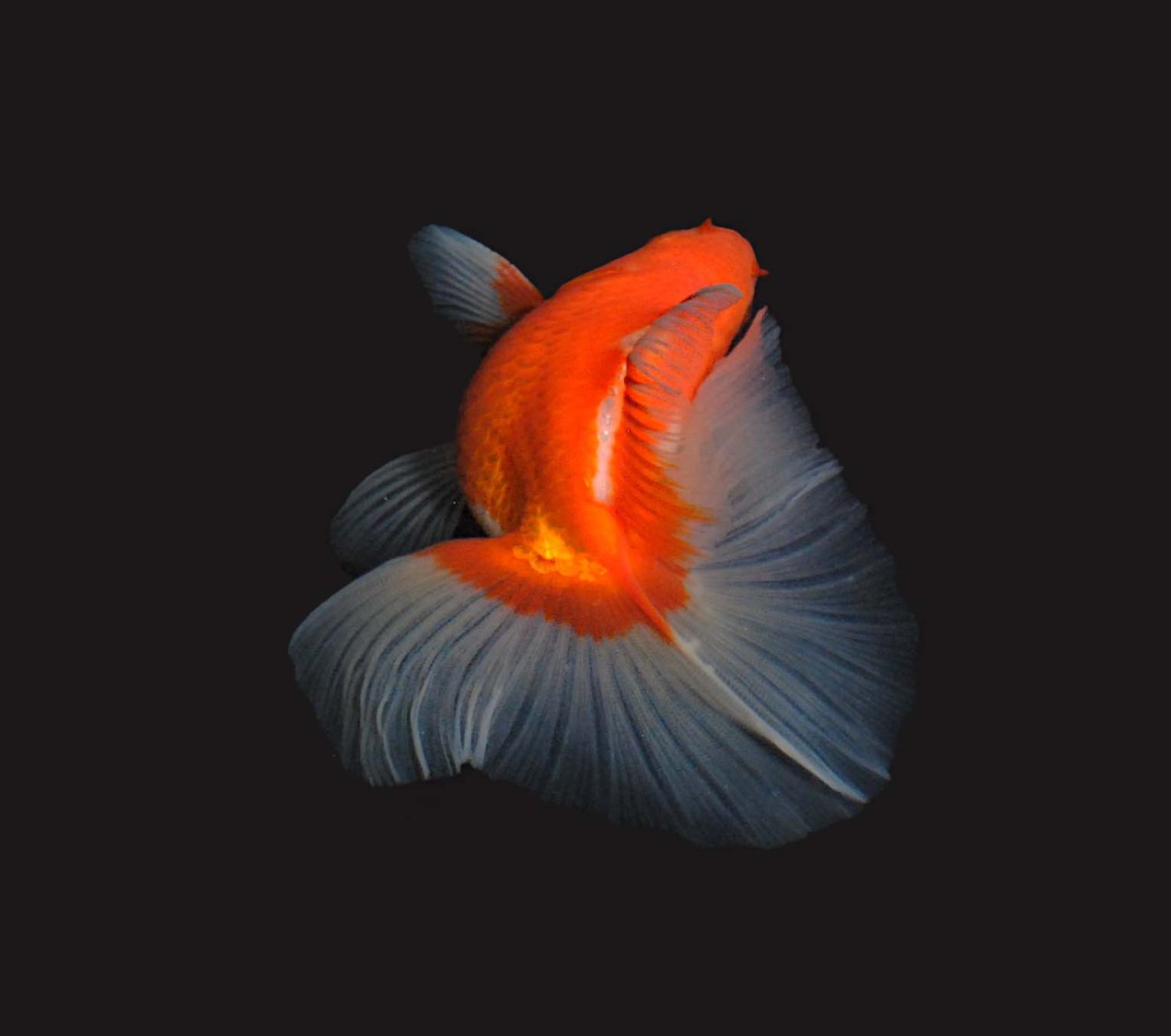
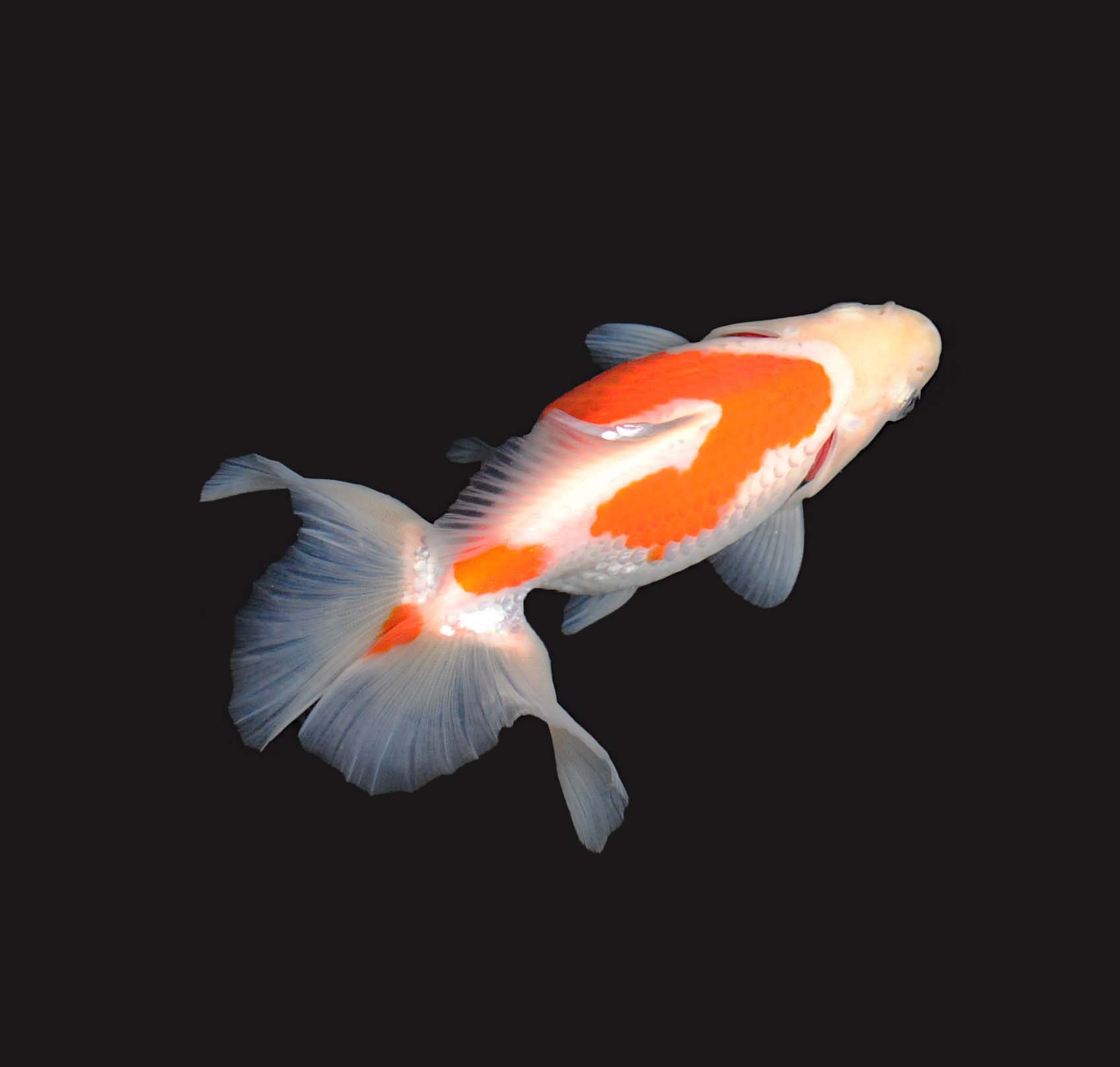
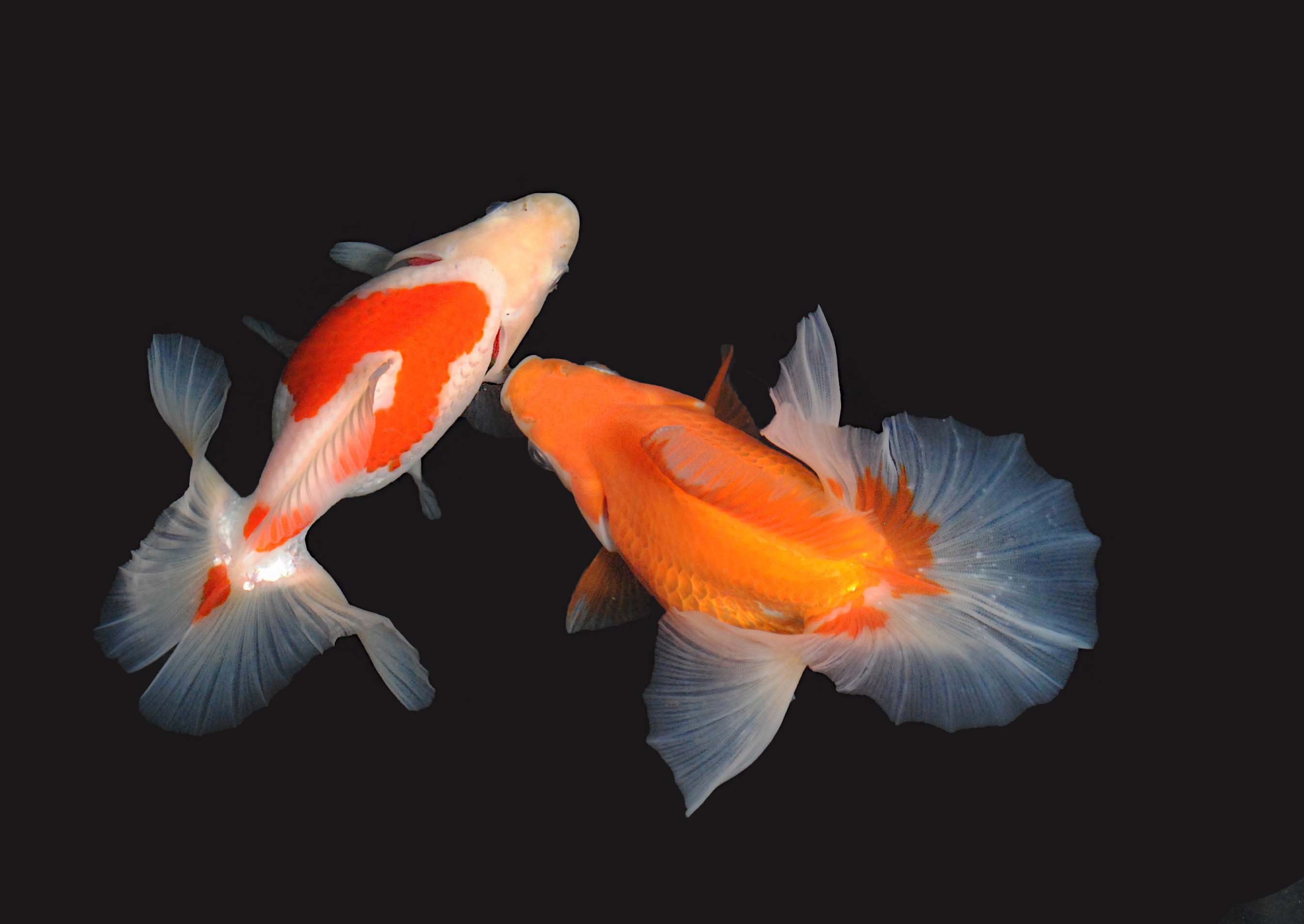
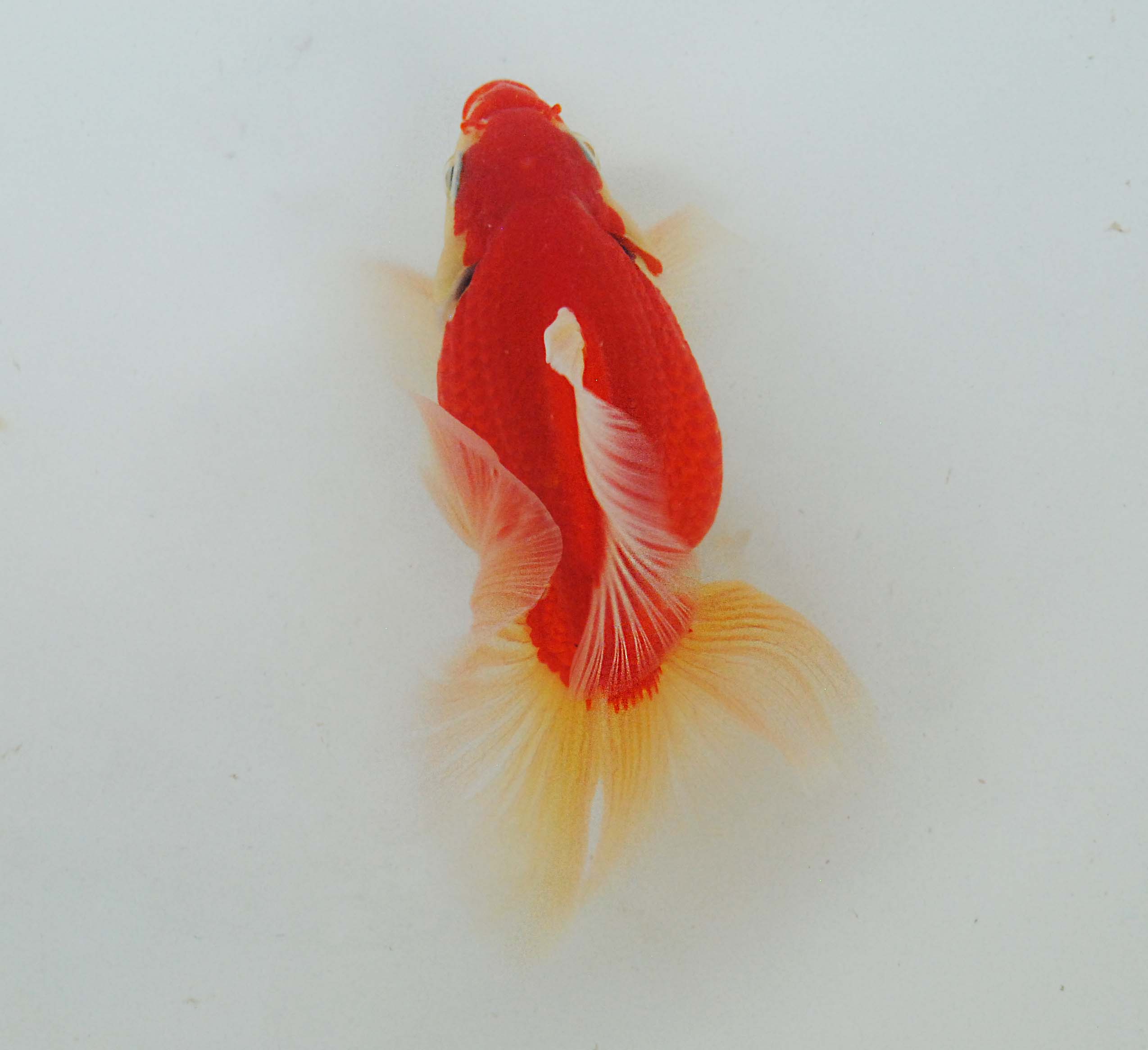
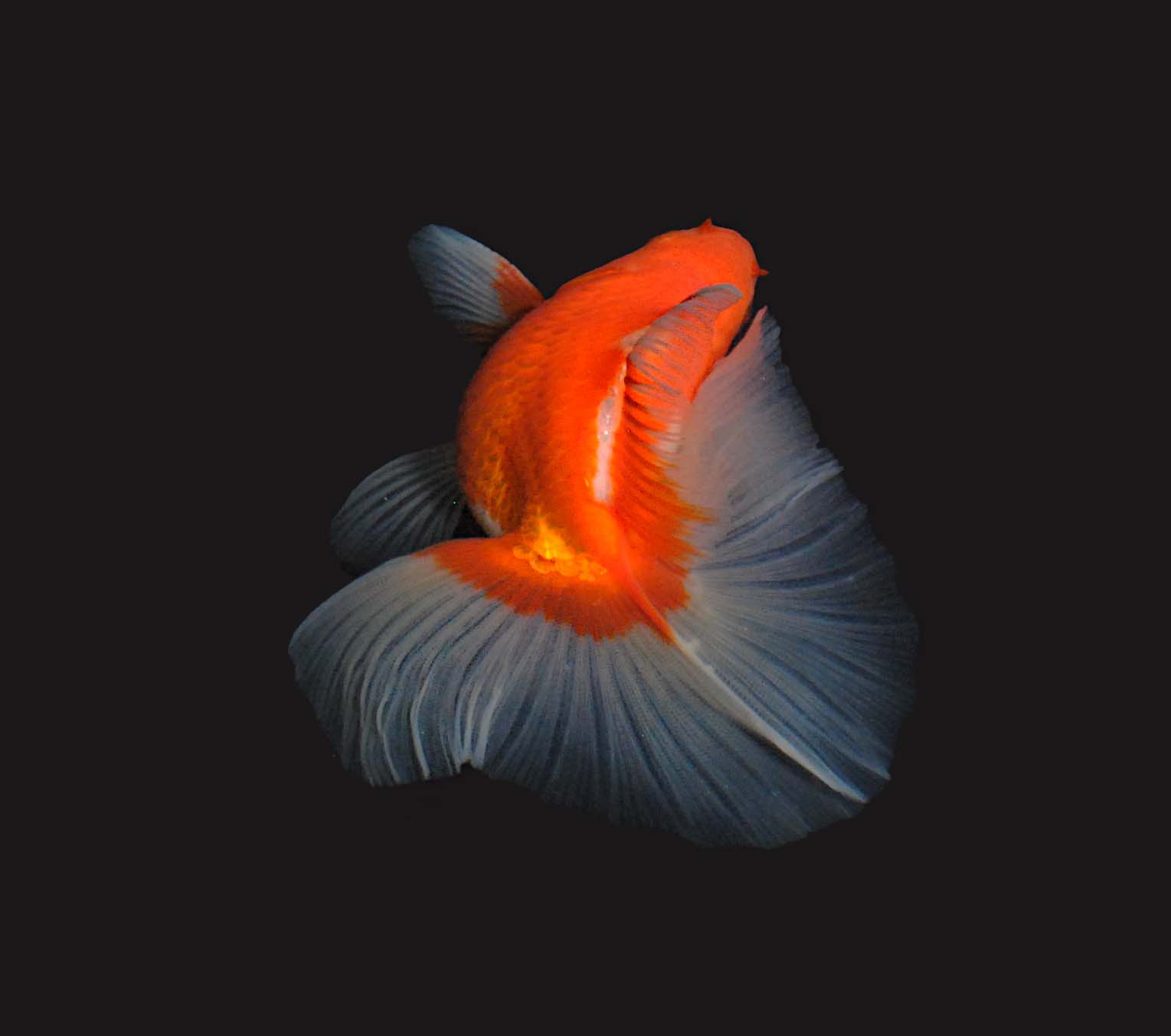
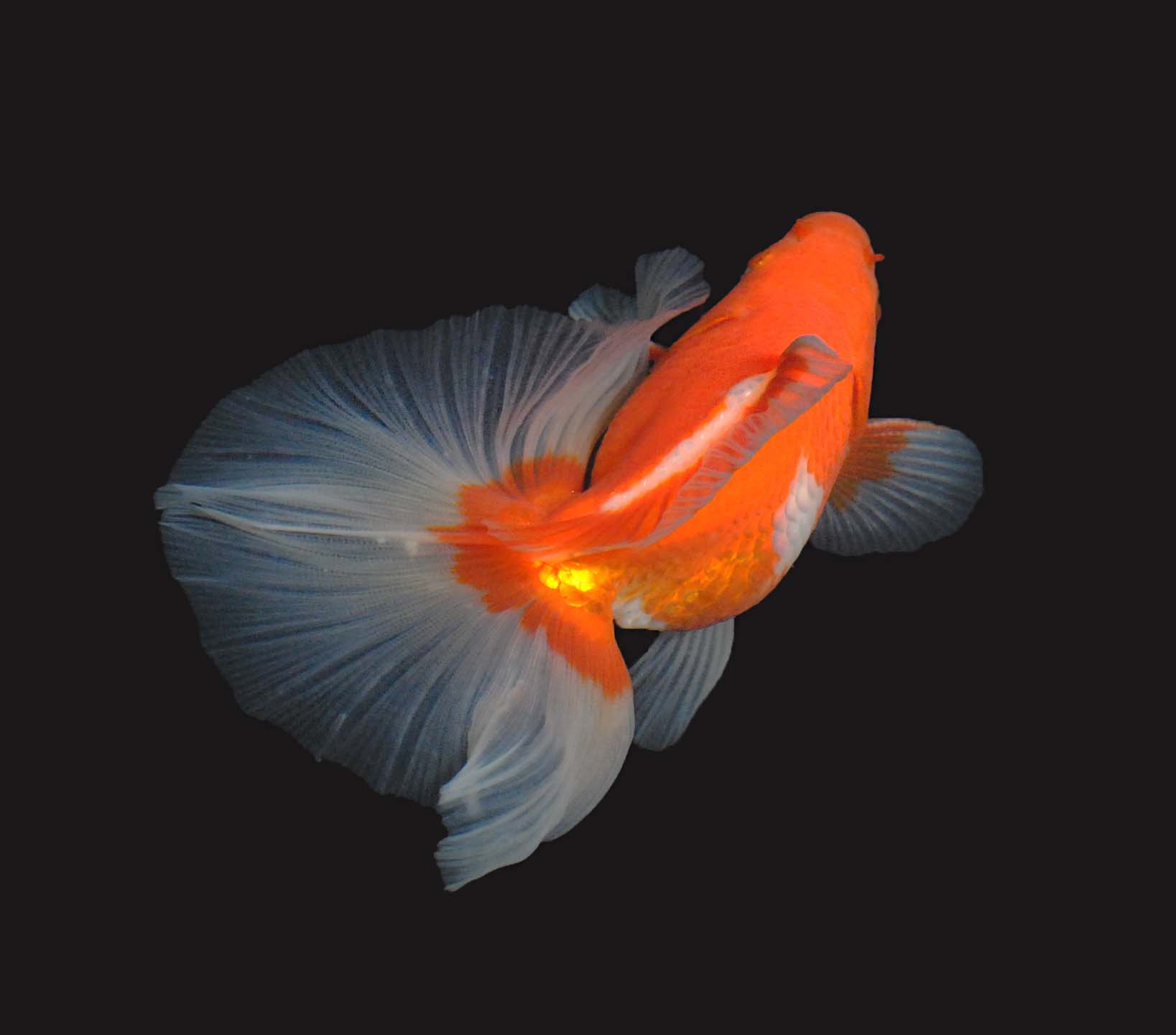
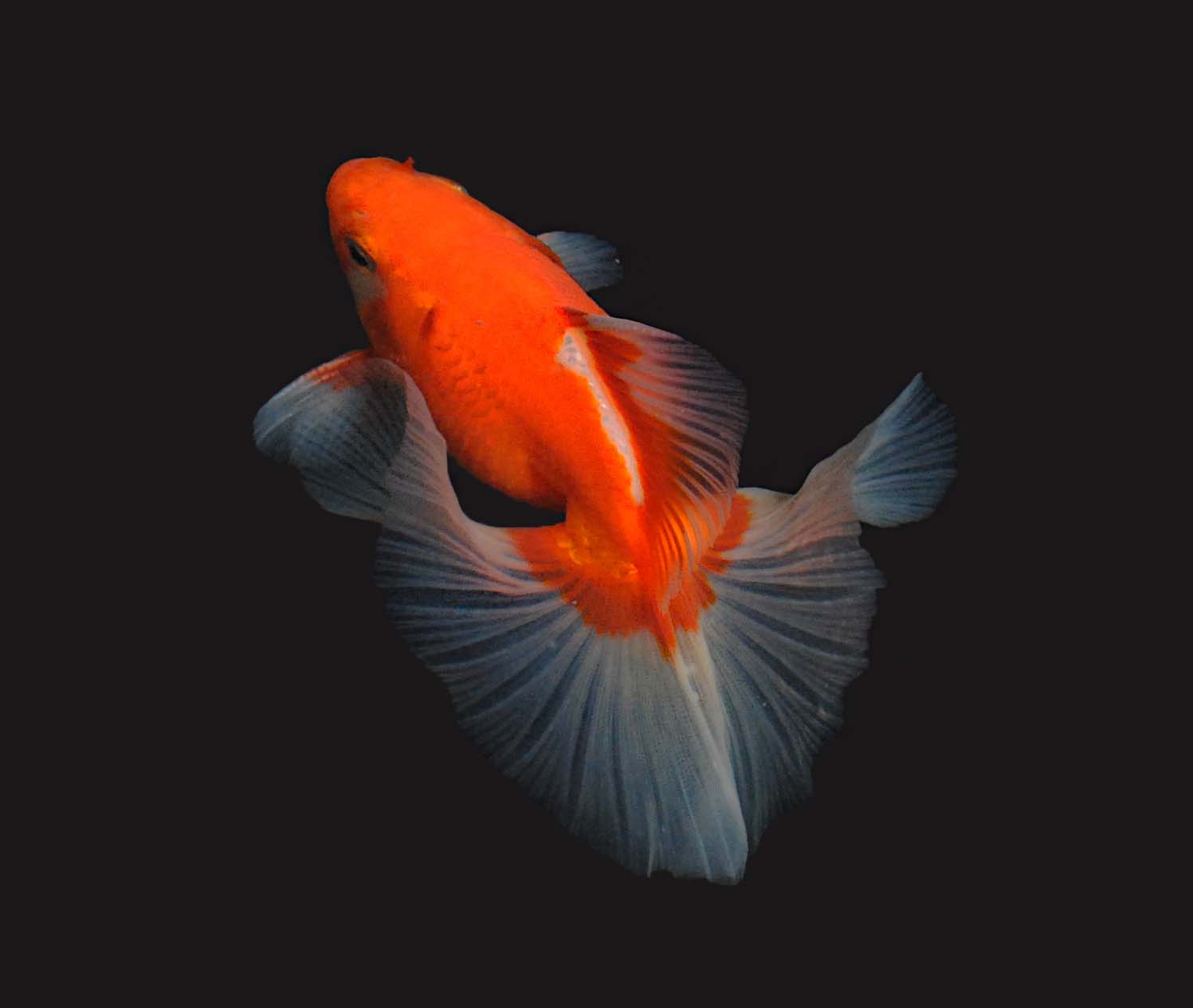
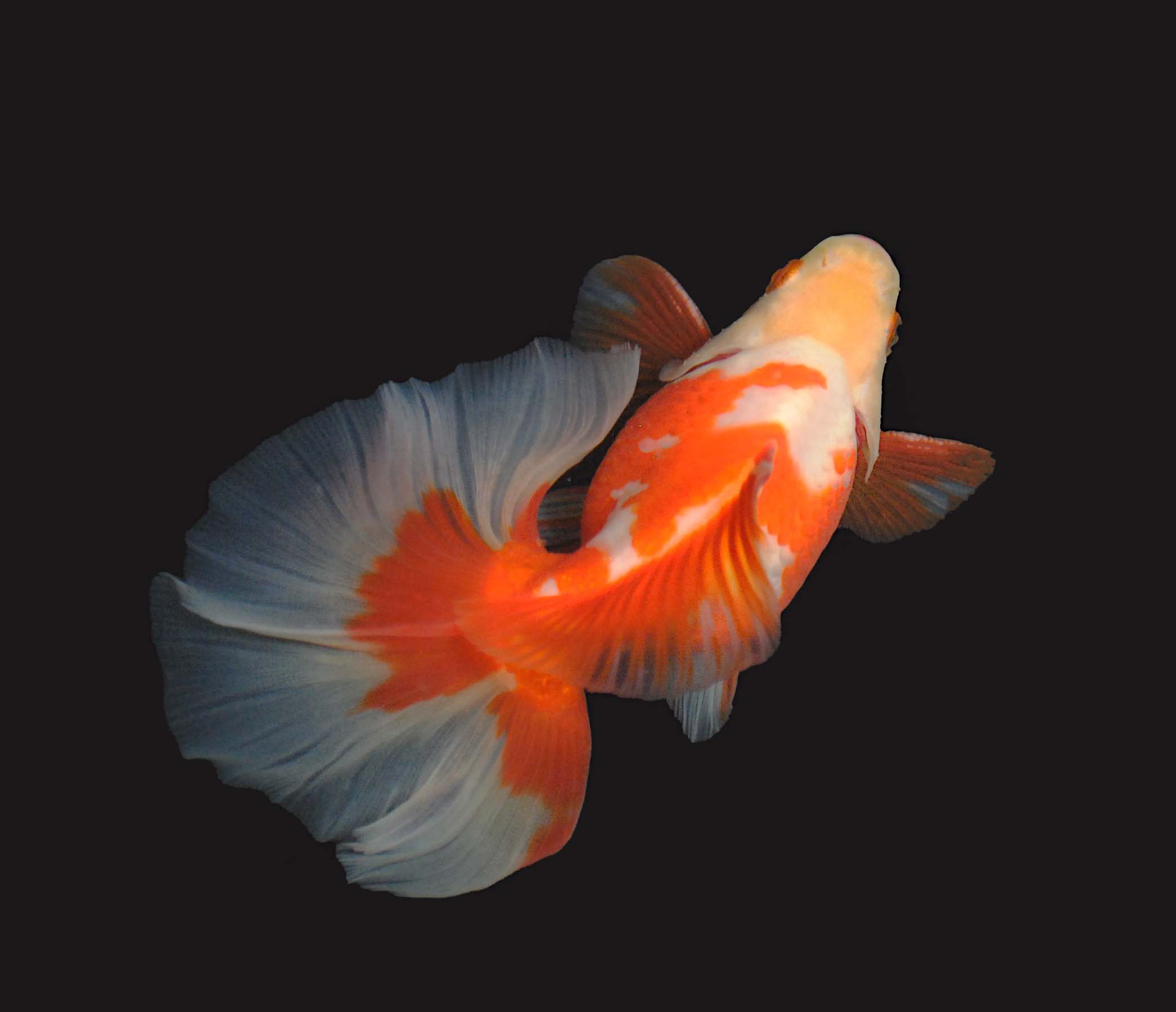
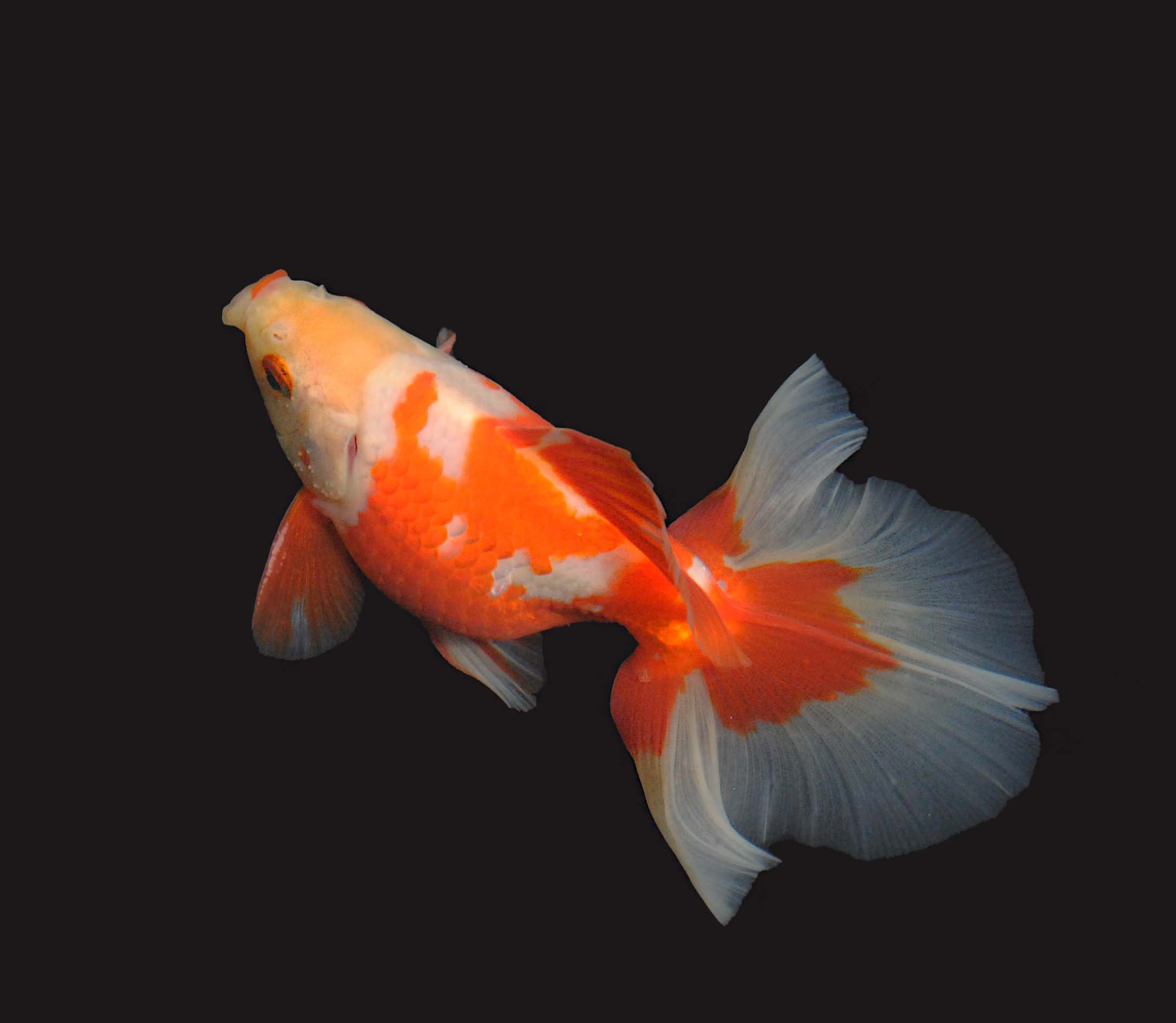
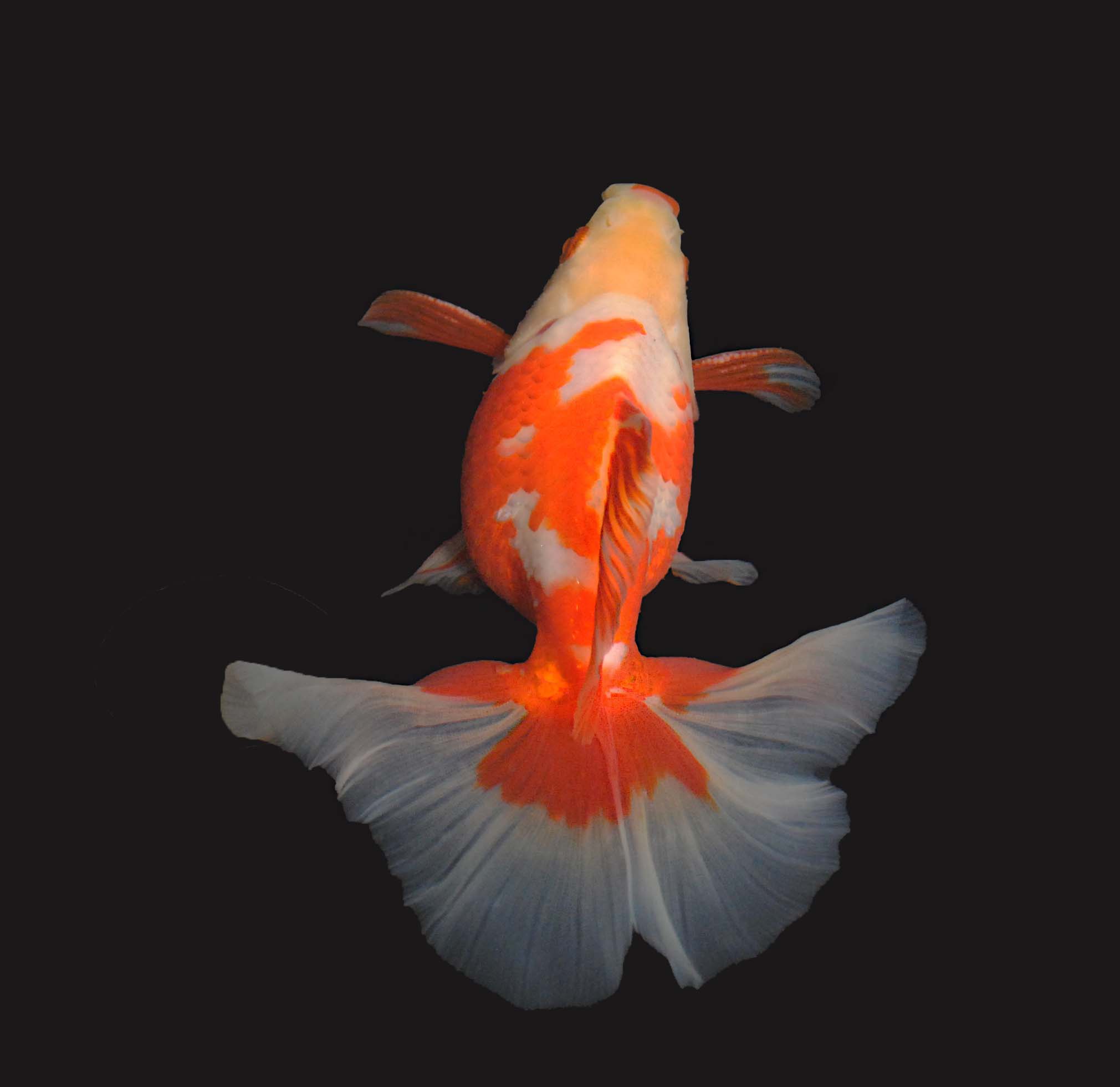
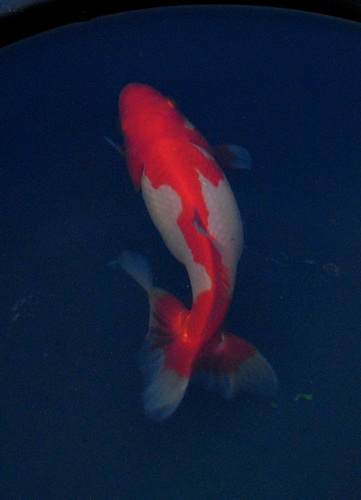
The wowkin has grown well so far. They come in several different forms, from the long body to short body, from the long tail to short tail. I think I have decided to keep only the one closest to my ideal in the first place. This afternoon, I find this one which is very similar to the picture of wowkin I painted in the first place. The body shape is just like wakin, the color is as intense as wakin, the tail has split just as I want it, the spread and flexibility of the tail is just as I imagine, and the small tosakin flip is also there! This is my dream coming true! Unfortunately, there is only one as perfect as this. Others have variation here and there. These are three latest photographs of the wowkin. Forgive the quality of the photo, since I took it just now under low sunlight. Do enjoy the tail dance.
Standard
The idealization of Wowkin, a new variety I try to create. This is meant to be a pond fish which can swim well. The body resembles wakin, with its large body size and deep red coloration. The tail is made to be more impressive than wakin but shall not restrict the ability of the fish to swim. What I have in mind is not a normal tosakin tail, but a semi tosakin tail. It is kind of smaller tosakin tail, retaining tosakin’s flip on its tips and a thousand ray flavor, but has a split in the middle of the tail and is more flexible, so the tail will be wide open when in stationary but close when swimming. This kind of tail is designed to help the fish swim better than tosakin, I hope.

































 hermantogoldfish