
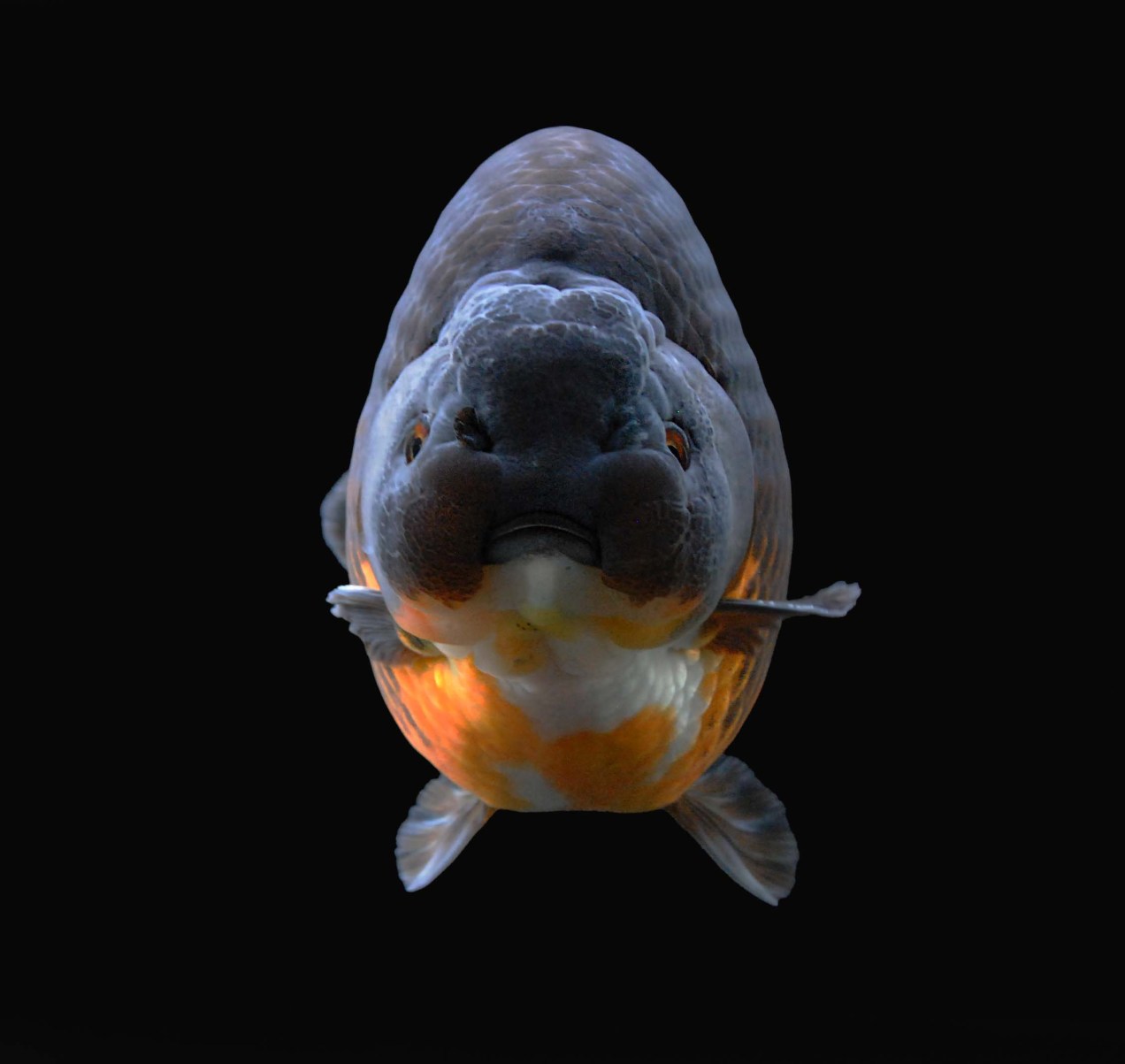
Update: Blue, Brown Ranchu
There is an unexpected twist on these projects. This is the story.
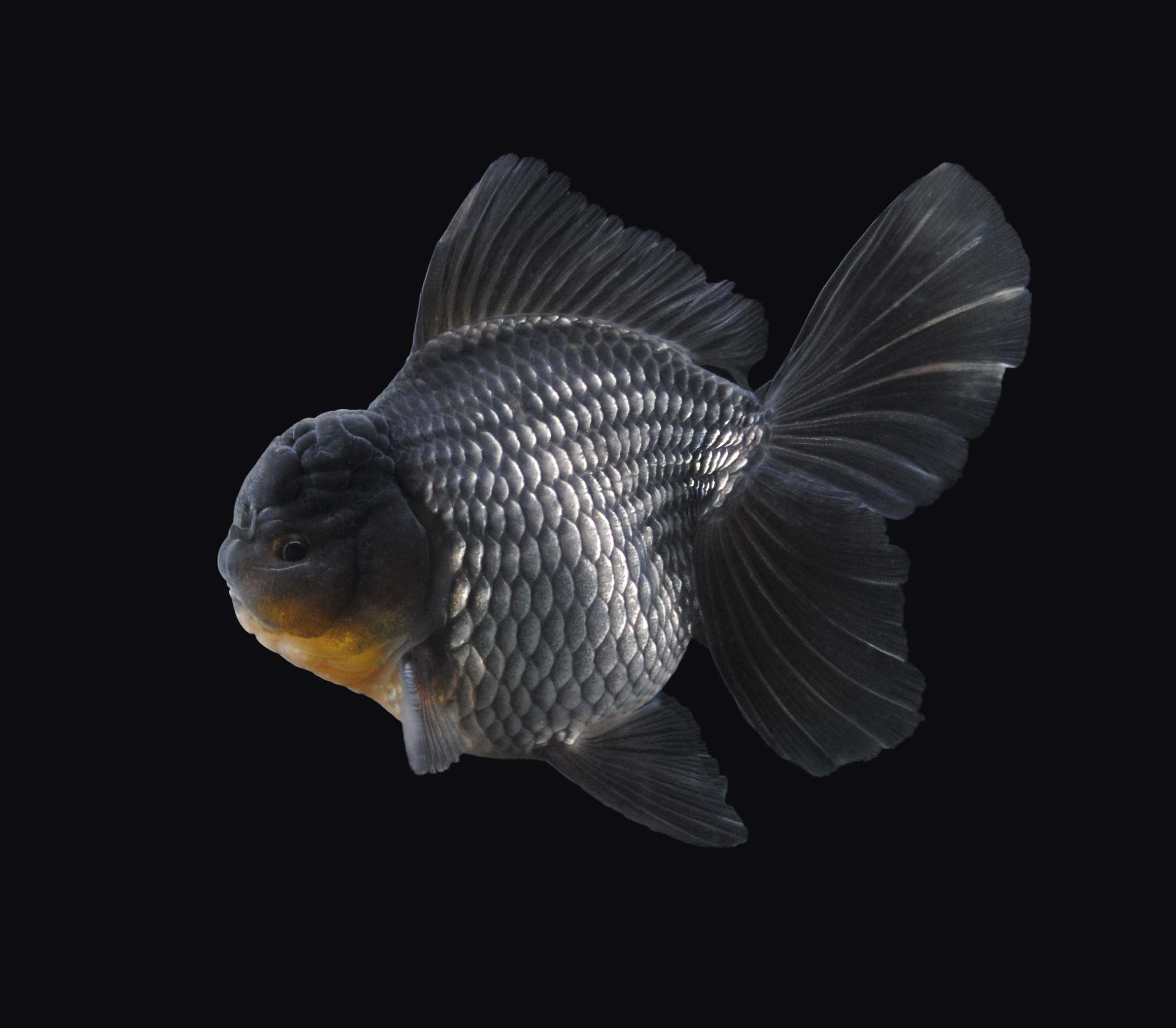
I mentioned that I almost lost all my ranchu lines in my previous posts last year. Only one Blue Ranchu left in my collection. To revive them, I acquired Blue Ranchu from a friend breeder who once bought the seed from me. I also bought some Brown and Purple Ranchu from another friend breeder who also got the seed from me. They might have crossed my original lineage to other Ranchu to maintain the genetic vigor, which is good, but will still relatively close to my lineage, which is good for me.
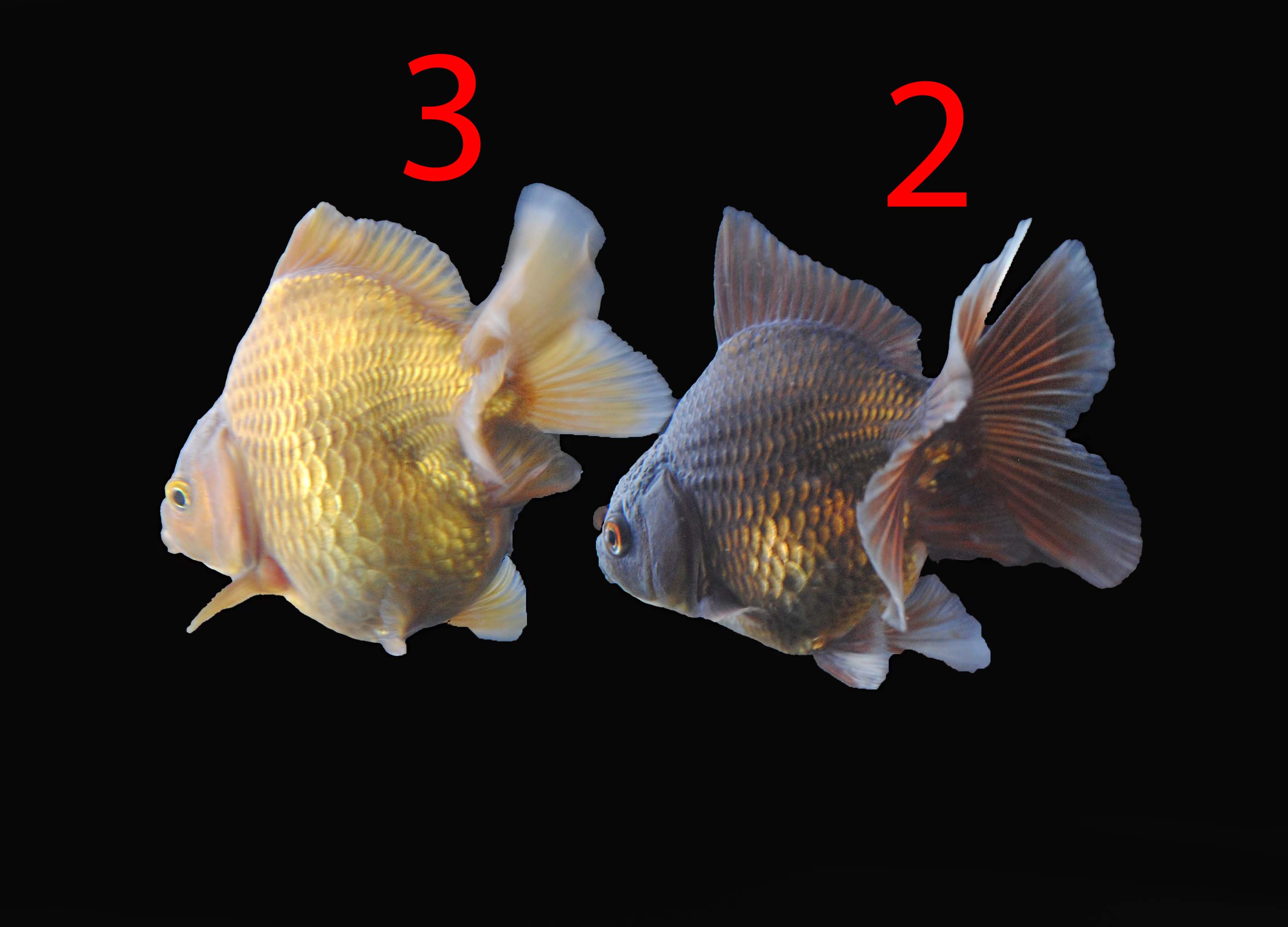
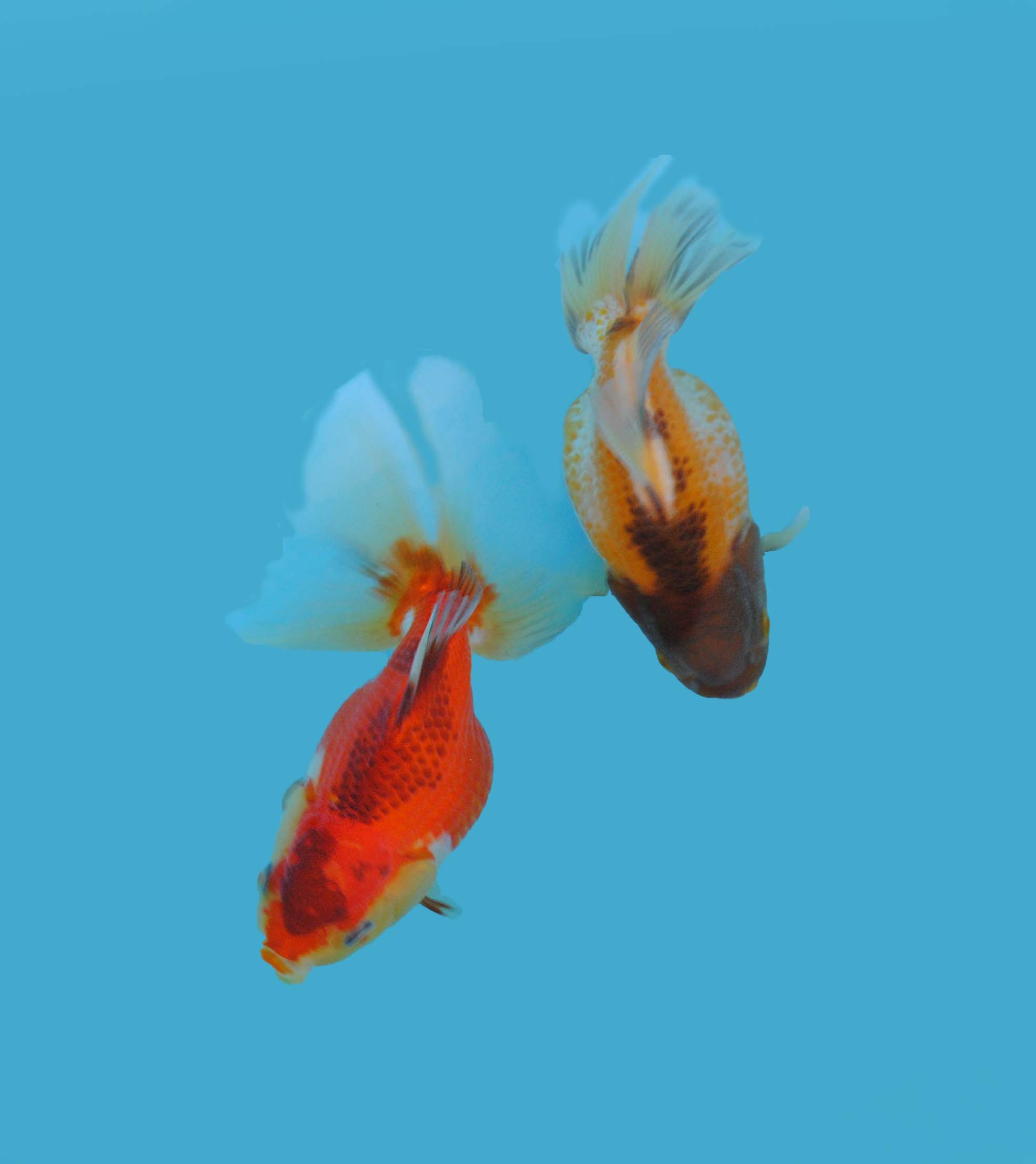
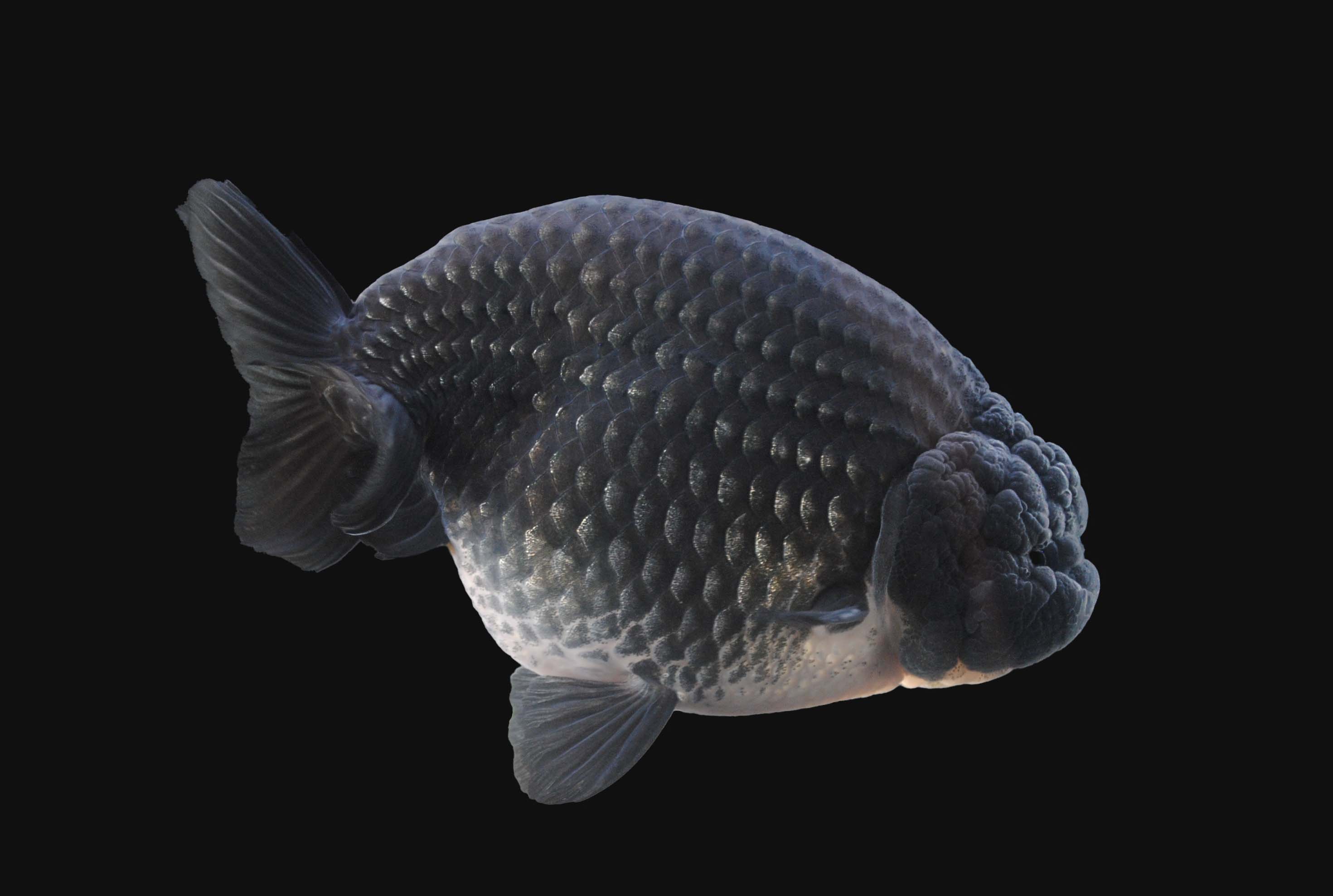
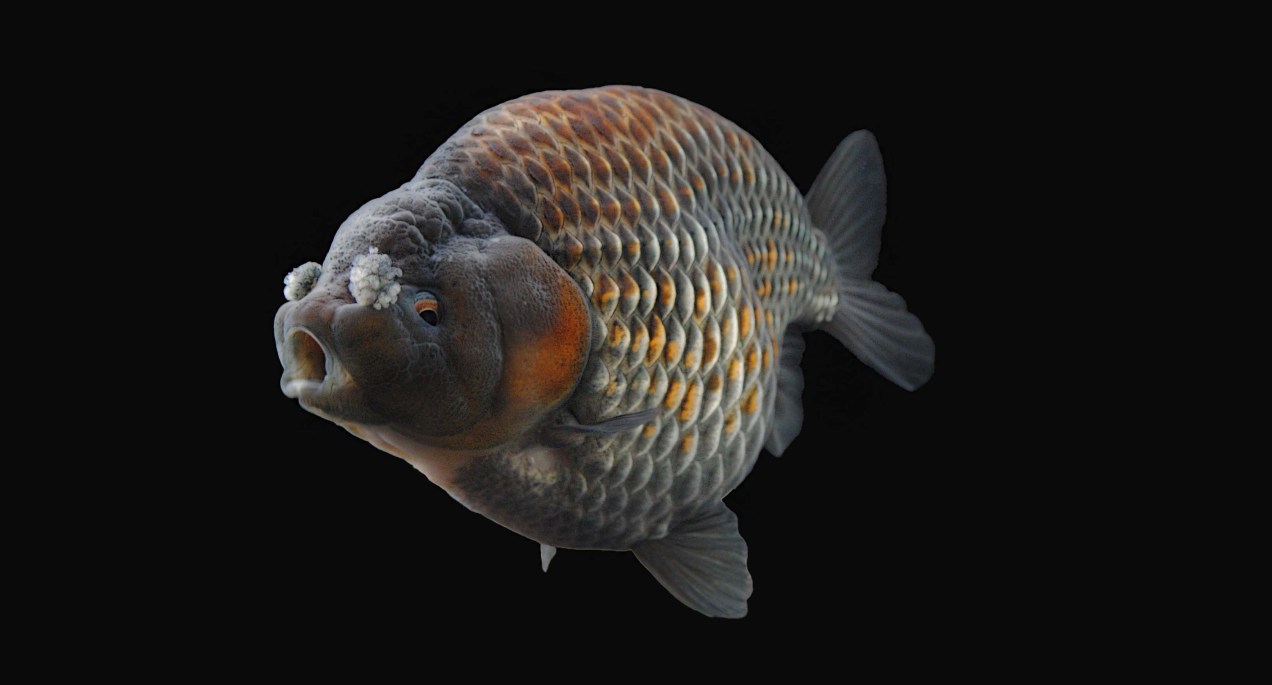
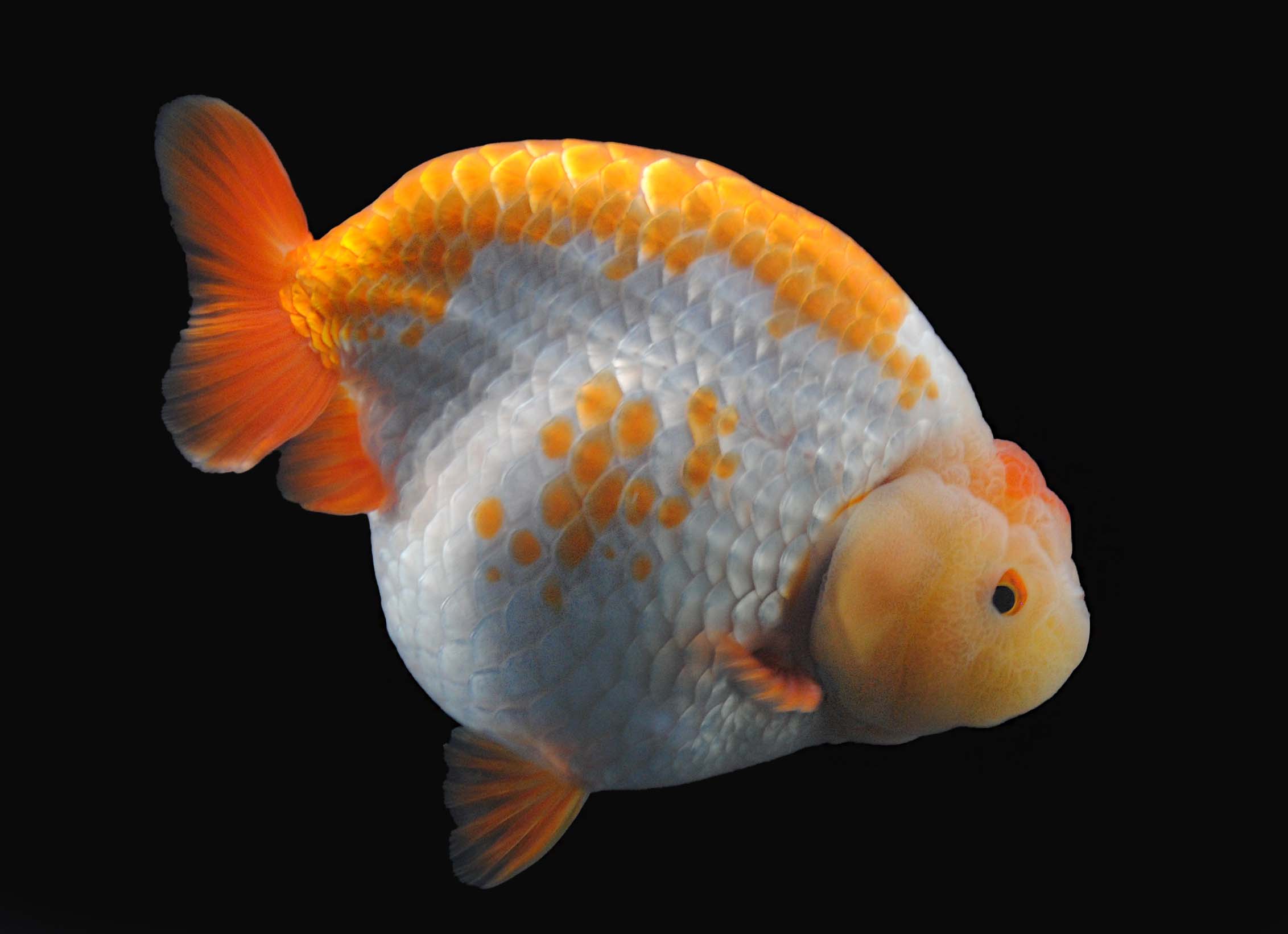
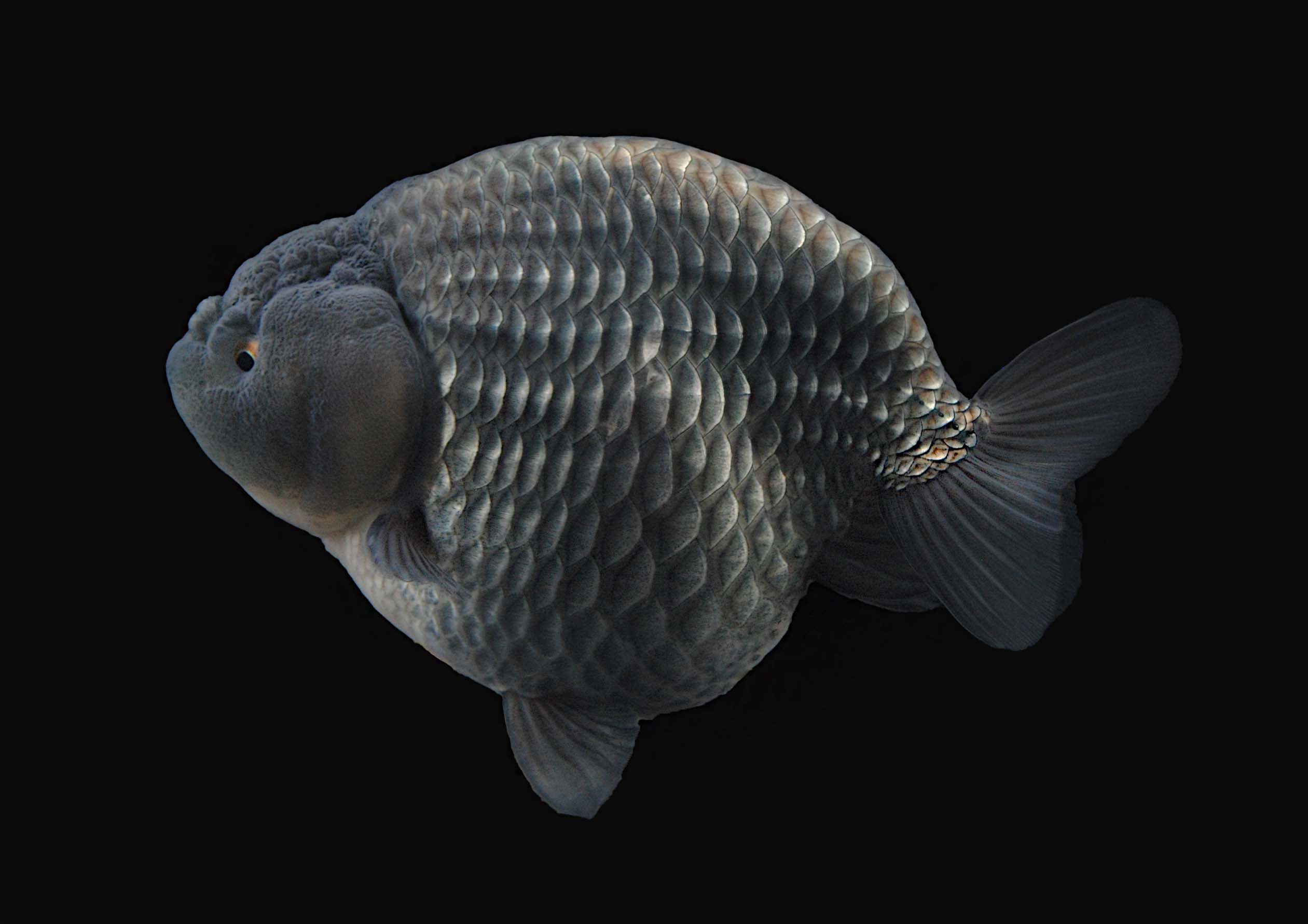
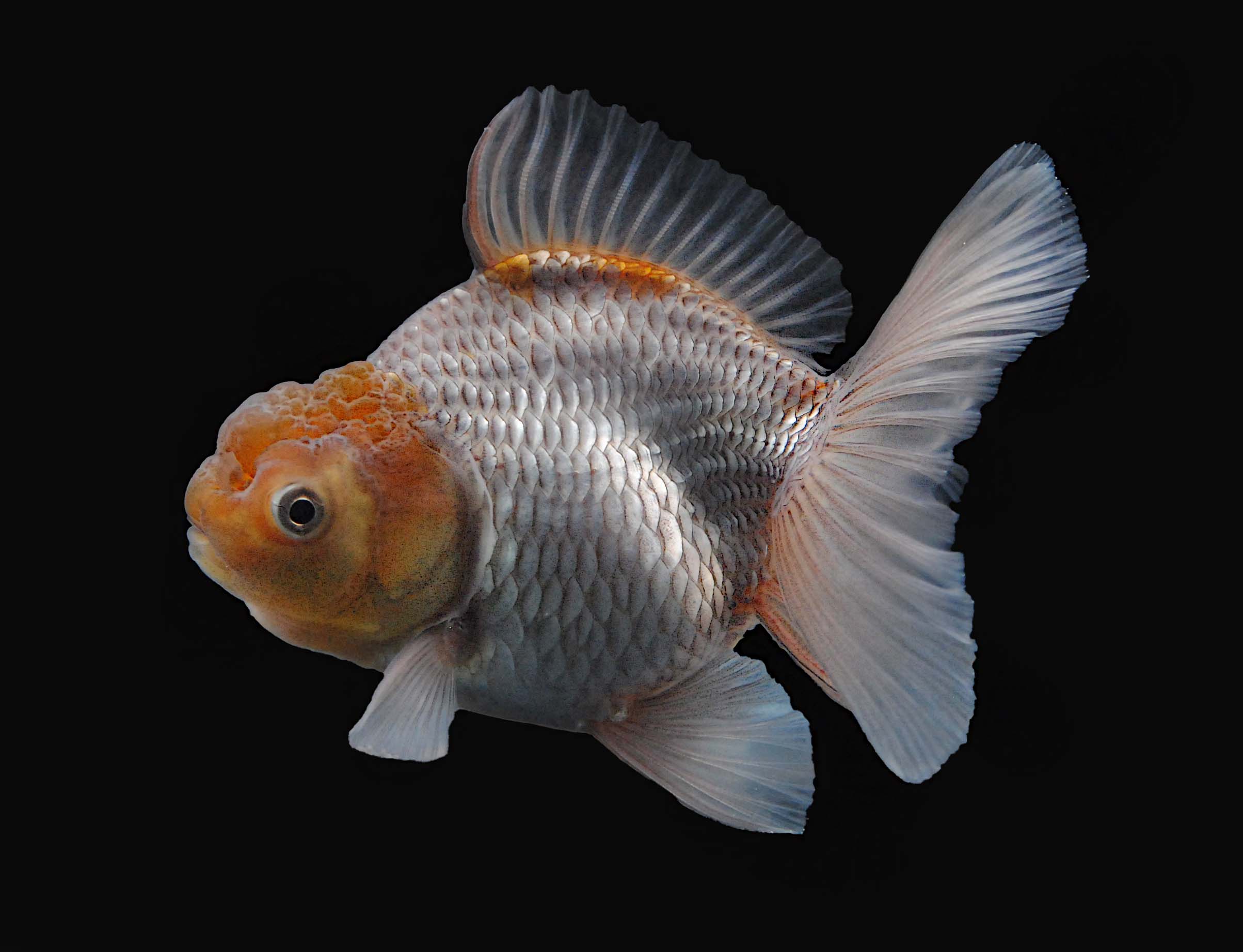
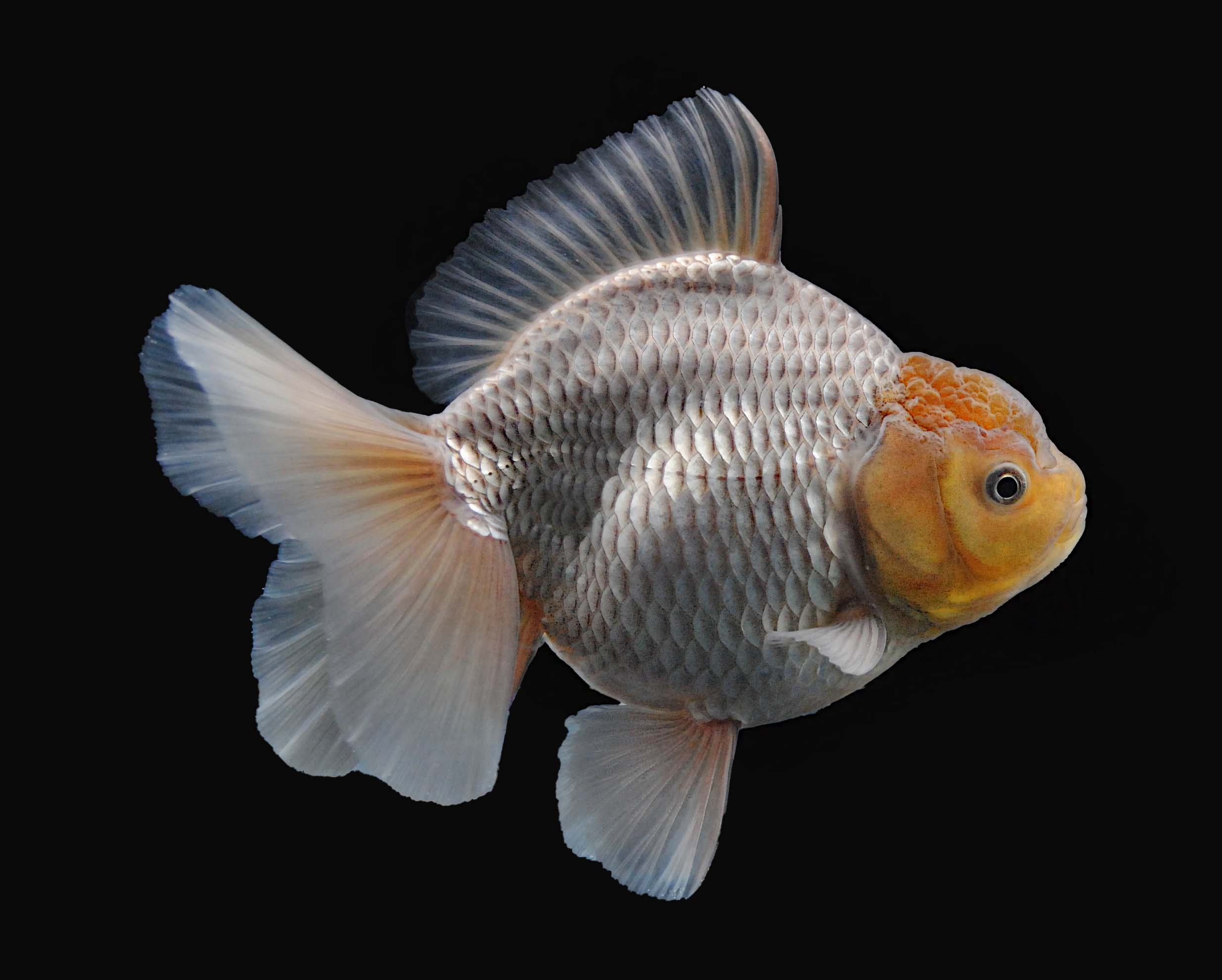
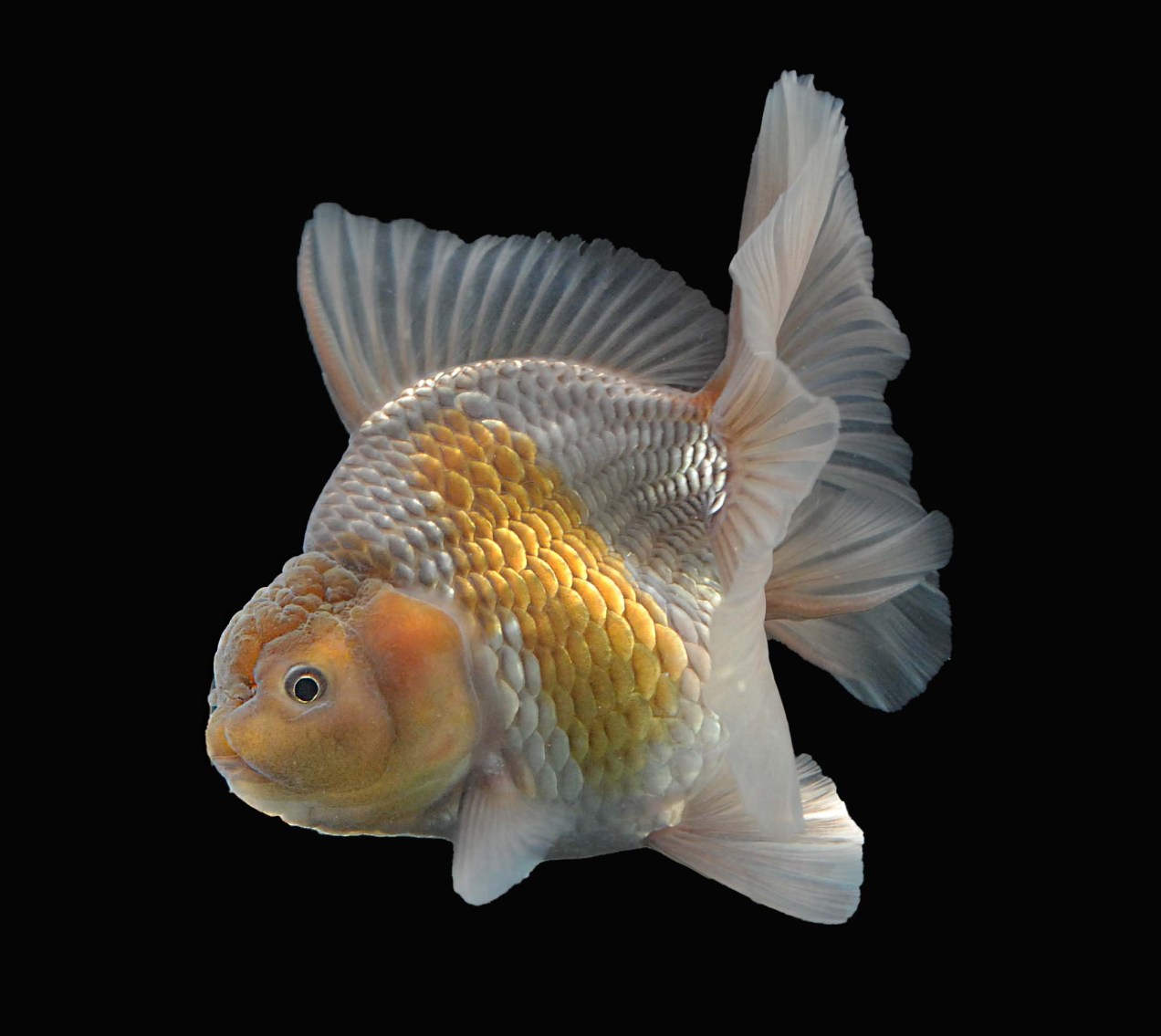
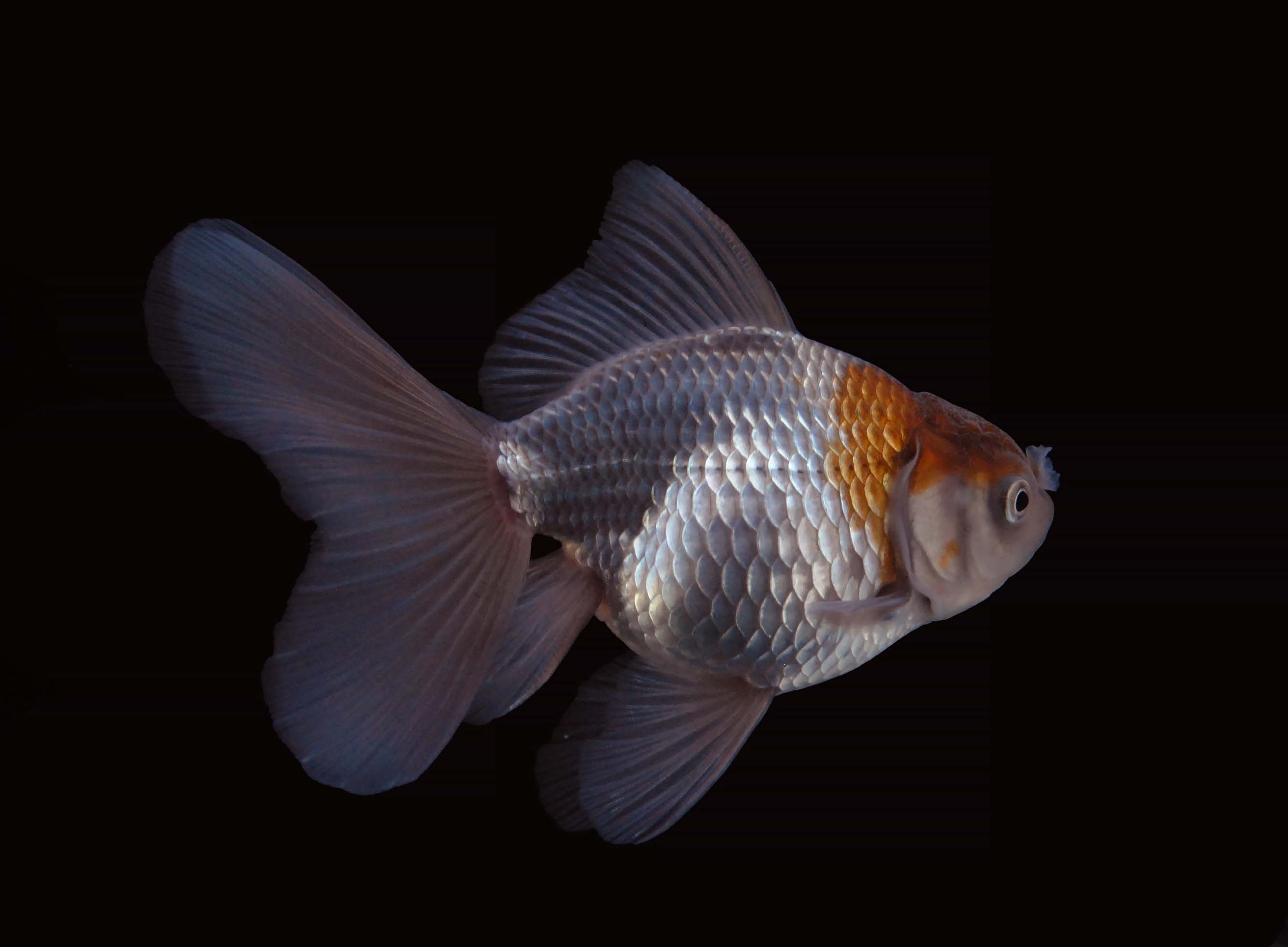
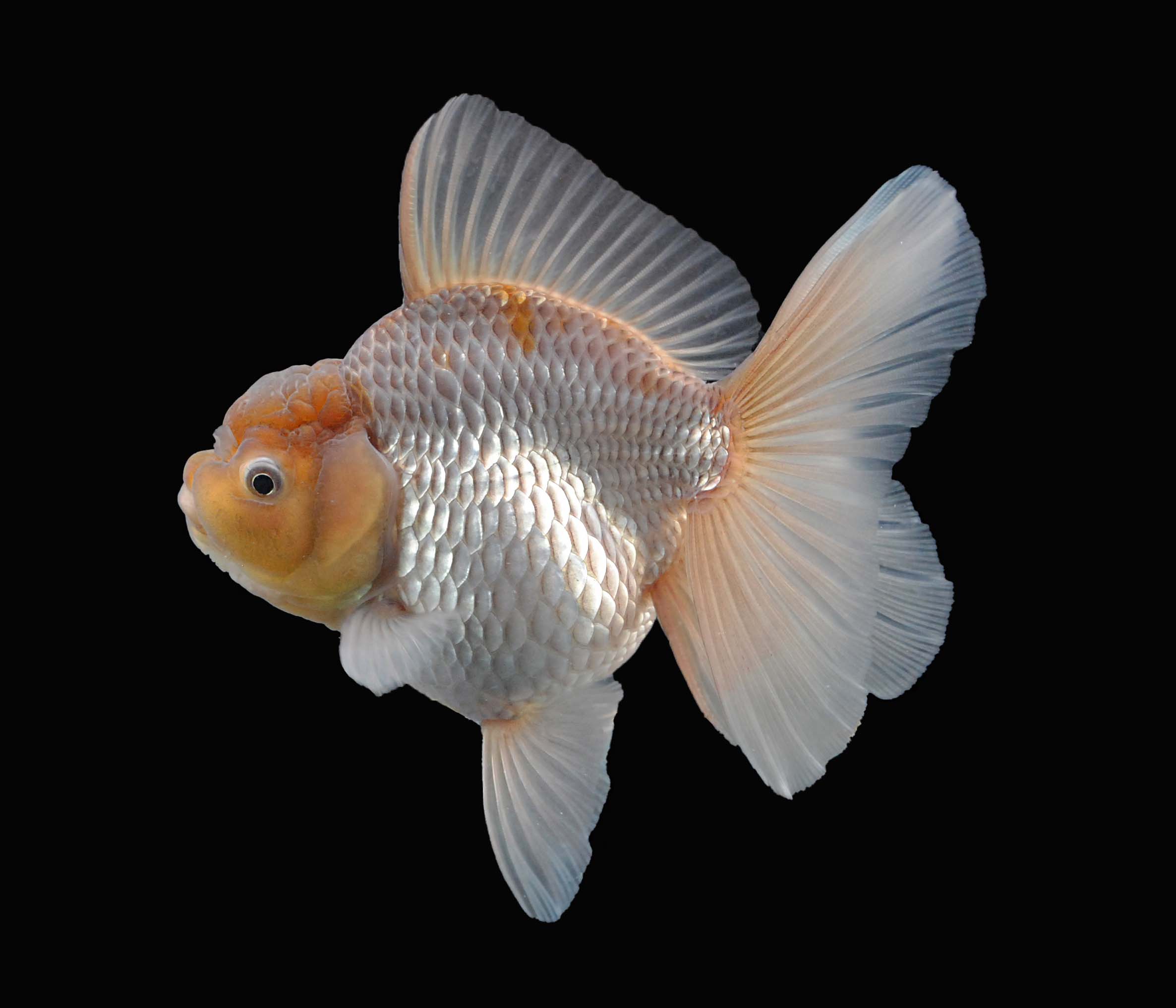
The twist comes from the Blue Ranchu that I bought. I noticed that several Blue Ranchu my friend breeder offered on the internet have whitish color in the neck area which sometimes carry over to the belly area. I did not have the exact picture of the fish. But this one offspring illustrates my point well. This one is a result of crossing the Blue Ranchu with the one remaining in my collection.
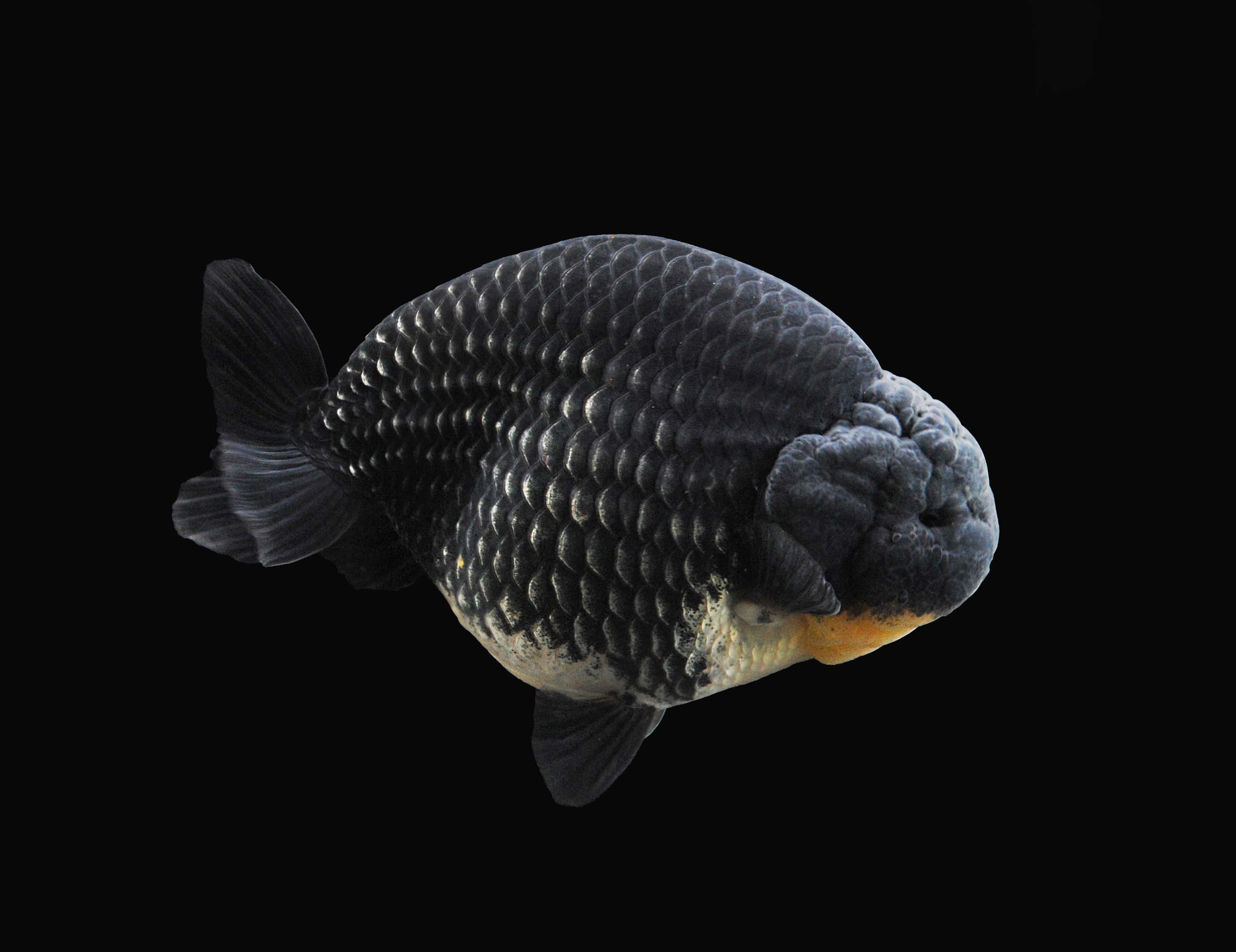
At first, I think the white area in the neck and abdoment is normal. Some of my Blue Ranchu shows the demelanization process to become blue and white fish, or sometimes even black and white if the blue is too dense. Some even become totally white. I was not aware of anything. But when my cross yielded some Kirin Ranchu and Calicos, I began to study the fish closely.
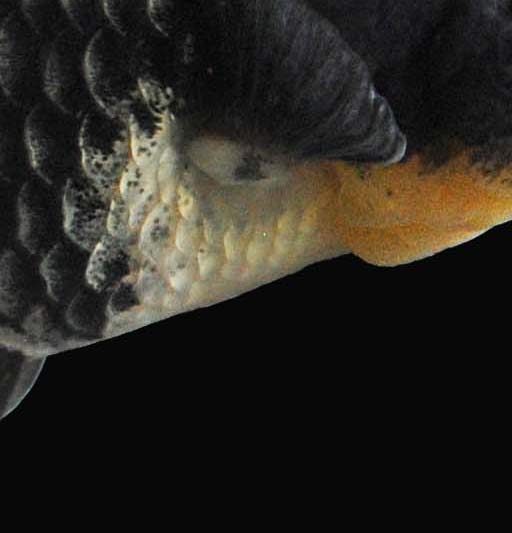
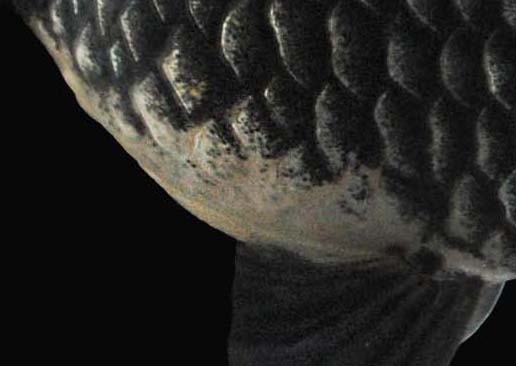
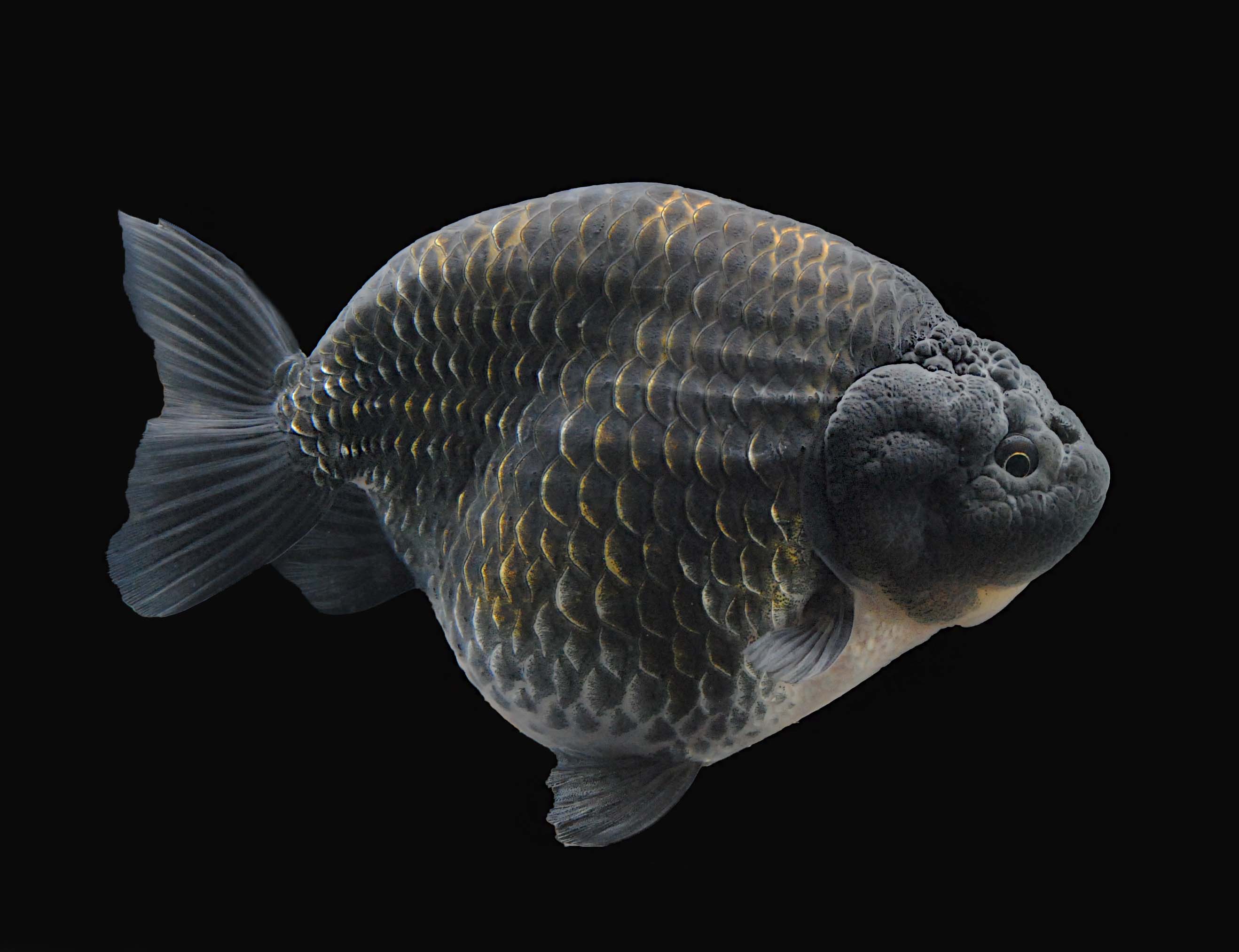
The white color in the neck is fully covered with metallic scale, makes me falsely believe this fish (and the fish I bought) is a truly metallic scale fish. But I fail to examine the white part of the belly. If we watch closely, we will notice that it lacks the metallic shine. It is a sign that the fish has transparent side in its gene.
I remembered that my friend breeder also acquired from me my line of Cow Ranchu (transparent scale). My guess is that he made a cross between the cow and the blue at a certain point in time and then tried hard to bring back the metallic scalation, resulting in this kind of phenotype. The specimen is almost totally metallic scale! But when we think they are truly metallic, we will be surprised when we see the offspring. We might think, how come metallic x metallic produces some transparent scale.
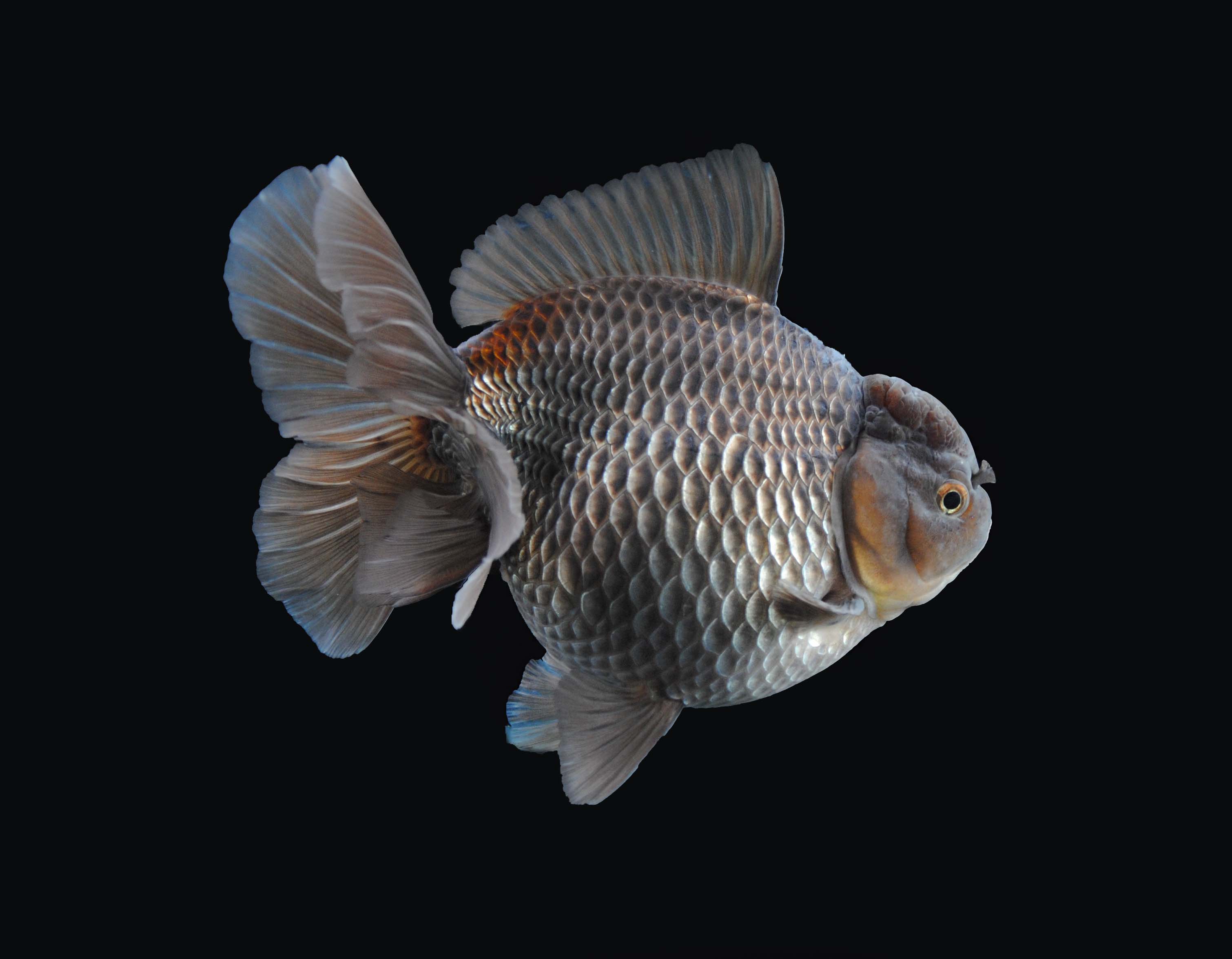
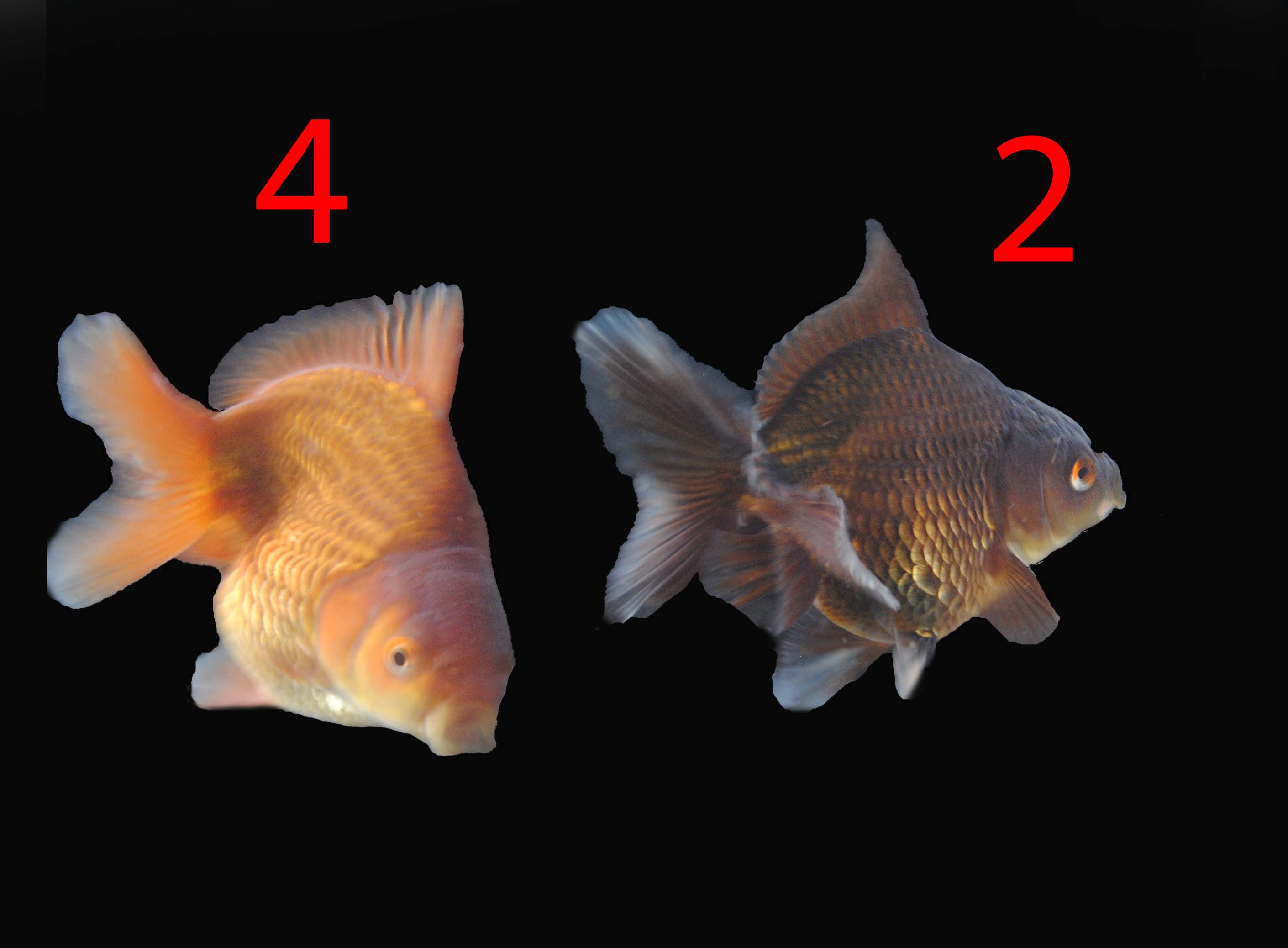
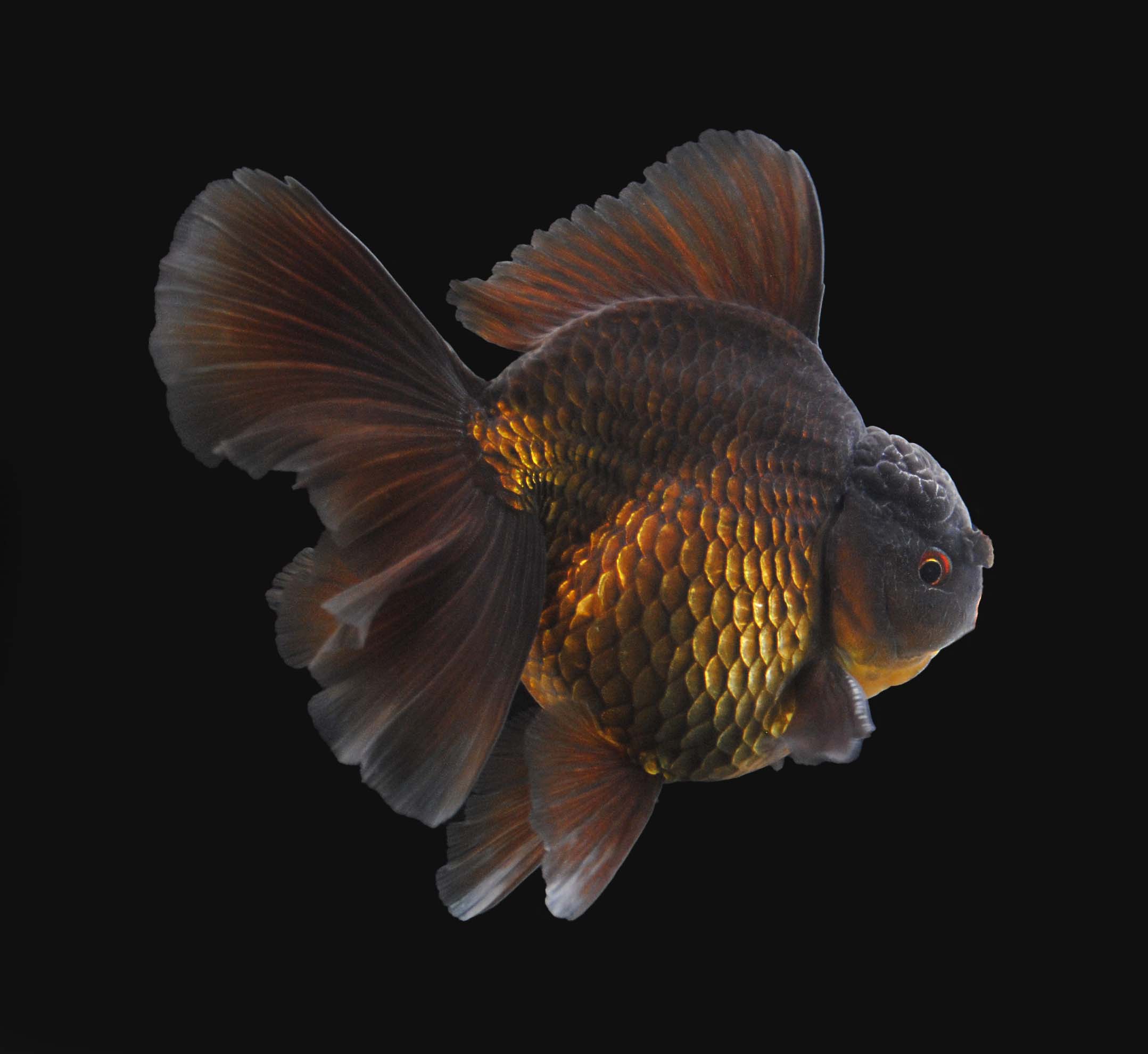
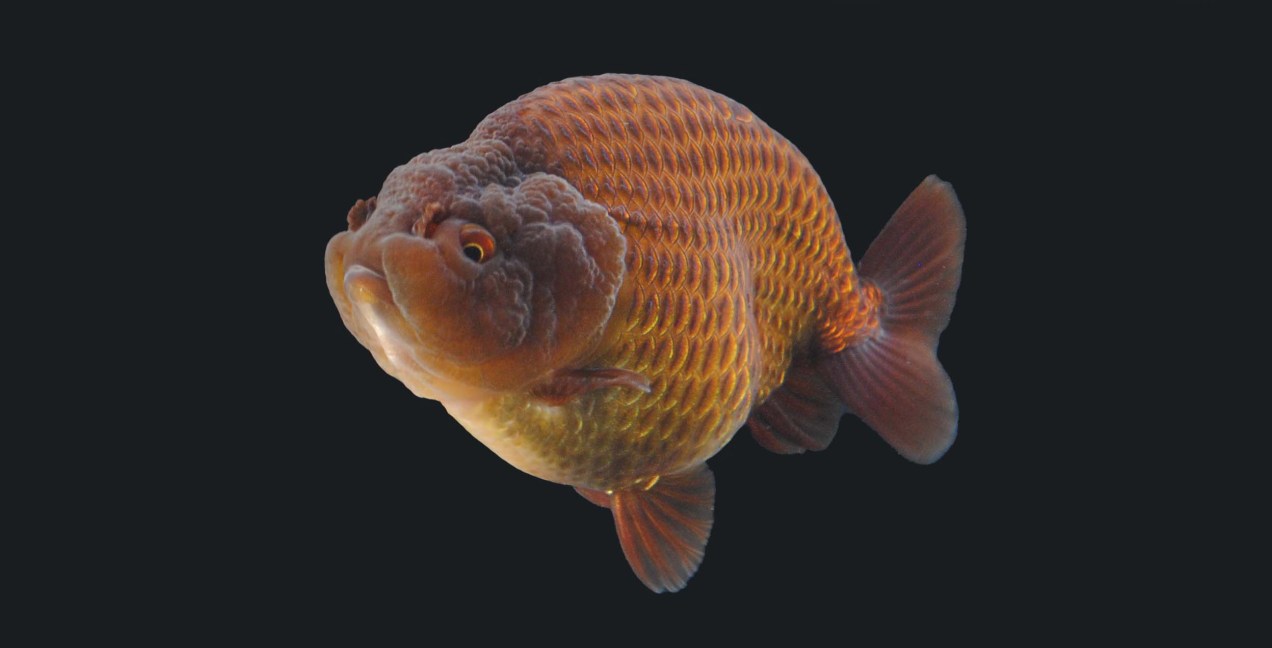
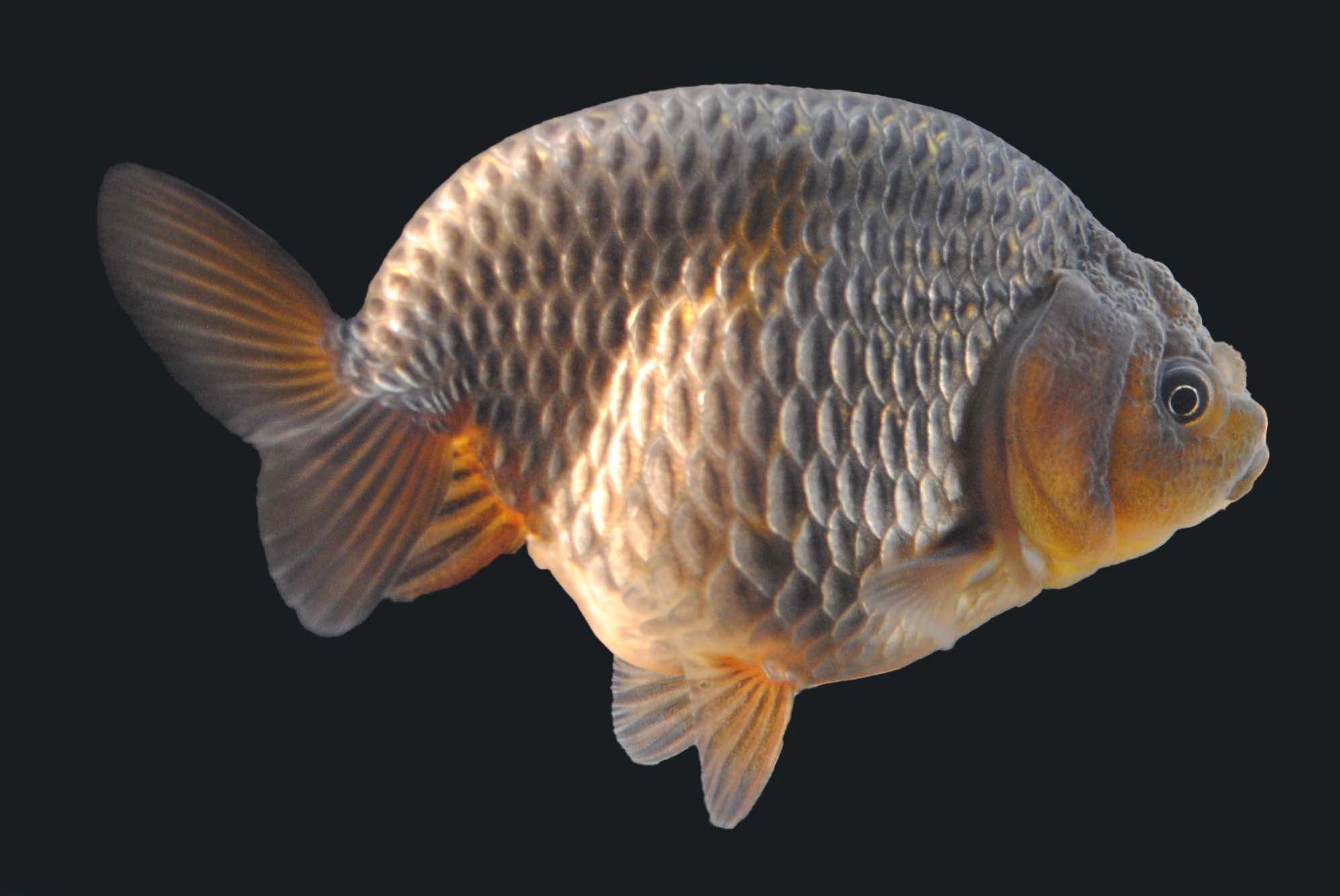
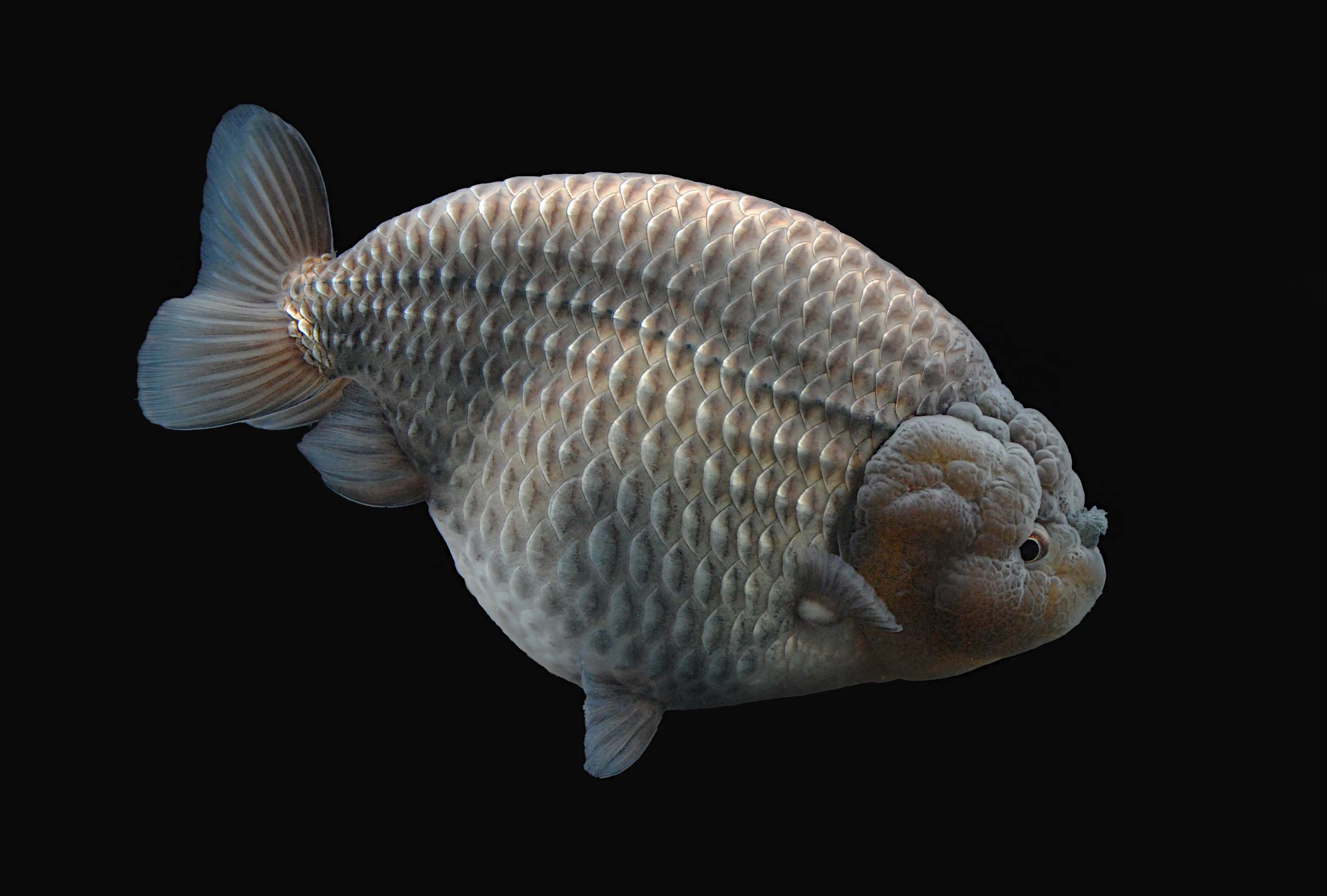
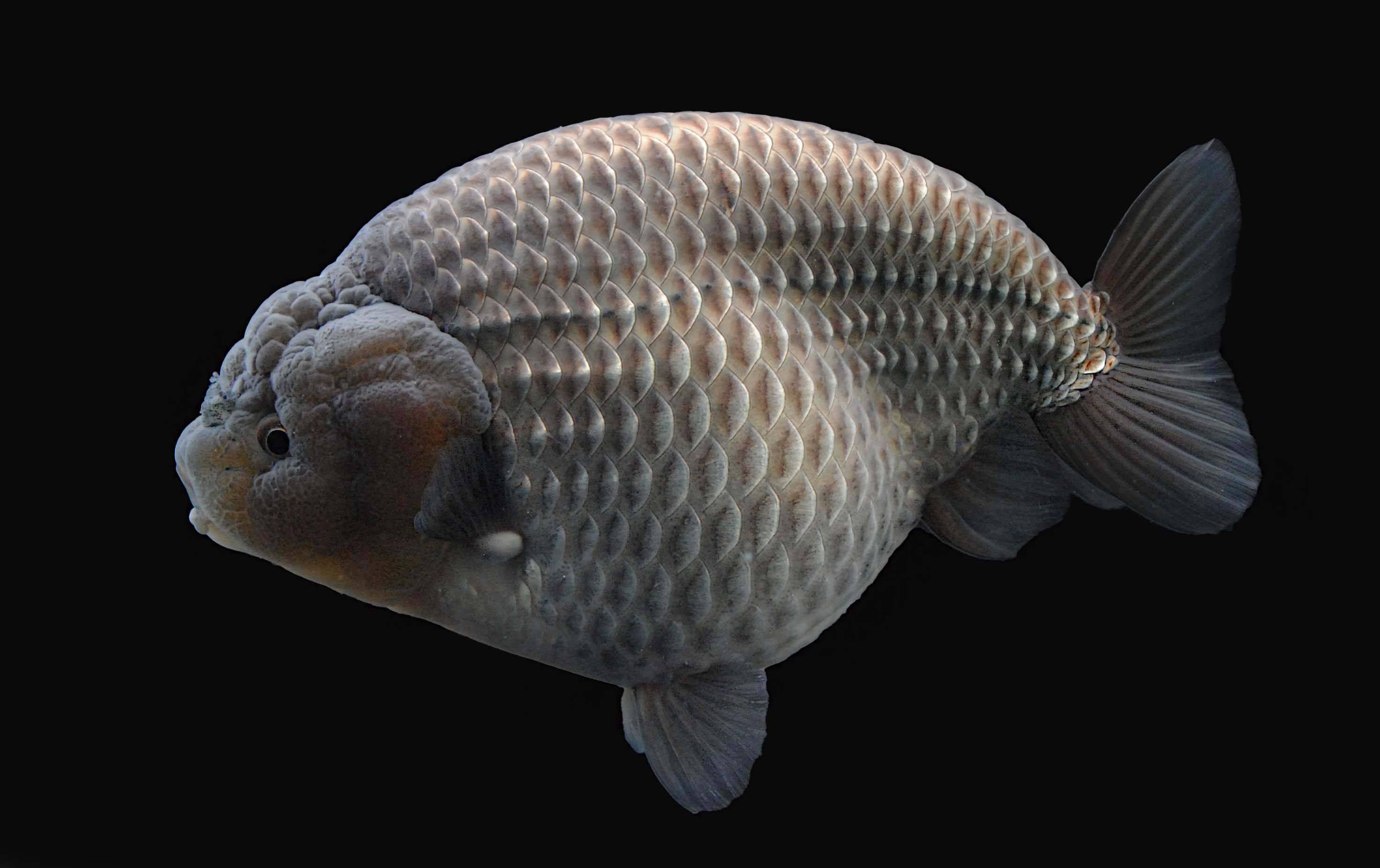
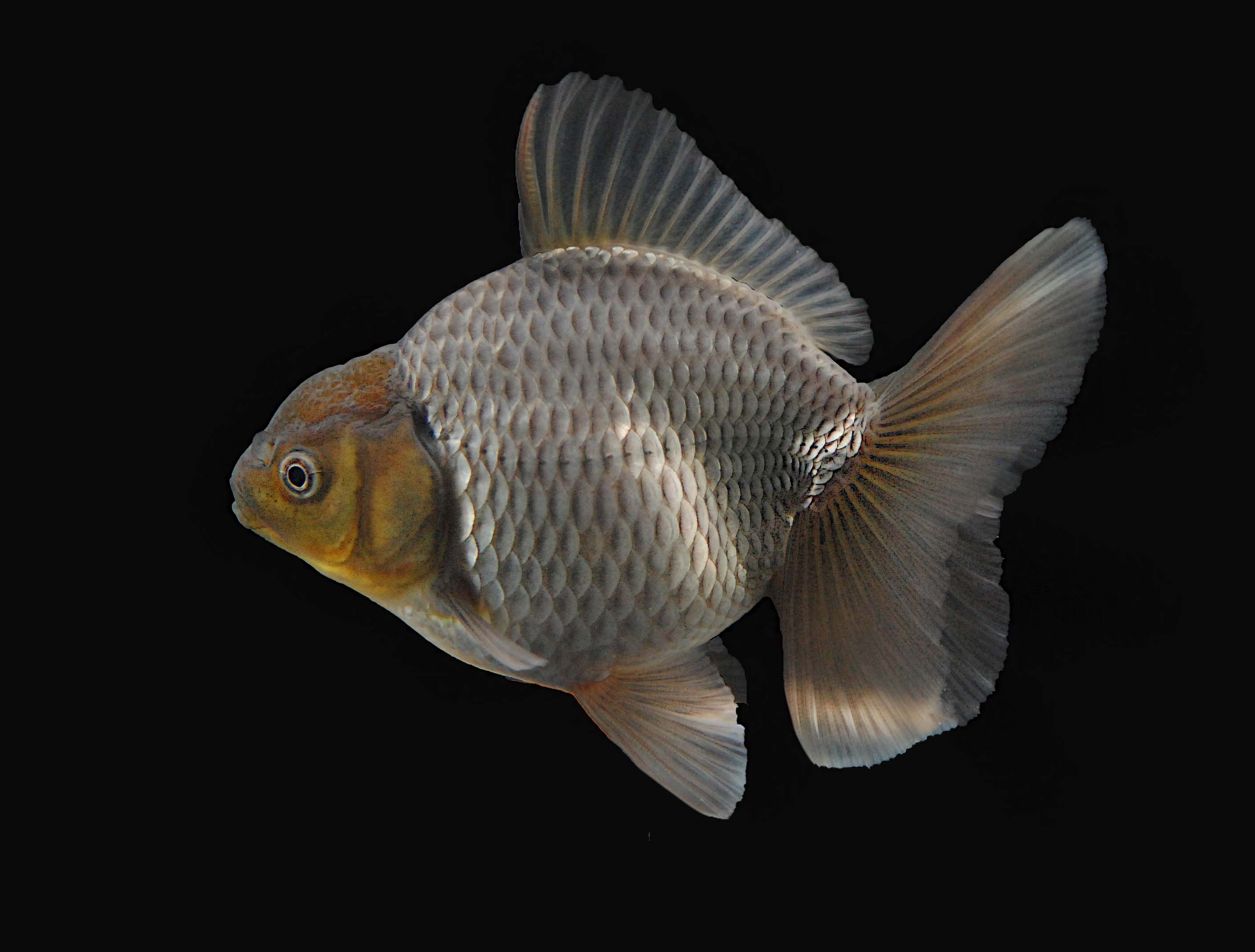
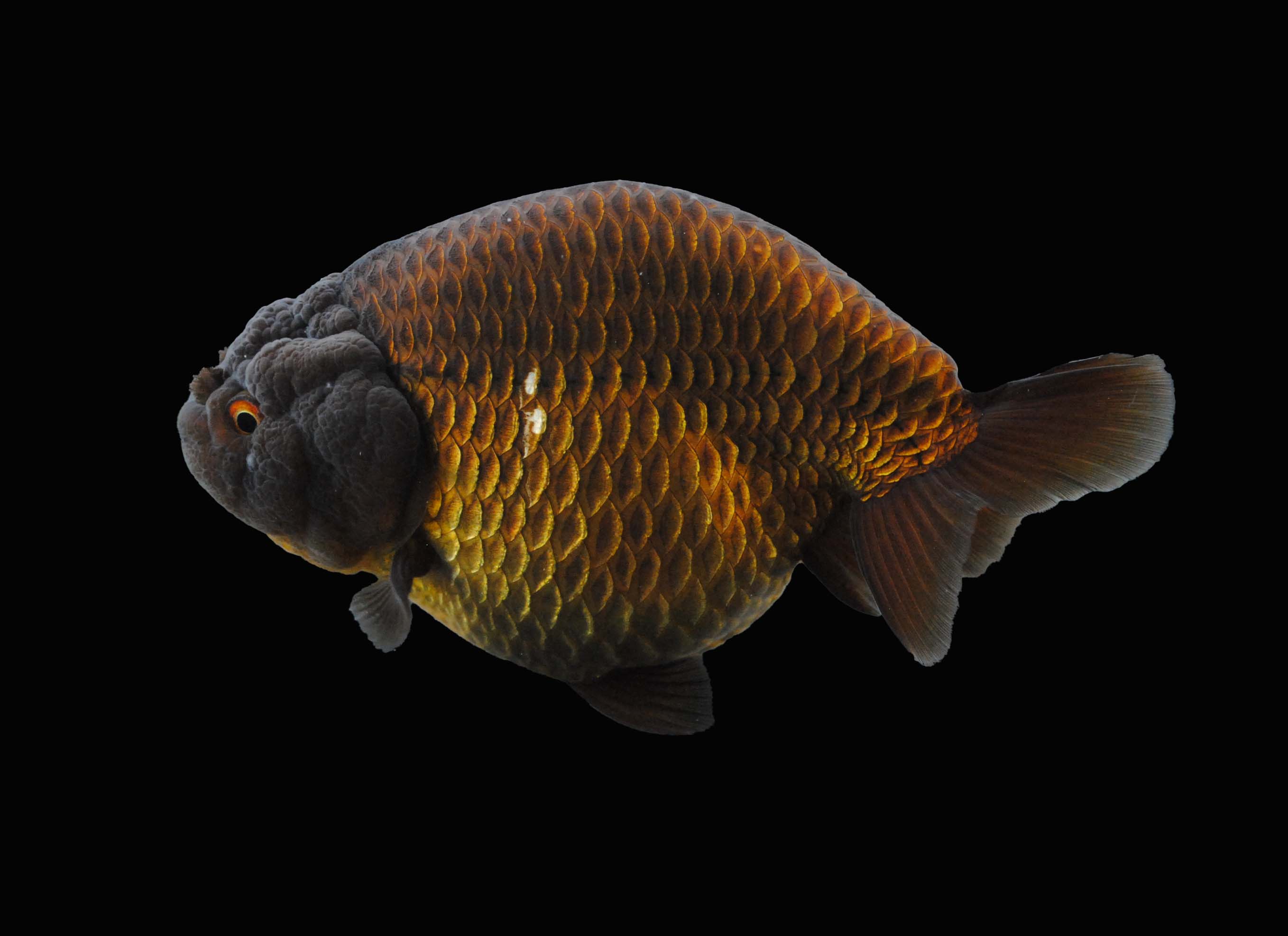
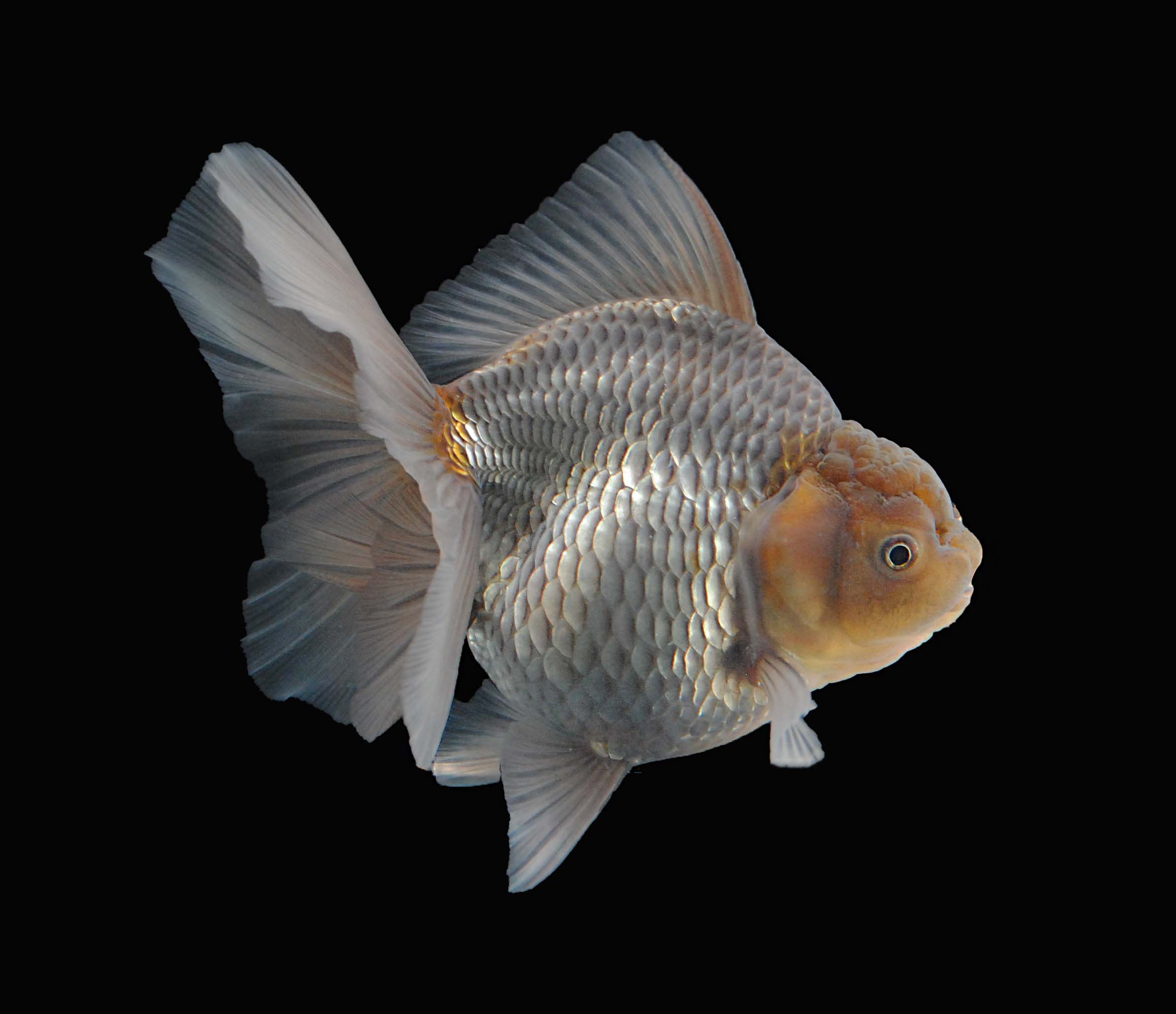
Without being aware of this fact, I must have crossed that false metallic Blue with the brown Ranchu I acquired from my other friend breeder. After 2nd generation, I noticed strange brown color. I got totally transparent Brown Ranchu! I thought it was weird. And I wanted to know how it will grow. Too bad, I did not take a picture of the fish in that state. I was thinking to document it later on. But strangely, as the fish grew into adulthood, it developed in metallic scale Brown Ranchu! This is the fish I am talking about.
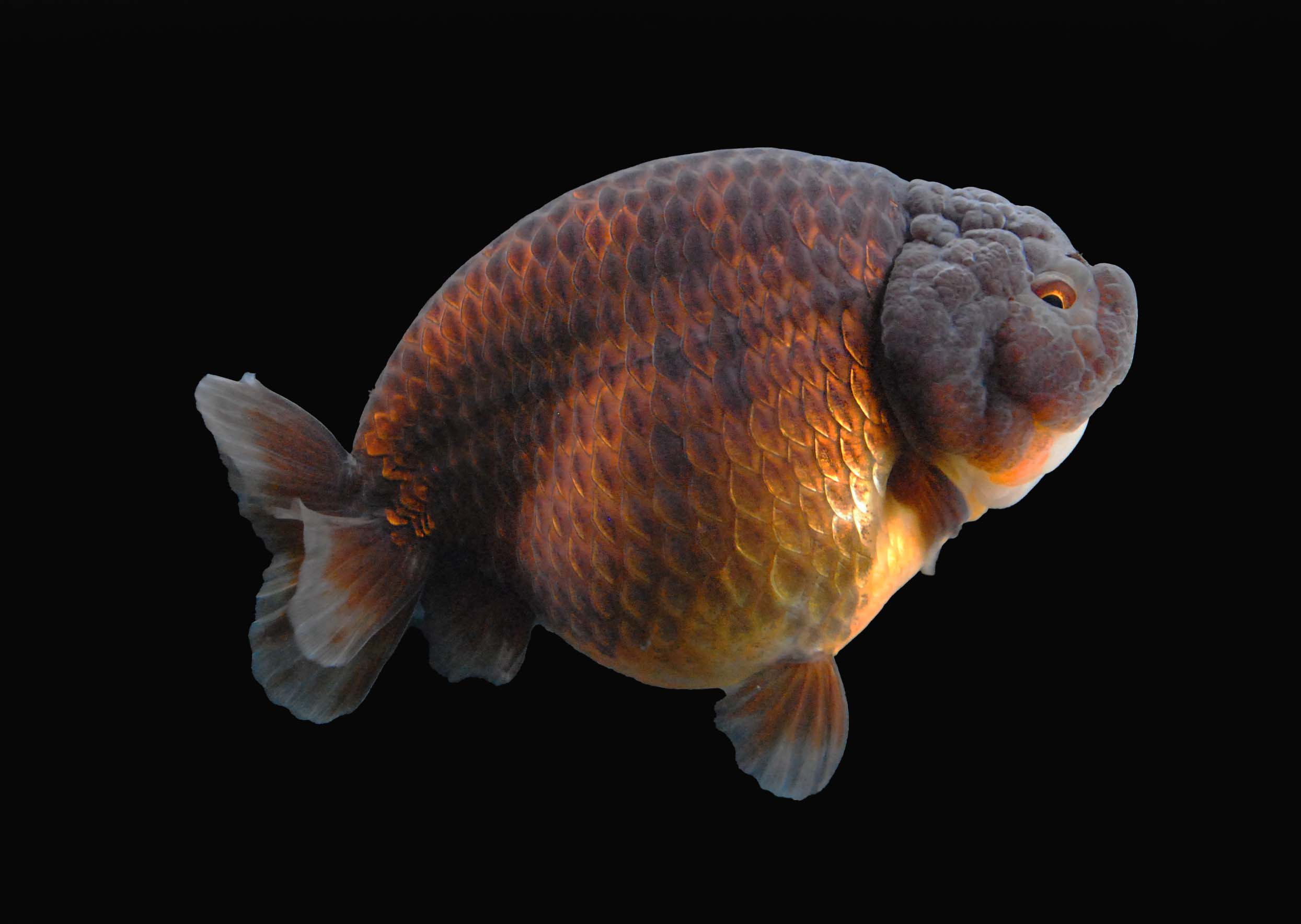
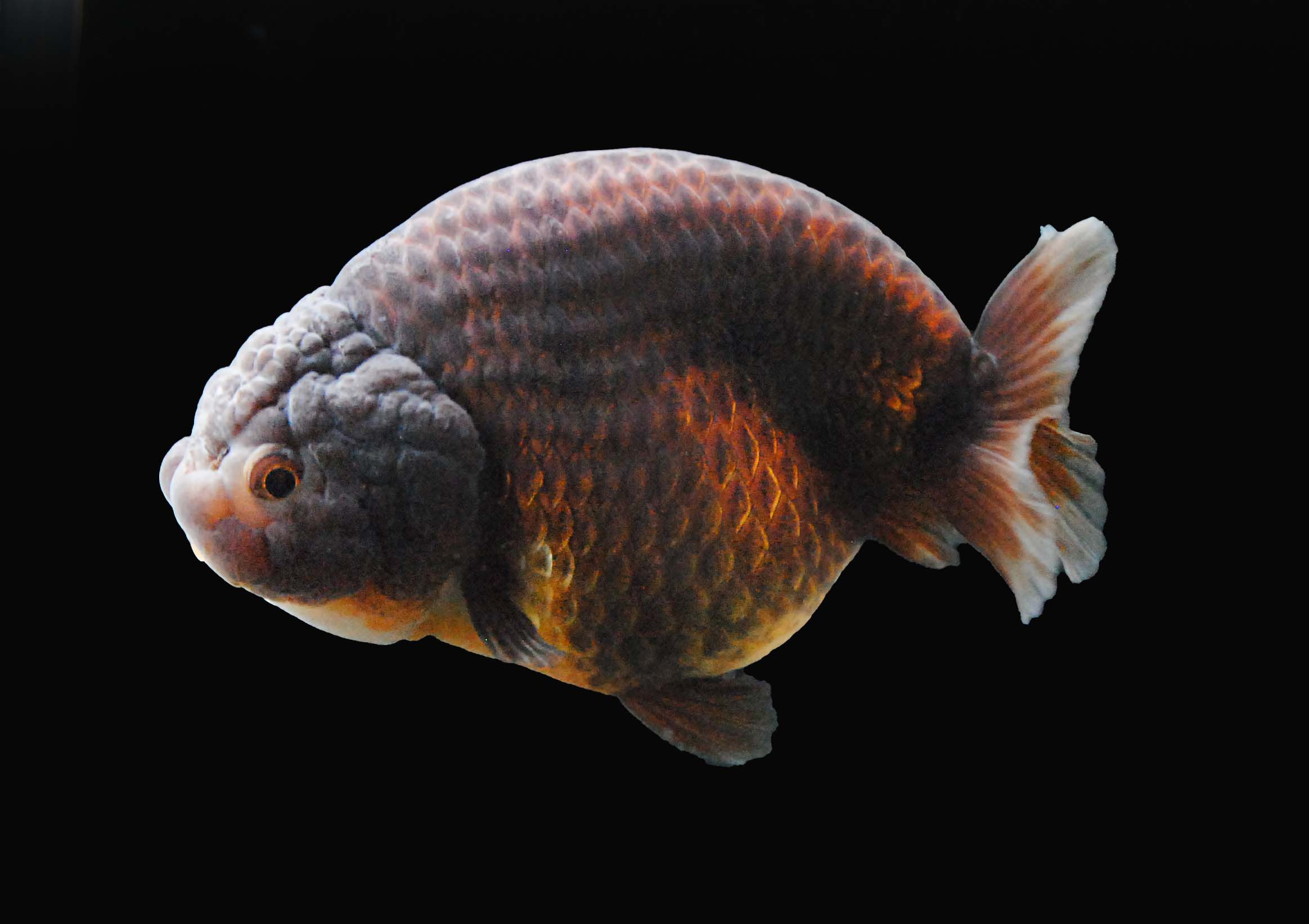
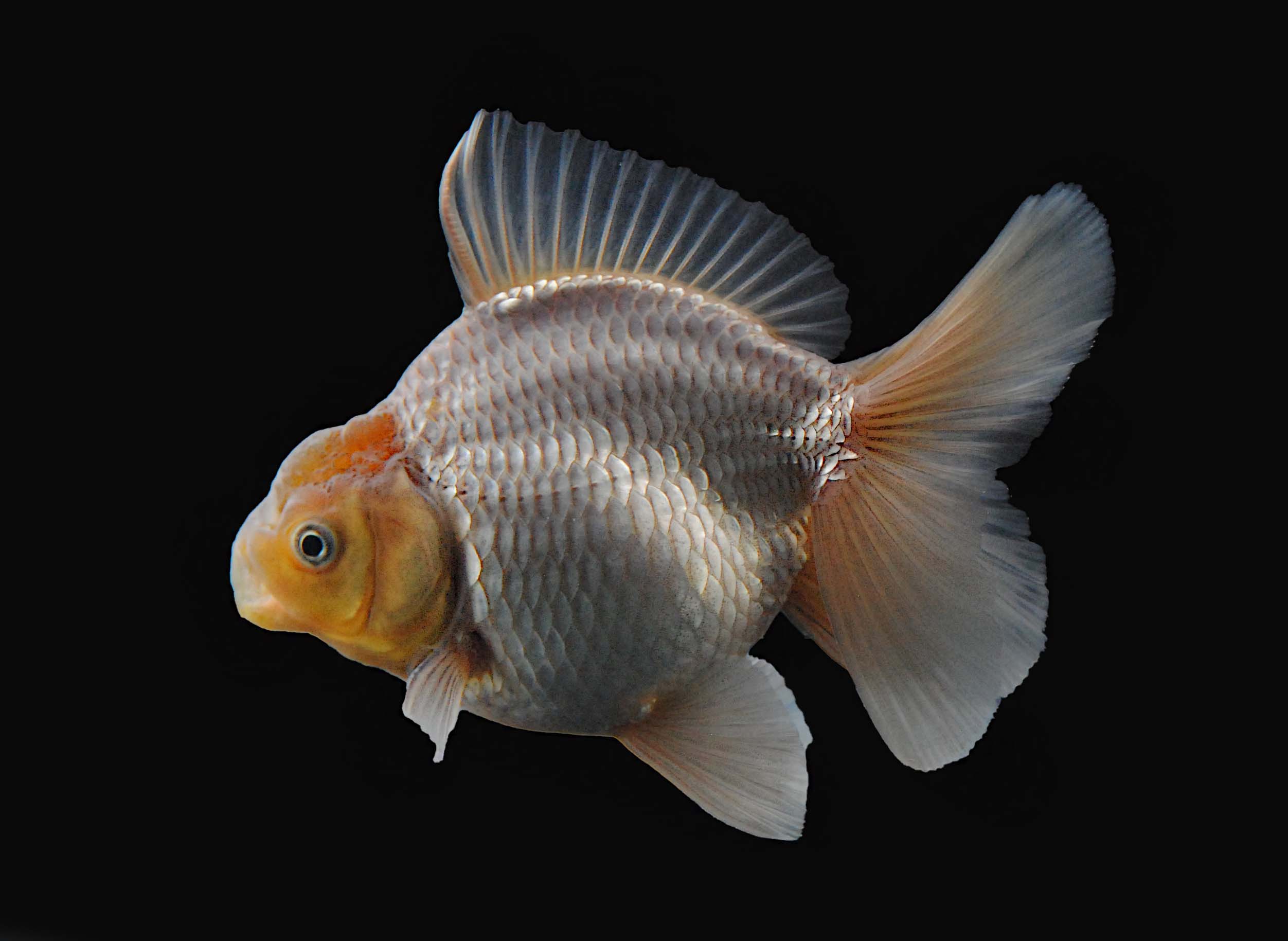
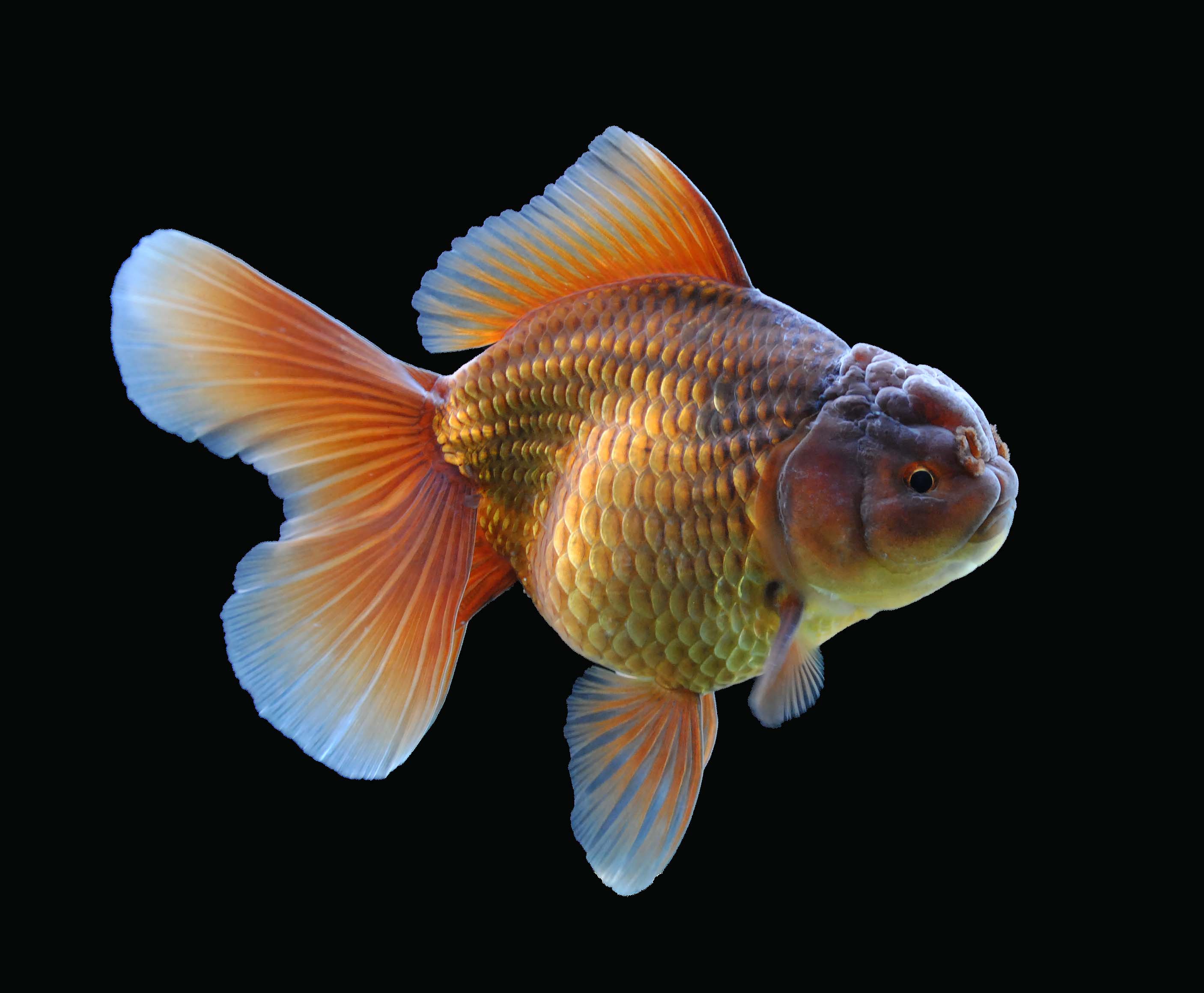
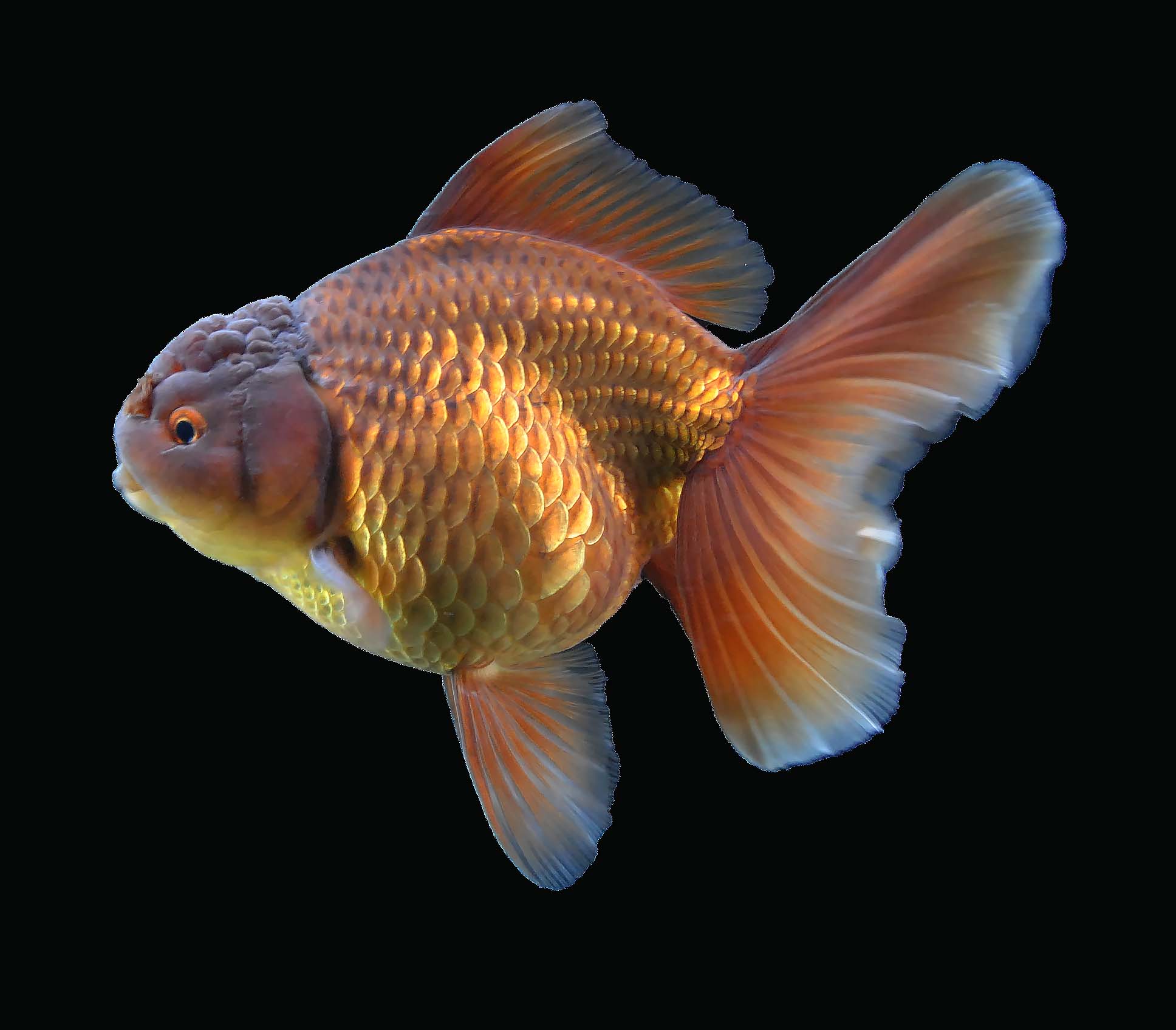
Who will think that this one is not a metallic Brown in the first place?
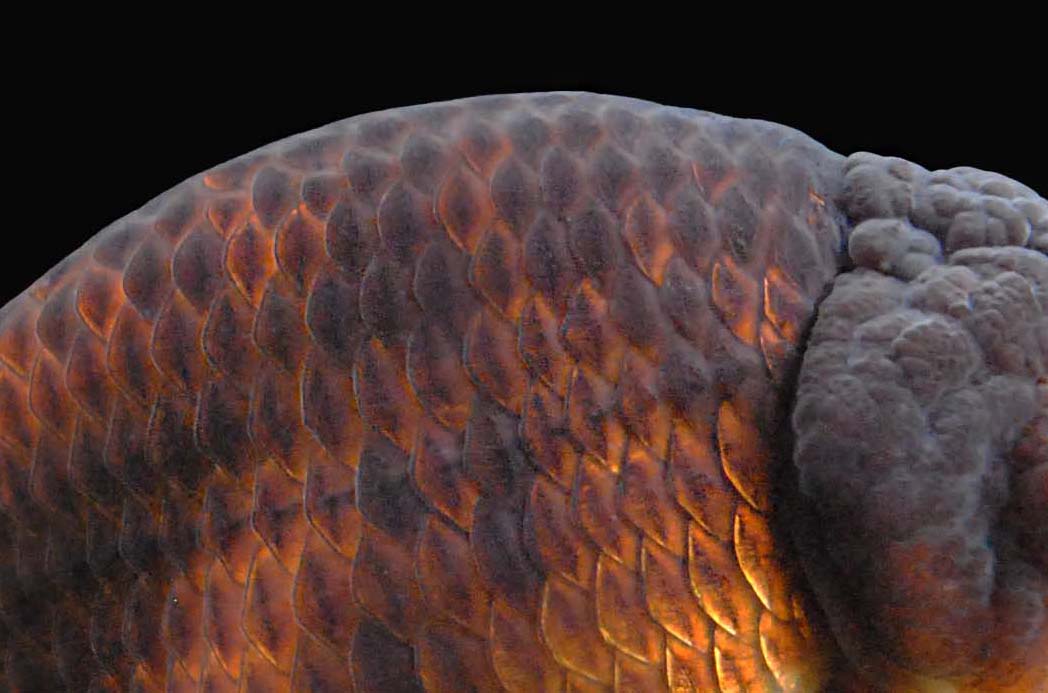
But if we watch closely to the neck and belly area, we will know that the light color part comes from the transparent scale genetics. It is not a trully Metallic Brown Ranchu.
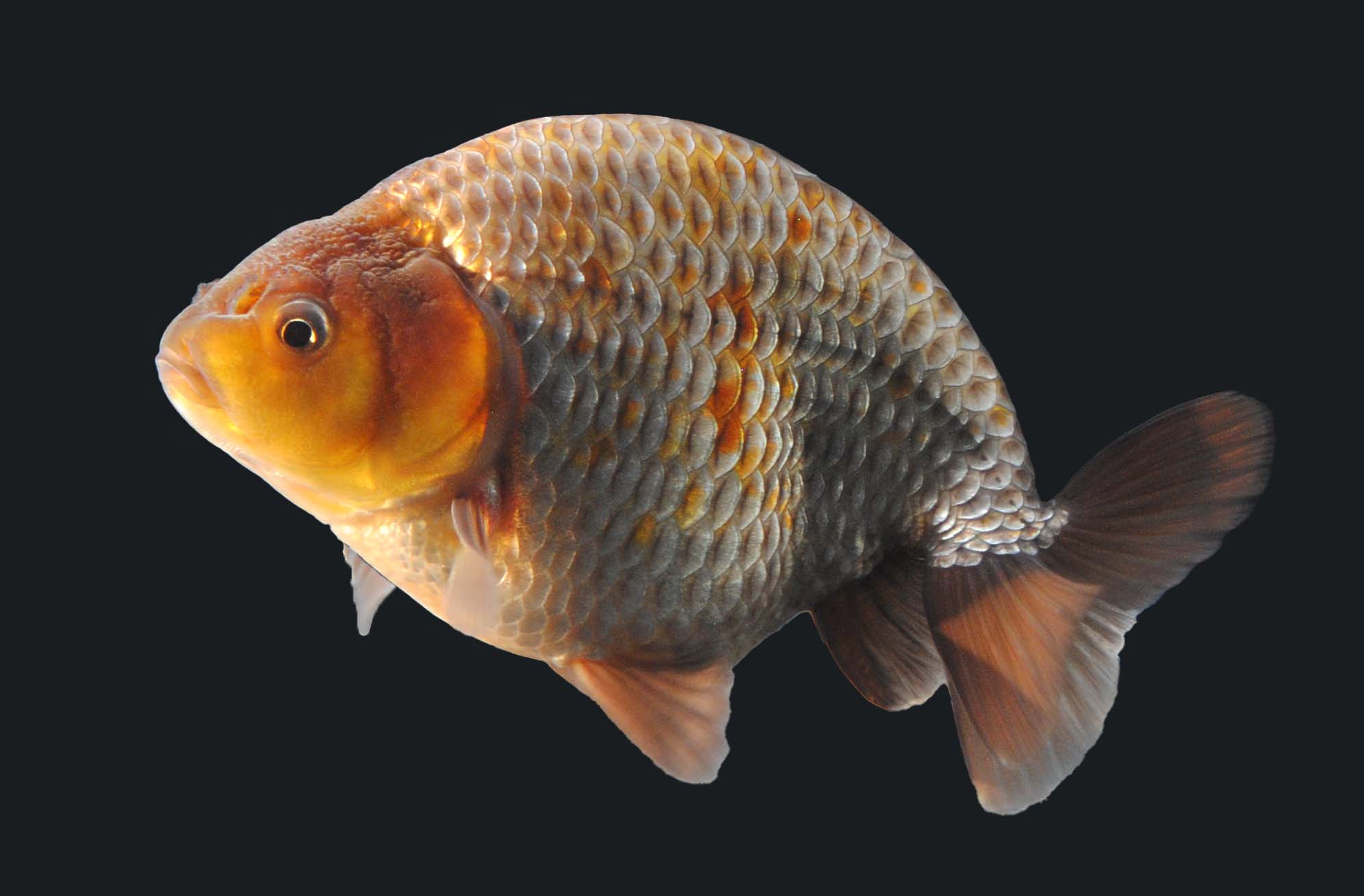
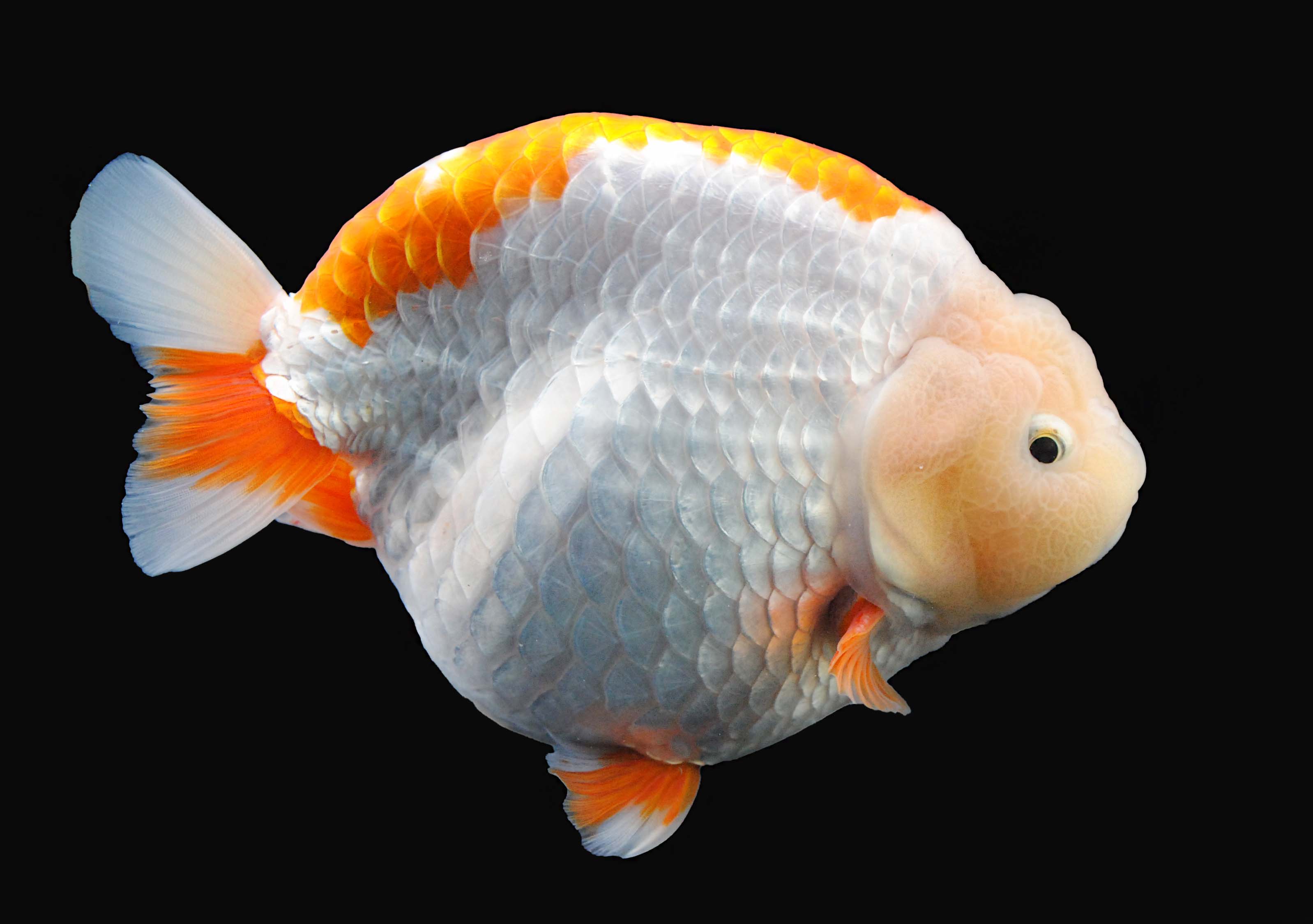
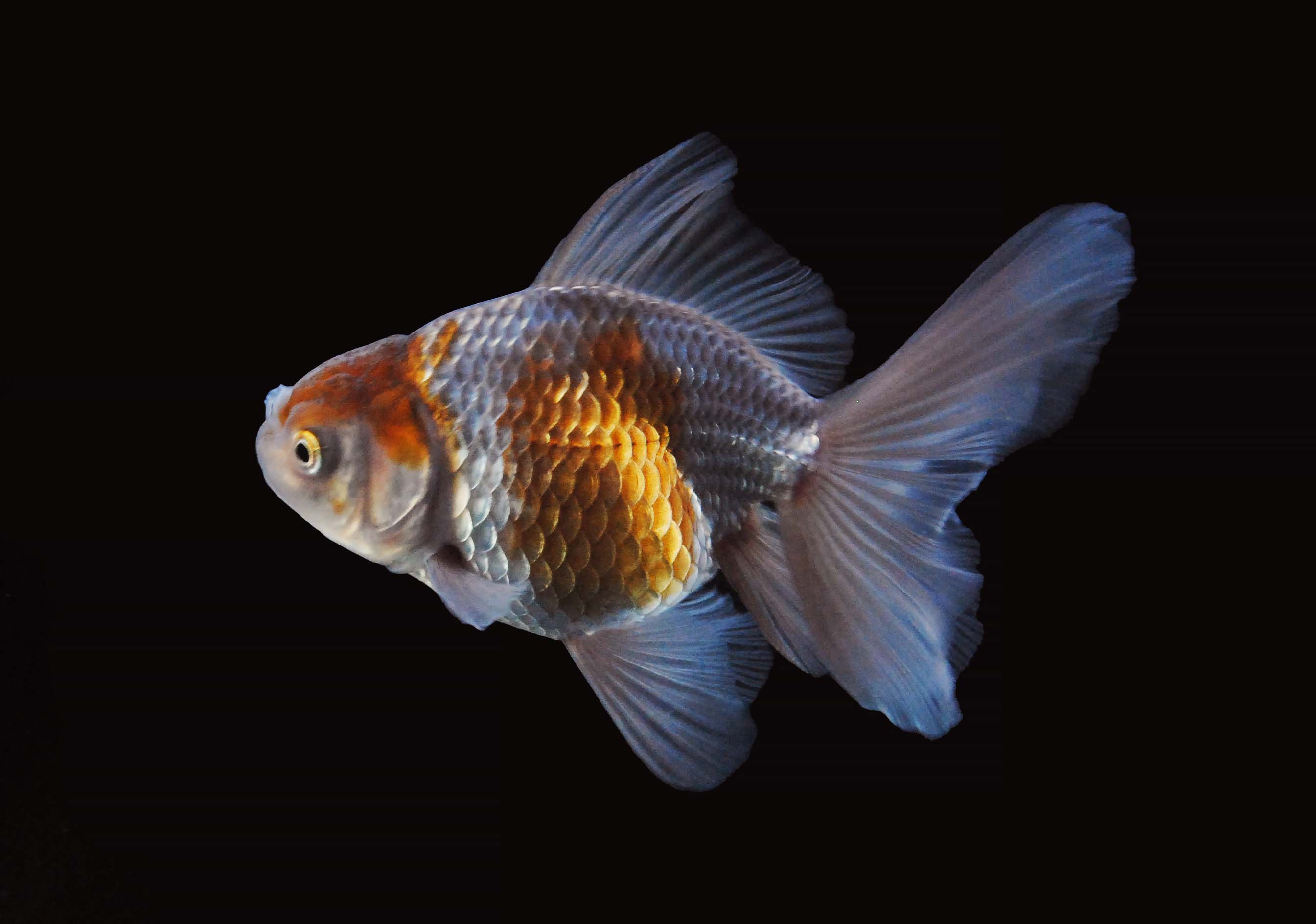
What is even more interesting is the pattern on its back noticed by my other friend breeder. There is a play between dark and lighter brown color to create a beautiful pattern. A trully metallic brown cannot produce that kind of pattern, as far as I know.
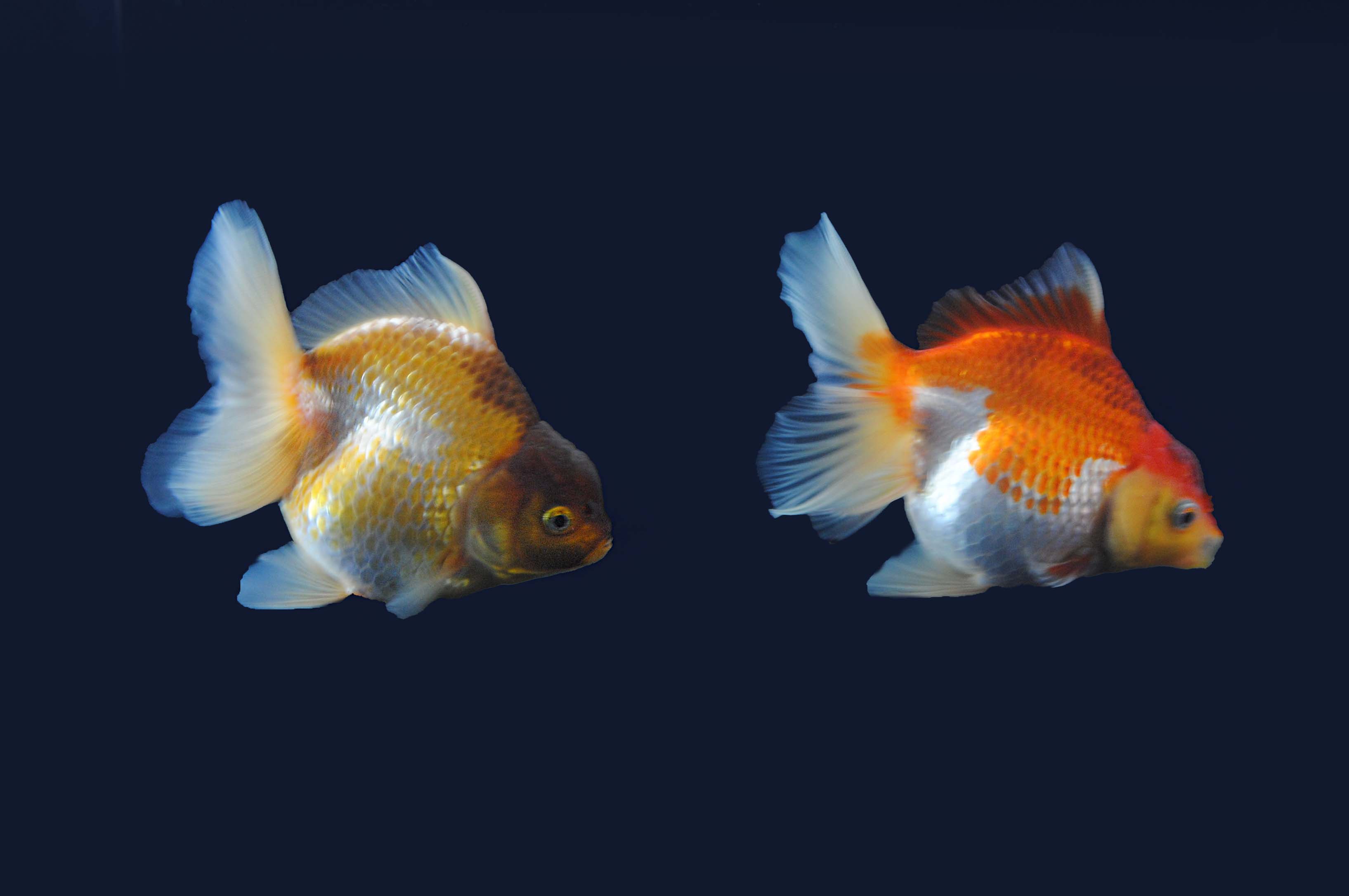
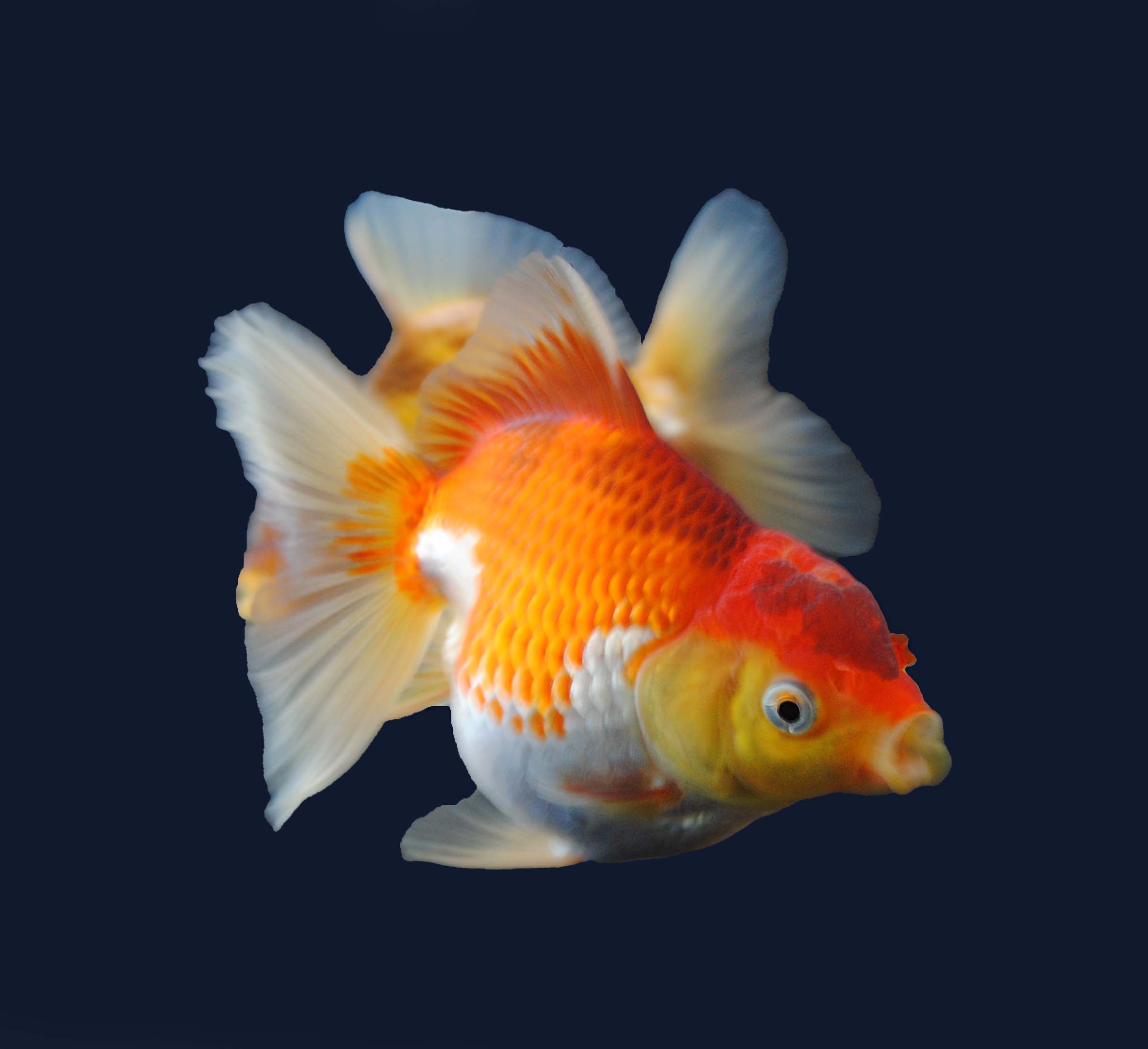
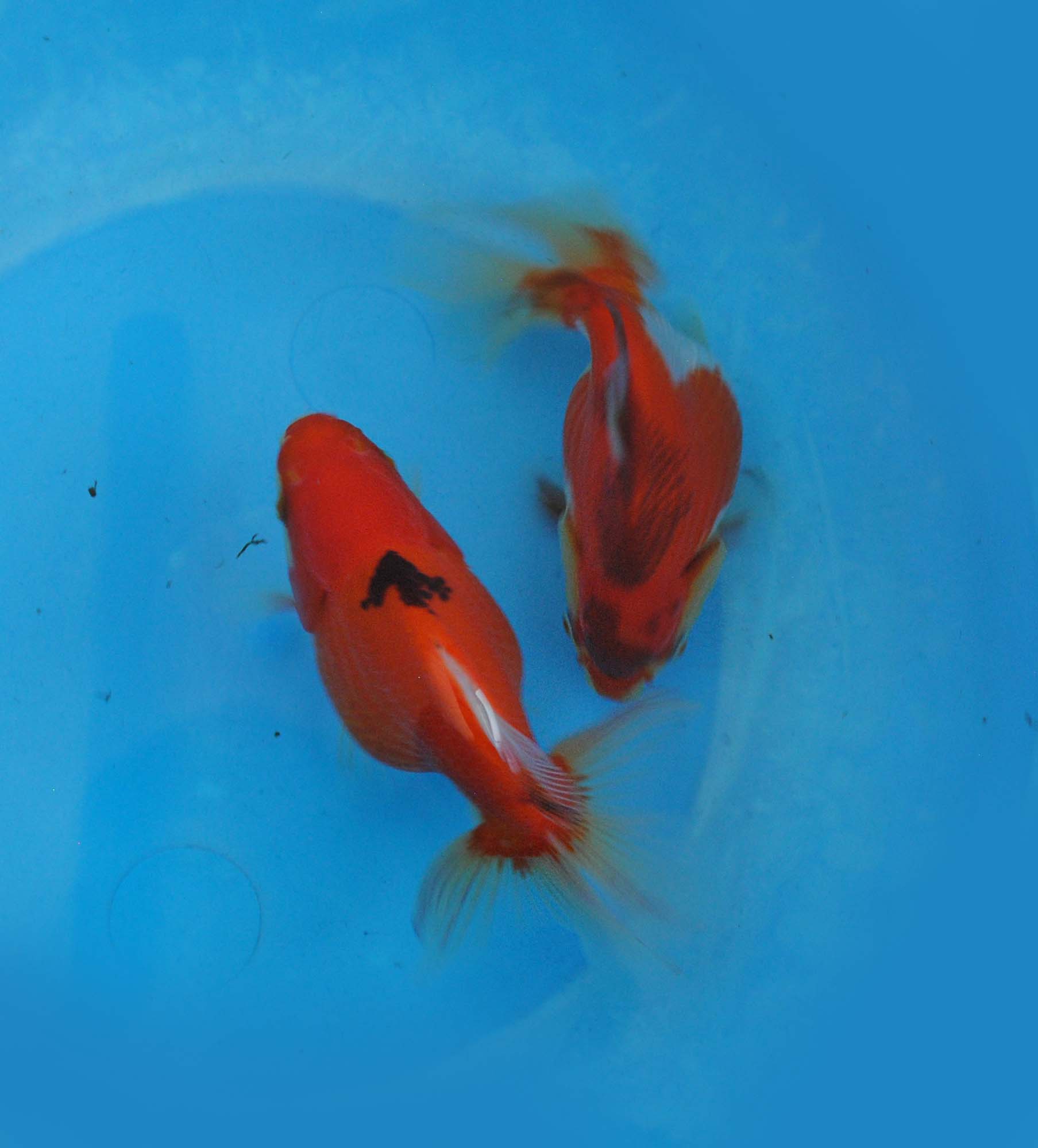
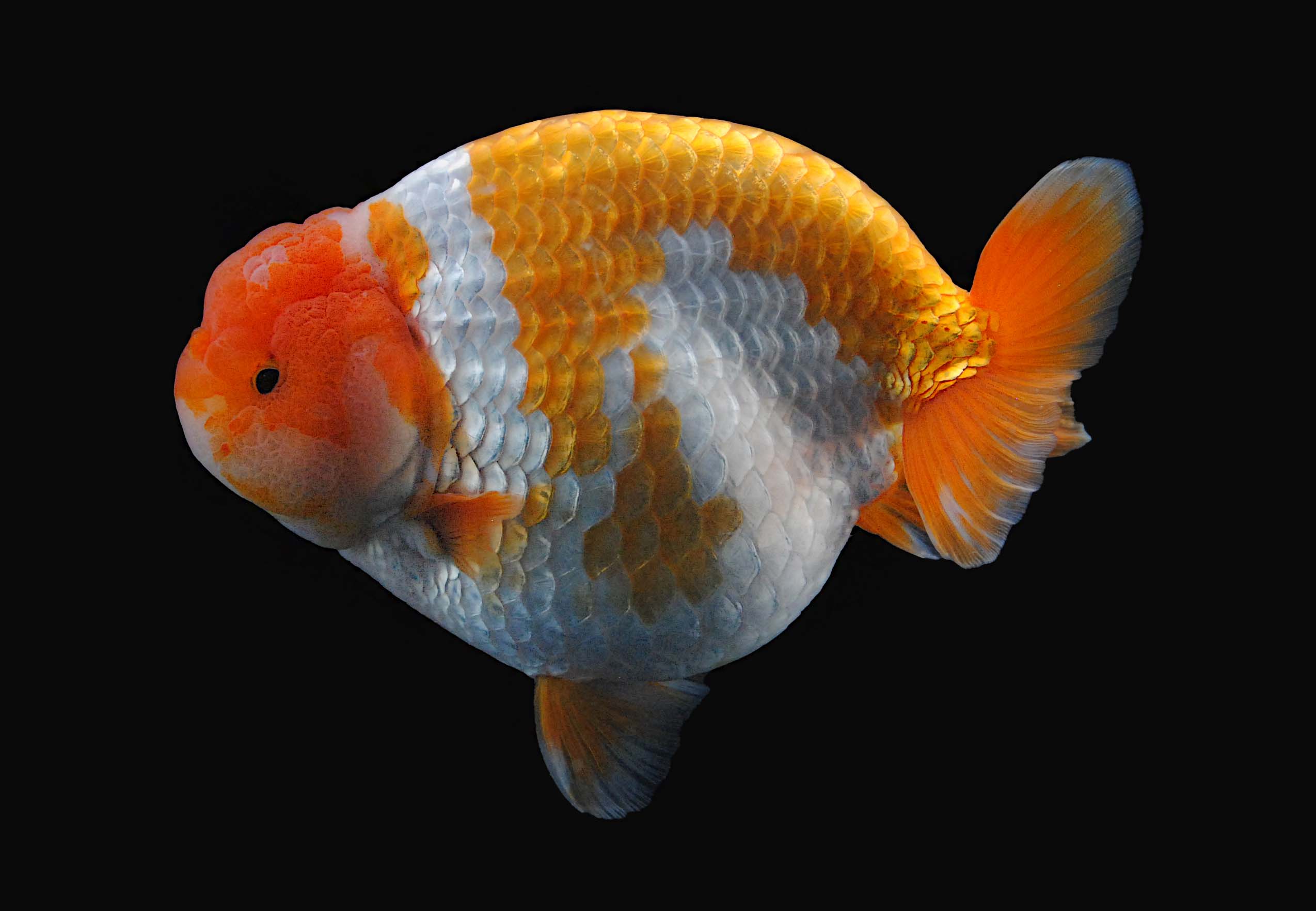
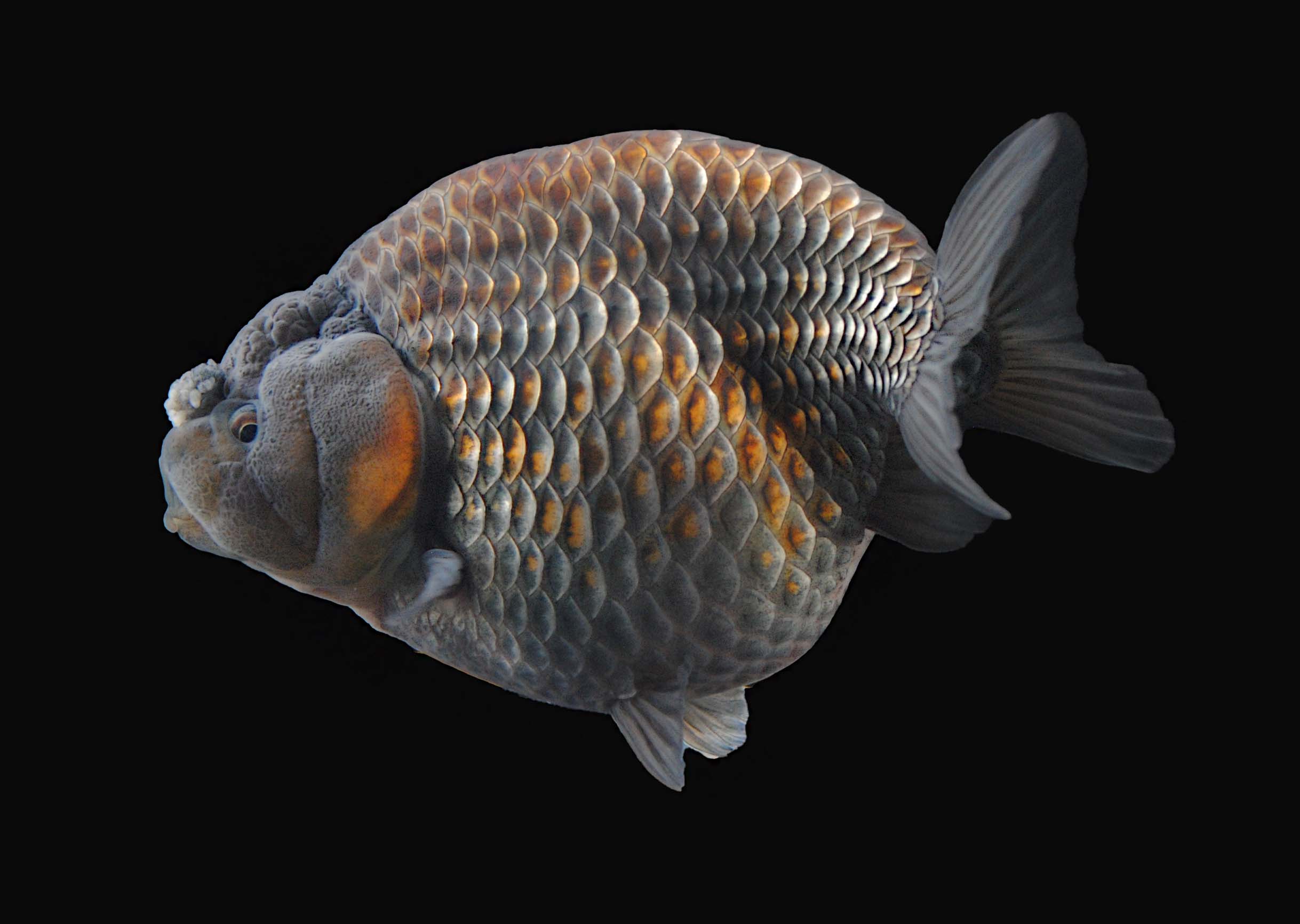
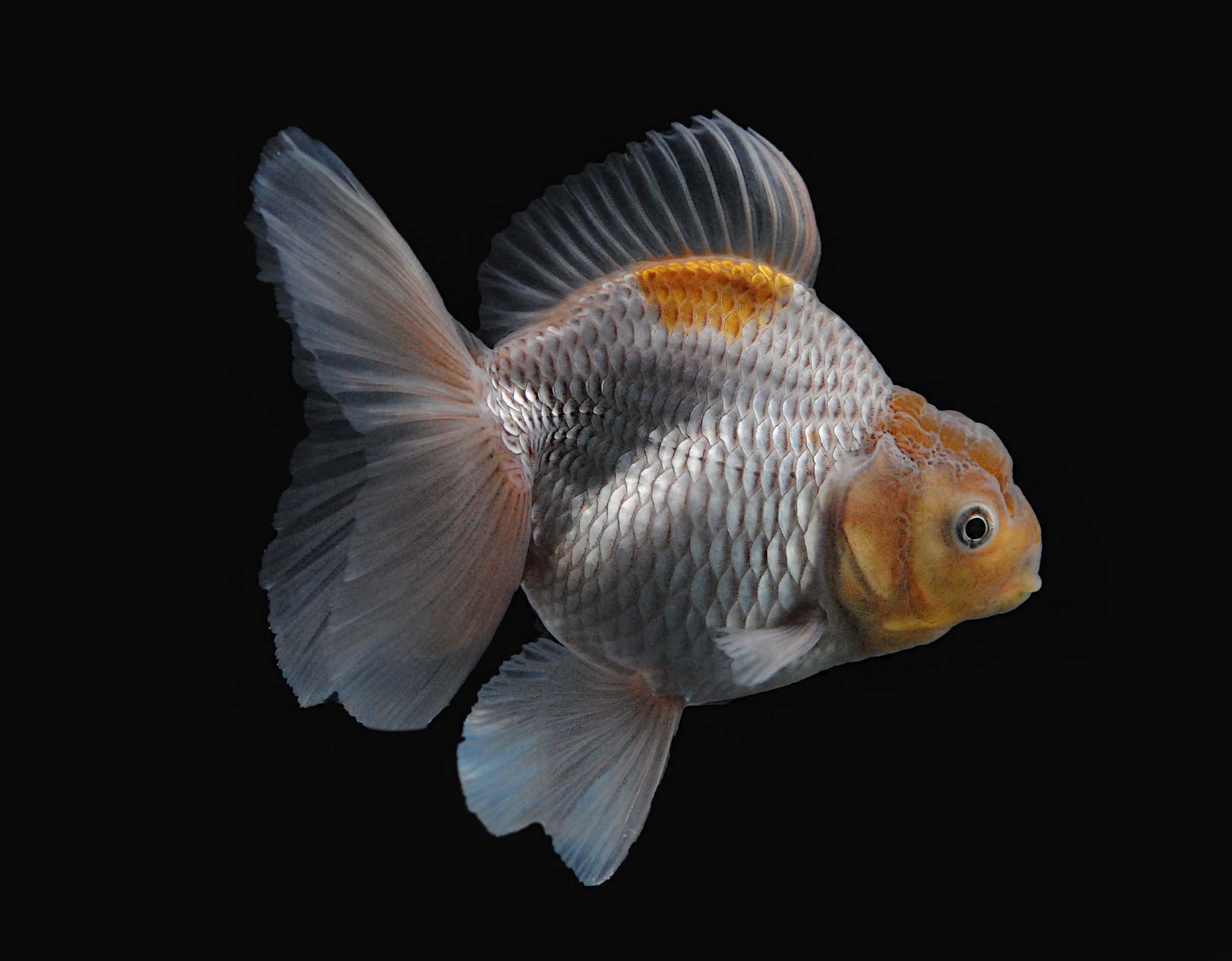
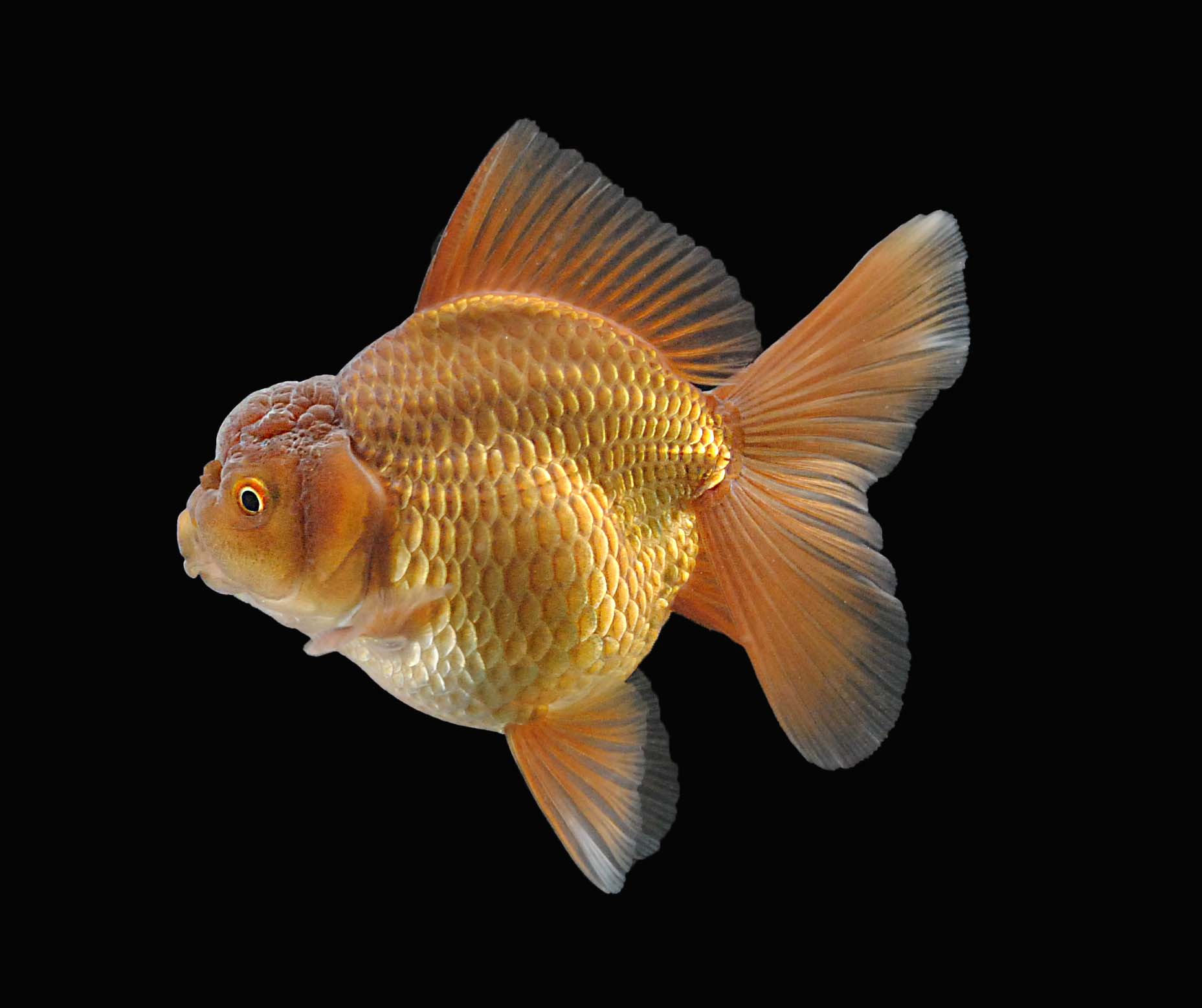
Another offspring is a male Brown Ranchu, with no such pattern, but with a lighter belly pattern.
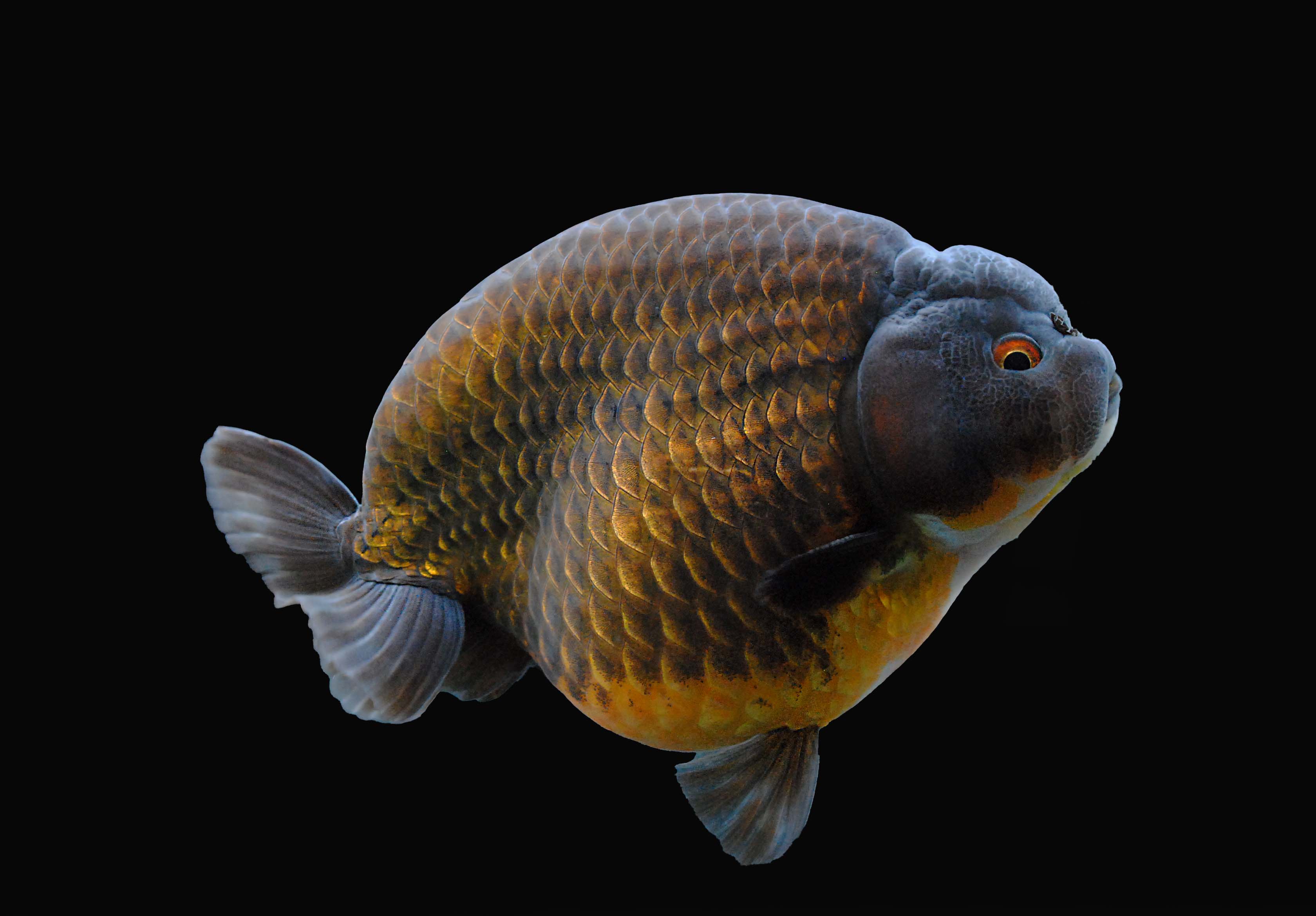
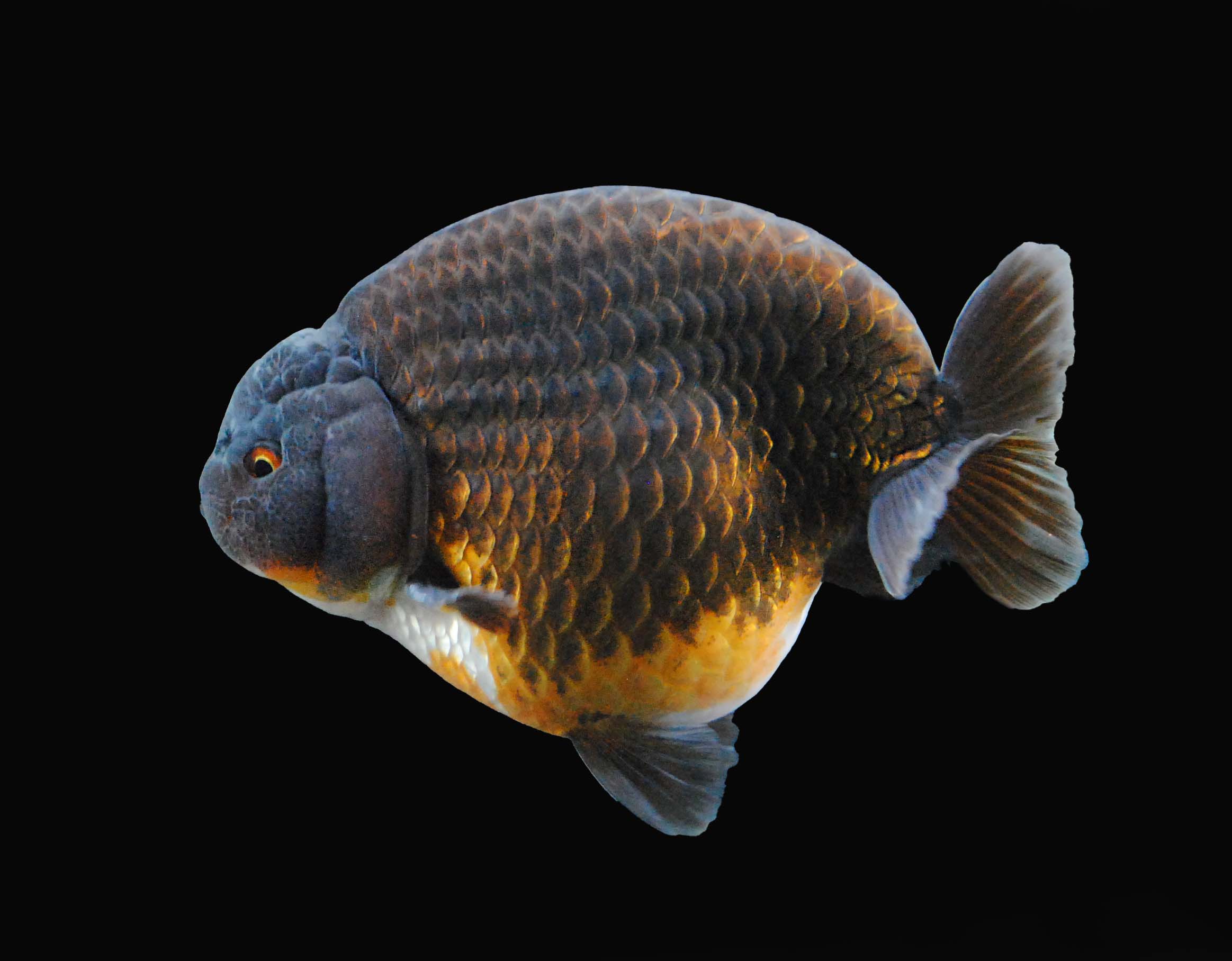
The lighter color is orange and white. Beautiful, right?
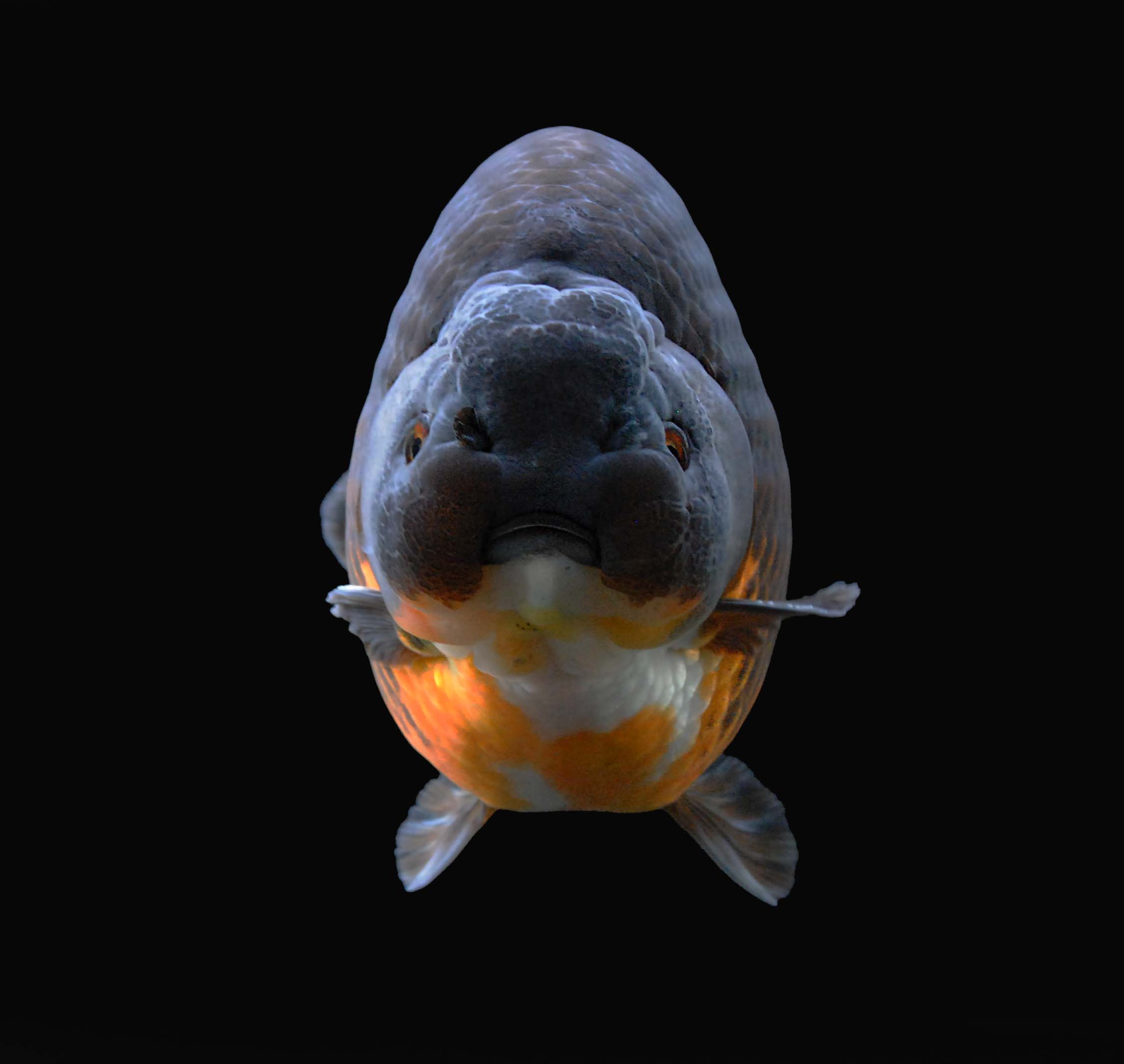
The pattern reminds us of Kirin Ranchu. But this comes in Brown variation.
I do personally think that this is not a setback to my Brown Ranchu Project. Yes, it is unexpected, but it enhances the beauty of the Brown Ranchu. I welcome this twist. The world of goldfish still surprises me.
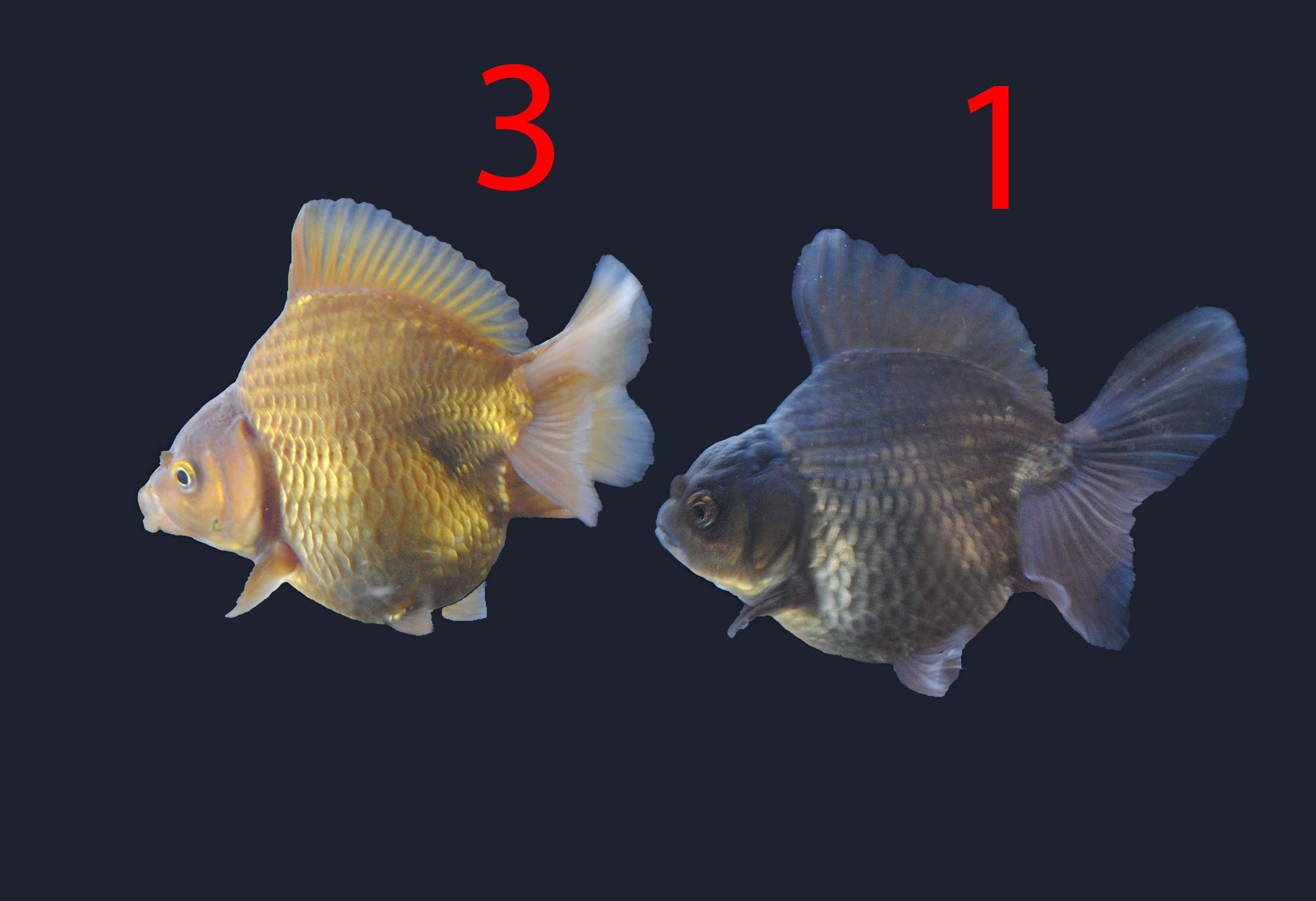
What will it be like if this kind of variation comes in Purple Ranchu? It is yet to be seen.




































 hermantogoldfish