

It has been a long time I did not update this blog. More than half a year, I think. I apologize for that. Business concerns, family matters, health issue, facility upgrades, employee’s absence, and vacations have prevented me from taking pictures and making updates. Now is a long Moslem holiday. I have a chance to catch up.
Last year, in the midst of my busy schedule, I managed to give an online talk to goldfish enthusiasts in Malaysia. They asked me to talk about my breeding projects. And a realization came to me that some of my projects are actually inspired by my childhood. I would like to start this first 2024 diary with this topic.
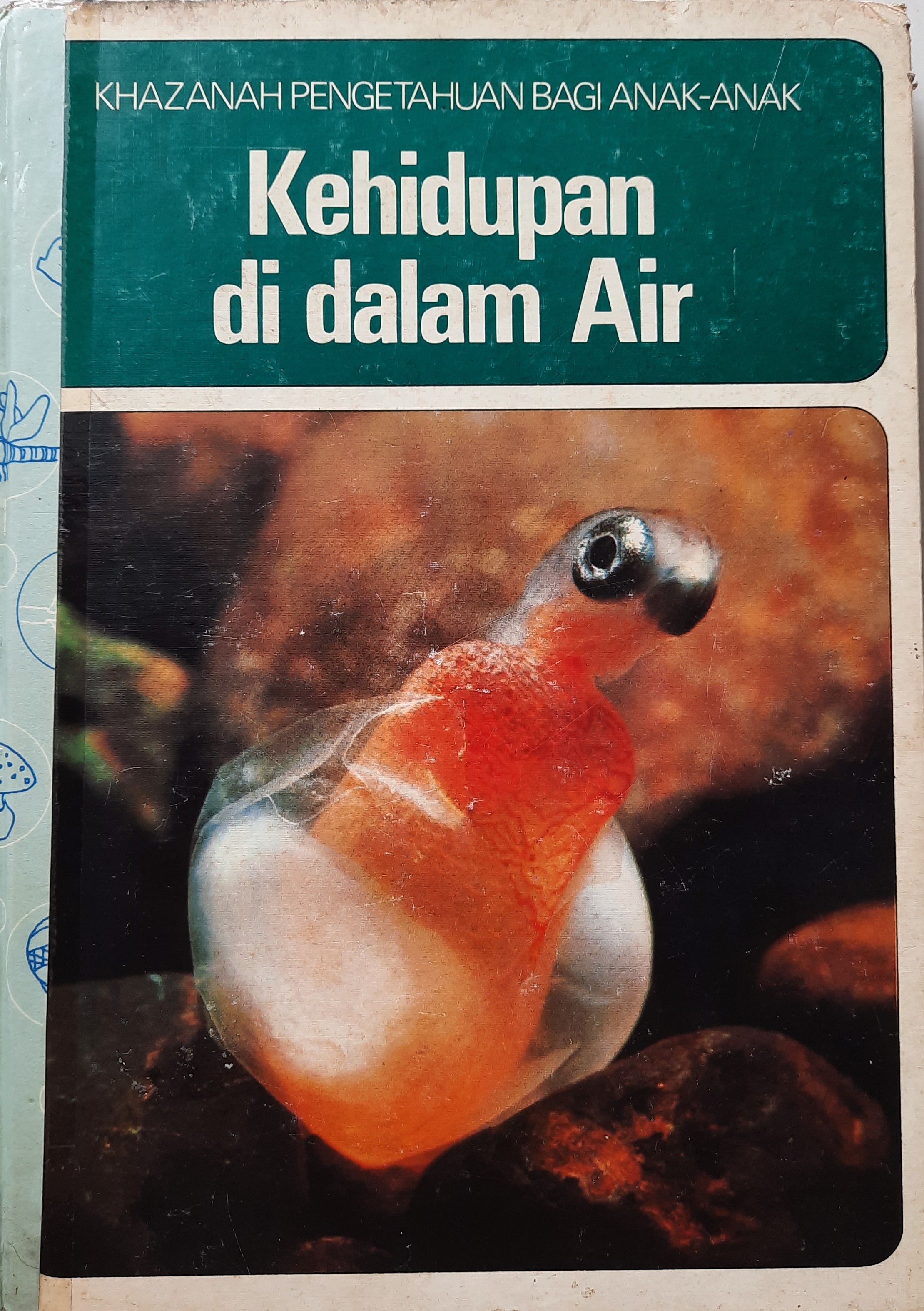
I mentioned before about an encyclopedia my Mom bought me more than 40 years ago. There is a page – yes, only a page – containing goldfish pictures. That page had become my daily childhood contemplation. My mind wandered wild, imagining whether someday I will have such beautiful fish.

In that talk to Malaysian friends, I realized that some of my projects correspond to this picture!
First, there is Seibungyo in the bottom of the picture.
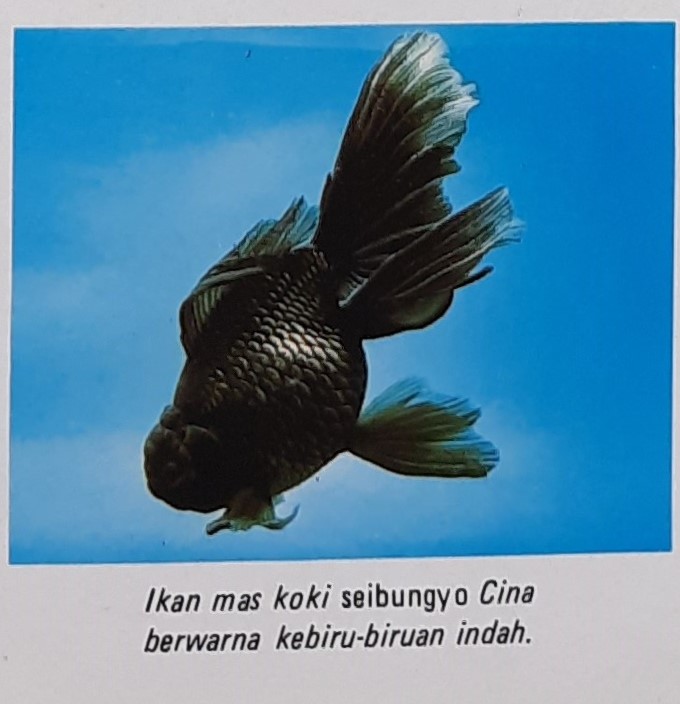
The description is: a Chinese Seibungyo goldfish with beautiful bluish color. I always wondered what Seibungyo means. It sounds like Japanese word, but the description says it is a Chinese goldfish. As a child I remembered asking goldfish sellers whenever I went to local fish shops about that name. As you guessed, nobody ever heard about it.
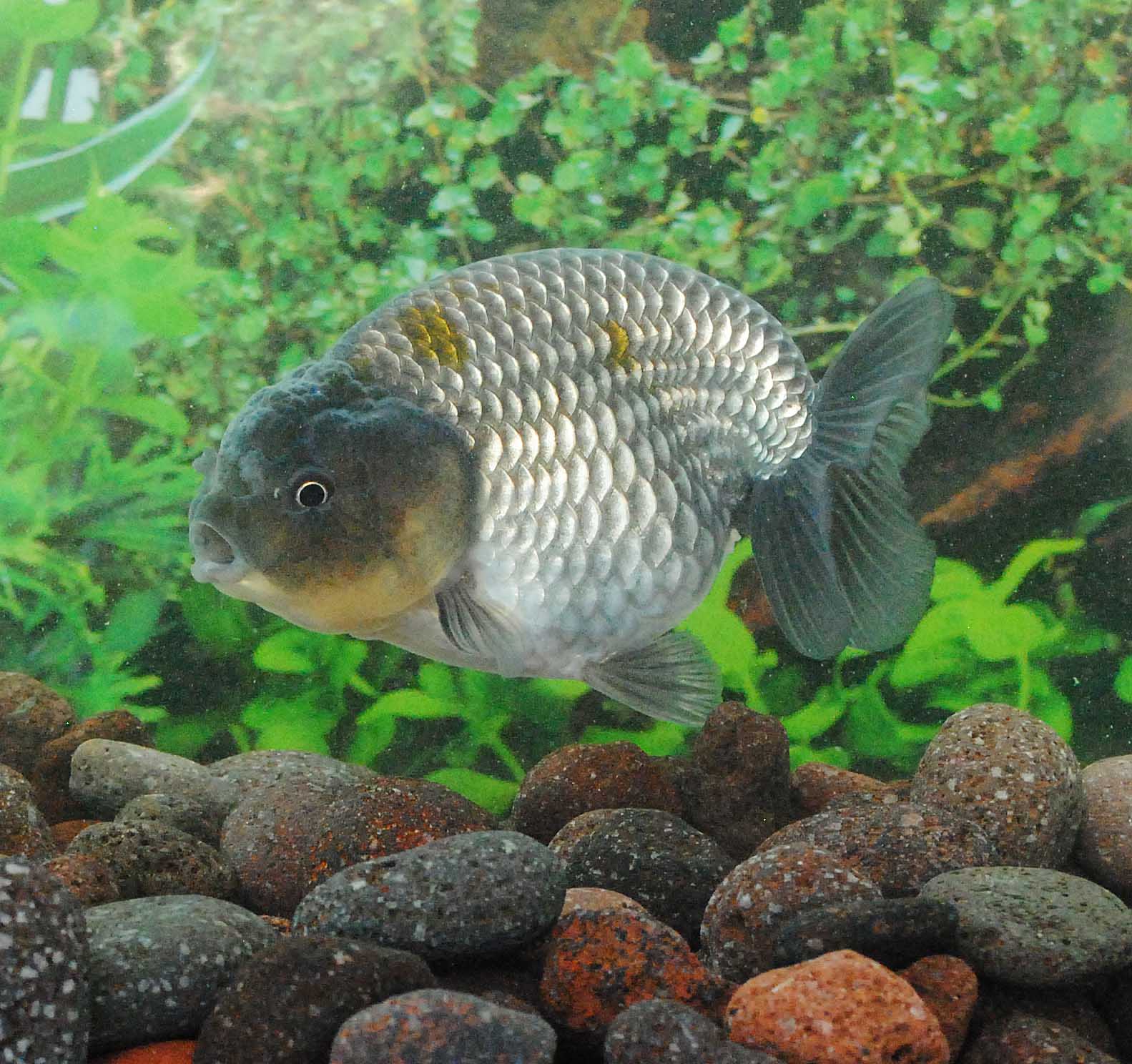
But now I think I know what variety of goldfish this is. Is it not just a blue oranda? Yes, it is! And it is one of my main projects! My blue oranda line has improved significantly. I think I have a better quality of blue oranda than the seibungyo in the picture. One of my childhood dream has come true!
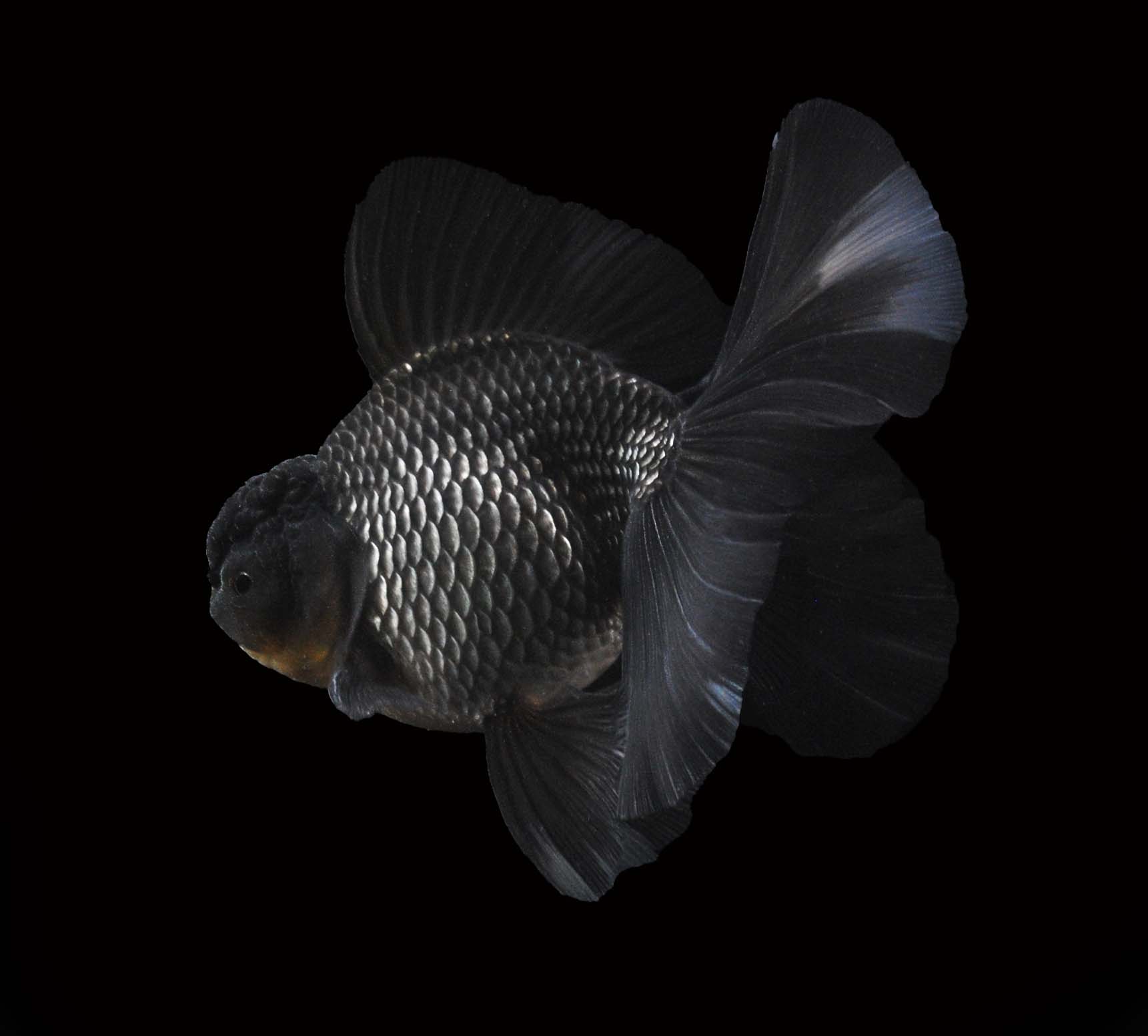
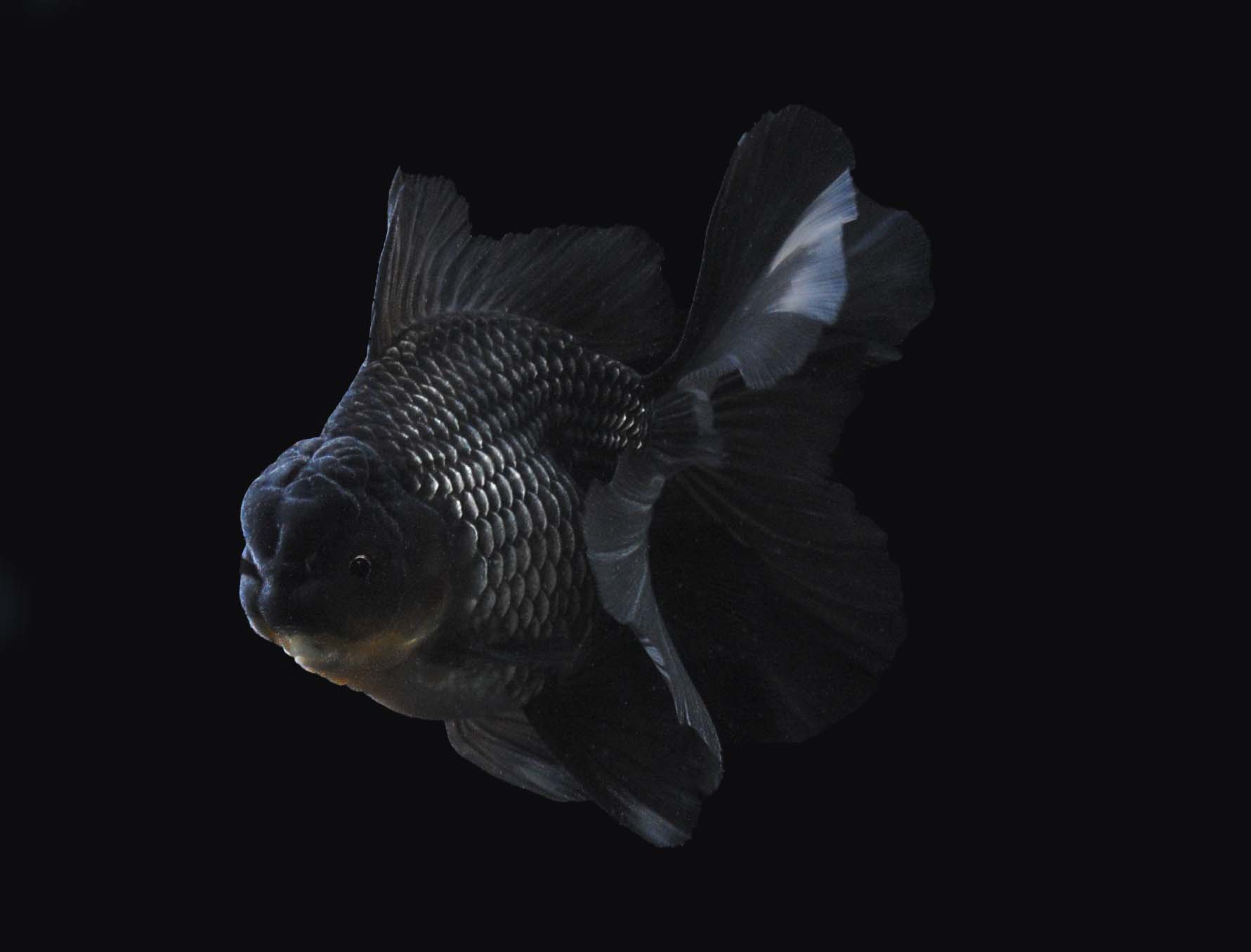
The Blue Oranda above is my most recent male. Some people nowadays prefer to call this color as Platinum.
Second, there is Chakin goldfish.
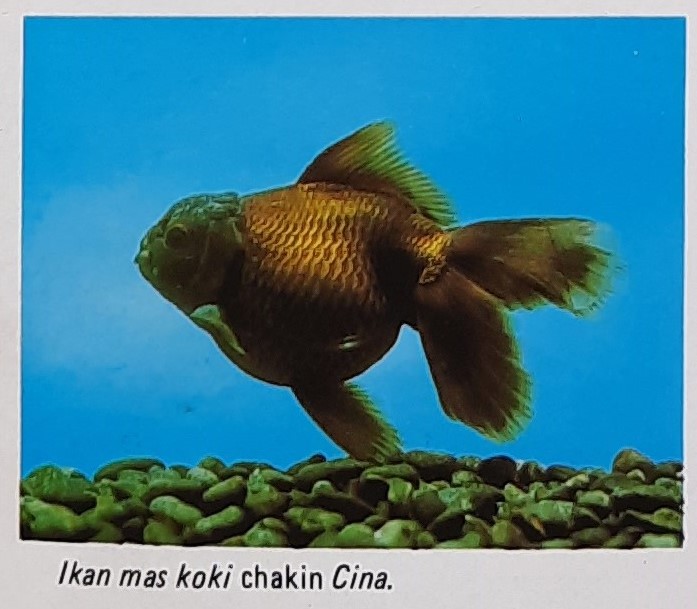
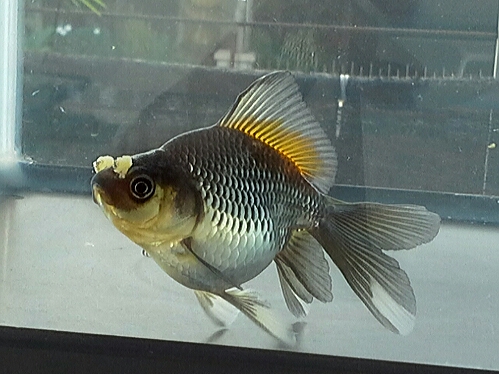
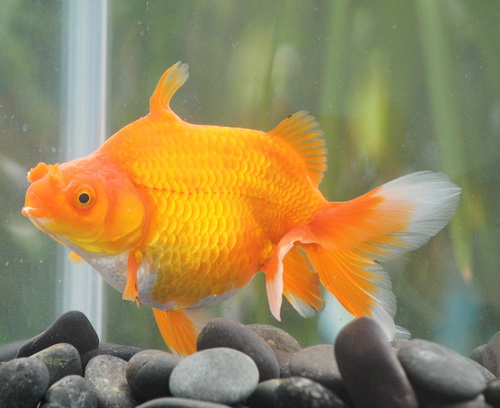
The description only says Chinese Chakin goldfish. It took me a long time in my childhood to understand that “cha” refers to “tea-color.” Yes, this is actually a tea-colored goldfish. Is this not the Brown Oranda line I have been developing so far? I have even gone further than that. I have also developed Purple / Lavender colored Oranda! With better quality, I think. Another childhood dream comes true!
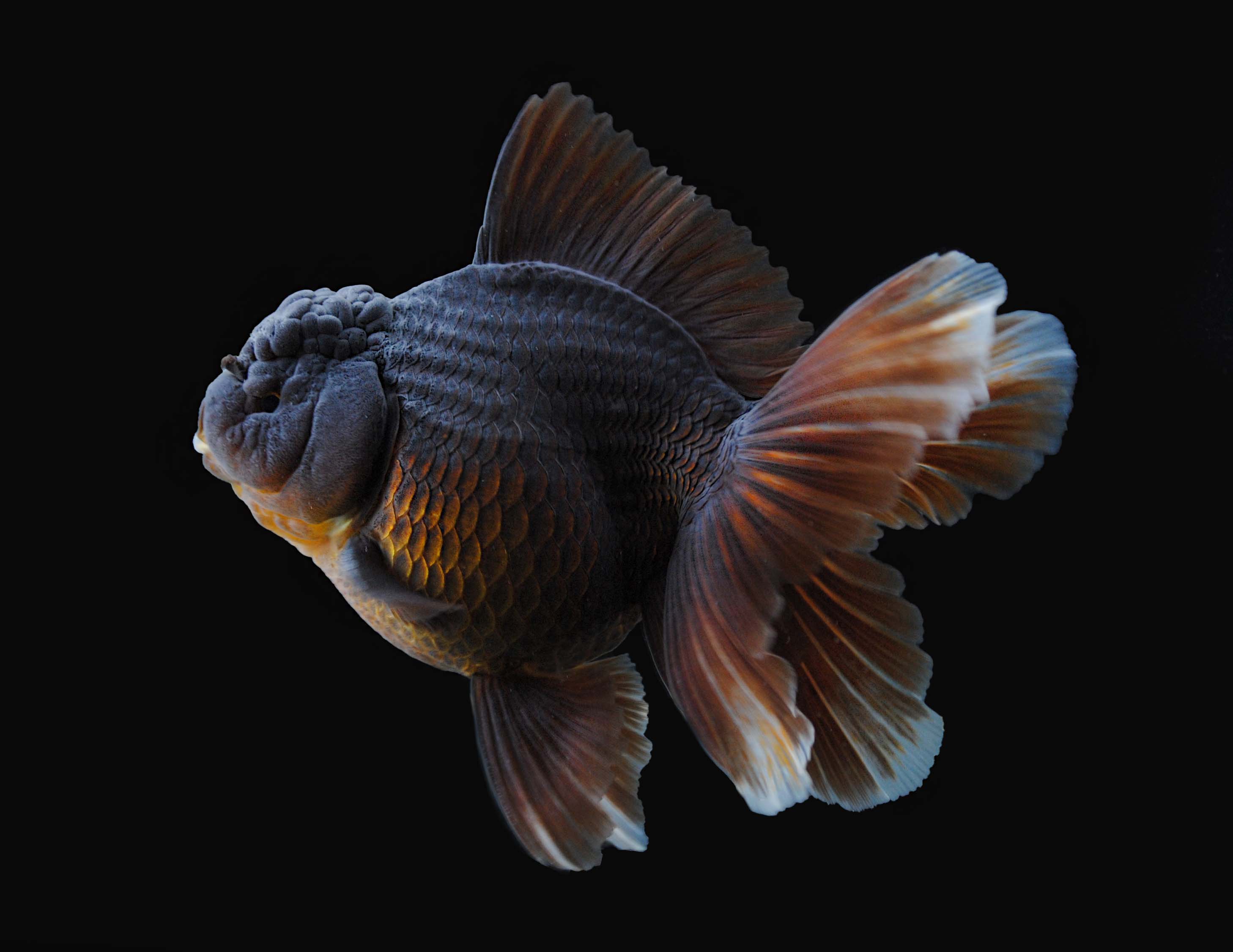
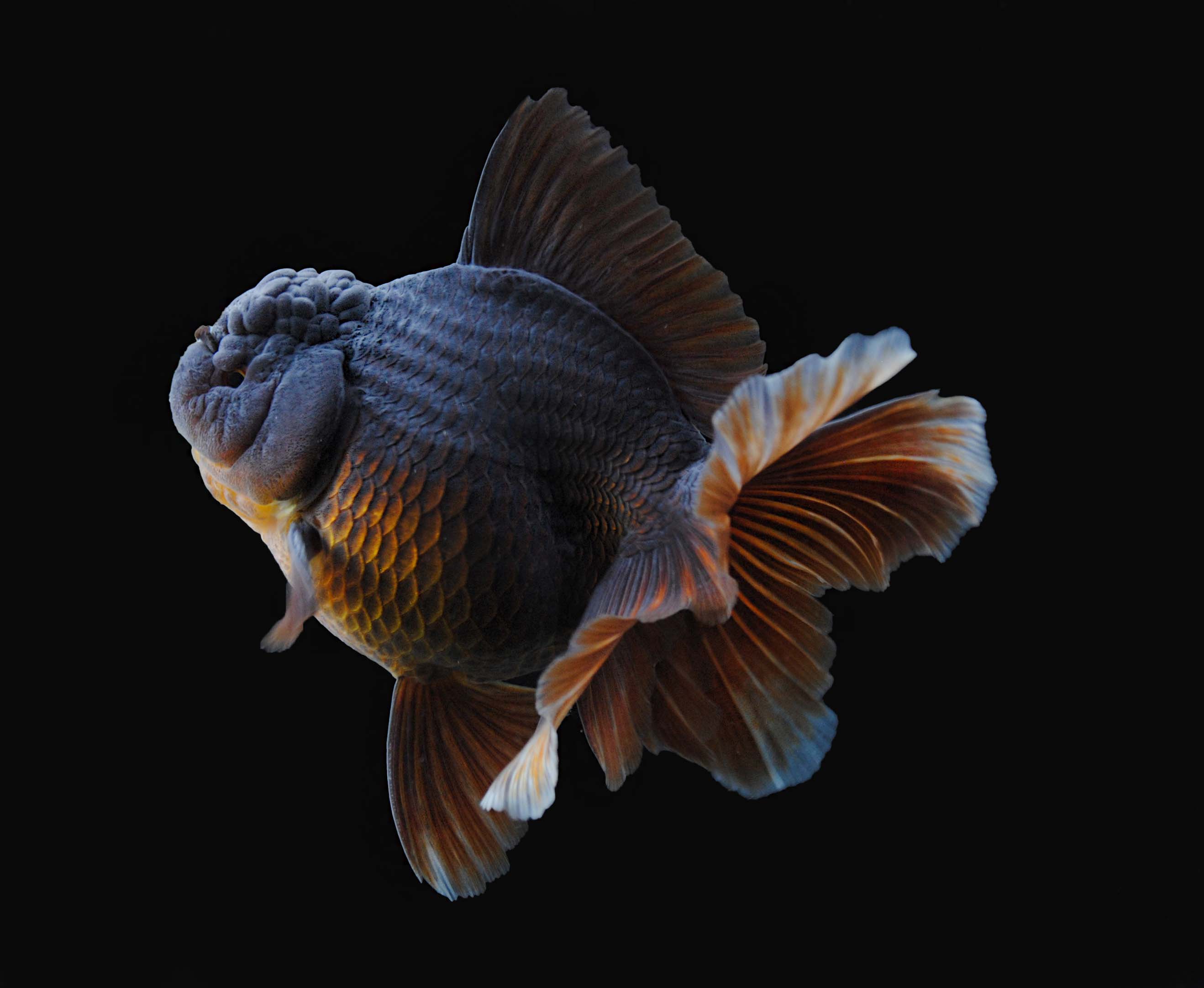
Yes, my brown oranda is a bit darker. I find out that the brown color has at least two main types: the light one (which is the tea-color) and the darker one (which is the dark chocolate color). The darker one seems to have the ability to elicit white color – a quality I do not see in the lighter / tea-colored one. The tea-color seems to elicit orange color only when the dark pigment (melanin) fades away.

The picture above is the comparison between the dark and light color of Brown Oranda.
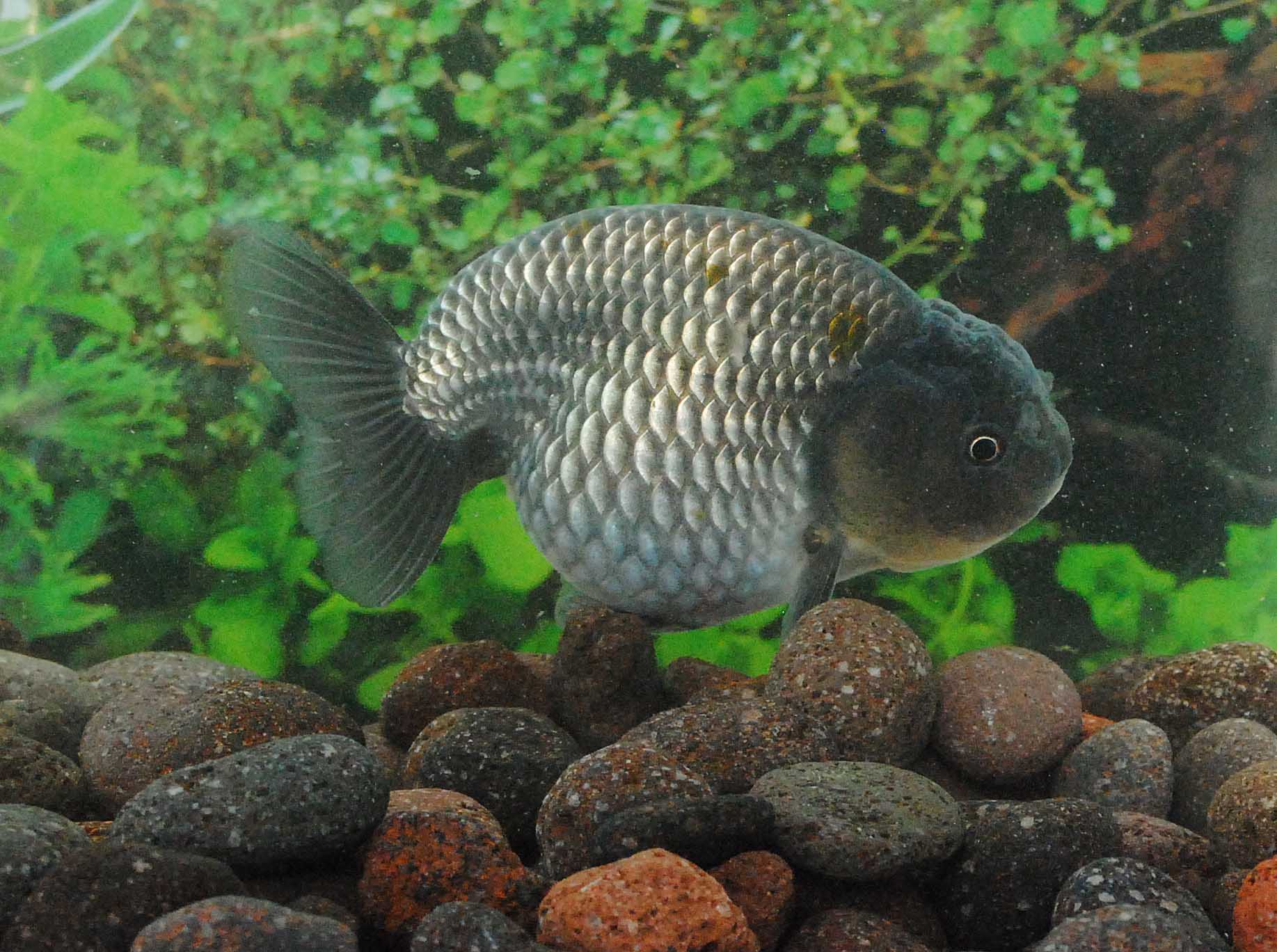
Third is the Chinese Goldfish with silver color and no dorsal fin.

Silver is just another name for blue or platinum. The fish resembles ranchu with long tail. I do not have such variety, but my blue ranchu is a good substitute for this fish, I think.
Fouth is Hanabusa!
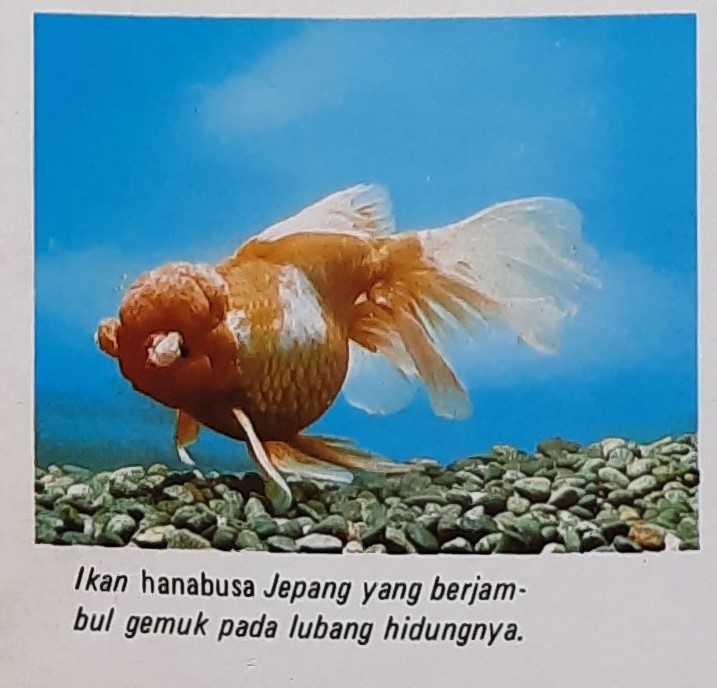
What in the world is Hanabusa! Thanks God the description gives us a clue. It says Japanese Hanabusa with large headgrowth in its nostrils. Headgrowth might not be the right terms. But now I know it is an oranda with pompom. I do not breed pompom oranda. But I mentioned before that I use the Chinese chocolate pompom to create my brown oranda line. Although I do not specifically breed pompom, once in a while the pompom feature just show up again and again in my facility. The latest I have is this piece of short tail oranda with pompom (or to be more precise, it is a ranchu with dorsal and pompom!) This piece shows up in my breeding unintentionally.

Isn’t she adorable? I cannot help bring her up to maturity due to its cuteness. And I am thinking of creating ryukin with pompom in the future by mating this piece with ryukin.
The last one is this rare specimen.
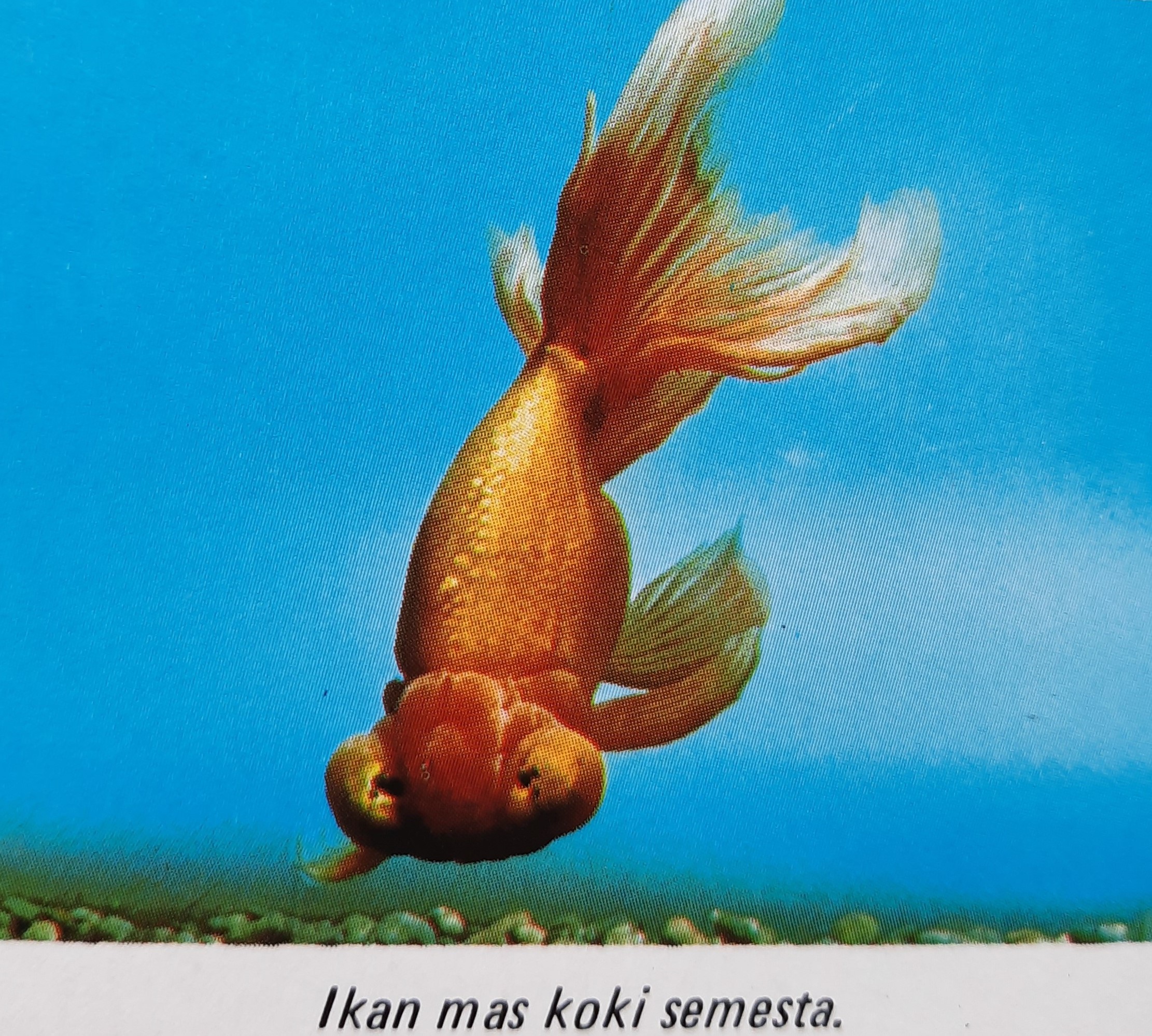
The description just says celestial goldfish. And I have a hard time figuring out what is in between the eyes. I think it is a headgrowth – the goosehead type of headgrowth. I think there is no such variety anymore nowadays. Perhaps the combination of headgrowth and celestial eyes features decreases the fish ability to acquire food and this might contribute to its continual creation.
I think I have a better ideal. One of my ongoing project is to create Celestial Eye with Butterfly Tail. It will be a fish with dorsal. The project has show positive improvement.
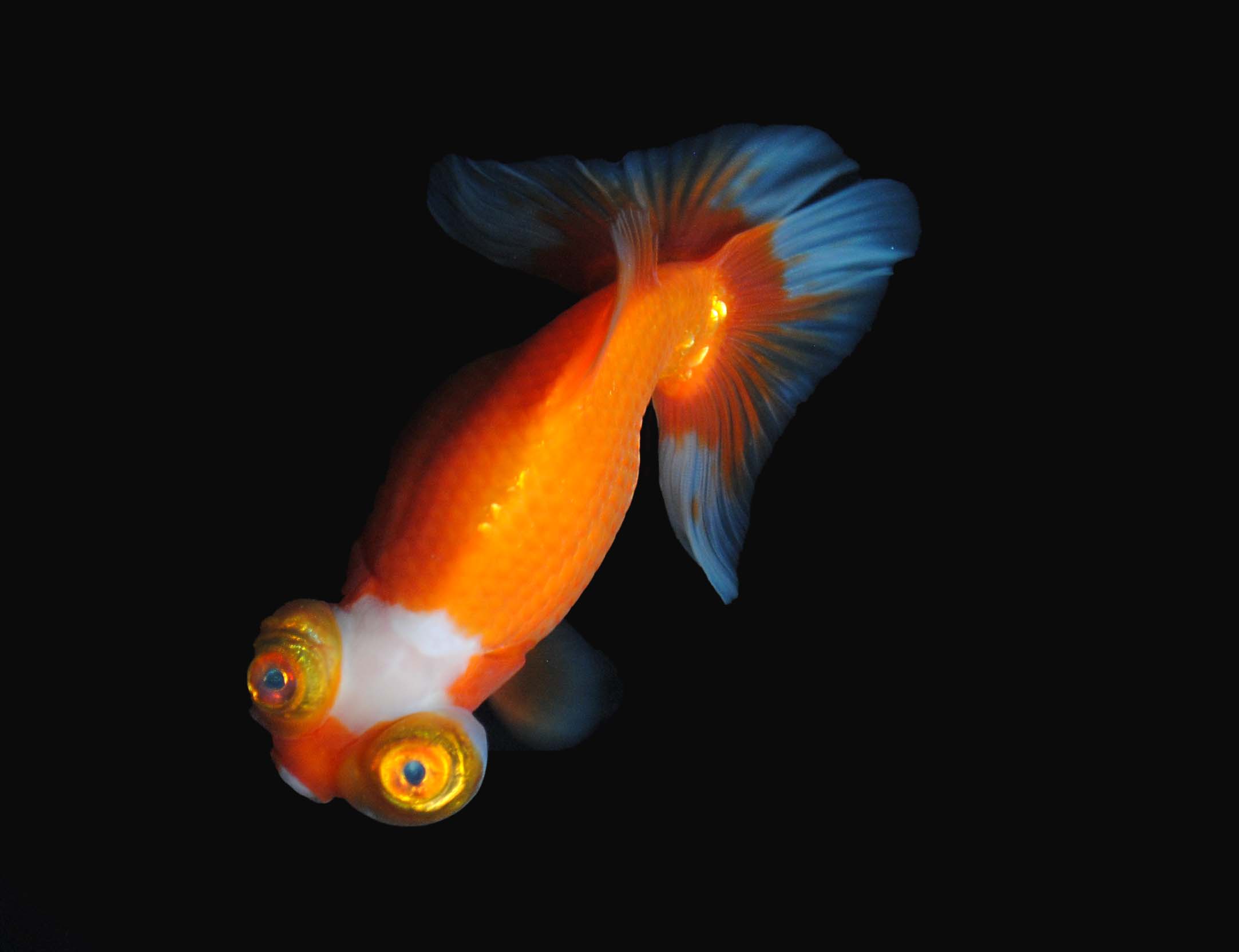
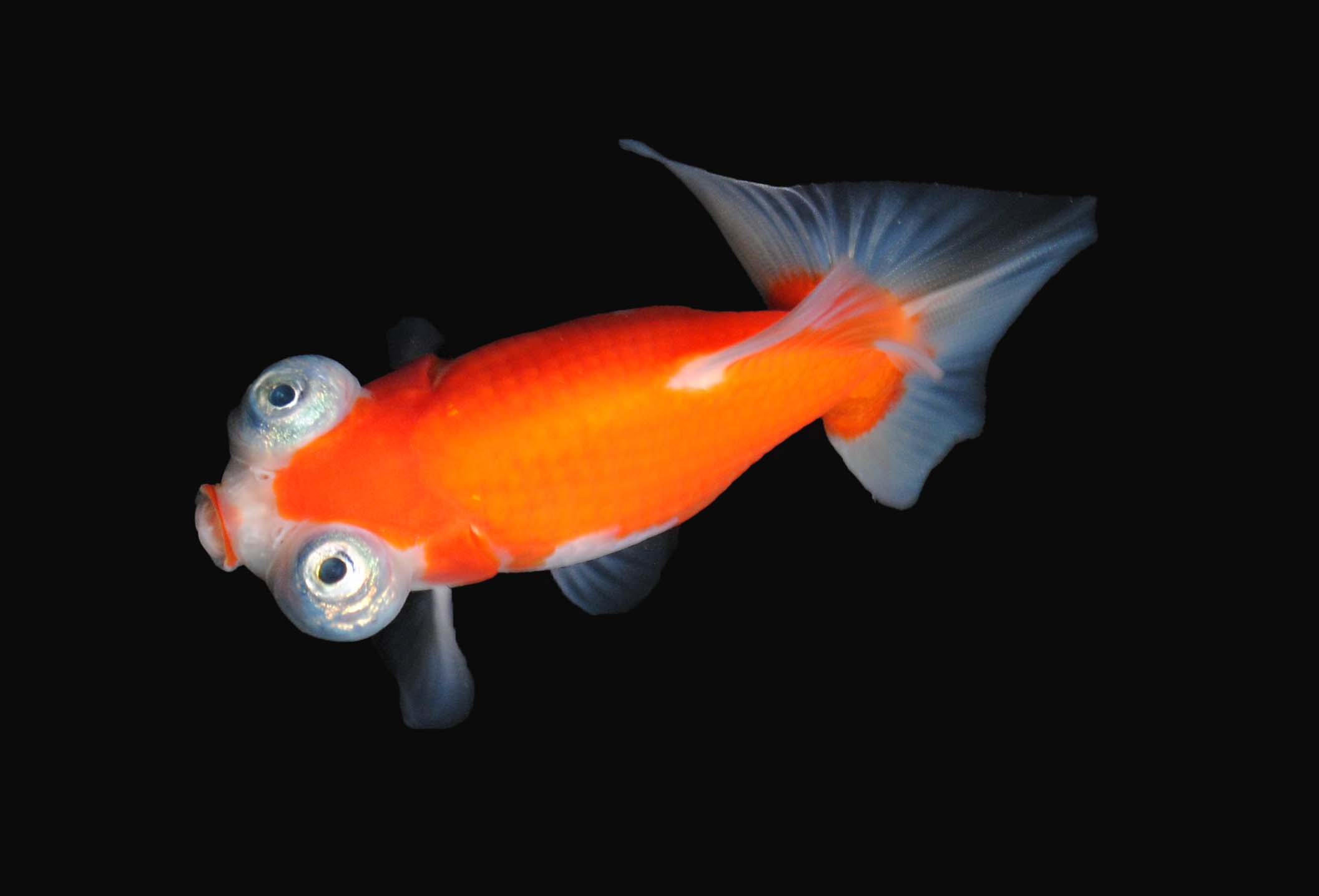
I think one more crossing with Butterfly will finalize this project. Wish me success.
Enjoy!

 hermantogoldfish