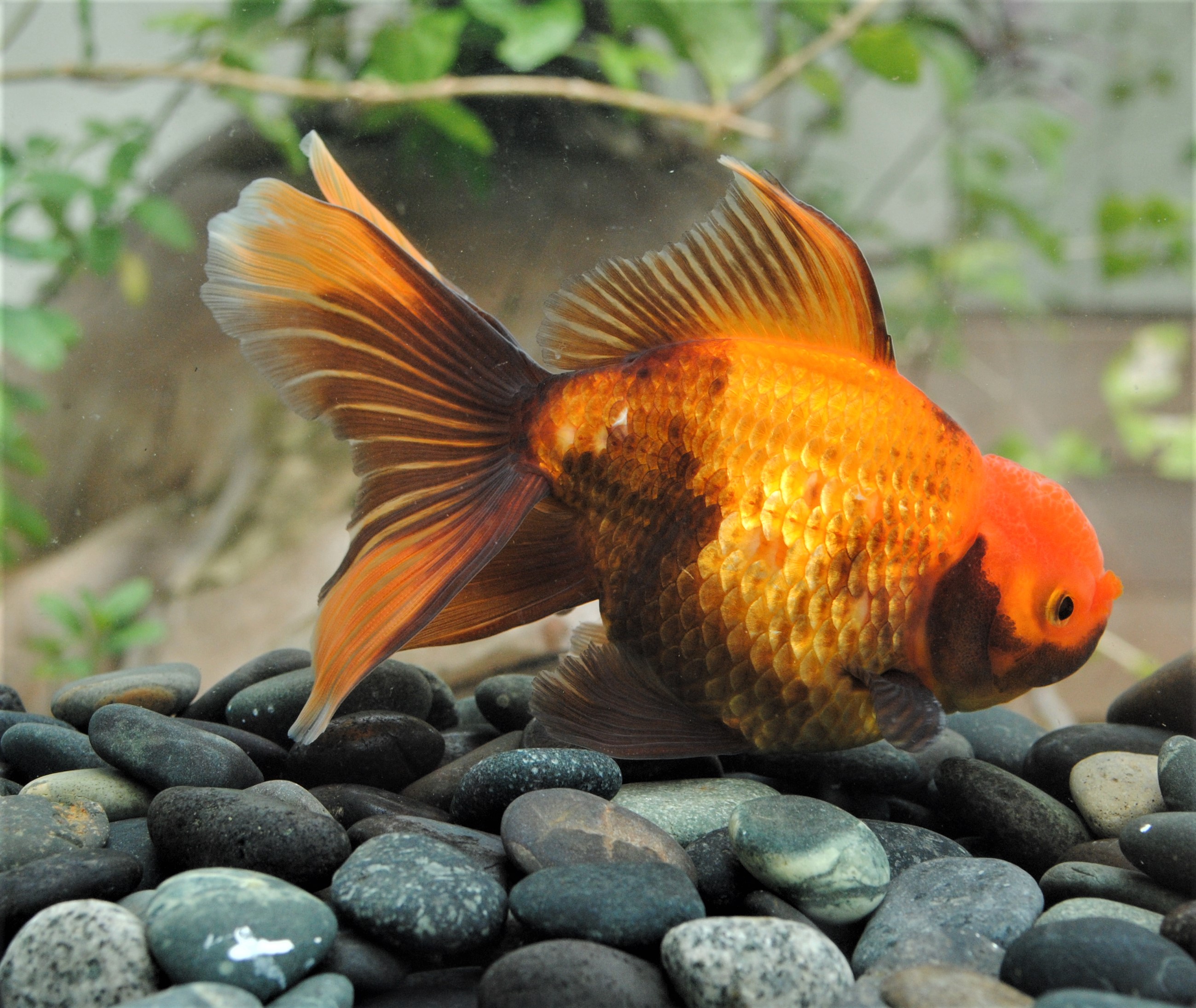
Yellow goldfish

Yellow Oranda 2020

It has been a long way to create Yellow Oranda from Yellow Comets. While the project had shown some success as reported in my last update, I was not content with the result. The main problem was the small headgrowth. Well, headgrowth was and is and will always be the main identity of an oranda. The small headgrowth did not highlight its main identity, in my point of view. So, I needed to do something about it.

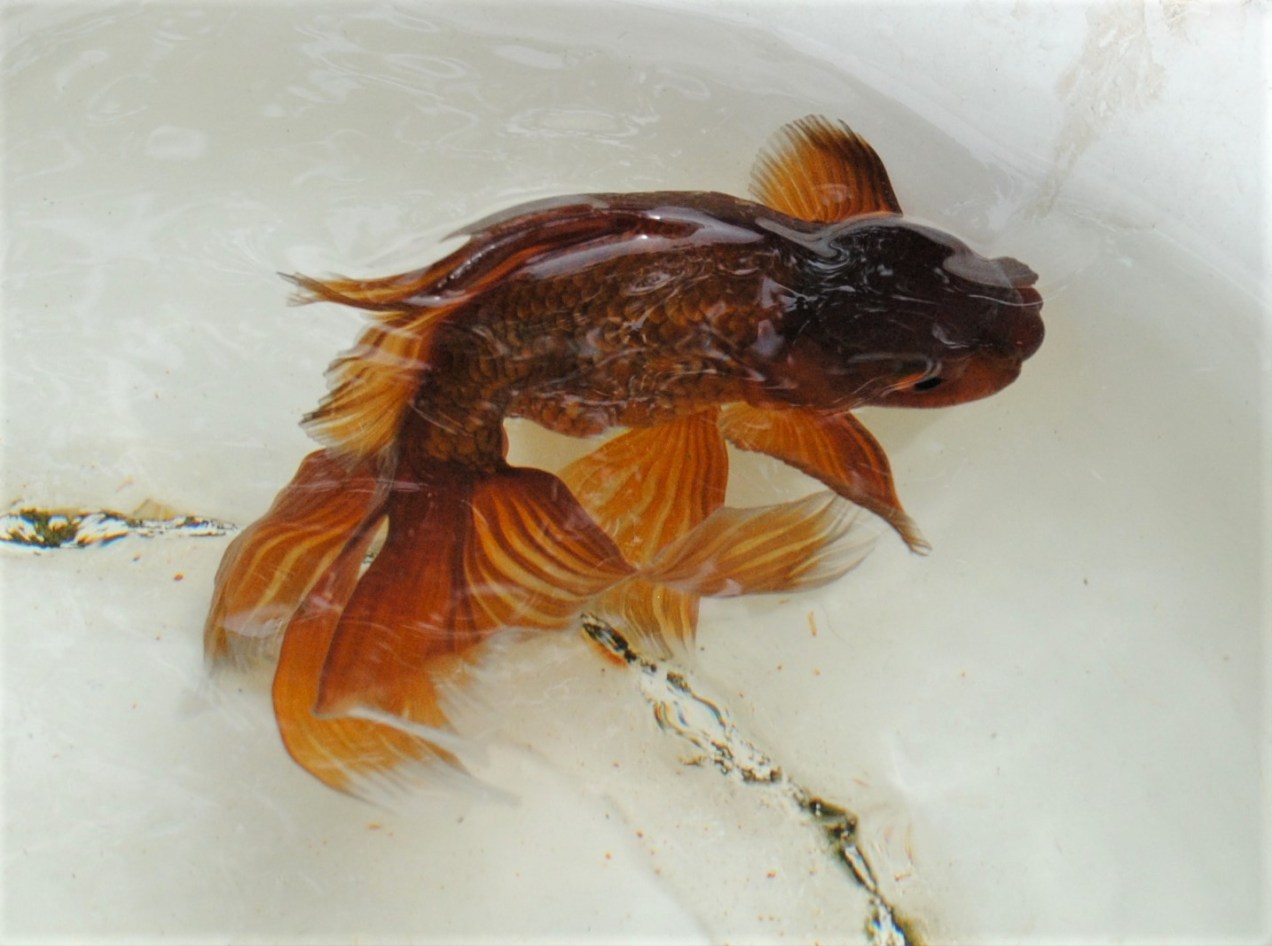
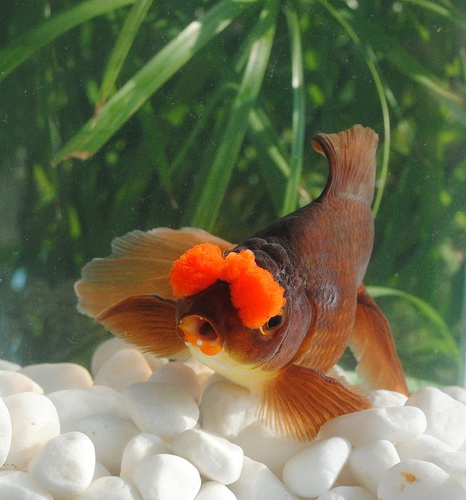
What I did was to cross my initial Yellow Oranda with an Oranda displaying a large and stable headgrowth. I chose my tricolor Oranda for this purpose, since my tricolor Oranda had large goosehead type of headgrowth. Of course, the F1 displayed no yellow color. But the F2 produced several of them. As I analyze the result, I think I am satisfied with the headgrowth of my current F2. Here are two of them:

Aren’t they beautiful? The second picture is the same fish as the one in the featured image (the Title).

The color is as intense as it can be, since they are kept outdoor full of sunshine and algae. And they are still as yellow as lemons.

I only kept four of them, since that is all I need to multiply their number. I does not take a picture of the third fish since it is almost white. Only a tiny stain of yellow is left in its body. Not good for a picture. But still good for breeding. At least I learn that it is possible to produce yellow-white goldfish, just as it is possible to produce red-white goldfish. Yes, the yellow color can coexist with the white.

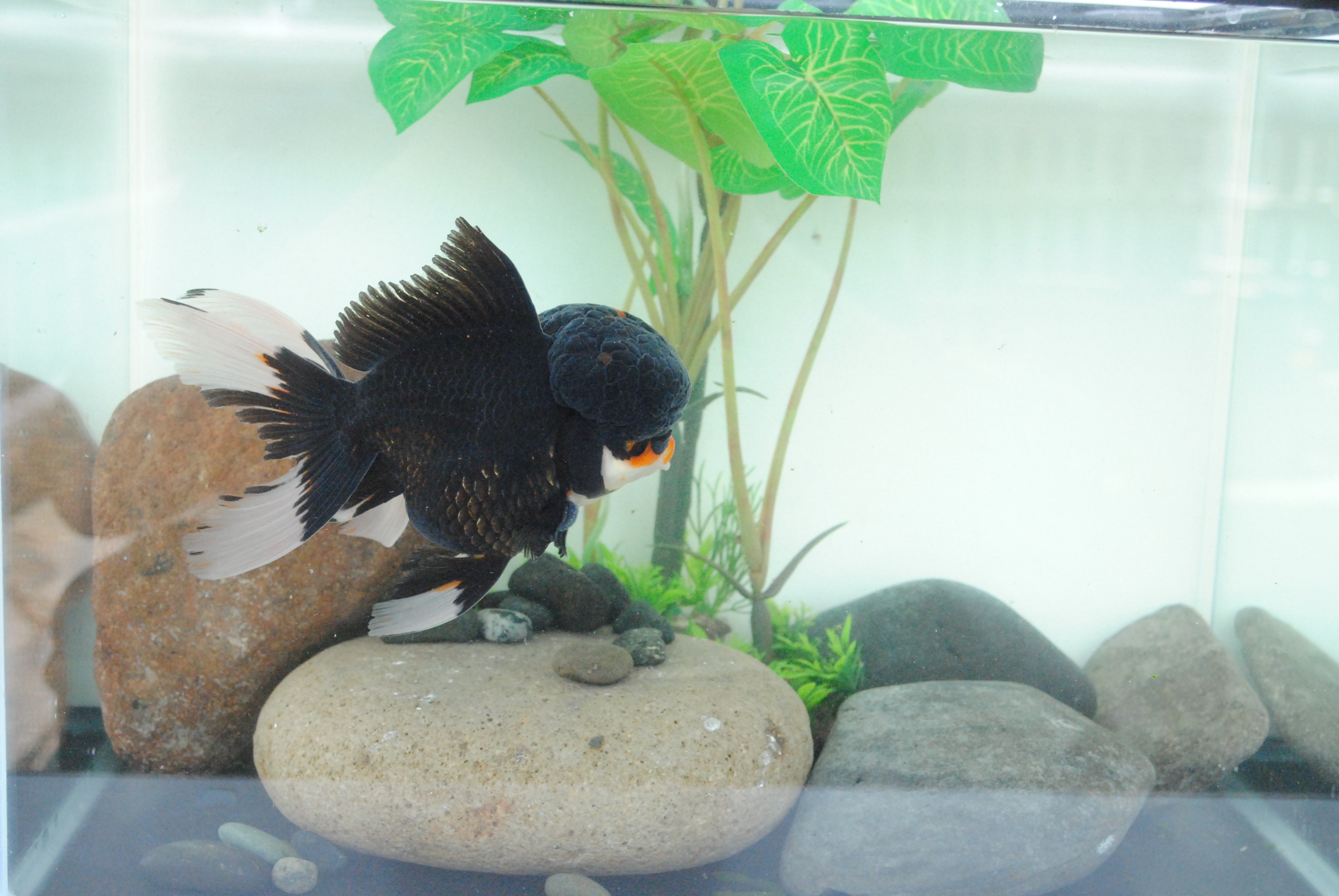
The last fish is a surprise! At first, it mutated from grey (Yes, the yellow golfsish starts from grey fry) into complete yellow. But then, it develops black color. I thought it was due to stress. It is often for a stress fish to display temporary black color on its body. But the black color persists until now (more than three months). It looks gorgeous. Remembering that one of the grandparent was a tricolor which carried strong black pigment, it is possible that this fish has turned into yellow-black variant! Of course I do hope this is true. It will take more time to confirm this. Here is the handsome fish:

Do you love him?

My next plan with the Yellow Oranda are these:

  1. Of course I will breed them just to make sure they have successor that I can use in my next breeding project.
  2. I am still not satisfied with the quality of the Oranda. So, I plan to cross this yellow oranda with a better quality Oranda in terms of the body and tail. I picture a strong and thick Yellow Oranda with beautiful tail.
  3. Concerning the yellow-black Oranda, I would like to create more of it. Right now I don’t have any pair for it. I am thinking of crossing it back with the tricolor oranda. It will ensure the presence of the black color. Of course the yellow color will not be found in the F1. But the F2 will yield several yellow-black Oranda, I hope!
Standard
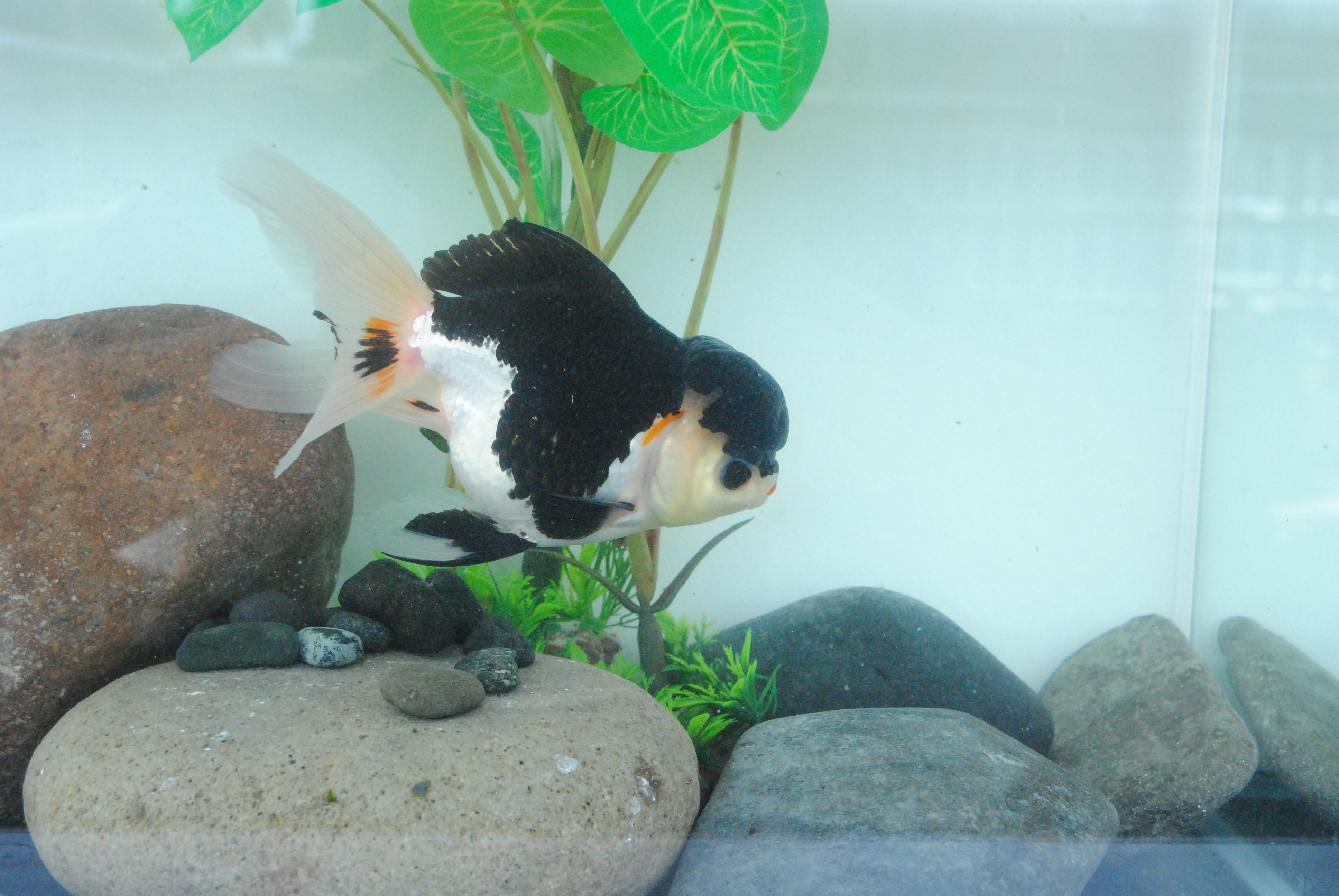
Panda Oranda

Panda That Humbled me down

Years of my experiment brings me the conclusion that the panda coloration (or the tricolor as its side effect) is actually the blue coloration in metallic scale fish that undergoes demelanization process. That process can happen quickly in certain blue fish, turning it into a totally white fish or red and white one. But it can also happen slowly, even to the point of being halted forever, producing the beautiful panda / tricolor goldfish.

Recently, since 2018, breeders from Thailand storm the market with panda / tricolor oranda which seems to be strong in its coloration. I acquired some and breed them to see if they conformed to my understanding. And what did I find?

The offspring were not blue in color!

They were grey just like the common metallic goldfish!

I raised them to see if they will become panda like their parents. And yes, with mix results, I got several decent panda oranda. The results consist of grey (which does not seem to turn into black nor panda), black, panda, tricolor, and some who loses the melanin totally.

Here are some of the results that I raised until maturity:

DSC_9166DSC_9362DSC_9467 (2)

So, panda does not come from blue fish only. My previous conclusion was wrong. I still does not know how the grey fish can become panda, since the common grey fish (red white fish) cannot do so. Actually, I experience this once a long time ago. But I dismiss it as an exception. Perhaps next time I can find my documentation and write about it. For now, I must humbly admit that there are panda color that does not come from blue fish.

Standard
Brown Oranda

Brown Oranda

DSC_6510 (2)

It all started with some chocolate pompom I bought from China. The brown color captivated my attention. Most of them had orange fluffy nostrils to make them adorable. To my knowledge so far, chocolate color like this was rarely found in other goldfish variety. Well, I saw a brown butterfly sometimes on the internet, but I have never seen one alive. I remembered seeing a brown oranda nicknamed chakin in an encyclopedia I had during my childhood. But I cannot find one live specimen of chakin (teh-kin, or tea-kin, the tea colored goldfish) here in Indonesia. Even the chocolate pompom had to be imported from China. I was entertaining a project to recreate brown oranda from this chocolate pompom I had.

This is one chocolate pompom I bred from the imported parents. I had many of this several years ago.

DSC_7809R

I crossed it with an oranda. I am sorry I forget about an important fact regarding this matter. I could not recall whether I used a common oranda or a redcap oranda for this cross. The result was all orange goldfish, with small head growth, and the small pompom in some. Those were my transition fish. I did not bother to take a picture of them.

Then I inbred those transition fish to get the desired result. I chose the few brown colored offspring and mated them with oranda again to improve the oranda characteristic. Once again, I got all orange color, but this time, they were decent oranda, with no or insignificant pompom. My final result should come from inbreeding them.

And yes, I got what I wanted! The brown oranda! From the start, I picked up the fry which showed light brown color right after they hatched. I grew them up. Yet, to my disappointment, only one remained brown until maturity. The rest turned into orange.

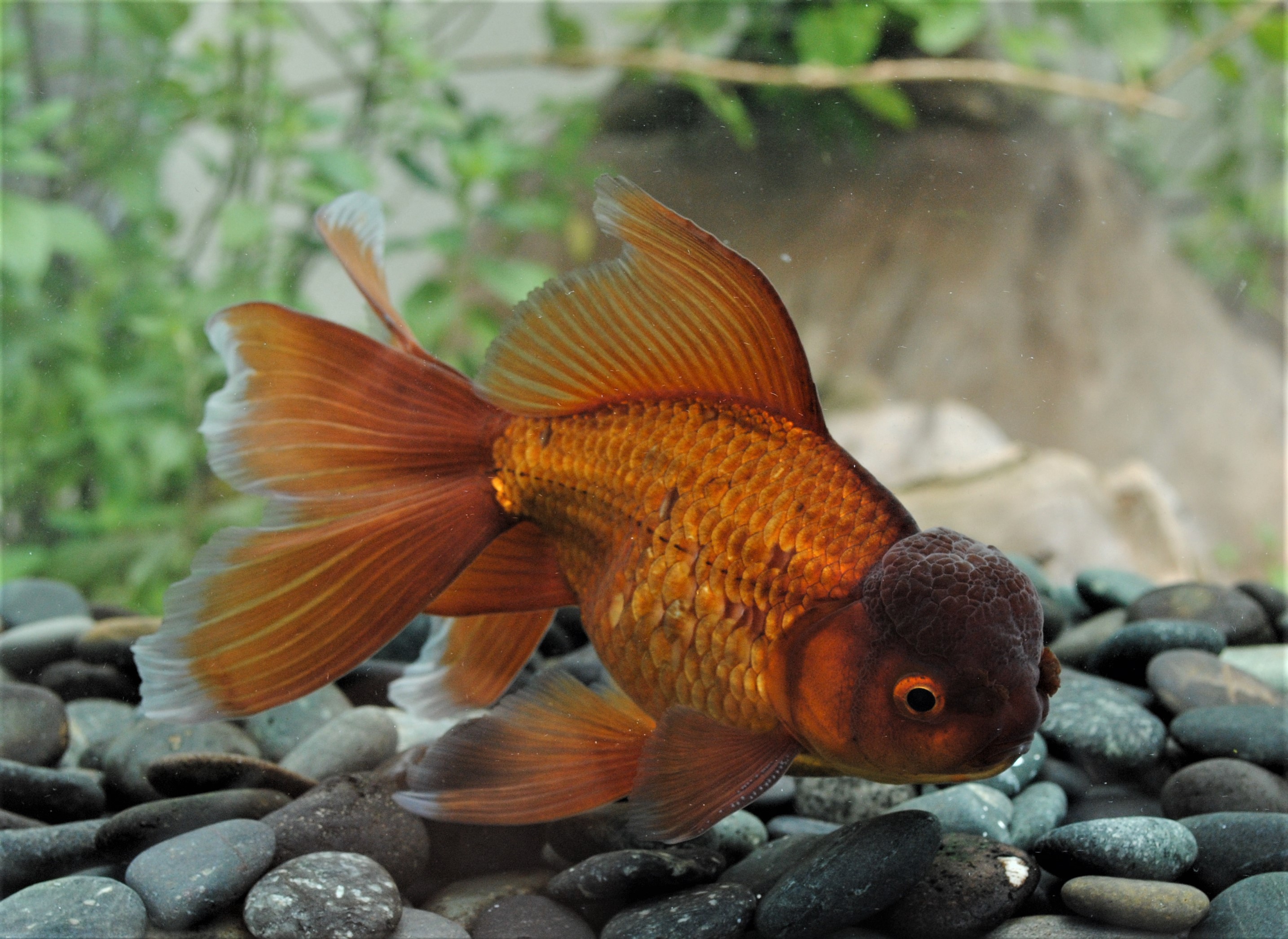
I mated this only brown with its orange sibling. The hatchlings were all brown in the beginning. And only two remained brown until now. I still keep them and now they are roughly 20 cm long with no hint of turning into brown. Unfortunately, both of them are male. All the female has turned orange. Below is one of current brown oranda I had, which I consider as my throphy.

DSC_6474 (2)

One strange phenomenon is this. Actually, there was a third male brown oranda, which slowly turned into orange. It retained less than 10 percent of its brown color. I was about to cull it out. Yet, I did not know how, it started to regain its brown color. This is one of the phenomenon I call the reverse demelanization. I managed to take the picture when it regained its brown color after being almost all orange:

DSC_6516 (2)

At first, I thought the increasing brown color might due to stress. If that is the case, the brown color will be temporary. But, it continued to grow to cover the whole body of the fish, leaving out only its cap. It grew into a beautiful fish: a brown red cap, if I may say! And then the reversing process stopped. Until today the fish is still alive, and has been almost a year in this state of pattern!

DSC_6633 (2)

Beautiful, isn’t it?

Any explanation?

That is my project to recreate the brown oranda. I think the project is finished. The only thing left is to multiply them, and to get the market to appreciate them.

Have a good day!

Standard