In my Diary #8 2024 I mentioned the emergence of a beautiful tricolor Ranchu out of nowhere. Well, it is not really from nowhere, but from (unexpectedly) my cow ranchu project. From that moment on, my tricolor breeding strategy diverged into two separate paths. The first path was to follow the inbreeding of my initial stocks. The second path was to cross the unexpected tricolor ranchu with my initial stock. In this diary, I will talk about the second path, that is from the cross between these two:
Male (unexpected stock)Female (initial stock)
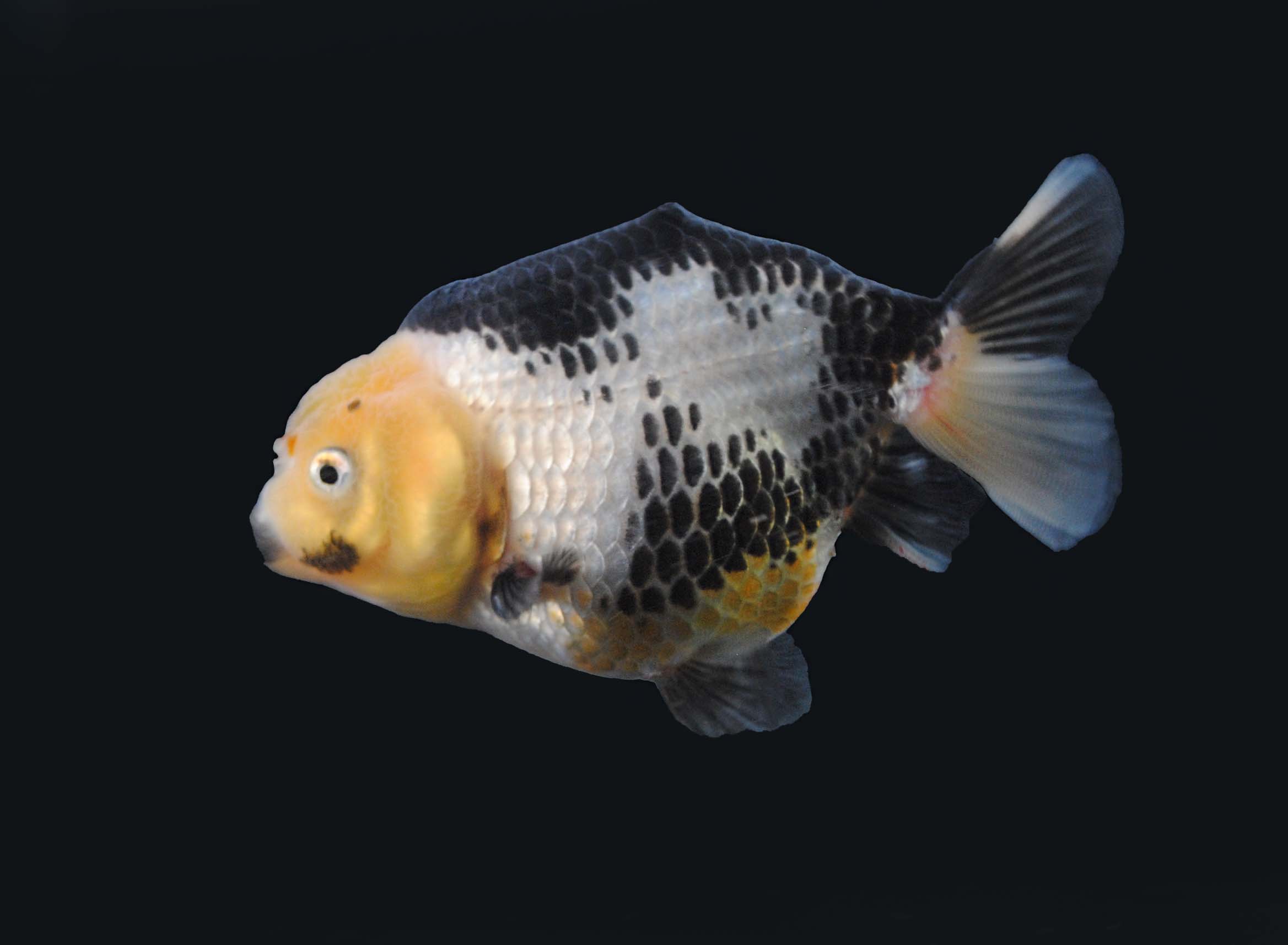
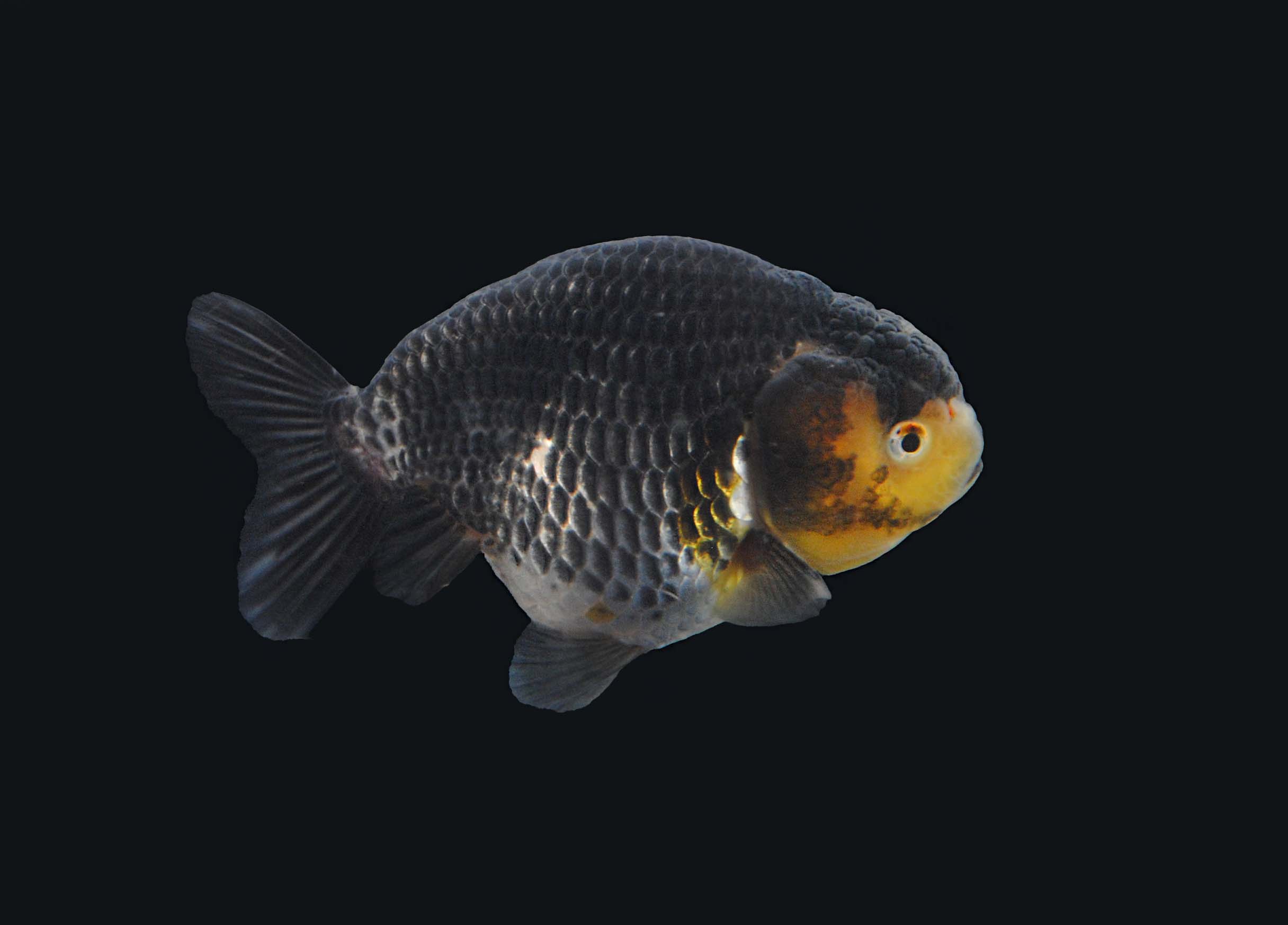
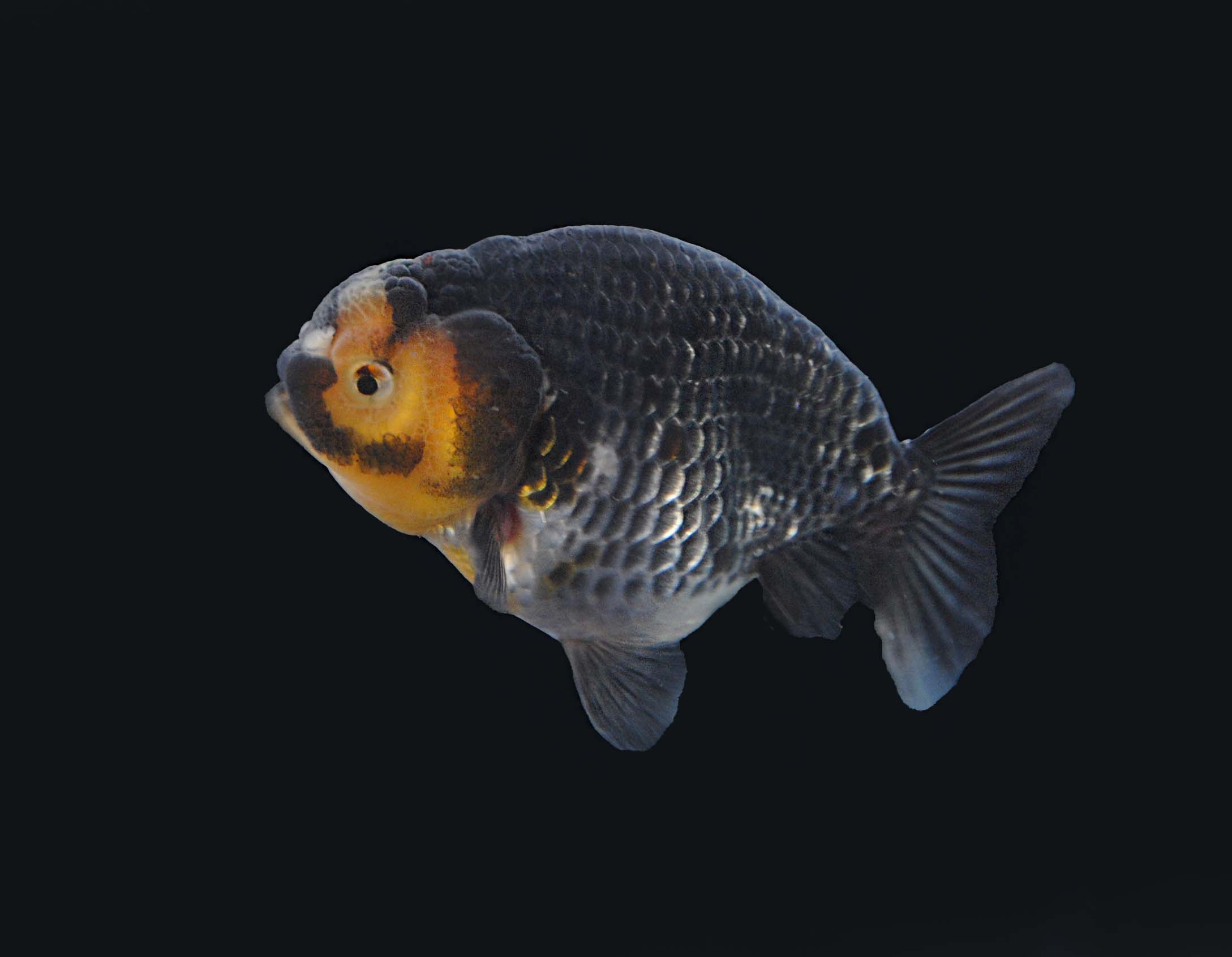
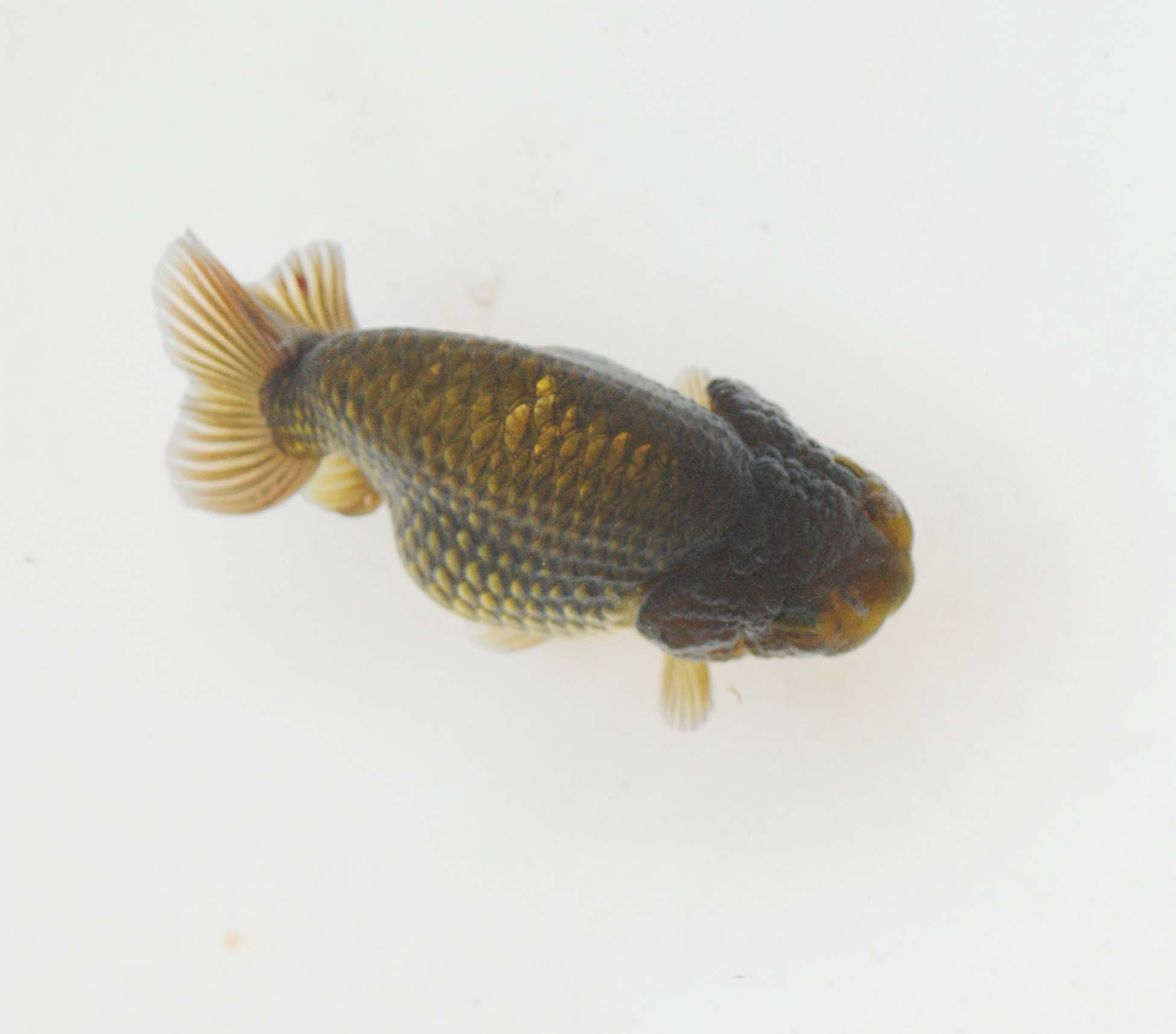
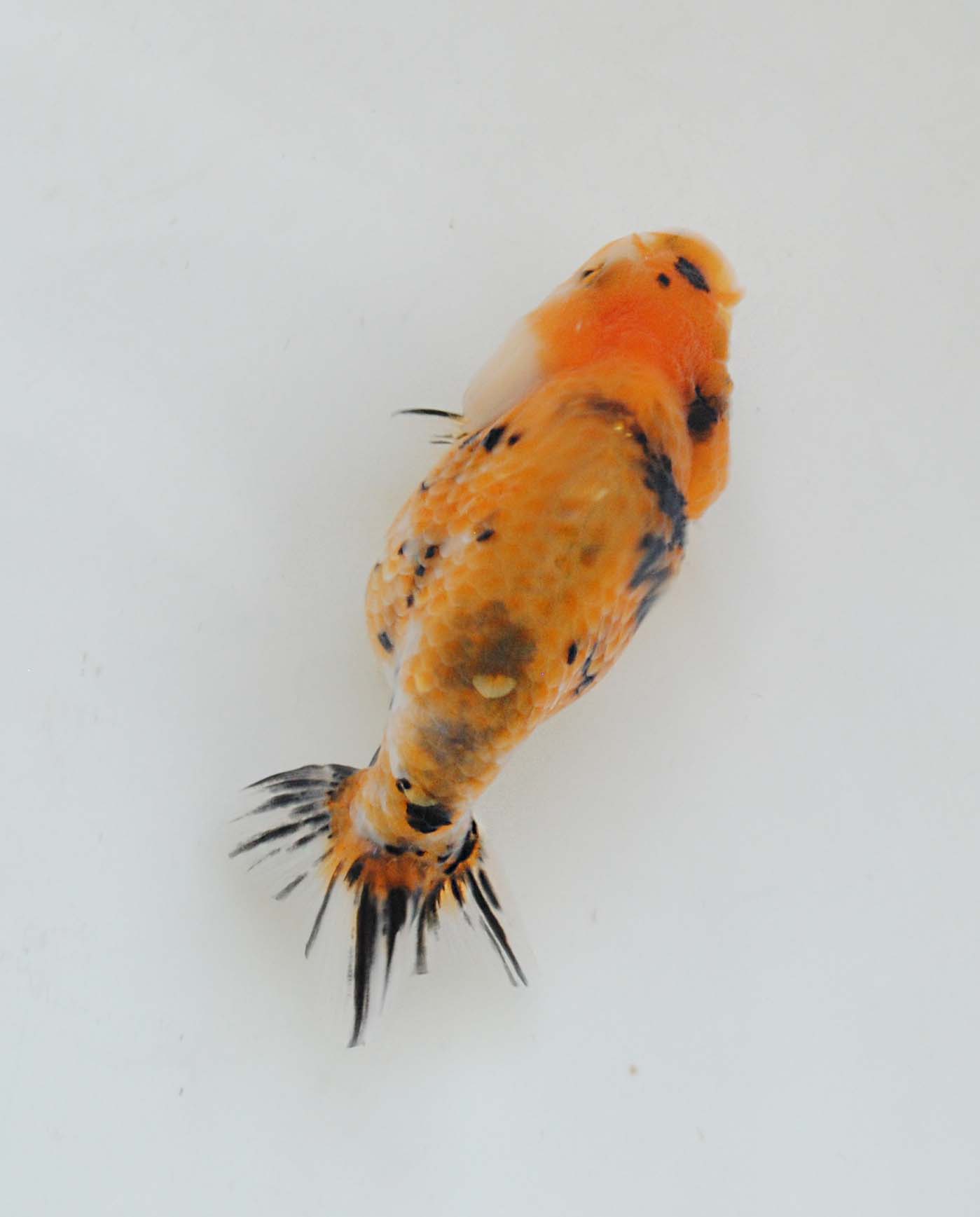
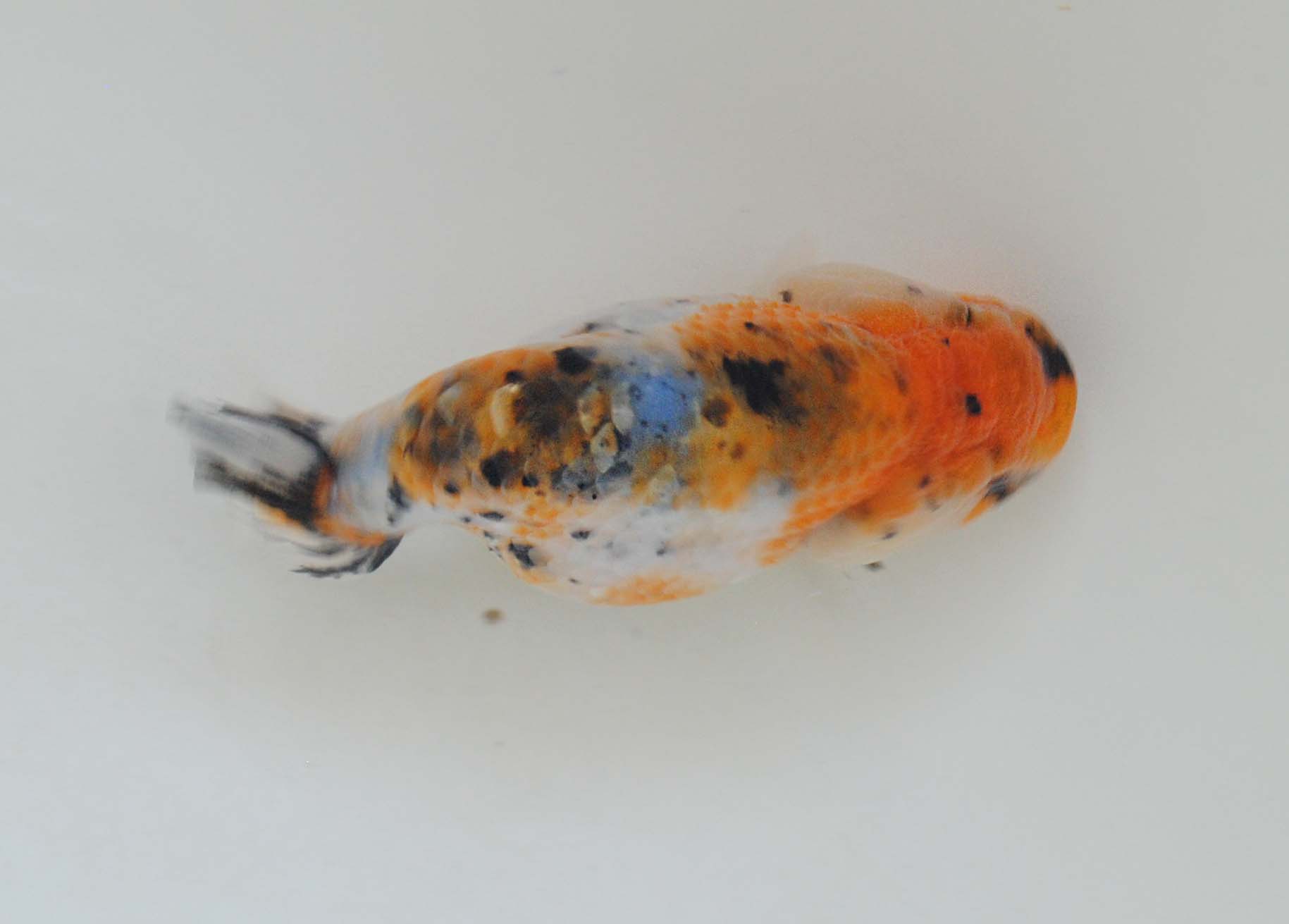
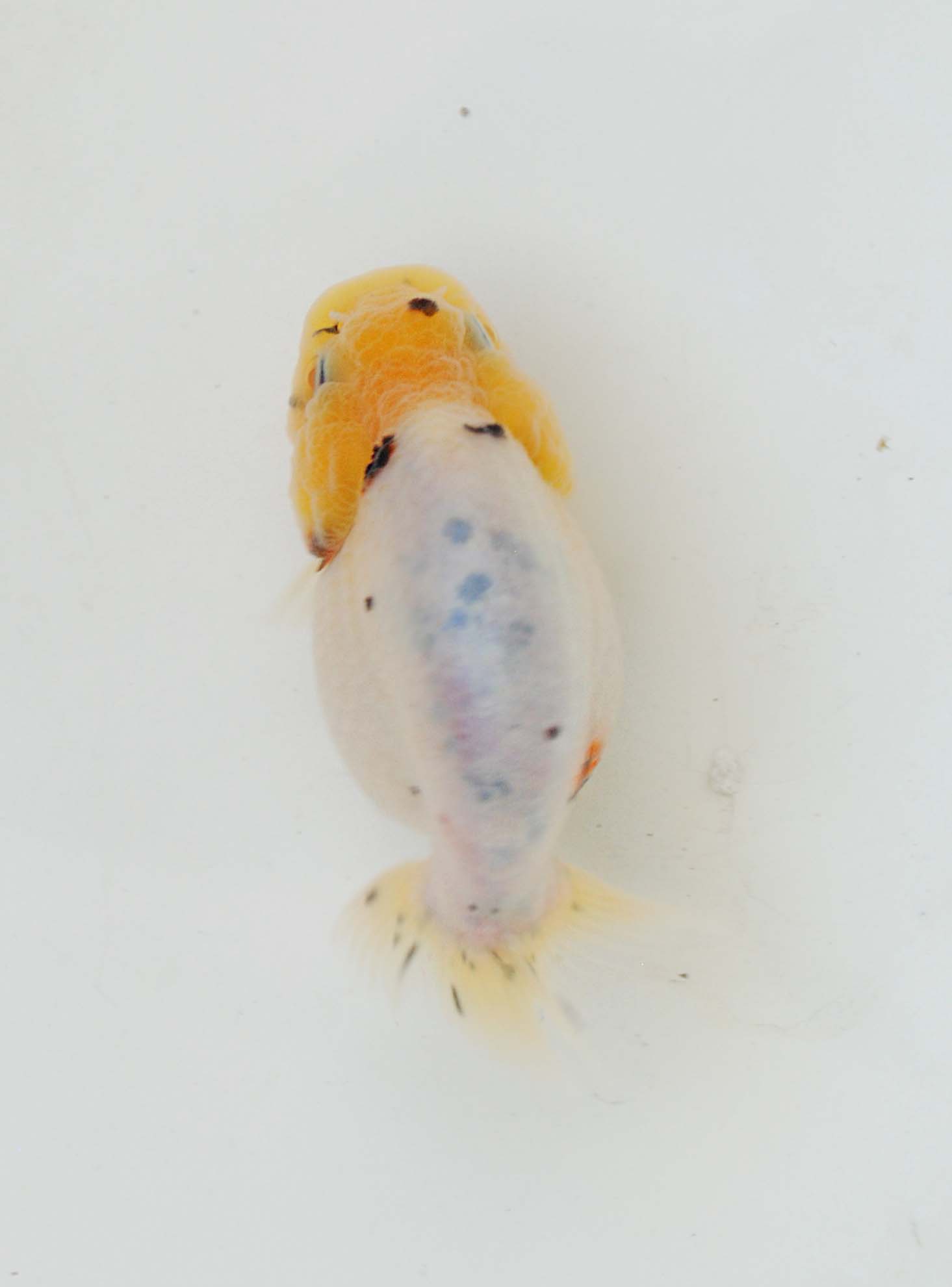
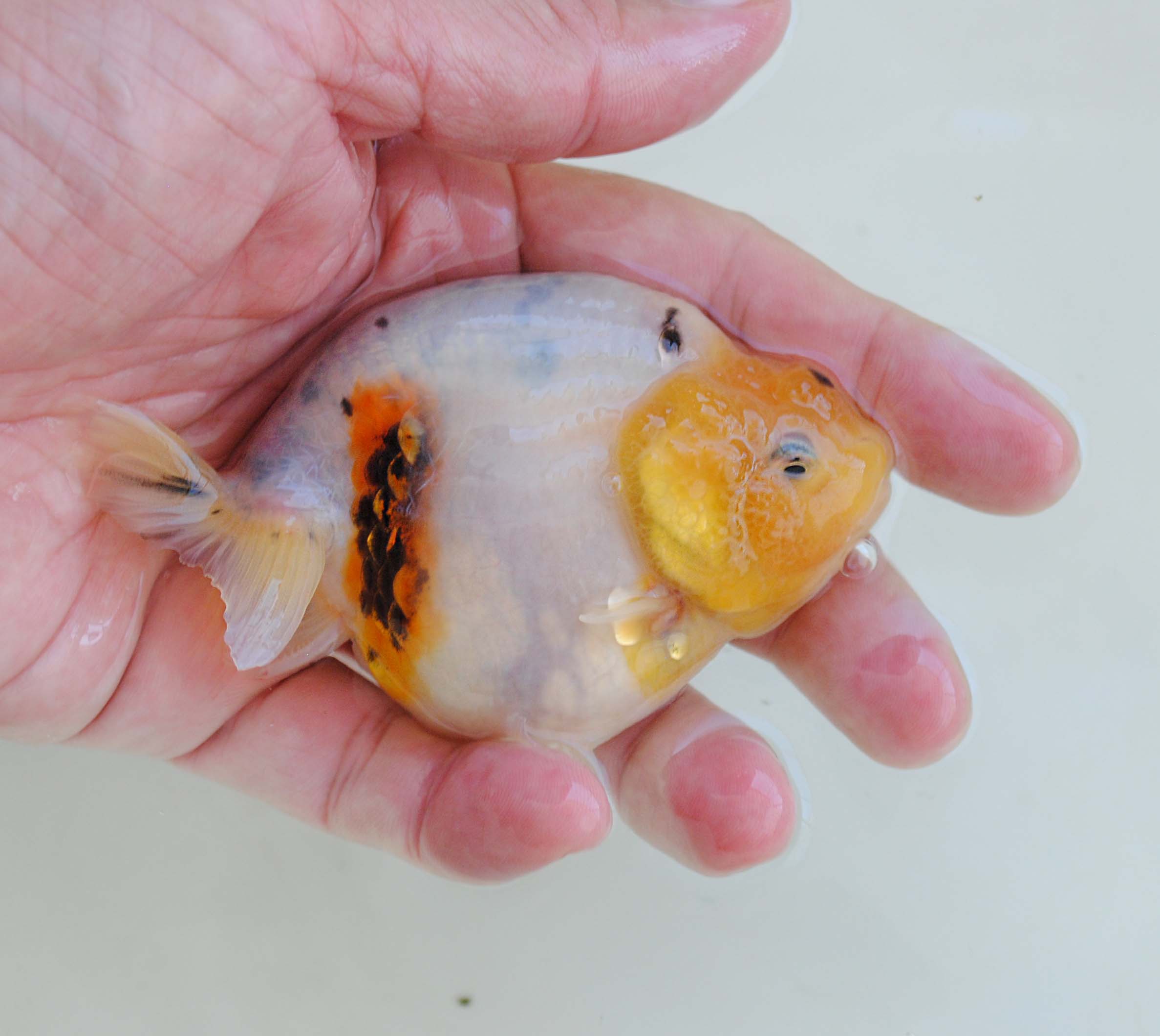
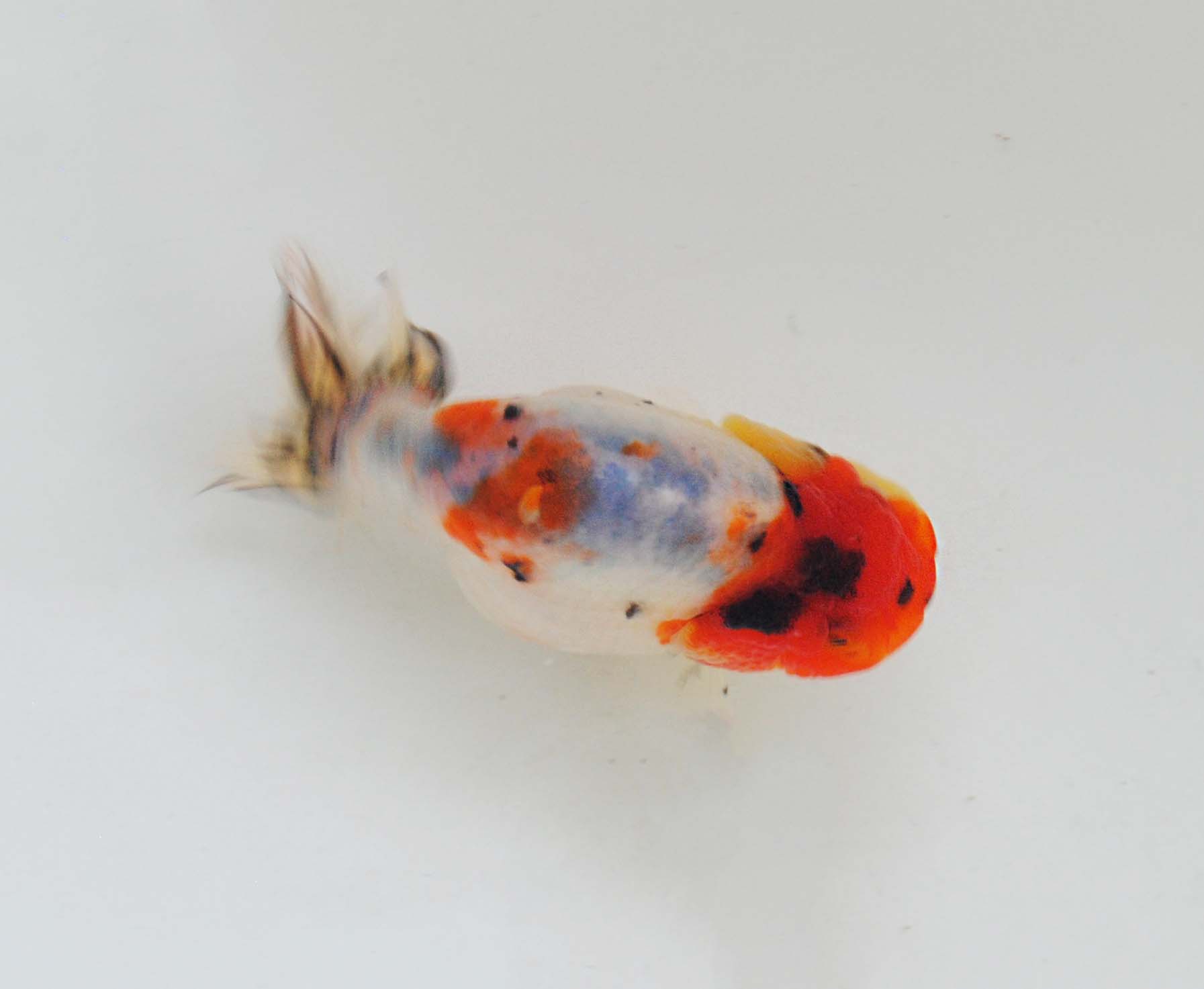
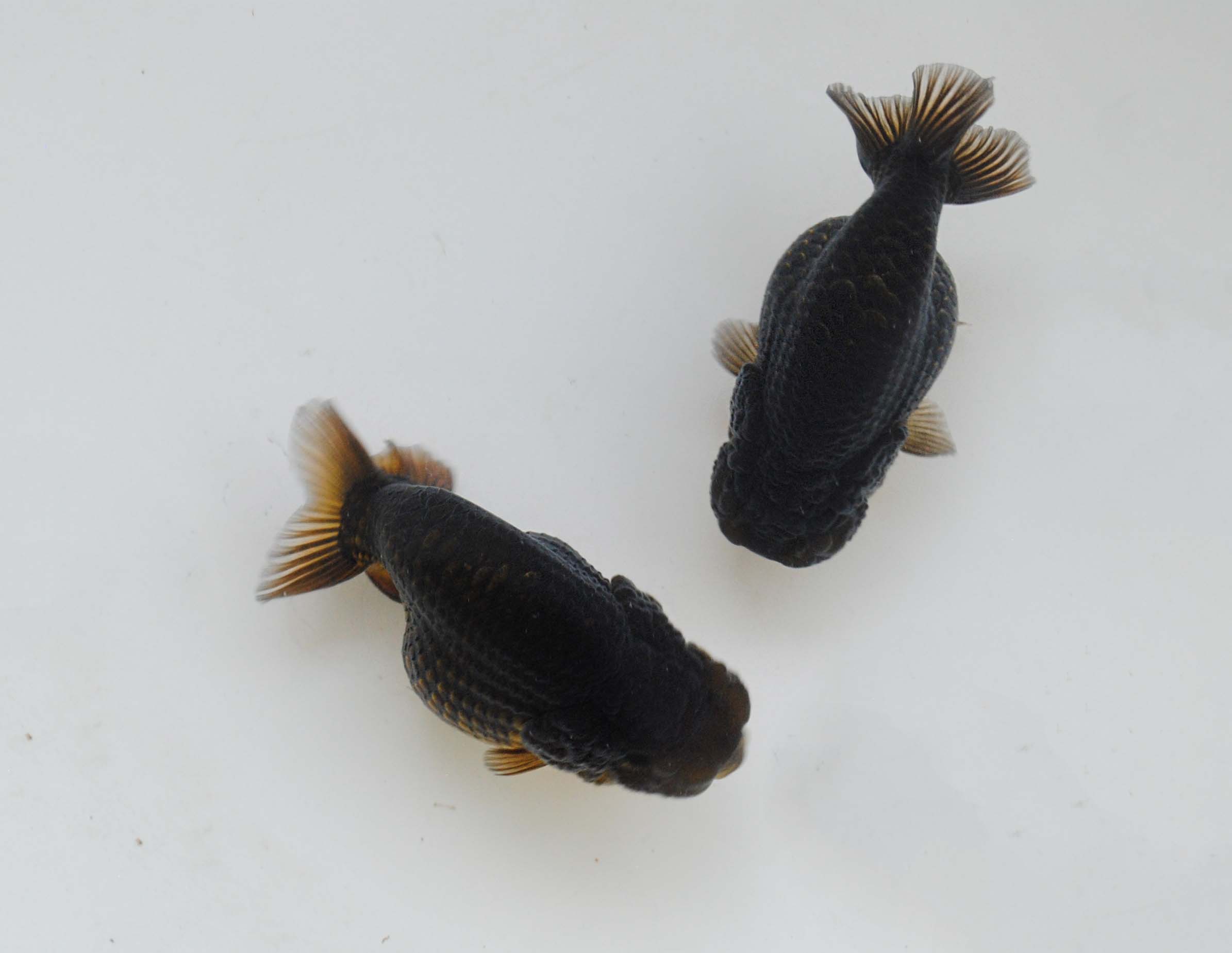
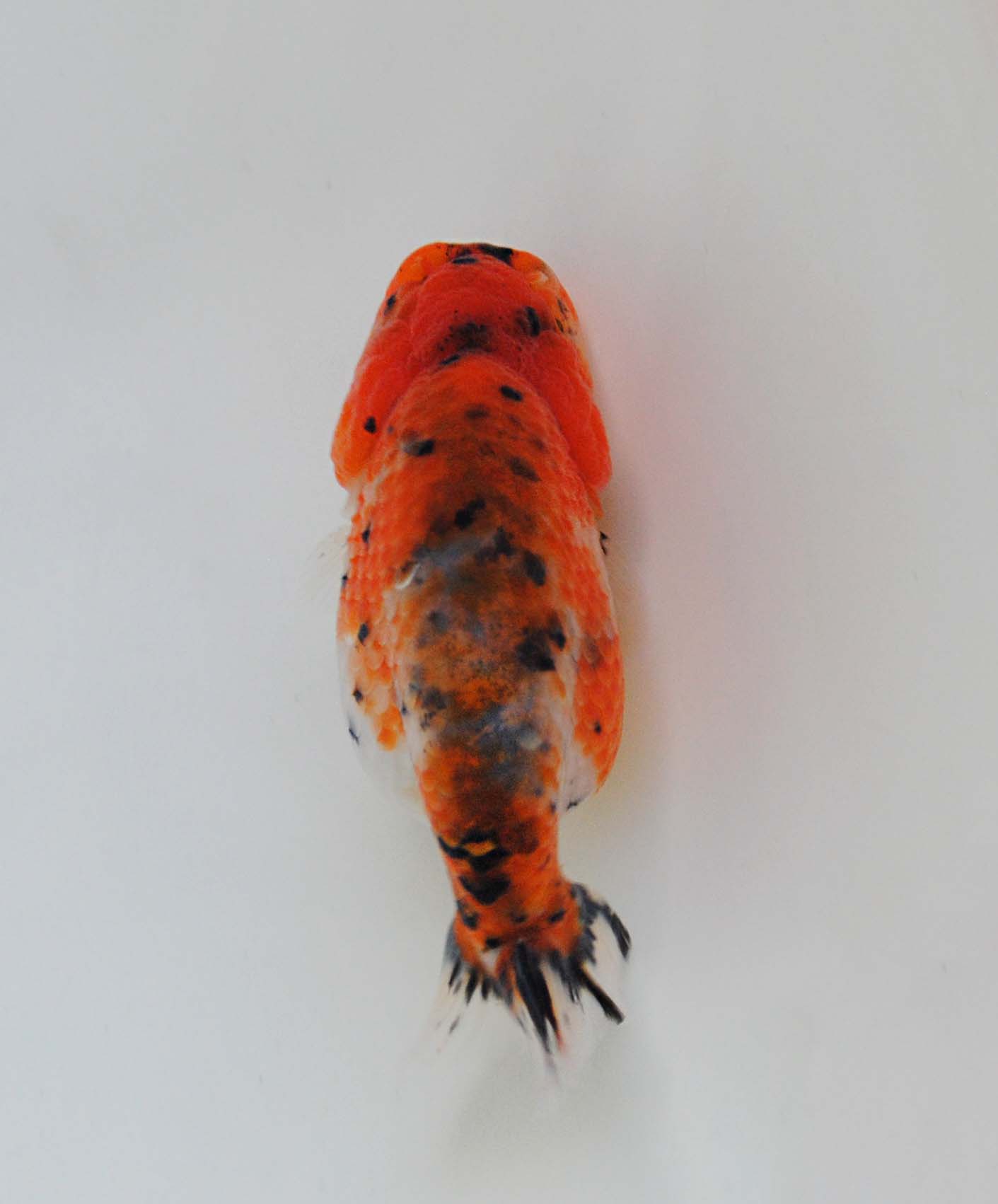
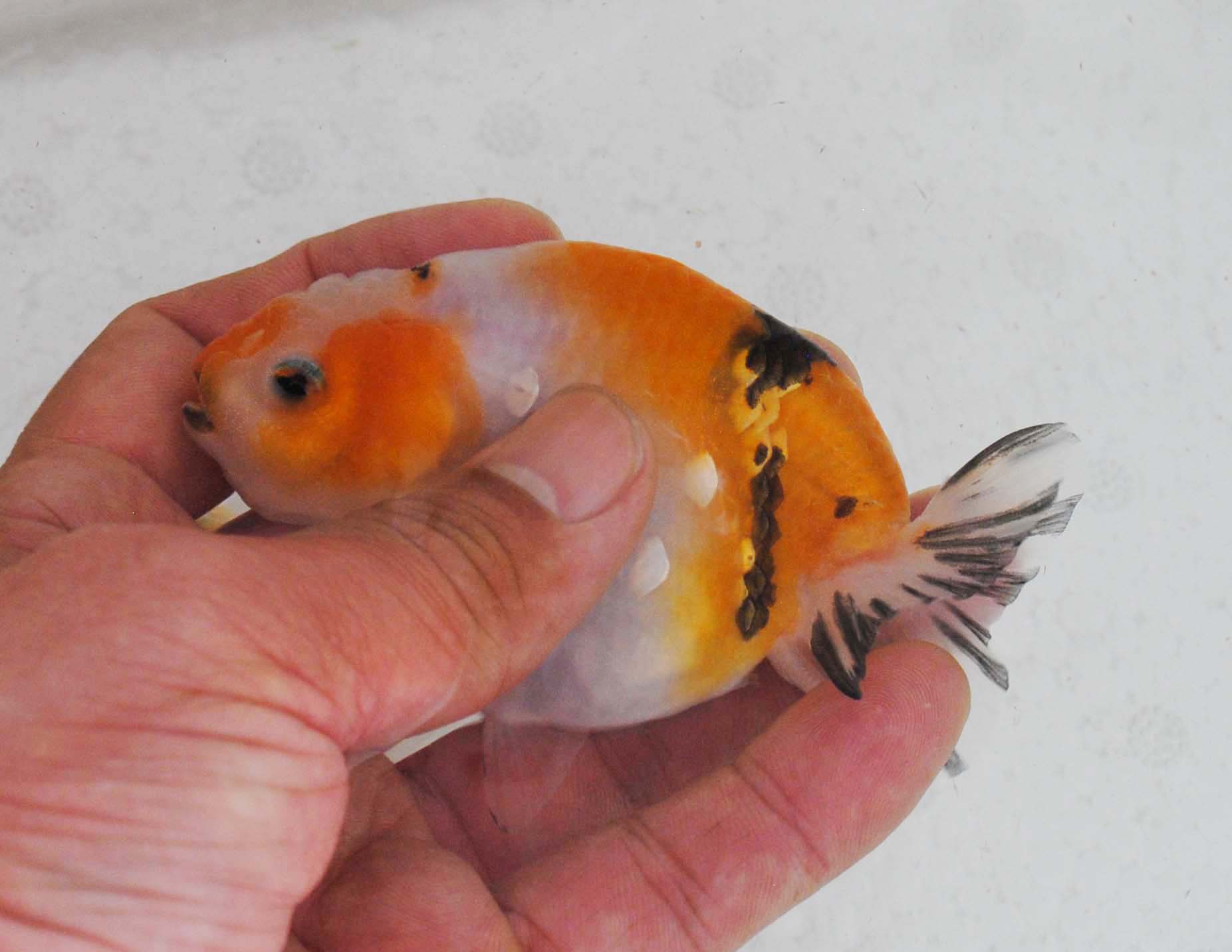
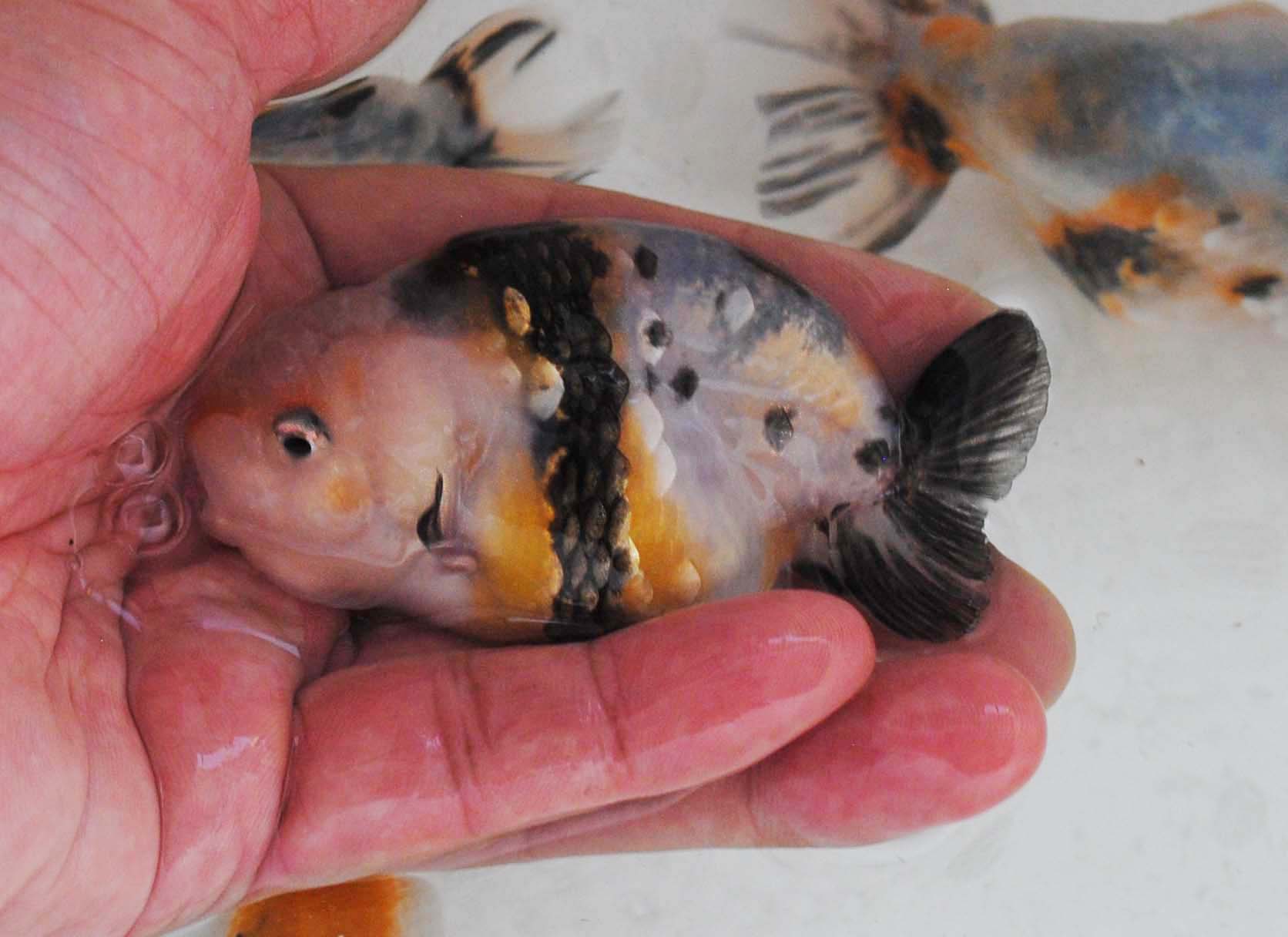
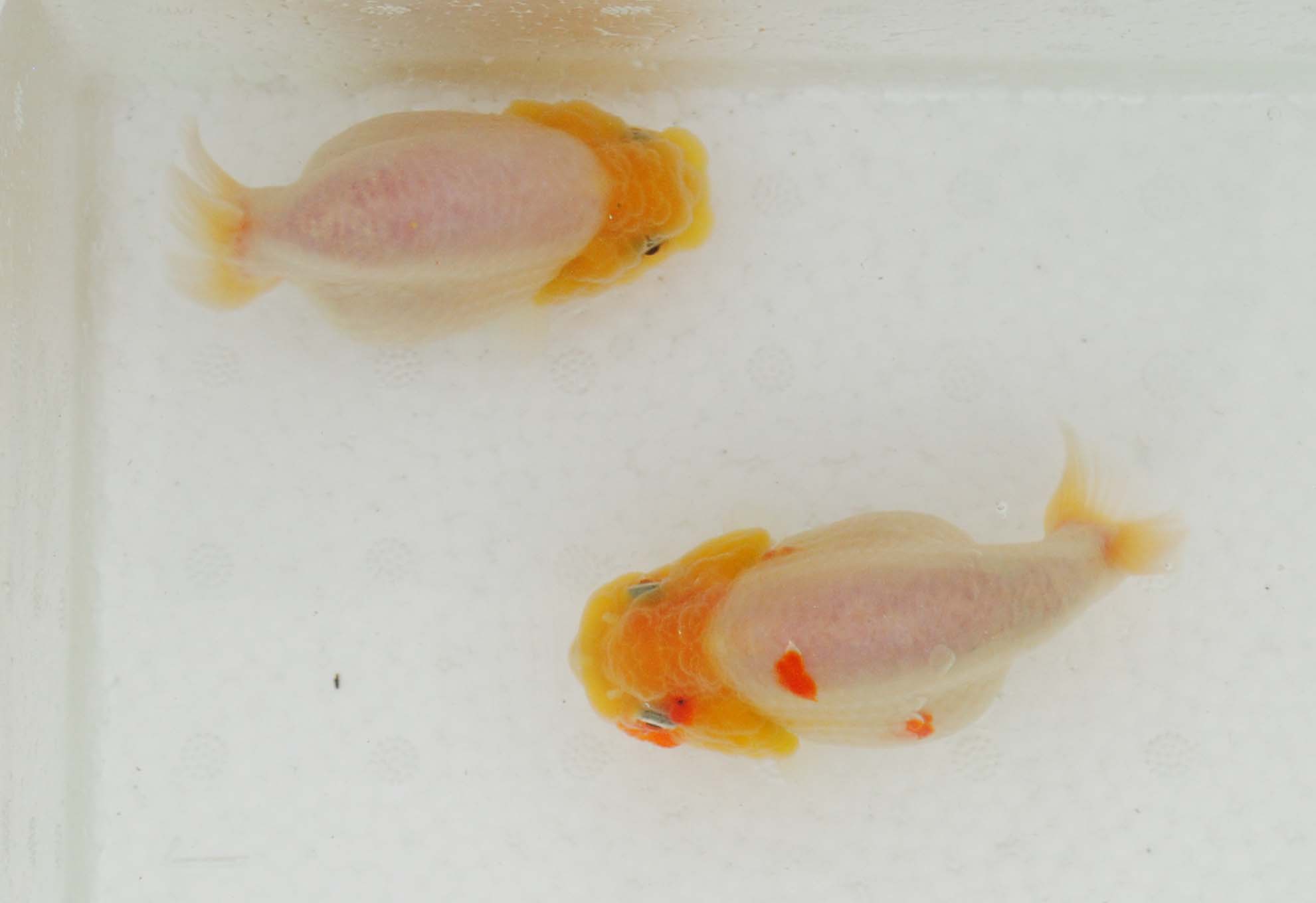
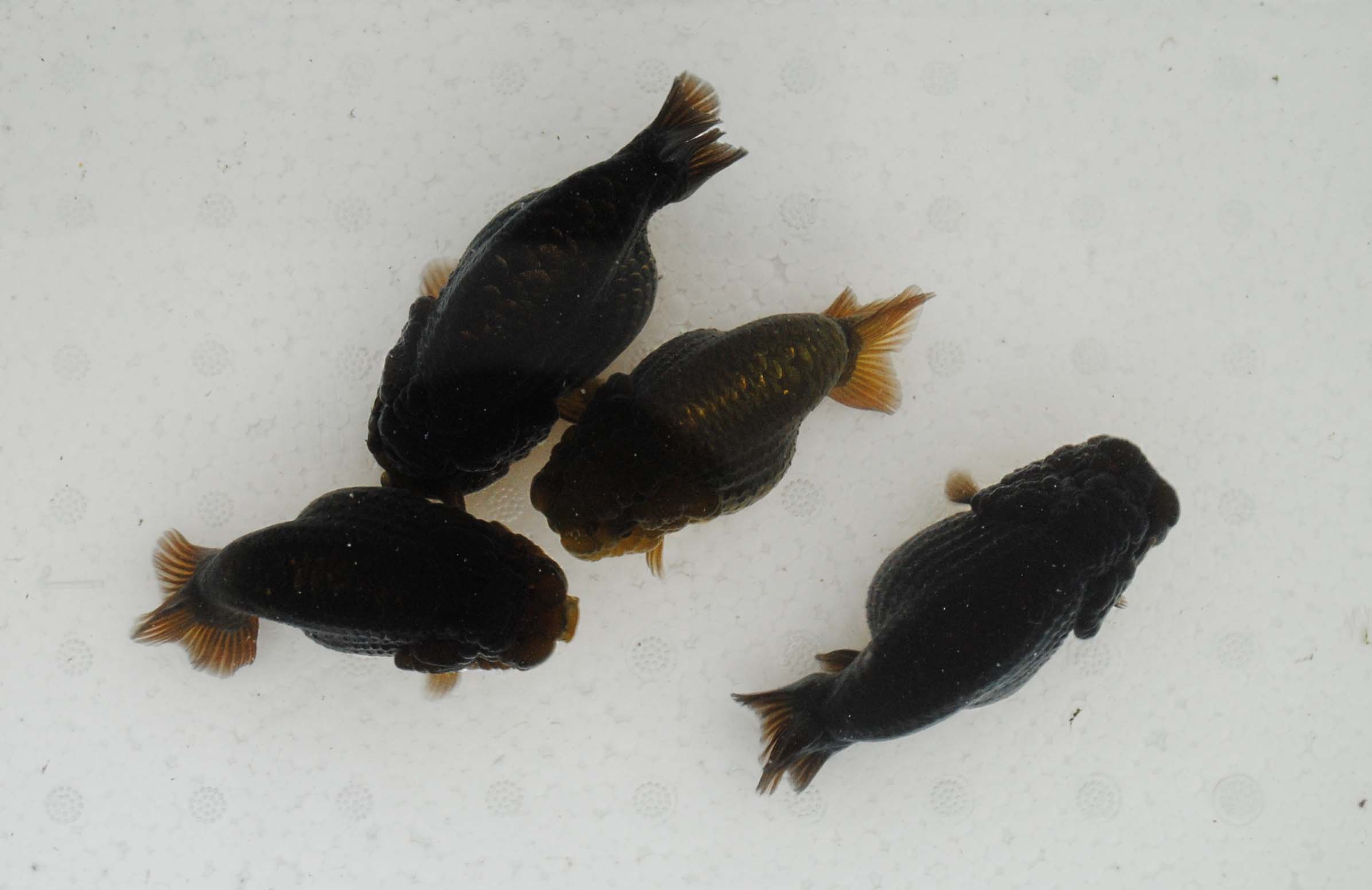
The offspring shows some interesting result in terms of coloration. Some exhibits strong black pigmentation on top of white or red-white color. This leads me to think that they are decent panda / tricolor ranchu! The quality of the body form varies. But as long as I can get the color genetics right, it is not that difficult to improve, I think.
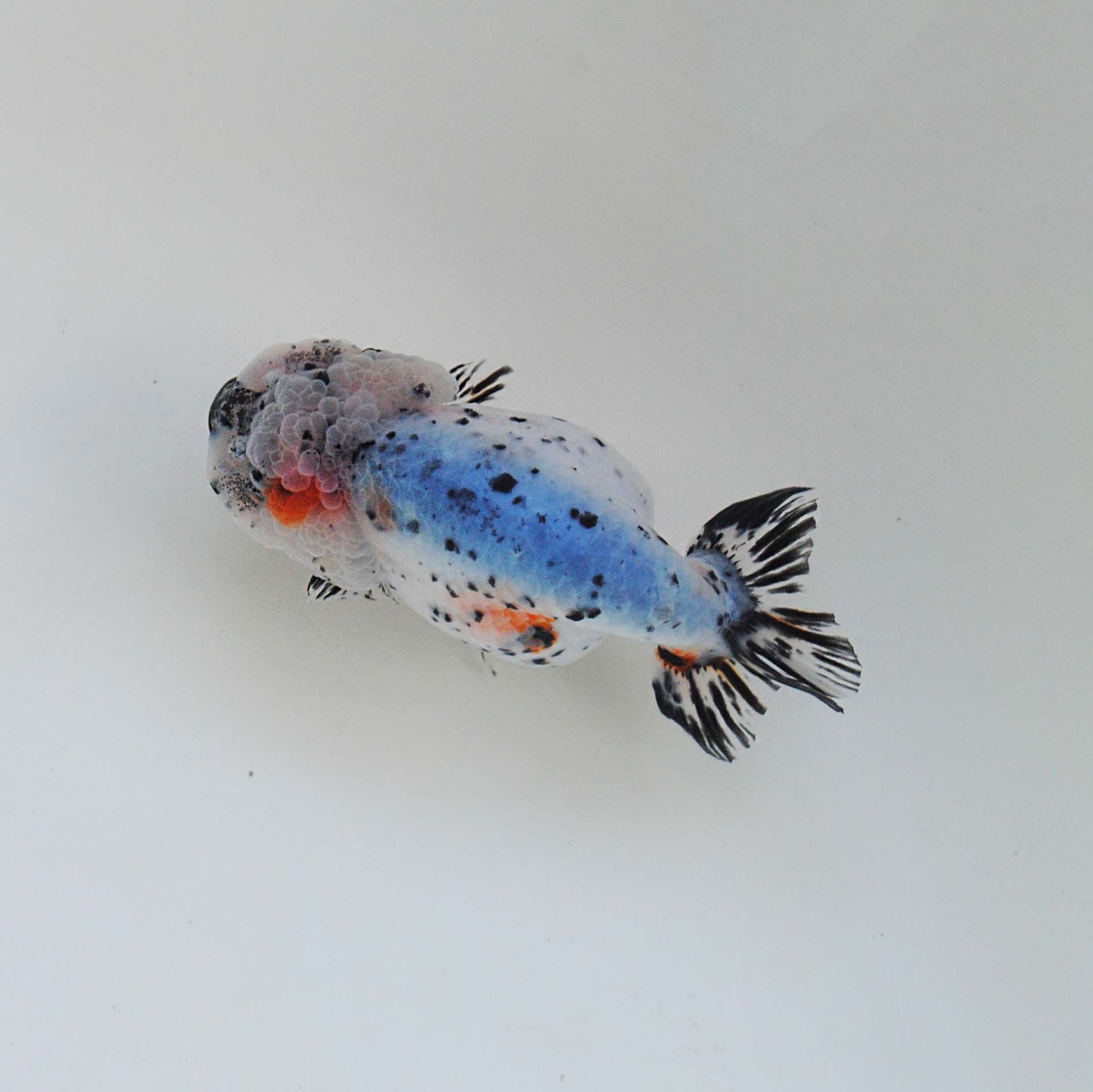
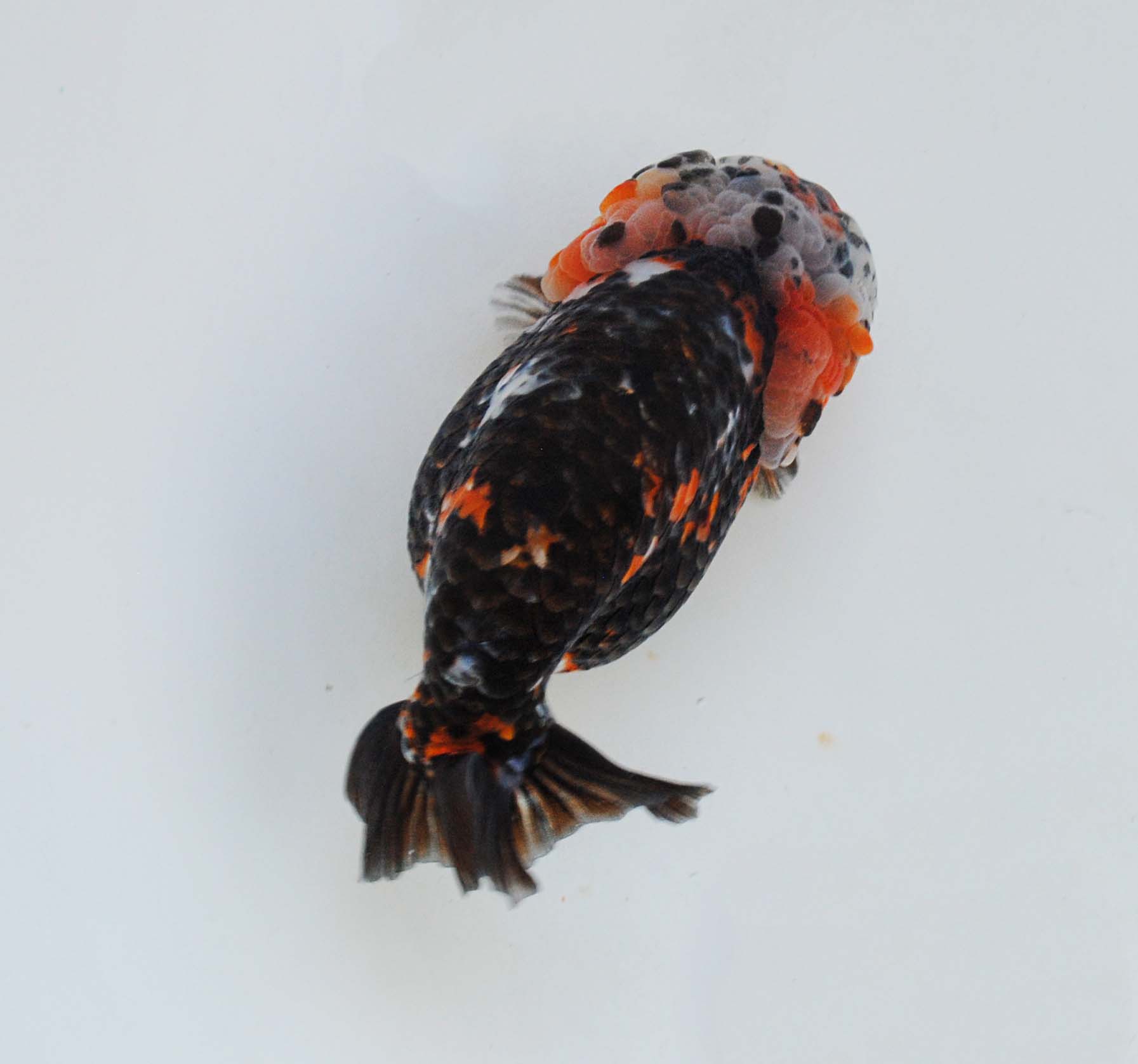
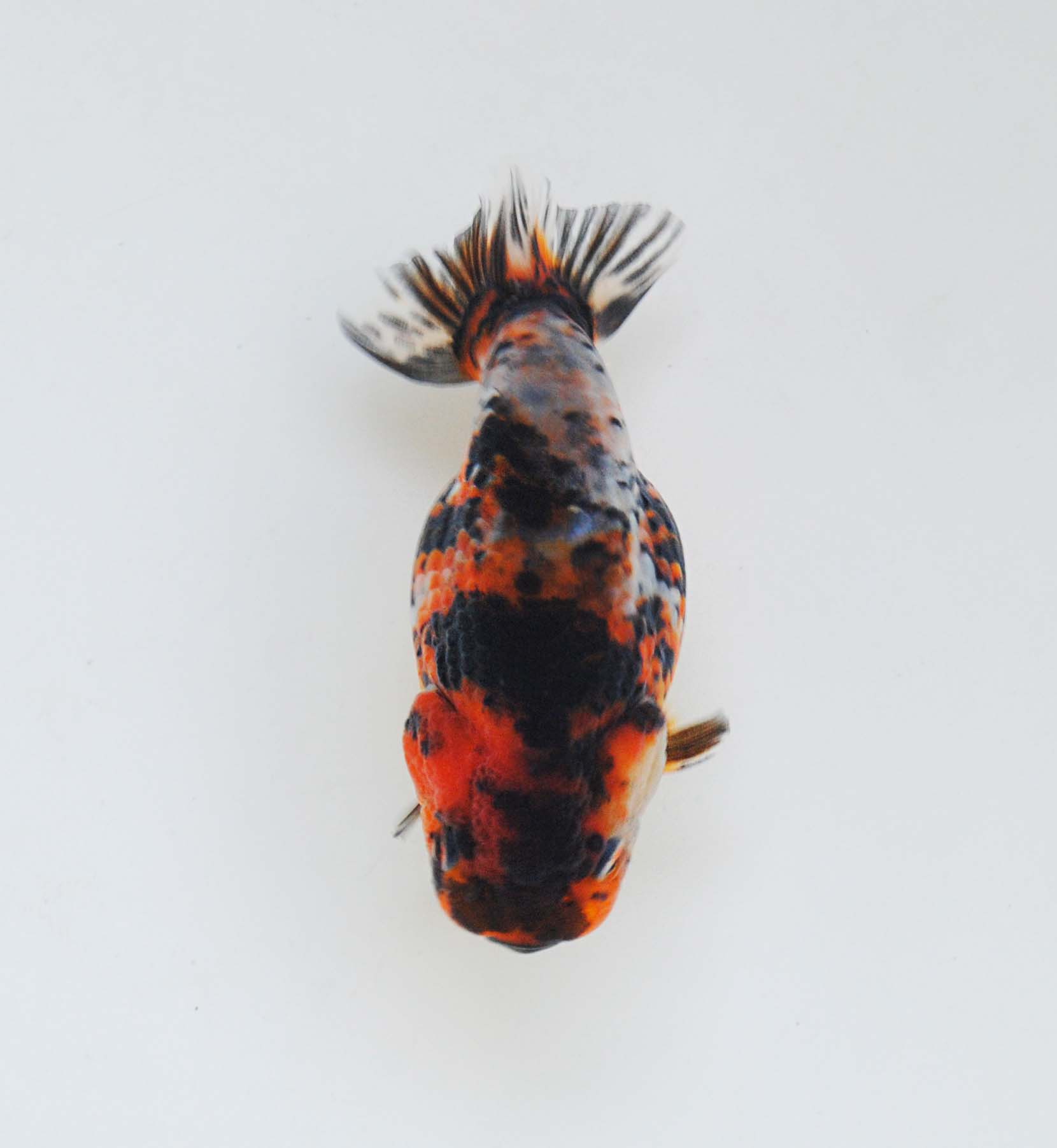
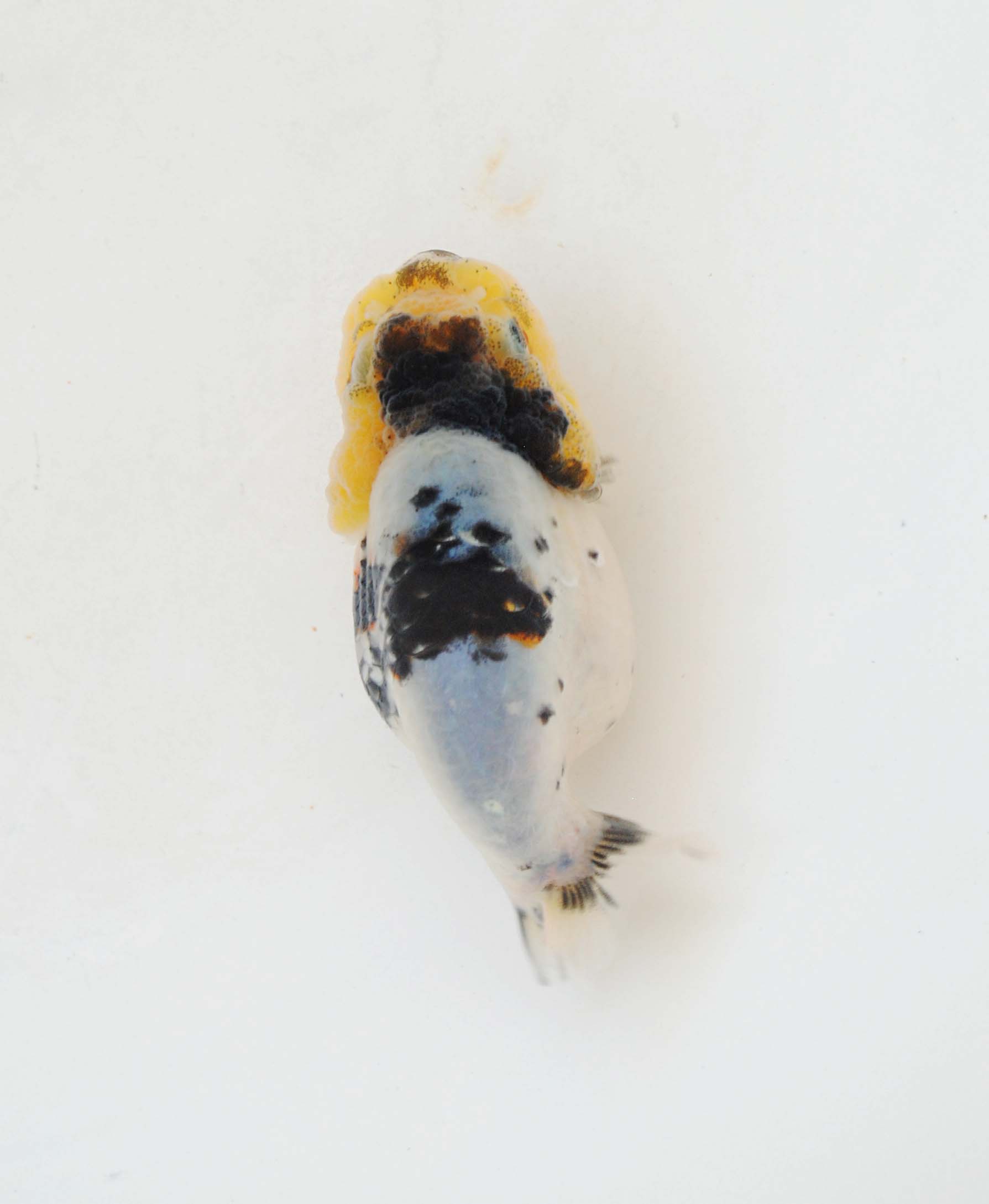
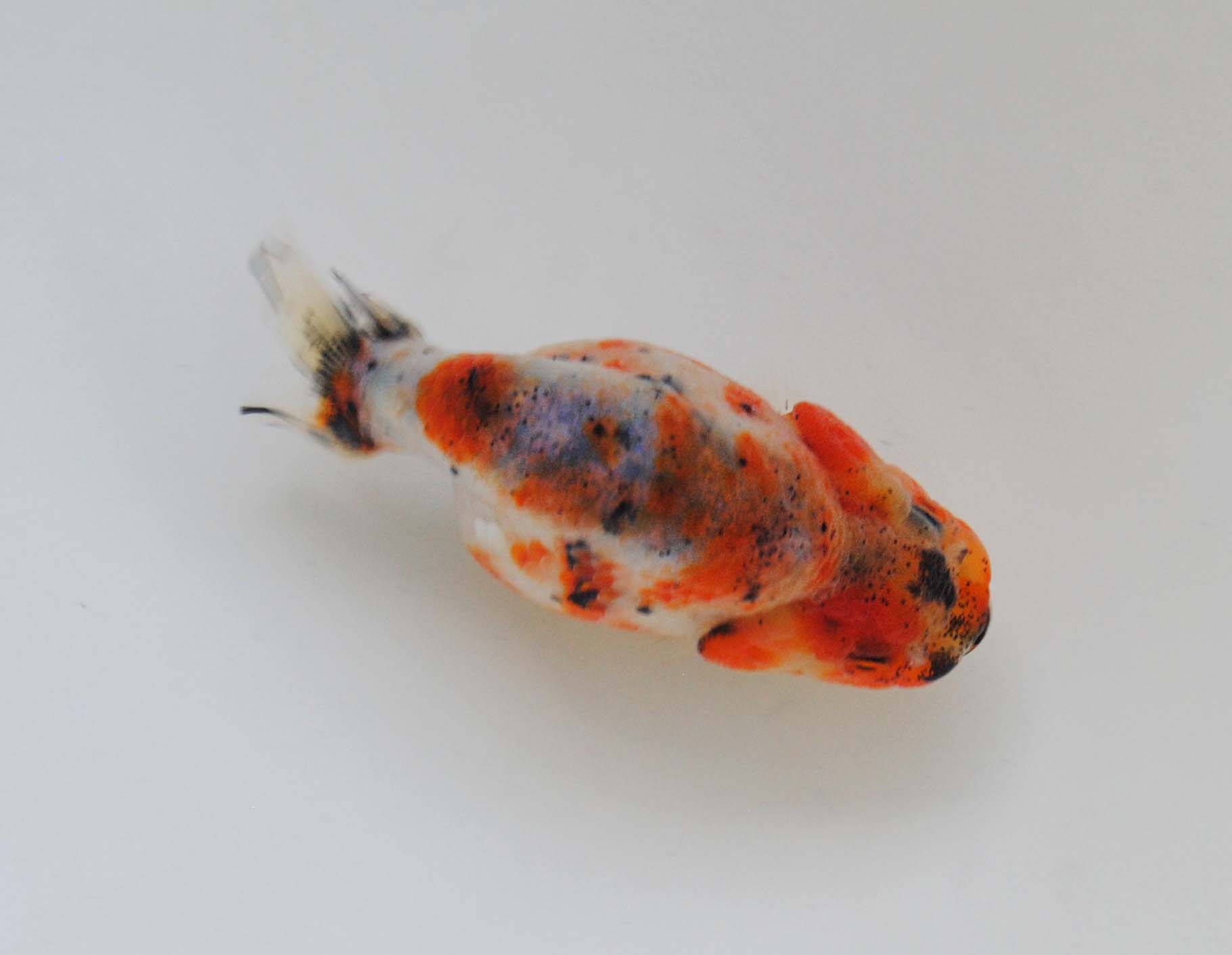
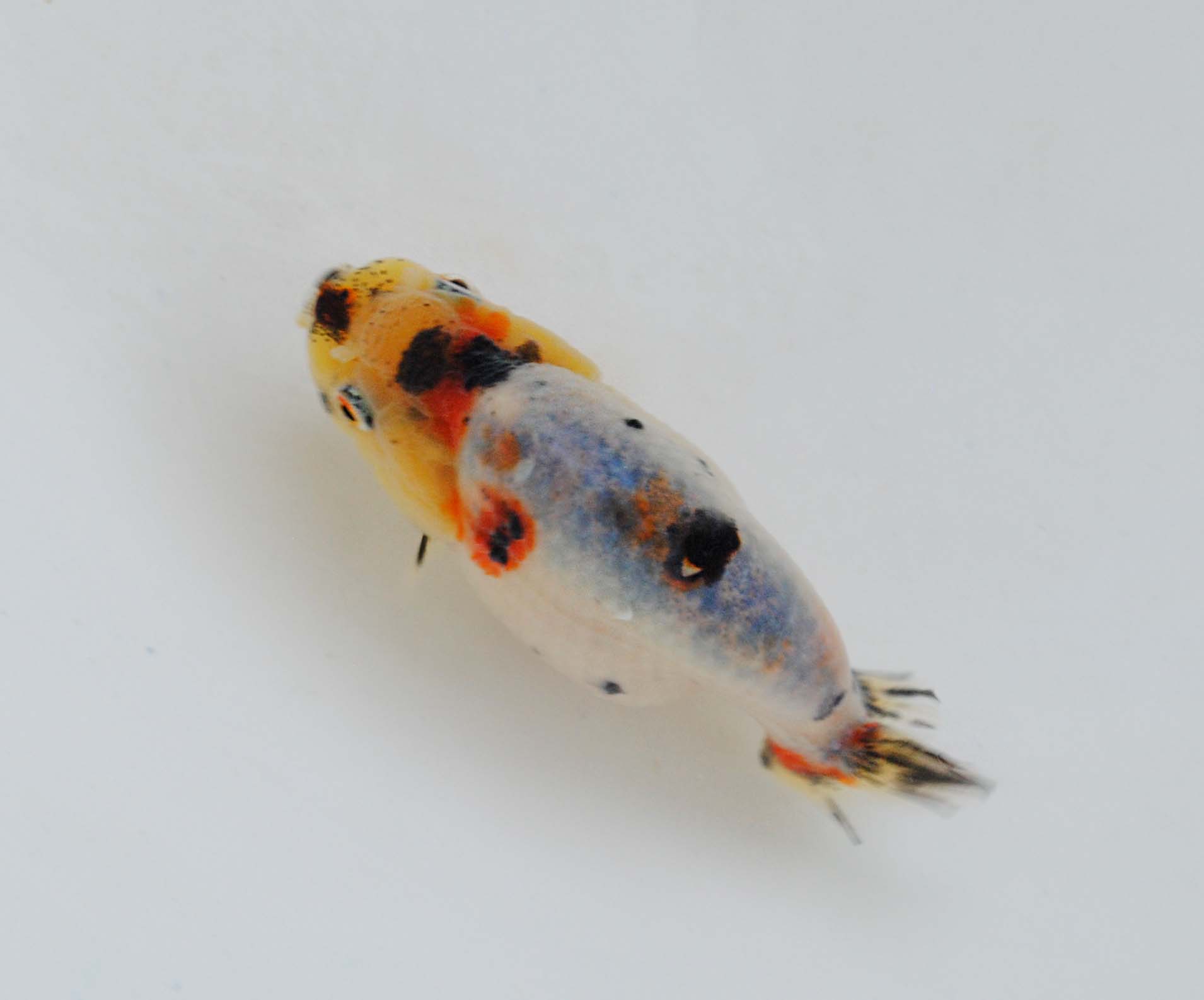
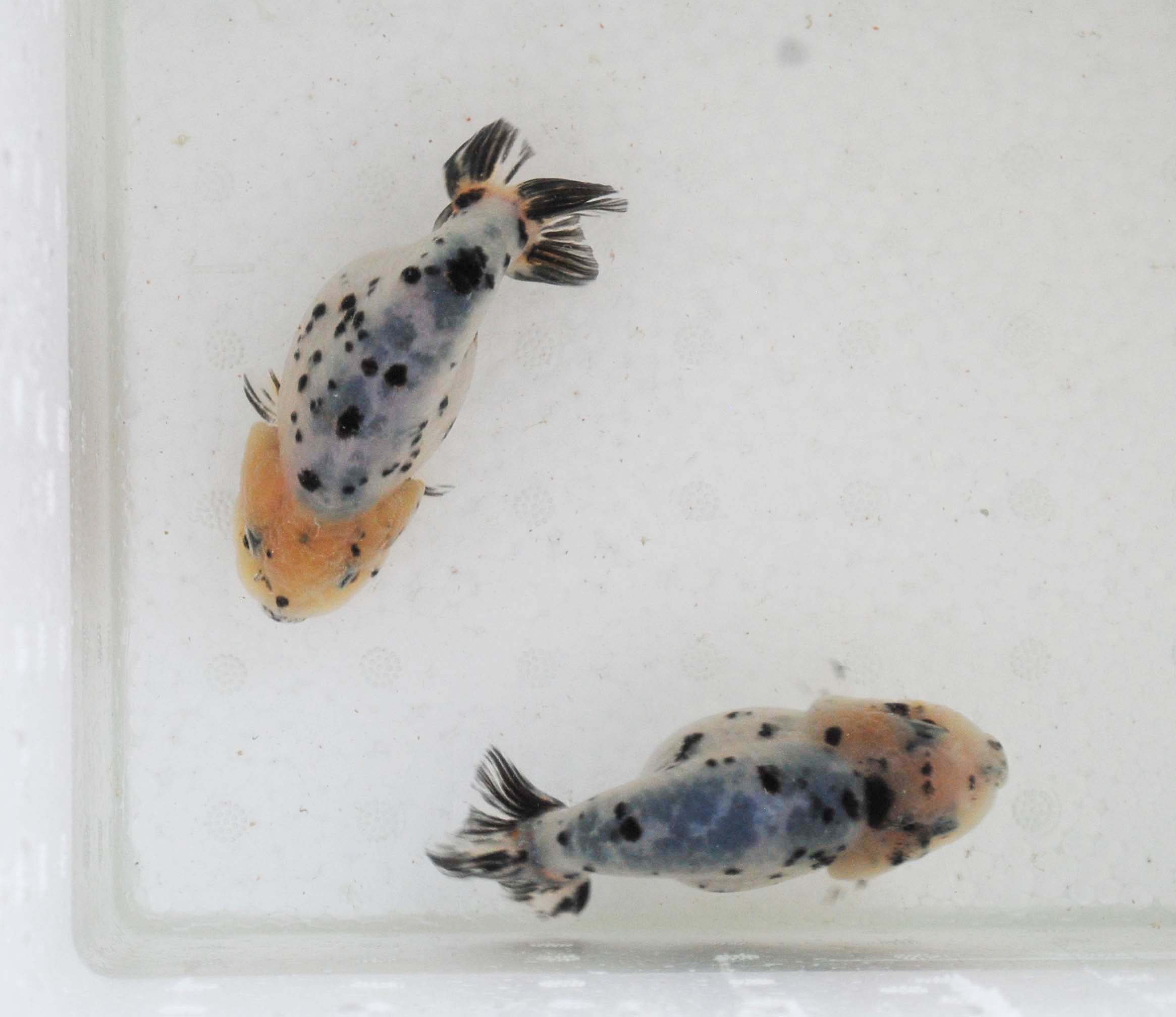
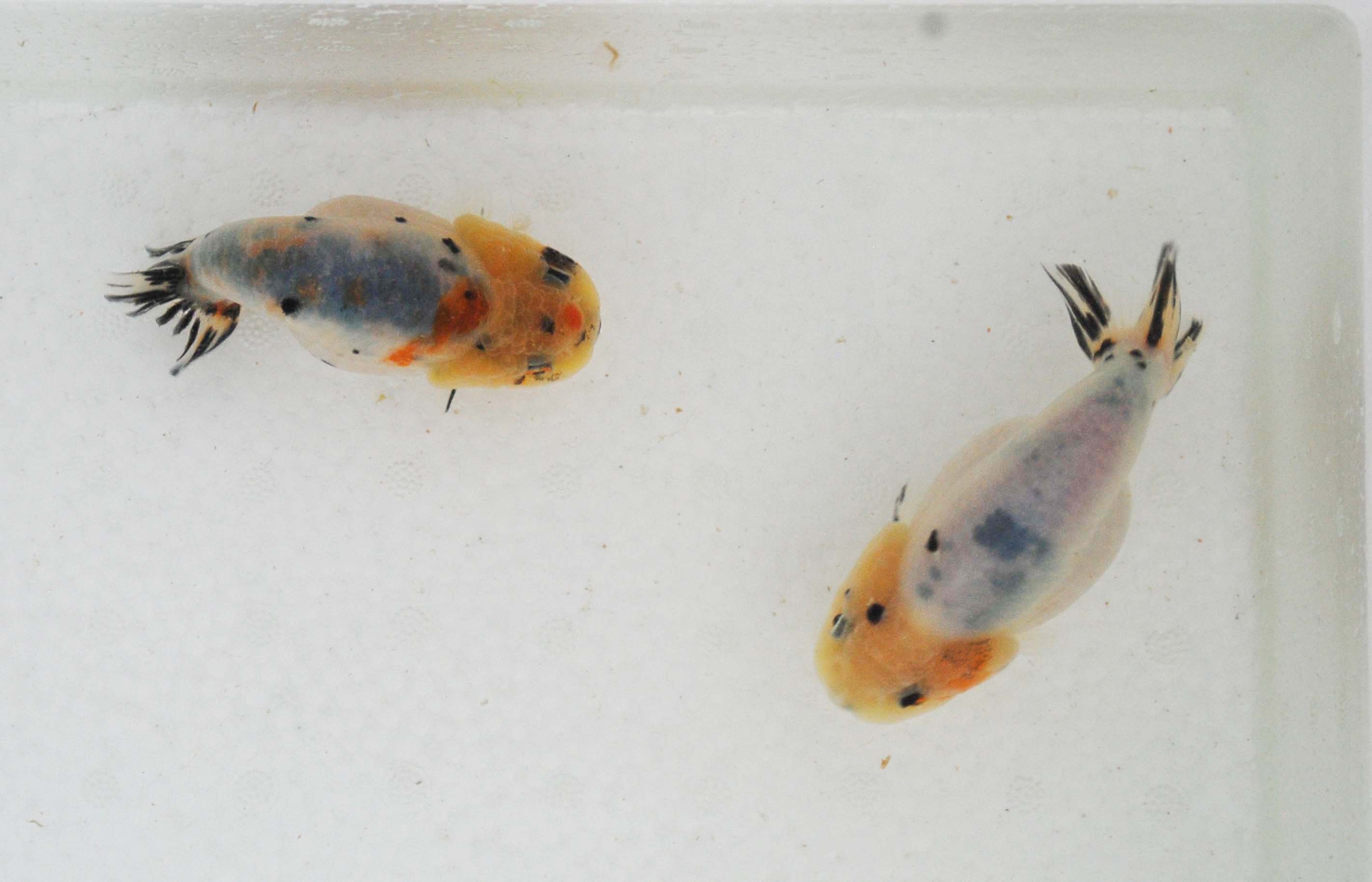
Here are four of the results. In fact, one of them has become a decent tricolor ranchu!
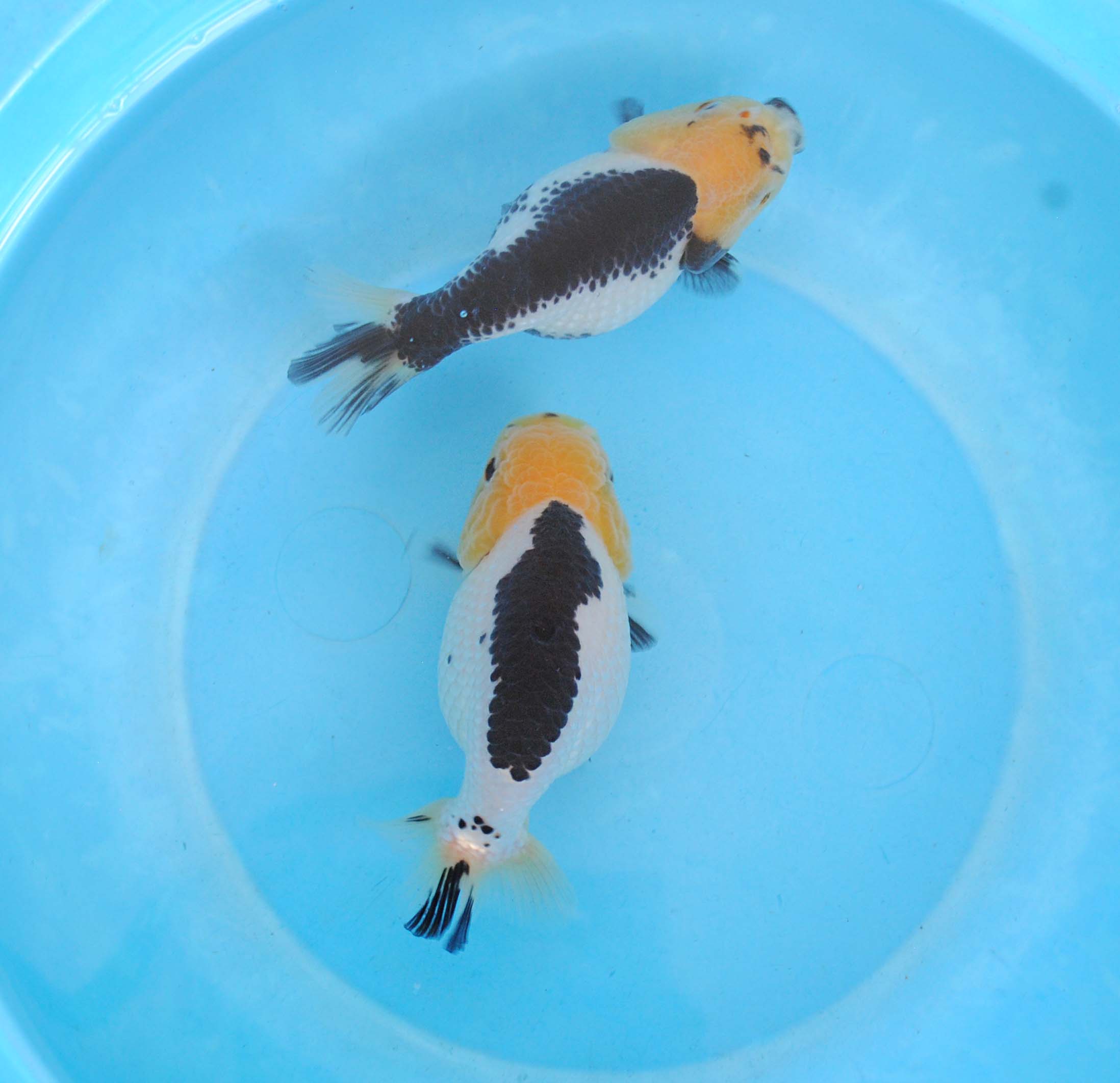
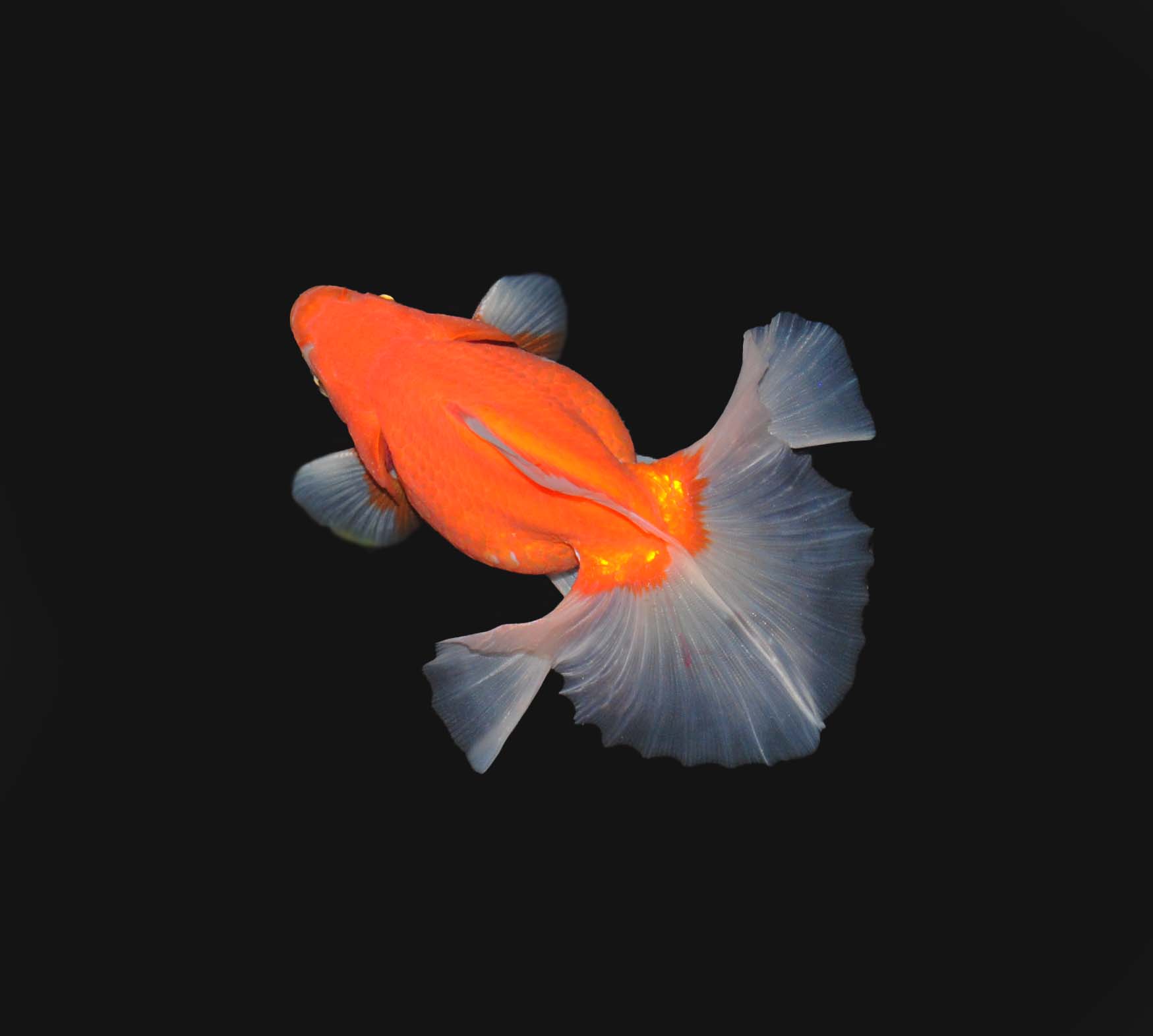
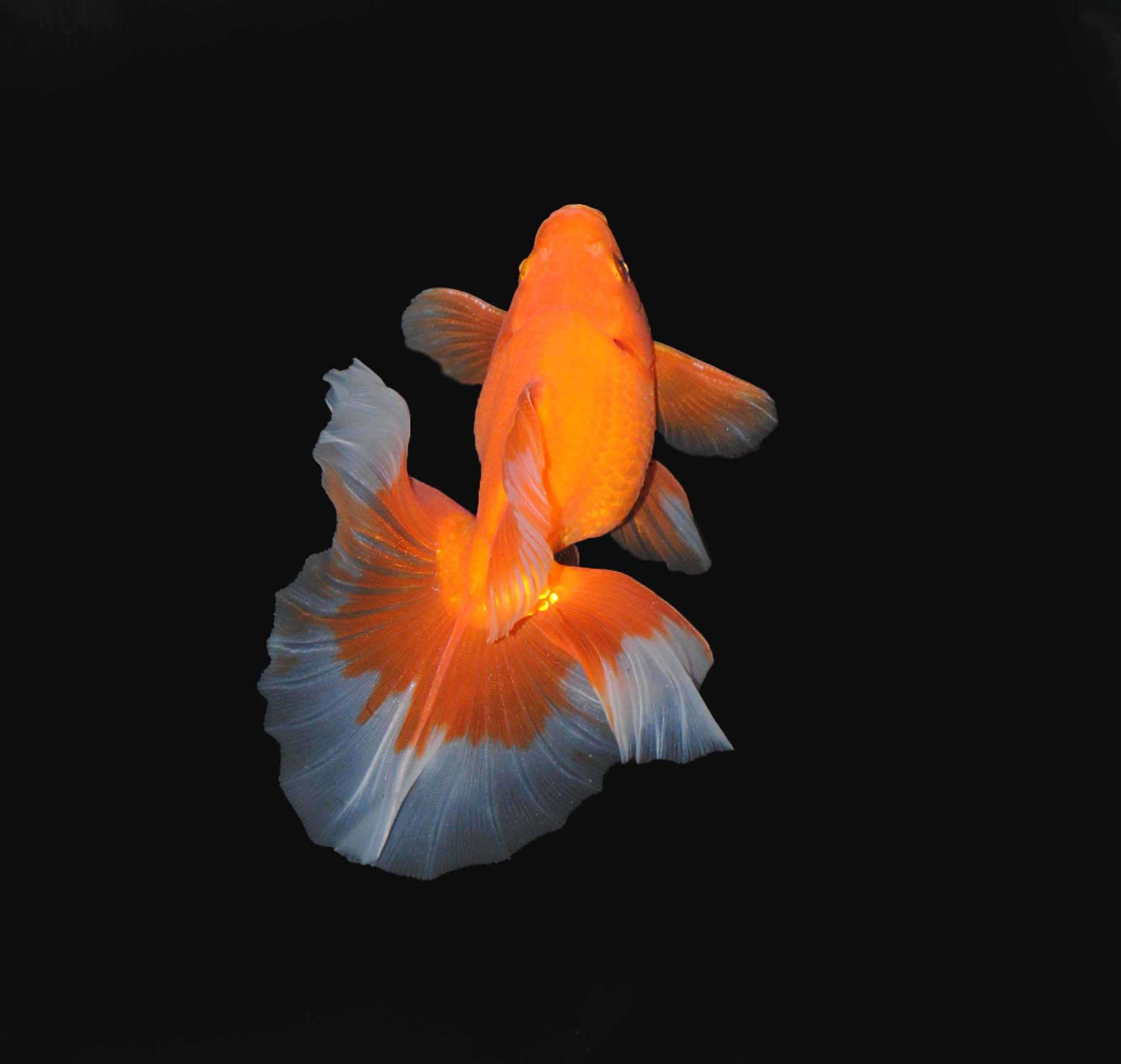
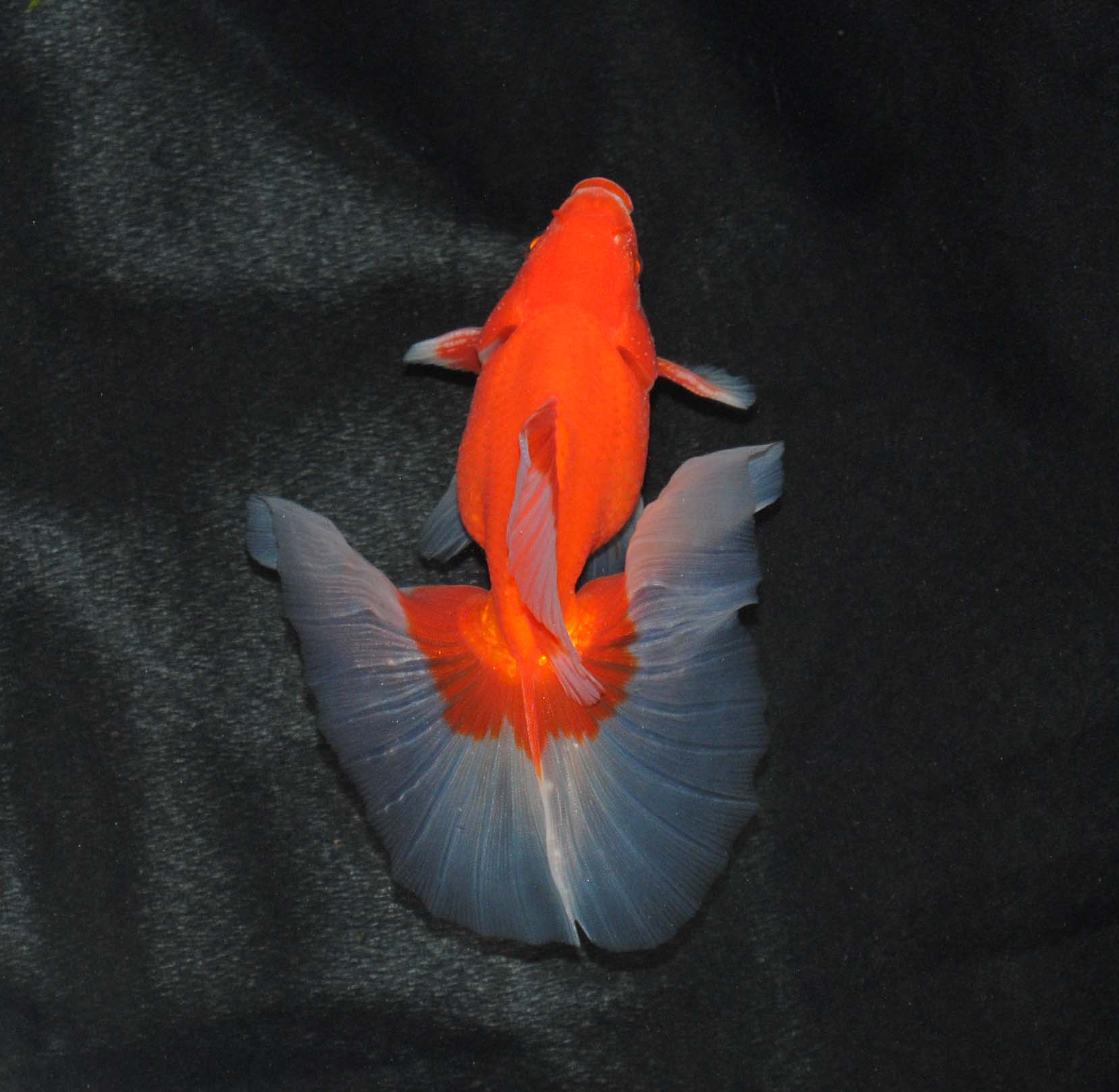
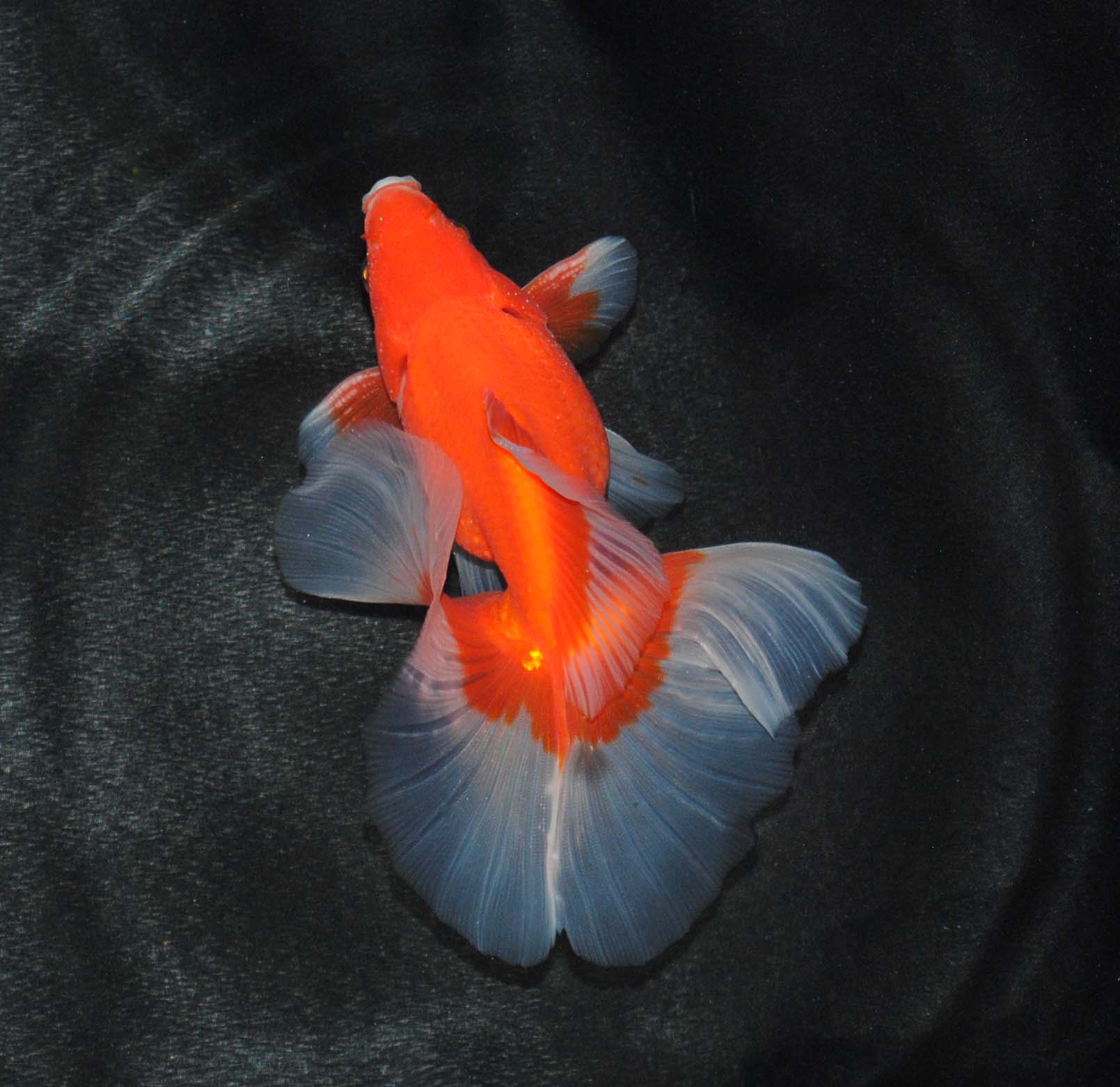
From the topview, some of the black and white color look startling!
I do hope I can realize my goals of creating panda / tricolor ranchu from these fishes.
In June 2015 I wrote about the prospect of doing a unique project, that is to create ogon goldfish. To refresh the memory, please read the following post:
Now, it has been 10 years since I wrote about it. Nothing has been done so far. Until at the beginning of this year (2025) I met a koi breeder and judge, mr Kevin from Surabaya. He specializes in breeding ogon koi. And he is kind enough to give me two baby male ogon koi from his breed.
I kept the ogon koi in a small tub, in the hope that they will not grow too large. I want to make a cross between the ogon koi and goldfish. The purpose is still the same, to create goldfish with shiny metallic fins and tail like the ogon koi. Well, if it can be achieved, I believe it will be a new unique and beautiful specimen of goldfish. Last time I try to make an illustration of such fish using photoshop, which might not be eye-catching due to my limited skill. Now, I ask chatgpt to generate the fish I envision. And see the difference between my normal tosakin and the envisioned ogon tosakin below!
The two ogon oranda below are also generated by chatgpt:
Marvelous, aren’t they?
So, instead of employing the purely selective breeding strategy, I will use the crossbreeding strategy between koi and goldfish. The ultimate question is: is it possible to cross between two different species?
Well, I am not uninformed about this. Since high school I was taught that such cross is possible but the offspring will be infertile. The case being mentioned was the cross between horse and donkey. I believed that theory until lately.
It happens that I enjoy following the scientific new discovery on prehistoric human. We now know that we as homo sapiens were not alone hundred of years ago. There were homo neanderthals, homo denisovans, and some more. They were considered extinct right now. But the DNA research shows that they leave a trace in our DNA. This information shows that it is possible to create fertile offsprings from species crossing. One of the podcast (I forget which one) raised up a question of how this is possible. The speaker explained that species categorization and the conclusional theory about infertility in the species crossing are man-made, and nature does not follow human’s categorization nor theory. Well, it was an enlightening explanation for me.
Then I went back to the case of crossing between horse and donkey. I ask chatgpt to find information about such crossing and whether there was a case that does not conform to the theory of infertility. And guess what? There were several documented experiment on such case! the record showed slight chance that the female F1 of such crossing were fertile. When they mate with male donkey, the offspring (F2) are donkeys. The AI does not find the case of crossing back to horse. And no account of fertile male F1. Well, I do not dig deeper. I think this information is enough for me to conclude that koi and goldfish can mate, and there is very slight chance that the offspring are fertile and I can cross them back to goldfish, provided the specimen carries the metallic fins genetics as in ogon color. Yes, I know it highly depends on luck. So, I need lots of best wishes from all the hobbyist who read this diary.
In the goldfish world, I have with me a paper from 2008 titled “The formation of a diploid gynogenetic hybrid clonal line of red crucian carp x common carp, and its application” by Shaojun Liu, Jing Wang, Wei Duan, Min Tao, Jifang Liu, Chun Zhang, Kaikun Luo & Yun Liu. It seems that they were doing the same experiment with koi and goldfish. unfortunately, the paper is too technical for me to read. I do not have enough background to understand what it says.
So, back to my project. I am glad to report that I have done the first attempt of crossing. My two ogon koi has come to maturation, and I mated them with a tricolor oranda. Why such pair? Frankly, no reason at all. Everytime I put a productive female goldfish in the tub with the koi, the goldfish stop laying eggs. The koi has never chased the goldfish. This was frustrating. So, when a goldfish was laying eggs in another pond, I strip the eggs and strip the sperms of the koi on top of the eggs. Yes, hand spawning. It happens that the tricolor oranda was laying eggs in another pond close to the koi tub in my facility, so I just grabbed the oranda and mate her with the kois.
These are the pair:
From the forced mating, only three eggs hatched! So few! But the successful hatching gets me excited! The ofspring is already two months or so, I think. And here they are:
At this stage, the metallic in the fins and tails is below my expectation. But the metallic color in the head (mouth and gill) is a trait I was not expecting, though that trait comes in varied degree in the. I cannot see clearly if they have moustache like the koi or not at this time. Well, I guess I can only wait for them to grow up and observe their progress for now.
I mated the koi with the tosakin with the same strategy twice. Nothing hatched at all! I do not know why. I also mated the koi with orange oranda (a cross between purple oranda and black oranda) and got a lot of healthy fry – more than a hundred of them. They are 2 cm in size right now. I will update on them later.
That’s all my report for now. If you are excited about this project, wish me the best!
As a follow up to Diary 2024 (5) and (8), I would like to refresh our memory that I was left with these fellows:
The bad news is that all are male.
So, to continue the project, I acquired several Cow Ranchu from a local breeder, two male and two female specimens. Too bad, they did not last long. I did not have a chance to take proper pictures of them. Here is a lousy picture using my handphone:
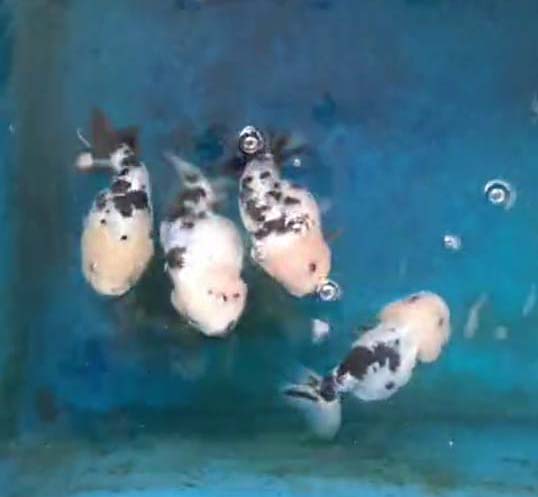
My first instinct was to cross the three male Ranchu (left picture) with these cows. They did not carry black fish nor cow pattern in the offsprings. Some were white, sakura and calico with dotted black patterns. I got rid of the white. Here are two offspring that I keep. Both of them are female:
The first to lay eggs was the calico. It was about three months ago. So, this diary is about the offspring of this calico female. The sakura lays eggs recently and the offspring is just 2 centimeters long. It will take a couple more months or so to update on them.
Since the calico female was so productive, I mated her with several male fish.
First, I mated her with her uncle. Remember the calico fish in the upmost middle picture? It has turned into a calico with lots of black patterns:
BeforeAfter
So, just to be more systematic, the first cross is this:
MaleFemale
And the offsprings I kept after lots of culling are:
12345
Fish 1 seems to inherit the strong black pattern from the father. I treasure this strong black pattern feature for the next breeding.
Fish 2 seems to be a balanced mix from both parents, creating a pleasant pattern. I do notice there is a large block of black pattern in the back, which is good. If the fish can get rid of the red, blue and little dotted black pigment, it will be left with white color and that large black block. It will be a beautiful cow ranchu.
Fish 3 is the closest to the cow pattern I am looking for. I hope I can create more of this pattern. So, this fish is my first priority in the next breeding.
Fish 4 is weak, since it has no large black pattern. It has only few small dotted black pigments. It has no red and less of the blue shadow, which is good for a cow. I think if I cross this with a Ranchu with strong black pigment, there is a chance it will produce beautiful offspring. So, I keep it as a reserve.
Fish 5 shows that this cross can produce black / grey offspring, and also offspring with metallic scale. This is good, since this kind of fish might come handy in the next crossing.
The second cross is between the cow and the calico female:
MaleFemale
And these are the results:
12344 from sideview
Do notice that this cross does not produce any black / grey nor metallic fish.
Fish 1 is a sakura which I will not use.
Fish 2 is a weak color. The red is not a strong red. It is more of a pale orange color. And the black pigmentation is weak. I will not use it.
Fish 3 is a calico with weak red and black color. I will not use.
Fish 4 is interesting. It is almost totally white with minimal blue coloration and red color, which is what I need. Too bad it also has less black pigment. But as the sideview picture shows, the black pattern is interesting, reminding me of a belt pattern. I think it is nice to see how the offspring will turn out when crossing this with a fish that has strong black pigment. I only keep this one from this crossing.
The third crossing is a metallic tricolor ranchu with the calico female. This tricolor comes from a black fish (also calico offspring from my previous breeding project) that turns into this spectacular pattern. There is only one specimen of this.
MaleFemale
And the results are:
1234
I think fish 1, 2 and 3 are pretty similar. They are dominated by white color with a little bit of red, blue and black which make them nice to see. They all have not so large but also not too small black pattern. I decide to keep them all.
Fish 4 show that this cross carries the black / grey and metallic gene.
Last crossing is between a black uncle and the calico female:
MaleFemale
Let me show the results:
1234
Fish 1 and 2 are calico with weak black pigmentation. The red color is stronger than the 2nd cross. I do not think I will use these two.
I guess my reader will know for an instance that I will keep fish 3 for the same reason I mention in the analysis of the previous crossing above. So also with fish 4. I will keep all black / grey fish at this moment.
For friends who follow my Cow Ranchu projects and anticipate much (like myself), I must inform two bad news. First, all the offspring from both the Cow x Black and Cow x Sakura result in 100% male fish! That is a disaster for a breeder. Before I finish lamenting, there was an outbreak in my farm that cost me almost all of them. The Cow x Sakura line was totally wiped out. Fortunately, I managed to save few from the Cow x Black line.
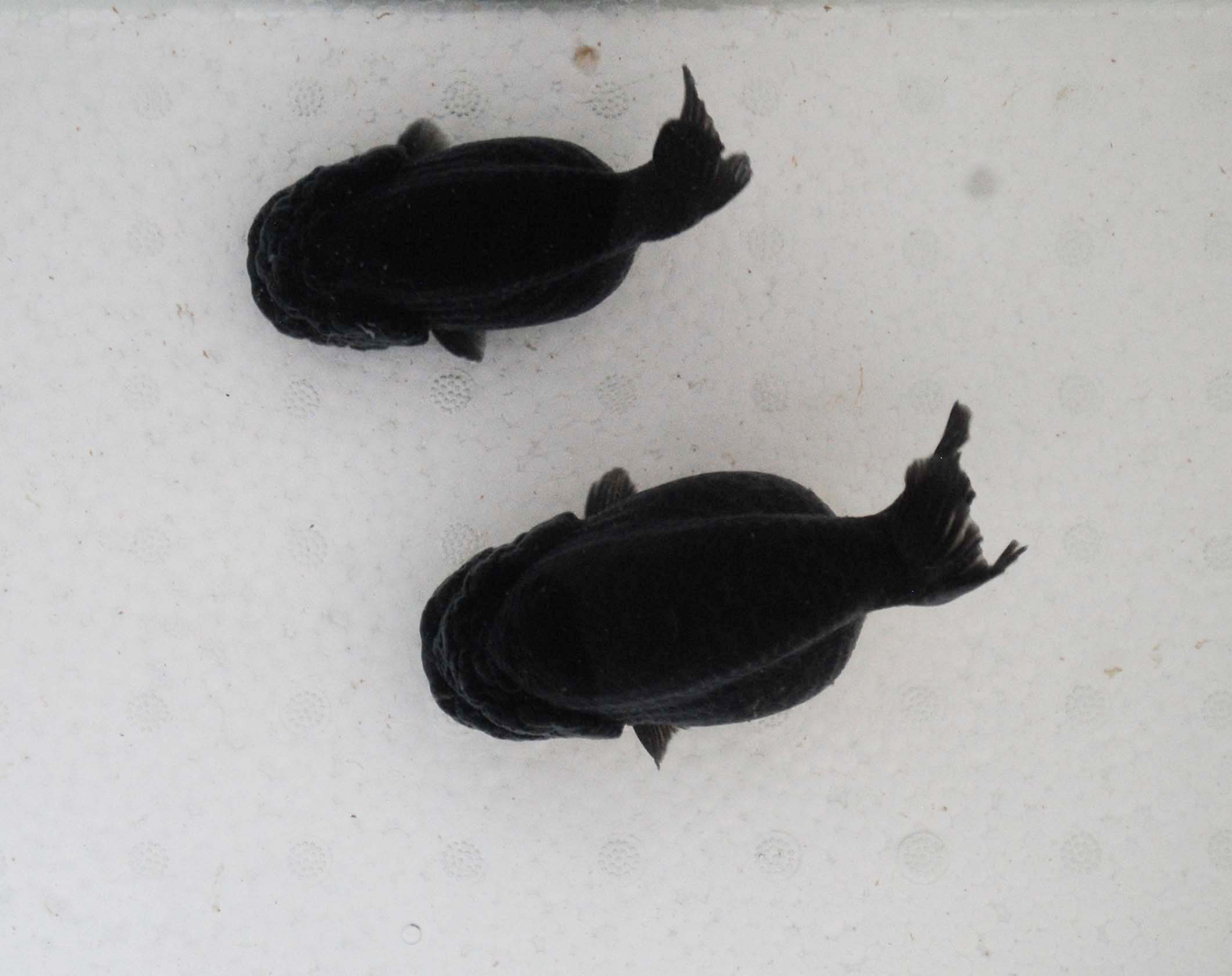
These three patterns from the Cow x Black survived:
My main plan was to cross the first pattern type (the left picture) with the black colored sibling. But it was not possible since all were male. As a change of plan, I buy another female Cow Ranchu and cross it with the first type. Too bad the female cow died after delivering her first offspring before I took any documentary of her. I might post the result later on. But for now I can report that there is no single black in the offspring. After this mating, I sell all the first type pattern since I do not think I need them for my project anymore. I still keep the second type pattern and the black. And here the interesting news comes!
The black offspring turn into two handsome princes!
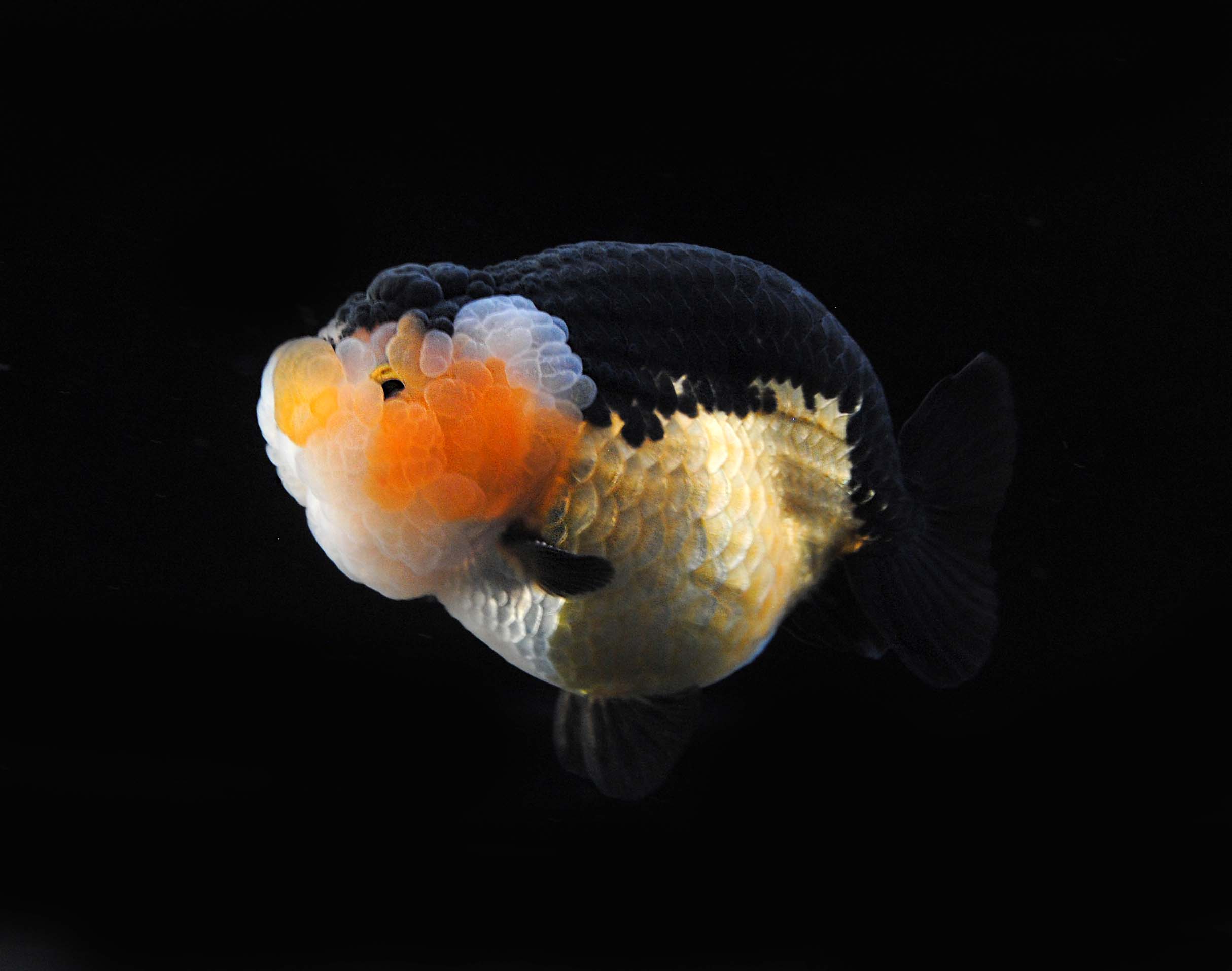
I kept two best of them. One of them turn into a black gold, and another one into tricolor pattern!
Aren’t they handsome?
I find that the black color is so persistent in them. It makes me full of hope. At least, not for my Cow Project, but for my Tricolor Ranchu Project! It is like getting a lottery!
Of course, I know that the stability of the pattern here is under question. Will they stay? Well, I am still observing. And when I cross them with fish from my Tricolor Project, how is the compatibility knowing that they come from Cow lineage?
Now, let me update on my Tricolor Project.
The project had shown a good progress. My latest offspring consists of some male and female shark ranchu (bad body form) with strong tricolor pattern. I highlight the strong pattern here. After I achieve that, the rest of the project becomes easier. I just need to improve on the body formation.
But when the outbreak kills lots of my fish, I am left with one female only! I was heartbroken. If this single fish died, then I must restart this project that I have done for several years. So sad.
This is the survivor:
I mated this female with the two male Ranchu above. Frankly, it is hard for me to make a prediction of what will the offspring be. My hope is to have Tricolor Ranchu, of course.
First try, all the eggs cannot hatch.
Second try, no luck. I begin to suspect this female is infertile.
But I still try.
Third attempt, same result. Not even a single offspring. Actually, at this time I also mated this female with a ryukin just to make sure that the infertile ones were not the male. Same result, The possibility of the female being infertile is high!
Yet, I still try.
In the fourth attempt, I mated the female with the two princes above, with a ryukin, and with a tricolor Oranda! And guess what? All hatched perfectly!
If you ask me how come, I do not know.
Now, I am raising all of them. They are 3 cm in length right now.
Then, I try again to mate the female with the two princes for the fifth, and sixth time, and nothing hatched. The female resumes her infertility.
Well, I have no explanation for this. But I thank God for the one successful shot (the fourth attempt).
And let’s see the results in several months to come.
For these several years, my most intense breeding projects were Blue, Brown, and Purple Oranda. Second to them was the Tosakin Project. I got many different tail types from the cross between Tosakin and Butterfly. From that point on, I made many combination pairings and carefully selected the offspring. I did these for many generations of Tosakin. And I think the quality has improved a lot right now.
Interestingly, there are two main distinct tail types in my current collection: the medium tail, and the long tail. I am still in the process of combining their features to create an improved version. Right now, I only take the pictures of male ones since they display the best of these features for the time being.
Male 1: The medium tail (two pictures of the same fish)
I think this type is the most faithful I have to the Tosakin tail standard. First, I am talking about the strength of the tail, or … I do not know the right terminology. Perhaps it is better to refer to it as the hardness of the tail. The tail does not collapse easily and can maintain its form well (its flips and its middle tail). Second, I have improved the middle tail shape a lot, from the V shape I had before to the horse-shoe shape right now. Third, the “thousand-rays” are visible. Fourth, the flips are clearly visible, of medium size, and always maintain its open position most of the time. I am satisfied with these improvements. The next improvement I am aiming at is to lengthen the tail size without sacrificing all the positive features I mention above. And one more good point of the fish is its thick backbone!
Video of Male 1:
Male 2: the long tail
The length of the tail is impressive. But the tail is soft. Though the middle tail only collapses a little, the flips totally collapse a lot. The “thousand rays” are not clearly defined. The fish still looks gorgeous especially when it spreads its tail fully.
Video of Male 2:
Male 3: another long tail
The same explanation applies to this fish. But there is more hint of Butterfly flavor in this specimen.
Video of Male 3:
Well, that is all my update on Tosakin. Hope you like my current collection. And do expect another quality upgrade in my next Tosakin update!
Flysakin is a term my friend (mr. Harlim) gave to my Tosakin – Butterfly cross. At first, I objected. I would like to give a more creative name. But I could not come up with one. So, since this variety was just a transition fish to reject, I did not think I need to put effort in thinking about a more proper name. This name was used since.
It is a transition fish. Tosakin was (and is) rare in Indonesia. When I imported some from Japan, I had limited success in breeding them. Most of the offspring had partial or no dorsal fins. That was a disaster. My guess, the gene might be saturated due to inbreeding. So, my strategy was to cross the fish with a different line. But different line of Tosakin was nowhere to be found at that time. Importing again was costly. As an alternative, I had my line of Butterfly that I had been working for several years. I think Butterfly is the best match to cross with Tosakin. From that point, I would cross the offspring back to Tosakin to produce genetically more vigorous Tosakin.
The transition fish mostly did not display the telescope eyes in F1. Later on, the F2 would produce some small telescope eyes. I used them for my Butterfly project. Those without the telescope eyes are used for the Tosakin projects.
Concerning the tail, these transition fish (Flysakin) displayed many different tail characteristics. Some were quite astounding. Yes, they were meant to be rejects. Yet, my mind could not get rid of the impressive tail displayed. They were like paintings! As I looked back to my breeding activity, I had encountered these beautiful tails over and over again, without being purposefully breed them. And they always captivated my mind. It is true that they have no standard worth – they are out of standard. Yet, they carry rough beauty.
Here are some from my archieves:
The year 2020 was the most intense time of my Flysakin breeding.
The color was mainly grey since I used black Butterfly as one of the parents. There was a need to improve the color.
And this year (2024) I think I have come to the peak of my Flysakin projects. There are still several different tail types, but I chose the closest to Tosakin yet with tail split. Why tail split? The split will make it easier for the fish to open wide and develop its flips. So, it is easier to create a quality one than Tosakin.
Of course, the difficulty increases its worth. The more difficult to get, the more we value the object. In this case, quality Tosakin is much harder to get than Flysakin. So, Flysakin is not meant to be a rival to Tosakin. It is just meant to be a less expensive alternative.
There are four individuals that really stand out this year. I have taken some pictures and videos of them. I hope you will enjoy watching these painting-like goldfish.
The Female:
The Male:
And here are their videos so that we can see their beautiful swimming.
In this Diary I will report the results of the cross between Cow Ranchu and Black Ranchu in this video:
The black is actually an offspring of my previous Cow Ranchu (Milk Cow Variant). Let me show the results and I will compare them with the offspring of Cow x Sakura reported in the previous diary (#4).
Here are the offspring:
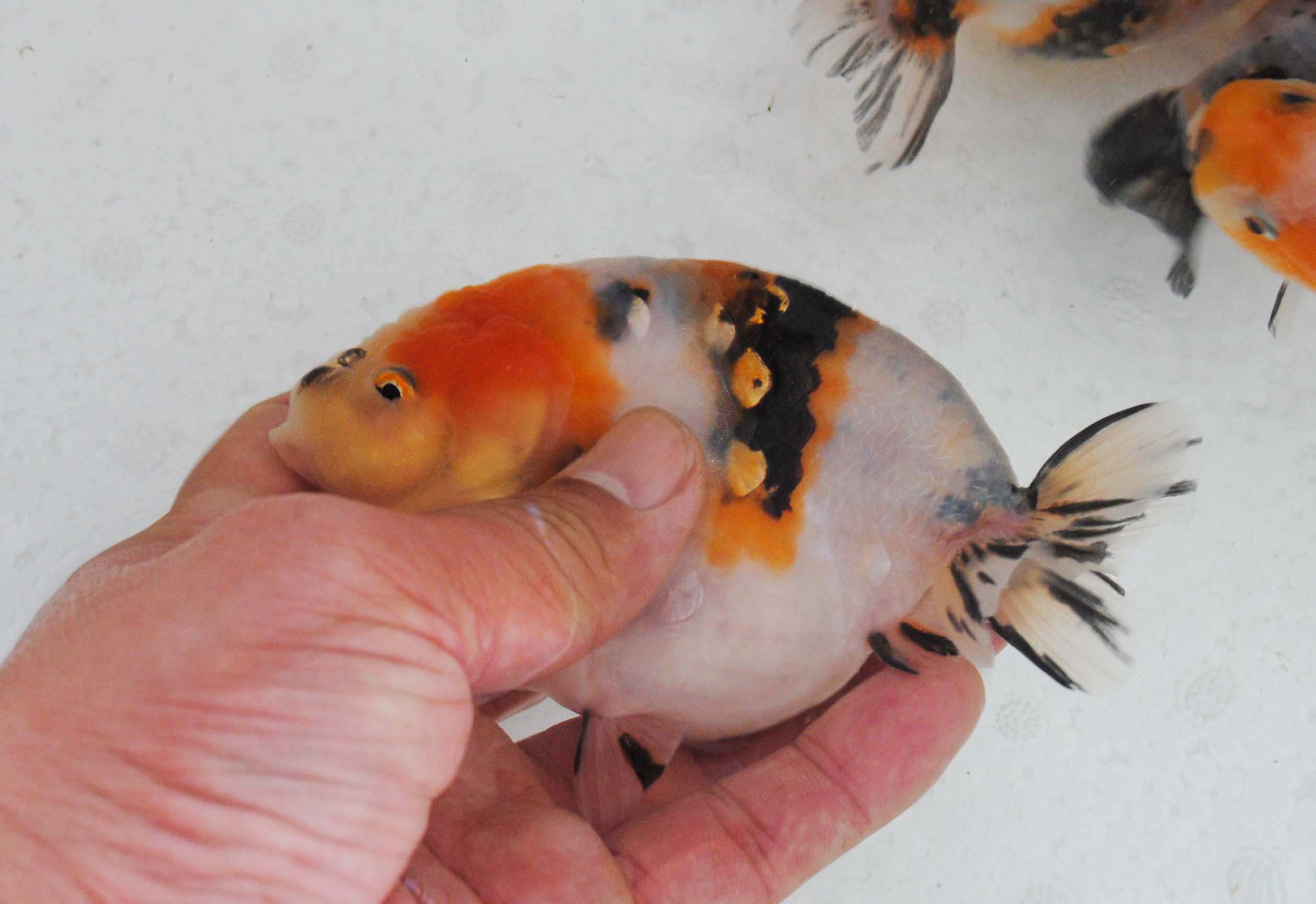
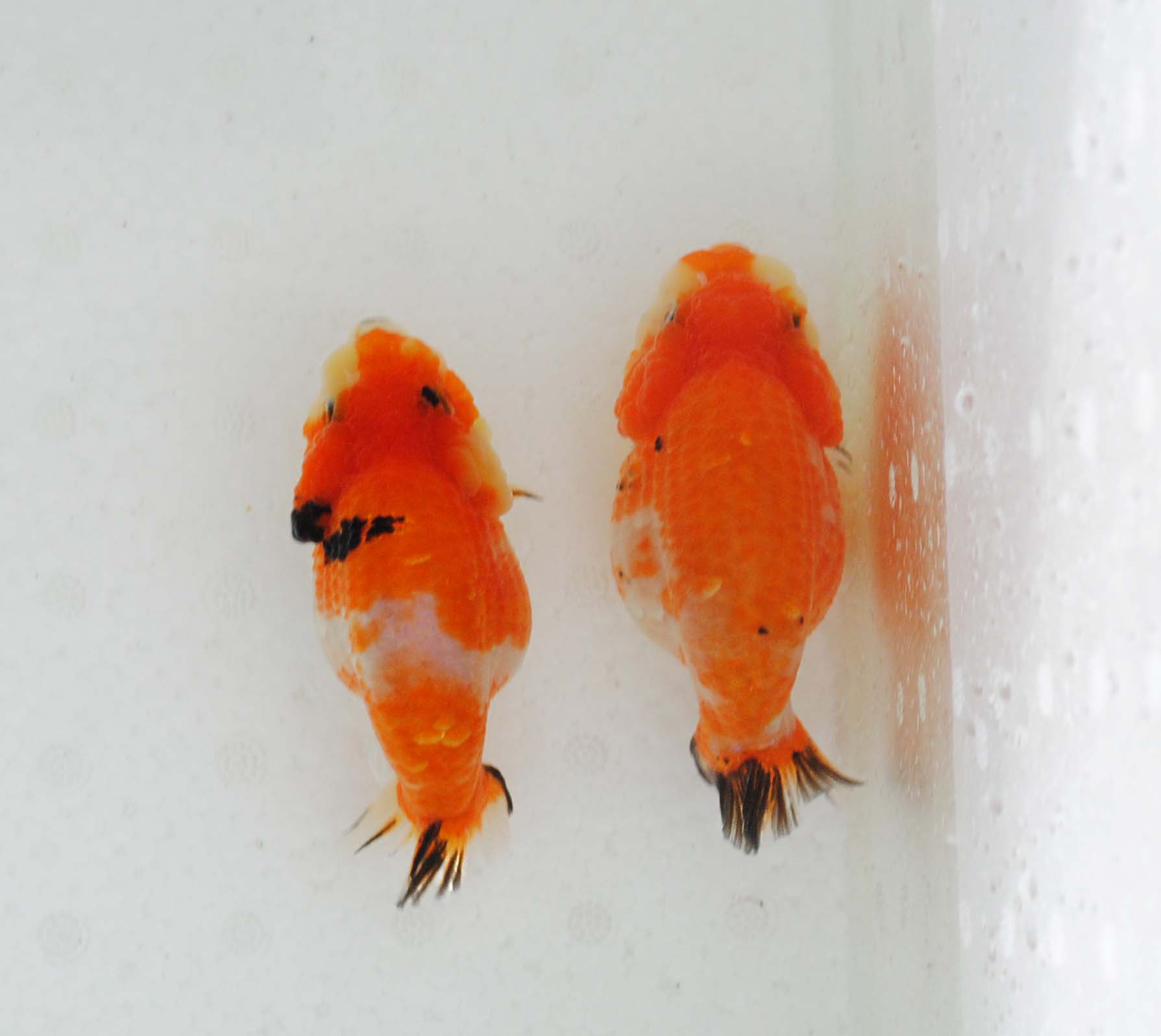
The first category are fishes with large black markings in the shape of large blocks / islands. In these results they have red color. If they are free from the red color, they will come close to true Cow Ranchu, I think. At least when being watched from the top. Interestingly, from the side viewing, the black markings extend to one side of the body (sadly, only one side) to appear like large belts.
I think this is an interesting phenomenon. The project can be directed to create Cow Ranchu and Ranchu with Belts.
This one also has a belt in one side of the body, but the black marking does not extend to the top of the body. I will put this in the same class as category one, I think.
All these four will be in my breeding plan.
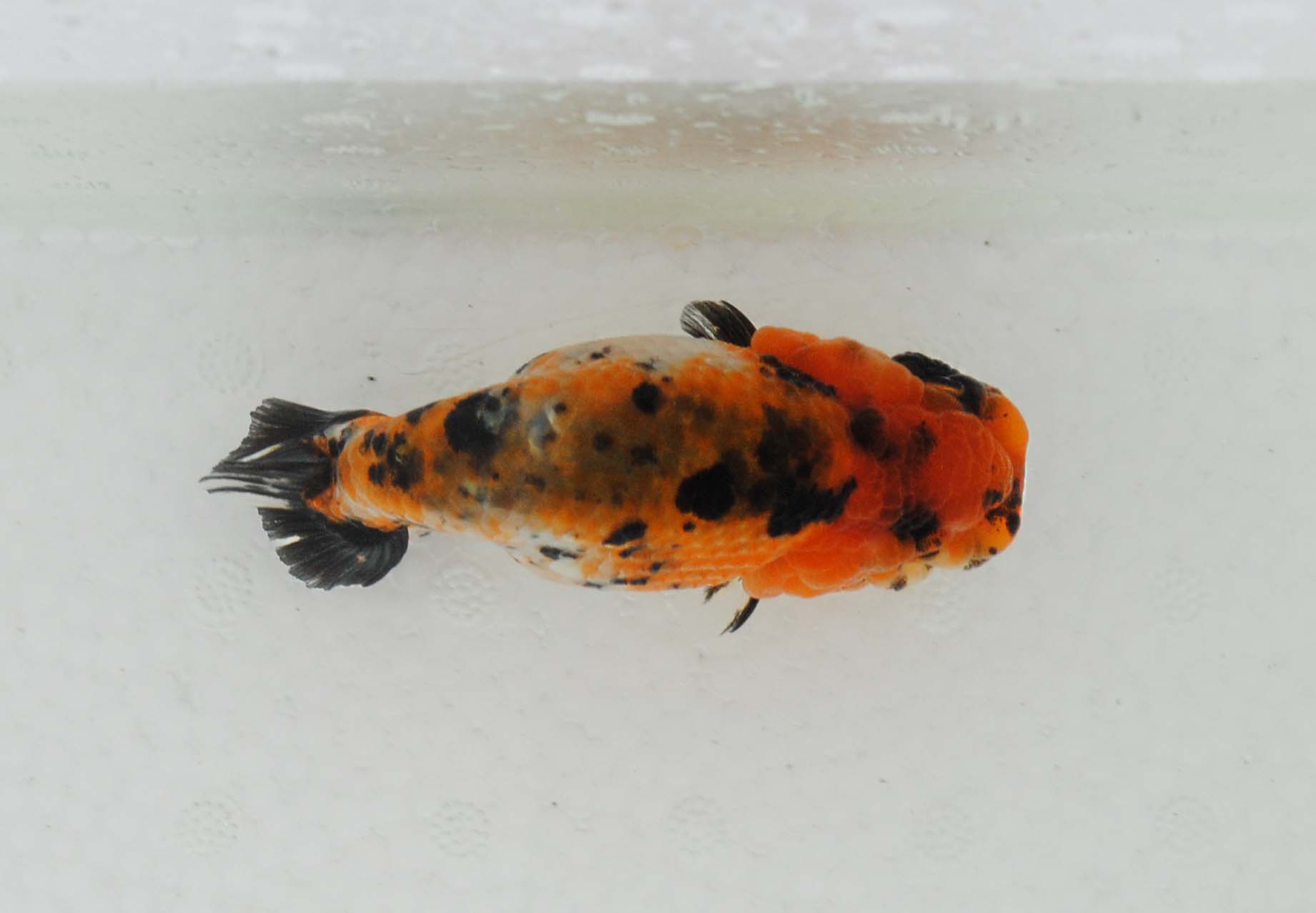
This is the 2nd category. It has lots of black marking, in the shapes of large blocks and dots. But the black marking does not produce a belt appearance. It is more towards irregular pattern. It can be considered as calico with lots of orange color. I am still undecided whether to use this in the project or not.
This third category is also interesting. They are close to the pattern of snow leopard, except that the snow leopard does not have blue and the black dots are smaller and many.
The fourth category resembles calico but a weak one. The blue and white are dominant while all the other three color are minimal. I do not think I can use them to propel this project.
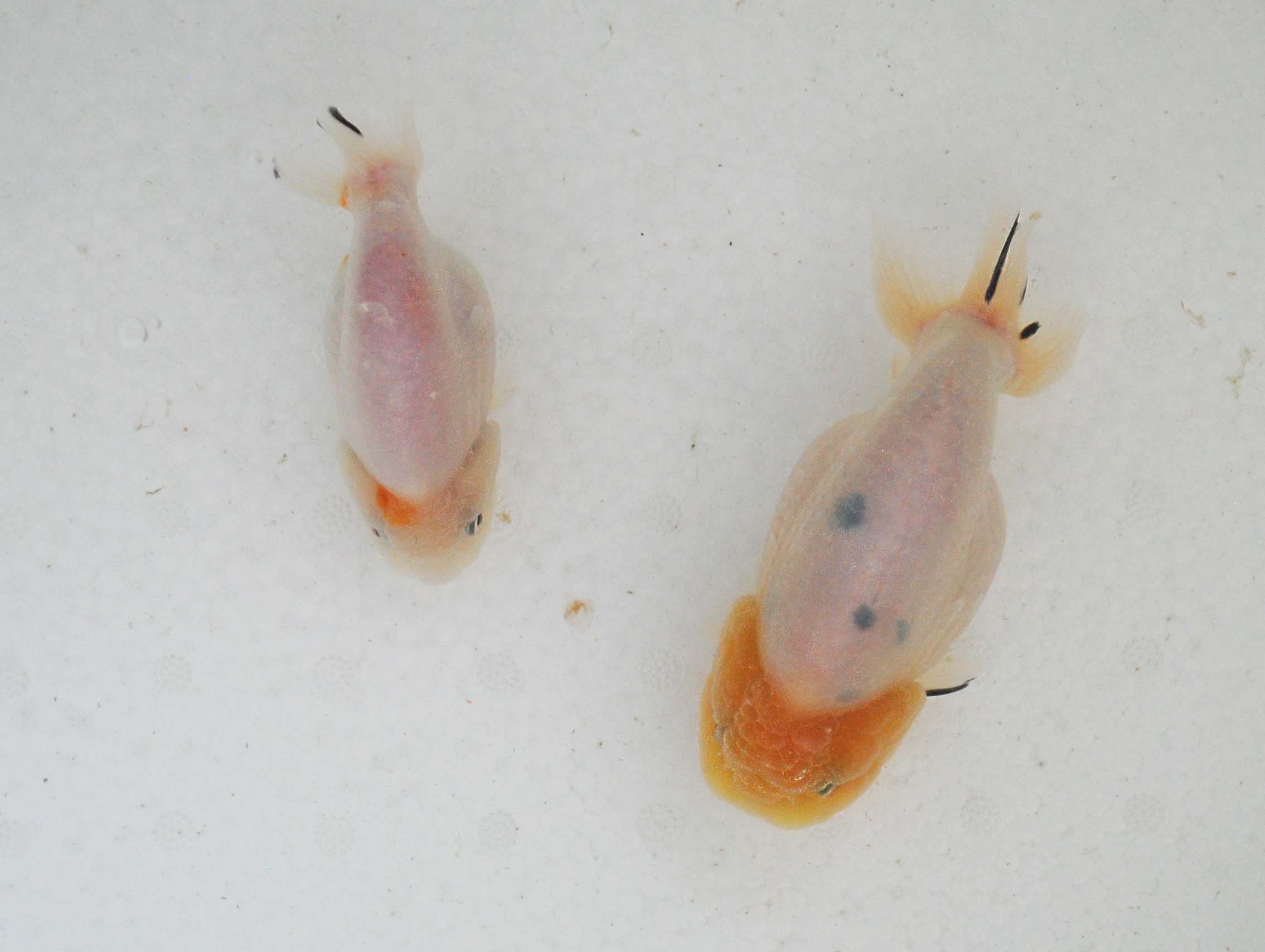
The fifth category is the almost white fish. I notice that the black color is stubborn, though minimal.
This sixth category is the Sakura. Once again, the black color still appears in a minimal proportion.
And the last category is the black color. They always come out from the Milk Cow crossing. Of course, I will use them as my main ingredient in this project.
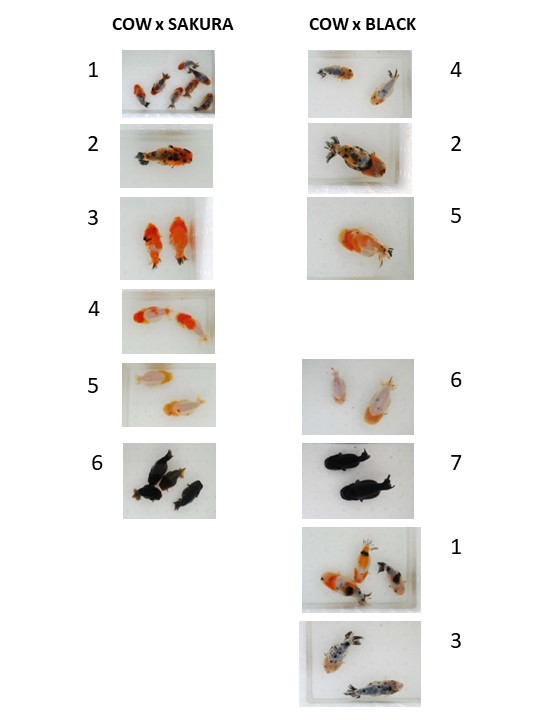
So, to compare with the Cow x Sakura, let us examine this table:
In the cross with Sakura, we do have offspring #4 (left) which has beautiful proportion between the red and white color (roughly 30% – 70% or 40% – 60%). This is different from #3 (left) which is dominated by red color. And #4 has no trace of black pigment. We do not see this variant in the Cow x Black offspring.
The offspring that comes up only from the Cow x Black are the #1 (right) and #3 (right). Yes, the cow / belt variant and the (somewhat) snow leopard variant only appears in the cross with black. I find this finding interesting.
The beautiful calico variant only appears in the cross between milk Cow and Sakura. This is also a thing to ponder.
The black appears on all of the crossing.
I think there is a lot to think about from this observation. I will make my next breeding plan based on this information. Tell me if you find any interesting interpretation to this information.
My experiment with Cow Ranchu is still ongoing. After so many attempts, I still have no clue of how to produce the color pattern. I had bought Cow Ranchu many times with limited success in breeding them. I grew suspicious concerning whether the fish (both male and female) had been treated in a certain way to prevent successful breeding. I had few offsprings, though. But at this point, none can be categorized as cow. The suspicion makes me reluctant to buy more import of Cow.
Yet, when an seller imported them once again, I was tempted to try this project once more. But I did not want to buy many. This time, I bought just one male. In my mind, this will be my last attempt to buy Cow Ranchu. If this also fails, I will stop buying them. To my surprise, this male is very vigorous! I bred him twice, with different female, and they gave me lots of offspring. He died afterwards. I have not taken a decent picture of these parents, but I have short videos of them.
In this diary, I will show the offspring from the first cross. It is between this male Cow Ranchu with a Sakura Ranchu. Well, it is not really Sakura since it has several black dots. But the dots are minimal, so it is closer to Sakura pattern. This Sakura is the result of my previous experiment with previously imported Cow Ranchu.
The Male
The Female
I am interested in knowing what color patterns are produced. And it is interesting to compare with the next diary where I cross the same male Cow with another fish.
I just take the pictures from top view for quick reference and classify them based on the color pattern. Here are they:
Many become Calico with good pattern quality. By definition, calico should have five colors visible. These offspring have blue, white, red, black, and orange / brown color. The blue color is strong. All the color is in good proportion. Actually, I like these offspring. But for my purpose (in understanding cow), I will not use them to further my project. So, I will sell all of them.
The second category is with lots of orange color and with no blue, so I put this in a different category from the calico. Perhaps, this fish can be said to have four color: orange, black, white, and the black pigment under the orange color (I do not know what to call it, it is definitely not blue). I will not use this one for my project, either.
This third category can be called three colors since it has red, white, and black color. But the black pigment is so minimal that this category can also be called Sakura. I am interested in this category. There is a story to it. I once bought a strikingly beautiful three colors transparent Ranchu from a farmer. This is the fish:
Such a marvelous color, isn’t it? Too bad, the breeder only had one. I asked him to find similar pattern in the batch and he could not find any. Upon questioning him how he came up with this color, he said he crossed the Cow Ranchu (from my lineage) with a Sakura Ranchu! He described the Sakura to have lots of red color with minimal black markings and several metallic scales in the body. This description matches the third category of the offspring I am talking above! That’s why, I will use this third category to further my experiment. If my experiment with Cow Ranchu takes a different turn to result on this kind of three colors, I do not mind at all! (Note: the three colors is female. It grew large in my facility and died without ever producing any egg).
The fourth category is the true Sakura. Actually, I do not think I will need them for the Cow Ranchu project. But one has an excellent body quality, which whets my appetite to breed it. I am sorry I have not taken the pictures right now. Hopefully, I will have the pictures next time.
The fifth category is the totally white / almost white fish. I am still considering their usage on this project. So I am undecided right now and will keep one. Perhaps the totally white one.
The last category are the black metallic fish. This is what I learn from the presence of this category. The fact that Cow Offspring (the milk cow variety) always produces decent number of black offspring means that black fish are involved in the making of milk Cow variety. Well, it is my conclusion. I can be wrong. But unless proven otherwise, I will keep this category and use it in my cow project.
As mentioned in my previous diary, I must commit this year to my Ranchu projects. In order to do this, I must rearrange my priorities. I must let go some to make room for the Blue, Brown, and Purple Ranchu projects. And sad to say, I am thinking (very hard) to let go my Blue and Brown Oranda lines. I have been working hard to improve the quality of the Blue, Brown, and Purple O for several years. And I think I have accomplished the projects to a certain extent. Among the three, I plan to keep only the Purple line. I have several reasons for this choice:
The Purple is the most rare among the three. I considered it as the hallmark of my Oranda achievement. The blue and the brown were ingredients to produce the Purple.
I can always recreate the blue and brown from the purple if I want to.
With this thinking, I have started to let go all my Blue and Brown Oranda. Well, almost all. I still keep one male from each variant (the best ones) just for my collection. I have no plan to breed them in the near future, but in case I miss those lineages and have spare times, I can always cross them with my Purple.
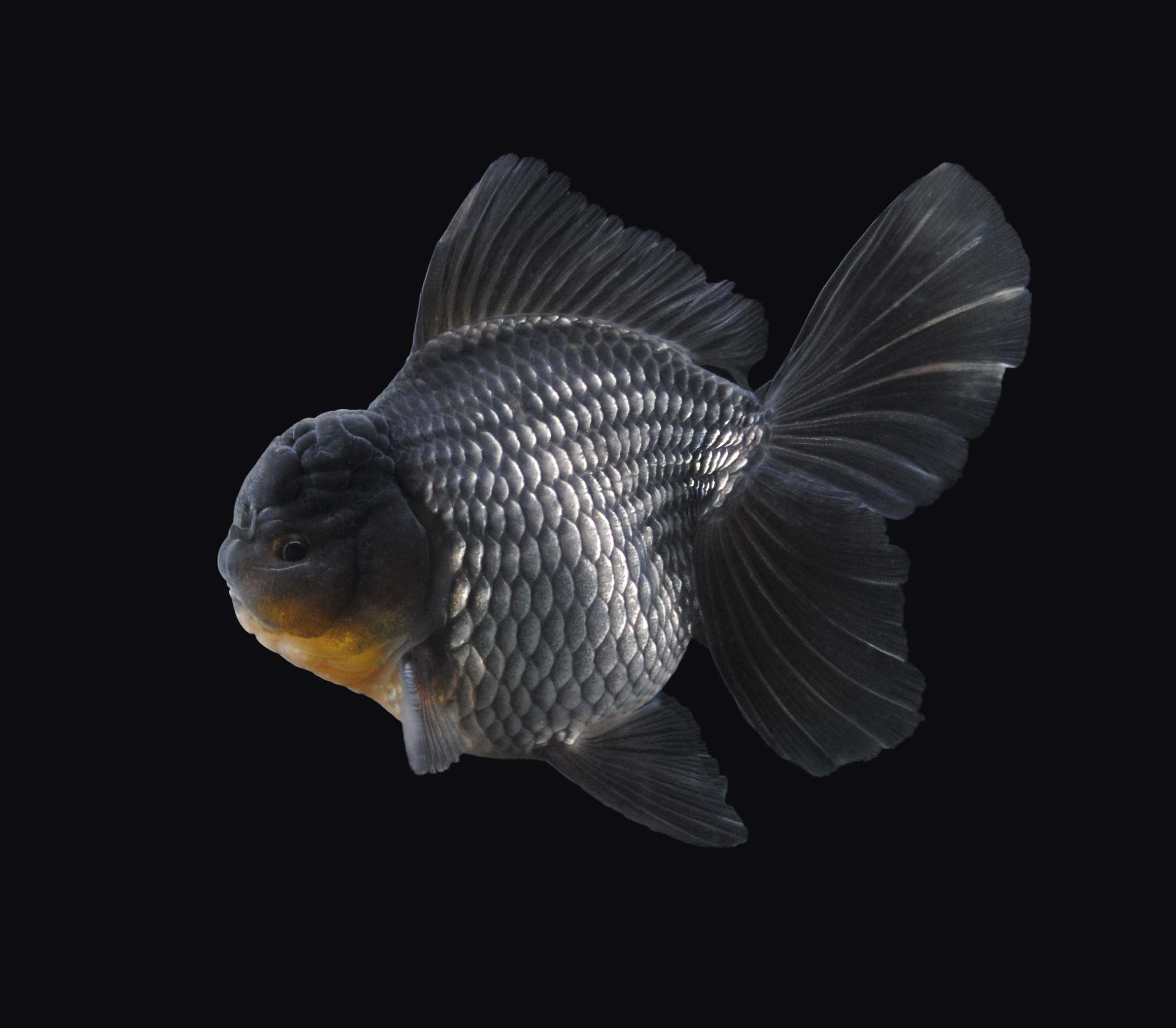
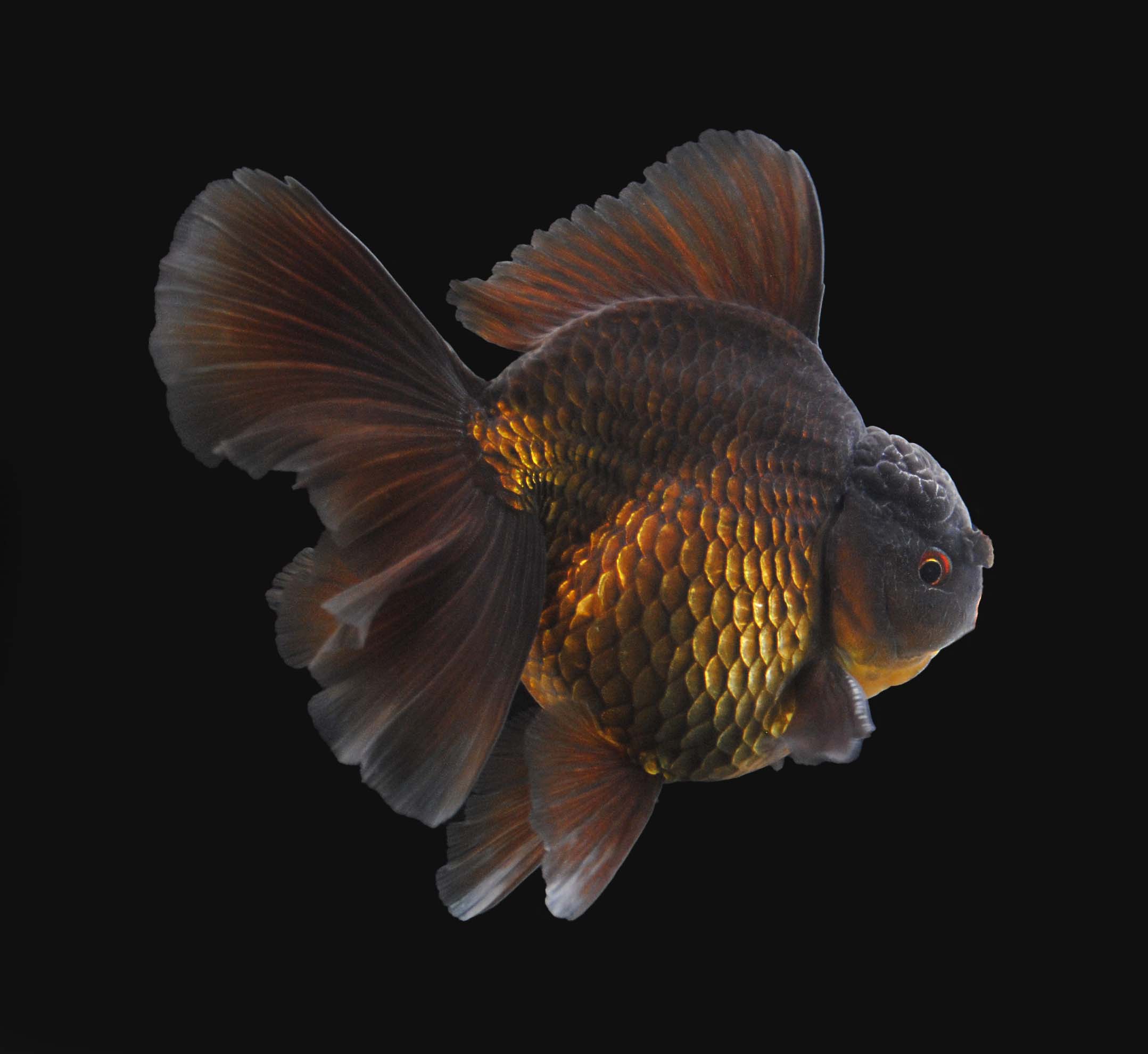
I have taken some pictures and videos of the last two for us to enjoy. Hopefully you like them.
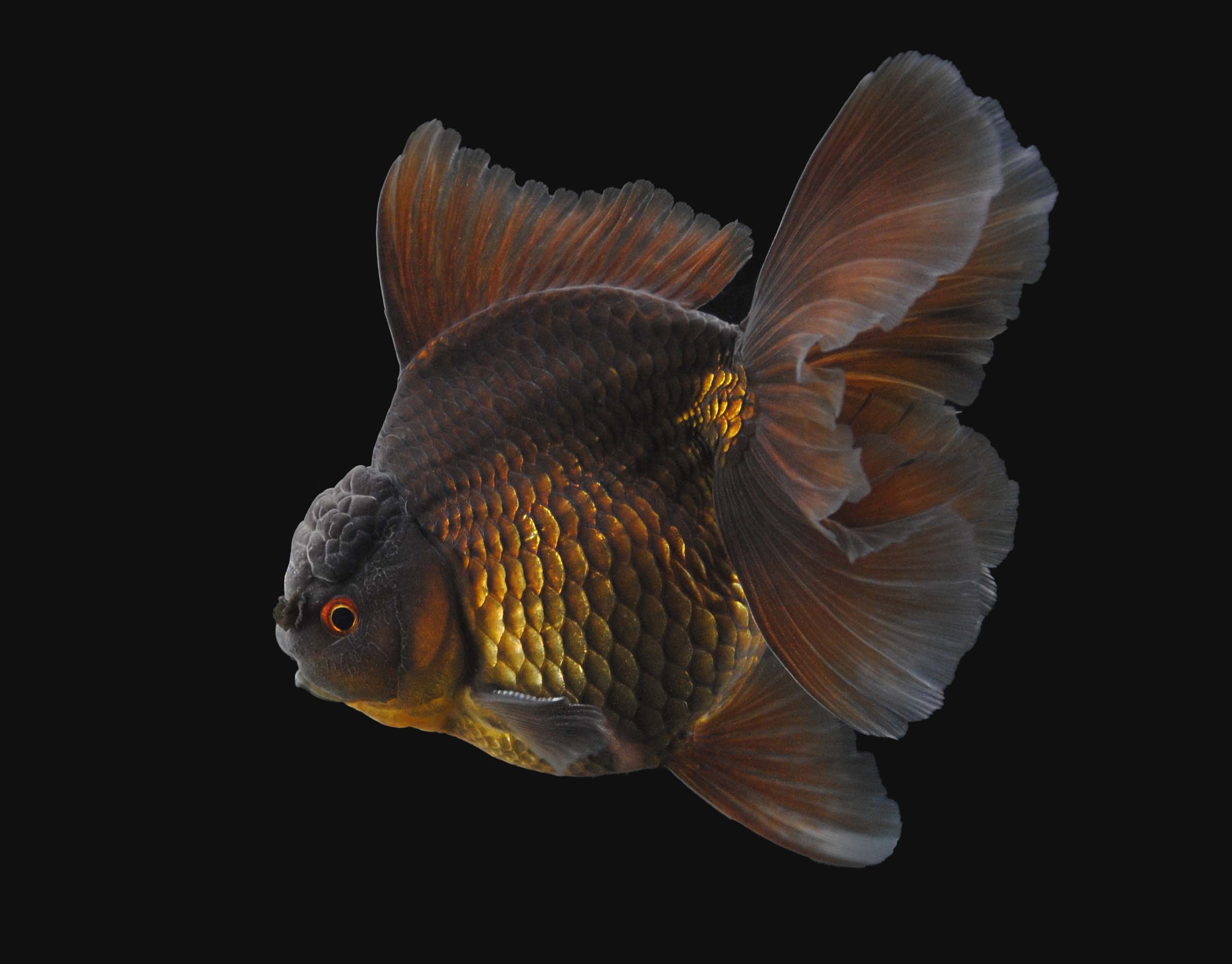
The headgrowth is not minimal nor excessive. I think it is decent and can still grow a little bit more with age without ever covering his eyesight. The back curve is higher than the headgrowth, to give him a strong body impression. The body length is medium with a good head – body proportion, in my opinion. He has a good body width (measured from top to bottom. If we take a straight line from the eye to the peduncle, then the line will divide the body in approximately the same portion. A good balance. The scales have beautiful shine, neatly arranged in the right side of the body. We see some out of proportion scalation in the left side behind the upper head area. The first ray of the dorsal is not very straightly upright (if we want to scrutinize in detail) but it is a good one. There is a sign of recovery from injury in the middle of the first ray, my bad. The tail angle is good, and I put a special attention on the lower lobe which has a slight nice curve towards the abdomen. This is a feature seldom remembered nowadays. The brown pattern makes him more handsome, I think. A note about the brown color: when it appears on Blue fish, the brown looks paler compared to when it appears on Purple fish. I love the fish.
The headgrowth tends to be minimalist, not highlighted enough, actually. The body has an impression to be round. It means, the length is medium short, and the body width is good. The head – body proportion is still okay. The brown color is vibrant. The dorsal and the tail are good. A special attention should be given to the tail. It is a luxurious tail! The lower lobes curve towards the abdomen, and there is a tosakin-tail flavor to it. This reminds me to my terminated Dancing Queen projects, which tried to create Oranda with Tosakin curled tail viewed from the side. I must have crossed the result from that project to my Oranda line sometimes ago. The beauty of the tail is more visible in the videos below.
For the last several years I focused too much on developing my Blue, Brown, and Purple Oranda line. I postponed the Ranchu projects on the same color to the point of neglecting them. I must confess that all my Blue, Brown, and Purple Ranchu line were wiped out almost completely. There is only a single old male Blue ranchu left. I can hardly do anything with that. So, basically, these projects must be restarted from zero.
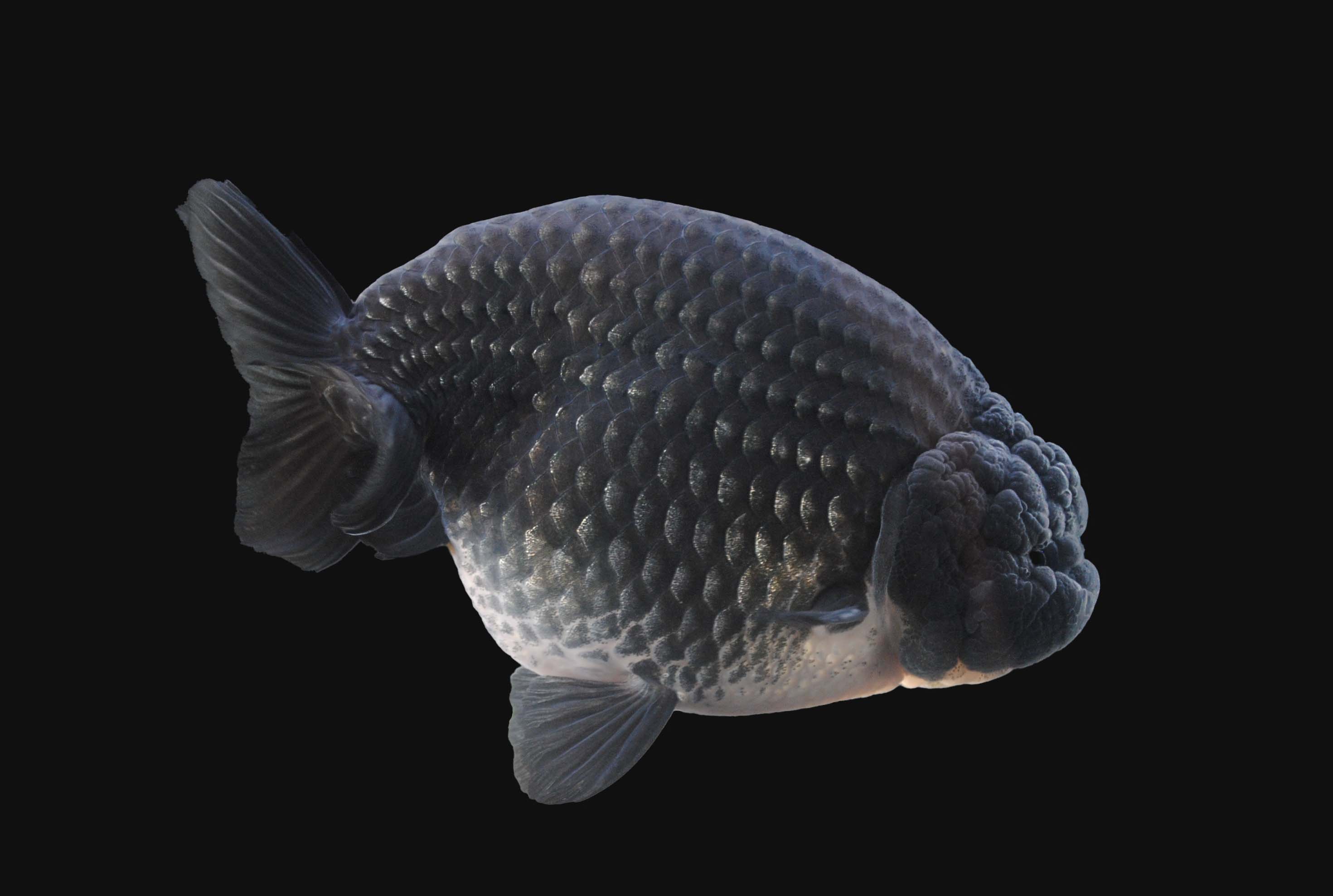
Is he not handsome? He is a large fish. Personally, I like his strong body type. It is a bit long but with a balanced body width. And he has a thick waist. His headgrowth is decent. Yes, he has some obvious weaknesses in the smoothness of his back curve and the angle of his tail. Hopefully I can still have his offspring that carries the positive features. But I must act quickly, because he is losing his vigor due to old age.
I tried to find other breeders that might carry the blue and brown genetics. I do not worry about the purple, since if I can get blue and brown, I can recreate the purple. Gladly, I find breeder friends who bought from me before and are still keeping the genetics of these rare colors.
From Mr. Malek I bought some of his Blue Ranchu. He acquired the gene from my line before, and he crossed it with his own fishes. These two females are in my possession right now.
They are very fertile, and that is the most important thing for me. I also bought a male blue from him just for a reserve. But since these two females are good at laying eggs, I do not want to mate the male with them. Looking at the specimen here, I must admit they have their charm. I do not want to produce the same line. I want to differentiate a bit.
These two females show two spectrums of blue color, the lighter and the darker ones. Their body type can be considered medium short. This is the first point of difference with my male. The curve is varied, but I believe my friend has lots of good quality ones. The tail is also varied. The headgrowth is more well -developed than mine. This is the second point of difference. I make a cross between my line (the old male) with these two. I am tending their newly hatched offspring right now. Wish me success.
From Mr. Aji Linting I acquired this Brown Ranchu:
He acquired the brown (and also purple) from me a long time ago when I have just started. At that time, my line was of low quality. My friend crossed it with the previous type of Thailand’s Black Ranchu since he appreciated that variant very much. We can see the trace of the Black Ranchu feature in this male specimen. I was breeding that Black variant twenty years ago, so I am familiar with the features. New hobbyists might not be familiar with it. Anyway, looking at the bright brown color, I am very enthusiastic!
I acquired several male and female. Some with purple combination. But I focus on this brown male Ranchu as my material. I already crossed him with the two female Blue Ranchu and am waiting for the offspring to grow. Wish me success also on this project.
I also acquire a red and white Ranchu from local breeder to use in my crossing:
He is an enormous fish. He is handsome in his own way. But for me, I do not like the indentation in his upper neck and his excessive headgrowth covering his eyes. But still, this is the best I can find so far. I plan to cross him with the two Blue Female to enrich the blue genetics I have. The richer the gene pool the more choices I have to work on improving my Blue Ranchu quality. And also, I think I might need to have my own red and white lineage. Hmmm, let’s see ….


































 hermantogoldfish