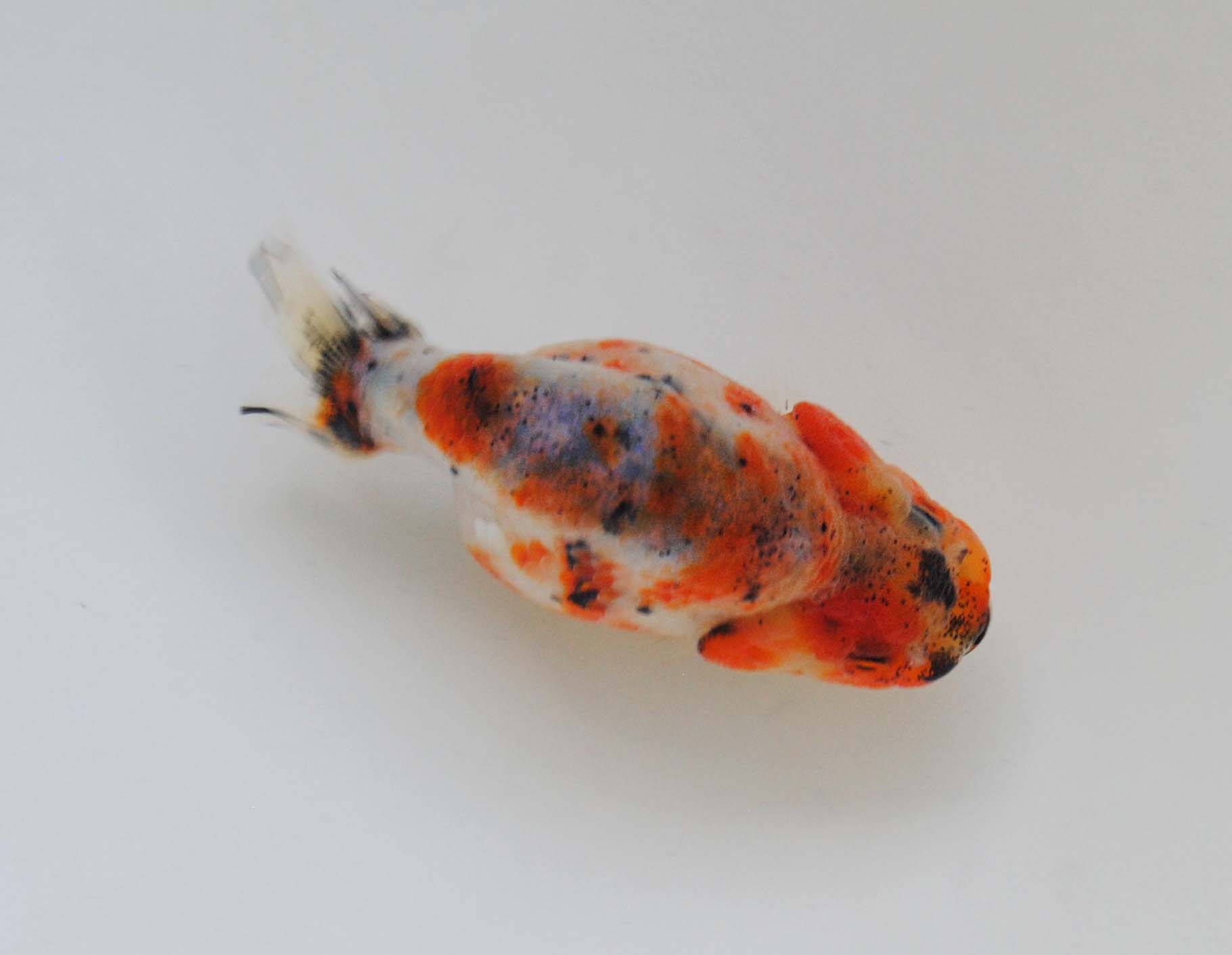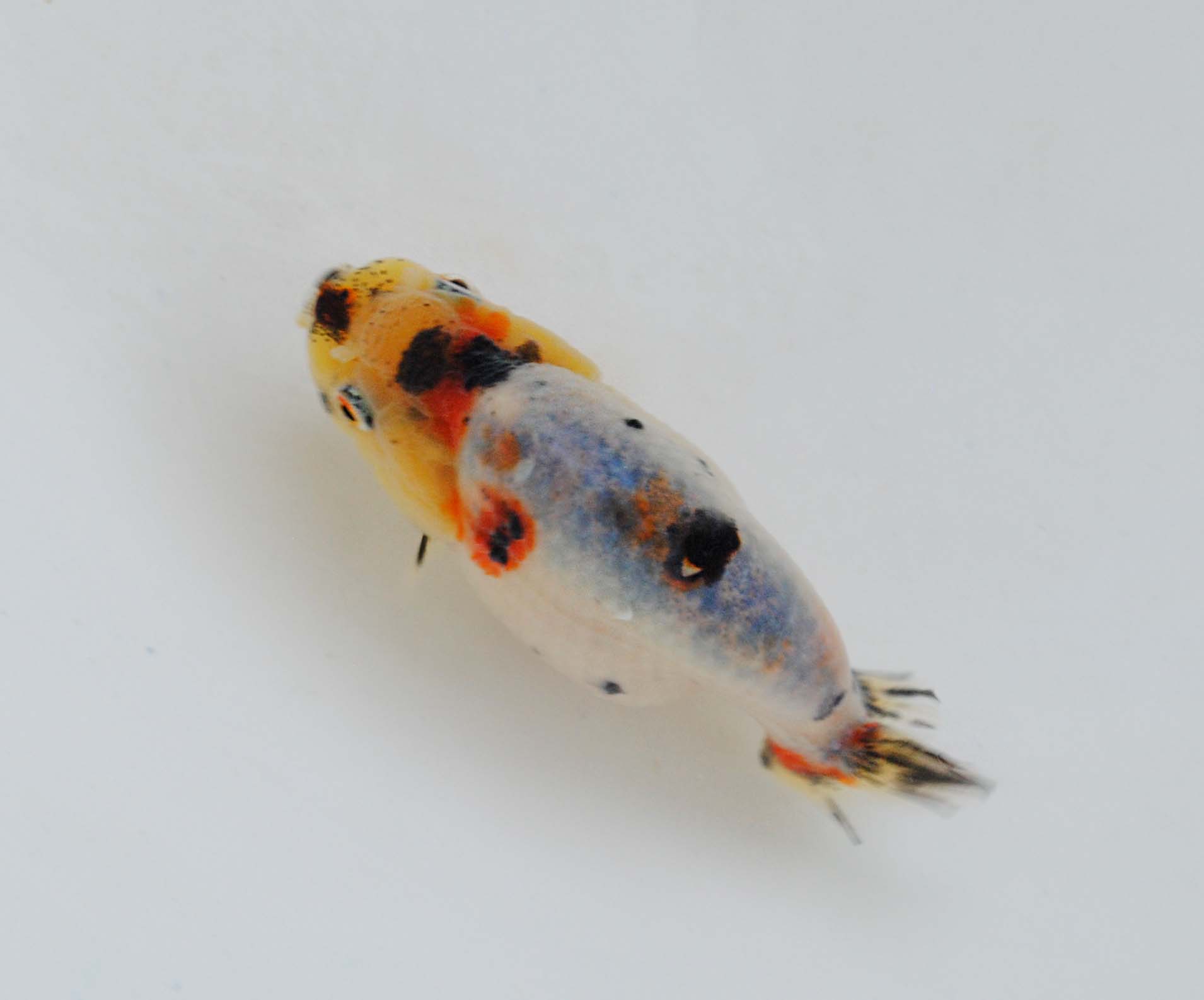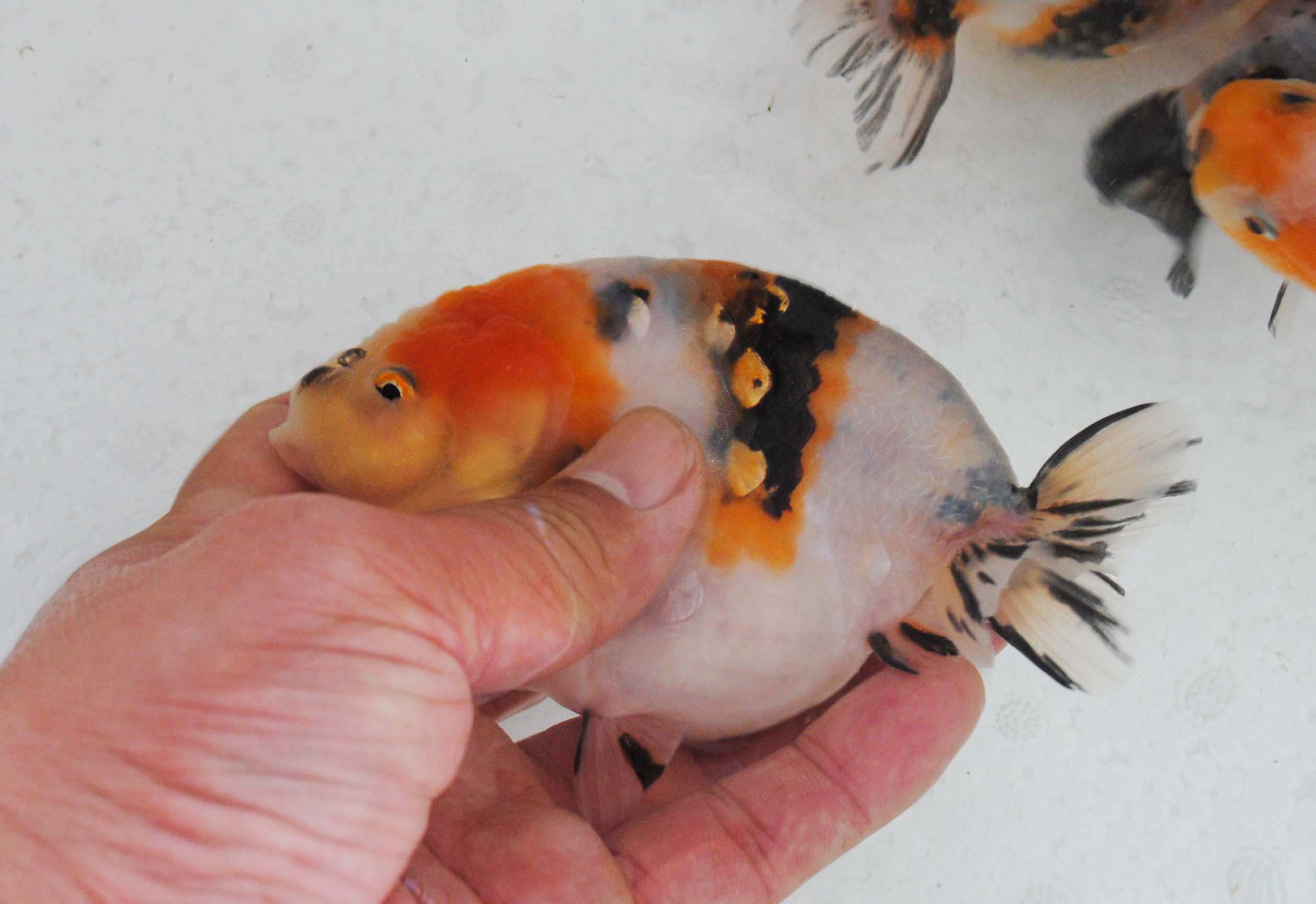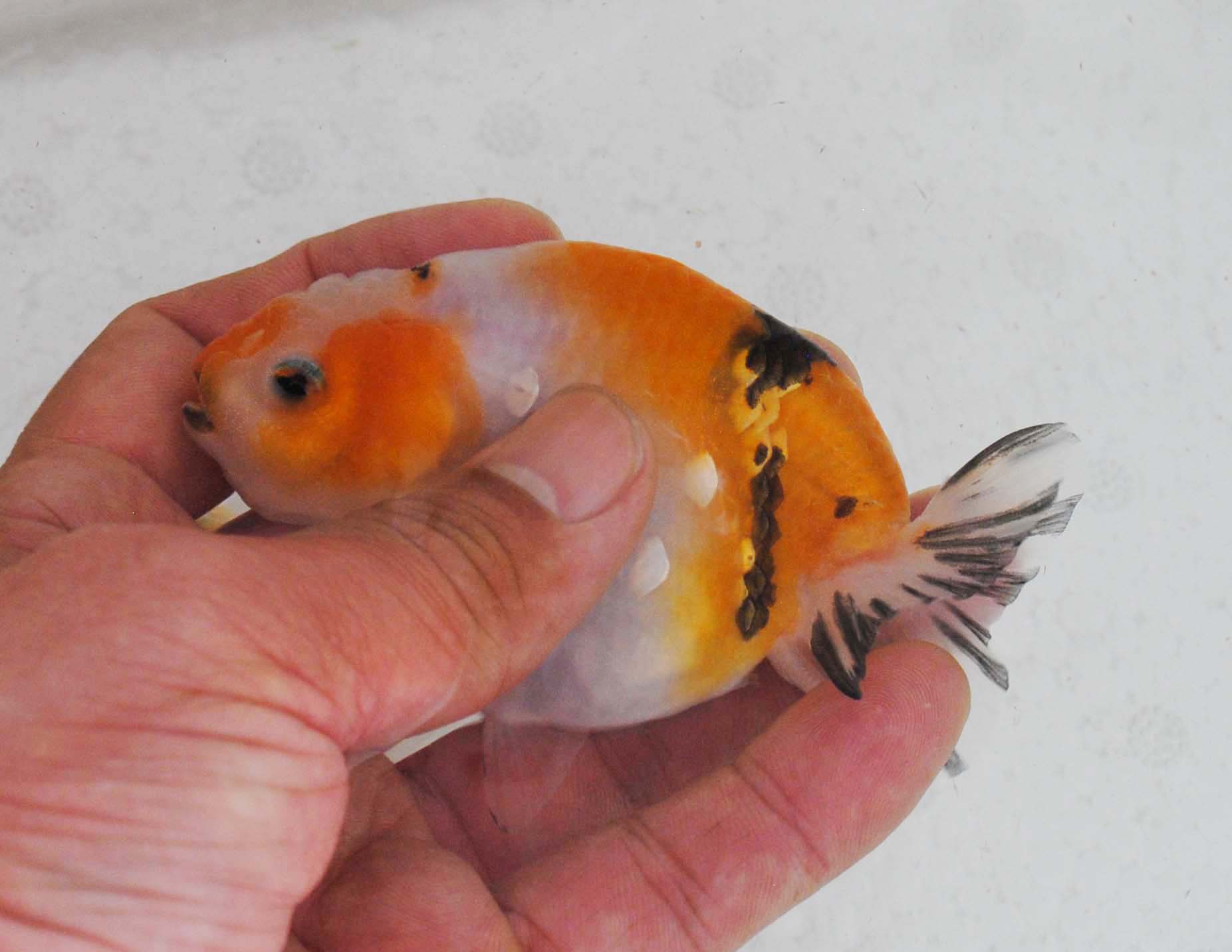
calico ranchu, cow ranchu

The Diary of a Goldfish Breeder 2025 (1)

Update on Cow & Calico Ranchu

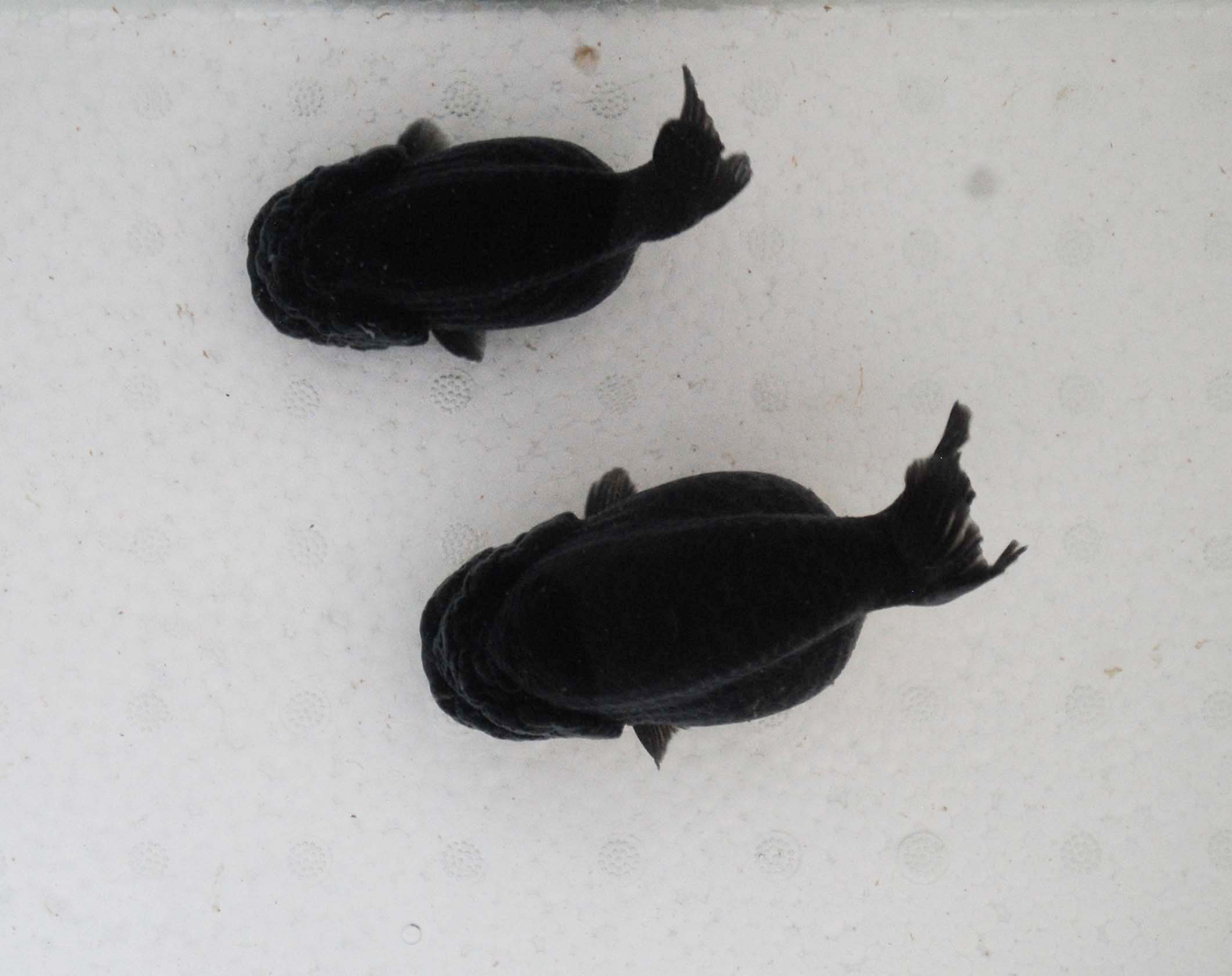
As a follow up to Diary 2024 (5) and (8), I would like to refresh our memory that I was left with these fellows:

The bad news is that all are male.

So, to continue the project, I acquired several Cow Ranchu from a local breeder, two male and two female specimens. Too bad, they did not last long. I did not have a chance to take proper pictures of them. Here is a lousy picture using my handphone:
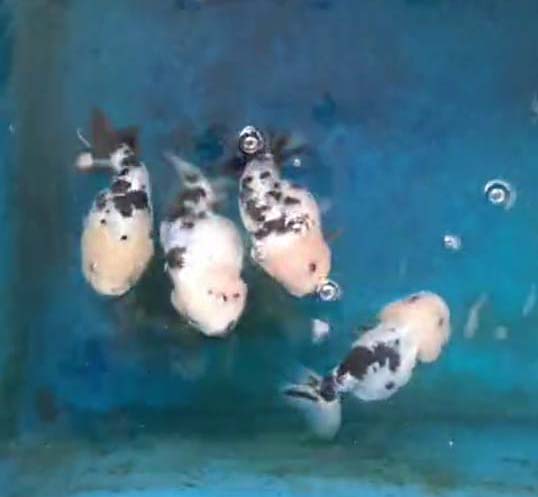
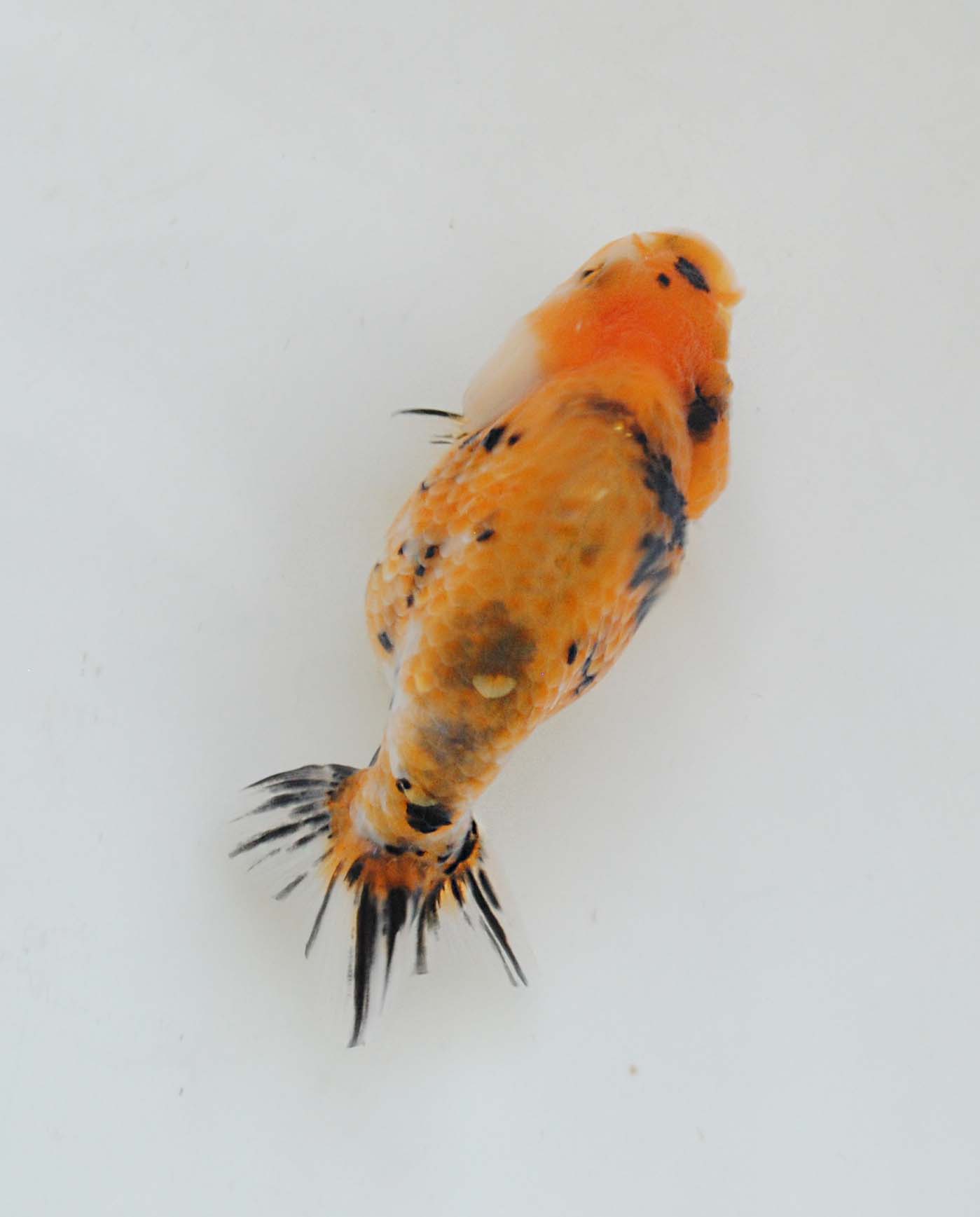
My first instinct was to cross the three male Ranchu (left picture) with these cows. They did not carry black fish nor cow pattern in the offsprings. Some were white, sakura and calico with dotted black patterns. I got rid of the white. Here are two offspring that I keep. Both of them are female:
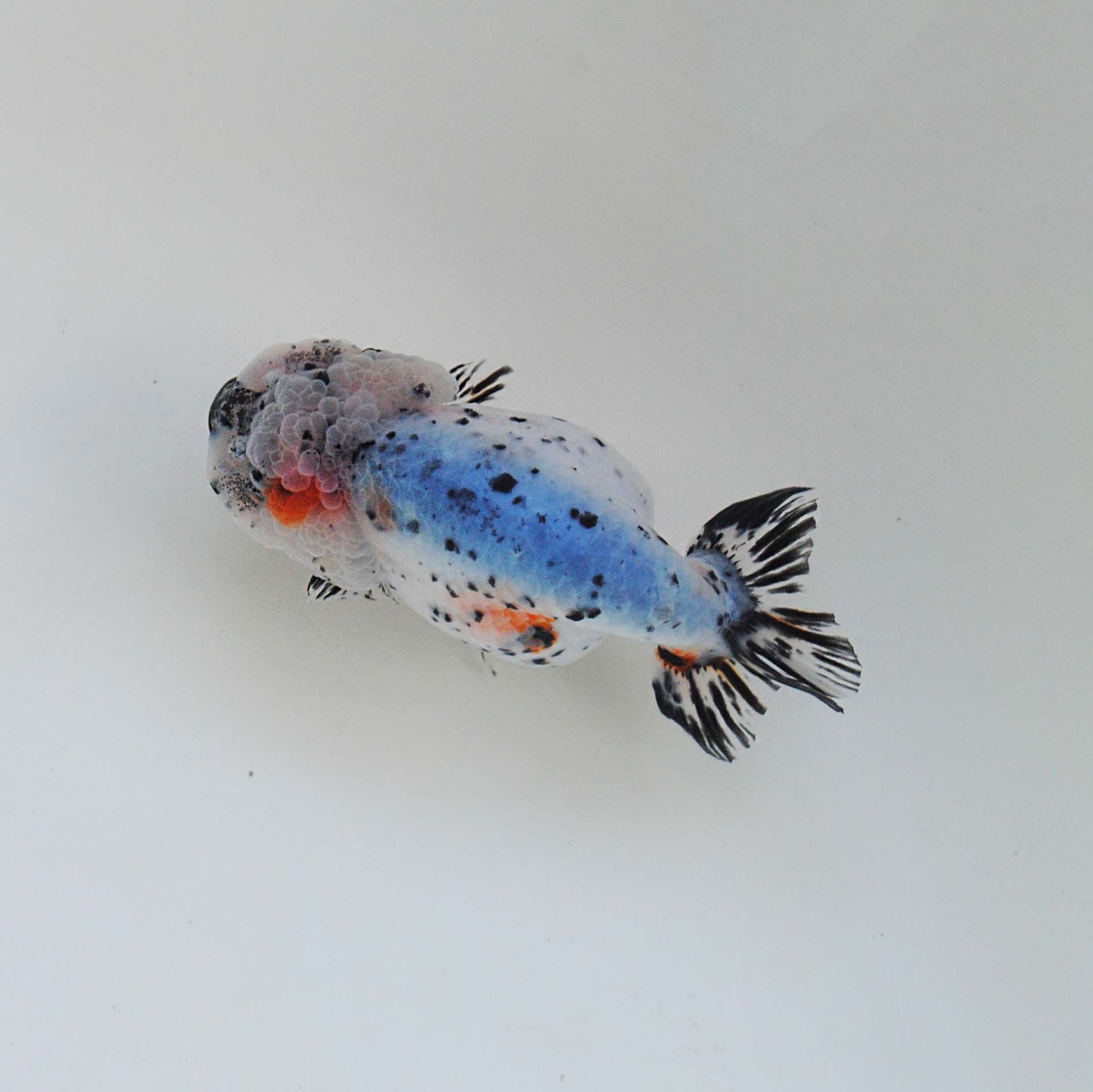
The first to lay eggs was the calico. It was about three months ago. So, this diary is about the offspring of this calico female. The sakura lays eggs recently and the offspring is just 2 centimeters long. It will take a couple more months or so to update on them.

Since the calico female was so productive, I mated her with several male fish.

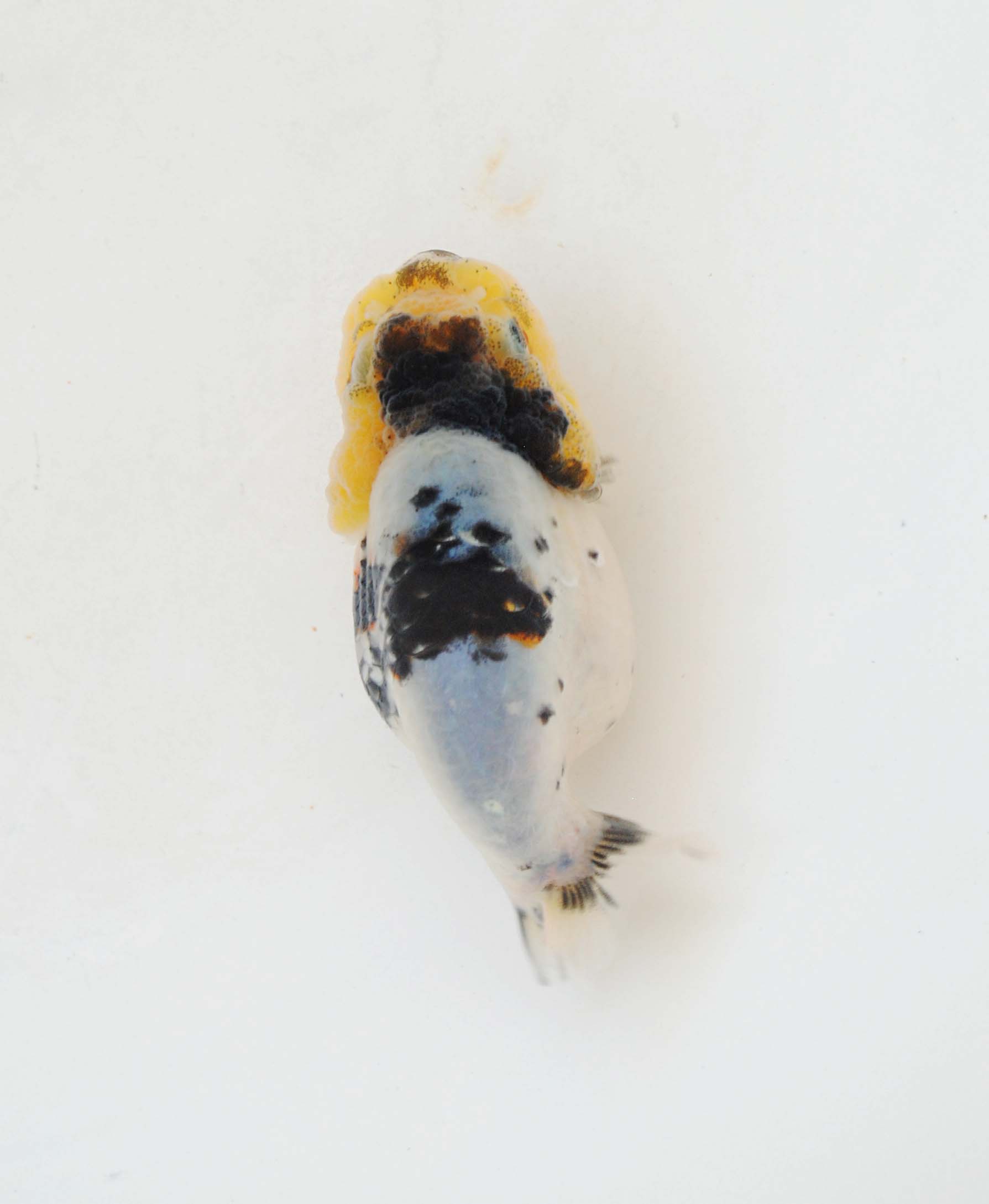
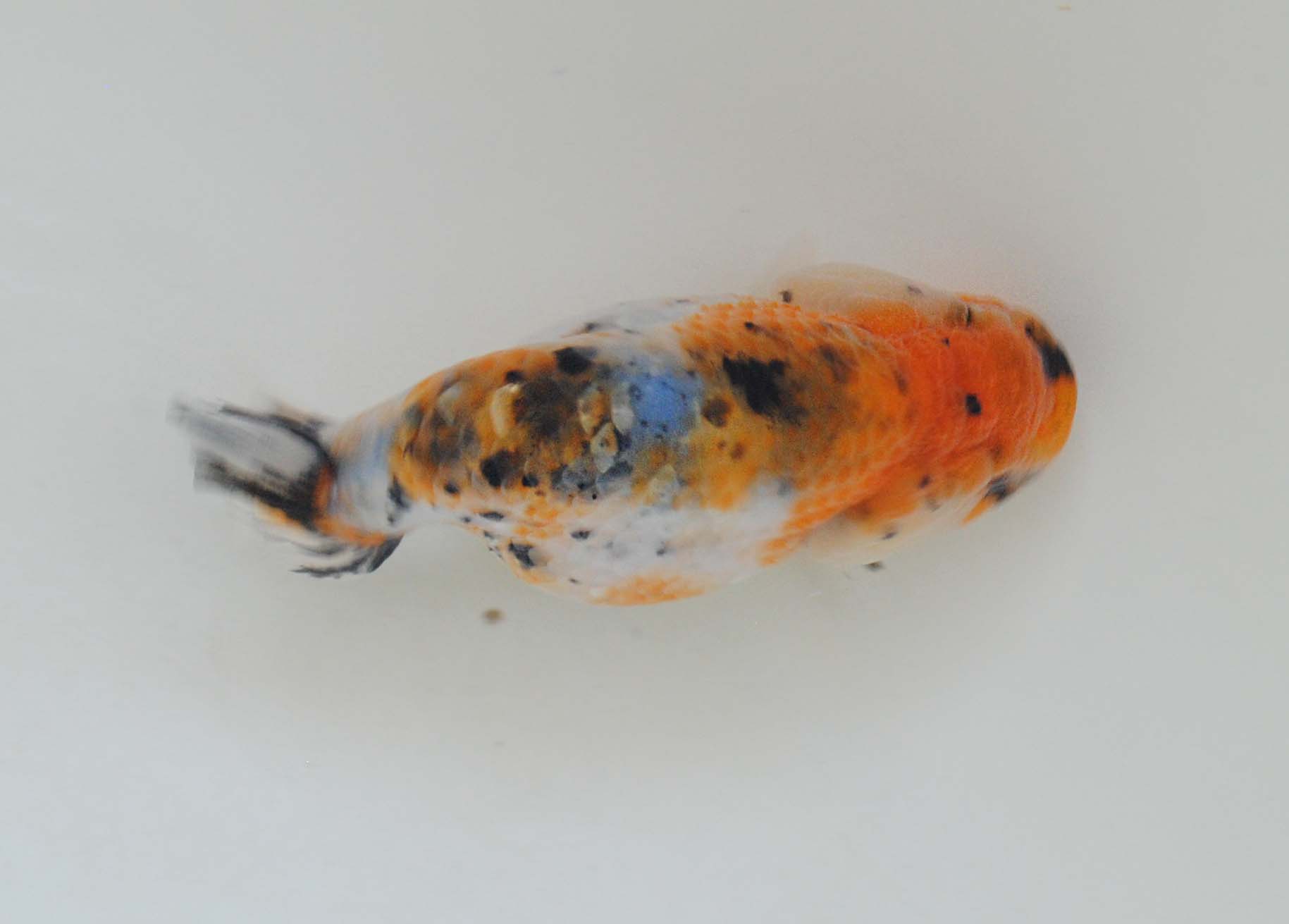
First, I mated her with her uncle. Remember the calico fish in the upmost middle picture? It has turned into a calico with lots of black patterns:
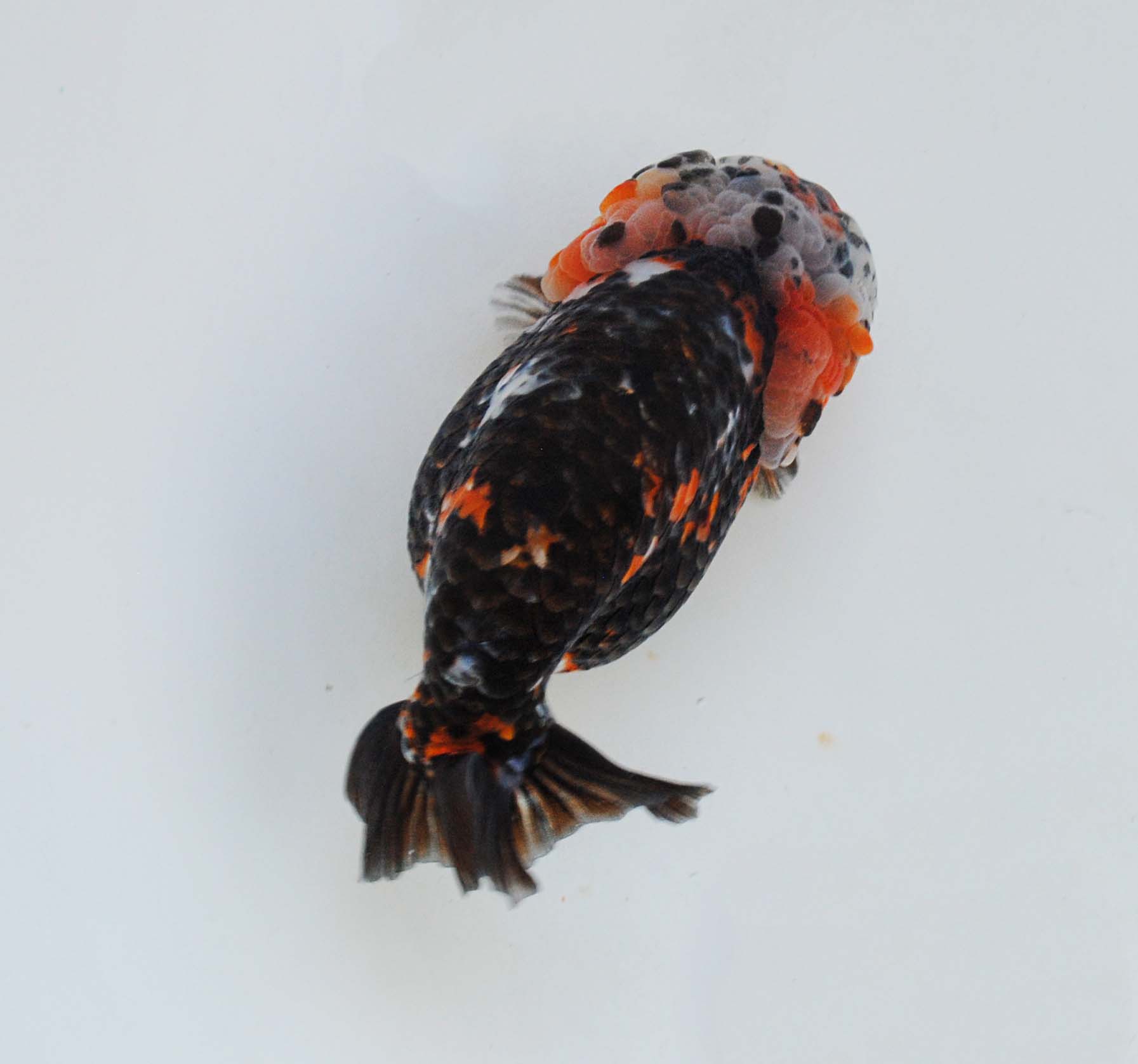
So, just to be more systematic, the first cross is this:

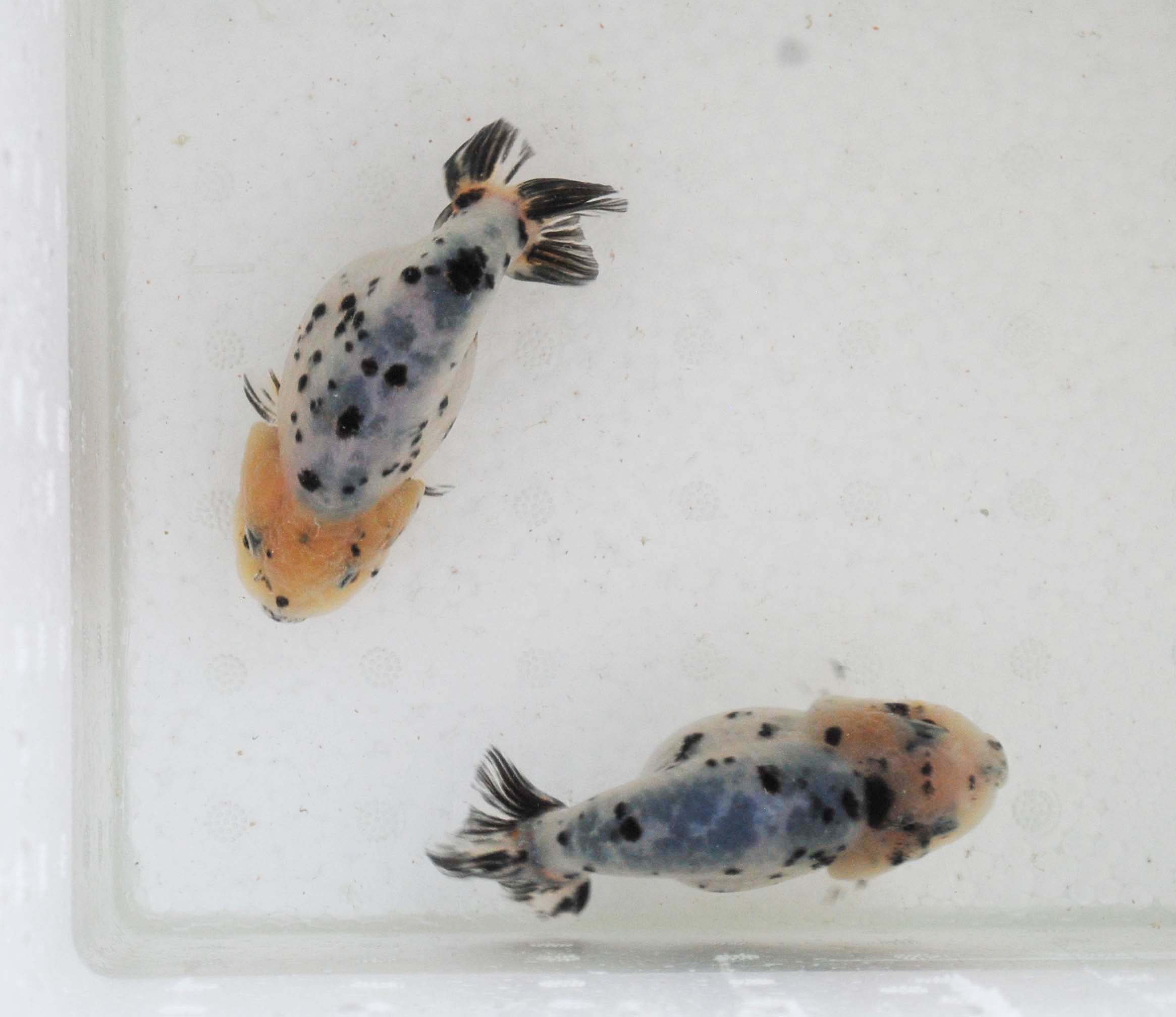
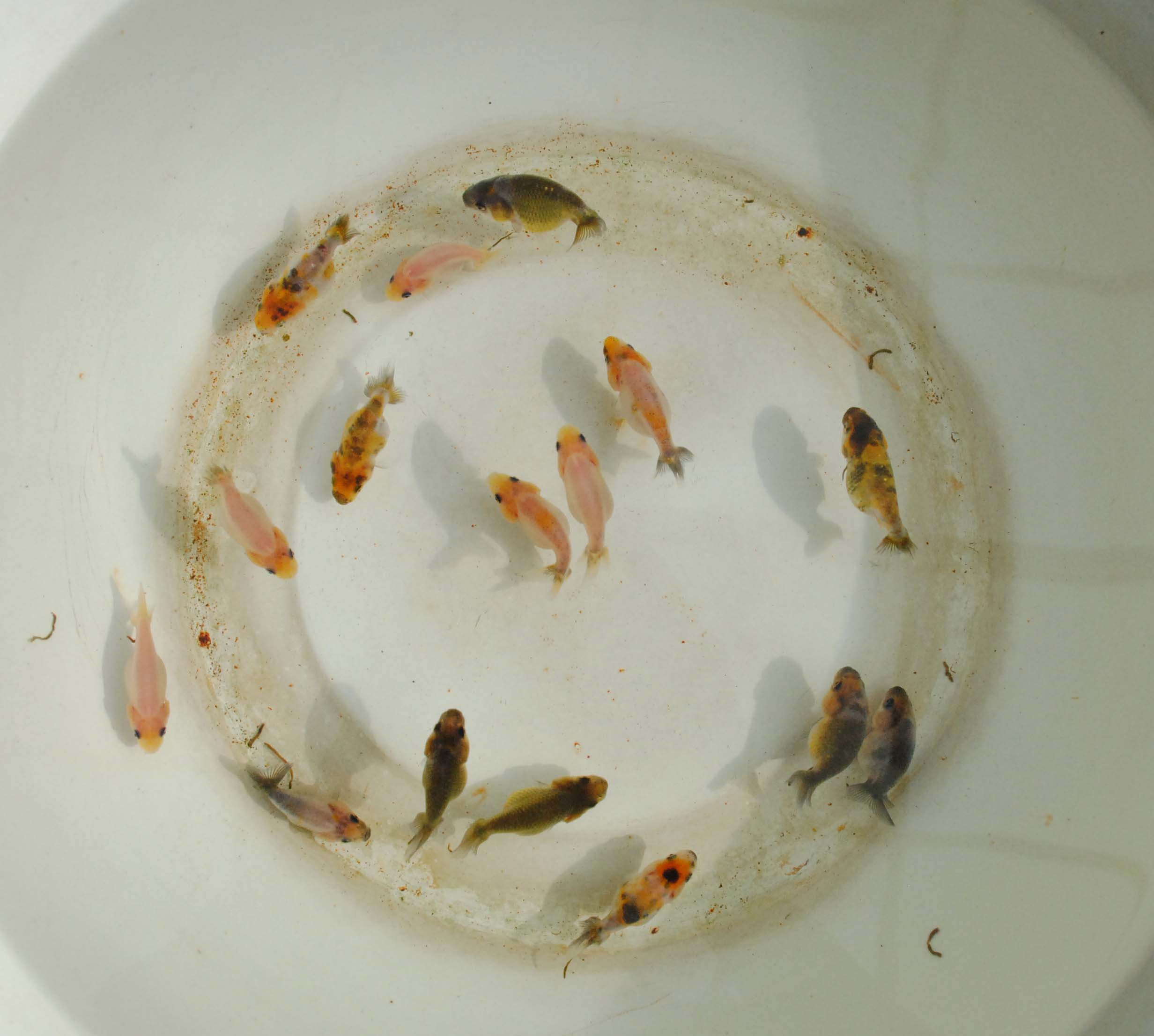
And the offsprings I kept after lots of culling are:
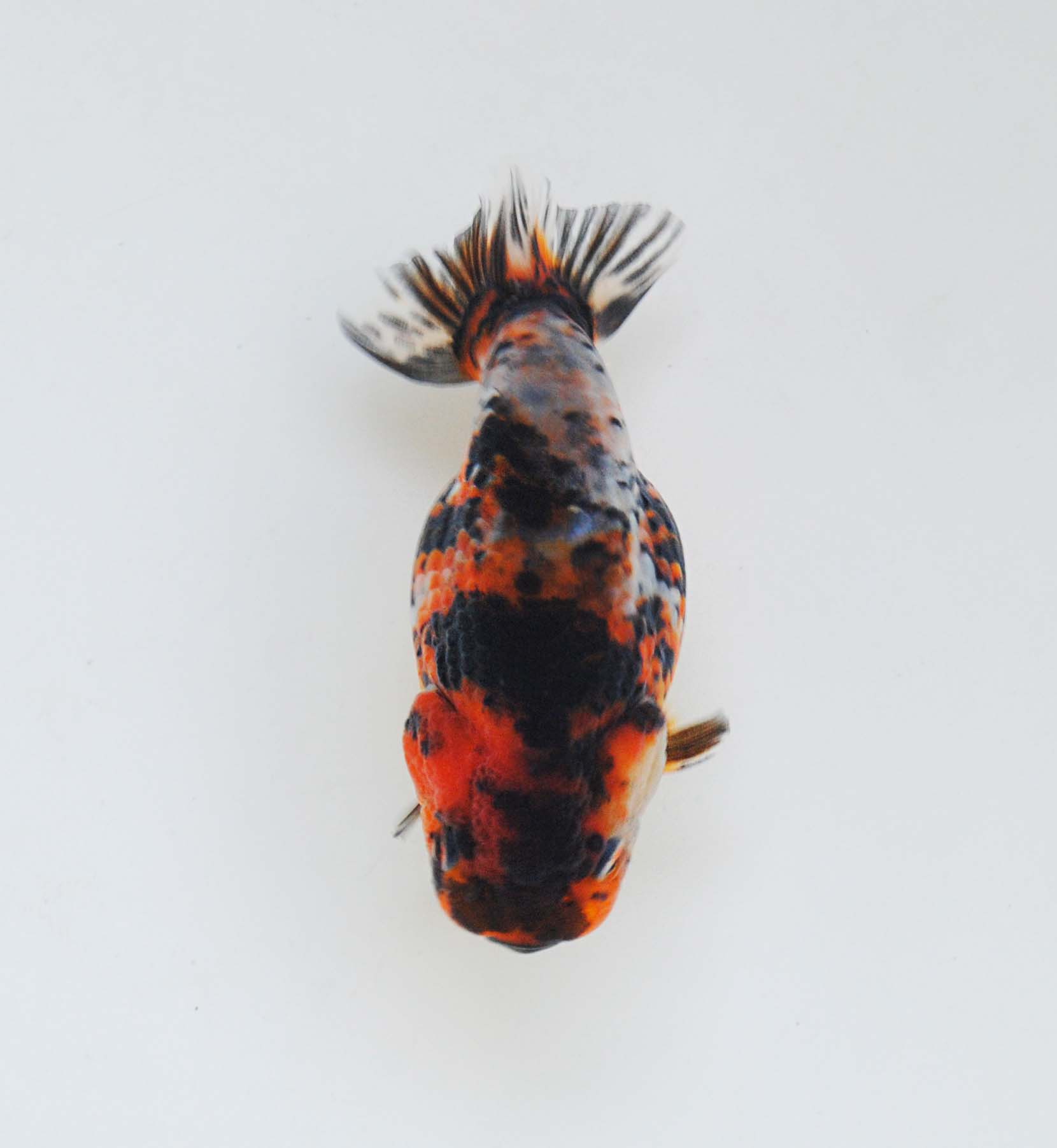
Fish 1 seems to inherit the strong black pattern from the father. I treasure this strong black pattern feature for the next breeding.

Fish 2 seems to be a balanced mix from both parents, creating a pleasant pattern. I do notice there is a large block of black pattern in the back, which is good. If the fish can get rid of the red, blue and little dotted black pigment, it will be left with white color and that large black block. It will be a beautiful cow ranchu.

Fish 3 is the closest to the cow pattern I am looking for. I hope I can create more of this pattern. So, this fish is my first priority in the next breeding.

Fish 4 is weak, since it has no large black pattern. It has only few small dotted black pigments. It has no red and less of the blue shadow, which is good for a cow. I think if I cross this with a Ranchu with strong black pigment, there is a chance it will produce beautiful offspring. So, I keep it as a reserve.

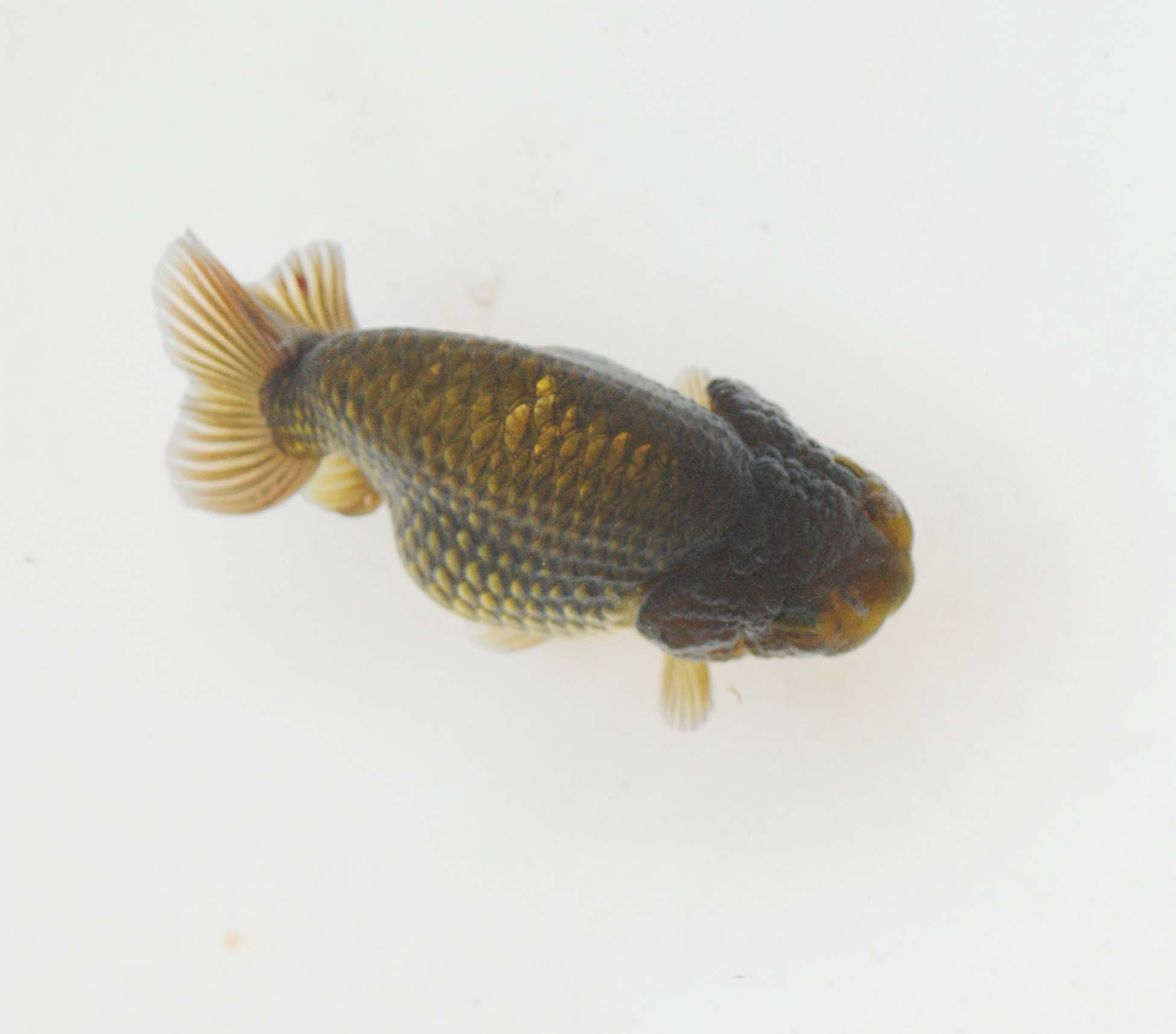
Fish 5 shows that this cross can produce black / grey offspring, and also offspring with metallic scale. This is good, since this kind of fish might come handy in the next crossing.

The second cross is between the cow and the calico female:

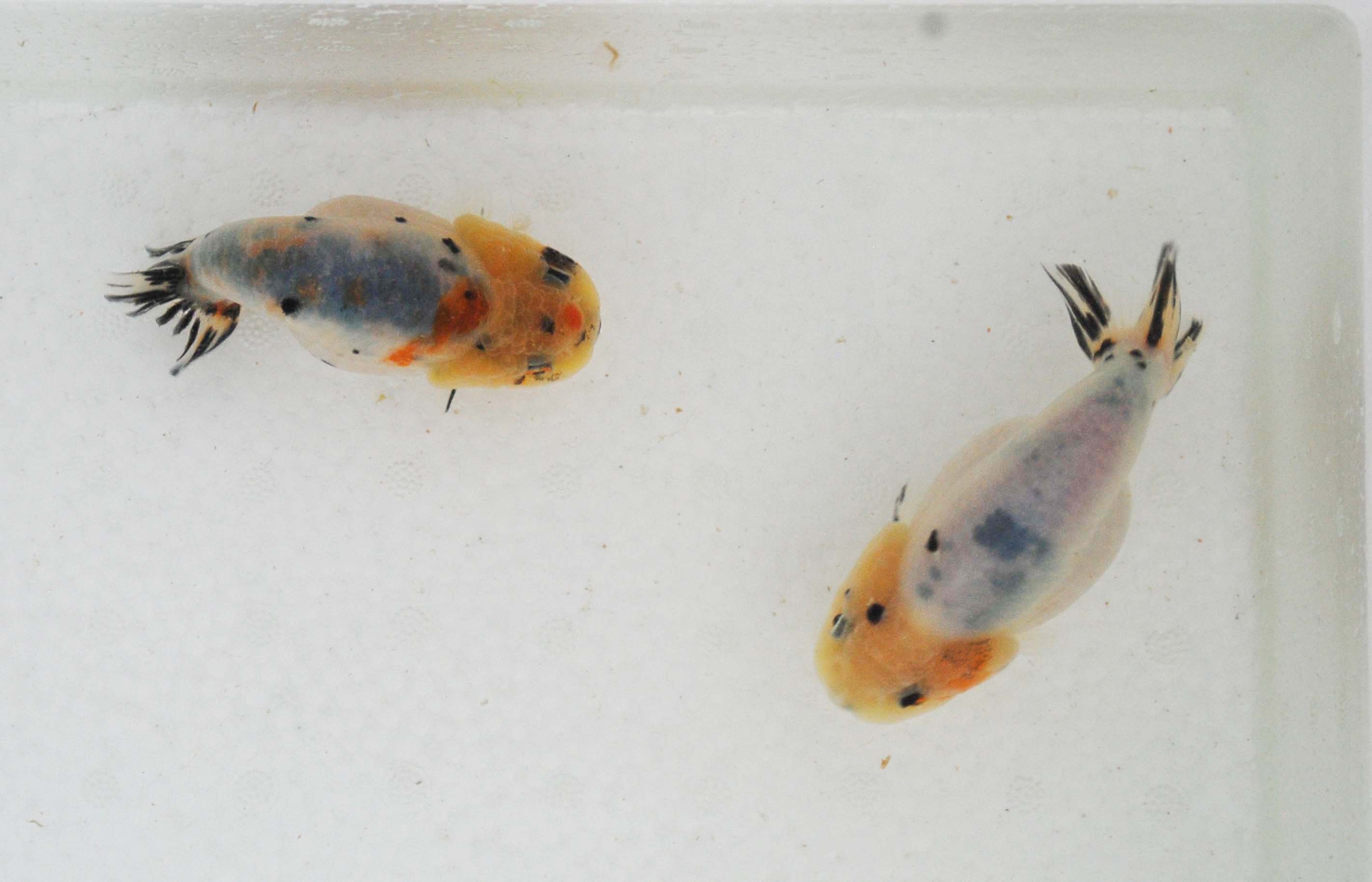
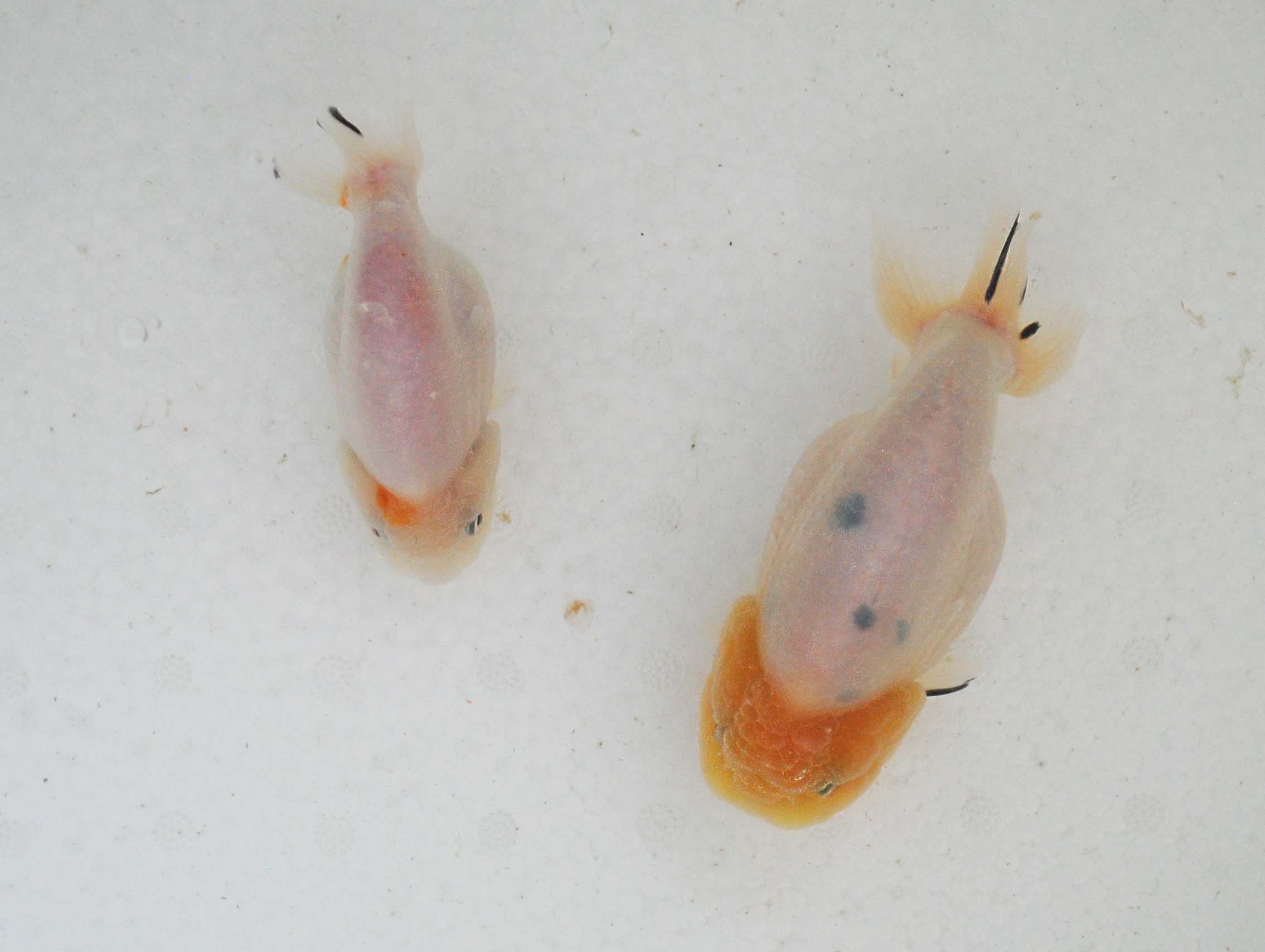
And these are the results:

Do notice that this cross does not produce any black / grey nor metallic fish.

Fish 1 is a sakura which I will not use.

Fish 2 is a weak color. The red is not a strong red. It is more of a pale orange color. And the black pigmentation is weak. I will not use it.

Fish 3 is a calico with weak red and black color. I will not use.

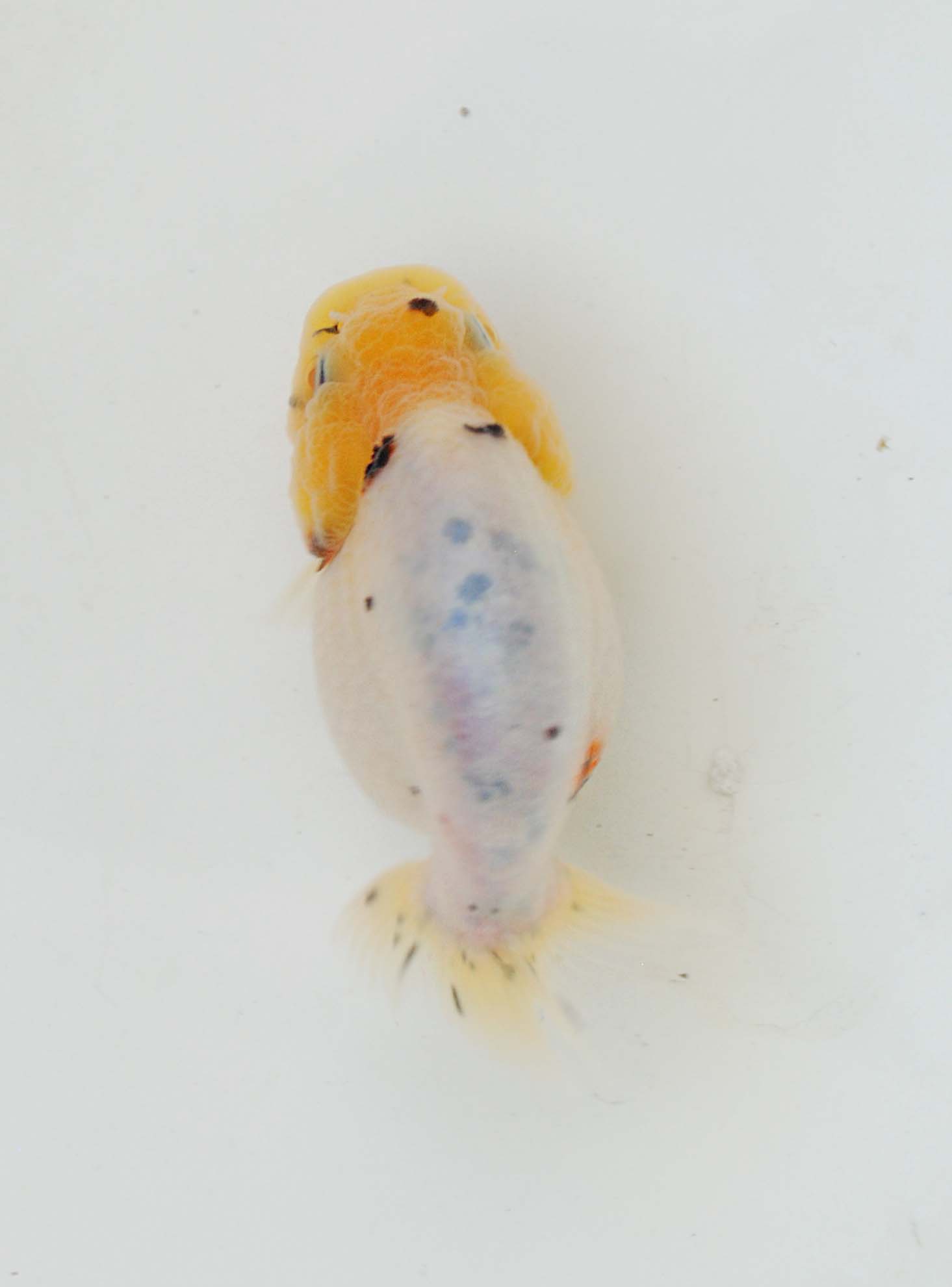
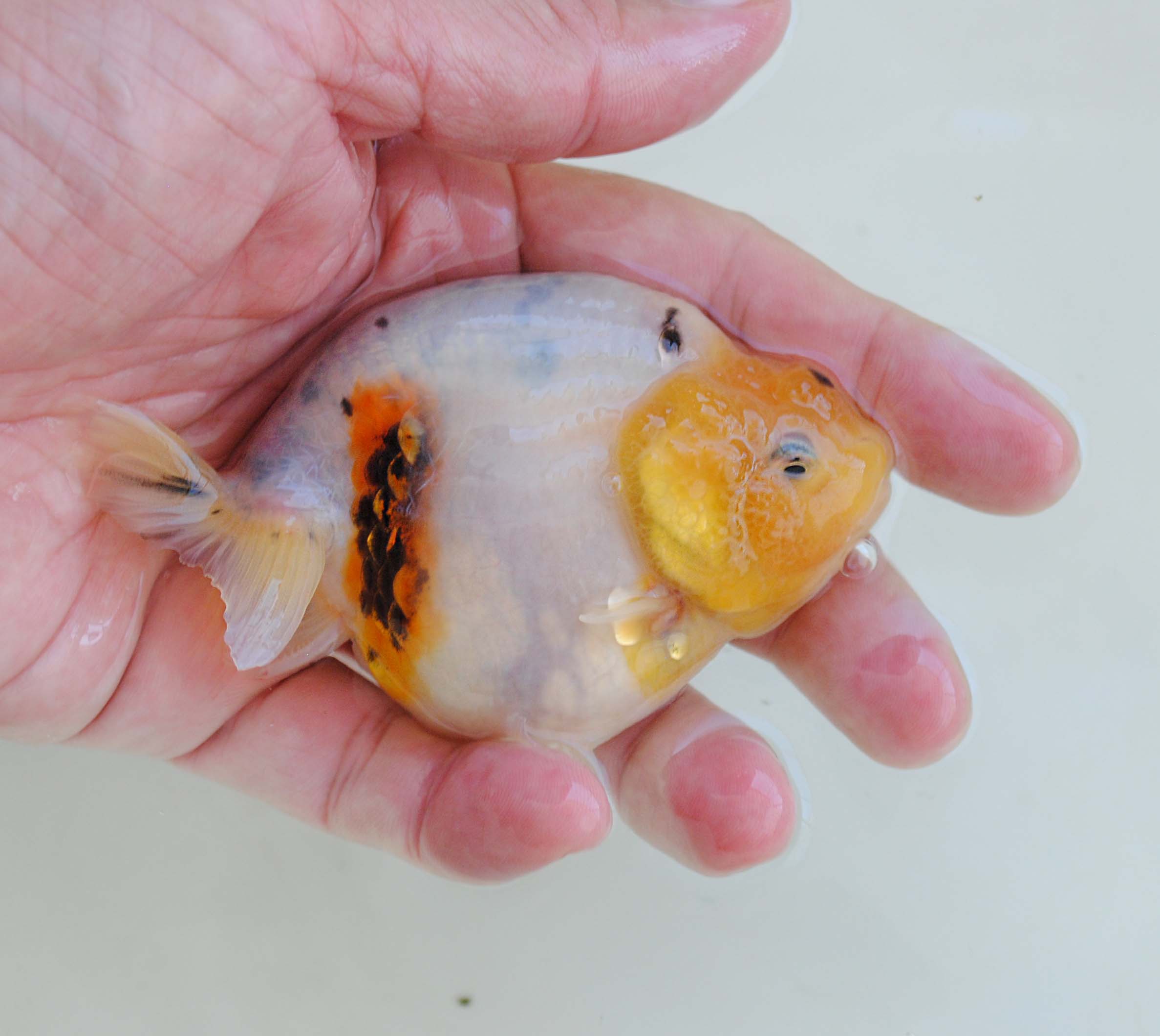
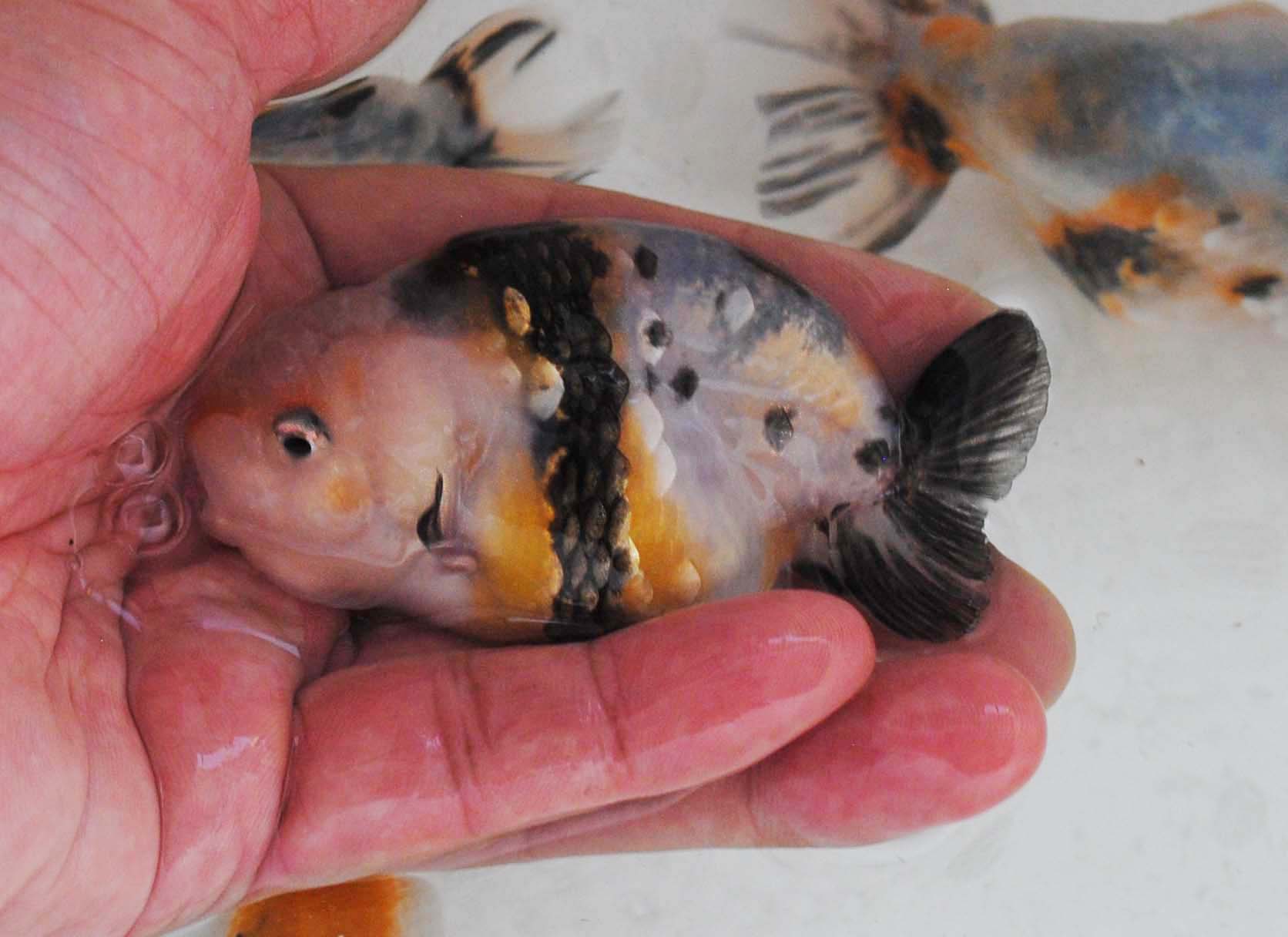
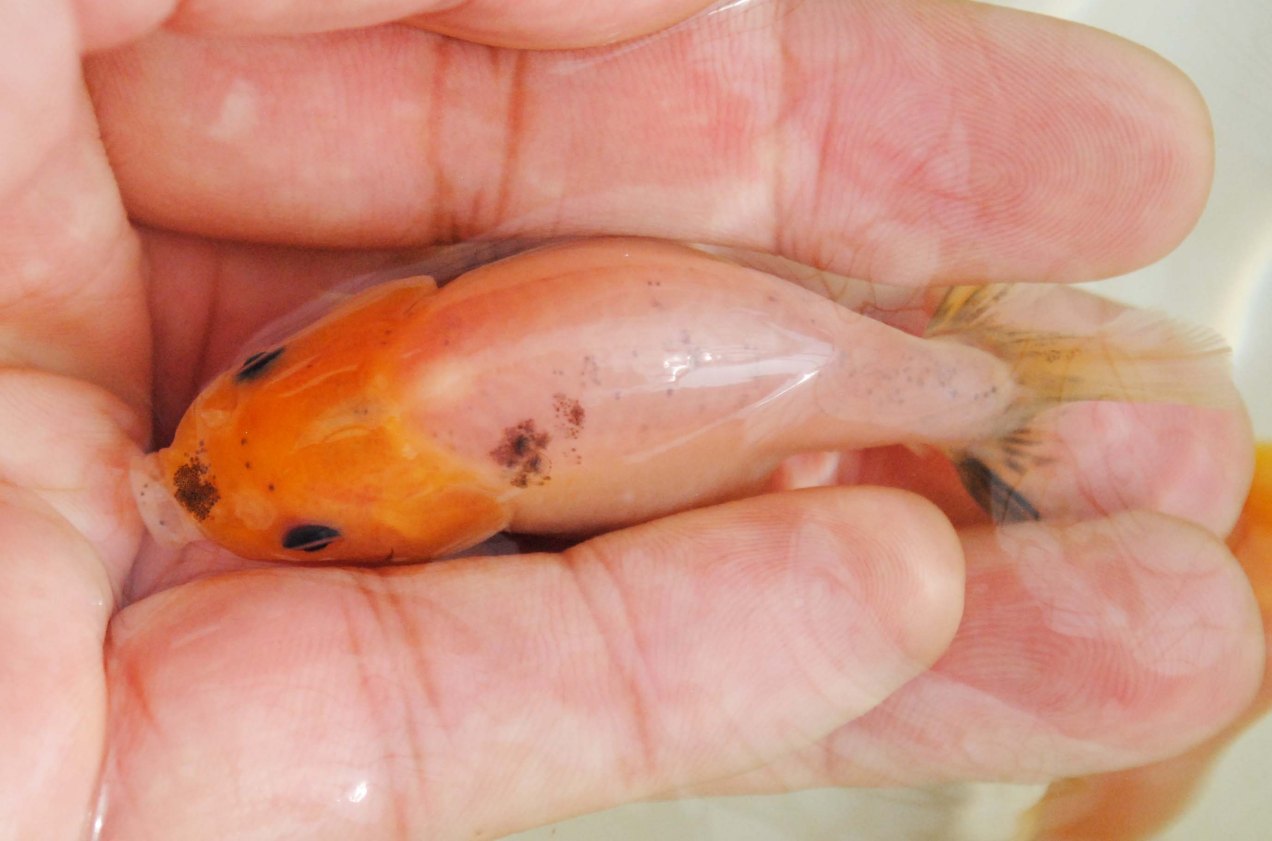
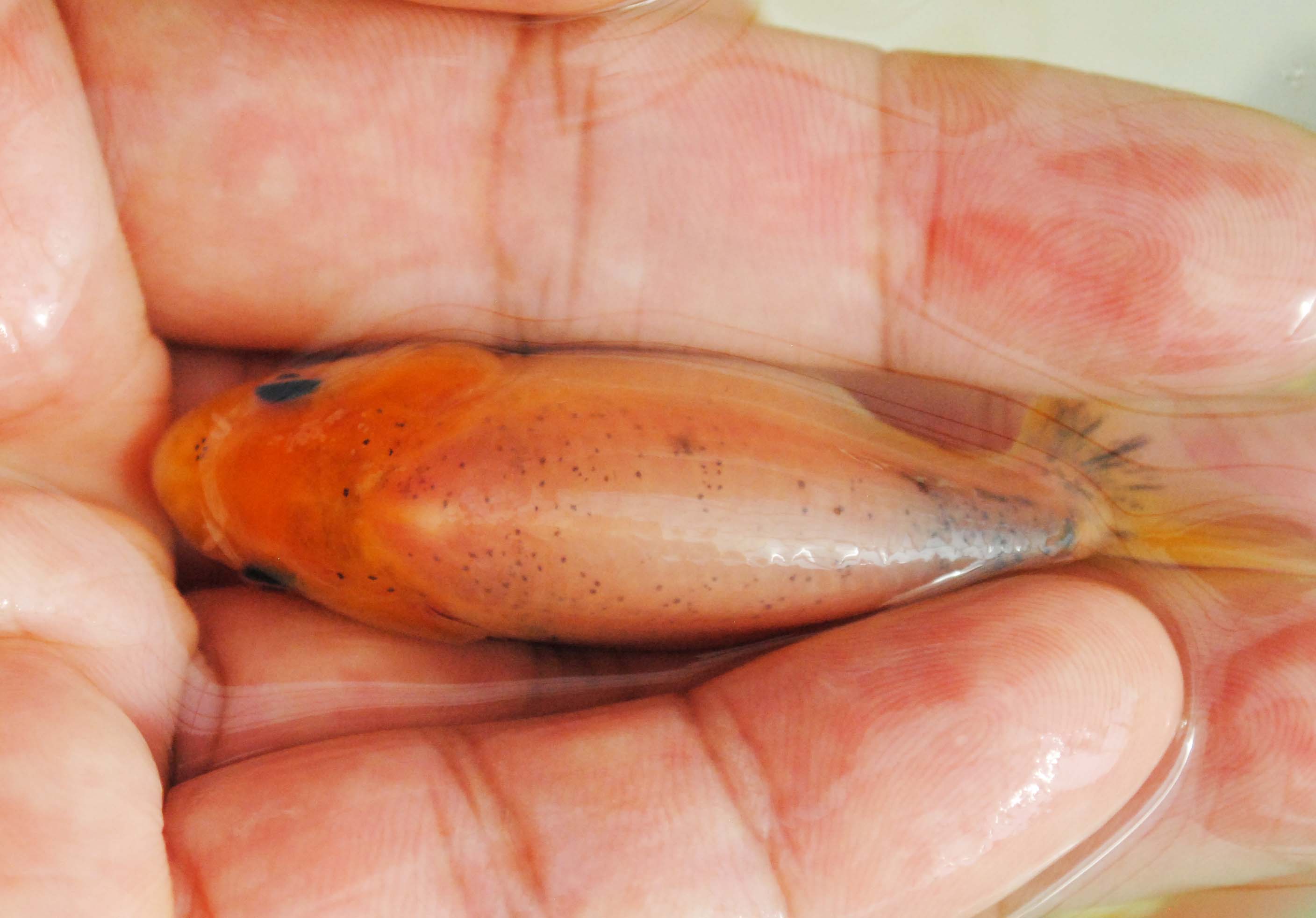
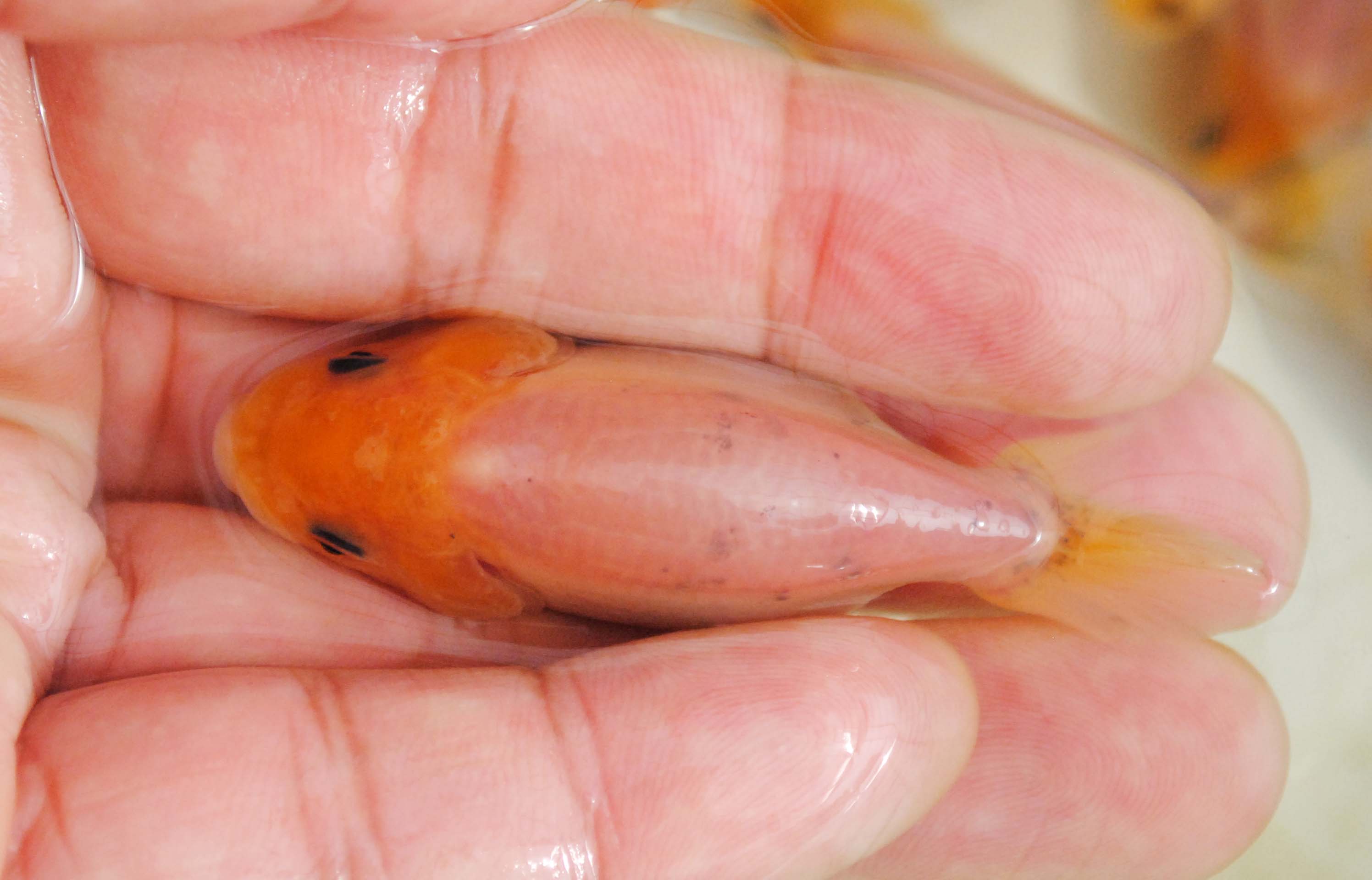
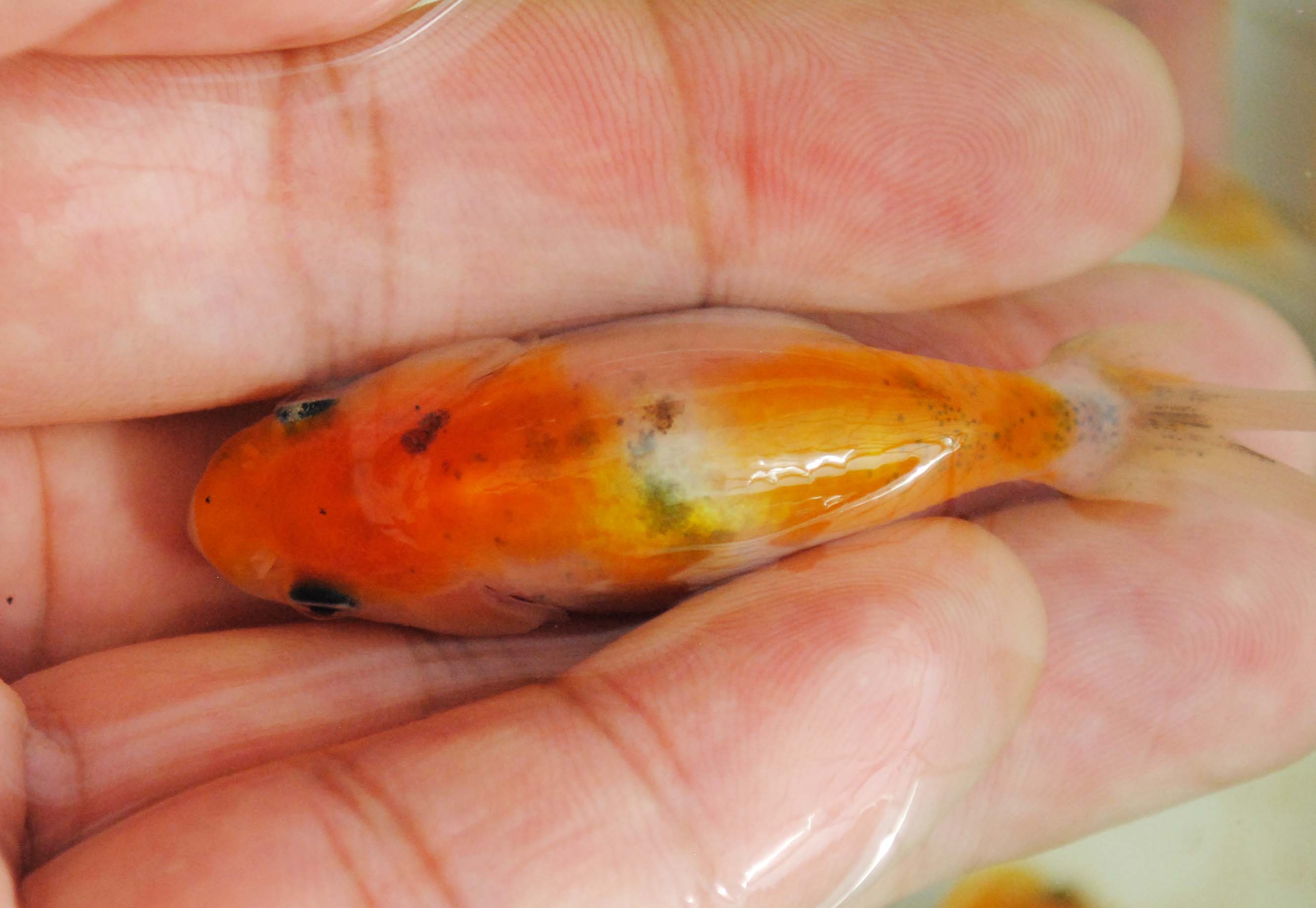
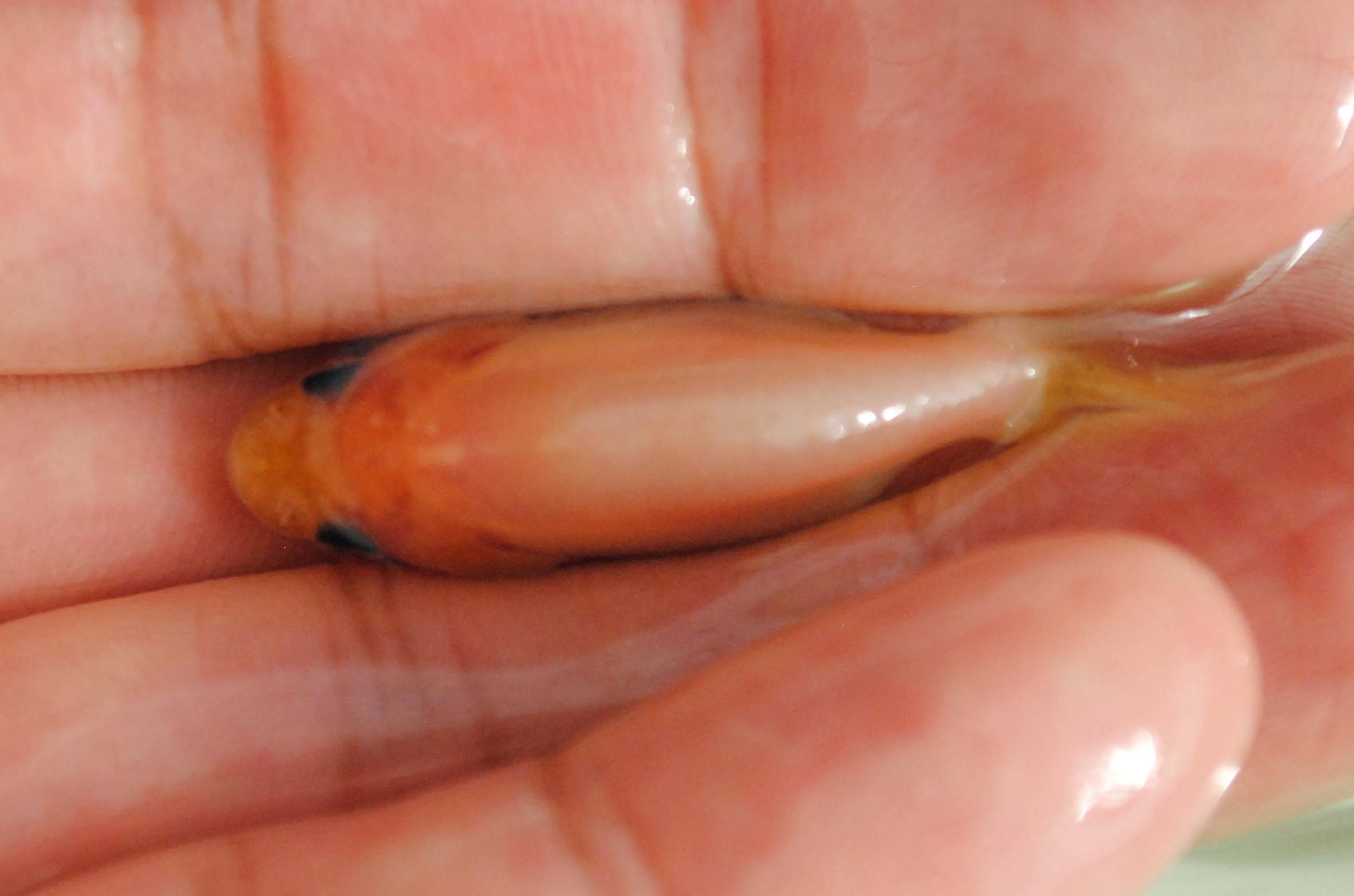
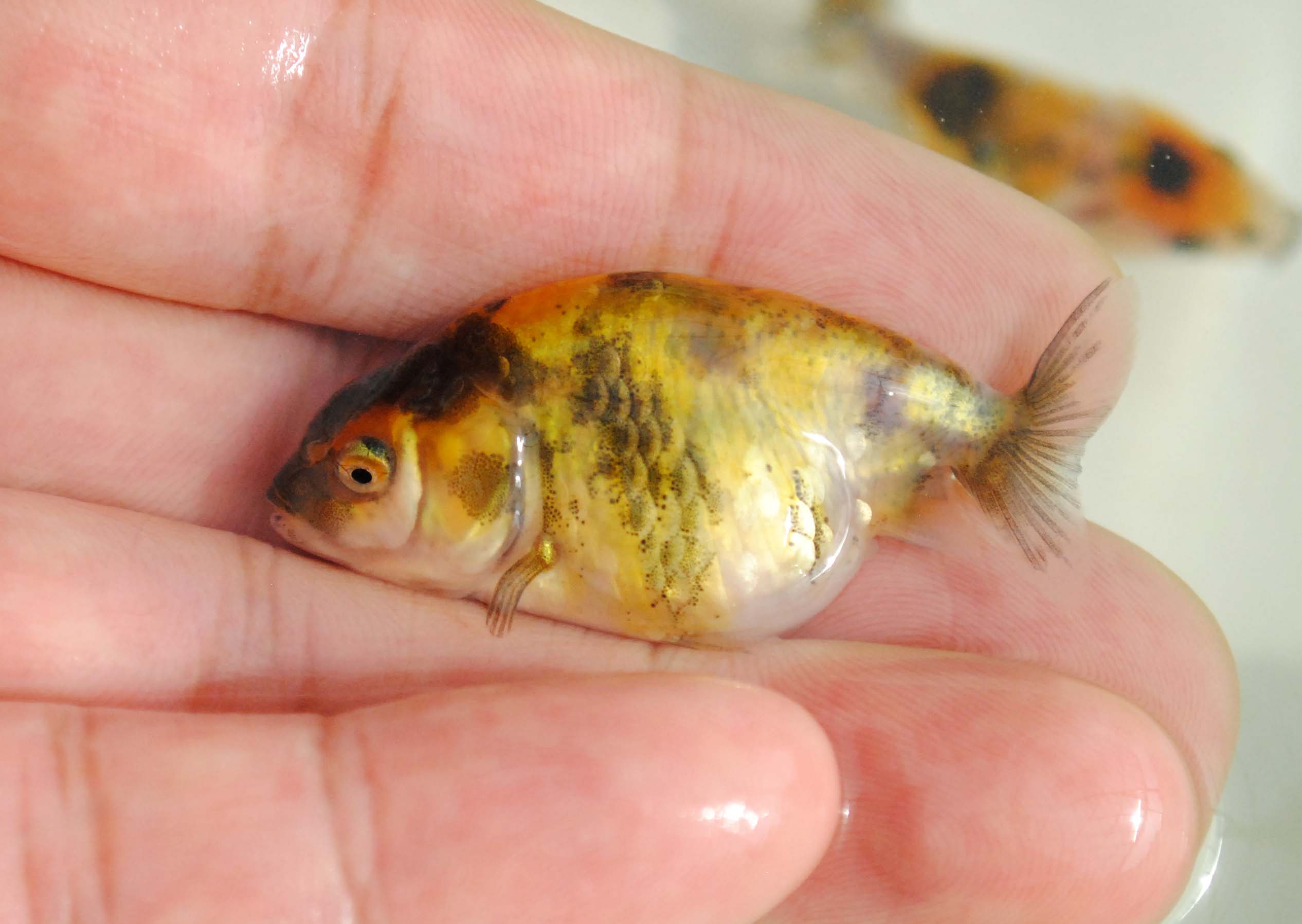
Fish 4 is interesting. It is almost totally white with minimal blue coloration and red color, which is what I need. Too bad it also has less black pigment. But as the sideview picture shows, the black pattern is interesting, reminding me of a belt pattern. I think it is nice to see how the offspring will turn out when crossing this with a fish that has strong black pigment. I only keep this one from this crossing.

The third crossing is a metallic tricolor ranchu with the calico female. This tricolor comes from a black fish (also calico offspring from my previous breeding project) that turns into this spectacular pattern. There is only one specimen of this.

And the results are:

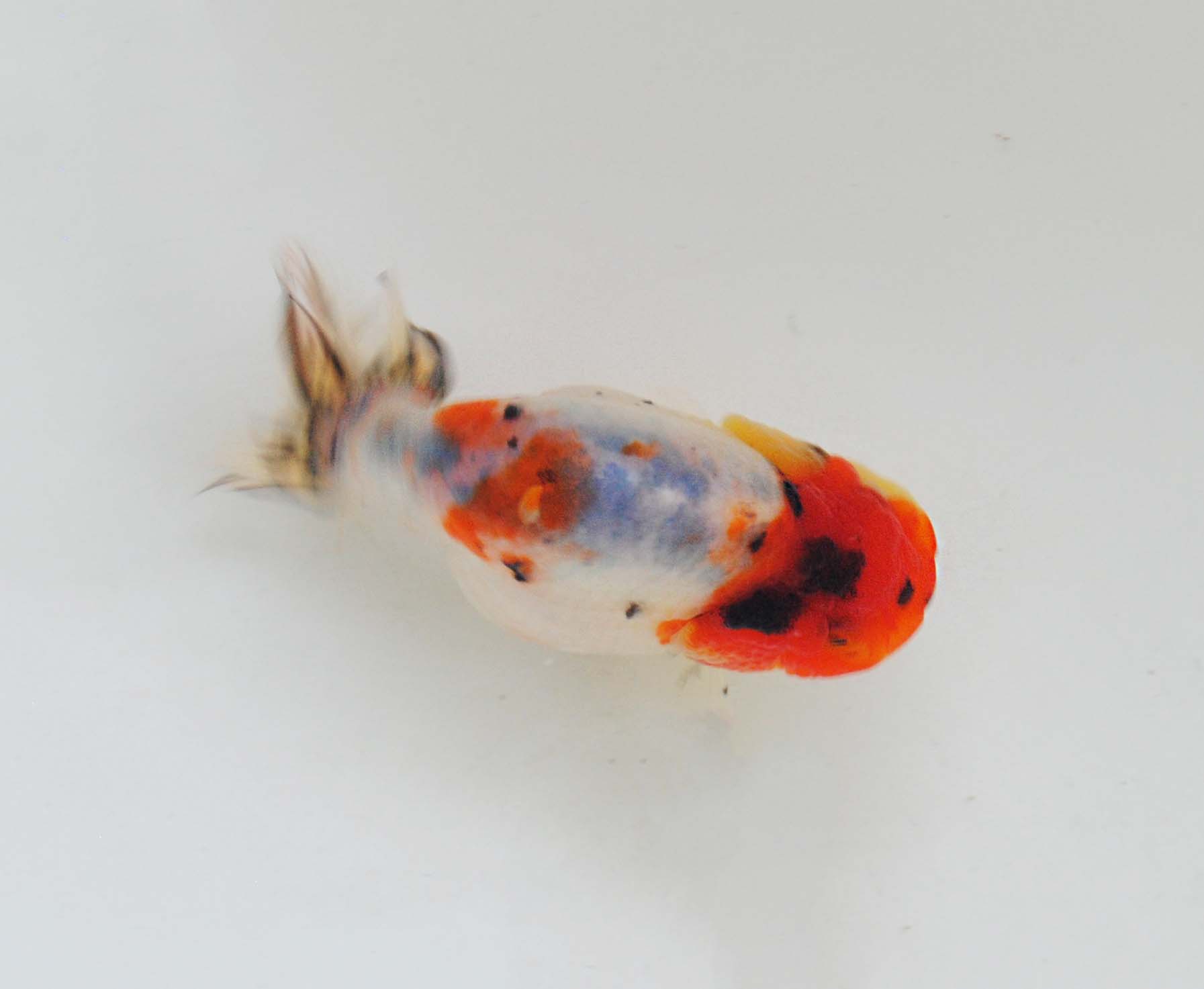
I think fish 1, 2 and 3 are pretty similar. They are dominated by white color with a little bit of red, blue and black which make them nice to see. They all have not so large but also not too small black pattern. I decide to keep them all.

Fish 4 show that this cross carries the black / grey and metallic gene.

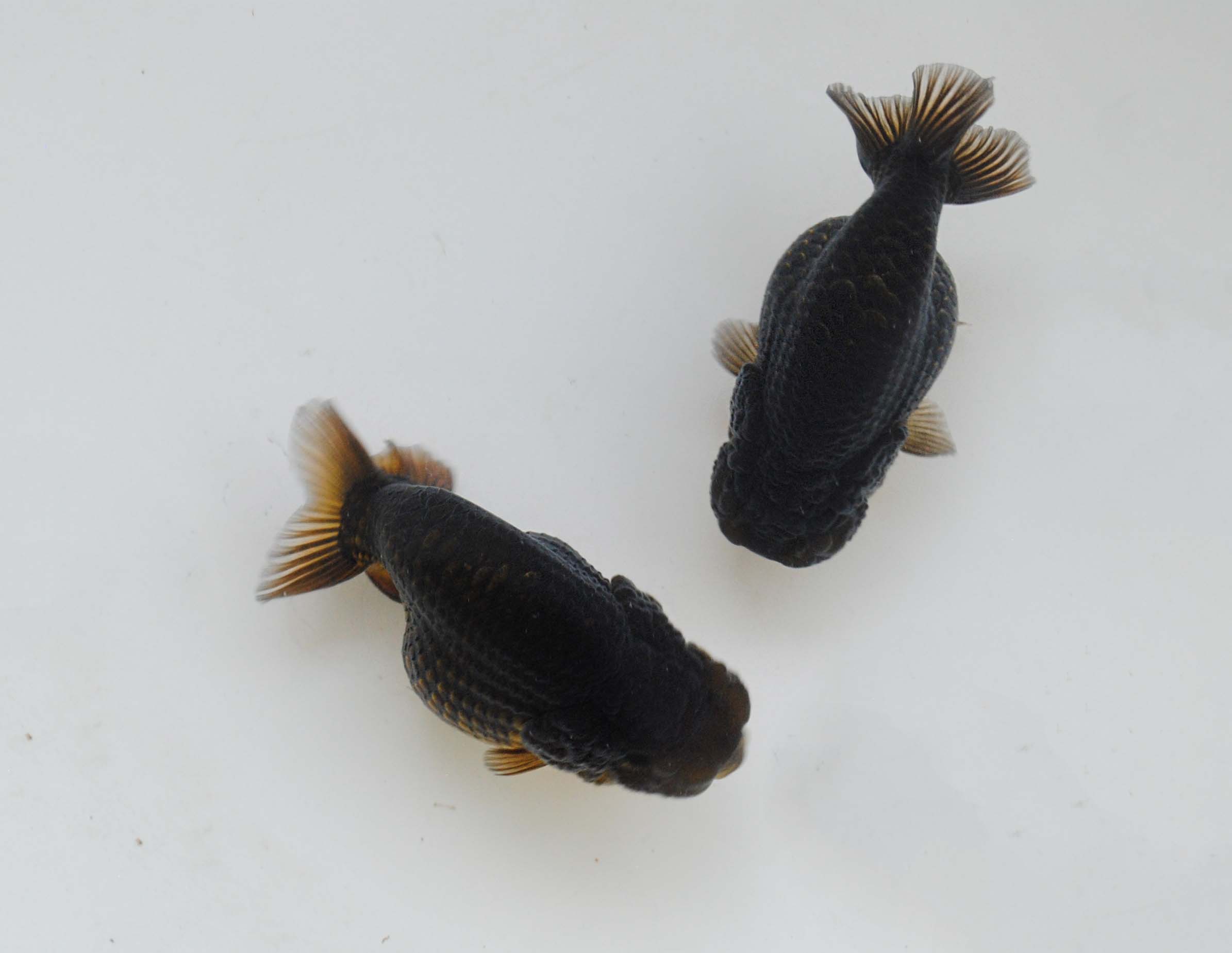
Last crossing is between a black uncle and the calico female:

Let me show the results:
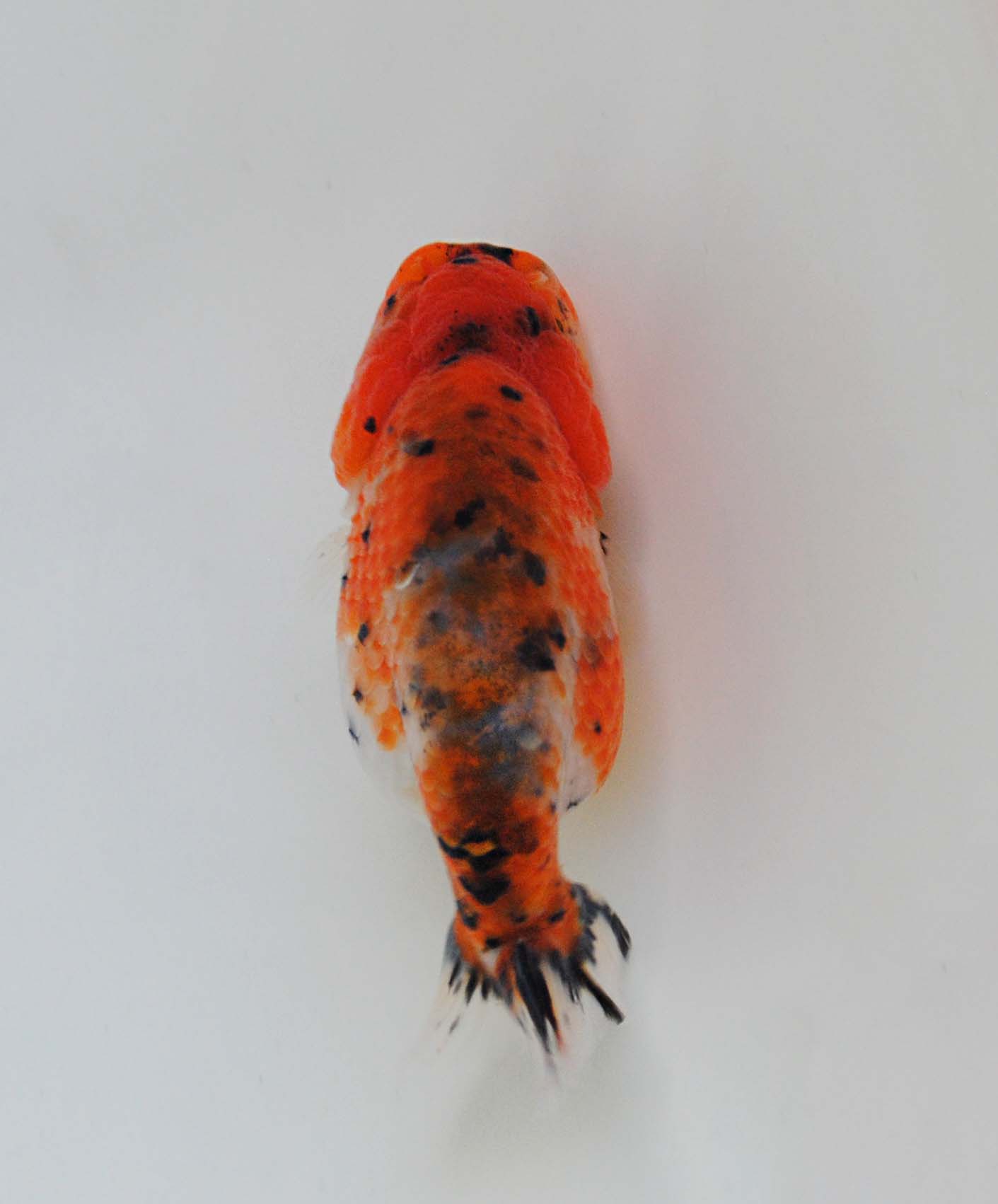
Fish 1 and 2 are calico with weak black pigmentation. The red color is stronger than the 2nd cross. I do not think I will use these two.

I guess my reader will know for an instance that I will keep fish 3 for the same reason I mention in the analysis of the previous crossing above. So also with fish 4. I will keep all black / grey fish at this moment.

Now my task is to wait for them to mature.

Wish me the best.

Thank you.
Standard
calico ranchu, cow ranchu

The Diary of a Goldfish Breeder 2024 (5)

In this Diary I will report the results of the cross between Cow Ranchu and Black Ranchu in this video:

The black is actually an offspring of my previous Cow Ranchu (Milk Cow Variant). Let me show the results and I will compare them with the offspring of Cow x Sakura reported in the previous diary (#4).

Here are the offspring:

The first category are fishes with large black markings in the shape of large blocks / islands. In these results they have red color. If they are free from the red color, they will come close to true Cow Ranchu, I think. At least when being watched from the top. Interestingly, from the side viewing, the black markings extend to one side of the body (sadly, only one side) to appear like large belts.

I think this is an interesting phenomenon. The project can be directed to create Cow Ranchu and Ranchu with Belts.

This one also has a belt in one side of the body, but the black marking does not extend to the top of the body. I will put this in the same class as category one, I think.

All these four will be in my breeding plan.

This is the 2nd category. It has lots of black marking, in the shapes of large blocks and dots. But the black marking does not produce a belt appearance. It is more towards irregular pattern. It can be considered as calico with lots of orange color. I am still undecided whether to use this in the project or not.

This third category is also interesting. They are close to the pattern of snow leopard, except that the snow leopard does not have blue and the black dots are smaller and many.

The fourth category resembles calico but a weak one. The blue and white are dominant while all the other three color are minimal. I do not think I can use them to propel this project.

The fifth category is the almost white fish. I notice that the black color is stubborn, though minimal.

This sixth category is the Sakura. Once again, the black color still appears in a minimal proportion.

And the last category is the black color. They always come out from the Milk Cow crossing. Of course, I will use them as my main ingredient in this project.

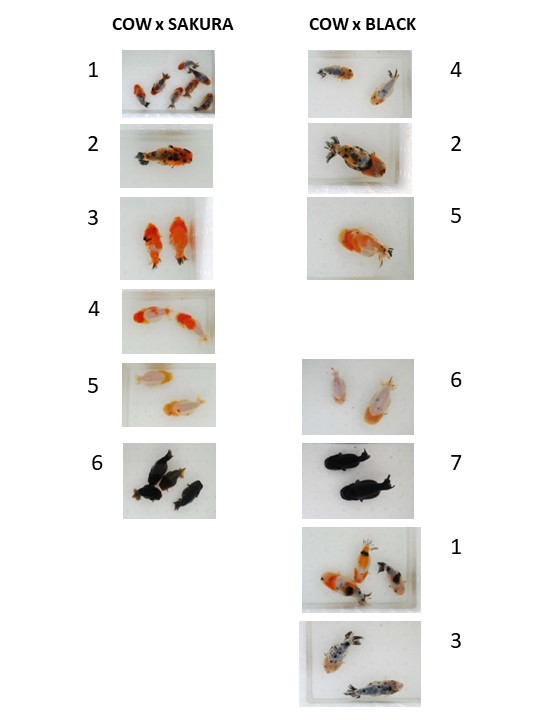
So, to compare with the Cow x Sakura, let us examine this table:

In the cross with Sakura, we do have offspring #4 (left) which has beautiful proportion between the red and white color (roughly 30% – 70% or 40% – 60%). This is different from #3 (left) which is dominated by red color. And #4 has no trace of black pigment. We do not see this variant in the Cow x Black offspring.

The offspring that comes up only from the Cow x Black are the #1 (right) and #3 (right). Yes, the cow / belt variant and the (somewhat) snow leopard variant only appears in the cross with black. I find this finding interesting.

The beautiful calico variant only appears in the cross between milk Cow and Sakura. This is also a thing to ponder.

The black appears on all of the crossing.

I think there is a lot to think about from this observation. I will make my next breeding plan based on this information. Tell me if you find any interesting interpretation to this information.

Standard
calico ranchu, cow ranchu, The Diary of a Goldfish Breeder 2022

The Diary of a Goldfish Breeder 2022 (4)

Update on my Cow Ranchu projects. I use a female with two males separately.

This is the first match, the female and the male:

I bought the female from a local farm and I do not know whether it is a local breed or an imported fish. My guess, it is an imported fish. The male is my own offspring. I have a feeling that they are from the same lineage (I mean, their parents / grandparents might come from the same farm in China).

And this is the second match, where the female is the same fish:

The male is an imported fish from Chine (through Vietnam, as I was told). It is sold with the label of milk cow since its white color seems to be free from bluish shadow. So, it is safe for me to assume that the female and the male come from different farm lineage in China.

And their offspring shows different results!

These are the offspring from the first match:

They are dominated by the white (or pink) fishes. Some develop red color to become calico. Some have black patches, some black dots. And the black coloration grows. None are purely white (or Casper the ghost) – all have some hints of black coloration. I have high confident that they will be beautiful color as the melanin develops more intense.

Here are some close ups:

But the second match shows different result:

There are the white (pink) with hints of black pigments as well as the calicos. But there are also the Casper (without any black pigment in the body), the Tiger (with red pigment dominates the body), and also three more unidentified variants.

This is the Casper:

This will be the Cow, I guess:

This is the Calico:

This is the Tiger, and I am sorry I forget to take the topview picture:

These two are the first unidentified variant. They have white and purplish coloration with black dots:

These two puzzles me, since they have green color (like wild fish) but with some part of the body being purplish. And their scalations are transparent:

And the last one is similar to the previous two but without any purplish color. And at first, I thought the color was metallic scale with wild color. But now it develops transparent scale in its stomach, and the metallic scalation becomes blur. I am not sure how will it develops:

For me, it is interesting to see that these two matches produce different result. It shows that many fishes labeled as Cow Ranchu might carries different genes. Some can yield true cow coloration (with small percentage of calico) just like my first match, but some can produce all sorts of transparent scale variations as the second match shows.

The greenish ranchu is another interesting case to watch. I am enthusiastic to see what they will become. Will they produce interesting color? Or will they be just dull coloration subject to cull out?

Standard
calico ranchu, cow ranchu, The Diary of a Goldfish Breeder 2021

The Diary of a Goldfish Breeder 2021 (3)

Date: March 5, 2021

               My ranchu projects are not as well planned as the oranda projects. For several years I have worked with blue, brown, and purple ranchu. I develop them from scratch. I got my blue ranchu from the panda moor x ranchu. My brown ranchu came from chocolate pompom x ranchu. And my purple ranchu was a cross between the blue and the brown ranchu. It took years for me to get those colors into the decent ranchu shape. But until now, I have not had a clear vision of how to develop my line’s basic ranchu shape.
               The oranda projects consume a lot of my space. It is the fate of a city breeder like me to work with limited space. I must think of the management of my tubs in a daily basis: moving fishes around from tubs to tubs, maintaining a manageable hatching size, culling as early as possible in the strictest way I can. With this lack of vision and space in developing my ranchu line, I plan to reduce my activity in ranchu projects for now. I will only breed just to make sure they are not extinct from my collection. By doing this, I can save my space. The good thing is that I can always put ranchu in the same tubs / ponds with oranda without the risk of losing track of the lineage. I cannot do this for the hatches between semi brown, semi blue, semi purple, and semi yellow oranda. They all will mutate into the same color (namely red, red-white, or wild color). They must be kept in separate tubs to keep track of which one is which.

Hopefully later on I will be able to develop my own ranchu line’s shape. But for now, they are not my priority.

Actually, there were two main sub projects in my ranchu planning. They were the cow ranchu and the tricolor ranchu.

Last year I was resolved to breed the cow ranchu. I have acquired at least three different line associated with cow ranchu from China (one from De Quan farm, one from Pan Xi, and one from unknown). I even mixed them with my blue and purple metallic scale ranchu. Yet, the results are far from satisfying. I have bred them several times with similar results. Most of the offspring have no anal fins. The rest have horrible back shape. Sometimes I got only one or two decent shape from a batch. The surviving ones mostly become either calicos or casper (the full transparent white fish).

Right now, I revise my cow ranchu project. First, my aim is not to acquire cow ranchu offspring anymore. I revise my aim into producing my calico ranchu line instead of cow ranchu line. So, I will cross whatever transparent scale I have, be it cow ranchu, calico, or a mix with other ranchu type. I will not keep track of the lineage of the offspring anymore. And later on, I will see if there is a good body shape and color from my mix collection that I can develop into my own transparent scale ranchu line. Just surrender myself to the force of randomness. Second, I will sort of postpone this project for later. Right now, I will just breed them only when I have space and time, and to collect few decent fishes from each batch. I will raise them together with my oranda. So, this project will not occupy a lot of my space and energy for now. Hopefully I will have some beauties to work with later on.

It seems that in life, one must choose one’s priority. One cannot have everything, at least in the same time. So, I think I am correct in postponing the priority of my ranchu projects for now to concentrate on my oranda.

The second sub project was the tricolor metallic scale ranchu. I was trying to develop this kind of ranchu from my tricolor goosehead oranda. I have made several attempts for some generations, with no success. I think failure is part of a breeder’s life. But I am still trying and learning from my mistakes. I am still restarting again and again.

Right now, I have three batches of different cross between the tricolor oranda (and also her cross) and ranchu. I dedicated three large ponds for the offspring (roughly 10 weeks old now). They are space-consuming and this project is far from being successful. I am still watching how the offspring turn up (whether they will carry the tricolor genetics or not) and thinking of another way of doing this in case the current project fails.

This sub project of tricolor ranchu is so dear to me. I can postpone the blue, brown, purple, and cow ranchu projects, but not this one.

Standard