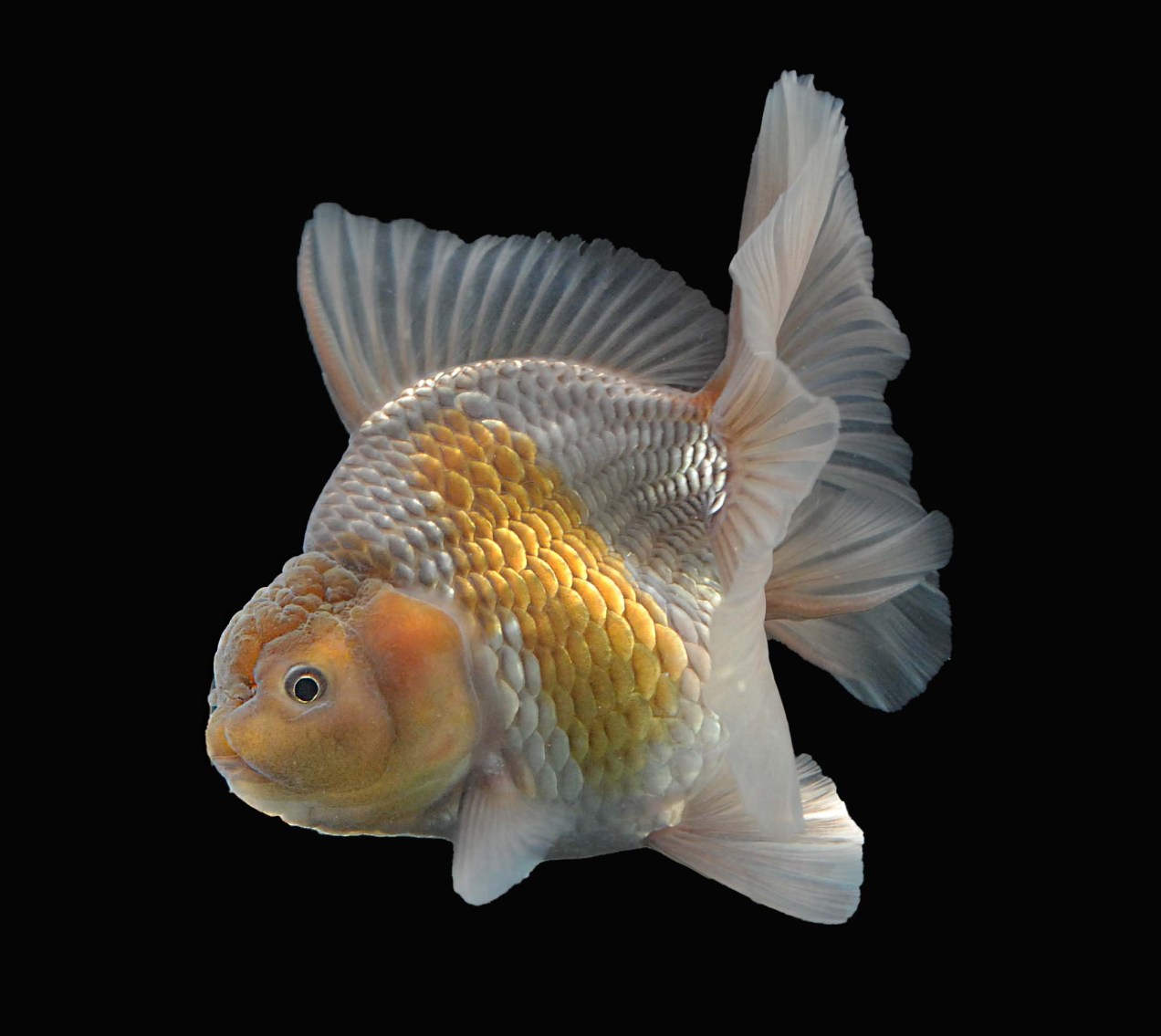
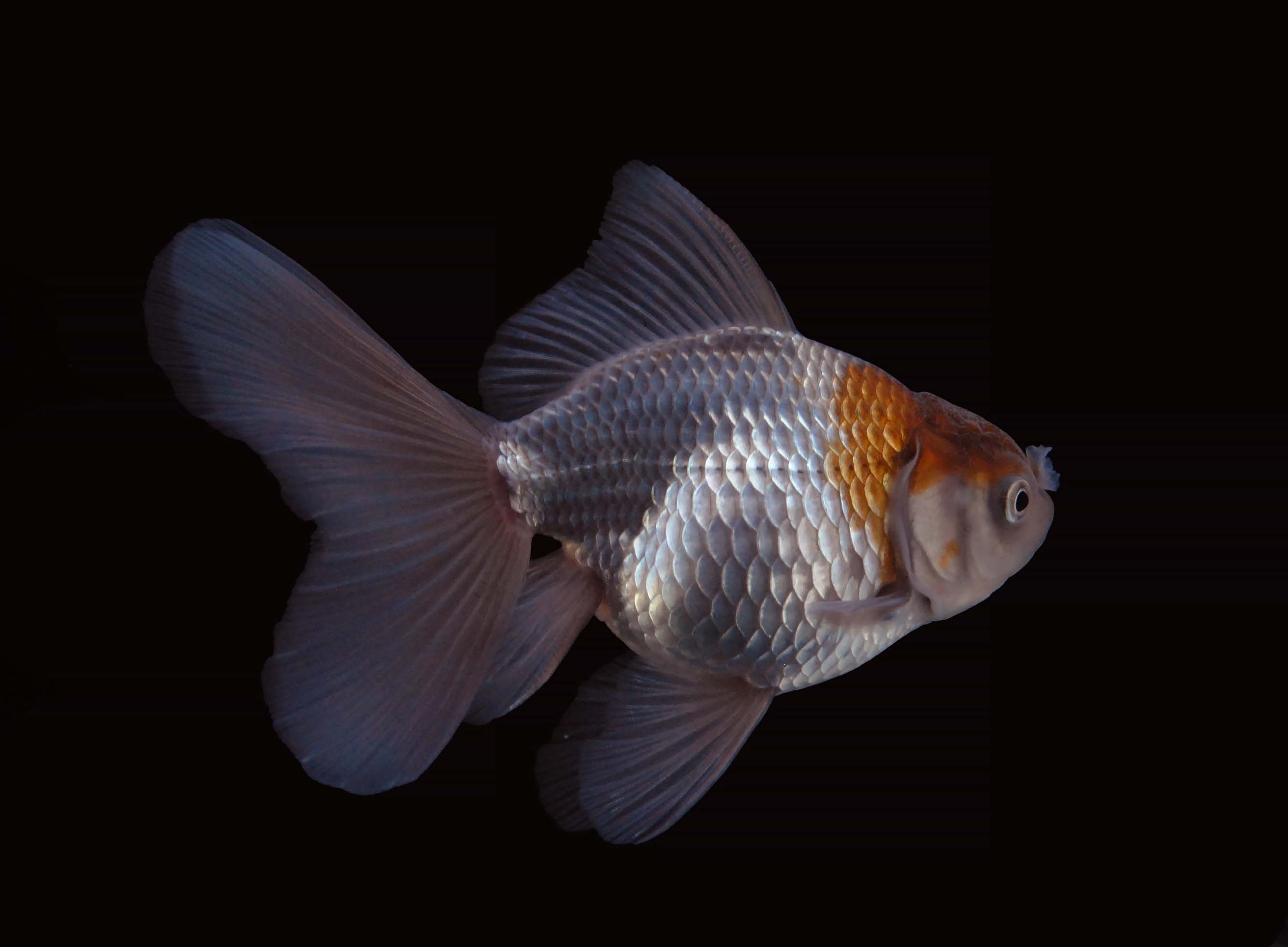
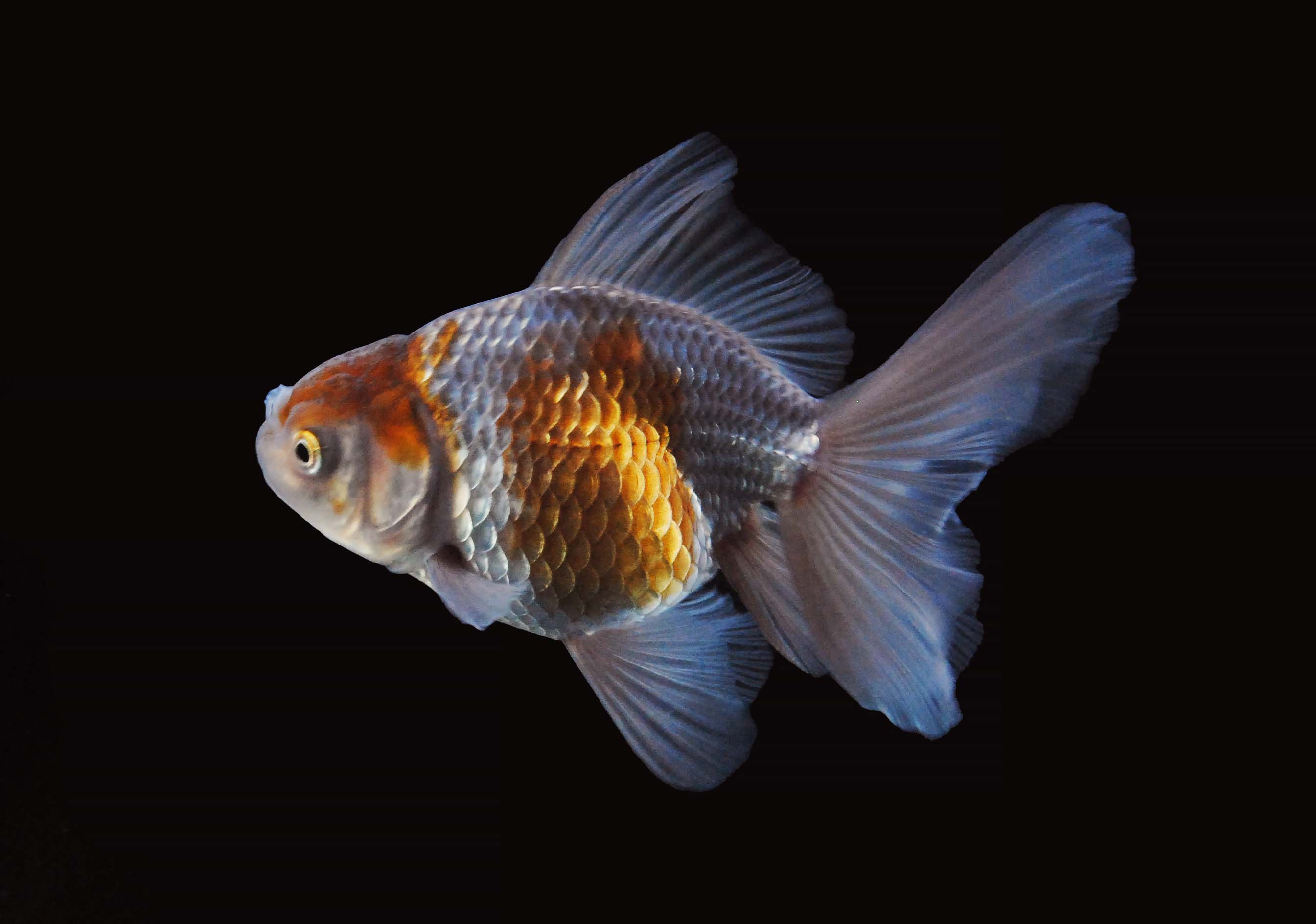
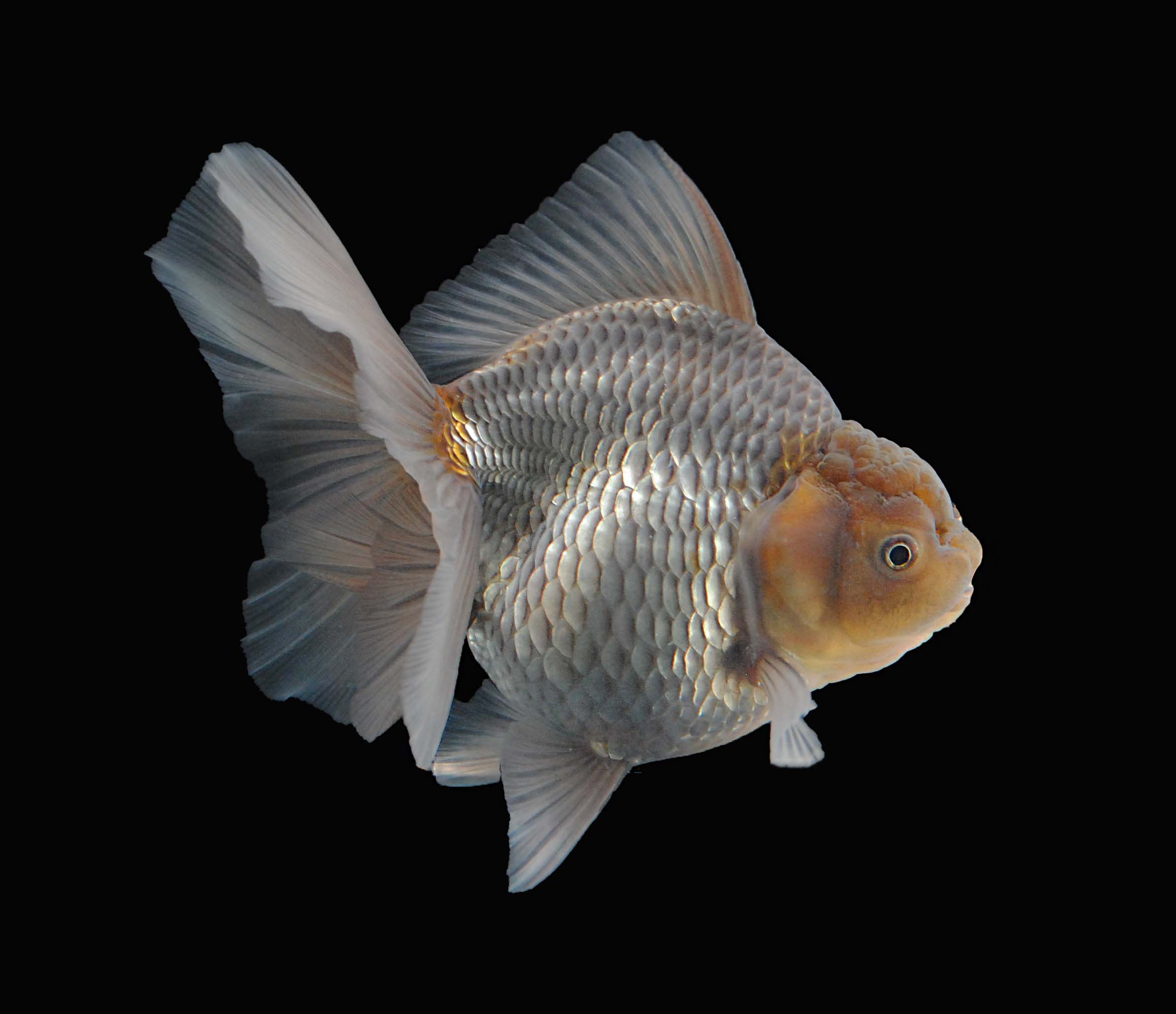
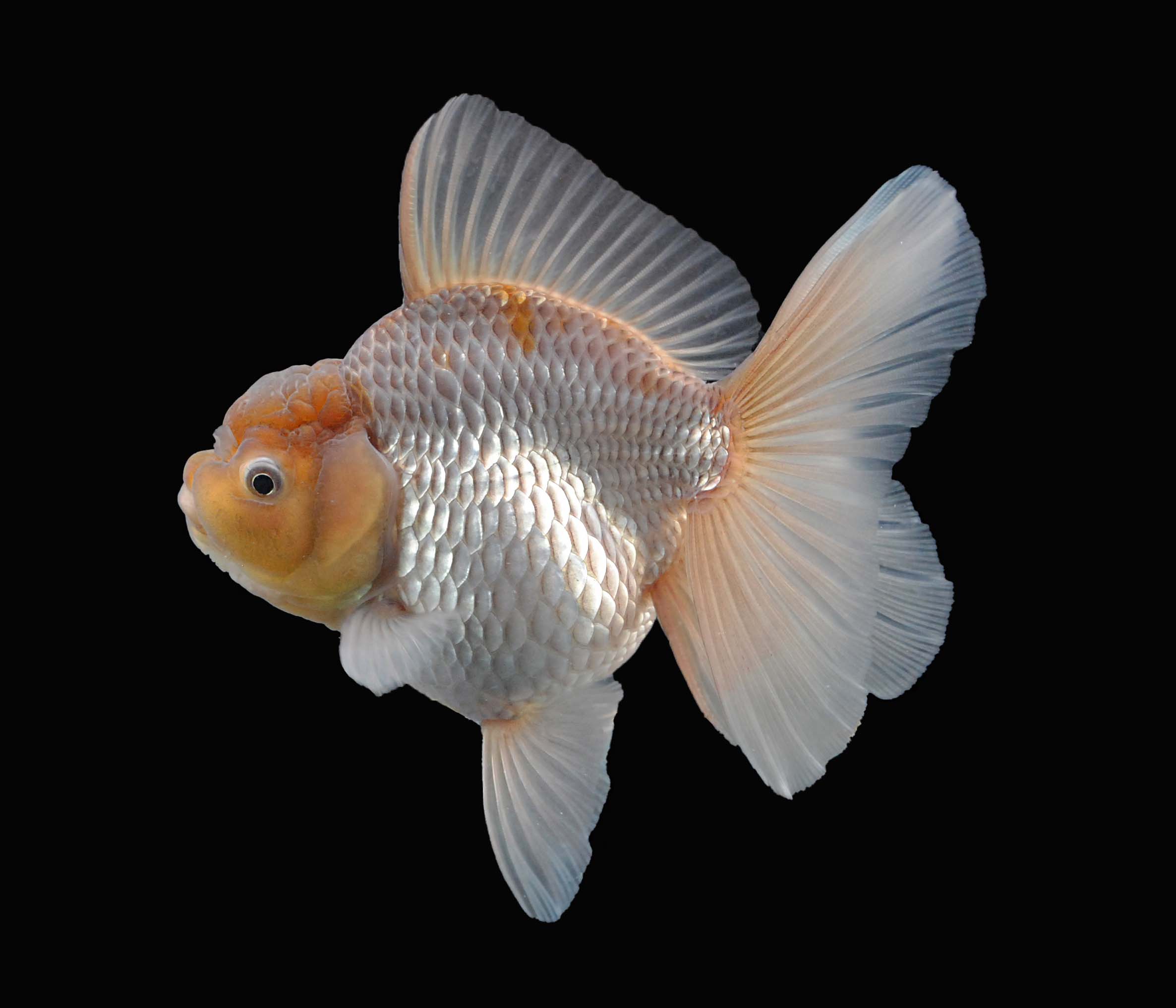
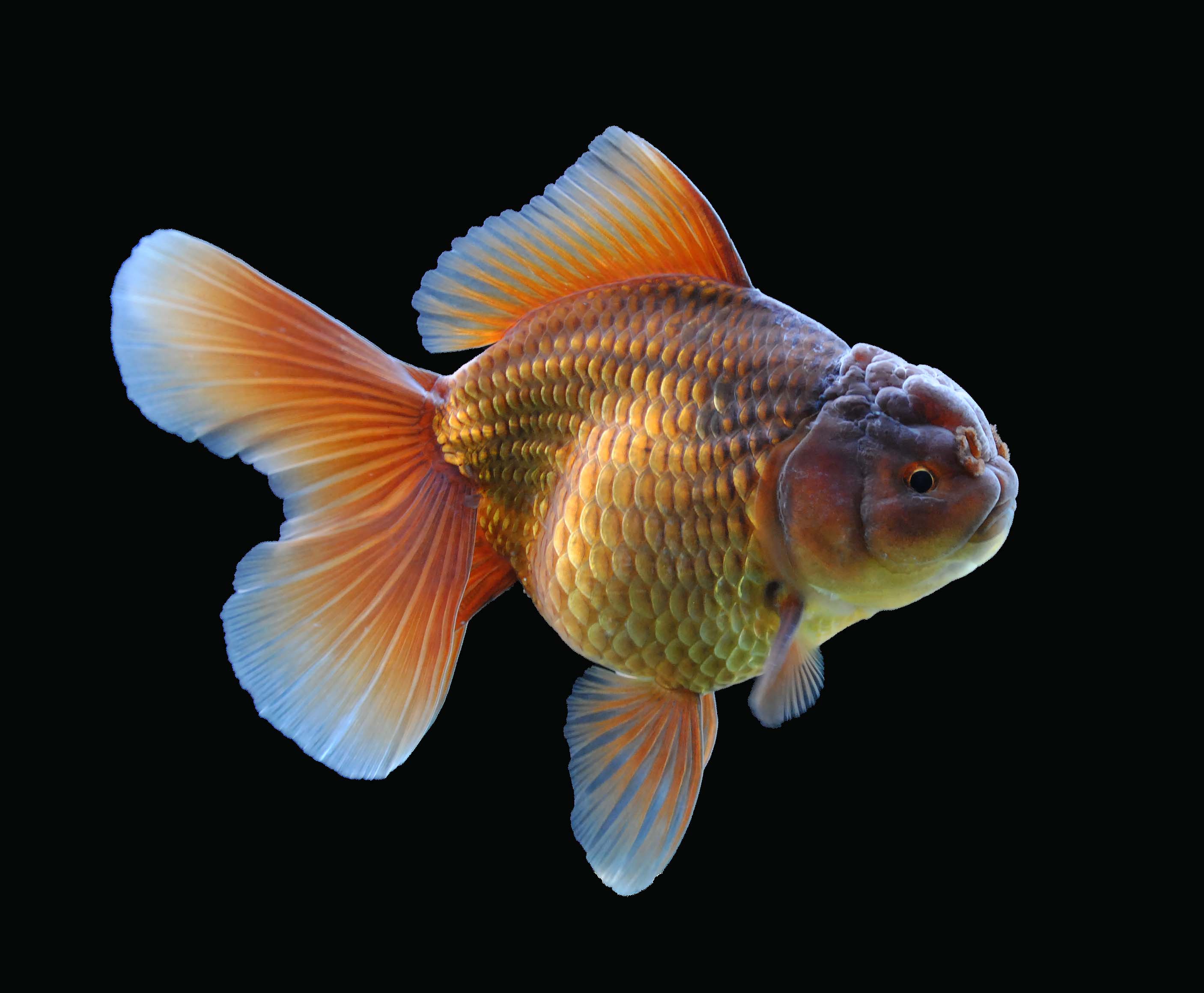
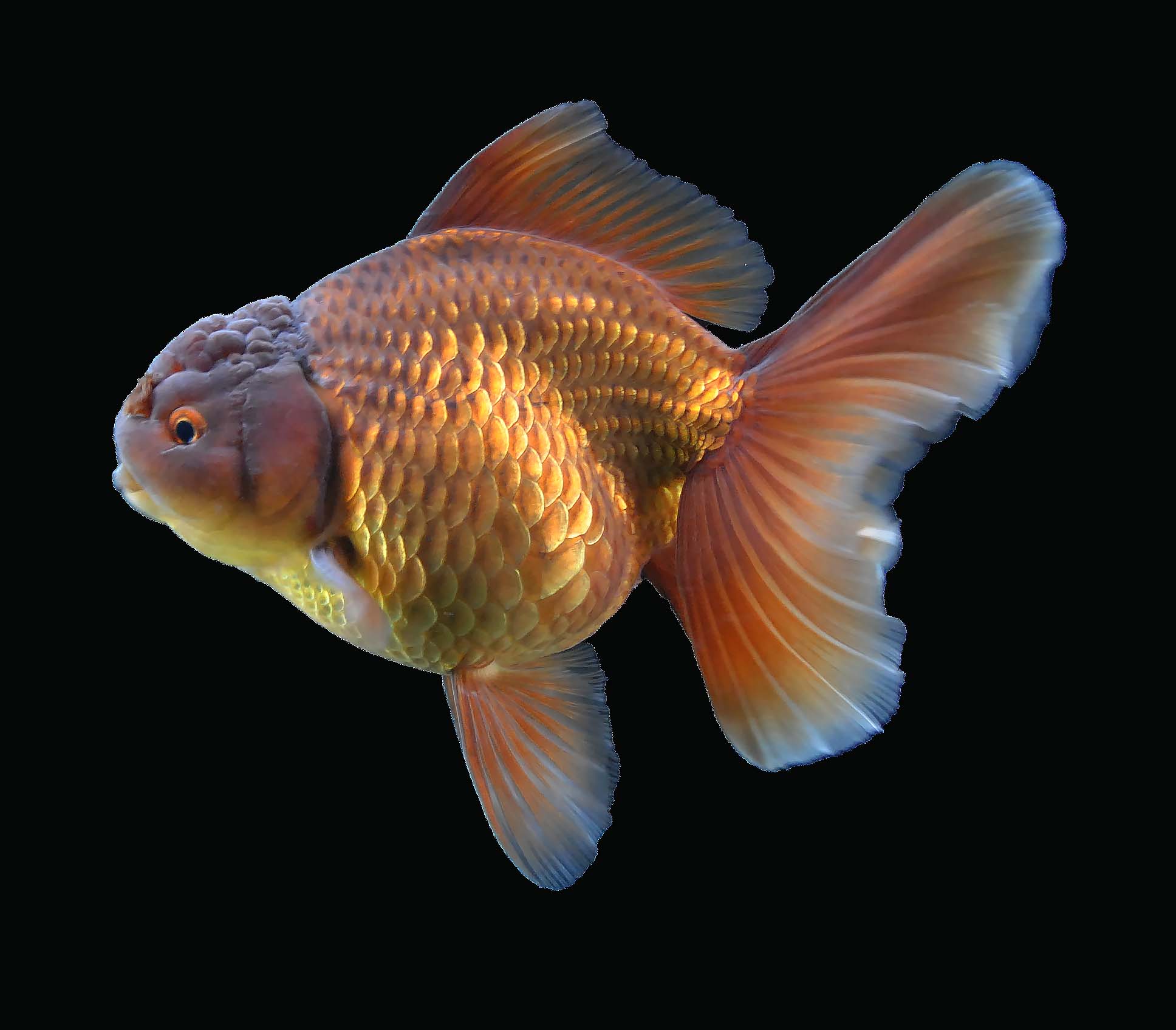
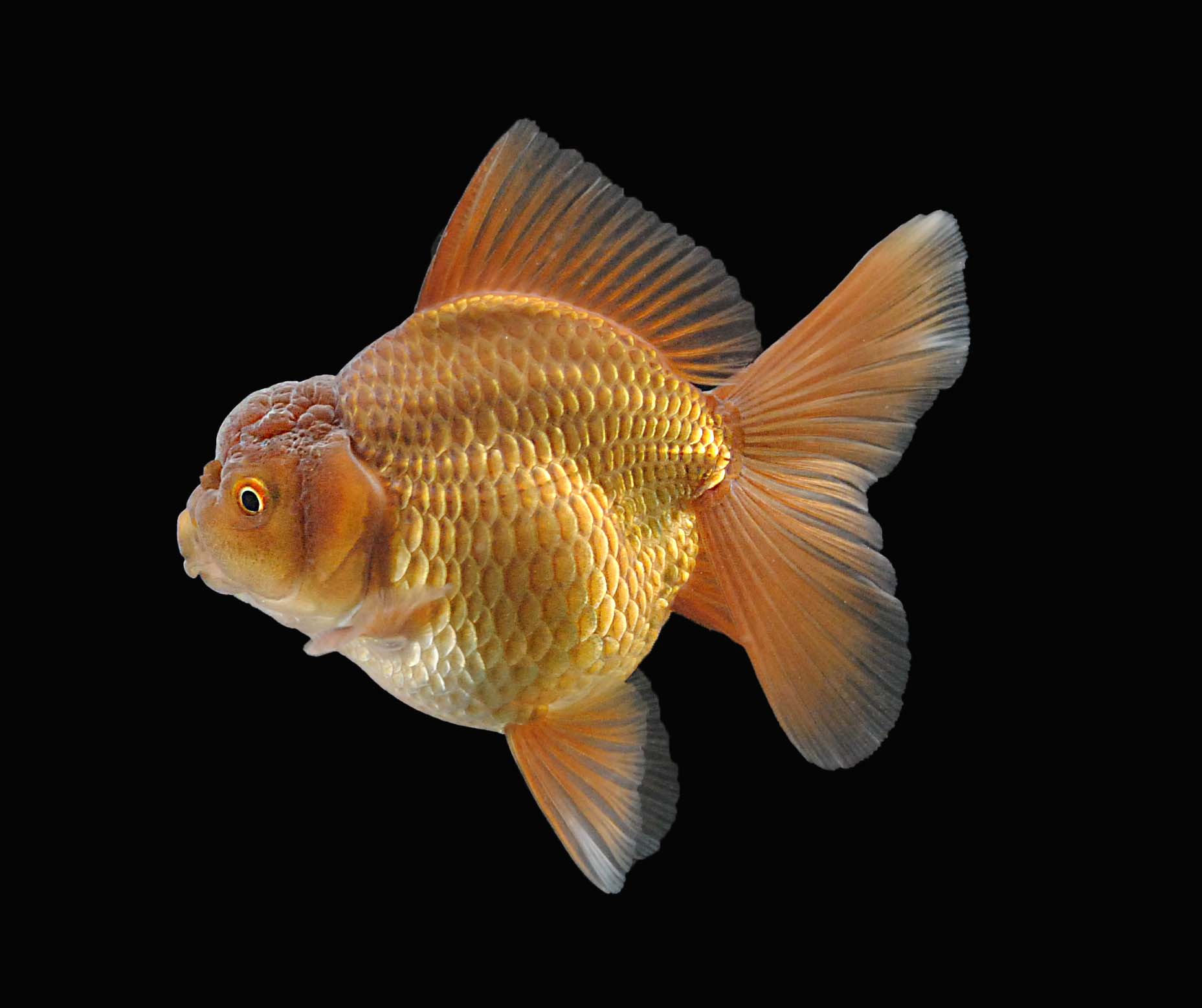
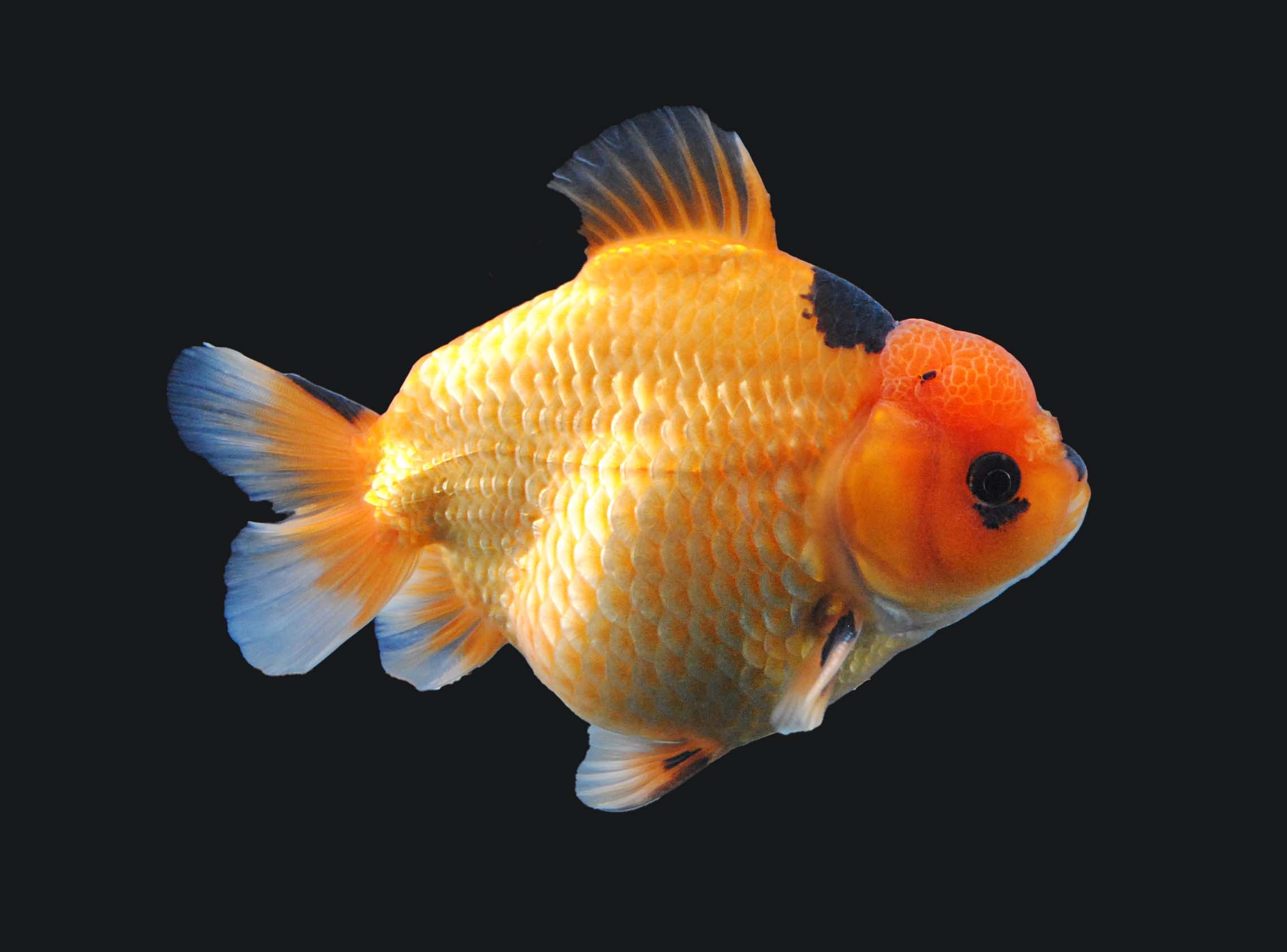
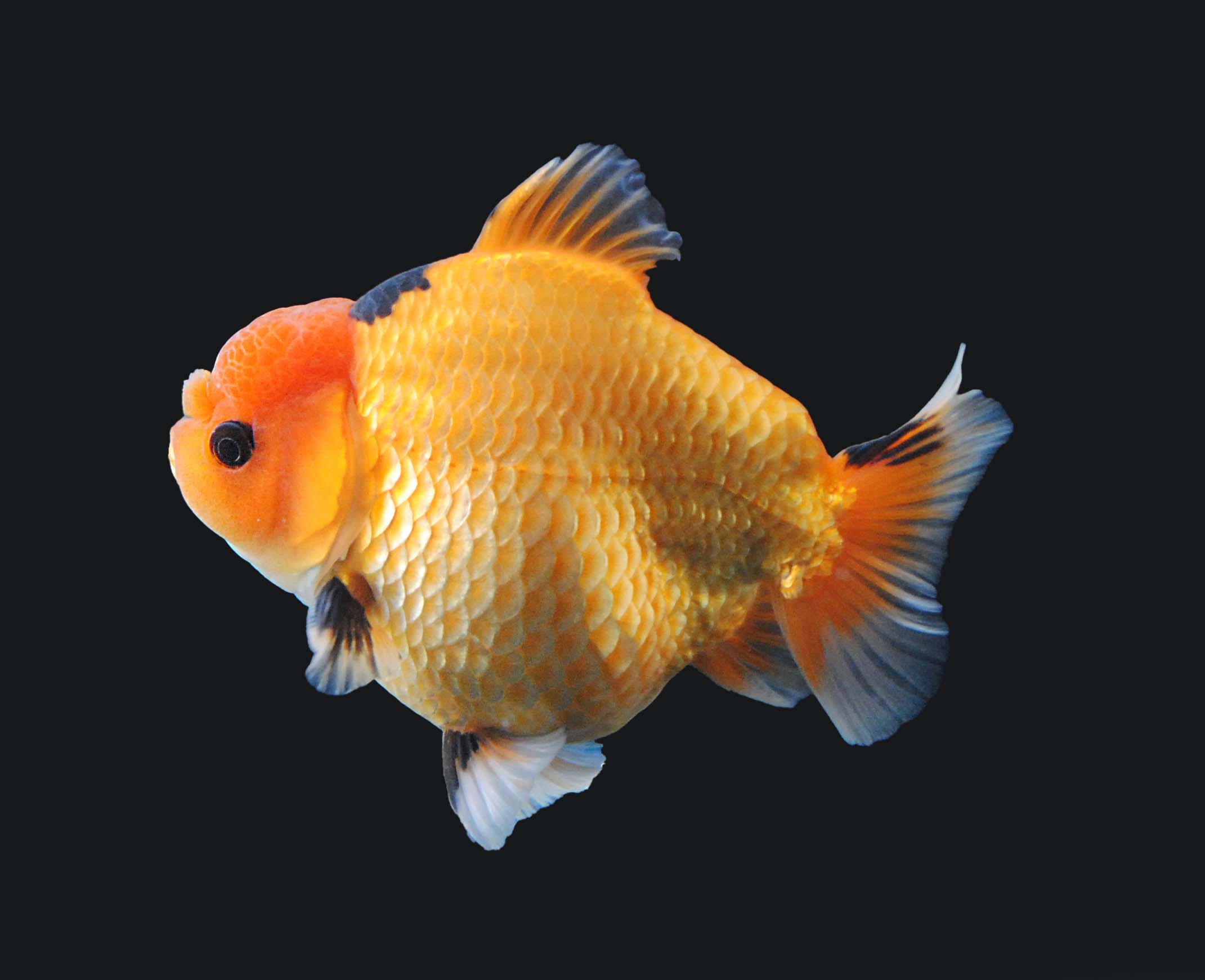
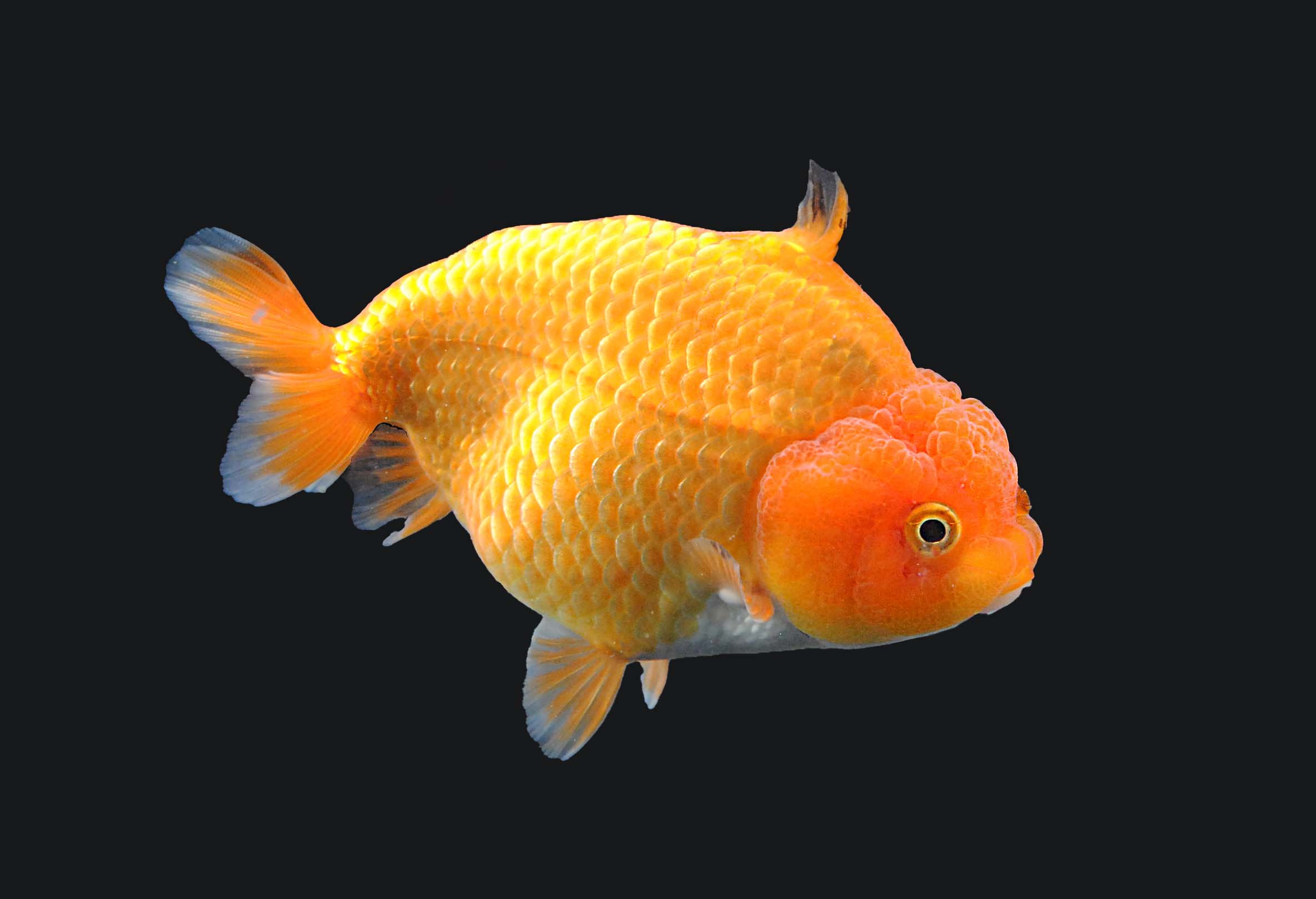
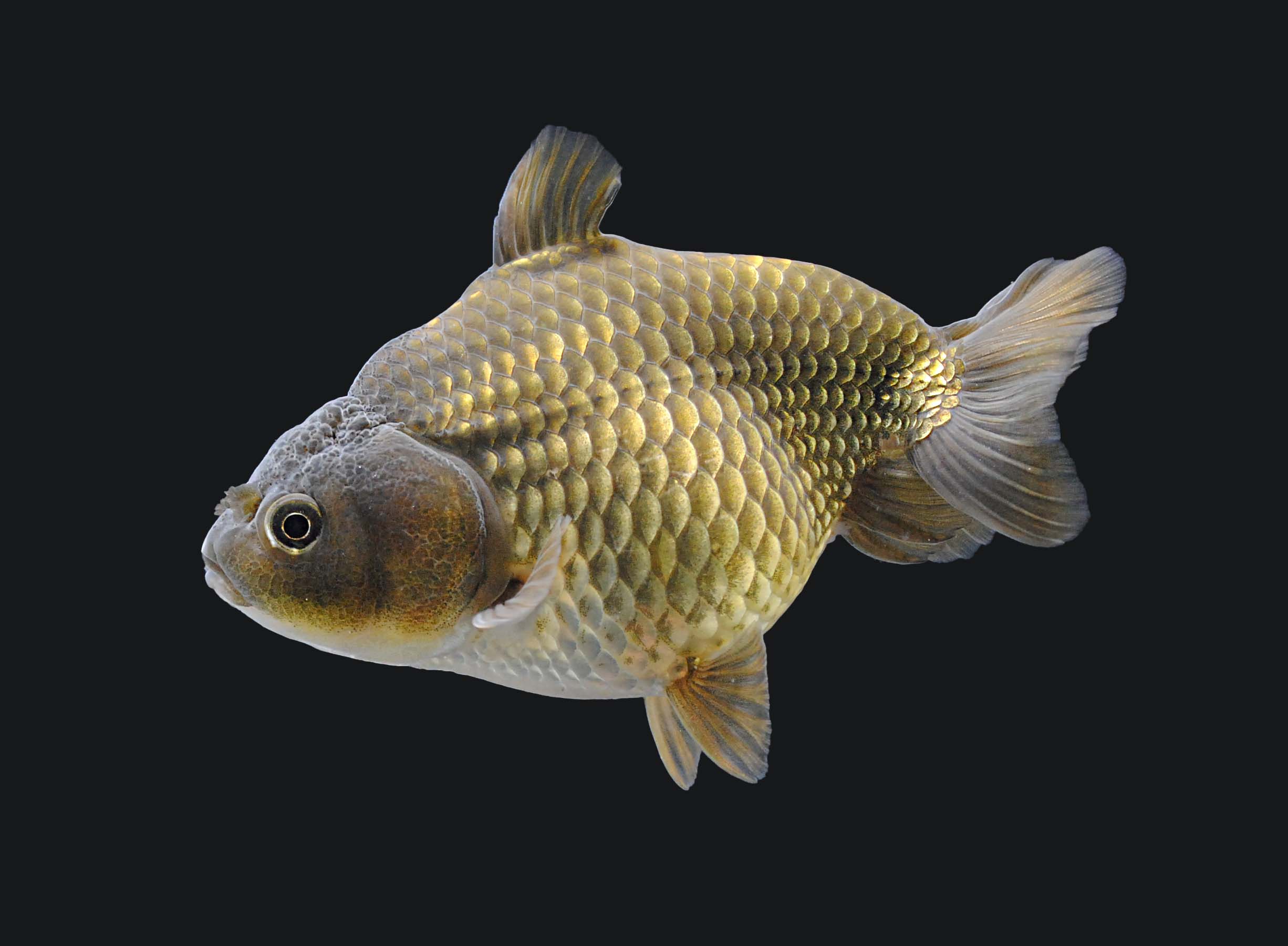
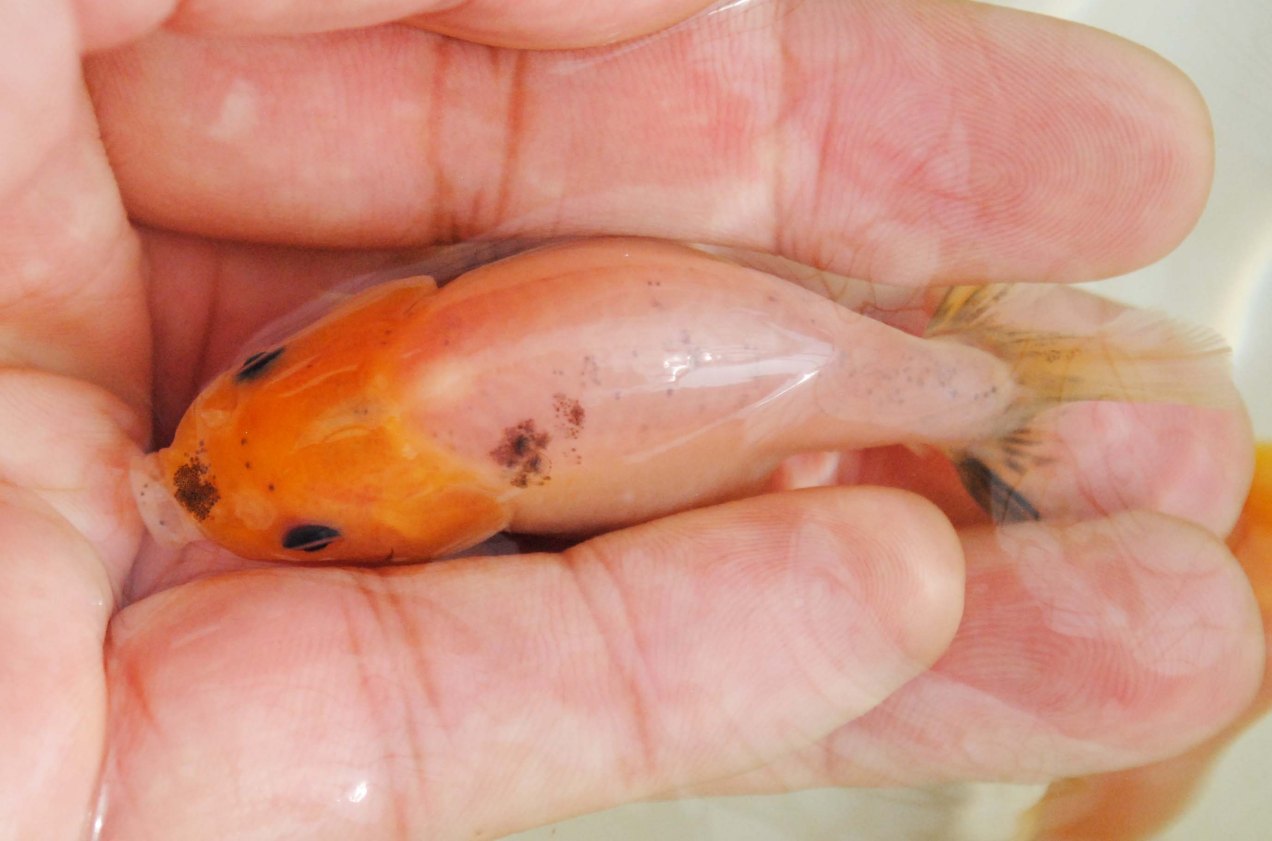
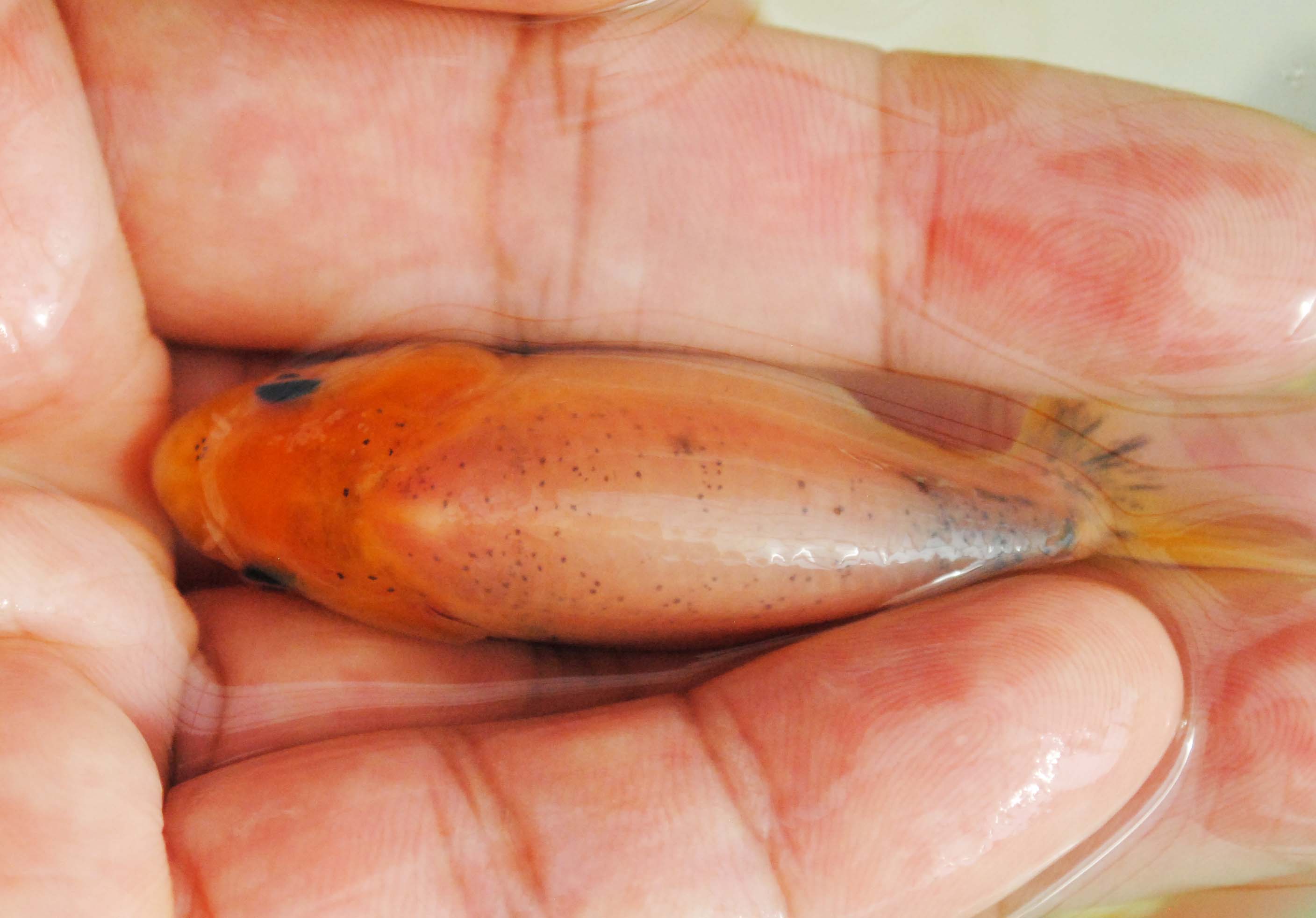
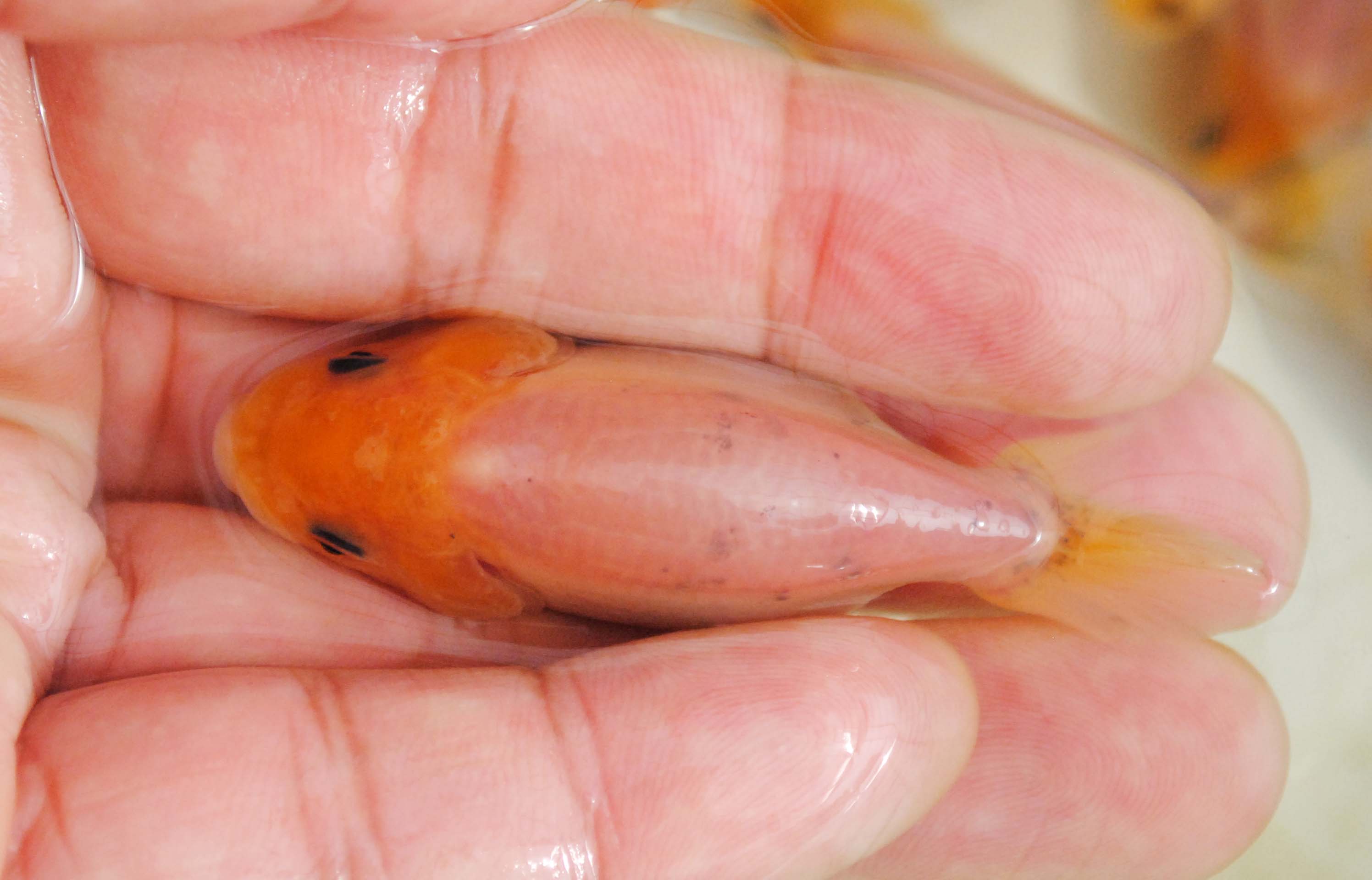
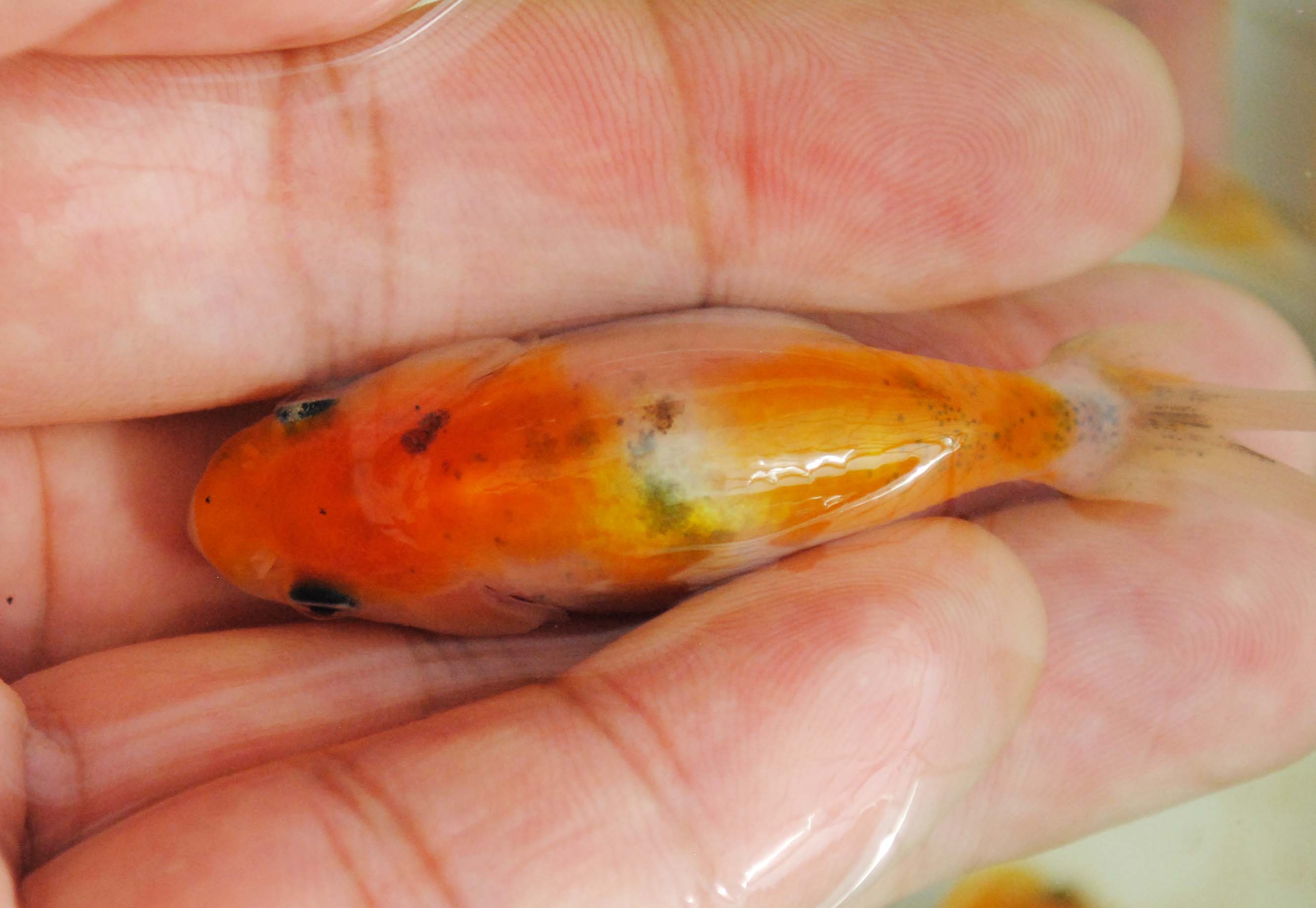
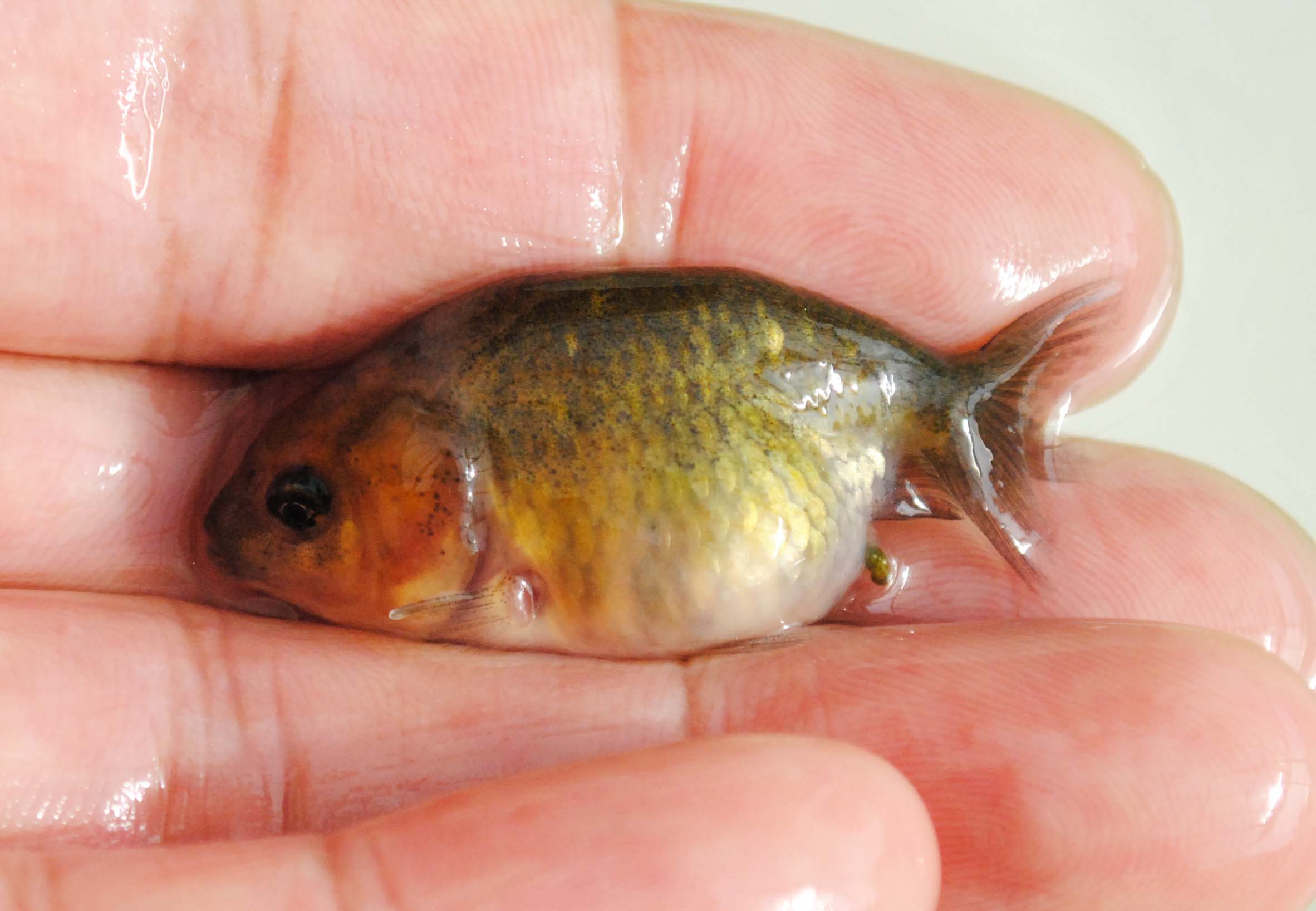
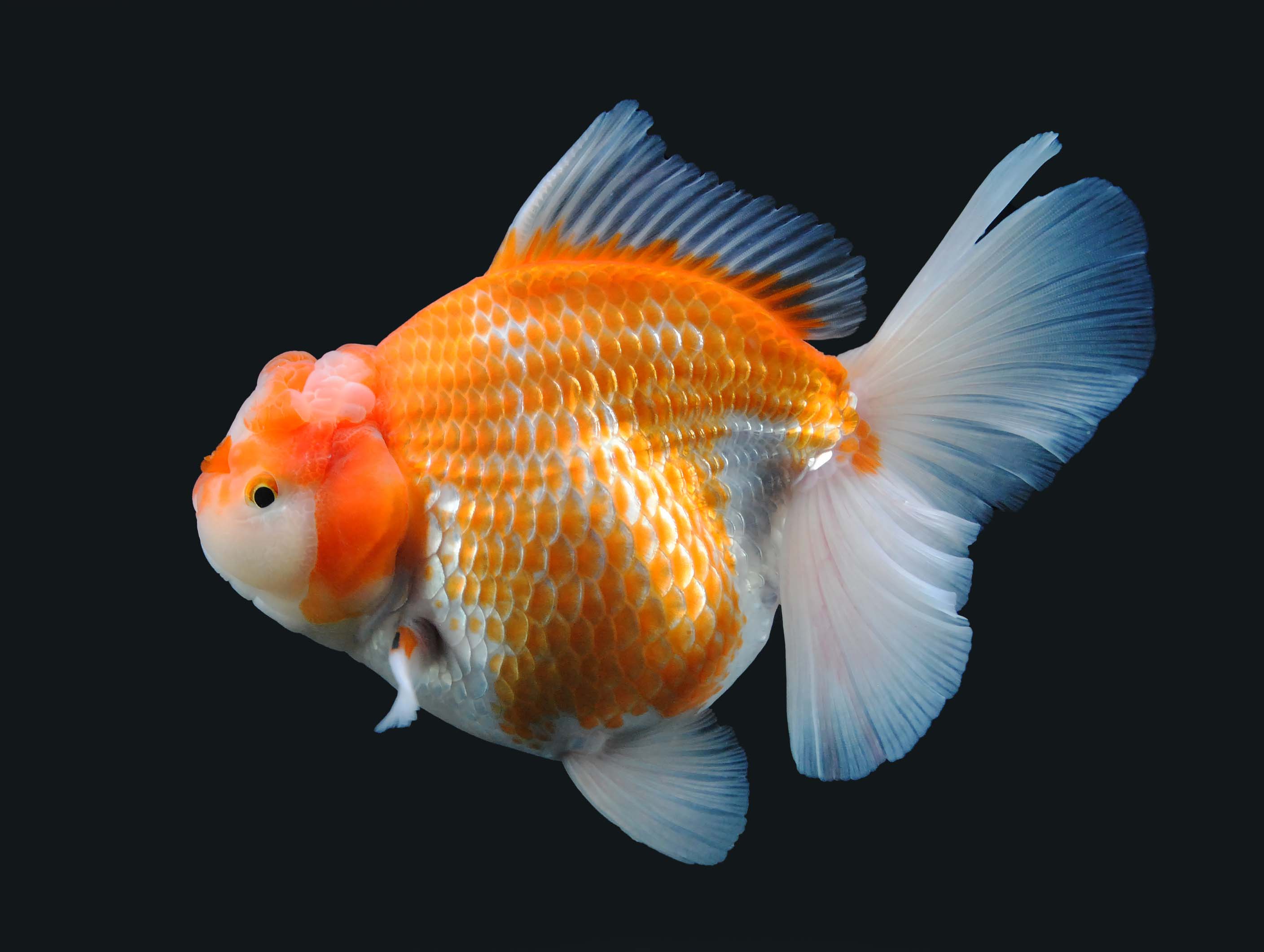
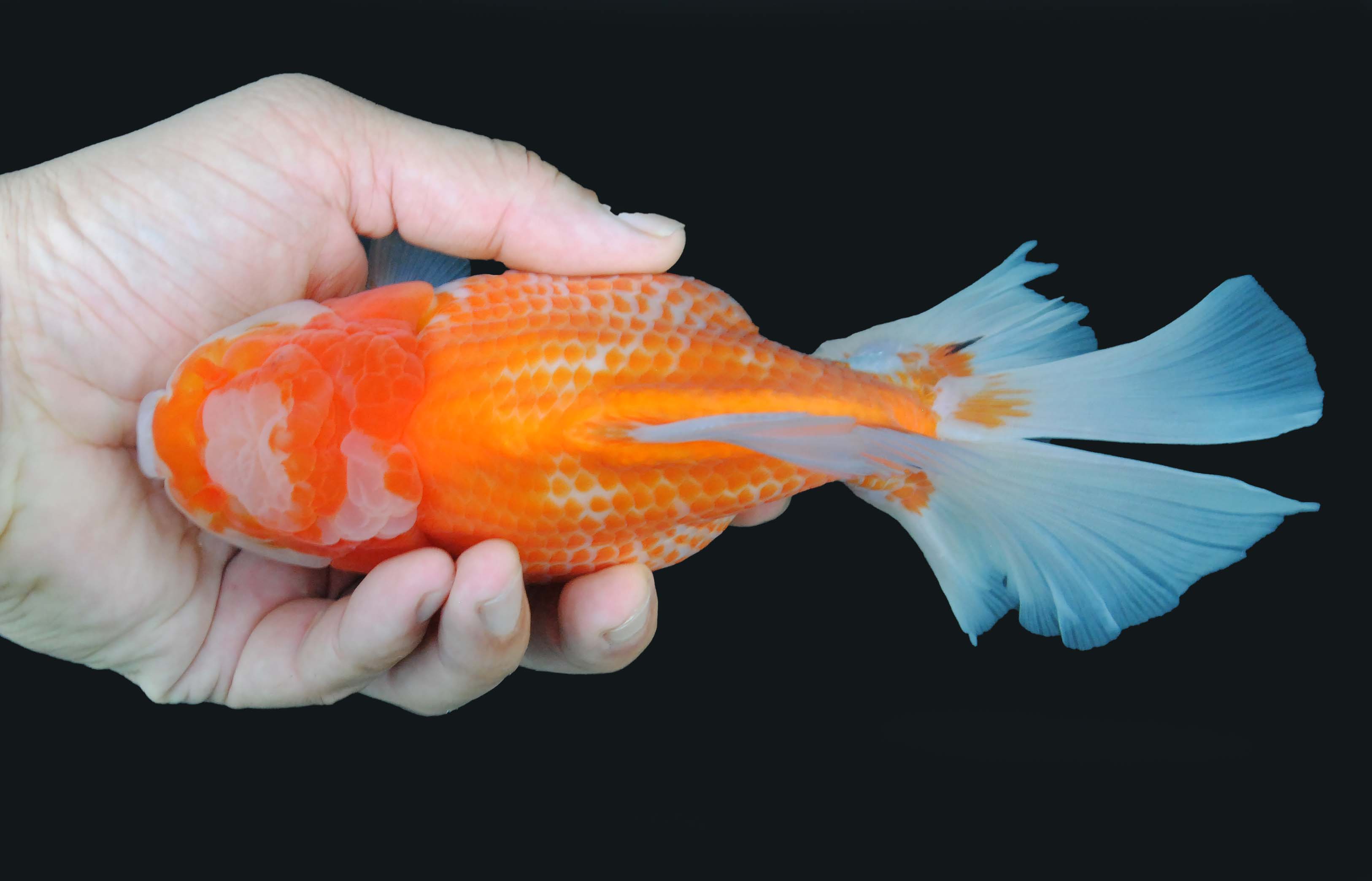
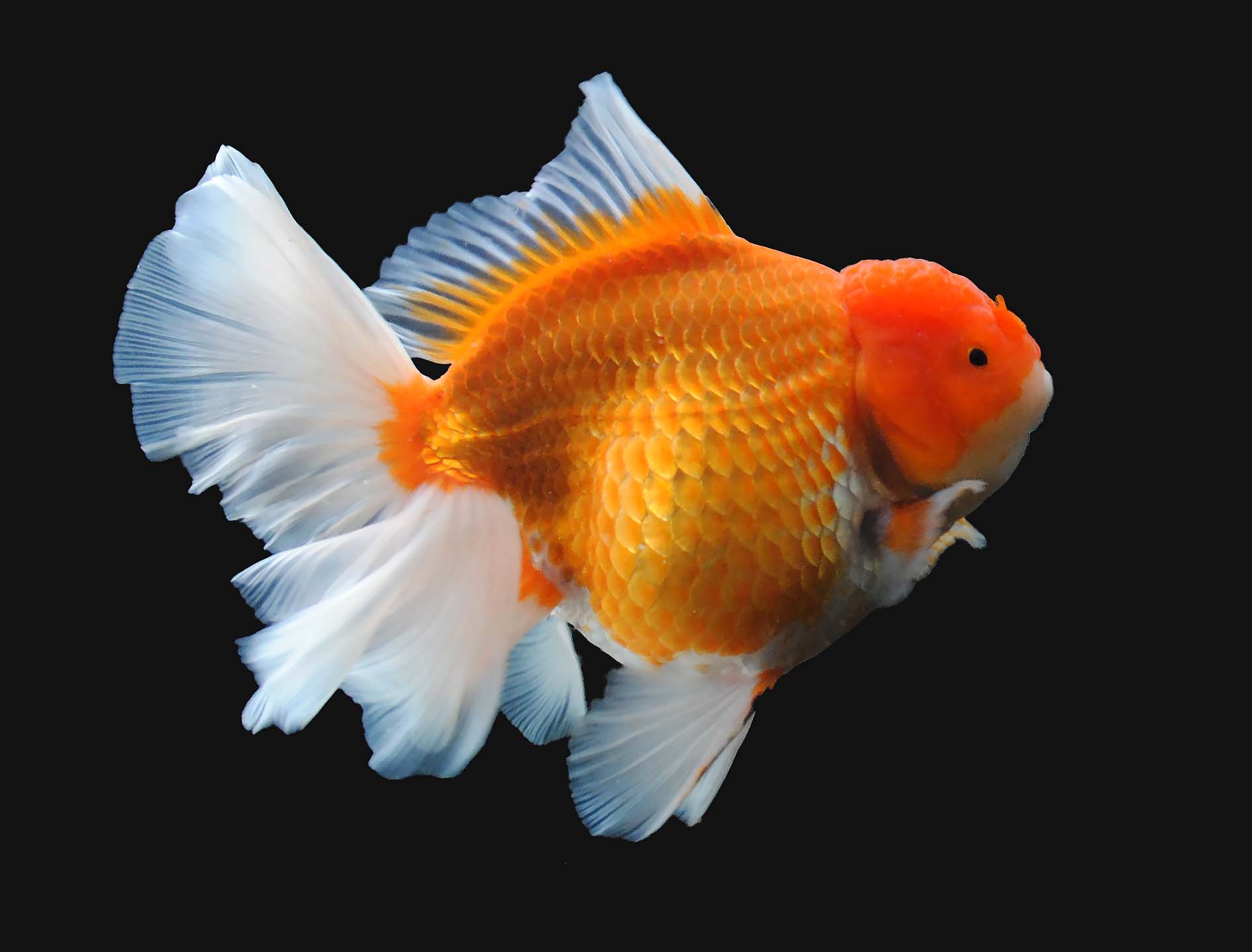
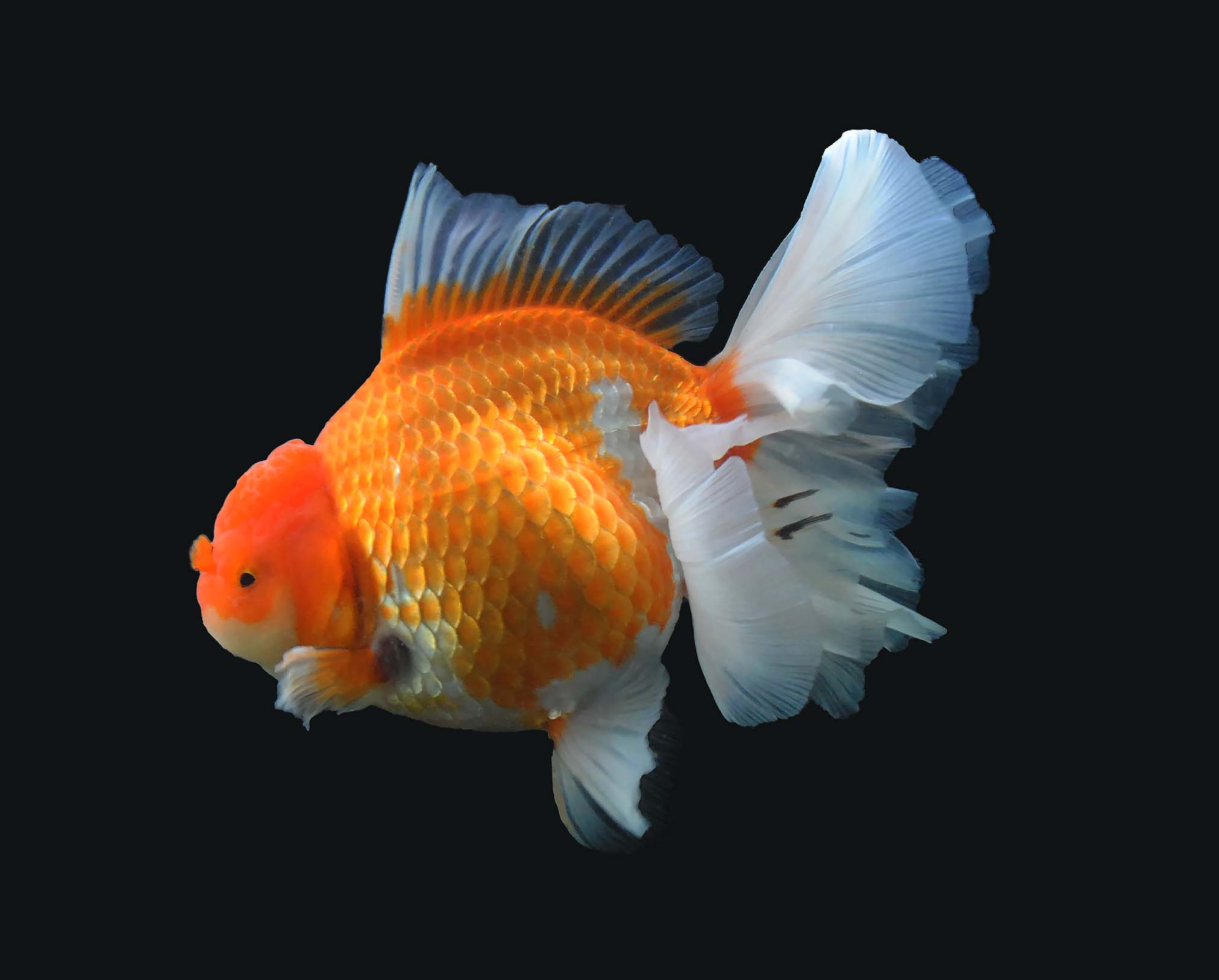
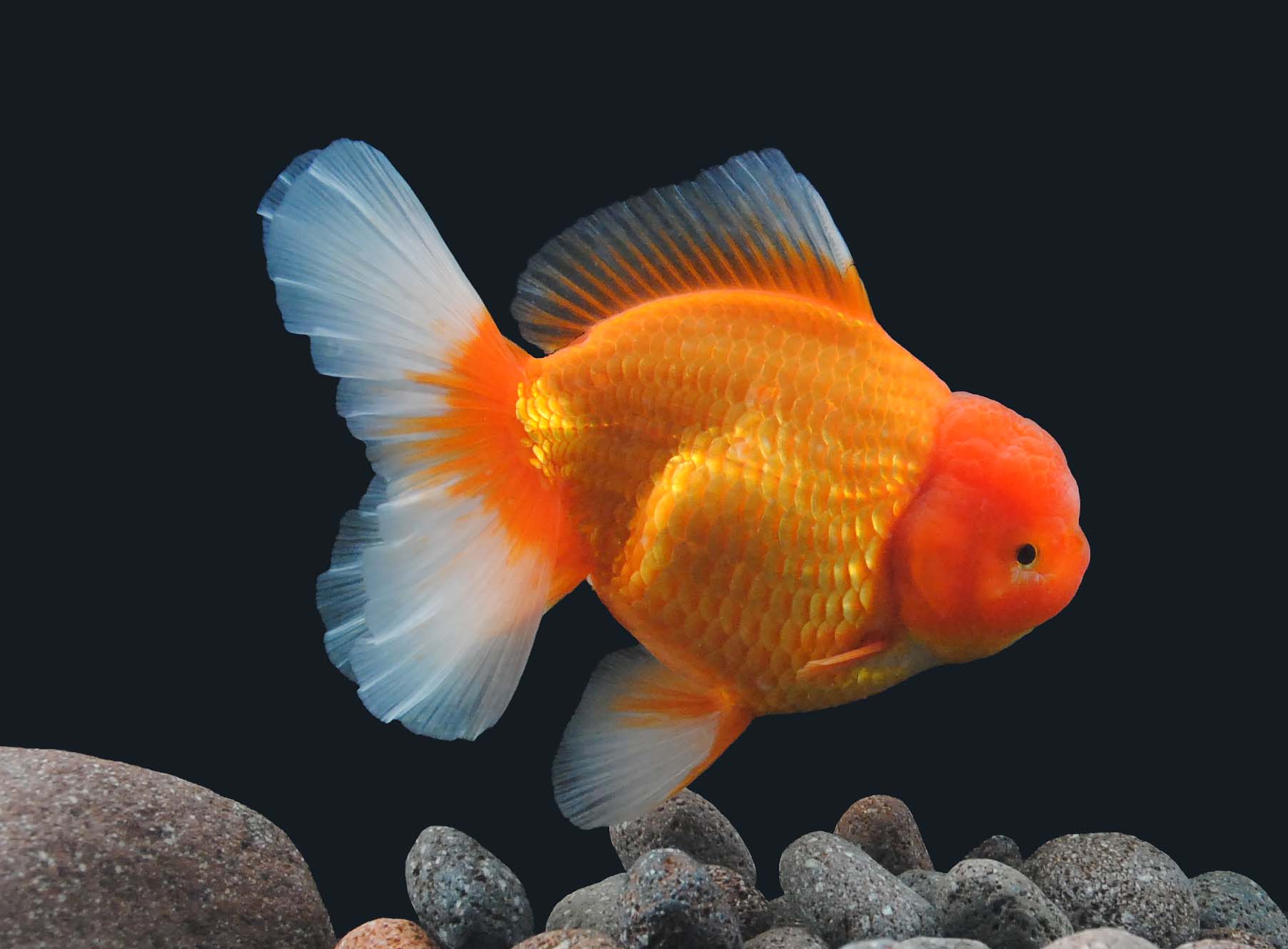
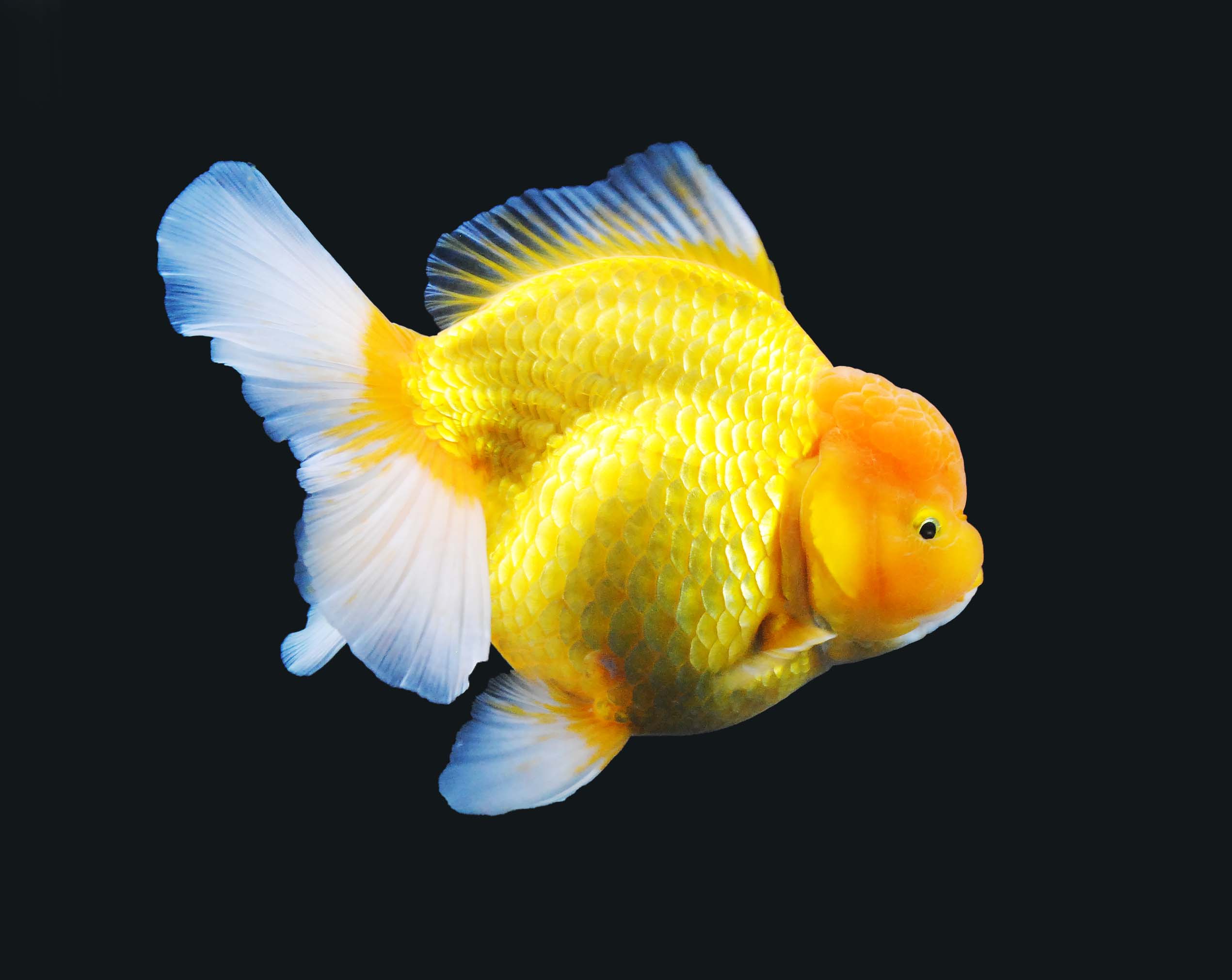
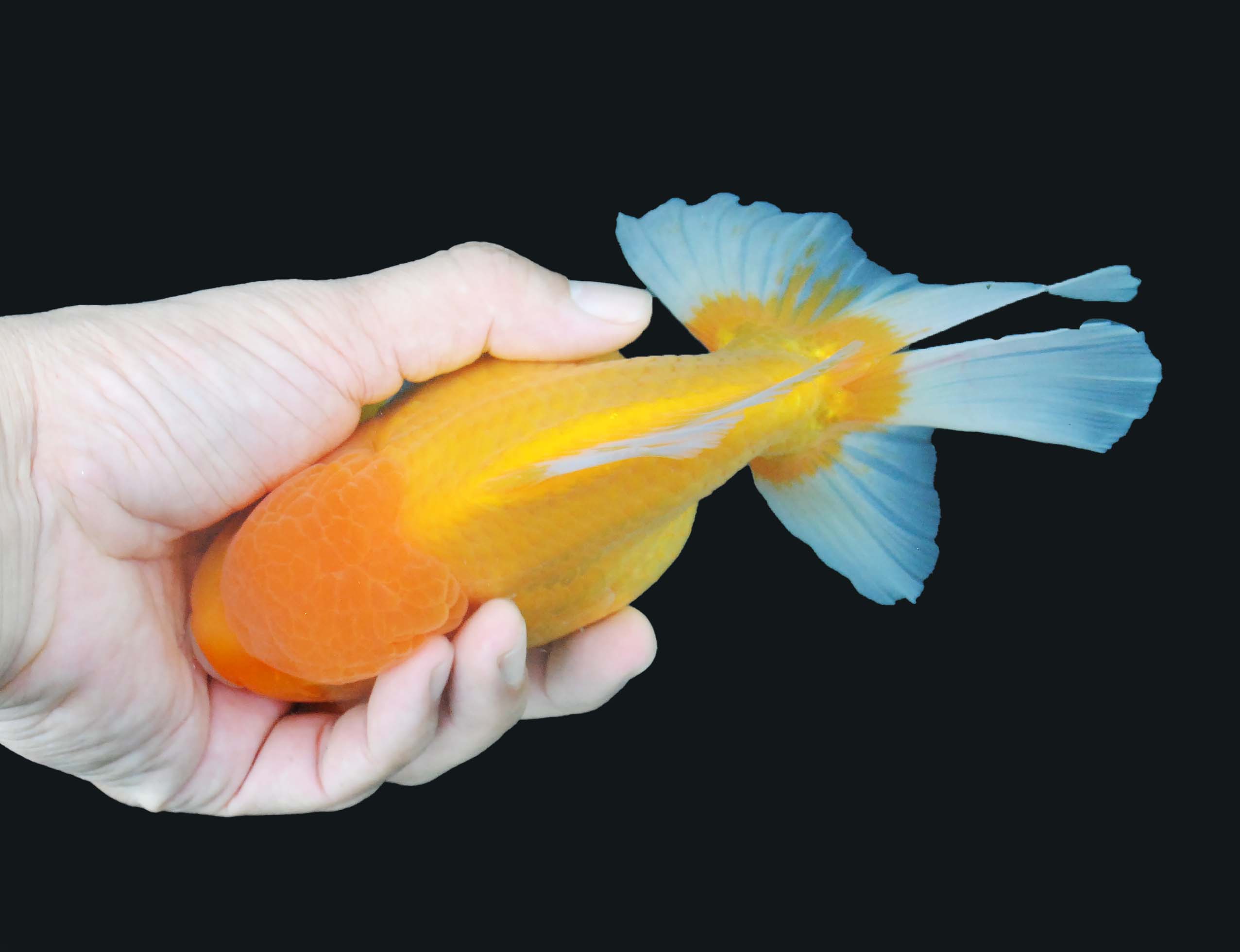
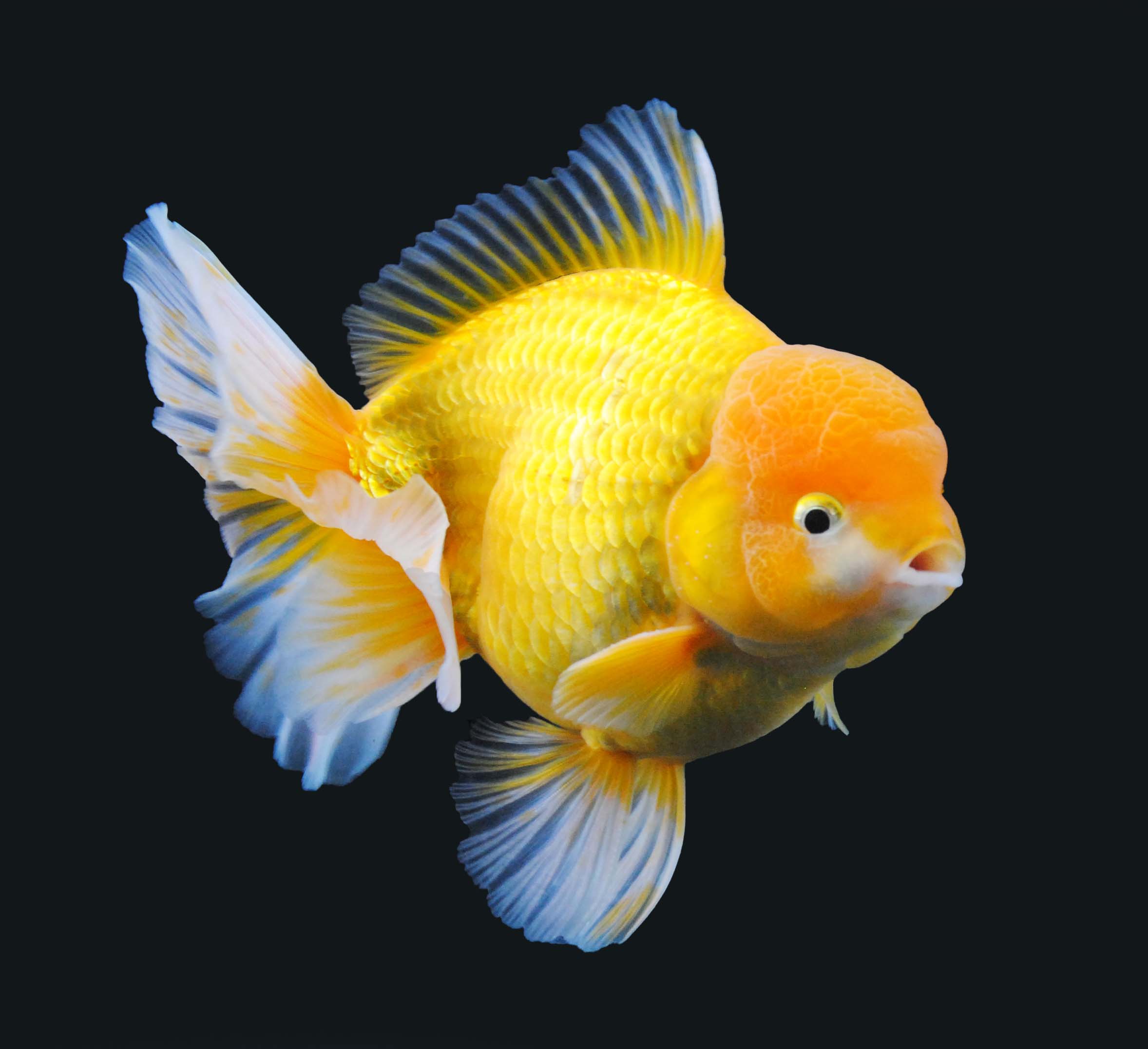
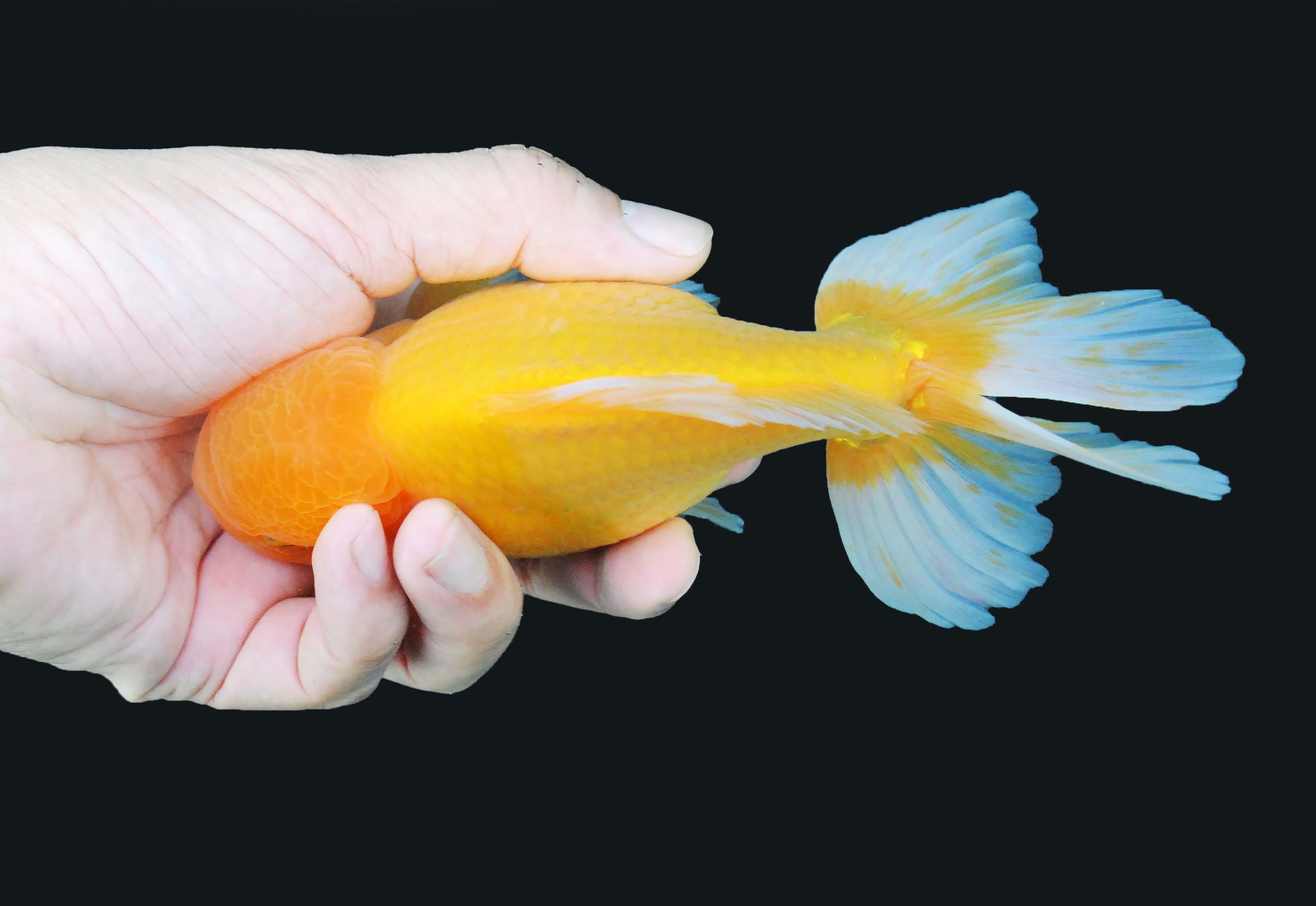
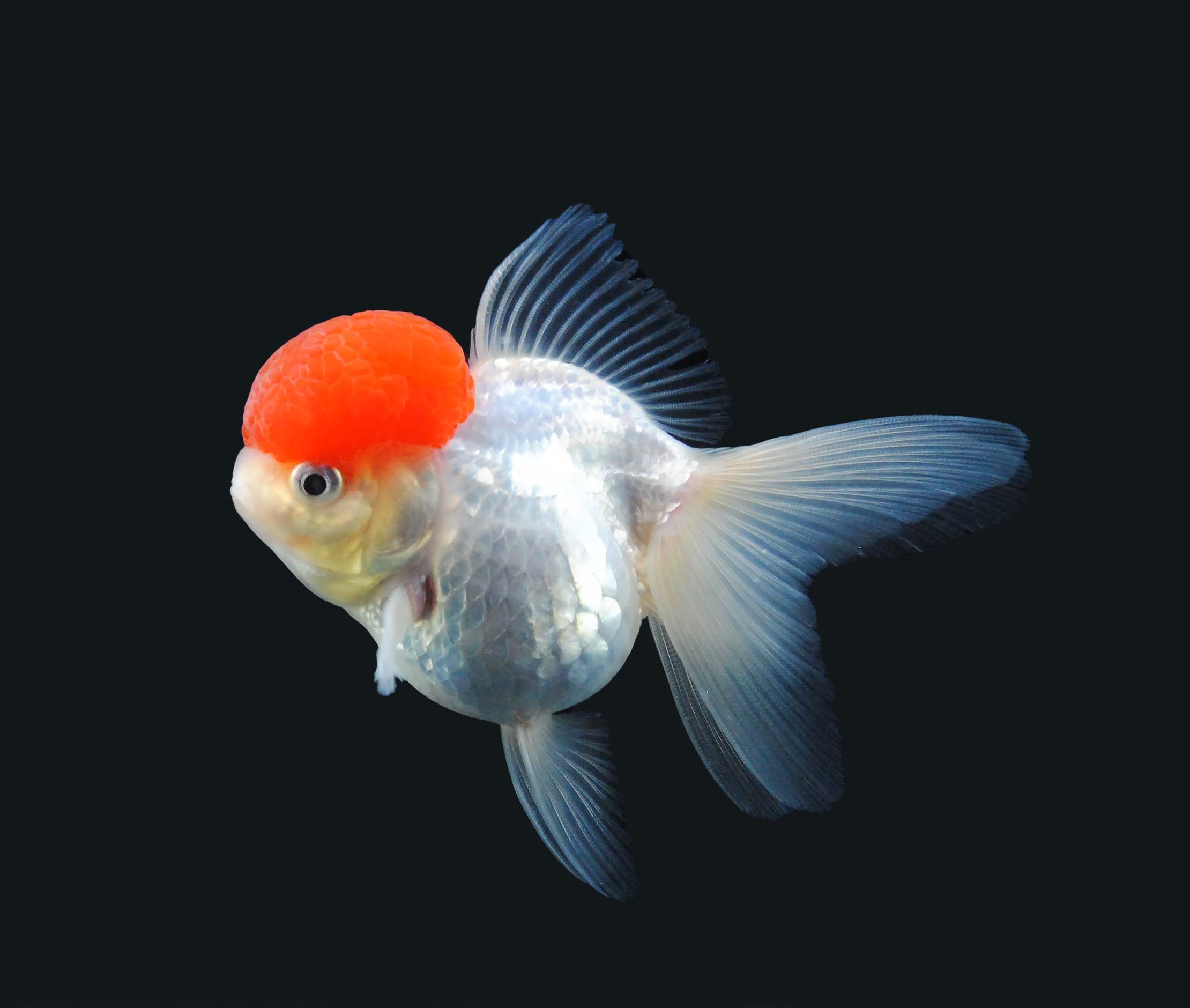
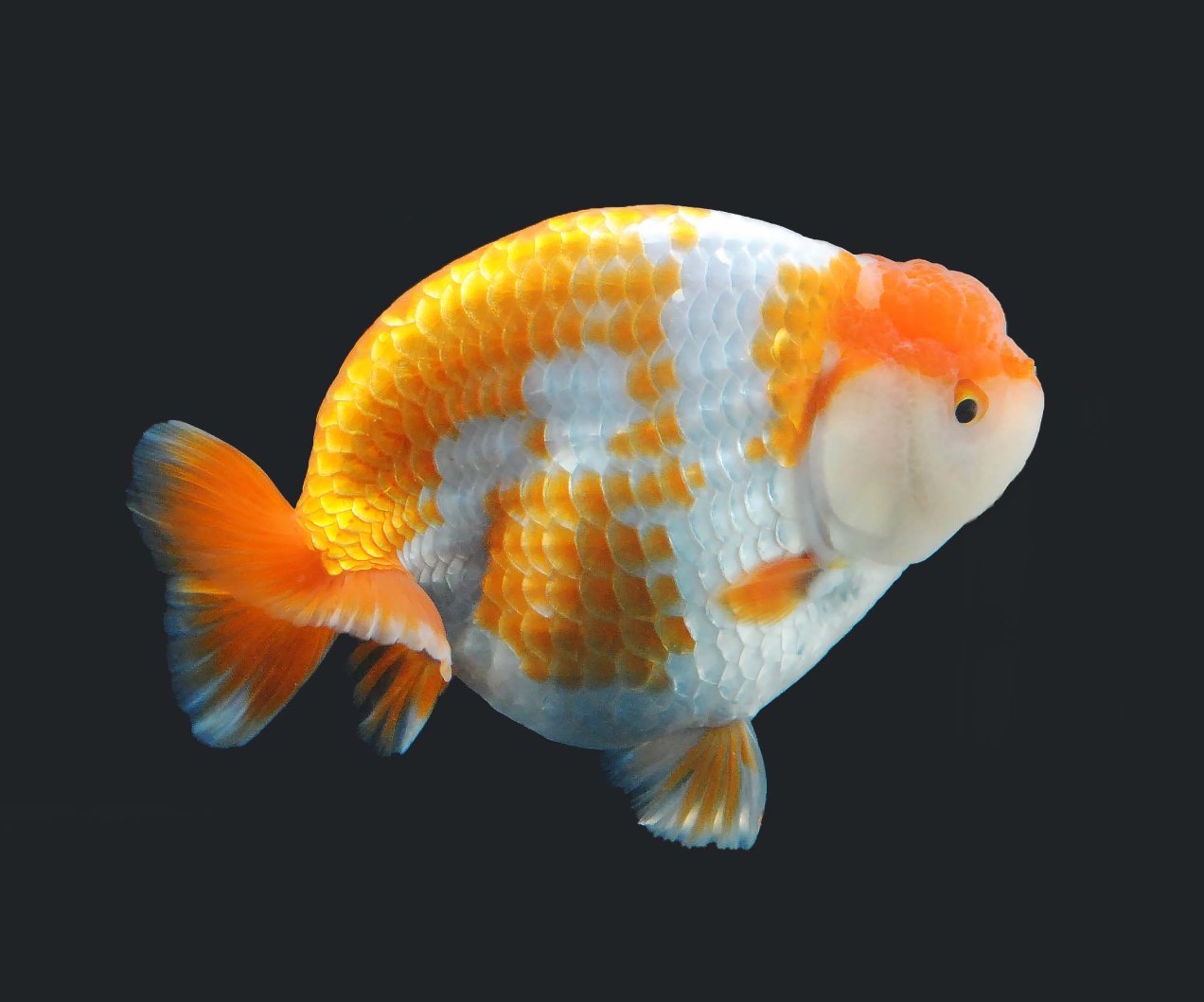
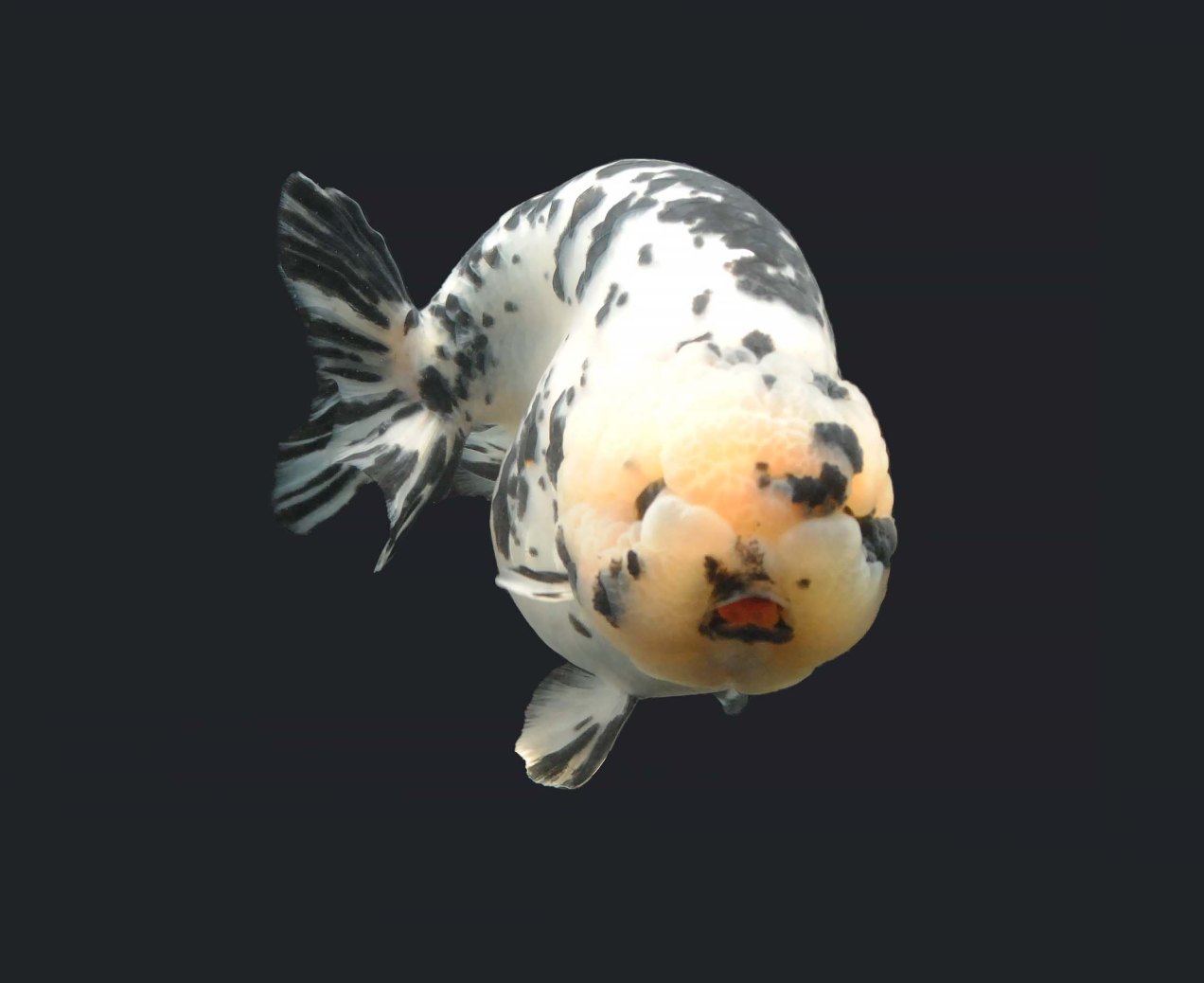
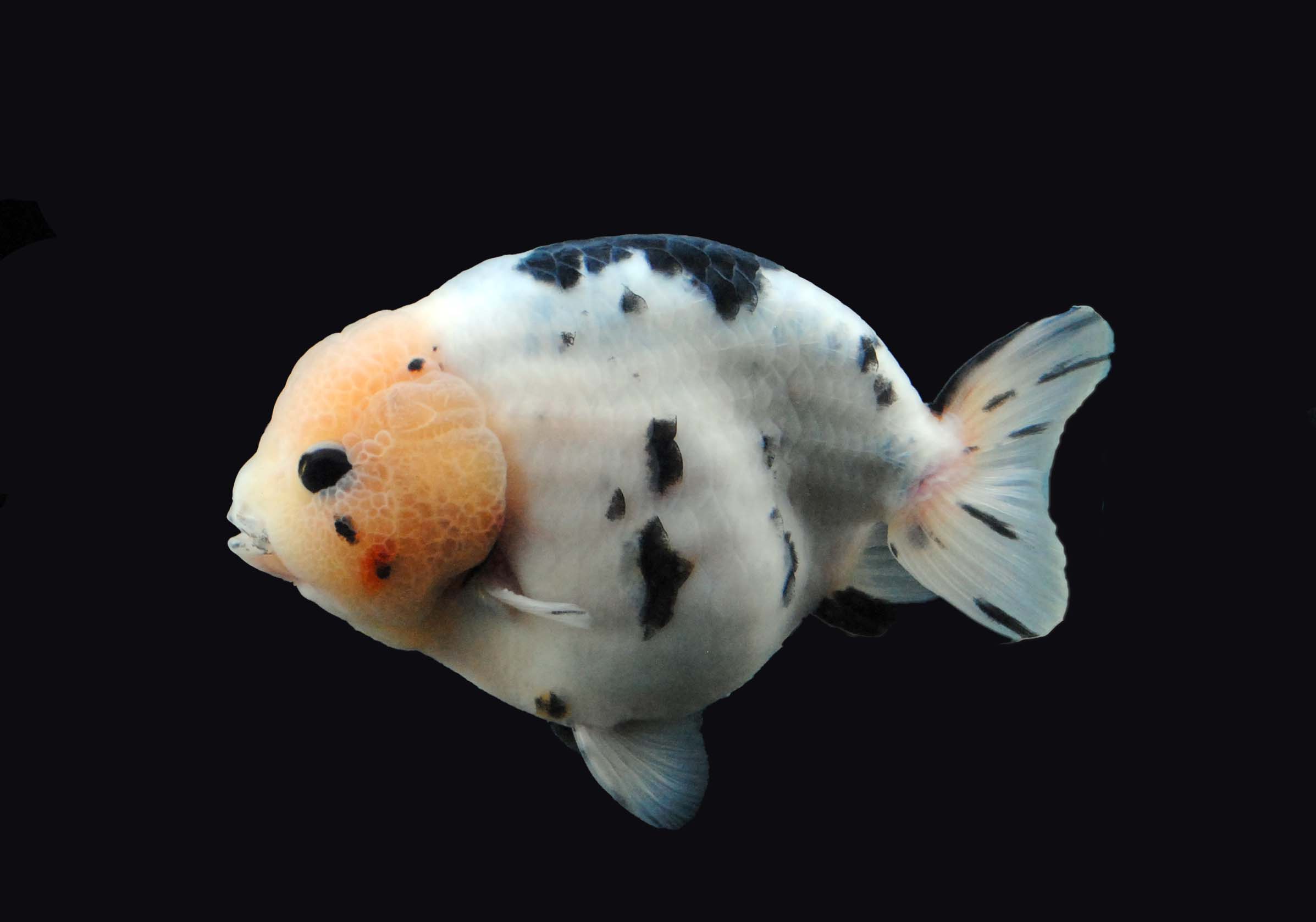
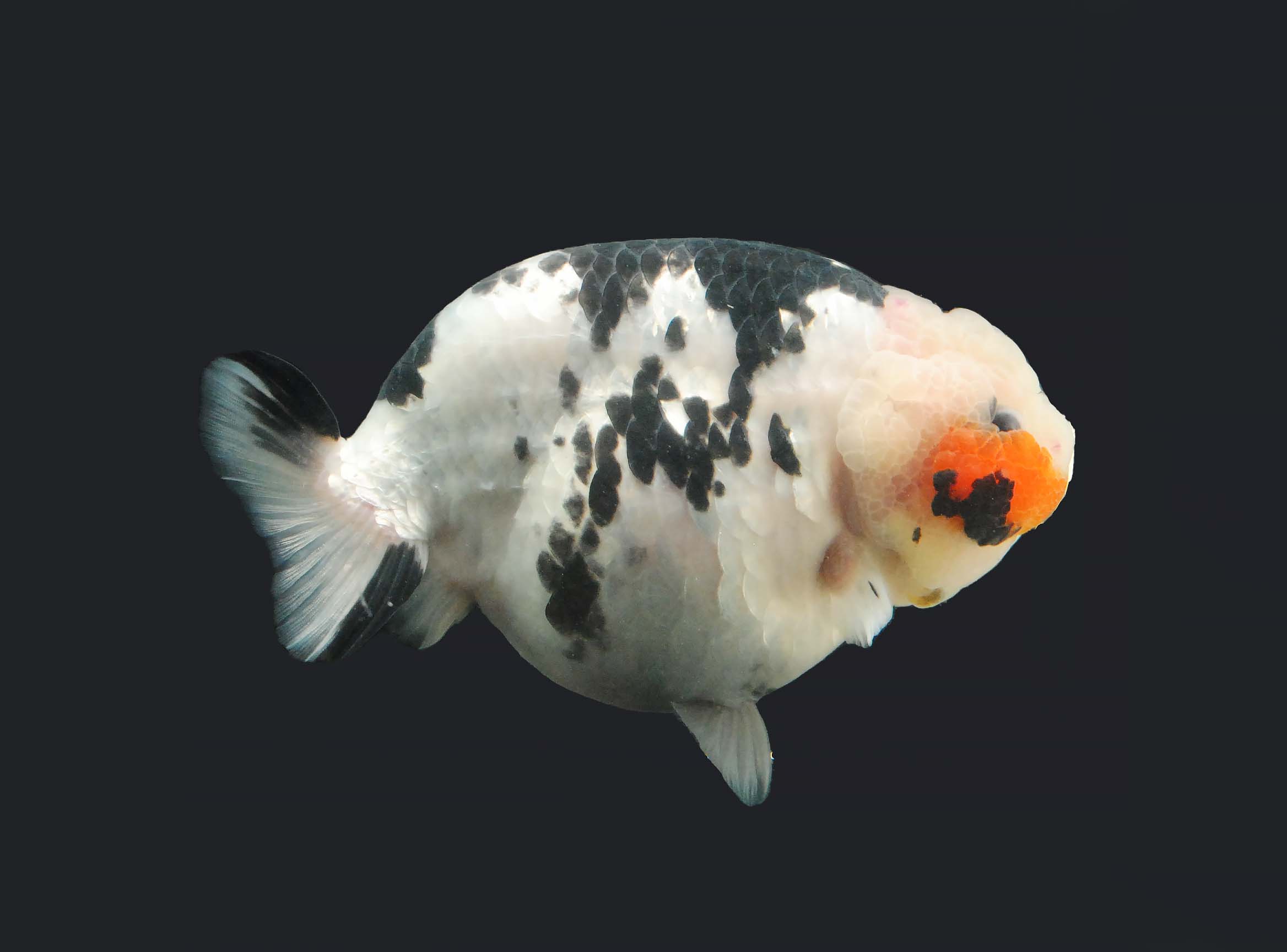
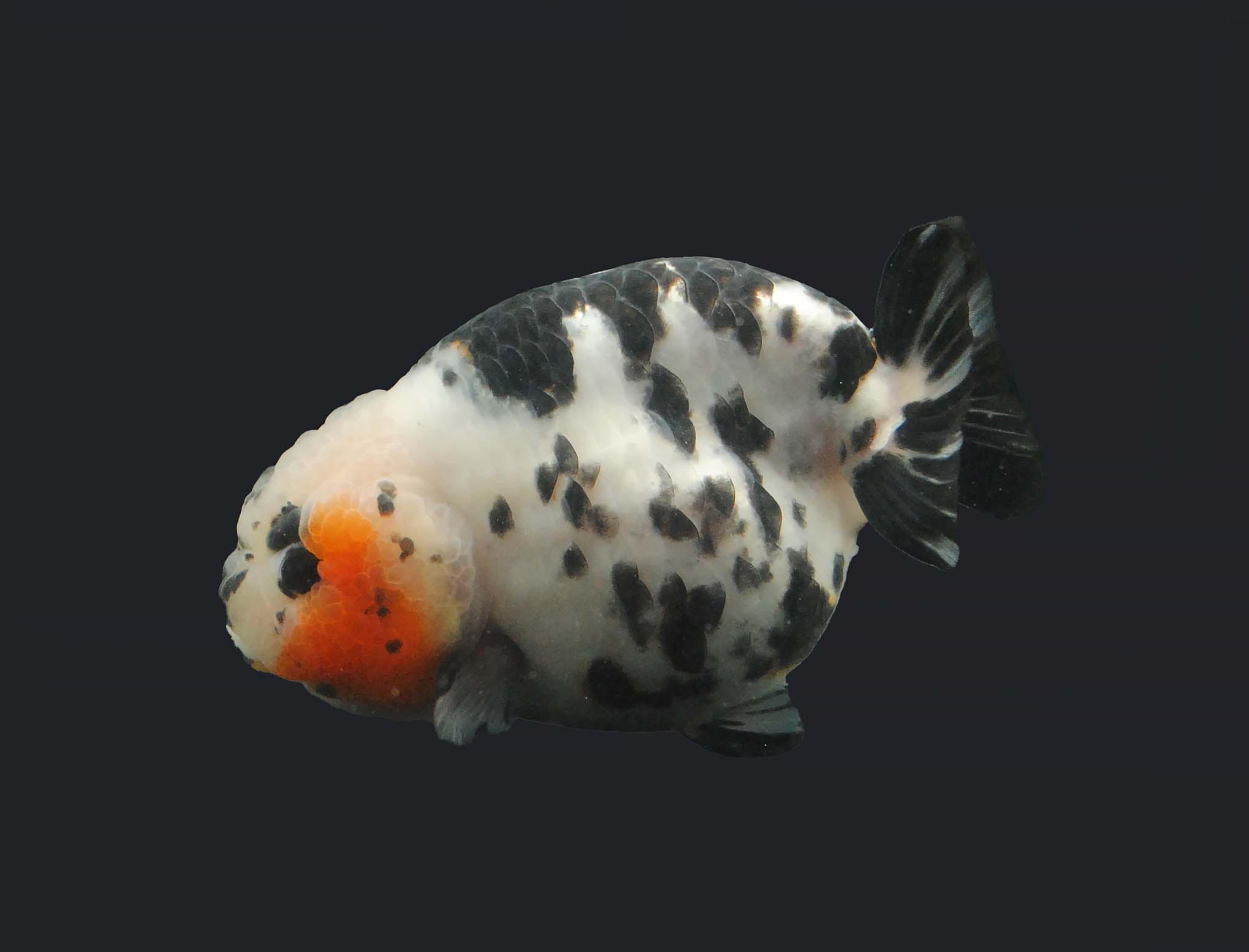
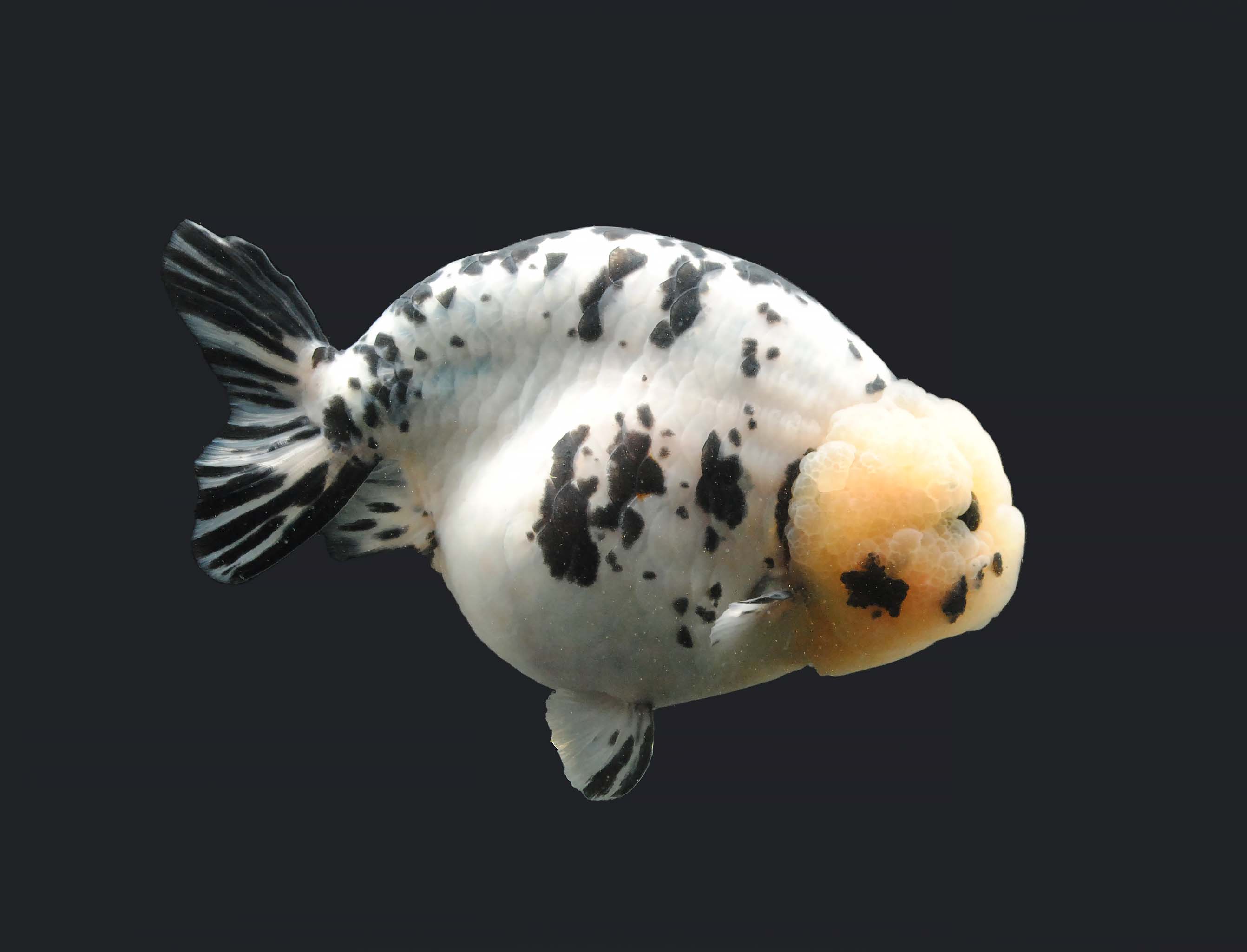
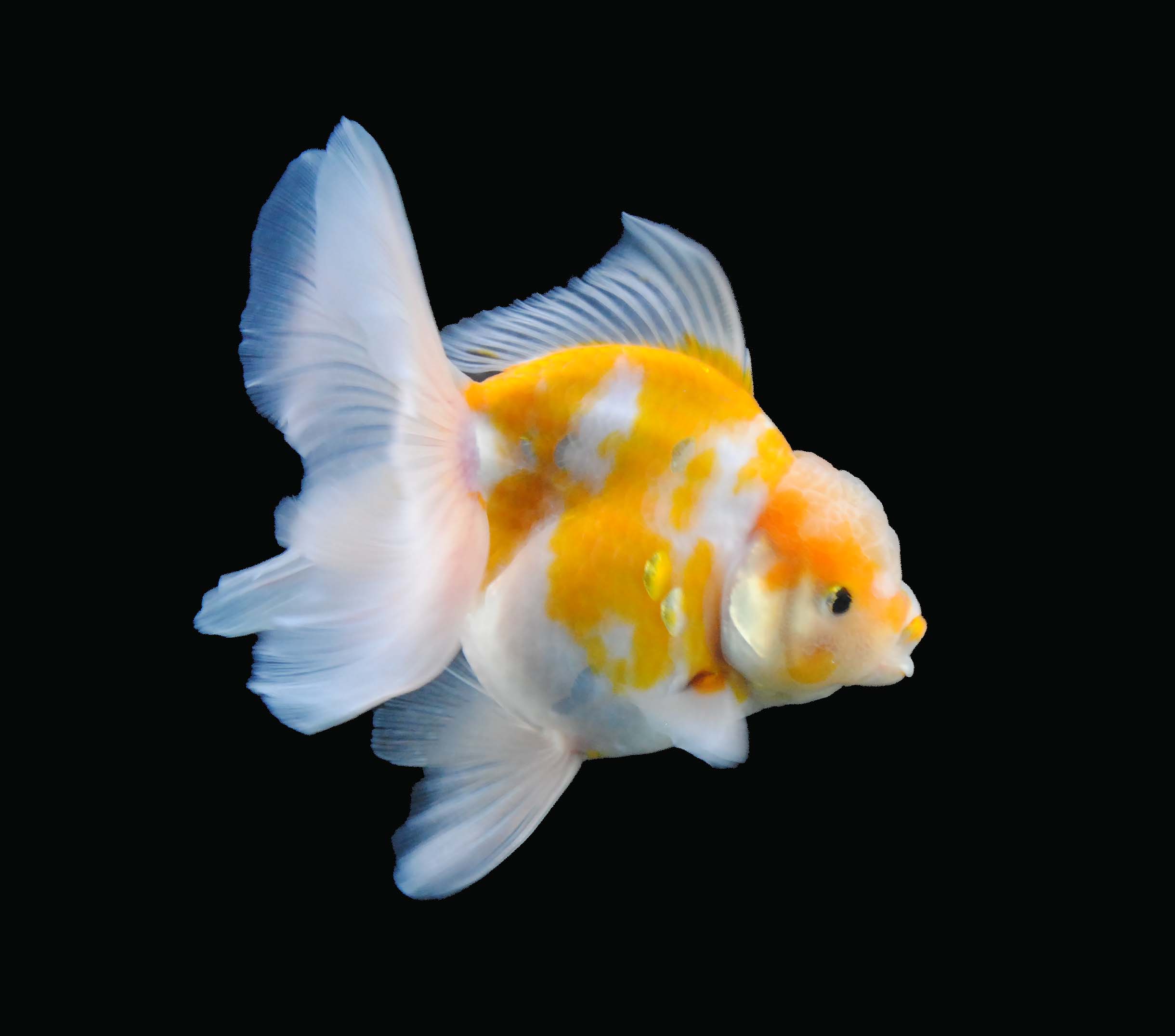
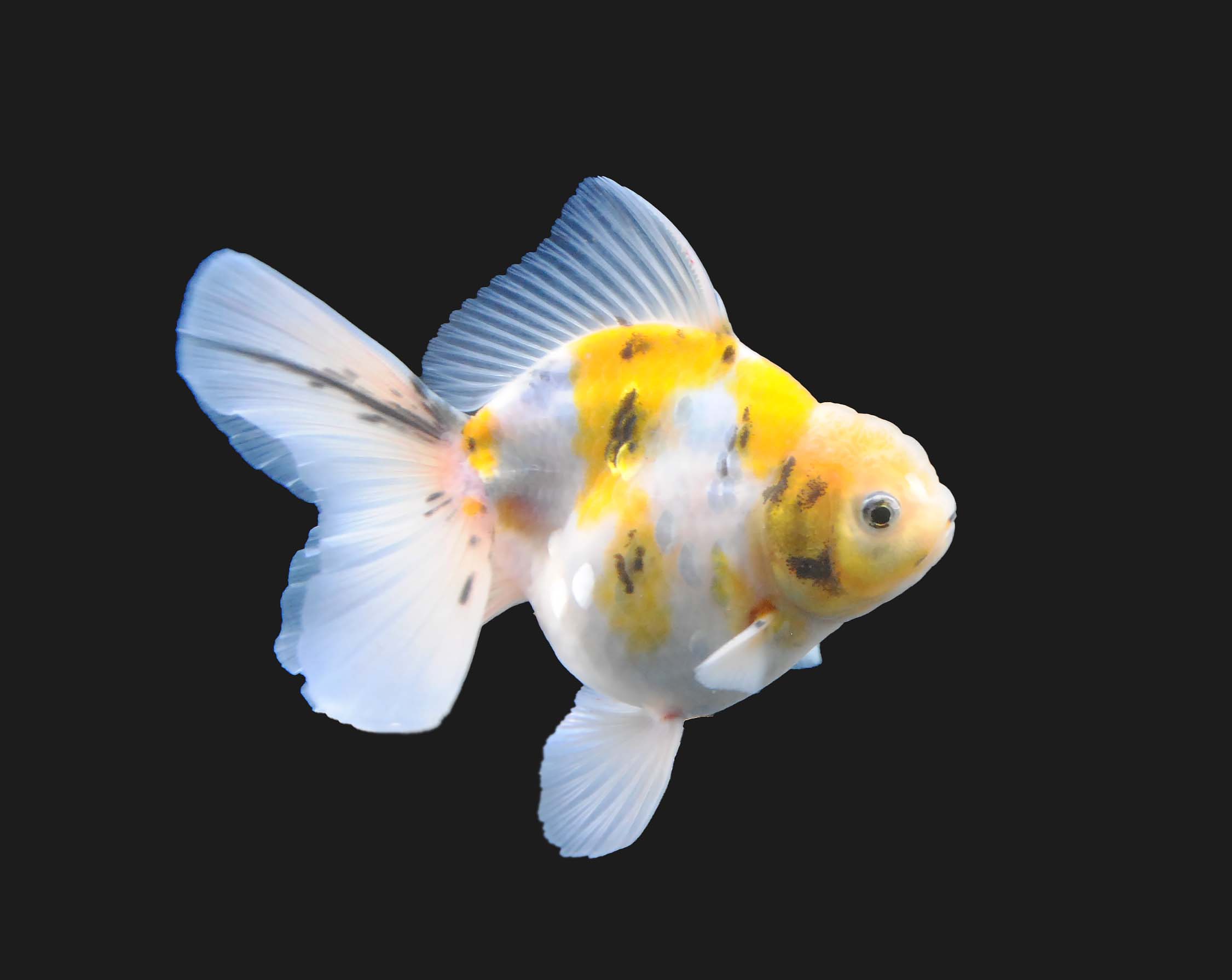
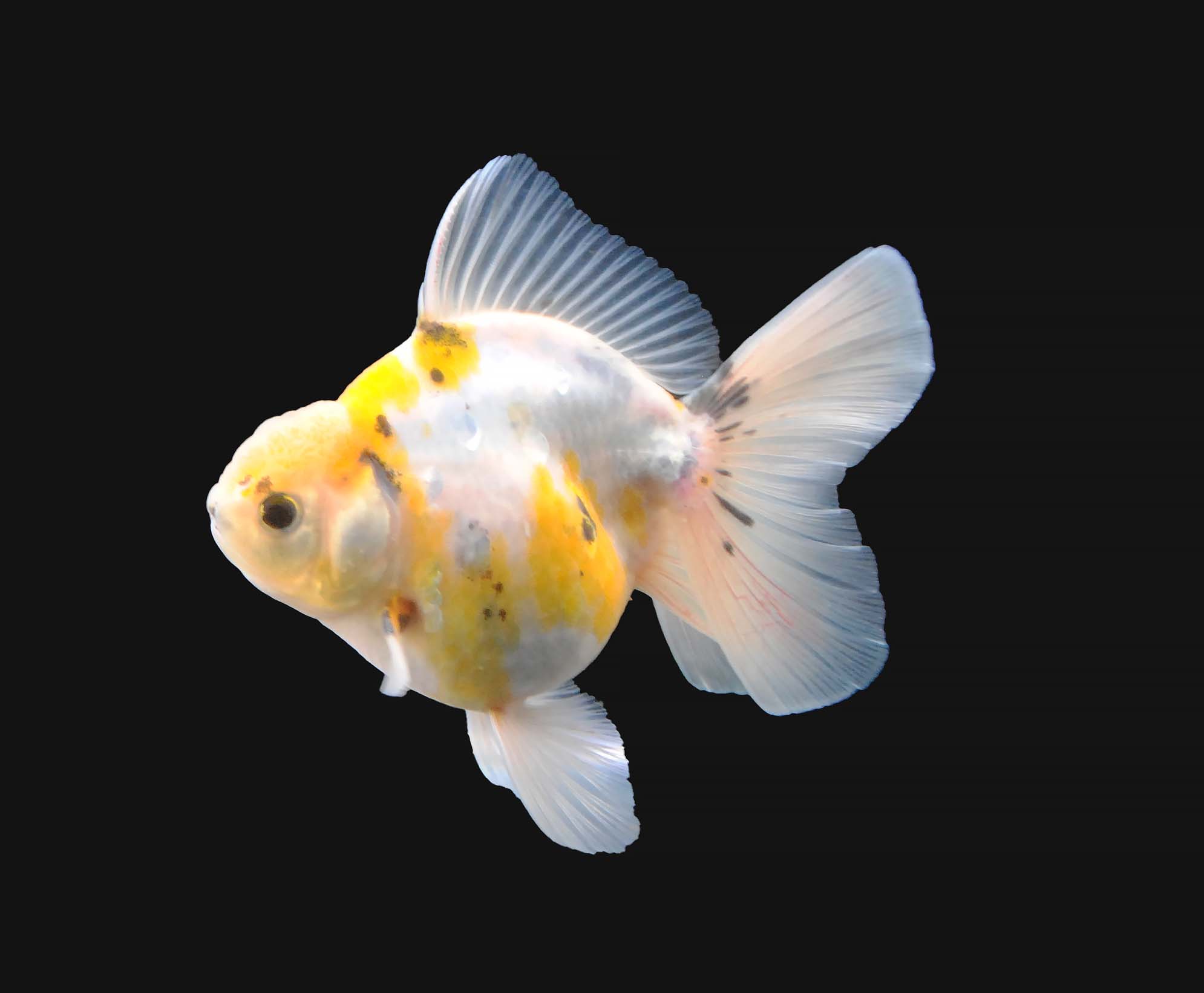
When we say red goldfish, we must understand that there are different kinds of red with slight differences among them. The same case happens in other types of goldfish color.
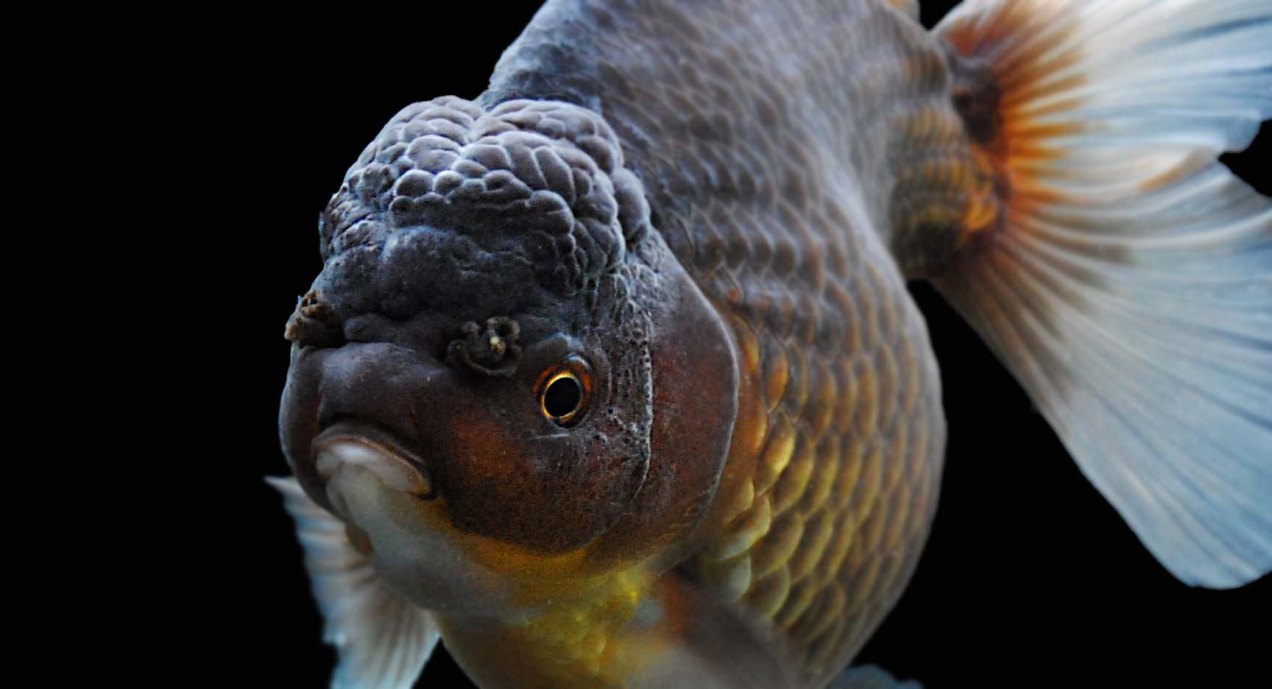
In this opportunity, I would like to present two types of brown color I observe in my goldfish collection. In the previous diary (#7) I posted my current development of brown oranda. The color reminds us of the color of tea:
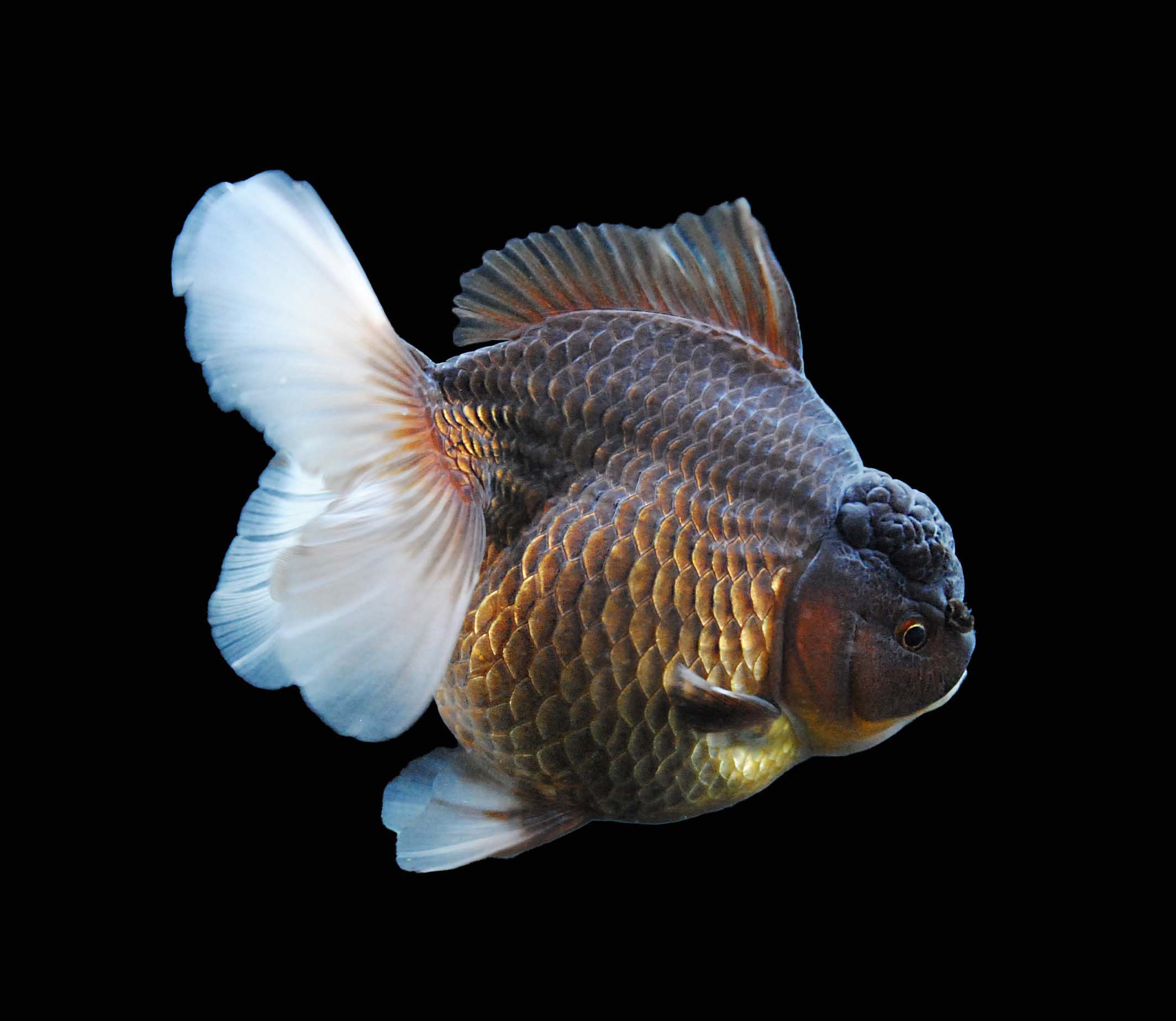
Actually, when I do a project – say, the brown oranda project – I do not just do one mating / crossing. I do several different pairings in the same period of time. One of the pairs produces the tea-colored oranda above. But another pair, which I must admit I did not document it well, results in a darker colored brown oranda. The color looks like the color of dark chocolate, I think. And it has a beauty of its own! Here she is:
This dark choco oranda seems to be from slightly different lineage from the tea colored one. Yes both of them have cute little hump and similar headgrowth type. Both have good body depth (width). But the dark choco has a bit longer and thicker body, and smaller tail type. And I think there is an important feature to note: while the tea-colored has the color in all its body, including the tail, the dark choco can develop white color (or no pigment) in its tail! I used to think that the white color cannot coexist with the brown. Usually, when the brown color fades, the fish will reveal orange color. But this dark choco forces me to revise my understanding. The white color can coexist with the brown color! Aesthetically, it is beautiful. If the white color can exist in its tail, perhaps one day I will see the white color occurs in the body to create the brown (dark brown) and white goldfish. It will be amazing!
I do not know what creates this different spectrums of brown. I also do not know why the white color can occur in this dark choco girl. But when I see the development of this dark brown color, I immediately fall in love. Right now, if I must choose one brown color to be my line, I do not know which one will I choose. As a hobbyist city breeder, I do not think I can afford both.
Finally, this is the update on my Purple and Brown Oranda projects – half way. I think I have done a lot of improvements on these two lines. Let me start with my Purple Oranda project.
This is the purple oranda I had in the beginning of this project:
Skinny fish, with minimal headgrowth.
After working on it for a year, I have made significant improvement, I think. These two are the best I currently have:
Do you like them? 😊
The improvement is in the body depth (width) and thickness, the headgrowth, and the tail erection. And yes, I can see they have beautiful little humps, which I do not know where they come from. I have never used any ryukin in the crossing.
Now, let me remind us of my previous line of brown oranda:
This brown oranda project has also made some improvement. These two are the best results right now:
Improved, right?
At this point, I am tempted to consider this project as final. I love the shape of these purple and brown oranda at this current state. But I keep reminding myself that this is the half way result of a two years project. Well, what more do I want to improve? I still want to improve the headgrowth, and if possible I want to elongate the body just a little bit more.
Anyway, I am satisfied with my current result. Hope you all enjoy these results as I do.
I must revise my understanding about the breeding of blue, brown and purple crossing.
Several weeks ago I crossed semi purple ranchu with semi purple ranchu. What I mean by semi purple is the cross between purple ranchu and red ranchu. The phenotype (outward appearance) is red / red-white / wild color. To refresh our memory, these are the pair I used (female, male, and male):
In my understanding, the result will be as shown in this illustration:
SP = Semi Purple
I mentioned earlier that the result consists of two different visible color: the light colored fry and the dark one. The light colored fry will become purple, and the dark colored one will become grey (which might eventually turn into red / red-white / stay grey). Based on this understanding, I usually cull out the dark colored one.
I have done these crossing with oranda and ranchu several times and I have revised my understanding. The light colored ones do not turn into solely purple, but also brown fish! So, without any crossing back to brown, I get brown color as a bonus. This will make my life easier. I do not need to make the brown as a separate project. But in this revised understanding, I still cull out all the dark colored ones.
This time, when I breed the semi purple ranchu above, I decided to keep the dark color fry. My initial purpose is to see if some of can become my Basic Ranchu Material. To my surprise, as the color become more visible in several weeks, the dark color turn out to be not only grey fish but also blue fish! So, I have been wrong all this time by culling out all the dark ones! So, once again I must revise my understanding to be like this:
Here are the real offspring:
purple ranchu
brown ranchu
grey / green / wild colored ranchu (that might turn into red/red white)
blue ranchu
Knowing this, I can simplify my projects. Instead of three projects of blue, brown and purple, I can just do one. The purple project will yield all the three color types I want. Is not that great?
But there is a certain doubt lingers. Why does the semi purple cross produce all the three color types? In my understanding, there is two possible solution:
the purple genetics I use is not pure.
even the pure purple genetics carries all the three color types with it, which will be reintroduce when being crossed with another fish (in this case a red fish)
Possibility number one is likely to happen, since I crossed my purple to many other color which I did not keep track diligently. I tried to purify the purple by mating purple with purple. I also mated purple with brown, and purple with blue, which yielded several percentage of purple goldfish (which I guess the purple gene is not pure in this case). And I do not know which purple I use to produce the semi purple ranchu above.
So, yes, I cannot answer which one of the two possibility is true. If number 1 is true, then to reduce my three projects into one will only work if I use the impure purple genetics. If number 2 is true, then I can reduce the three into one in all cases. Hopefully someday someone else can clarify this by doing a better experiment with diligent journal.
Tricolor ranchu (metallic scale) has always been my aim. When the tricolor (or panda) ranchu with metallic scale appeared several years ago from Thailand, I immediately thought of creating its ranchu version. I did not realize how hard it would be.
Up to now, I have crossed the tricolor oranda with ranchu three times. Each time, I followed the project up to the 2nd generation. When there was no sign of success, I repeated the same crossing again and again, for I could think of no other way to achieve the result. Of course, I used different fishes, and sometimes I used the result from previous failed attempts. It has been roughly three years now with no apparent success.
However, the latest result seems to rekindle my broken spirit. When the previous failed attempts only yielded orange or wild color, the current results show a more stubborn black color. One particular fish even gains back its black pigment after losing it – a process I frequently witness in tricolor goldfish. I call the process as a re-melanization process.
This is the piece (male) that undergoes the remelanization process:
And this one is his sibling (male) but does not undergo the remelanization process. Yet, his black pigment has stayed this way for a longer time. A common fish under demelanization process will lose that black pigment sooner.
I put a lot of expectation on these two guys. I have mated them with a tricolor oranda. Now the offspring are 2 cm in length and are still wild color. I think some of them will become tricolor fish. Yet, most of them generate fully normal dorsal fins. That is the problem with crossing back to oranda.
The only female from the same batch is this one:
The black color of this female is not as dark as the males. And the demelanization process looks similar to the common fish. If I have high confidence for the males to be tricolor, I do not have that much confidence for this female. Yet, mating this female with the two male fish is an option. (The female has not laid eggs yet).
Those three are from the same parents and same batch.
There are two more female fish I kept from previous failed attempts as reserve:
I think I can get rid of the yellow one. The wild colored one might be an option to mate with the two male fish. Who knows the wild color is a better choice than the blackgold one?
That’s all my update on the tricolor ranchu project right now. Wish me the best 🙏
Update on my Cow Ranchu projects. I use a female with two males separately.
This is the first match, the female and the male:
I bought the female from a local farm and I do not know whether it is a local breed or an imported fish. My guess, it is an imported fish. The male is my own offspring. I have a feeling that they are from the same lineage (I mean, their parents / grandparents might come from the same farm in China).
And this is the second match, where the female is the same fish:
The male is an imported fish from Chine (through Vietnam, as I was told). It is sold with the label of milk cow since its white color seems to be free from bluish shadow. So, it is safe for me to assume that the female and the male come from different farm lineage in China.
And their offspring shows different results!
These are the offspring from the first match:
They are dominated by the white (or pink) fishes. Some develop red color to become calico. Some have black patches, some black dots. And the black coloration grows. None are purely white (or Casper the ghost) – all have some hints of black coloration. I have high confident that they will be beautiful color as the melanin develops more intense.
Here are some close ups:
But the second match shows different result:
There are the white (pink) with hints of black pigments as well as the calicos. But there are also the Casper (without any black pigment in the body), the Tiger (with red pigment dominates the body), and also three more unidentified variants.
This is the Casper:
This will be the Cow, I guess:
This is the Calico:
This is the Tiger, and I am sorry I forget to take the topview picture:
These two are the first unidentified variant. They have white and purplish coloration with black dots:
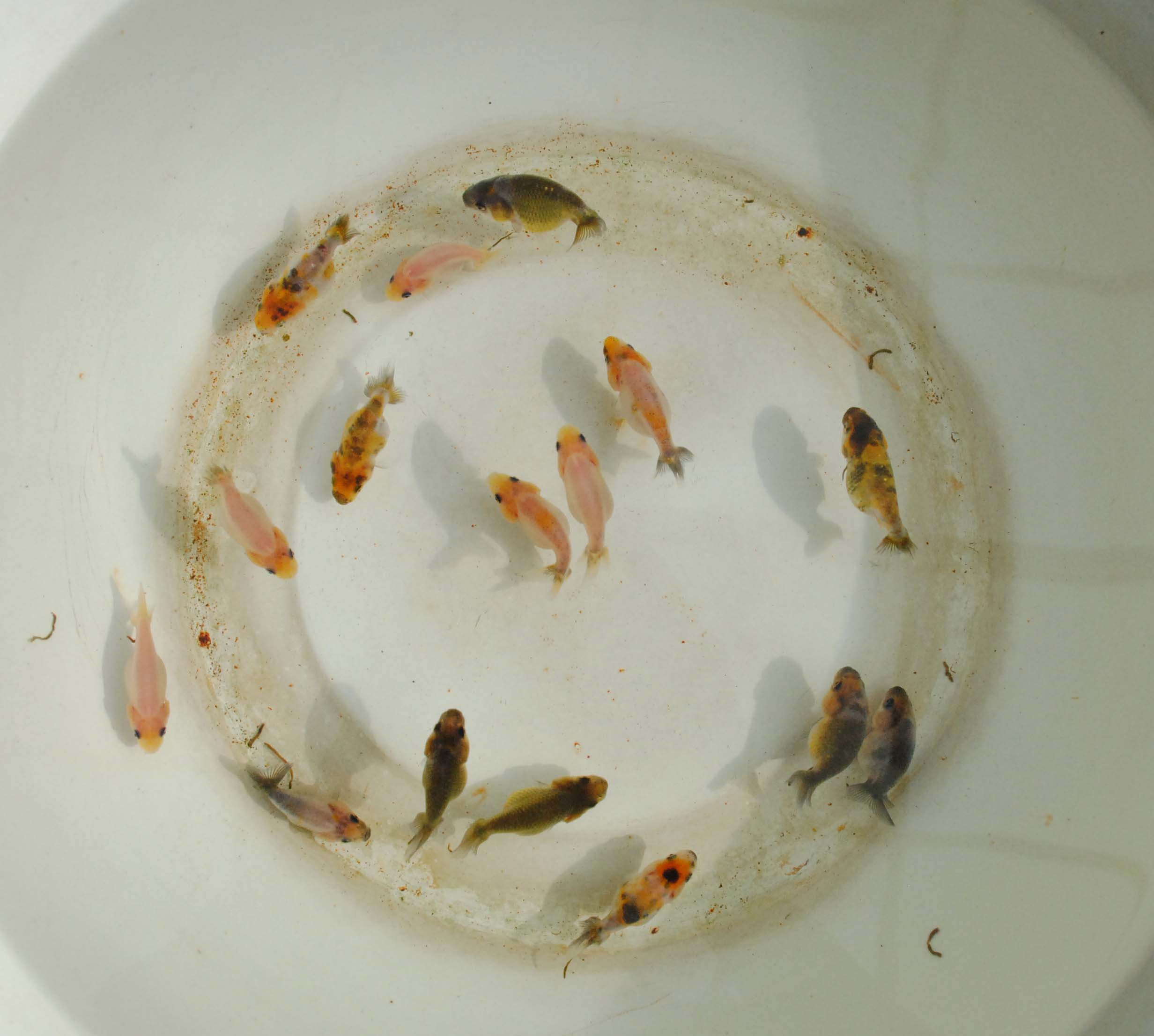
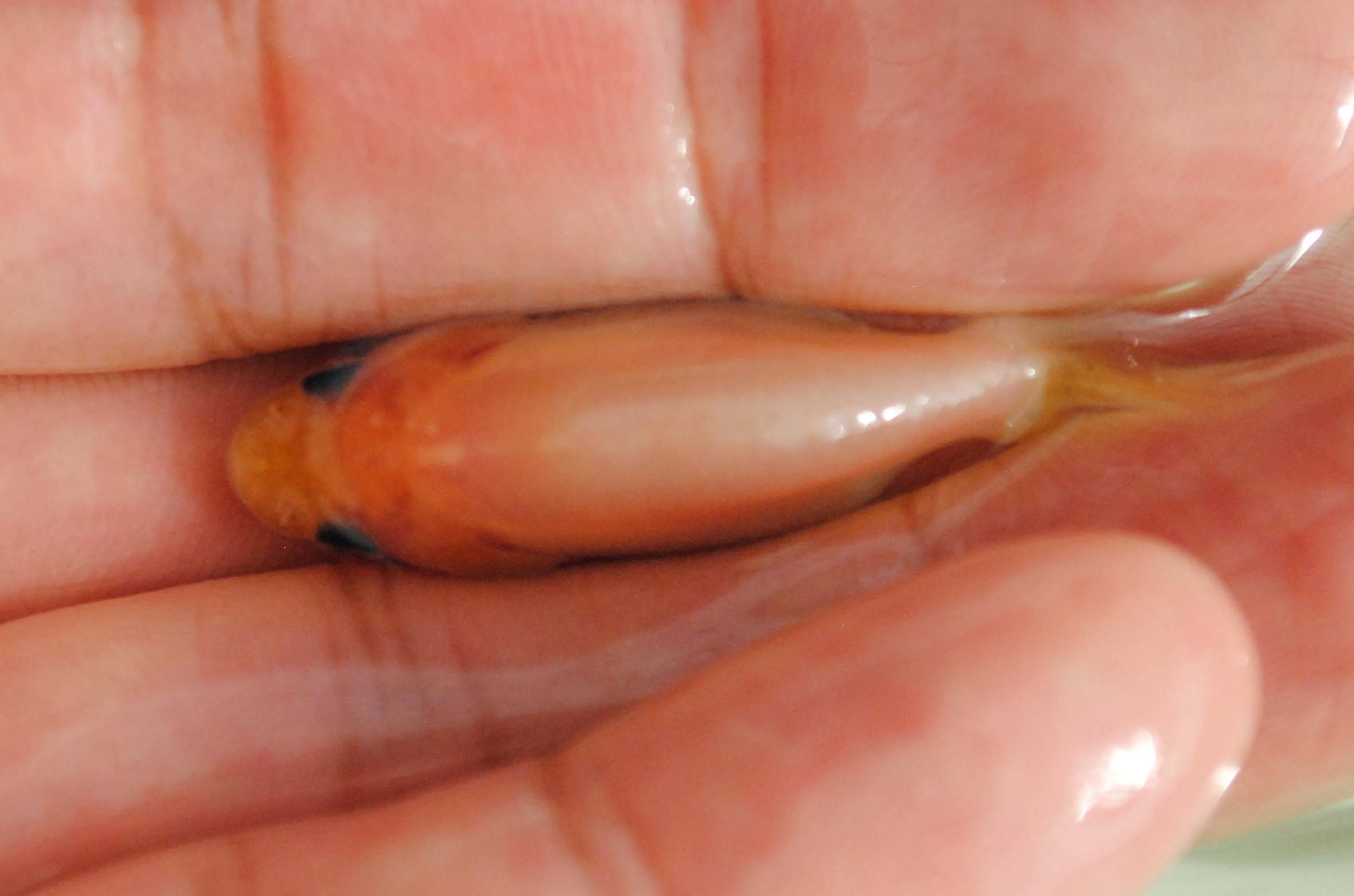
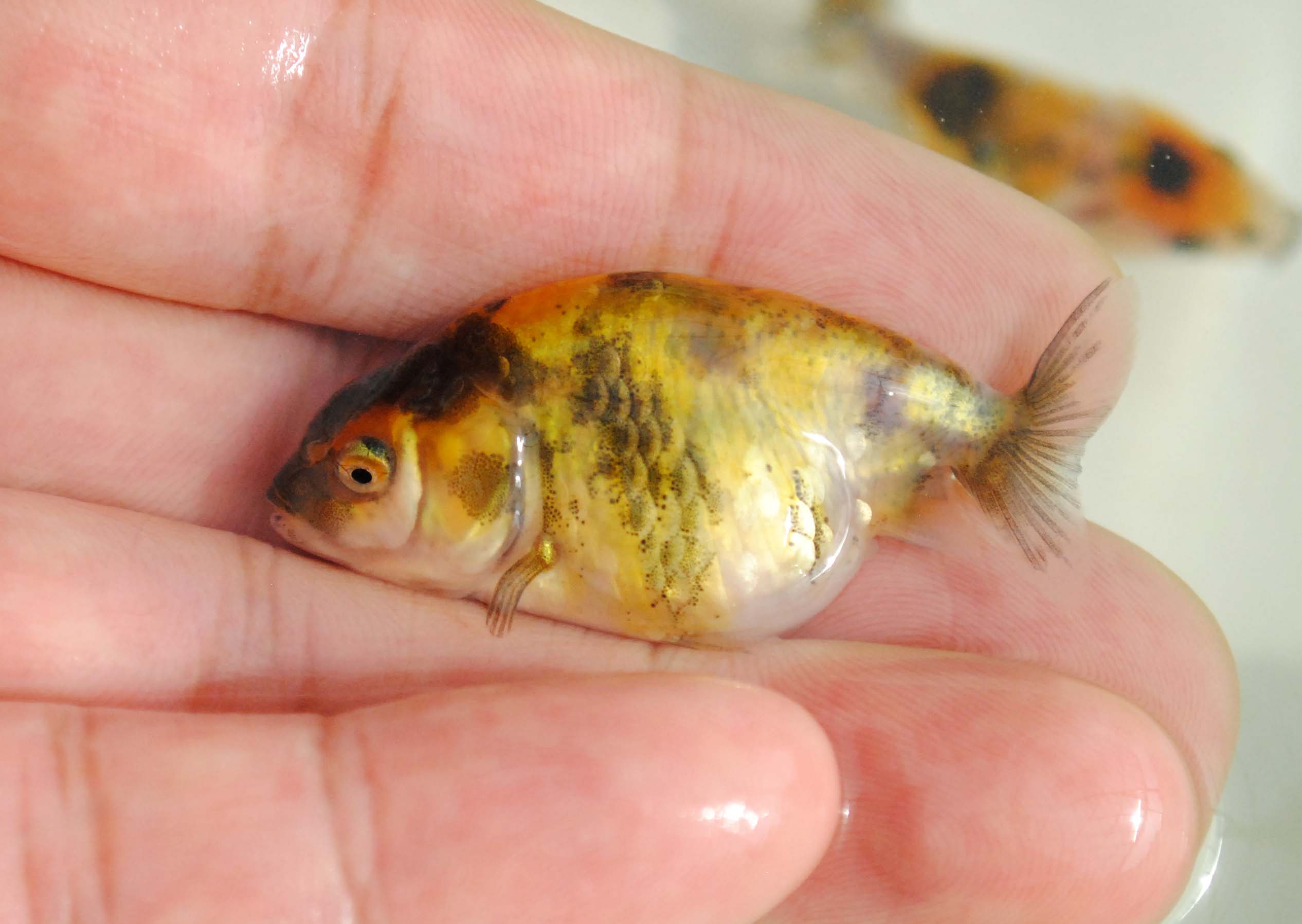
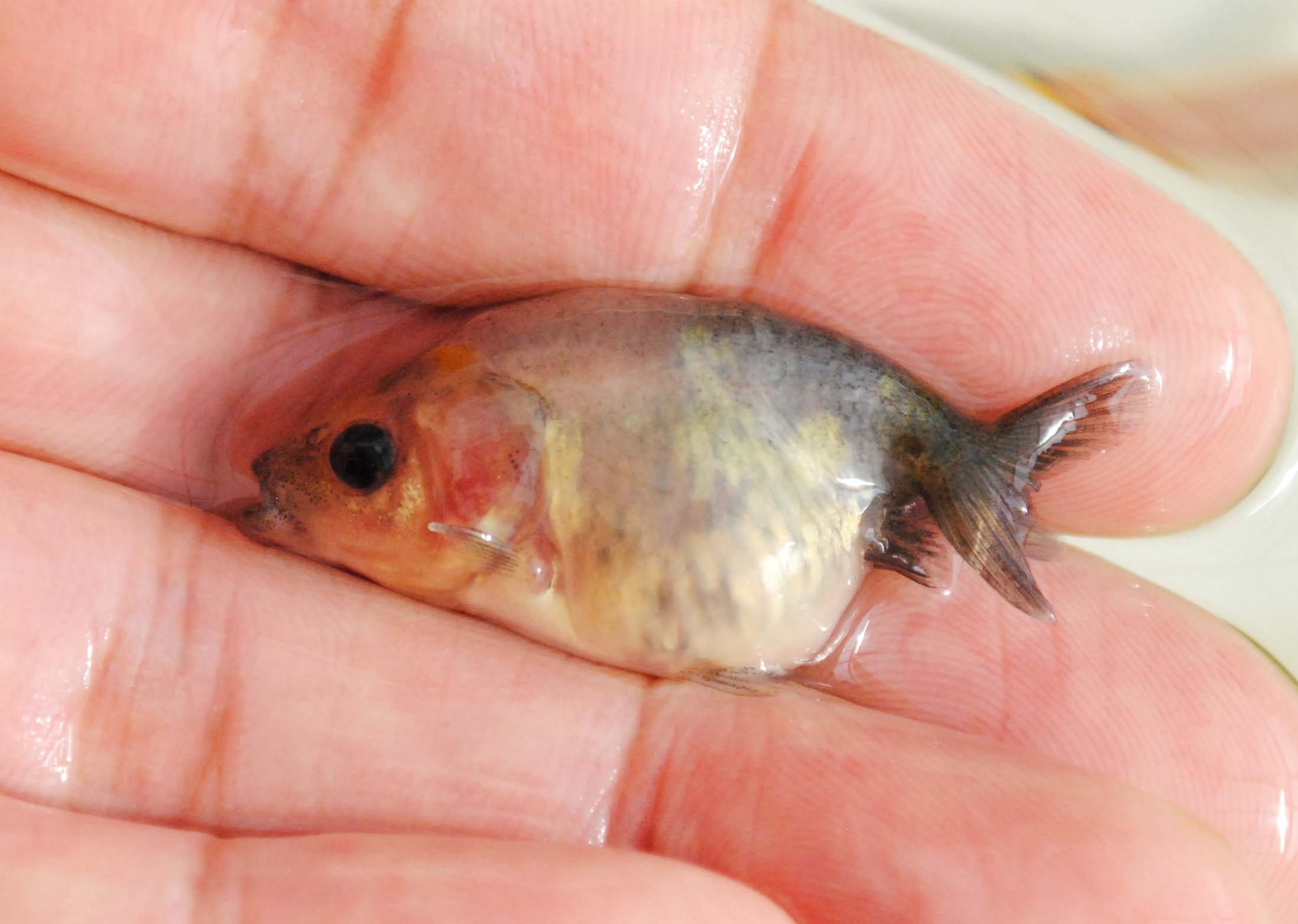
These two puzzles me, since they have green color (like wild fish) but with some part of the body being purplish. And their scalations are transparent:
And the last one is similar to the previous two but without any purplish color. And at first, I thought the color was metallic scale with wild color. But now it develops transparent scale in its stomach, and the metallic scalation becomes blur. I am not sure how will it develops:
For me, it is interesting to see that these two matches produce different result. It shows that many fishes labeled as Cow Ranchu might carries different genes. Some can yield true cow coloration (with small percentage of calico) just like my first match, but some can produce all sorts of transparent scale variations as the second match shows.
The greenish ranchu is another interesting case to watch. I am enthusiastic to see what they will become. Will they produce interesting color? Or will they be just dull coloration subject to cull out?
While waiting for my ranchu offspring to grow, I manage to assess the current state of my oranda projects. First, I unexpectedly found two beautiful redwhite oranda as side results of my breeding program. When I crossbred my oranda to create the blue, brown, and purple color, I also got grey fish as the side result. I usually cull them out. But sometimes I saw some with interesting quality. I was tempted to keep them without bothering to keep track of their lineage. Some of them stayed grey, some turned into red or redwhite fish. I located these two beautiful oranda among them. Both of them are female. If only I had their male sibling, I might be able to establish them as a solid lineage.
These two fish have almost identical body shape, but one is a bit larger then the other one. The smaller one has single anal fin. So, I put a lot of hope in the larger one as my alpha female this year. Although I do not know her parents, I can make a guess. Their body shape reminds me of Helen – my alpha female last year. So, I give this new female the name: Helen2 – a very unimaginative name, for sure 😂
And this is Helen, her mother. Do you see any resemblance?
I value Helen2 in terms of its strong body shape. It has beautiful body depth (measured from top to bottom) which make her long body looks medium (or some might perceive it as short). It is a character I want to maintain. The stomach is beautifully round. The tail is of medium size, a bit smaller than her mother’s. The headgrowth is still minimal, yet it looks handsome. Well, I will still improve the headgrowth later on. But there is a great temptation to be satisfied with Helen2. Unfortunately, her color is more orange than red.
Definitely Helen is now my Basic Material. I realized how far I have gone away from my basic material of the previous year, but I am happy with that. To refresh our memory, these were my original basic materials:
Second, I need to select a male fish to cross with Helen. Which fish will be the best match?
Right now, my adult blue, brown, and purple oranda are way unsatisfactory. As a surprise, my yellow oranda grow into beautiful specimen. This is unexpected, since I though they need one or two more crossing to yield the desired result.
My yellow oranda has strong body, better headgrowth (than Helen2), and has uniformity. Well, actually, there are two types of body among my yellow line. I kept 6 fish, 3 males and 3 females. One type of the body looks like this:
This one is the largest female yellow oranda. The body is very compact and round. A bit short, yes. But it can grow into big fish without losing its swimming balance. I think I can accept this quality as satisfactory. There is no Helen’s blood in these yellow. I think the body and head shape is influenced by my tricolor goosehead oranda (now extinct from my collection, too bad). Three females and one male has this body type. I was waiting for the females to lay eggs right now.
Another type is like this:
Two males have this body type. This shape reminds us of my original Basic Material, don’t you think? This picture depicts the best male oranda I have right now. He is my alpha male. I think as the fish grow larger, this shape will hold the balance better than her sibling’s shape (the more compact one). So, yes, I use this male to be Helen2’s ultimate partner.
Helen2 has laid eggs several days ago. The hatching rate is less than 50%. But I am fine with that. It suits my capacity well. This cross will enable me to have my new line of Basic Material, and also my new line of Yellow Oranda.
Third, I also think about the improvement of Helen2 and this Yellow guy, especially in the headgrowth type. Last year I made a resolution to incorporate the goosehead type in my oranda lines. I have not change this commitment. But, perhaps, I was aiming at a more decent size of the goosehead type of headgrowth, not the excessive one as those of the redcap oranda.
Yet, in order to do that, I need to use the redcap oranda. So, two weeks ago, I bought some. Here are two of them (male and female):
They are small fish with weak body (short and thin). But their headgrowth is amazing.
I mated the male redcap with Helen2. My vision is to have Helen2’s body and tail shape with redcap’s headgrowth. But I am afraid that the offspring might have drawbacks in terms of body shape due to this cross. The eggs are ready to hatch tomorrow.
I also mated the yellow guy with the female redcap to improve my yellow oranda line’s headgrowth. Same concern about the potential drawbacks. The eggs will hatch in the next two days.
That’s all the update of my oranda projects for now. Wish me the best.
Last year I made a plan to focus on improving my lines of Oranda. This year I will focus on ranchu breeding. Although I was preoccupied with Oranda last year, I managed to start early with my Purple Oranda improvement project. I bought a very bulky male ranchu. Unfortunately I did not document him well before he died. He was a large red white fish, with a very thick backbone. In fact, it was the backbone feature that attract me to buy him. The headgrowth was minimal, and no funtan. I mated him with a small, weak, and thin purple ranchu from my own line. But she had funtan feature in her headgrowth. I am sorry I take no picture of her, either. At that time, my purple ranchu vigor has decreased drastically, perhaps due to successive generations of inbreeding. My bad. I should be more responsible with my lineage.
Anyway, I took only one shoot from that mating pair. As expected, the results are all red white or red / orange fish. I selected the best few to prepare them for breeding. They looked promising. Most of them had strong and thick backbone. The majority also had wide body depth. Those are two features I am looking for. The back shape can be categorized into two: the round one and the flat one. The headgrowth is varied between minimal and lushly. Some might be categorized as hybrid or lionchu type of headgrowth. Satisfying stocks!
However, there is an alarming development. They have come of age, and no sign of mating activity! I have tried to induce the mating with no avail. At this point, I have no more purple ranchu in my collection. So, if these semi-purple fishes are sterile, then this purple ranchu project is doomed. My mind wanders far away. I already think about mating the male semi-purple with my female brown ranchu. This strategy can surely revive the purple ranchu. But, I only have two female brown ranchu left. And the same problem occurs. They have become so big with no sign of being productive. The most extreme thought I have is to start from zero again: to cross my purple oranda with ranchu. It will be another painful and long process..
Here are three male semi-purple ranchu:
There are two female, yet one is not in the best condition when I take these pictures. So, I only take this one:
This female has a problem with swimming straight. And she has a small tumour in her back. Yet, she is full of vigor, especially in the feeding time 😊 She is always the first one to devour the pellets.
Last month (Januari) I started to renovate my breeding area. I was compelled to move many tubs indoor. These fishes are among those I put indoor. It came as a surprise when in a certain morning I found them chasing this female! I was very happy.
I usually operate under the principle that the first eggs are weak. So, it is my custom to let go the first eggs. But in this case, I decided to collect the eggs. I fear that I might not have the second chance.
I hand-spawned them. I only used the first and second male, since they have the desirable round back bone shape. And they hatched well several days ago! Thank God!
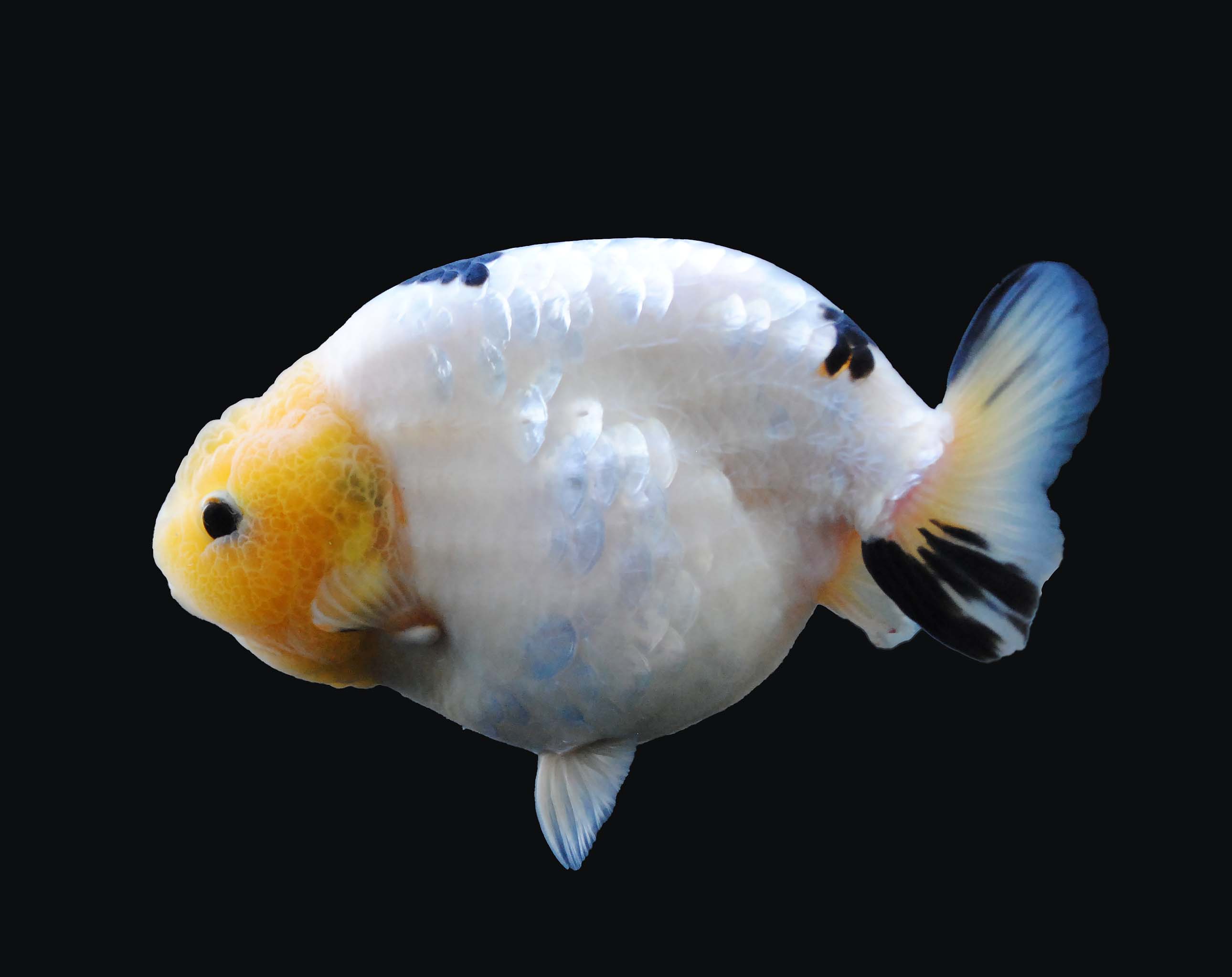
After this first mating, they do not mate anymore. I quickly realize that they are not in a healthy condition. Perhaps due to the unfavorable climate. Many fishes fall ill at this moment. Right now, they are in quarantine. I am so glad I make the right decision to collect their first eggs.
These are some of the offspring:
I want to point out that the offspring of semi-purple goldfish will consist of two different color: the light one and the dark one. The light one is the purple color, which usually falls into 25% of the offspring. The dark one will become red or red white (50% of them are semi-purple and another 25% are true red / red-white). The following two pictures show the color comparison:
These two colors must be separated as early as possible since the light ones are usually weaker and cannot compete for food well with their darker siblings. I separated them one by one as soon as they are able to swim (the 2nd or 3rd day after hatching).
Yet, there is always one type of offspring that puzzles me. It has light color but there is a dark area in its body. I encounter this phenomenon always. Yet, I have never separated them to see what they become. I usually put them under the light color variation. But I cannot trace what they become when they grow into adolescence. I hope someday somebody can look into this in more detail. This is the appearance of the fish:
The latest update is that I have done my first culling yesterday. I have with me about 50 light color ones and 50 dark color ones. I am excited to see how their body quality will turn out.
This new year I got a pleasant surprise that could propel my cow ranchu project. But first, let me update the color development of my cows. It is interesting to see how the black pattern grows.
This is my Alpha male. He is my own breed – my only success so far. The last time I took his pictures (last year), he looked like this:
And now, he turns into this beauty:
Impressive, right?
Last year I bought several more. The seller called them Milk Cow Ranchu since they were dominated by white color and the black came in few large patches. But the color progress proved them not so much different from my own breed. This makes me wonder whether I do something wrong in my keeping or it is the genetics. Here are their pictures before and after:
Male fish (Before):
After:
Female fish (Before):
And she turns into:
The transformations are almost magical! That is the wonder of Cow Ranchu!
Yet, this Cow Ranchu project proved to be quite a challenge for me. Three years of trial yields only a single good fish (the Alpha Male). During these years I have acquired many cow ranchu from different lines (and they are expensive!), and still no success. The female above gives me no satisfaction, either. It yielded few eggs. Most of the eggs did not hatch. Some of the hatchlings remained at the bottom, unable to swim. And those who could swim and grow, had so many problems with the quality and swimming ability.
Dec 29, 2021. A Friend notified me about a local online auction featuring cow ranchu. So far, there were rumor about local farmers being successful in breeding cow ranchu. But as far as I knew, none had been released into the market. When I took a look at the auction, I immediately realized that was a genuine cow ranchu since I saw her resemblance to one of the line of cow ranchu I acquired so far. Many local farmers tried to create cow ranchu from the local calico available here, but none was successful. The only option was to breed from imported parents, just like I did so far. When I saw the fish in auction, I could not determine whether it was an import fish or a local breed. But it did not matter to me. Then friends told me that it was a “tired fish.” They said the fish had been used as female parents exhaustively to the point of being unproductive anymore, and that was the reason it was on auction. Well, I did not buy that story. The news that she had been used in breeding was a good news to me! Concerning the fish being tired, I had a determination to treat her well to induce her to breeding again. So, without further ado, I won the auction. Concerning her real background, I felt no need to investigate. There are things better left unquestioned. Here she is:
She turns out to be very productive! When she came to my place, even in the quarantine stage, she laid thousands of eggs! What a blessing! Of course I did not hatch the eggs since she was still in quarantine alone. After that, she laid lots of eggs again. In my rough calculation, the hatching rate was around 90%. And the fry were healthy and able to swim well. Two days ago, I examined the two weeks old hatchlings and I found their quality satisfying (in terms of the smooth curve and erect tail). Now, I am waiting for the color to develop into true cow or not. In my heart, I am very satisfied. Perhaps this is a bit too early, but I feel that my cow ranchu project has already been successful, and I need to move on to a new project. I will tell you what is in my mind at the end of this essay.
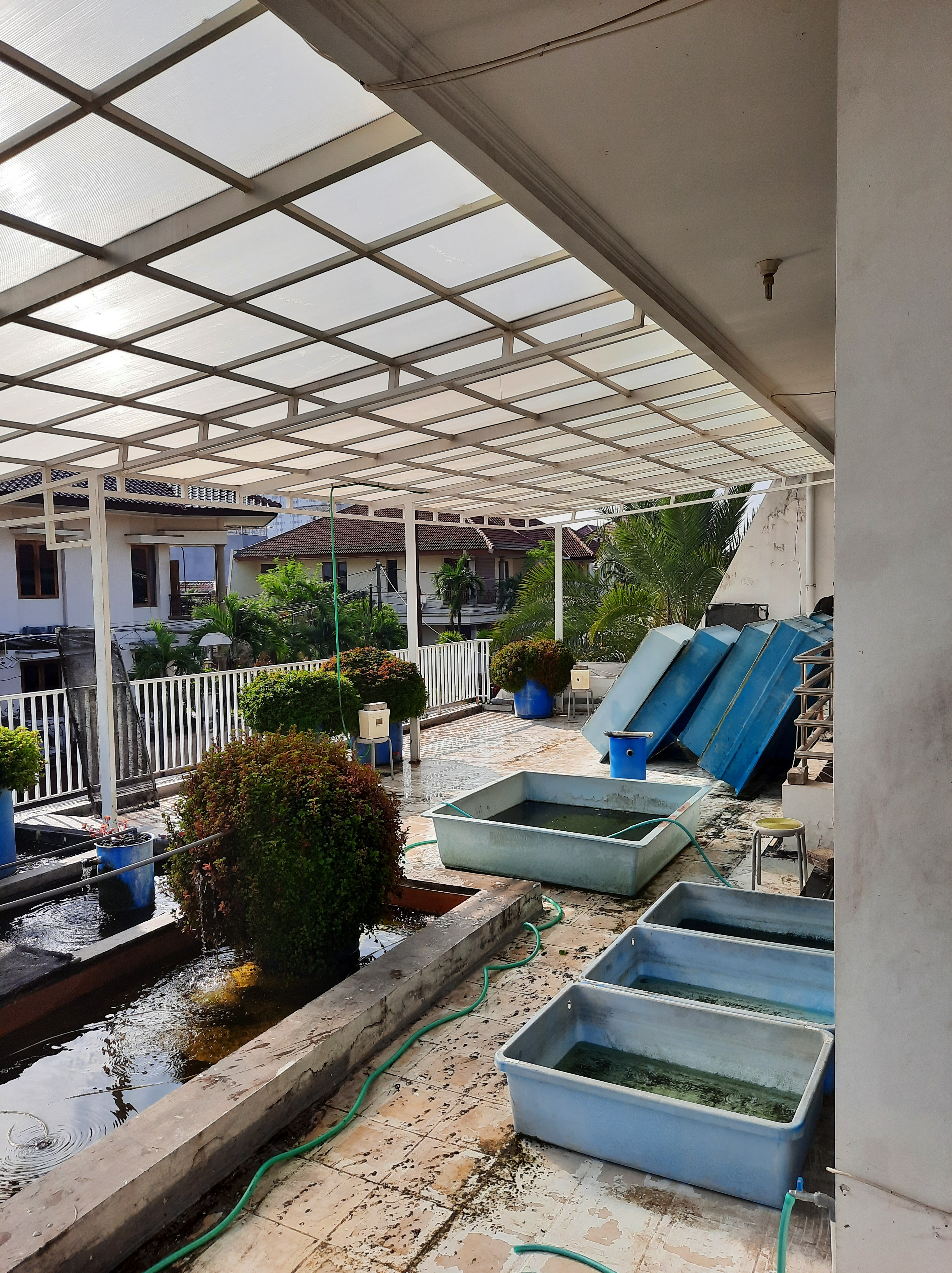
The fish laid another thousand of eggs for the third time last week. I know I could not take care of them. My farm is small, and I need to do some renovation next months. I have dried lots of my tubs for now. This will pause my breeding activity for at least a month.
But I felt reluctant to let the fry go to waste. What to do?
In this case, I decided to share. I clarify my thinking that this breeding activity is mainly a hobby for me, not so much for profit. Yes, I sell my fishes when I had too many, but selling is not my main purpose. So, I send all those thousands of new hatches into a farmer in the village. He will be able to raise the fry better than me. This is also an opportunity for me to learn not too attach to selfishness.
What is the new project I have in mind?
I am thinking of crossing my sakura yellow goldfish with the cow ranchu!
When the cow ranchu become more available in the market and not unique anymore, I will be on my way to create yellow cow ranchu! Let’s picture cow ranchu but replacing the white color with yellow! Another two years of project 😊
The new project I take this year is the Yellow Sakura Oranda.
It just occurred to me last year that it might be interesting to cross Sakura Oranda with my Yellow Goldfish. I pictured a goldfish with soft color skin as Sakura Oranda but the color is yellow white instead of red white. But I was not so sure about the upcoming result. Would the cross yield the color I imagined? Or would it be just orangish color which could not be clearly differentiated from the sakura color? Some transparent color goldfish have yellowish color, would my cross yield something differentiable from that?
I did this project out of curiosity. I just want to know.
After I separated the transparent from the metallic scale in the F1, I got all sakura color (red white). This is as expected, since yellow is recessive to red. I got the yellow color in the F1. Strangely, some of them had black marking. Perhaps the sakura oranda I used in the crossing was carrying the calico genetics. They were not perfect.
This one was not neat. The fins looked weak. Yet, I could confirm the color as yellow instead of red. I was very glad with this first result in terms of color. When I write this blog, the fish is no more.
The second yellow sakura had some improvements. The fins looked good, the body shape was more stout. The yellow color was a bit too little, but it was ok. I really liked this one. I managed to cross this with my metallic yellow oranda once, and this guy died.
I was left with several yellow sakura offspring.
One thing about sakura coloration is that the pattern counts. When the red color is too dominant, or when the red and white pattern was too plain (such as half the body is red and half is white), the fish becoming uninteresting for me. I consider a combination of red and white in proportional amount with some red islands as good pattern. I applied the same appreciation standard to my yellow sakura. So, I culled out a lot with dull pattern, and kept just one precious gem. This one piece is the one I currently have. The body quality is good enough, although there is a slight defect in the lower tail lobe and the dorsal which disqualify him from the contest. But, I found the pattern very beautiful. I think I can see two cartoon eyes in the pattern. And the soft yellow color combined with the milky white is more than I can expect. I also succeed in getting rid of the black pigment from the fish.
I take several pictures of him. Please enjoy. Merry Christmas.
I think my most successful project this year is the yellow oranda. I can breed them in slightly larger quantity with almost uniform shape. Regarding the quality, well, of course there are plenty to improve.
Let me refresh our memory concerning this project. I started by buying imported yellow common goldfish. Then I crossed them with wakin to produce yellow wakin.
I discontinued the yellow wakin project, and planned to create yellow oranda. So, I crossed the yellow wakin with a red white oranda that I had at that moment. Here were the initial results:
The body was a bit elongated. The headgrowth and tail were weak. To improve the headgrowth, I mated them with my goosehead tricolor oranda (short body). Here were the results:
There was a good improvement on the headgrowth. The body became shorter. And the tail was still weak. So, I crossed them with my Basic Material. And here are the current results (7 fish):
I can see that there is uniformity in them. The headgrowth does not look excessive right now, but it is there. They are still young right now, and I believe the headgrowth will grow more in the coming months. The body has a good width, most of them are short, few has medium length body. The tail erects pretty well, but some are too open. And the color are dominantly yellow.
I am quite satisfied with these results. I think this quality is already acceptable to the market. But since selling is not my main purpose, I still want to improve them. I think I will maintain the headgrowth, or make it slightly bigger to display the goosehead style. I also want the body to be longer without losing the body width. I want to have a good erect tail without being too open. And last but not least, I want the color to be yellow and white instead of fully yellow. These are the homework for next year.
Right now, none of the female lays eggs yet. But the male are already productive. So, I managed to mate these male with Helen. This should be the back up plan, but I do it first since Helen is fertile. I think this cross might improve the body length and the tail style (Helen has rose tail / wrinkle tail style while none of these yellow oranda display this feature). But the headgrowth will be a concern since Helen does not have a good headgrowth. The main plan is to cross these yellow with the Basic Material again. But this must wait until the female yellow oranda lay eggs. All my current Basic Material are male.