In my Diary #8 2024 I mentioned the emergence of a beautiful tricolor Ranchu out of nowhere. Well, it is not really from nowhere, but from (unexpectedly) my cow ranchu project. From that moment on, my tricolor breeding strategy diverged into two separate paths. The first path was to follow the inbreeding of my initial stocks. The second path was to cross the unexpected tricolor ranchu with my initial stock. In this diary, I will talk about the second path, that is from the cross between these two:
Male (unexpected stock)Female (initial stock)
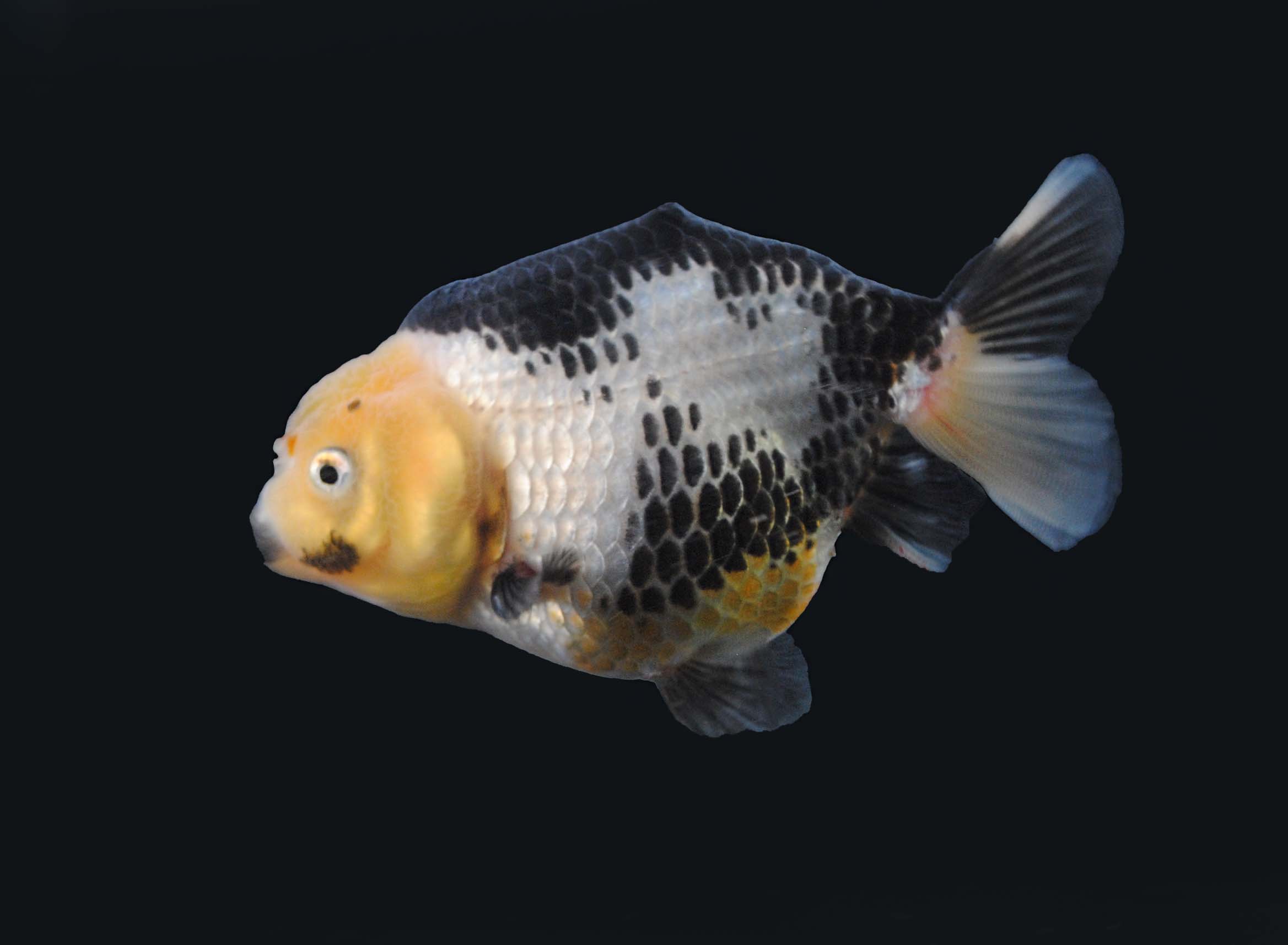
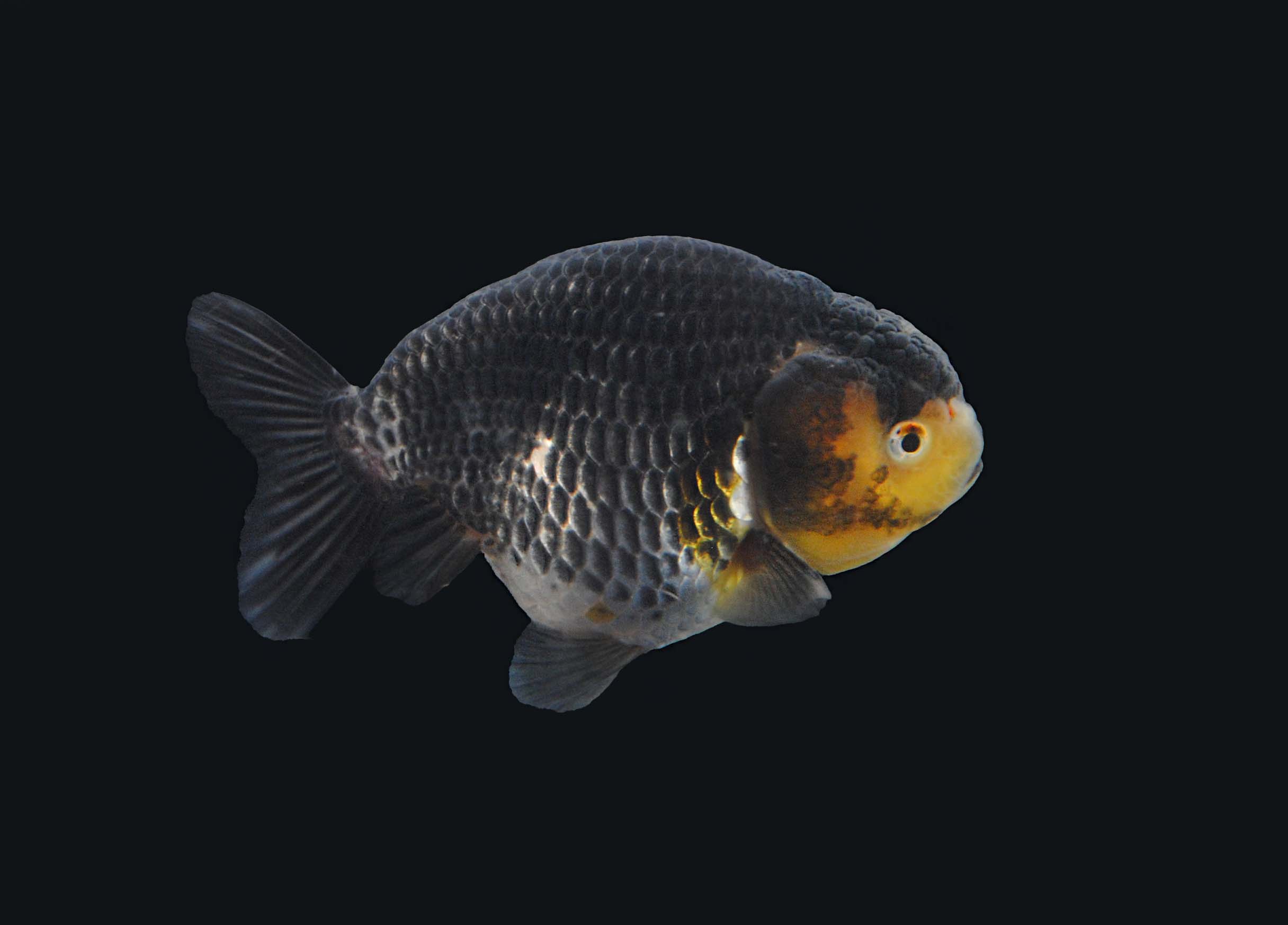
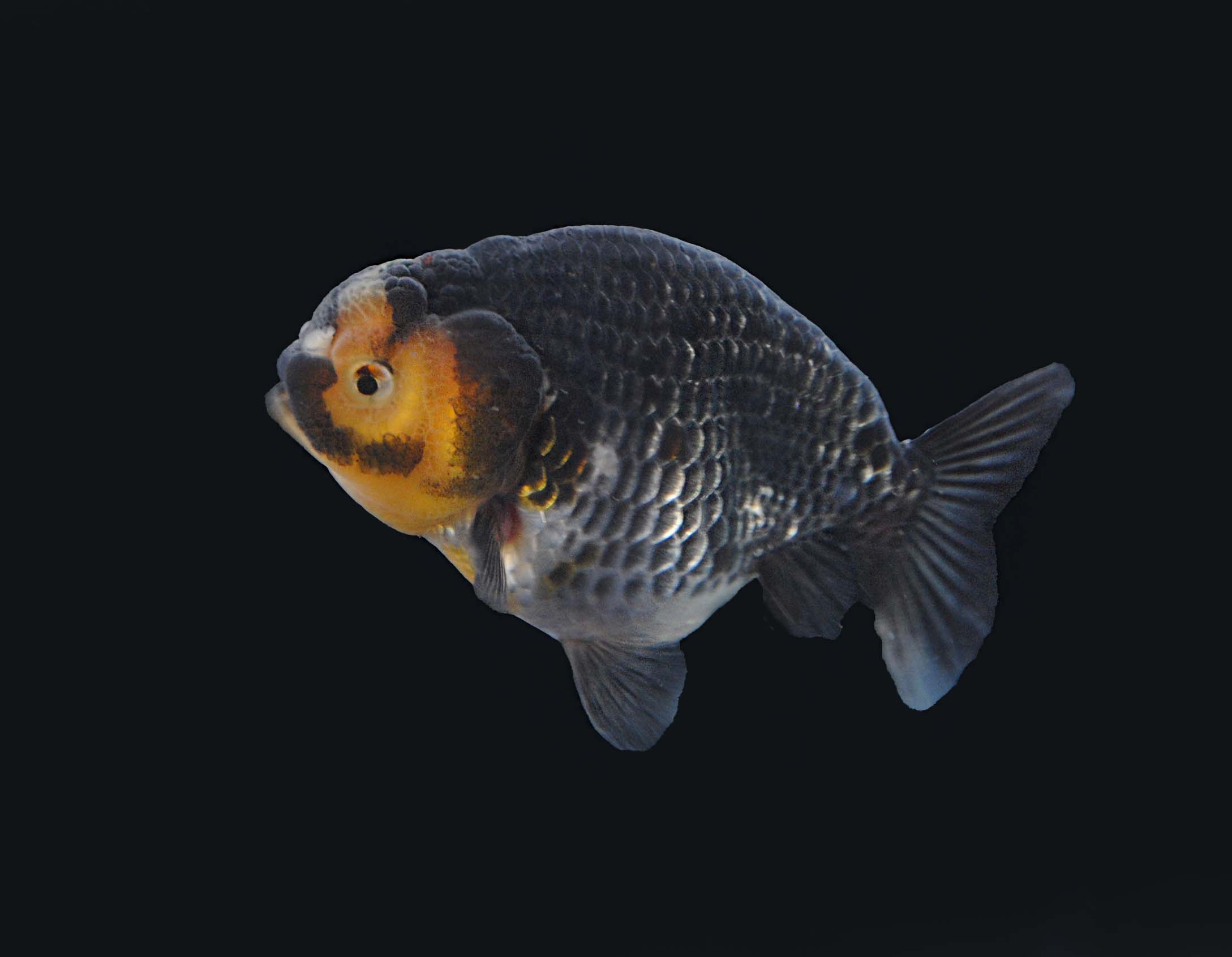
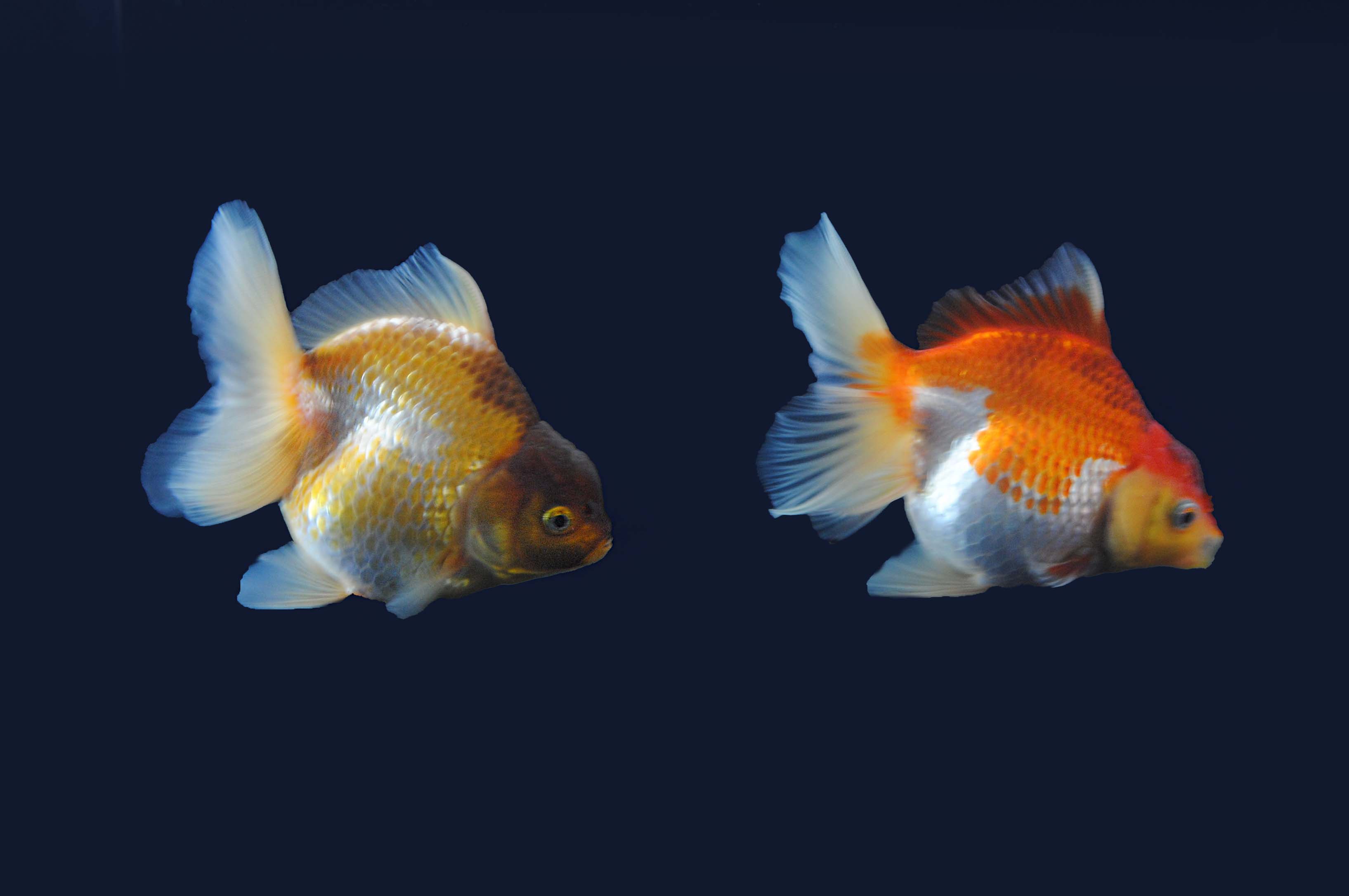
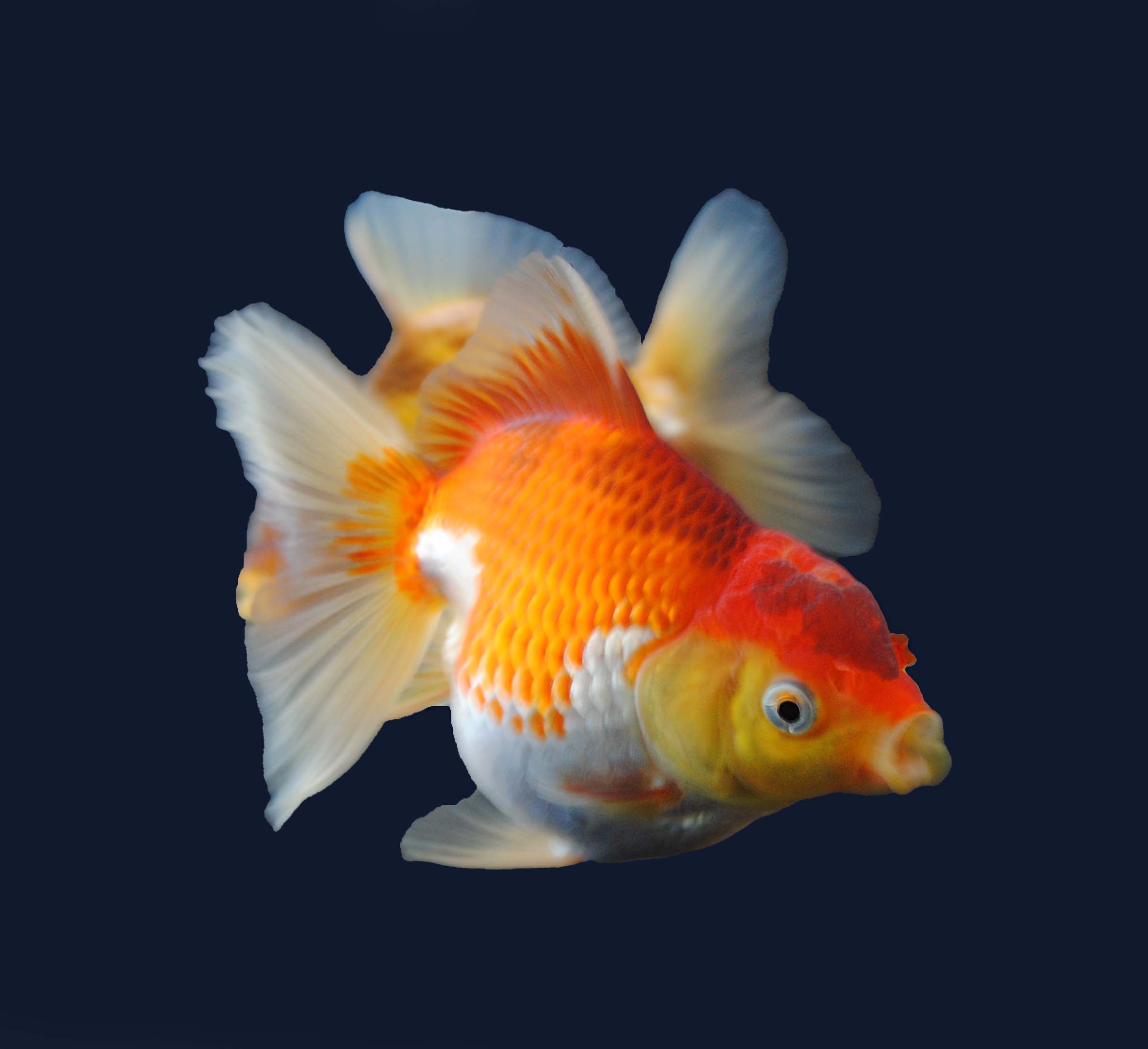
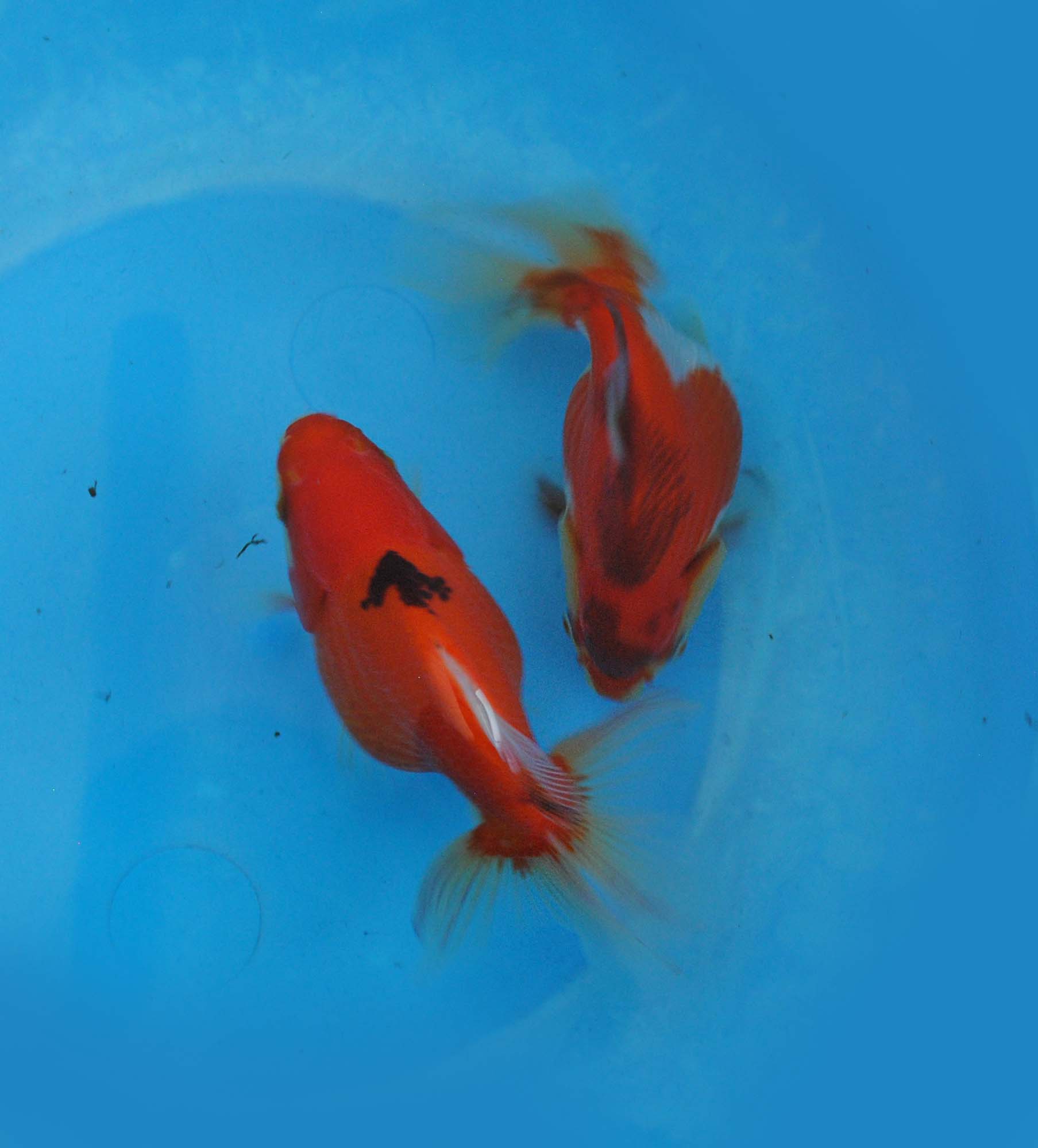
The offspring shows some interesting result in terms of coloration. Some exhibits strong black pigmentation on top of white or red-white color. This leads me to think that they are decent panda / tricolor ranchu! The quality of the body form varies. But as long as I can get the color genetics right, it is not that difficult to improve, I think.
Here are four of the results. In fact, one of them has become a decent tricolor ranchu!
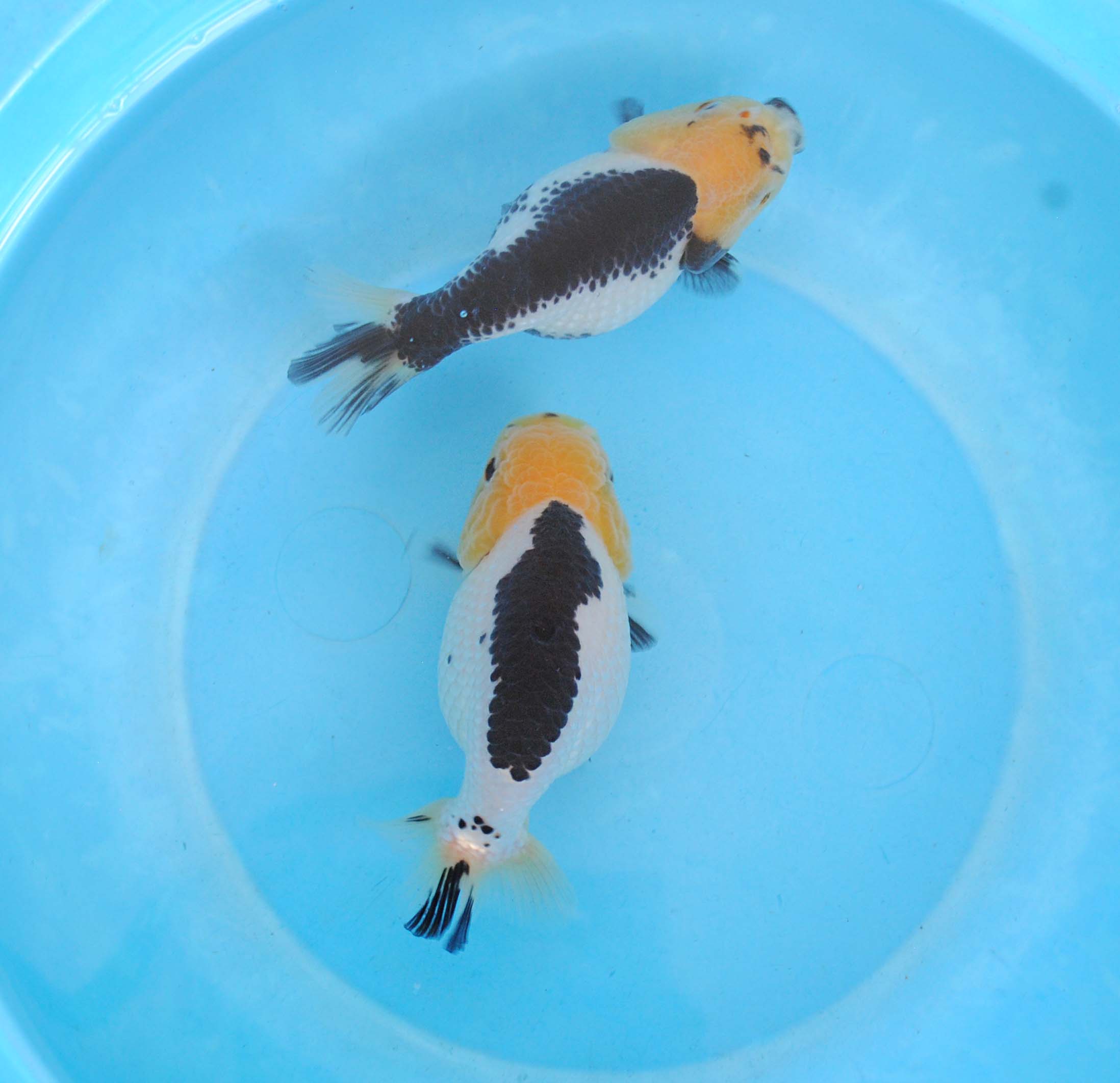
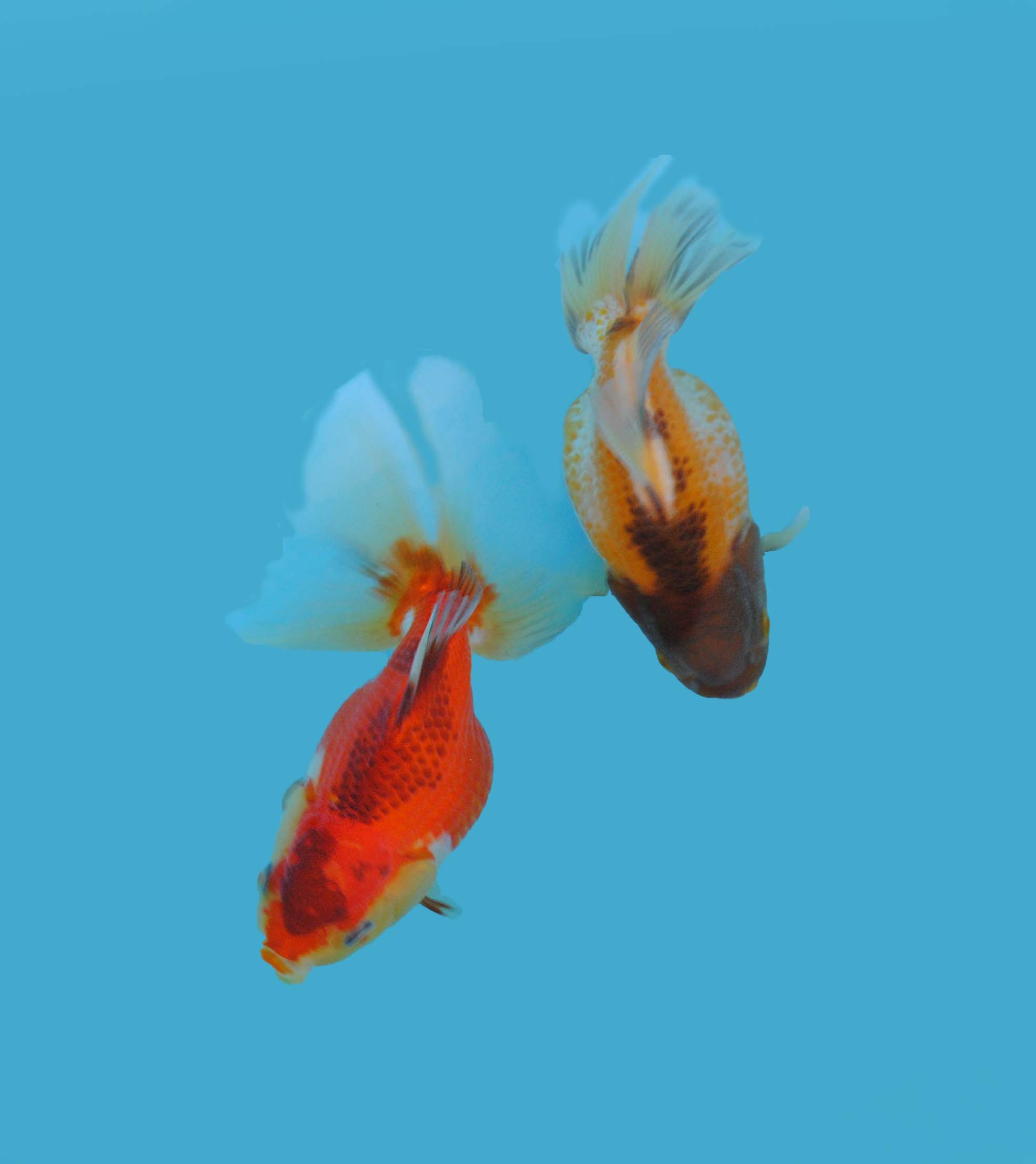
From the topview, some of the black and white color look startling!
I do hope I can realize my goals of creating panda / tricolor ranchu from these fishes.
In June 2015 I wrote about the prospect of doing a unique project, that is to create ogon goldfish. To refresh the memory, please read the following post:
Now, it has been 10 years since I wrote about it. Nothing has been done so far. Until at the beginning of this year (2025) I met a koi breeder and judge, mr Kevin from Surabaya. He specializes in breeding ogon koi. And he is kind enough to give me two baby male ogon koi from his breed.
I kept the ogon koi in a small tub, in the hope that they will not grow too large. I want to make a cross between the ogon koi and goldfish. The purpose is still the same, to create goldfish with shiny metallic fins and tail like the ogon koi. Well, if it can be achieved, I believe it will be a new unique and beautiful specimen of goldfish. Last time I try to make an illustration of such fish using photoshop, which might not be eye-catching due to my limited skill. Now, I ask chatgpt to generate the fish I envision. And see the difference between my normal tosakin and the envisioned ogon tosakin below!
The two ogon oranda below are also generated by chatgpt:
Marvelous, aren’t they?
So, instead of employing the purely selective breeding strategy, I will use the crossbreeding strategy between koi and goldfish. The ultimate question is: is it possible to cross between two different species?
Well, I am not uninformed about this. Since high school I was taught that such cross is possible but the offspring will be infertile. The case being mentioned was the cross between horse and donkey. I believed that theory until lately.
It happens that I enjoy following the scientific new discovery on prehistoric human. We now know that we as homo sapiens were not alone hundred of years ago. There were homo neanderthals, homo denisovans, and some more. They were considered extinct right now. But the DNA research shows that they leave a trace in our DNA. This information shows that it is possible to create fertile offsprings from species crossing. One of the podcast (I forget which one) raised up a question of how this is possible. The speaker explained that species categorization and the conclusional theory about infertility in the species crossing are man-made, and nature does not follow human’s categorization nor theory. Well, it was an enlightening explanation for me.
Then I went back to the case of crossing between horse and donkey. I ask chatgpt to find information about such crossing and whether there was a case that does not conform to the theory of infertility. And guess what? There were several documented experiment on such case! the record showed slight chance that the female F1 of such crossing were fertile. When they mate with male donkey, the offspring (F2) are donkeys. The AI does not find the case of crossing back to horse. And no account of fertile male F1. Well, I do not dig deeper. I think this information is enough for me to conclude that koi and goldfish can mate, and there is very slight chance that the offspring are fertile and I can cross them back to goldfish, provided the specimen carries the metallic fins genetics as in ogon color. Yes, I know it highly depends on luck. So, I need lots of best wishes from all the hobbyist who read this diary.
In the goldfish world, I have with me a paper from 2008 titled “The formation of a diploid gynogenetic hybrid clonal line of red crucian carp x common carp, and its application” by Shaojun Liu, Jing Wang, Wei Duan, Min Tao, Jifang Liu, Chun Zhang, Kaikun Luo & Yun Liu. It seems that they were doing the same experiment with koi and goldfish. unfortunately, the paper is too technical for me to read. I do not have enough background to understand what it says.
So, back to my project. I am glad to report that I have done the first attempt of crossing. My two ogon koi has come to maturation, and I mated them with a tricolor oranda. Why such pair? Frankly, no reason at all. Everytime I put a productive female goldfish in the tub with the koi, the goldfish stop laying eggs. The koi has never chased the goldfish. This was frustrating. So, when a goldfish was laying eggs in another pond, I strip the eggs and strip the sperms of the koi on top of the eggs. Yes, hand spawning. It happens that the tricolor oranda was laying eggs in another pond close to the koi tub in my facility, so I just grabbed the oranda and mate her with the kois.
These are the pair:
From the forced mating, only three eggs hatched! So few! But the successful hatching gets me excited! The ofspring is already two months or so, I think. And here they are:
At this stage, the metallic in the fins and tails is below my expectation. But the metallic color in the head (mouth and gill) is a trait I was not expecting, though that trait comes in varied degree in the. I cannot see clearly if they have moustache like the koi or not at this time. Well, I guess I can only wait for them to grow up and observe their progress for now.
I mated the koi with the tosakin with the same strategy twice. Nothing hatched at all! I do not know why. I also mated the koi with orange oranda (a cross between purple oranda and black oranda) and got a lot of healthy fry – more than a hundred of them. They are 2 cm in size right now. I will update on them later.
That’s all my report for now. If you are excited about this project, wish me the best!
I am 52 years old now, and taking goldfish pictures and videos is getting wearisome for me. The last time I took some pictures, I had a strained lower back. From that moment on, I think I need to cut back on my photo taking activities. On top of that, several business and family matters occupied my attention. While my overall health was (and is) diminishing (when vertigo took over several times) and my travelling schedule was tight, Not to mention that the earning generated during several years of working on this blog cannot even pay the subscription fee for even a year, haha! I was still faithful to my goldfish breeding projects, though. Every morning when I was not travelling, I will did my daily routine: doing water change, scrubbing dirty tubs, closely working on my projects. It is just that I had far less time to update on this blog. Going forward, I might update on this blog with less (and lesser quality) pictures. Oh yes, my vision is also deteriorating (welcome to old age, said my eye doctor!) I also think of discussing a new topic, that is about appreciation and the philosophy behind it. I think it will be an interesting topic for me to explore, though I fully acknowledge my limitation. Well, it is all still just wishful thinking, though. No promise.
During my blog absent last year, I had a chance to make a unique cross that I had an eye on a long time ago. The color of yellow and purple are both recessive to red. How if I cross them? What will the offspring variety be? I already know what happens if I cross red to yellow, or red to blue / brown / purple. But I have no idea what will happen if I cross yellow to purple. As far as I know, nobody has ever reported this kind of project.
MaleFemale
The F1 are all orange (some with black spatter). I did not manage to take picture of them due to the reason I mentioned above. Since it is easier to take video of them from my handphone, I managed to take their video and upload it in youtube:
And here are the F2
Is there any interesting result? I would say yes, though I am not sure they will do well in the market. They are interesting for curiosity purpose.
The most obvious results are the red / red white and the yellow / yellow white color. This is predictable, of course. But I do note that the yellow color has a bit of orangish color, in a different spectrum of yellow from its father, yet can still be differentiated from the red siblings. I do not think I will use them in my next projects, though.
Red white and yellow white
Next in line are the blue and purple color. This is also predictable. If the F2 of red x purple results in blue and purple (along with brown and red), it is expected that the F2 of yellow x purple will results in blue and purple also (along with brown which I will discuss after this, and red and yellow).
purpleblue
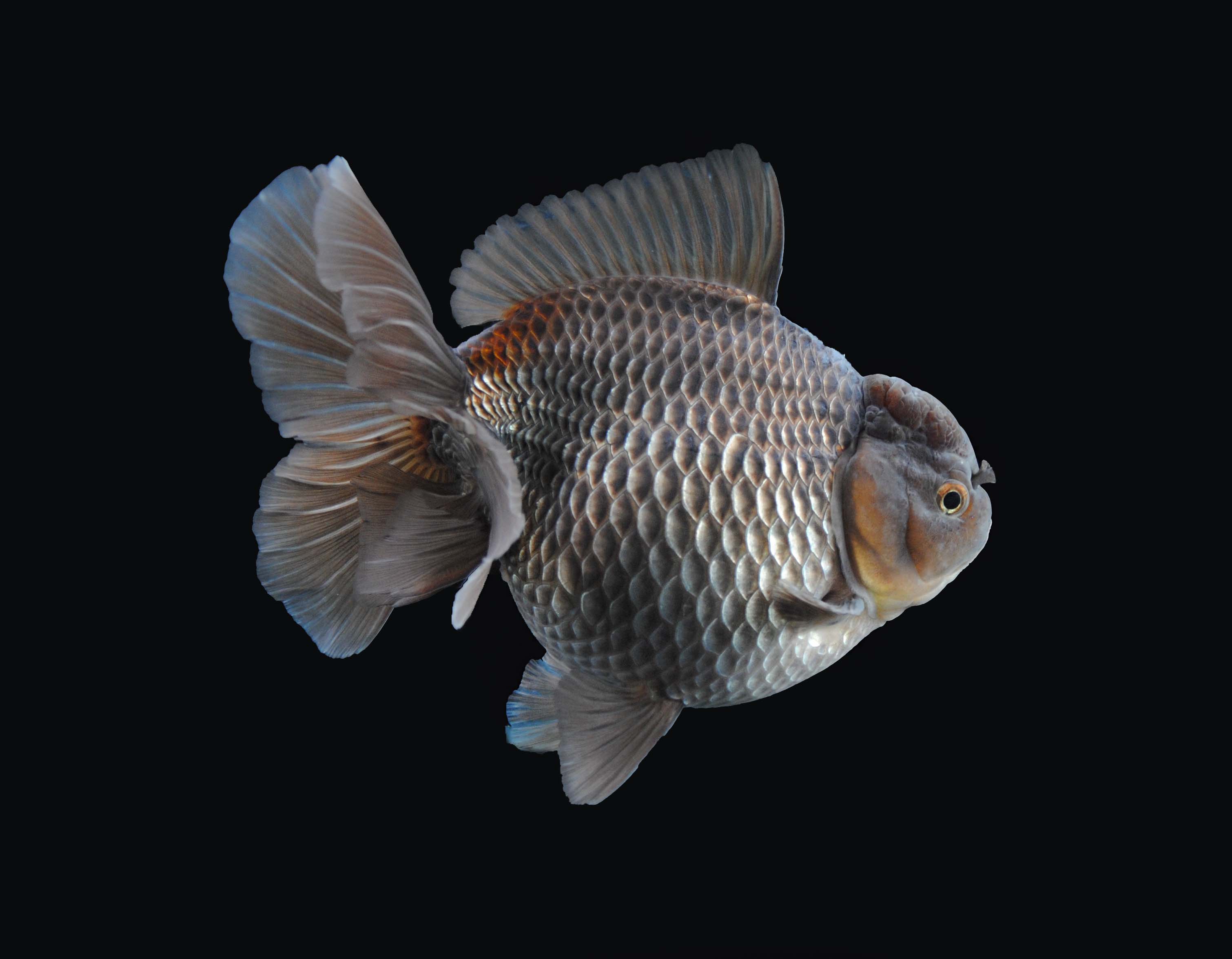
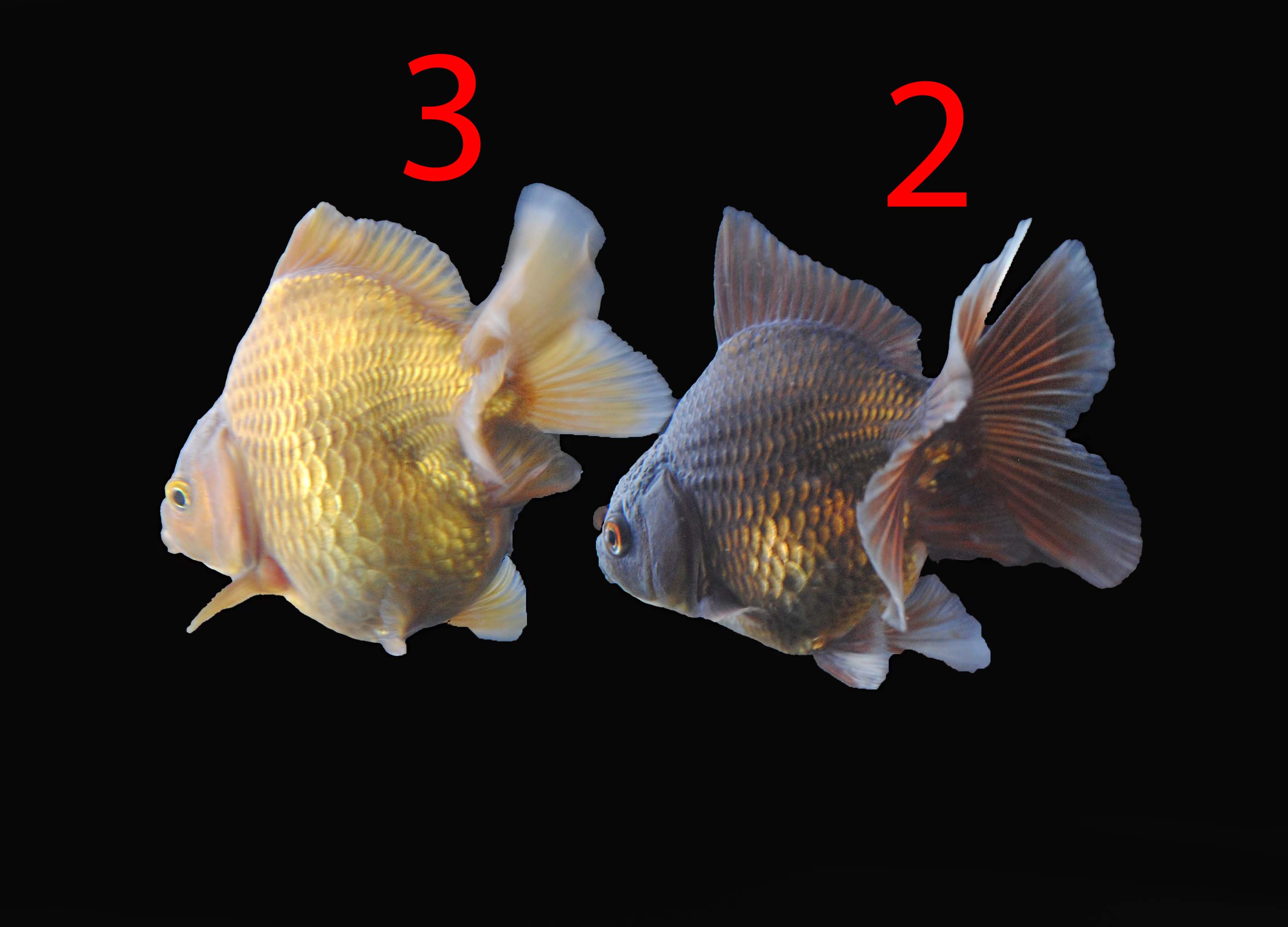
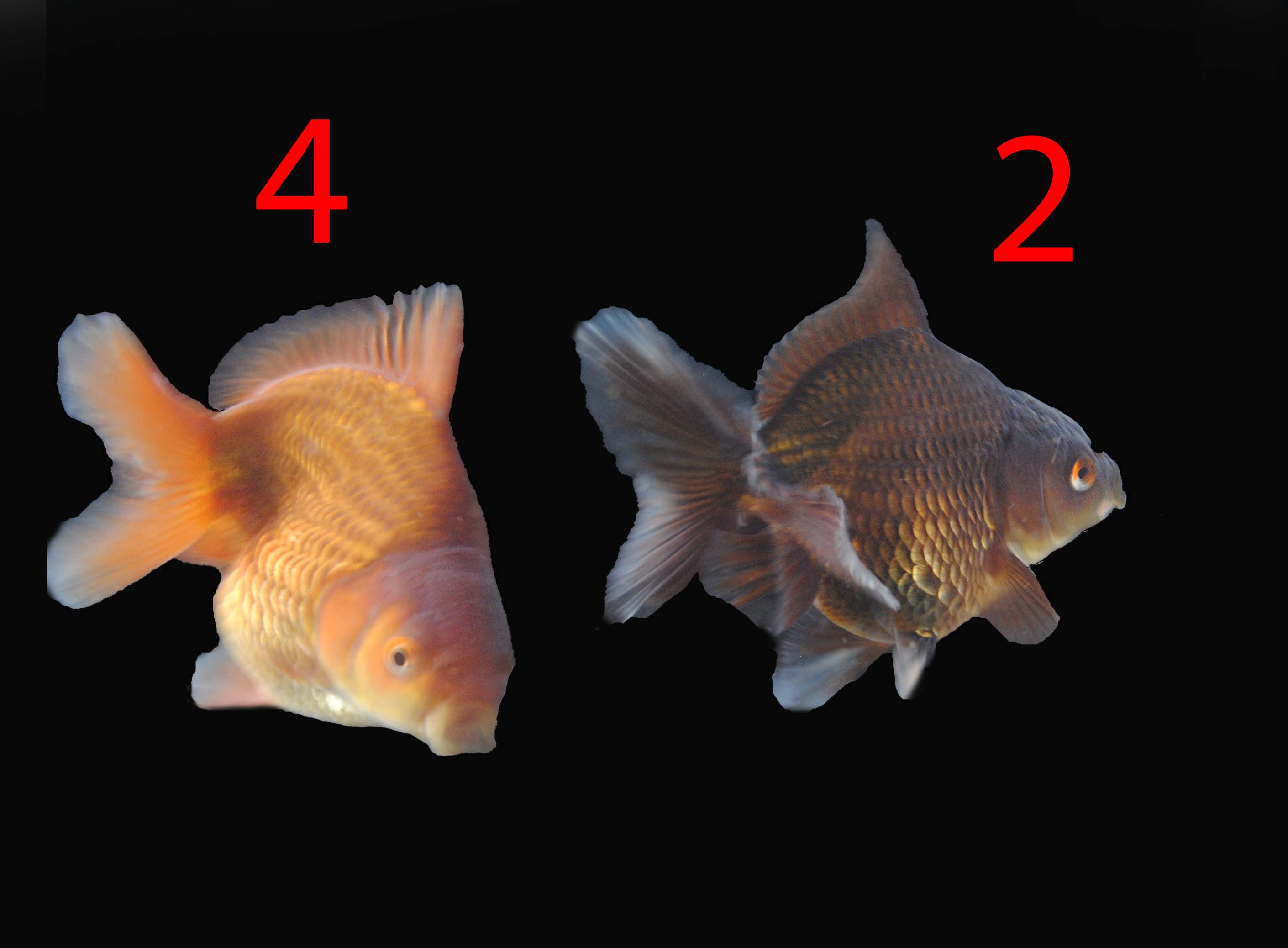
The brown offspring is a bit tricky and interesting. First, let me show you the grey (wild) color as also one of the offspring, and its dark brownish sibling. The wild color being #1 and the sibling #2. Do you think we can call the #2 brown / chocolate? I am not sure. It is close to Dark Brown color I discussed before in my previous blogs.
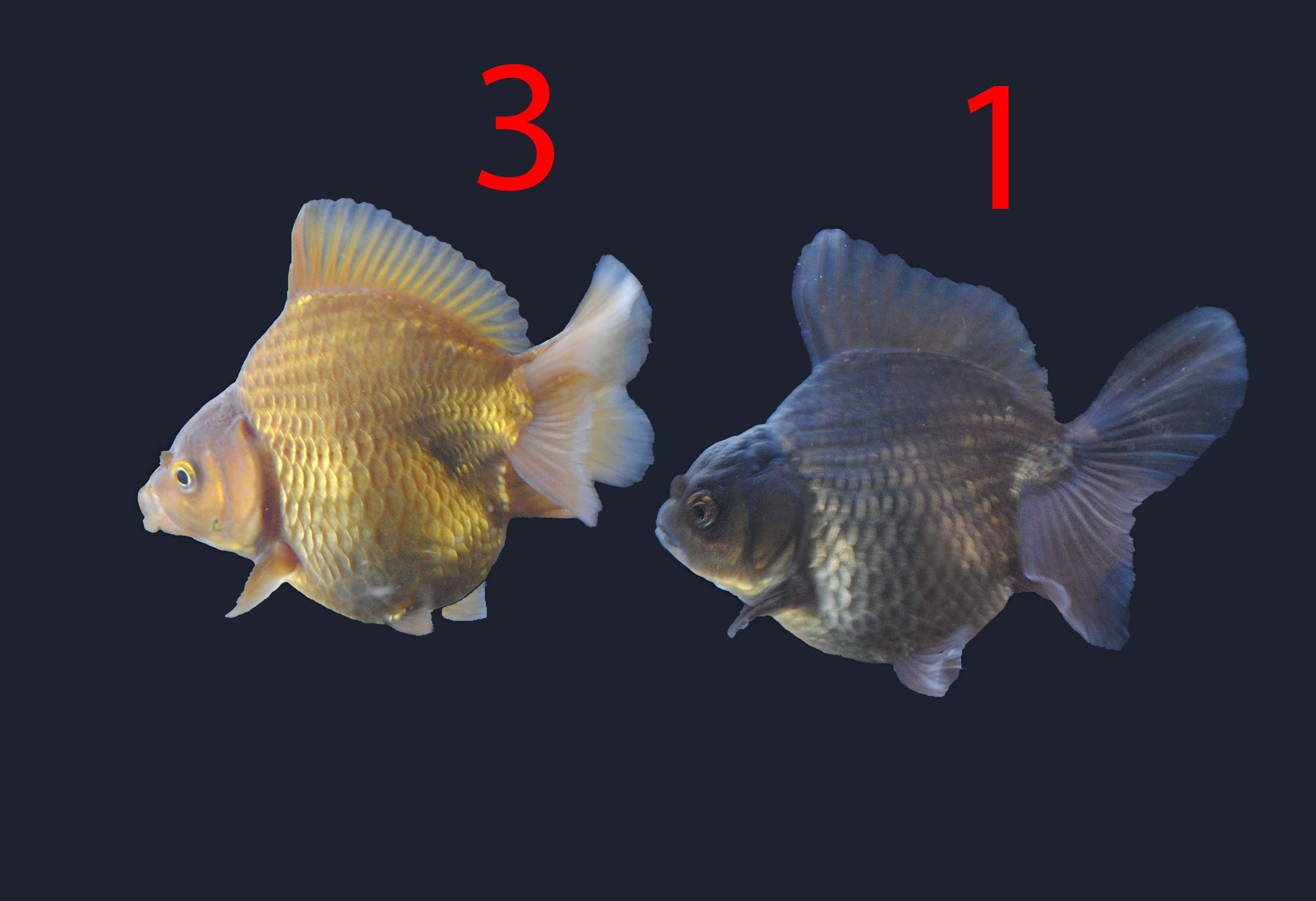
And there is one unique color in the offspring, which I am not sure how to call it. Is it bronze? Green? Copper? Gold? I do not know. I call it #3. When compared to the wild color, it is obviously not wild:
in a darker lightin a brighter light
But compared to #2, it is certainly not as brown as #2:
Can we call #3 as light brown? I do not think so, because we have another variant of brown as #4:
I compared #4 with #3 and #2:
#4 compared to #3#4 compared to #2
And if we think #4 is an interesting brown color, I still have #5 which is slightly different from #4 but more eye-catching. #5 is the best brown color I have ever seen. Too bad, when I took these pictures, I already tired myself to the core. So, pardon me for the few and blurry picture.
#4 and #5
I will definitely try to duplicate the color of #5!
Now, some of the brown color can fade into brown-red-white and brown-yellow-white color. The brown-red-white is already a rare color. But the brown-yellow-white is even more rare!
I think the brown color might eventually gone totally. But the existence of these two creates the possibility of us having those rare color combinations in a stronger version. Very unique, right? However, I am not sure if the market can accept them well.
Since the brown-red-white fish is full of defect, I cannot use it for my breeding project. But the brown-yellow-white is perfect. I will keep it for now and think about a follow up project later on.
the brown-red-white and brown-yellow white from above
Of course, there is a tricolor (black-red-white) fish in the offspring. The black color almost disappears completely. But this shows that such crossing might yield a tricolor combination. The picture below shows the difference between the black and the brown in red fish.
I might use the black-red-white fish in my tricolor project.












 hermantogoldfish