Yellow goldfish

Big Progress on Yellow

It has been sometimes I dream of yellow goldfish. It all started when I accidentally acquired a yellow tosakin. I was unaware at that time if the color was yellow. I thought it was just a pale fish due to the lack of sunlight.

I did make a cross between that yellow tosakin and a wakin, as part of my another project. Most of the offspring were red – really deep red – in color. But few show different color. It took a while for me to realize that they were yellow and mandarin orange color. I was inspired to create more of them. But unfortunately, there were too few of them. Usually from the same batch, all of the yellow were of the same sex. And most of the female were infertile. What to do?

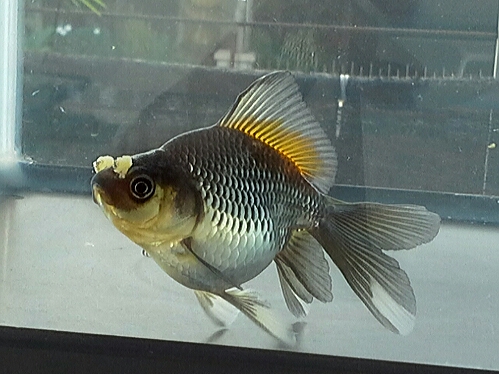
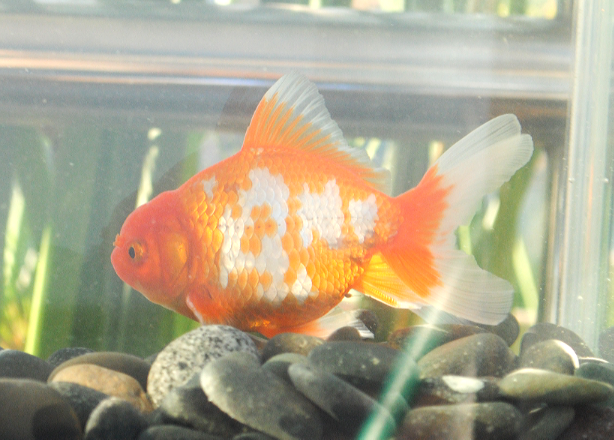
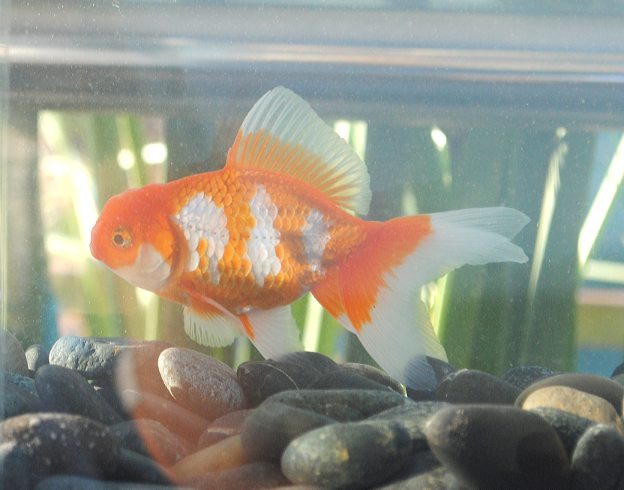
This is my yellow female infertile goldfish

semi lemon 2

my semi lemon

I remembered from my last trip to Japan, I saw that Japan has yellow commets. I also heard that they are common in America, Israel, and some more parts of the world. But Indonesia has none. So I planned to import some yellow commets from Japan. Thanks to Limas who made it possible. I did not have any yellow male. I only had some mandarin orange male fish. So I planned to breed my male mandarin orange goldfish with female commets from Japan.

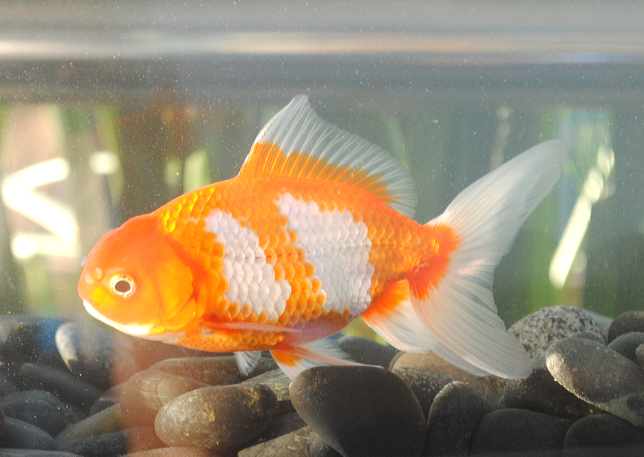
These are what I call the mandarin orange:

mandarin orange

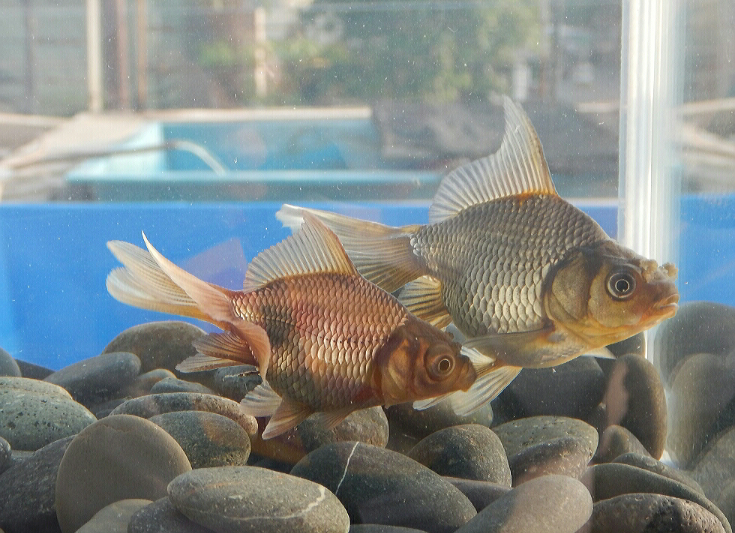
Upon the arrival of the yellow commets, I noticed that the yellow color was a bit different from my yellow goldfish. The commets were more like lemon color. My yellow goldfish had a bit of orange flavor in it, though I will still consider it yellow.

This is the comparison:

lemon cross

Alas, the yellow commets did not lay any eggs yet, though it has been months since I bought them. But the BIG SURPRISE is that, yesterday, my infertile yellow female suddenly laid eggs! And lots of them. I was tempted several times to let go the fish. Glad I did not do it. It has been a year or more without any eggs, but suddenly it laid the eggs yesterday. I matched her with the male lemons from Japan. And I am very enthusiastic to see the result.

If the yellow goldfish project was in jeopardy from the start, now I begin to see a big hope. And from this, there is a possibility to create yellow oranda, and even yellow ranchu in the future. Certainly this will enrich the goldfish diversity. Yellow goldfish will not be limited to yellow commets anymore 🙂

Wish me the best!
Standard
Purple goldfish

What color is this?

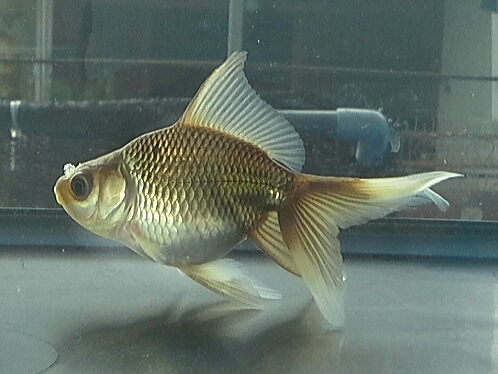
This is the most unique color I find in this purple goldfish project. It started as purple fish. But then it develops white coloration. The purple color becomes darker, to make it look like light brown. I do not know what to call this combination. Purple and white? Chocolate and white? It surely looks like brown magpie bird to me.

20150723_072508(2)

20150723_072449(1)

Many of the purple develop the white color, but most turn into totally white. So, I guess the behavior of this pattern is basically similar to the panda. That means there is a room for stabilizing the pattern through selective breeding.

unfortunately, there is only one with this kind of pattern. I hope the pattern will stay, though it is very probable that it will fade. And the purple goldfish is always the smaller compared to the blue and brown in the same batch.

My plan is to strengthen this pattern and multiply them in the form of pompom goldfish. Next, I would like to develop ranchu in this pattern. Wish me the best 🙂

Standard
Panda pompom

Panda pompom

From my experiment to create purple goldfish, I accidentally create panda pompom. This is predictable, since I use chocolate pompom and metallic blue fish as the grandparent. Some blue fishes appear in the offspring. Some have pompom, some do not. But most of the pompom feature are blue also. This one is extraordinary since the pompom feature is white, giving it a good contrast. If today we usually find pompom goldfish with chocolate body and orange pompom features, hopefully we will see more of blue or panda body and white pompom features. I can’t wait to see this piece mature. Enjoy.

20150723_072638(1)

Standard
Purple goldfish

Purple goldfish update on July, 2015

DSCN2583(1)

DSCN2601(1)

The above picture is the same purple goldfish in a lighter and darker background. This color is distinguishable from the blue and chocolate below:

Blue goldfish

Blue goldfish

Chocolate goldfish

Chocolate goldfish

The pictures below show the differences between purple and blue

DSCN2607(1)DSCN2619(1)

and this shows the difference between purple and chocolate

DSCN2635(1)

The picture below shows the fishes with respective colors from left: purple, green, blue and brown

DSCN2652(2)

Below are the highlights

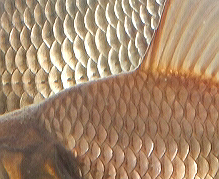
Blue scale on top, purple scale below

Blue scale on top, purple scale below

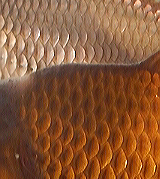
Purple scale on top, chocolate scale below

Purple scale on top, chocolate scale below

So far I think I have succeeded in producing purple goldfish, or purplish one, or any other name differentiable from blue and brown (chocolate). At this point, I think I can wrap up this project and consider it done. What remains is to try the same project again but with different type of fish. What I have in mind is ranchu. I would like to create purple ranchu. But first, I need to create the chocolate ranchu, which is still my ongoing project. It will be a challenging project!

There is another observation coming from this purple goldfish which I am not ready to share yet. Let see for another year or more if this observation really yields something interesting.

Have a good day!

Standard
Uncategorized

Dropsy Treatment

I have experienced dropsy in my fishes probably close to a hundred times. I have tried to find articles about it with no satisfying answers. The best conclusion I draw from my reading is that there is no cure yet for dropsy. Once I even brought a fish with dropsy to a lab. It was a topview ranchu I bought from Thailand. It was a lovely fish. I have treated the fish with all medication I was familiar with, but of no result. When I brought it to the lab, the result confused me. The lab said that they found nothing wrong in the fish. It was healthy. So the lab officer speculated on a mutation as a result of something that happen to the fish that trigger the dropsy. I don’t really understand about it. The fish continued to live for several months in the lab until I finally let it go.

I also experienced rare cases where the dropsy is cured. A friend named Mr Andy Hernianto and I were together in pondering these cases. Our observation led us to believe that there is a way to treat the dropsy with a higher chance of success. This is our conclusion.

First, it must be understood that dropsy usually appears together with or after a certain illness. So, while the dropsy itself is not contagious, the illness accompanying it can be contagious. While the dropsy itself does not lead to death, the illness can lead to death. When the illness is cured, dropsy persists, and the fish lives on. When the illness is not cured and dropsy appears, then the fish is in danger. So, first thing in the dropsy treatment is to make sure that the illness is cured.

I do not know what illnesses cause dropsy. I do not know whether it is a special illness or common illness.  I do not know how dropsy develops. It is beyond the scope of this article.

Second, after the illness is gone, high aeration can be used to treat dropsy. In this case, there is no medication needed. Medication can be used if we suspect the illness is still present. The key is high aeration. Later on, we will make this more sophisticated by saying that the key is high oxygen level.

This treatment is so simple. I usually put the fish with dropsy in a shade, and start to give high aeration. This treatment is particularly effective if the dropsy is still in its beginning state. The dropsy can be cured in several days up to a month. I usually put a fish in a clean container by itself, and no filtration. Water change can be done routinely if there is no medication used. If the dropsy has been there for a relatively long period, this treatment seems useless. The dropsy might be permanent already. At least I have tried this for a month, and I gave up. I do not know if the treatment was done for a longer period. This is one experiment I did in 2012.

DSC_6908

The treatment took approximately ten days. And the fish was cured as before. Below is the picture of the fish being cured from dropsy.

DSC_6974

Later on, I share this finding with another friend Mr Jemmy Wijaya. He reasoned that this must have something to do with the oxygen intake ability of the fish. If that is the case, then cold water temperature will help to cure the disease. Then he did the treatment with a chiller and reported success. I myself do not have a chiller and have never done the experiment. But I think it makes sense.

So, this is how to treat dropsy. I know I do not do statistics, but I sort of thinking that the success rate for a beginning period of dropsy is very high, probably 80 percent or more. Thanks to Mr Andy Hernianto and Mr Jemmy Wijaya. I hope there are scientists among the readers of this blog that will do more experiments to perfect this work.

Standard