calico ranchu, cow ranchu

The Diary of a Goldfish Breeder 2024 (5)

In this Diary I will report the results of the cross between Cow Ranchu and Black Ranchu in this video:

The black is actually an offspring of my previous Cow Ranchu (Milk Cow Variant). Let me show the results and I will compare them with the offspring of Cow x Sakura reported in the previous diary (#4).

Here are the offspring:

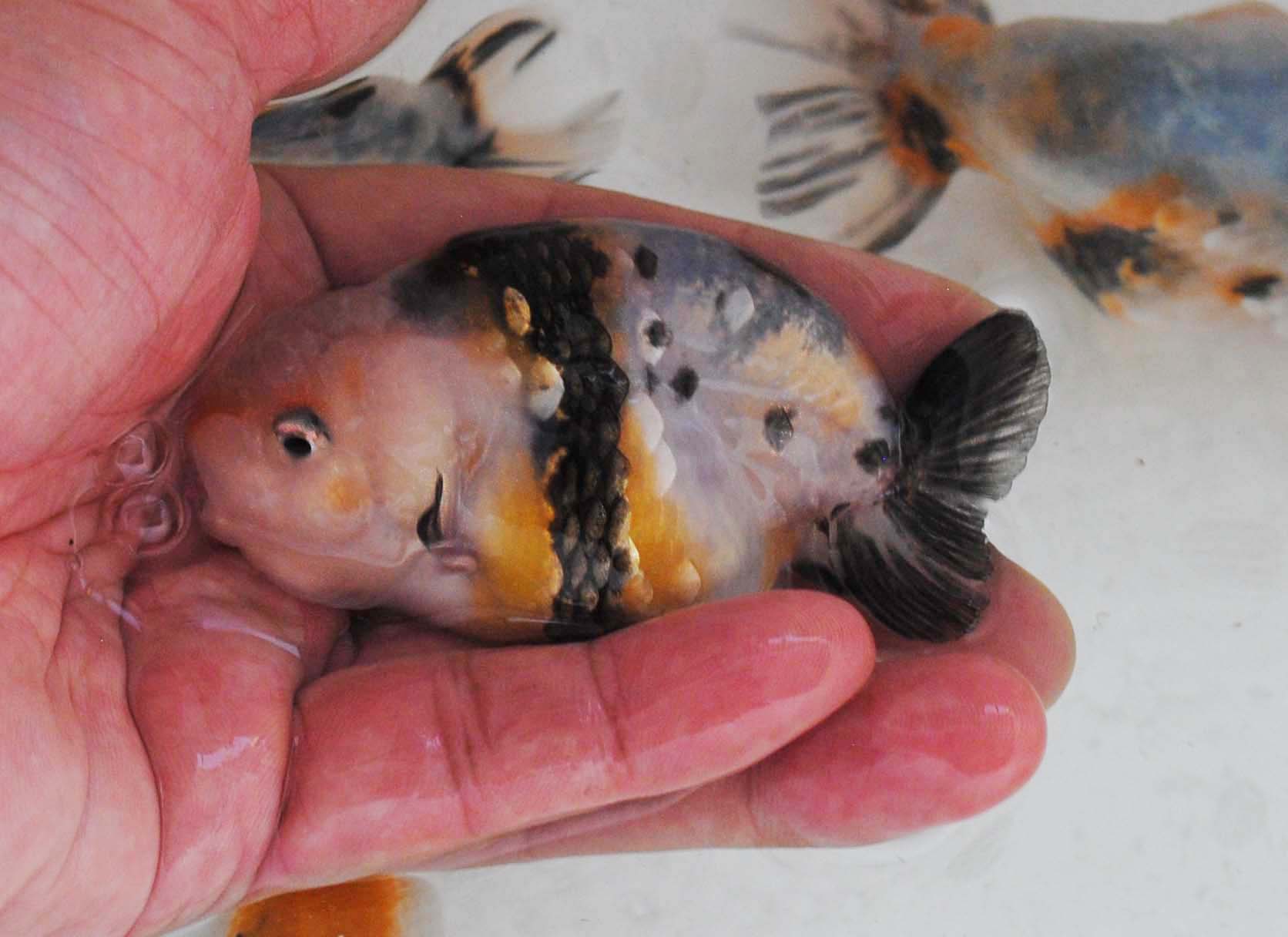
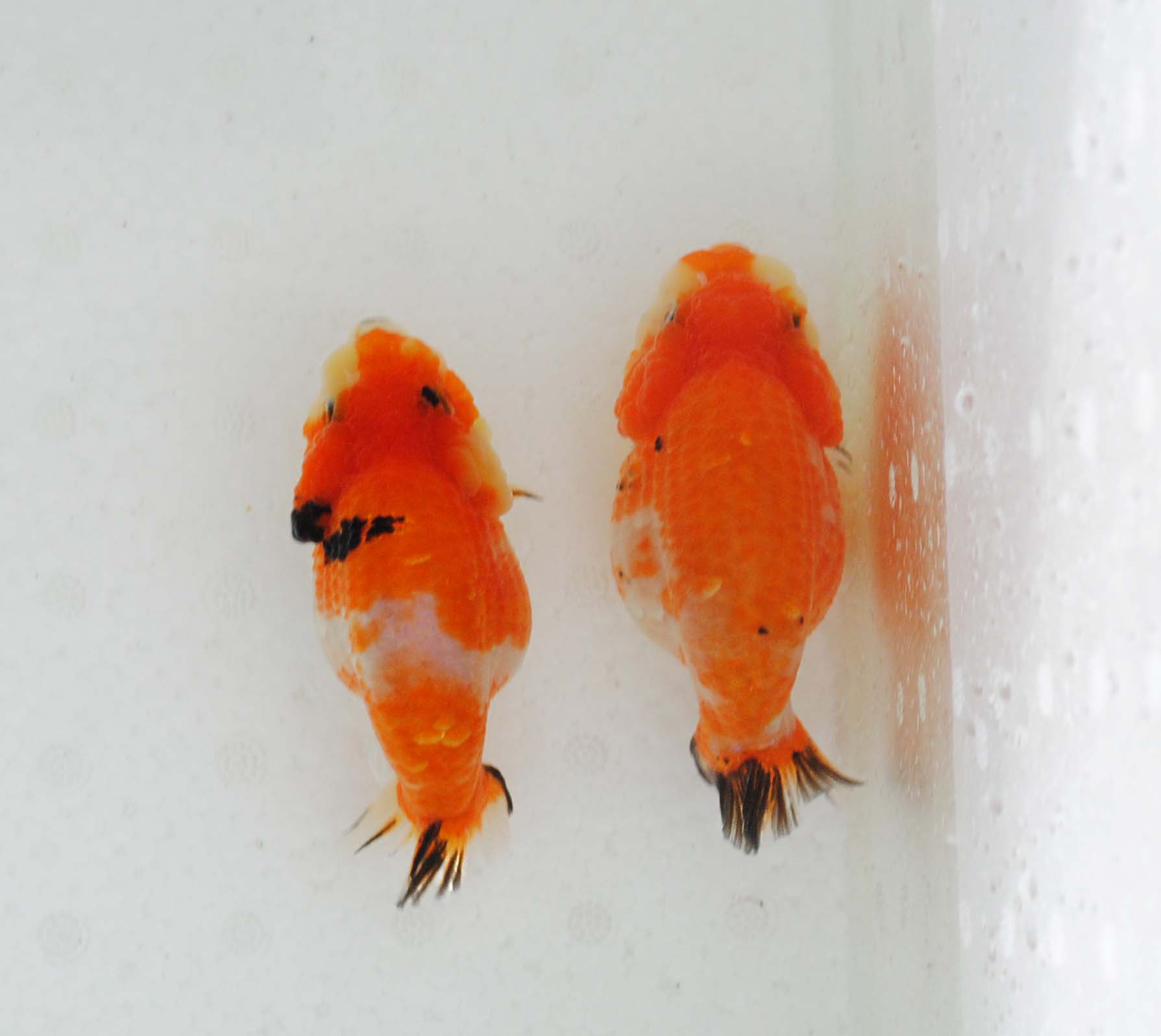
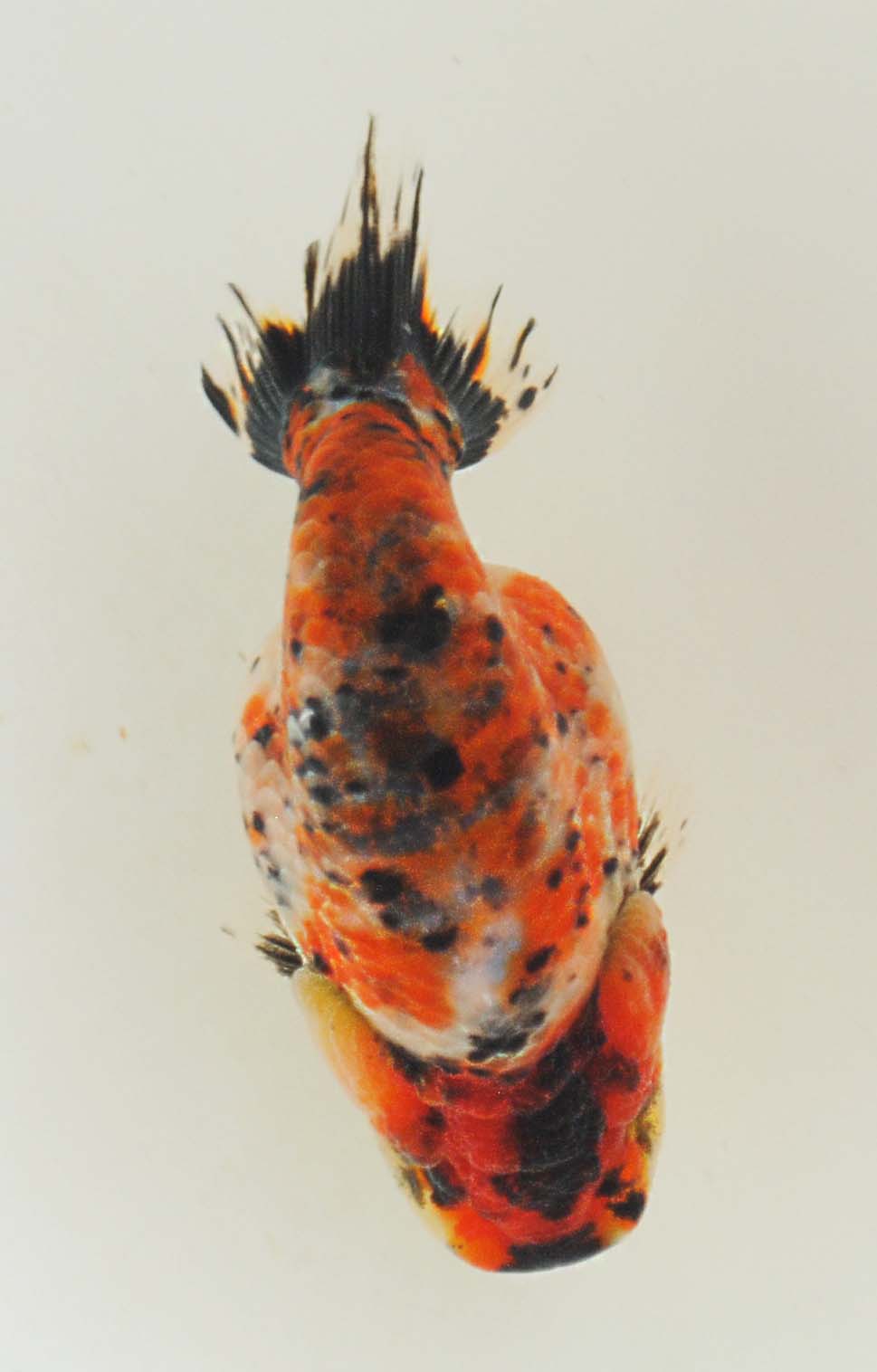
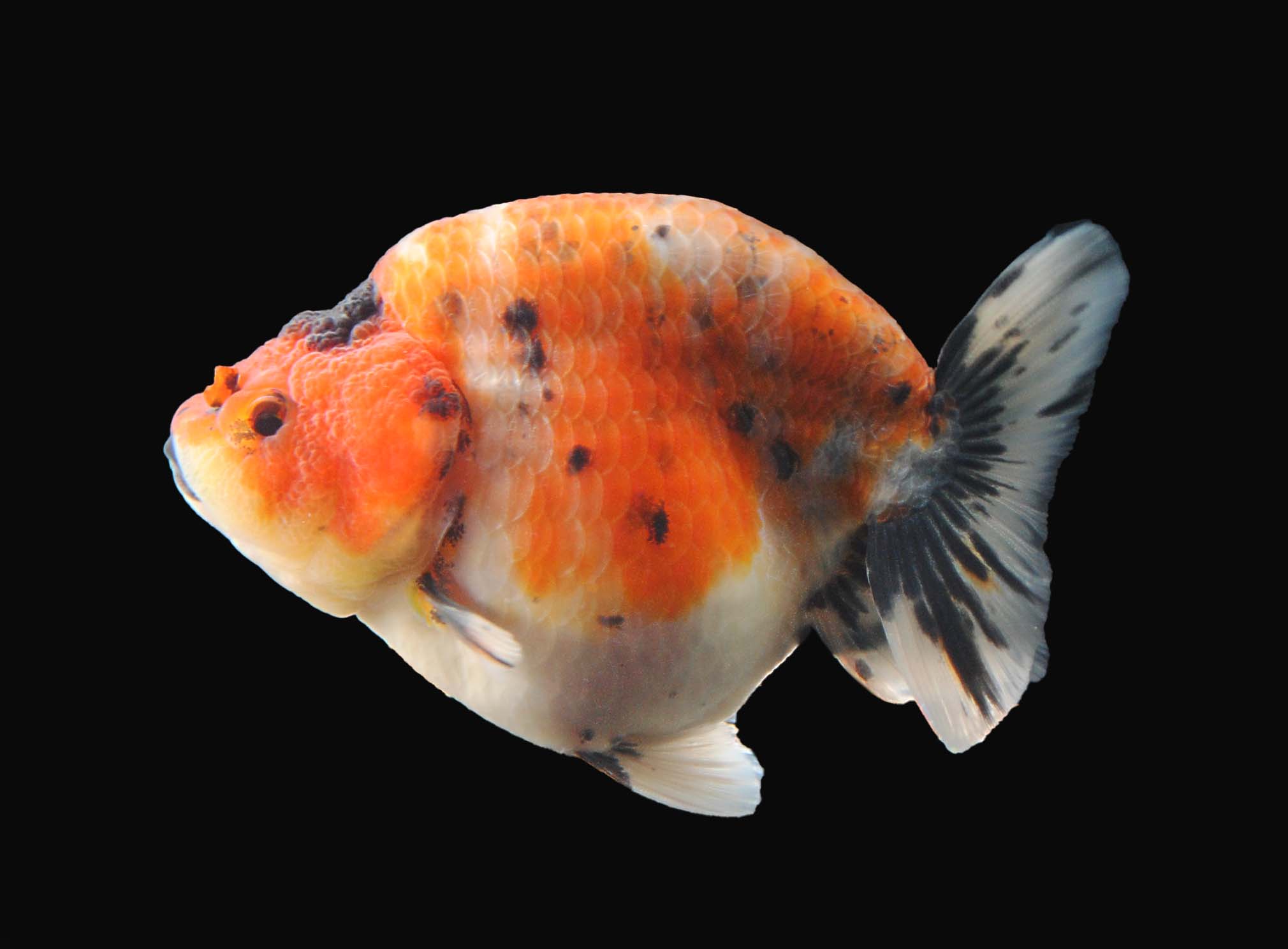
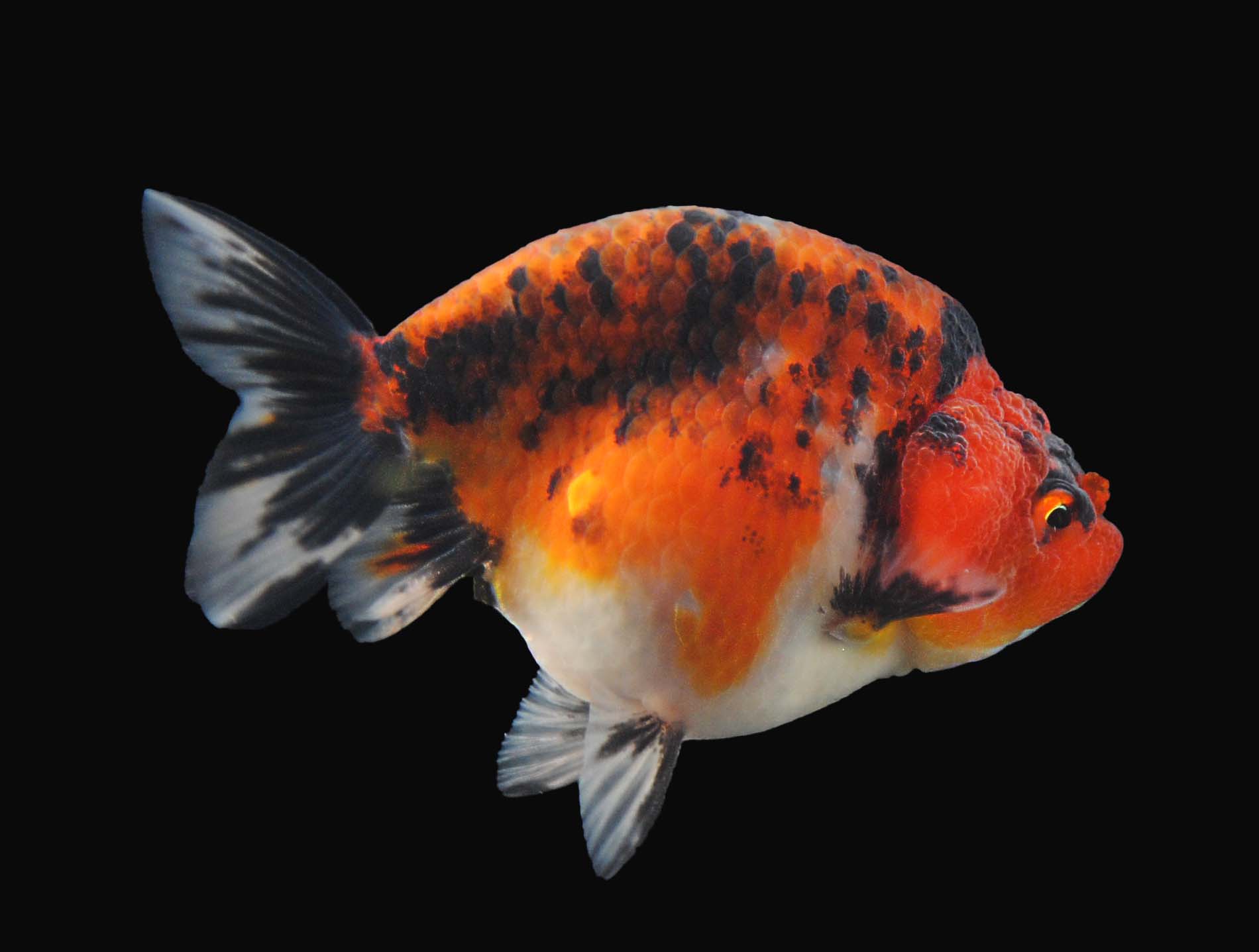
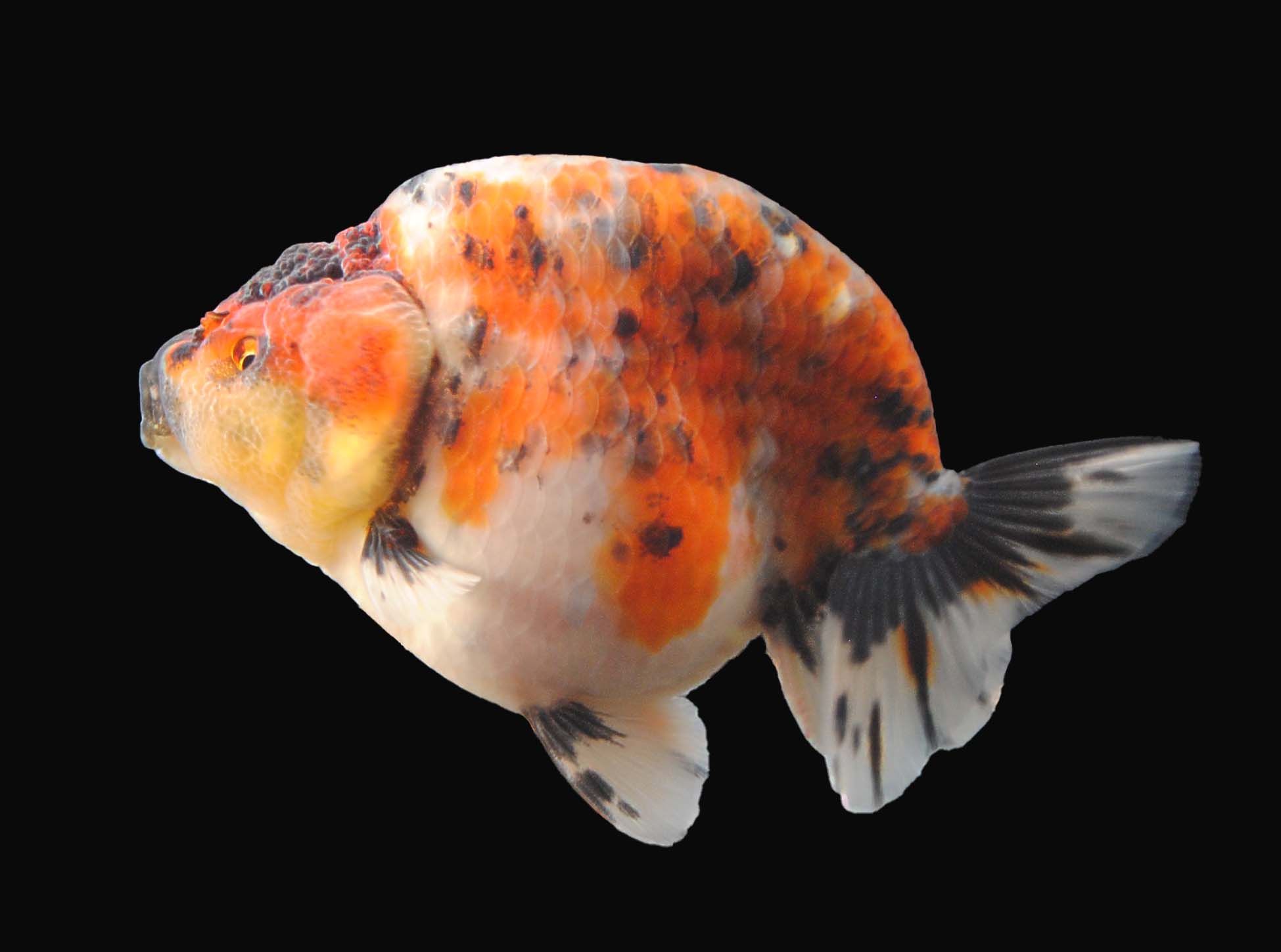
The first category are fishes with large black markings in the shape of large blocks / islands. In these results they have red color. If they are free from the red color, they will come close to true Cow Ranchu, I think. At least when being watched from the top. Interestingly, from the side viewing, the black markings extend to one side of the body (sadly, only one side) to appear like large belts.
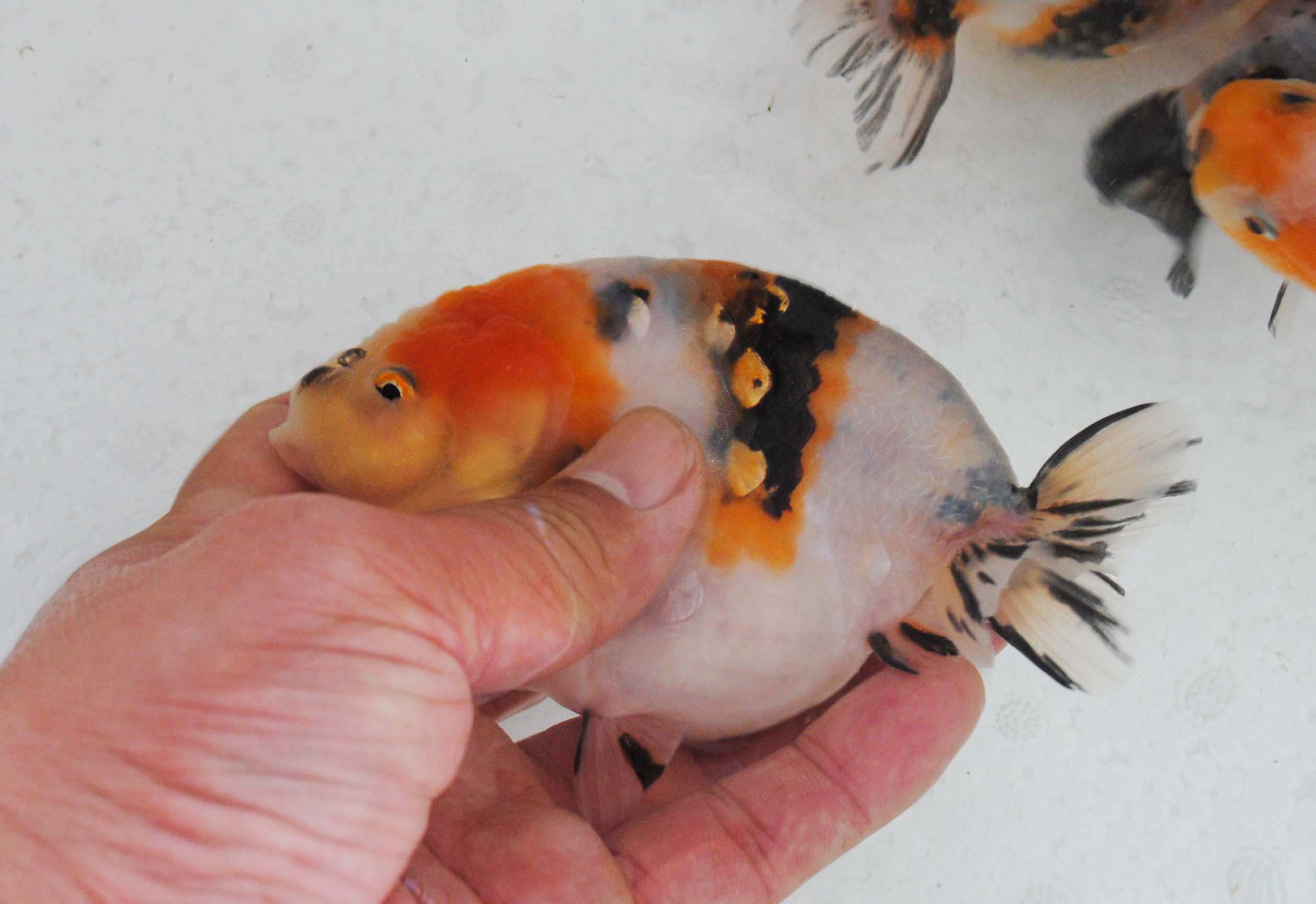
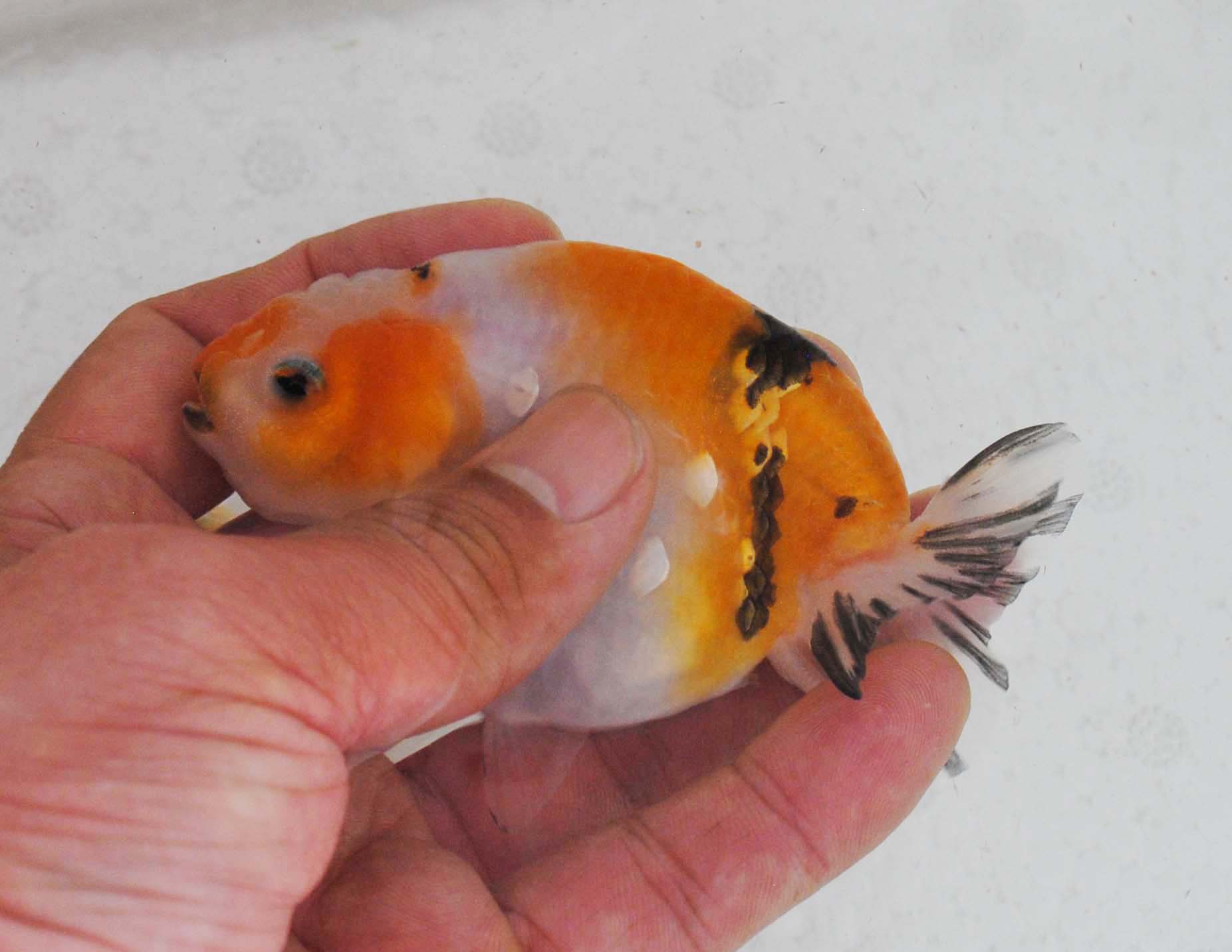
I think this is an interesting phenomenon. The project can be directed to create Cow Ranchu and Ranchu with Belts.

This one also has a belt in one side of the body, but the black marking does not extend to the top of the body. I will put this in the same class as category one, I think.

All these four will be in my breeding plan.

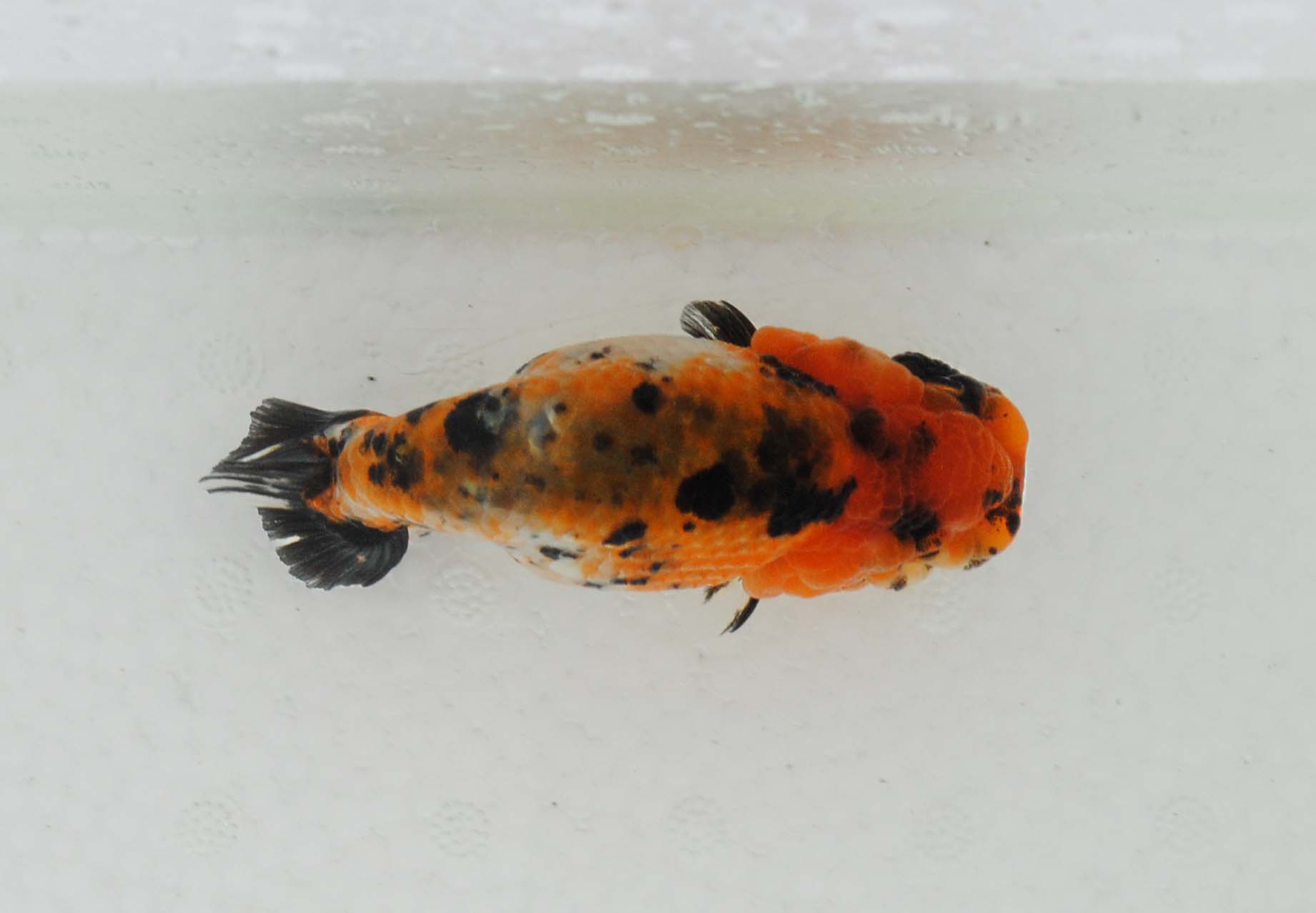
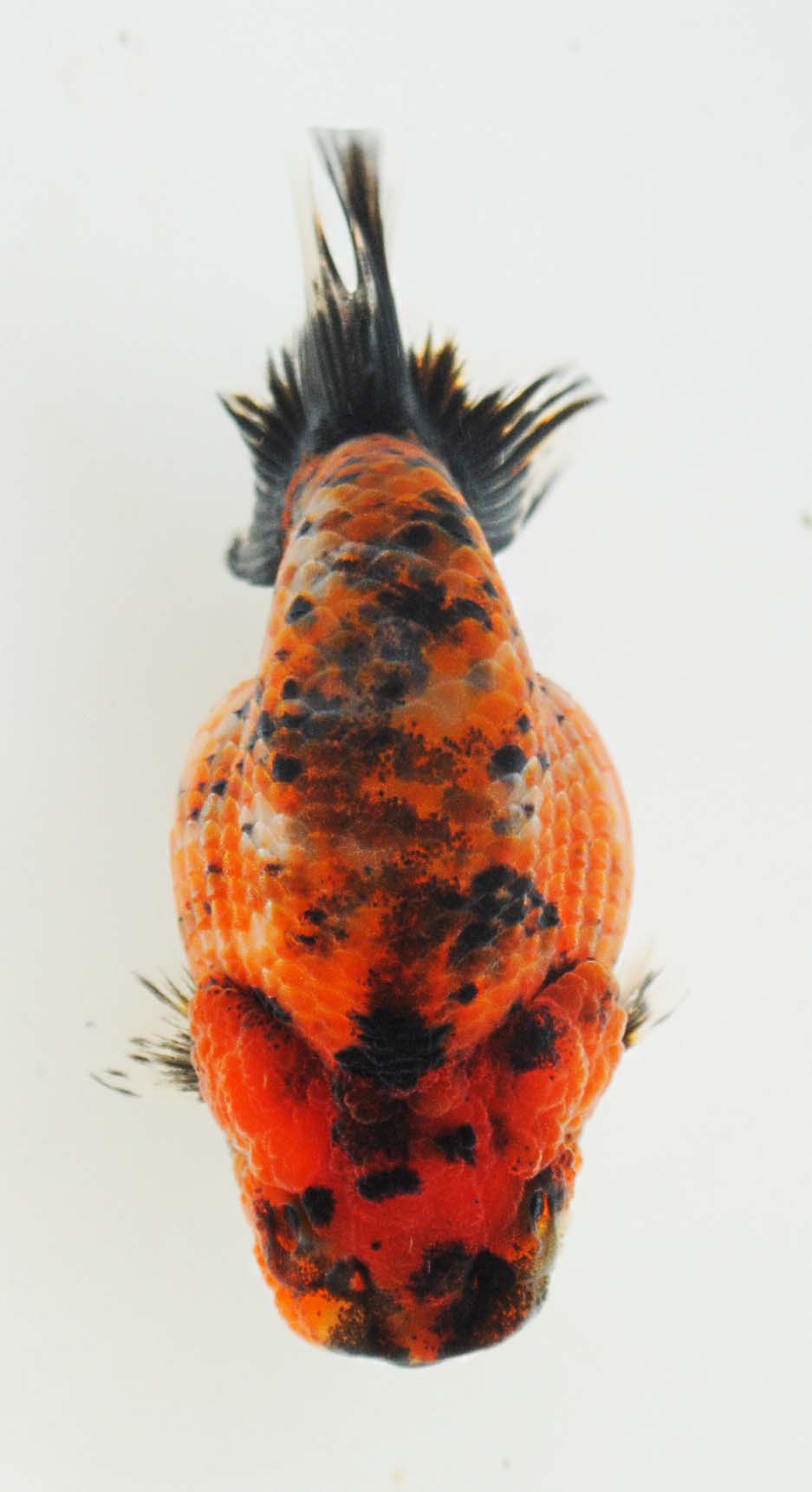
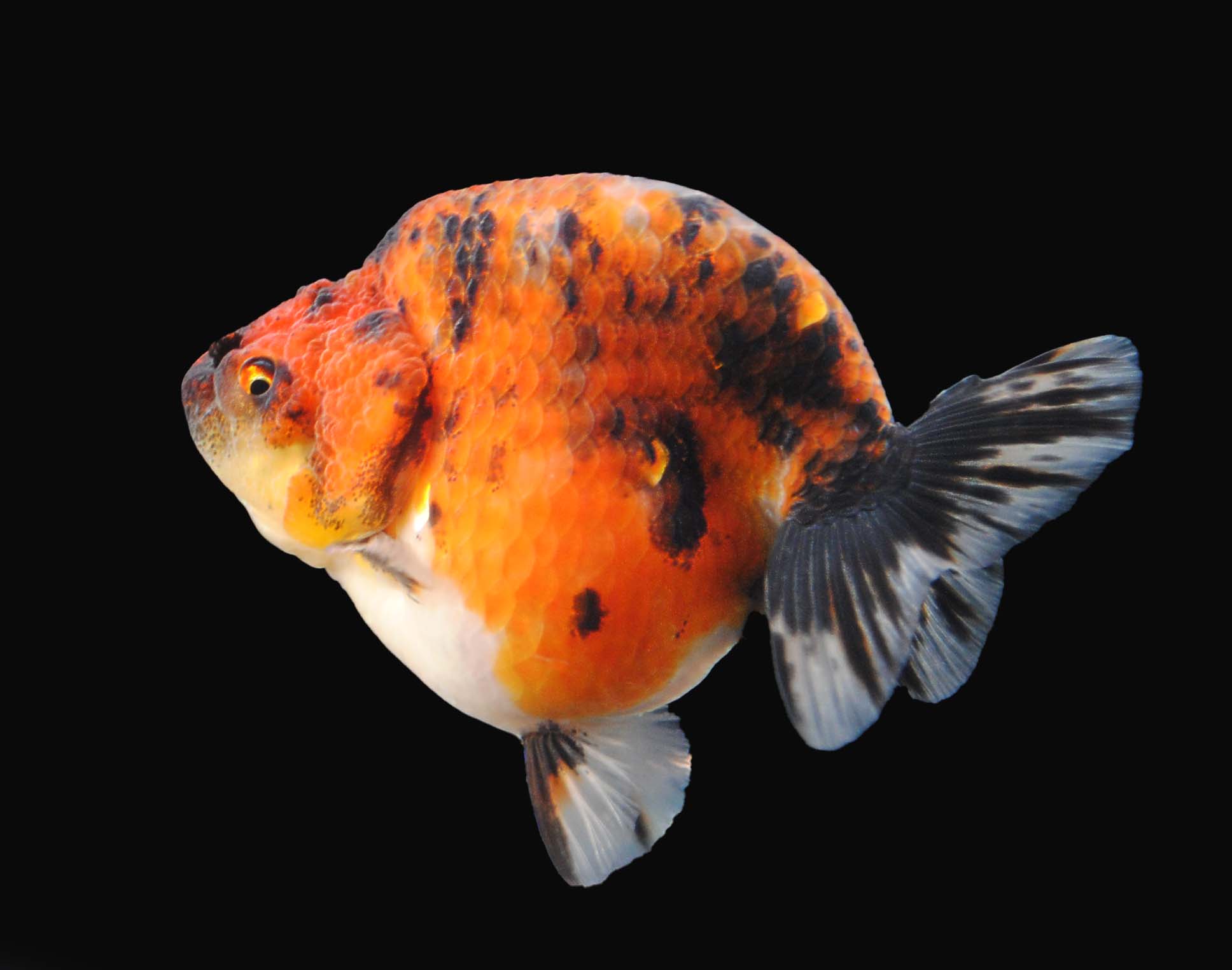
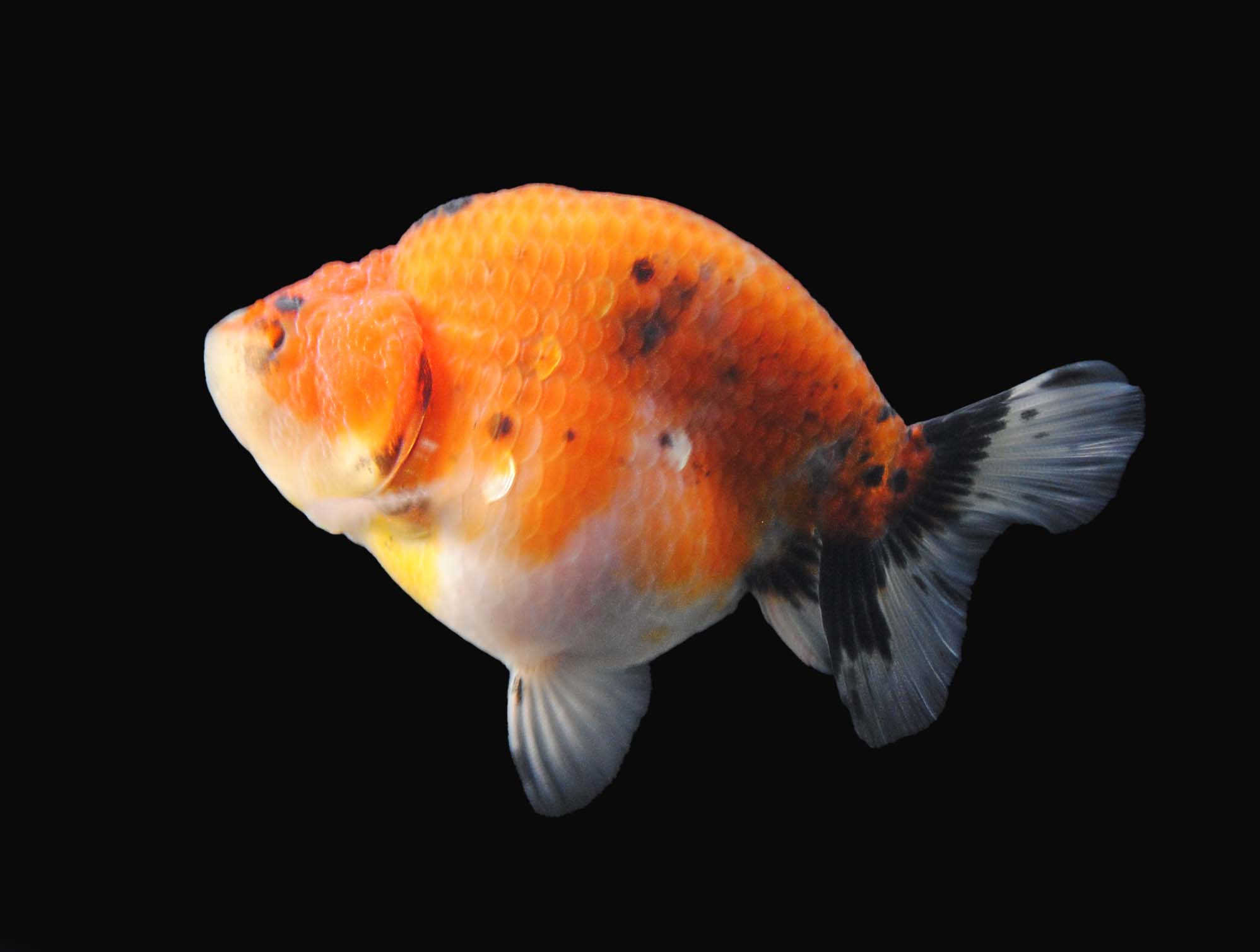
This is the 2nd category. It has lots of black marking, in the shapes of large blocks and dots. But the black marking does not produce a belt appearance. It is more towards irregular pattern. It can be considered as calico with lots of orange color. I am still undecided whether to use this in the project or not.
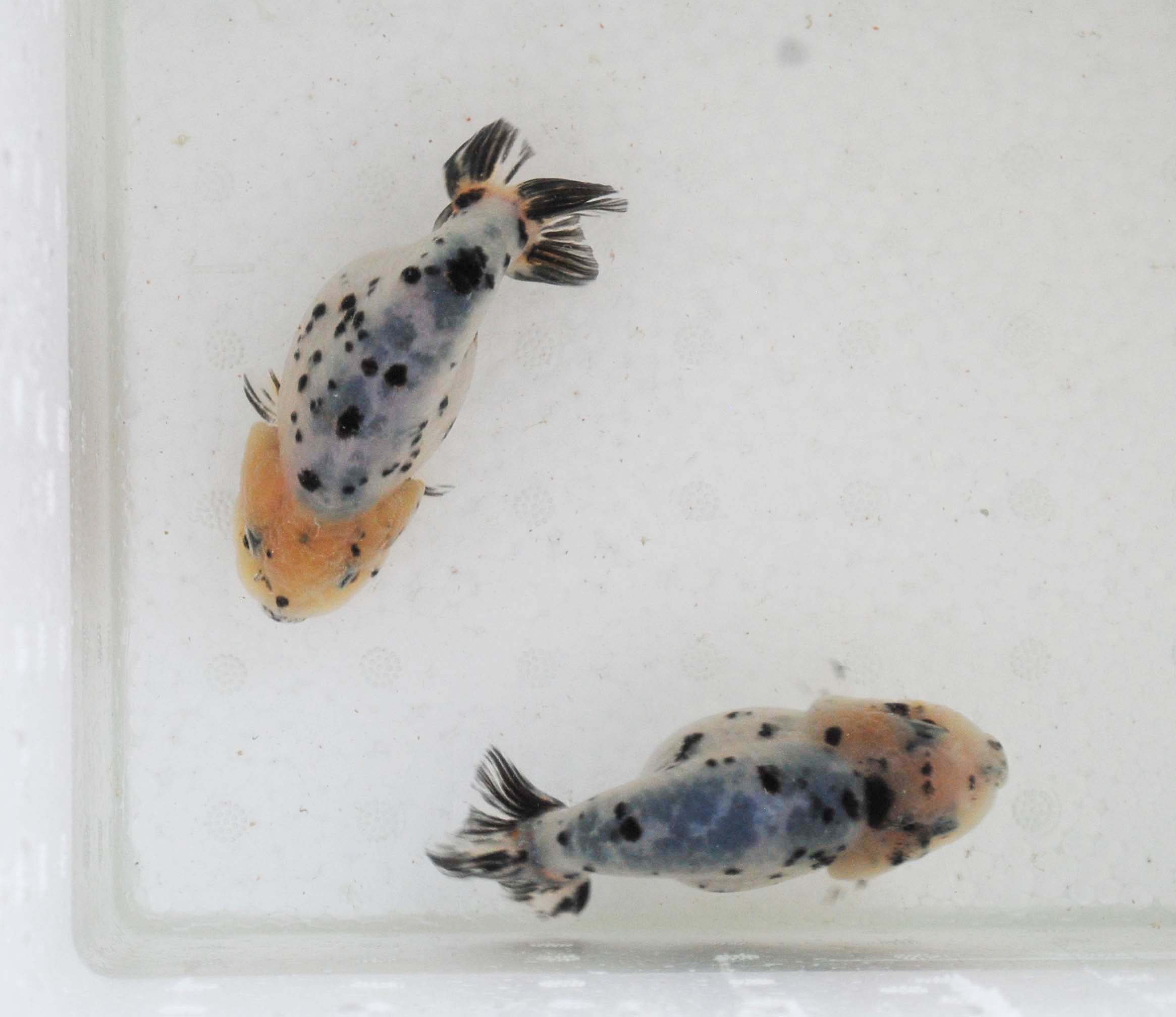
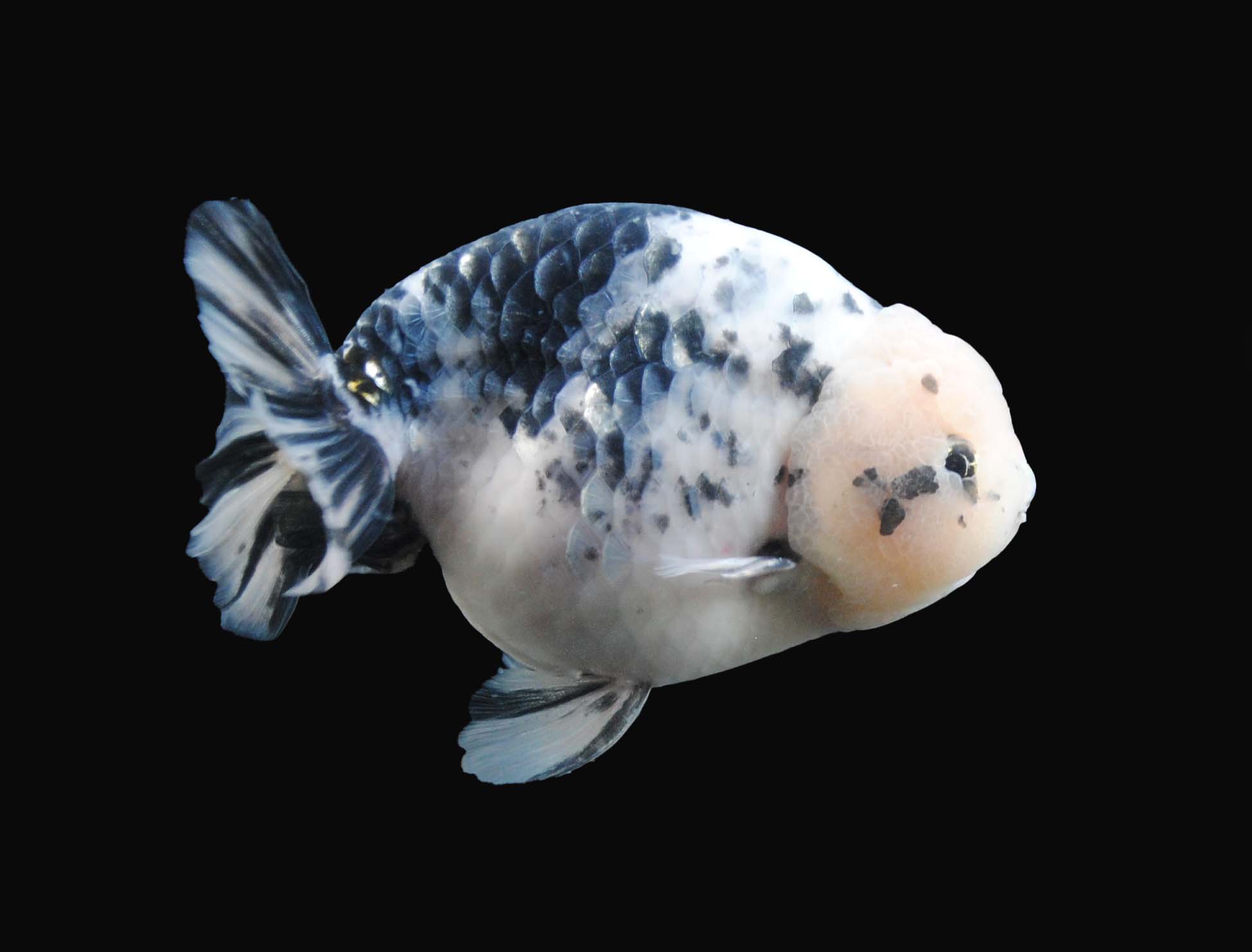
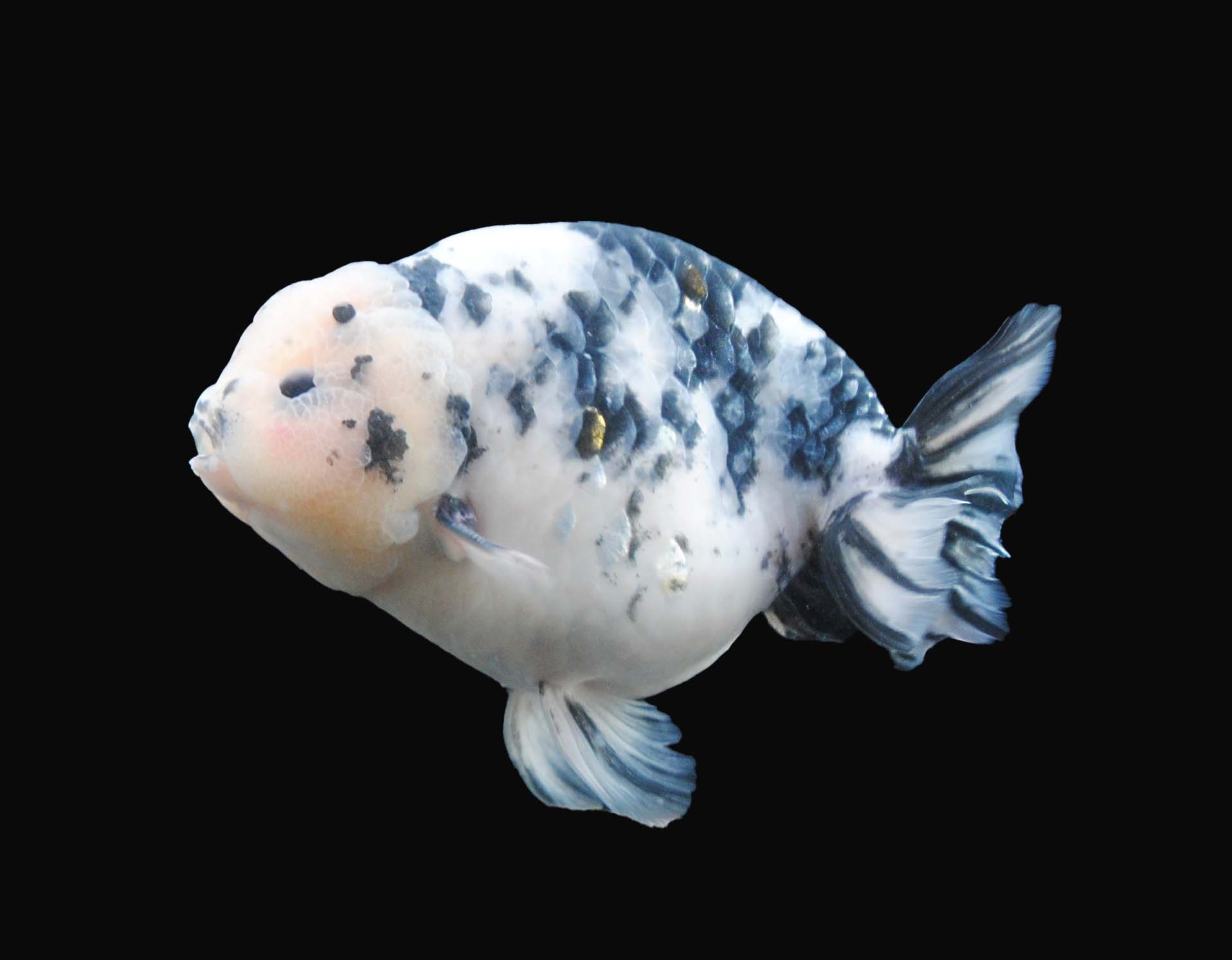
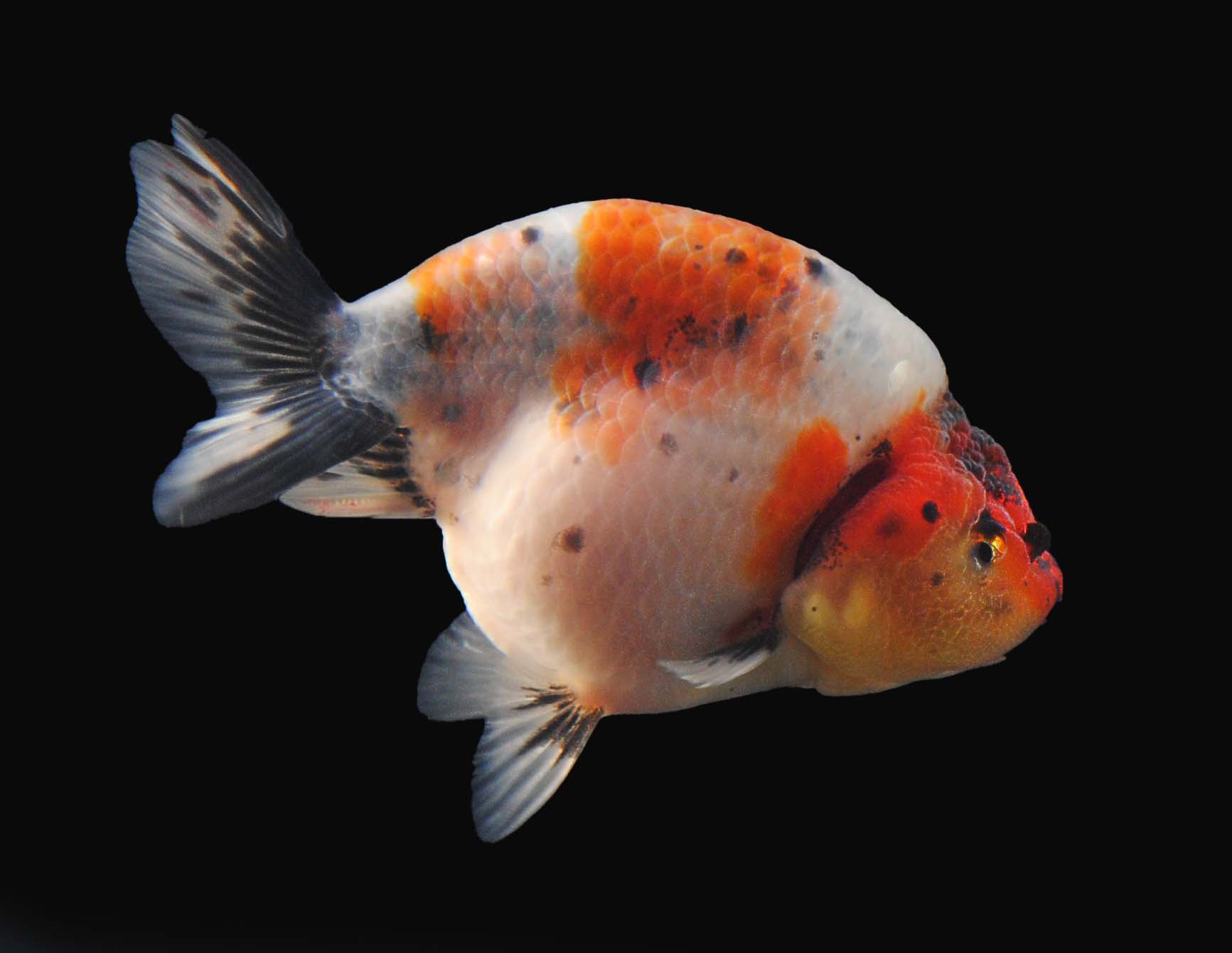
This third category is also interesting. They are close to the pattern of snow leopard, except that the snow leopard does not have blue and the black dots are smaller and many.
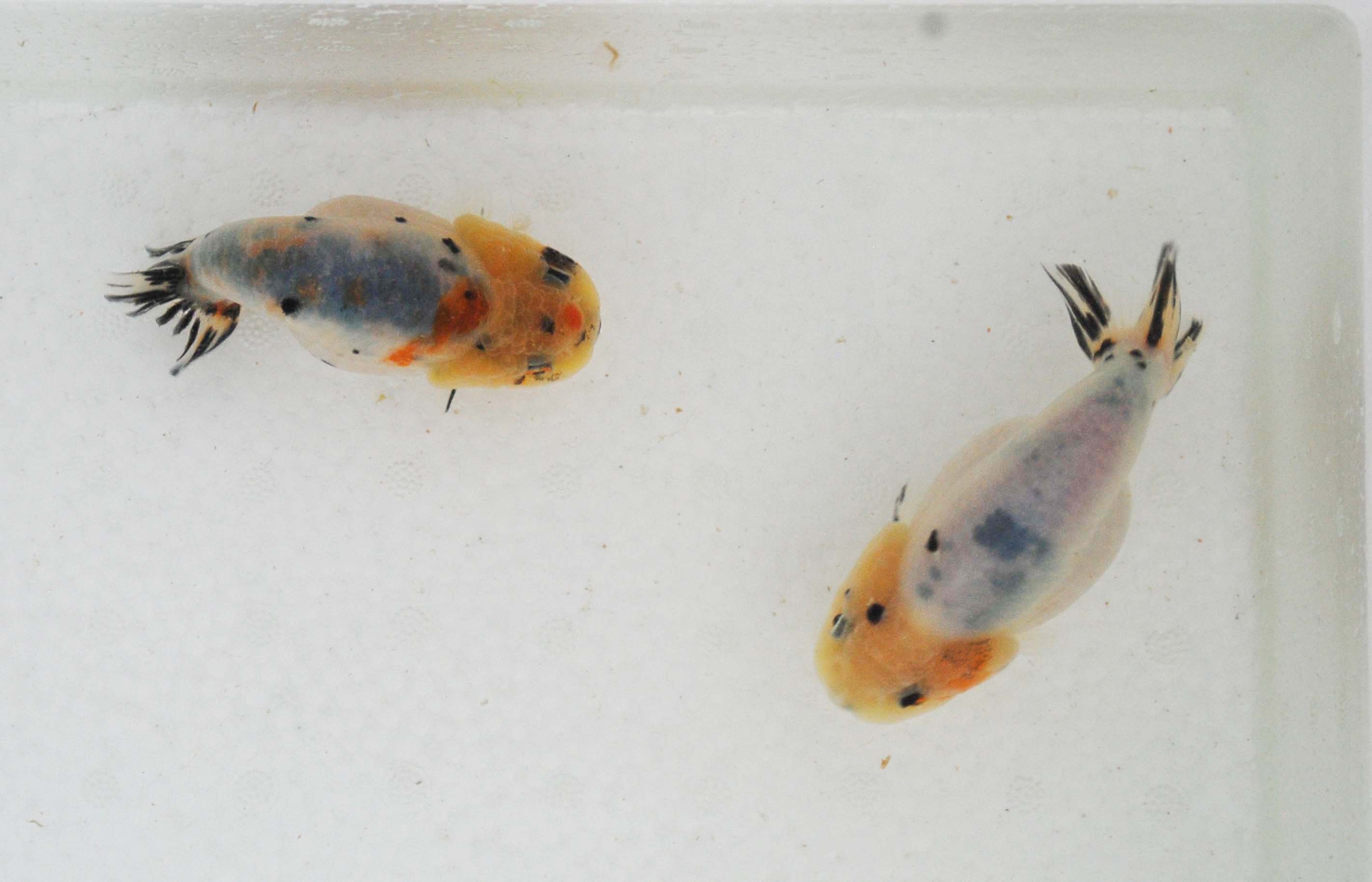
The fourth category resembles calico but a weak one. The blue and white are dominant while all the other three color are minimal. I do not think I can use them to propel this project.
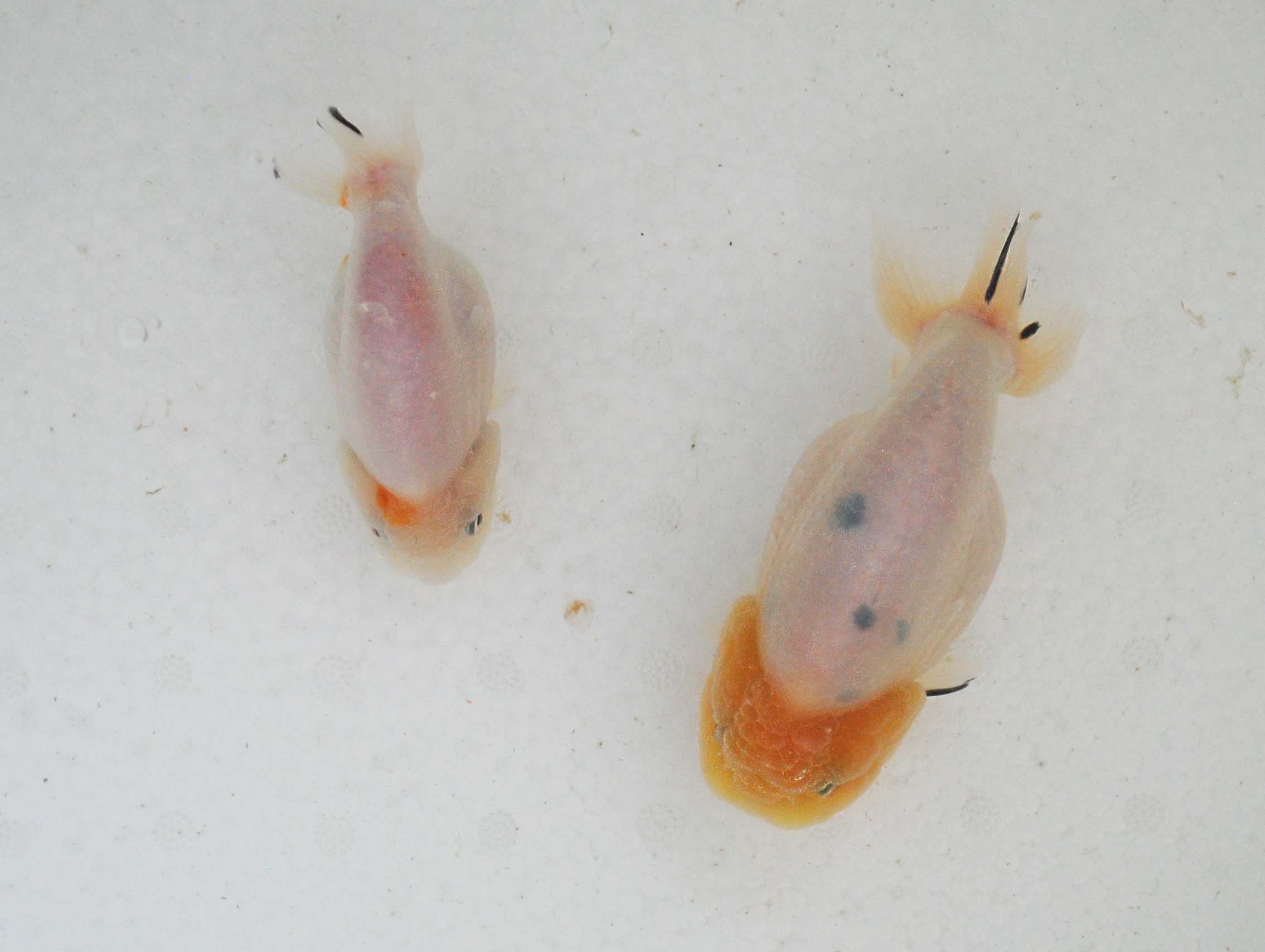
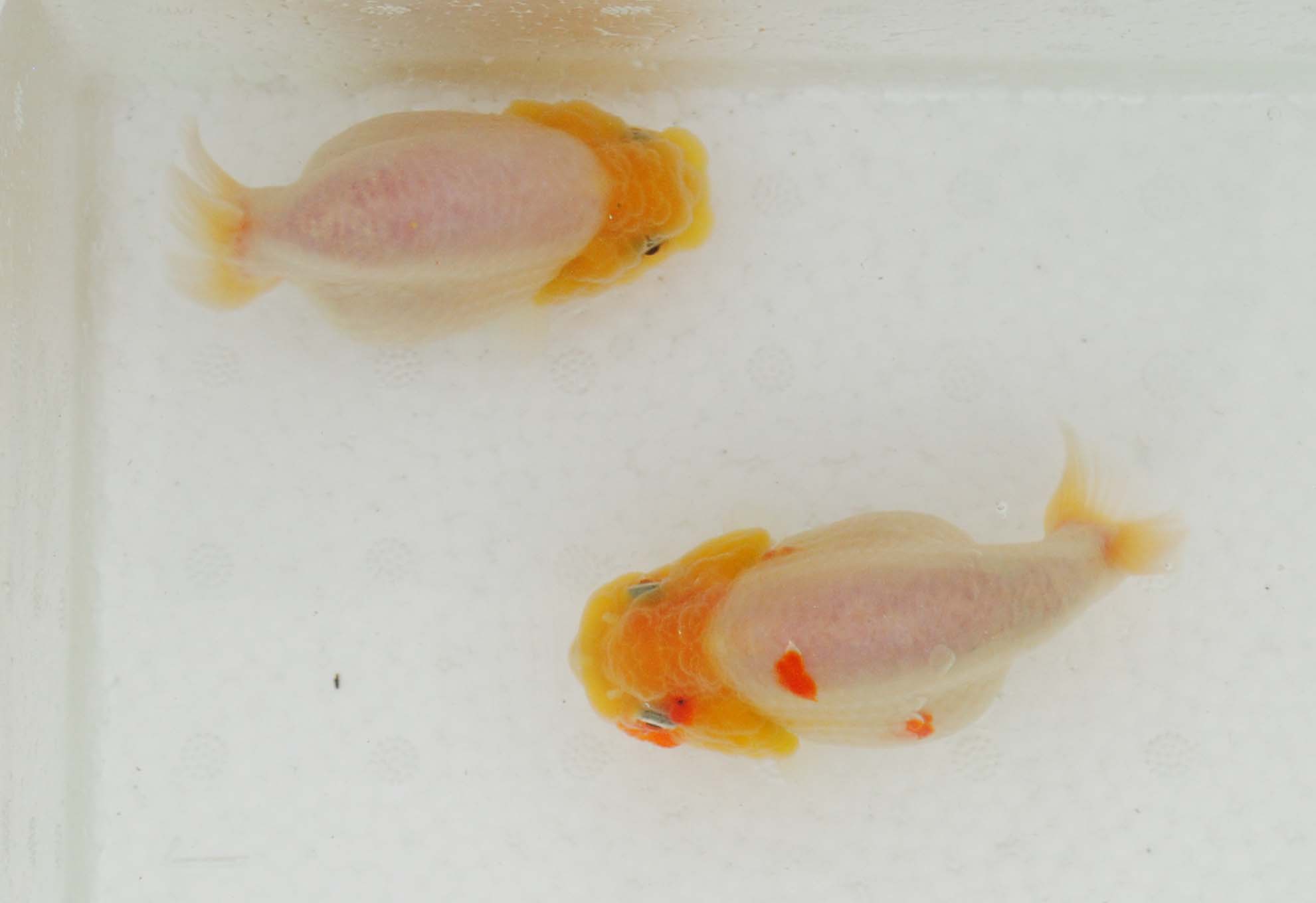
The fifth category is the almost white fish. I notice that the black color is stubborn, though minimal.

This sixth category is the Sakura. Once again, the black color still appears in a minimal proportion.
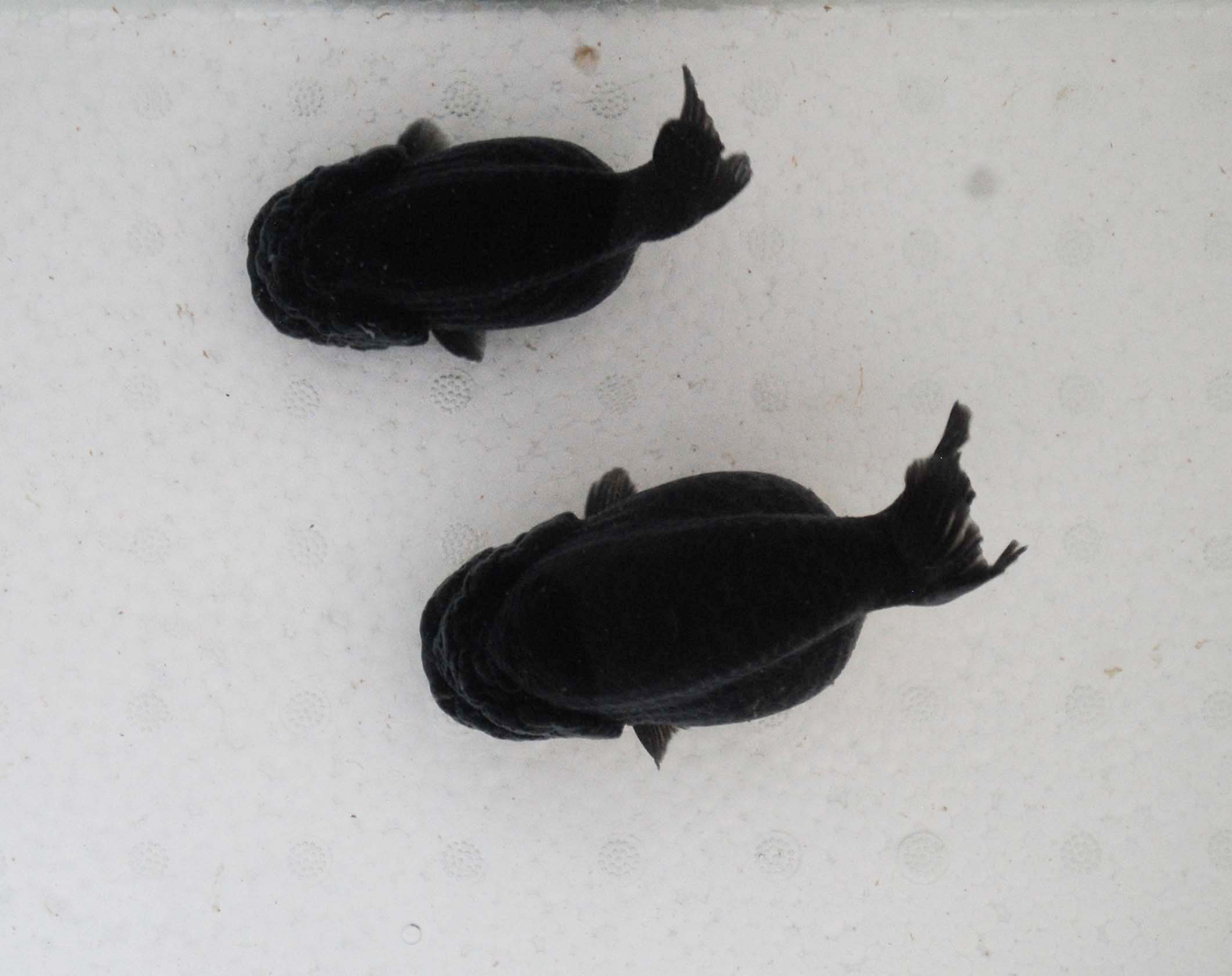
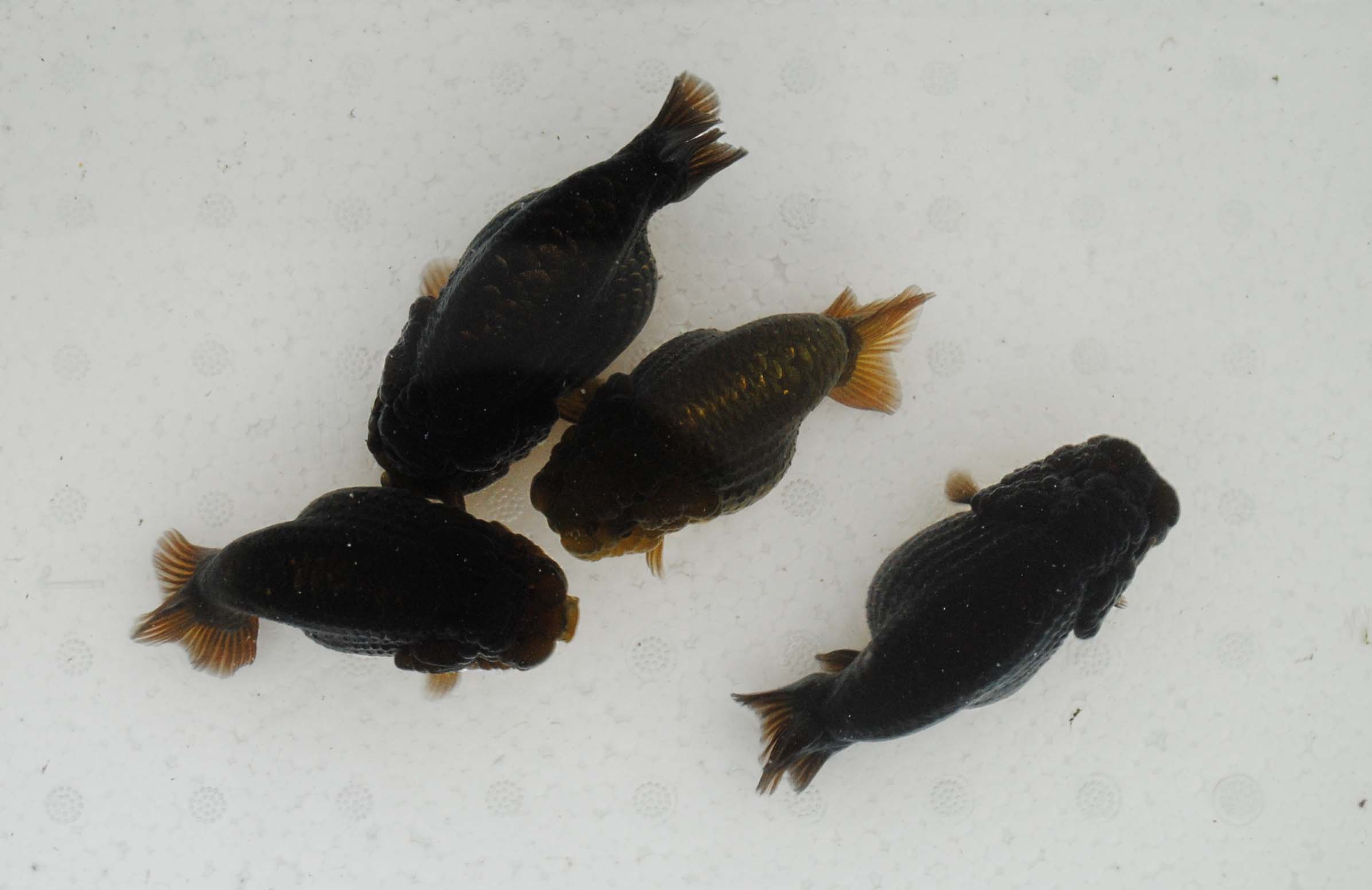
And the last category is the black color. They always come out from the Milk Cow crossing. Of course, I will use them as my main ingredient in this project.

So, to compare with the Cow x Sakura, let us examine this table:
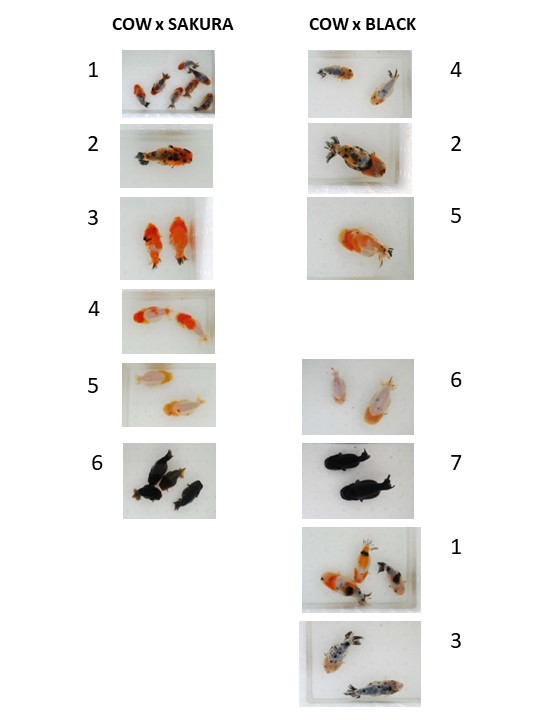
In the cross with Sakura, we do have offspring #4 (left) which has beautiful proportion between the red and white color (roughly 30% – 70% or 40% – 60%). This is different from #3 (left) which is dominated by red color. And #4 has no trace of black pigment. We do not see this variant in the Cow x Black offspring.

The offspring that comes up only from the Cow x Black are the #1 (right) and #3 (right). Yes, the cow / belt variant and the (somewhat) snow leopard variant only appears in the cross with black. I find this finding interesting.

The beautiful calico variant only appears in the cross between milk Cow and Sakura. This is also a thing to ponder.

The black appears on all of the crossing.

I think there is a lot to think about from this observation. I will make my next breeding plan based on this information. Tell me if you find any interesting interpretation to this information.

Standard
cow ranchu

The Diary of a Goldfish Breeder 2024 (4)

My experiment with Cow Ranchu is still ongoing. After so many attempts, I still have no clue of how to produce the color pattern. I had bought Cow Ranchu many times with limited success in breeding them. I grew suspicious concerning whether the fish (both male and female) had been treated in a certain way to prevent successful breeding. I had few offsprings, though. But at this point, none can be categorized as cow. The suspicion makes me reluctant to buy more import of Cow.

Yet, when an seller imported them once again, I was tempted to try this project once more. But I did not want to buy many. This time, I bought just one male. In my mind, this will be my last attempt to buy Cow Ranchu. If this also fails, I will stop buying them. To my surprise, this male is very vigorous! I bred him twice, with different female, and they gave me lots of offspring. He died afterwards. I have not taken a decent picture of these parents, but I have short videos of them.

In this diary, I will show the offspring from the first cross. It is between this male Cow Ranchu with a Sakura Ranchu. Well, it is not really Sakura since it has several black dots. But the dots are minimal, so it is closer to Sakura pattern. This Sakura is the result of my previous experiment with previously imported Cow Ranchu.

The Male
The Female

I am interested in knowing what color patterns are produced. And it is interesting to compare with the next diary where I cross the same male Cow with another fish.

I just take the pictures from top view for quick reference and classify them based on the color pattern. Here are they:

Many become Calico with good pattern quality. By definition, calico should have five colors visible. These offspring have blue, white, red, black, and orange / brown color. The blue color is strong. All the color is in good proportion. Actually, I like these offspring. But for my purpose (in understanding cow), I will not use them to further my project. So, I will sell all of them.

The second category is with lots of orange color and with no blue, so I put this in a different category from the calico. Perhaps, this fish can be said to have four color: orange, black, white, and the black pigment under the orange color (I do not know what to call it, it is definitely not blue). I will not use this one for my project, either.

This third category can be called three colors since it has red, white, and black color. But the black pigment is so minimal that this category can also be called Sakura. I am interested in this category. There is a story to it. I once bought a strikingly beautiful three colors transparent Ranchu from a farmer. This is the fish:

Such a marvelous color, isn’t it? Too bad, the breeder only had one. I asked him to find similar pattern in the batch and he could not find any. Upon questioning him how he came up with this color, he said he crossed the Cow Ranchu (from my lineage) with a Sakura Ranchu! He described the Sakura to have lots of red color with minimal black markings and several metallic scales in the body. This description matches the third category of the offspring I am talking above! That’s why, I will use this third category to further my experiment. If my experiment with Cow Ranchu takes a different turn to result on this kind of three colors, I do not mind at all! (Note: the three colors is female. It grew large in my facility and died without ever producing any egg).

The fourth category is the true Sakura. Actually, I do not think I will need them for the Cow Ranchu project. But one has an excellent body quality, which whets my appetite to breed it. I am sorry I have not taken the pictures right now. Hopefully, I will have the pictures next time.

The fifth category is the totally white / almost white fish. I am still considering their usage on this project. So I am undecided right now and will keep one. Perhaps the totally white one.

The last category are the black metallic fish. This is what I learn from the presence of this category. The fact that Cow Offspring (the milk cow variety) always produces decent number of black offspring means that black fish are involved in the making of milk Cow variety. Well, it is my conclusion. I can be wrong. But unless proven otherwise, I will keep this category and use it in my cow project.

And this is the end of my report today.

Enjoy!

Standard
cow ranchu, The Diary of a Goldfish Breeder 2023

The Diary of a Goldfish Breeder 2023 (11)

Project #12: Cow Ranchu

Update: Cow x Black

I would like to report the result of Cow Ranchu (male) x Black Ranchu (female). These are the parents:

The offspring consists of two types: the grey / wild color, and the transparent color. I cull the grey out early. So, I do not know whether they will turn into some other color or will continue to be grey. I keep the transparent color only.

I also cull out the defects in finages from the transparent color. I end up with 7 of them. Let me first show them from top view.

1. The black pattern is a combination between type 1, 2, and 3 mentioned in my previous writing (diary #10). The blocks, dots, and irregular pattern appear here. I cannot say this is desirable. But it is not a bad thing, either.

2. The black pigment exist throughout all the offspring. Unlike my offspring of cow x cow which yields lots of casper fish (totally white), the existence of black color in this cross is a good thing. I can say that the black pigment of the black ranchu contribute to the abundance of black color here.

3. The red color is dominant and is not a good thing in a cow project. I will say that this red color is due to the black ranchu genetics, also because underneath the black coat of a black ranchu is actually a red / orange color. This is visible when we (accidentally) scratch the skin of a black ranchu.

4. Some of the fish shows thick peduncle, following the genetics of the male parent. This is interesting.

Now, let’s examine the side view of the fish. The pictures are in the same order.

1. One interesting observation is that all of them have white belly! The red color tends to be dominant in the upper part of the fish, while the abdoment tend to be white.

2. All have hints of black pigment in the fins.

3. Black pigments in the body tend to be more in the top part of the body, and get lesser below.

4. The tails are large since both parents have large tails.

My Plan:

Actually, I am not sure whether to use them further for my cow ranchu project or not. It seems that I will have a hard time getting rid of the dominant red color here. It is still interesting to see the result if I cross them back to cow, though. Will the cross diminish the red? It is possible. Will the black color stay? It is also possible. And if this happens, then I will have fish with good black quality (though the pattern type is unpredictable) with less red color.

Crossing them back to black might also be interesting. Observation sideview number 1 reminds me of my attempt to produce Kirin ranchu years before. Kirin tend to have dark color on top of the body and light color in the abdoment. Well, this cow x black shows red color on top and white in the abdoment. And the black pigment tend to be more on top. This seems to be half way in the process of making kirin. So, crossing back to black arouses my curiosity.

But I am not sure I will have time to do all these. I have some other crosses with cow which results I will compare with this. If the other crosses produce closer results to cow, I might prioritize them. If that happens, then this cow x black project will be terminated.

Concerning crossing back to black, I must buy another black ranchu which I am somewhat reluctant to do. Black ranchu is out of my projects. I will think twice to enlarge my projects right now. So, I do not think I will do it.

As a conclusion, this cross might not continue. But it helps me understand crossing better.

Standard