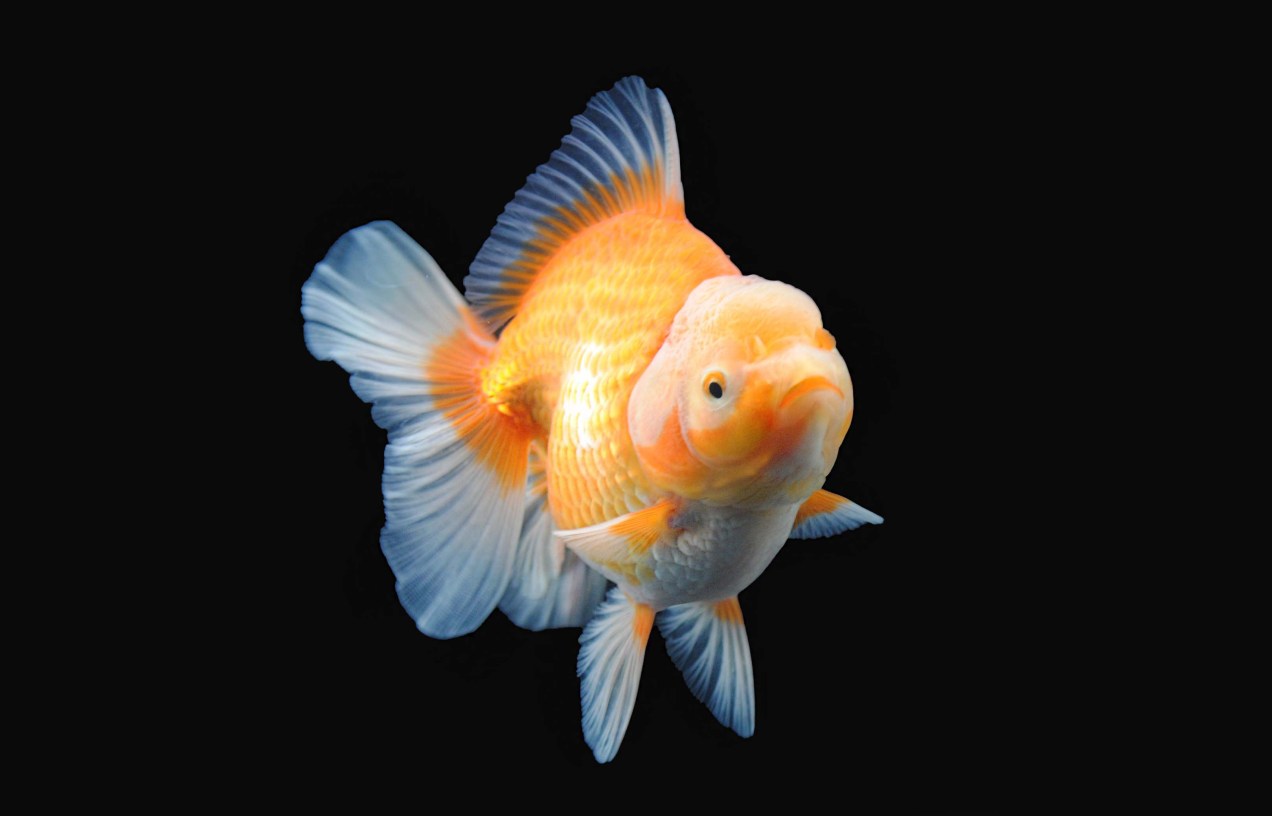
Blue Oranda, The Diary of a Goldfish Breeder 2023

The Diary of a Goldfish Breeder 2023 (4)

Project #1: (Semi) Blue Oranda

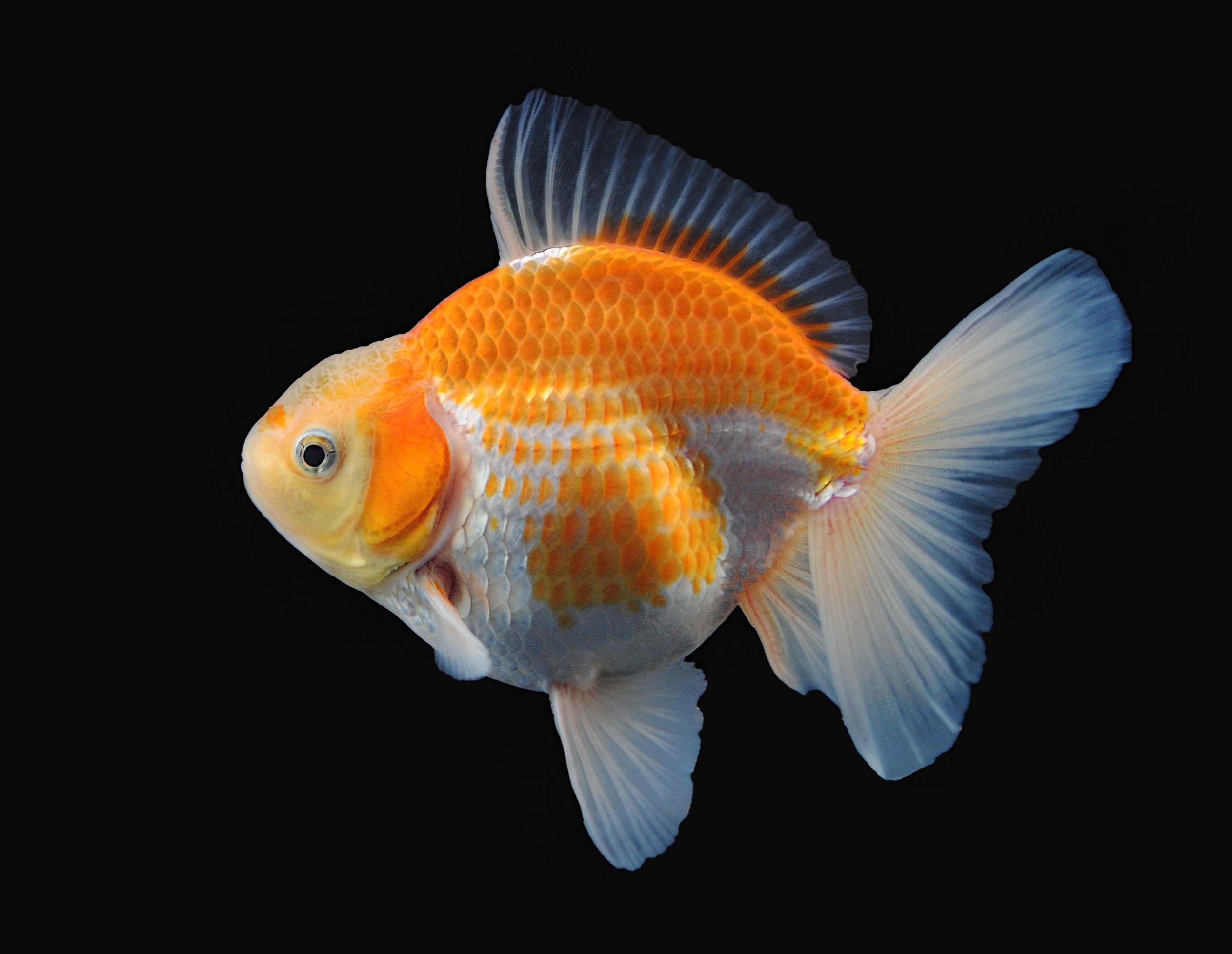
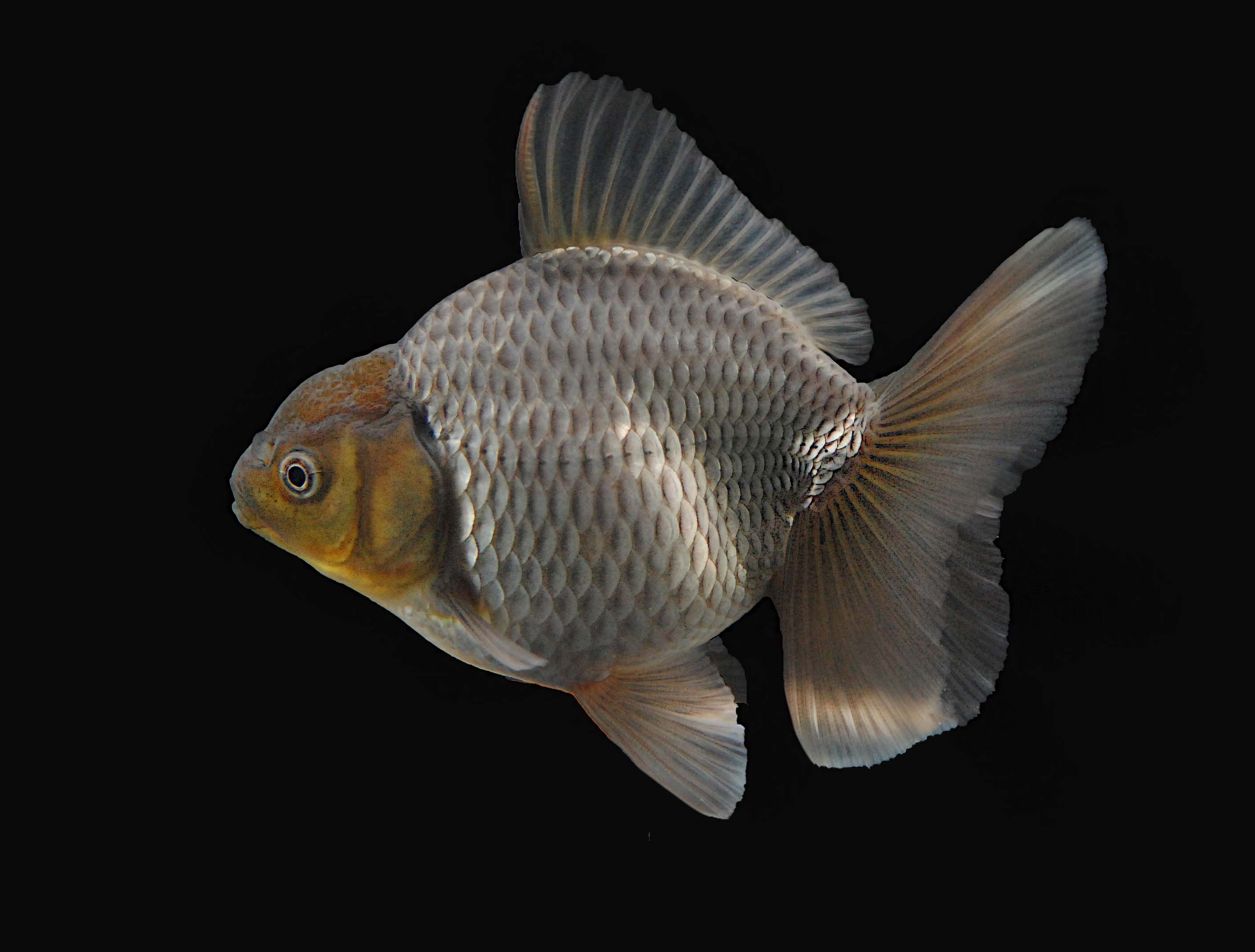
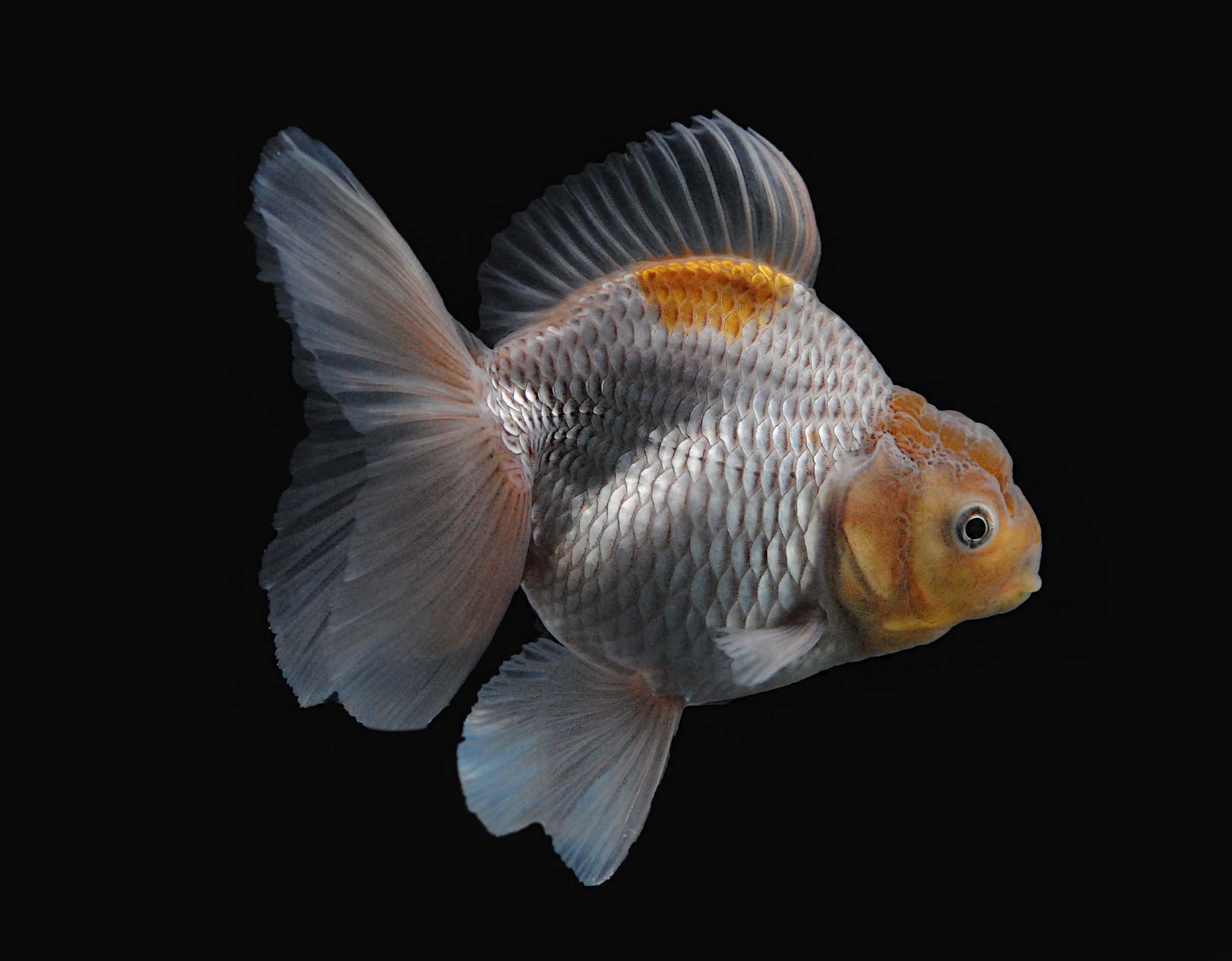
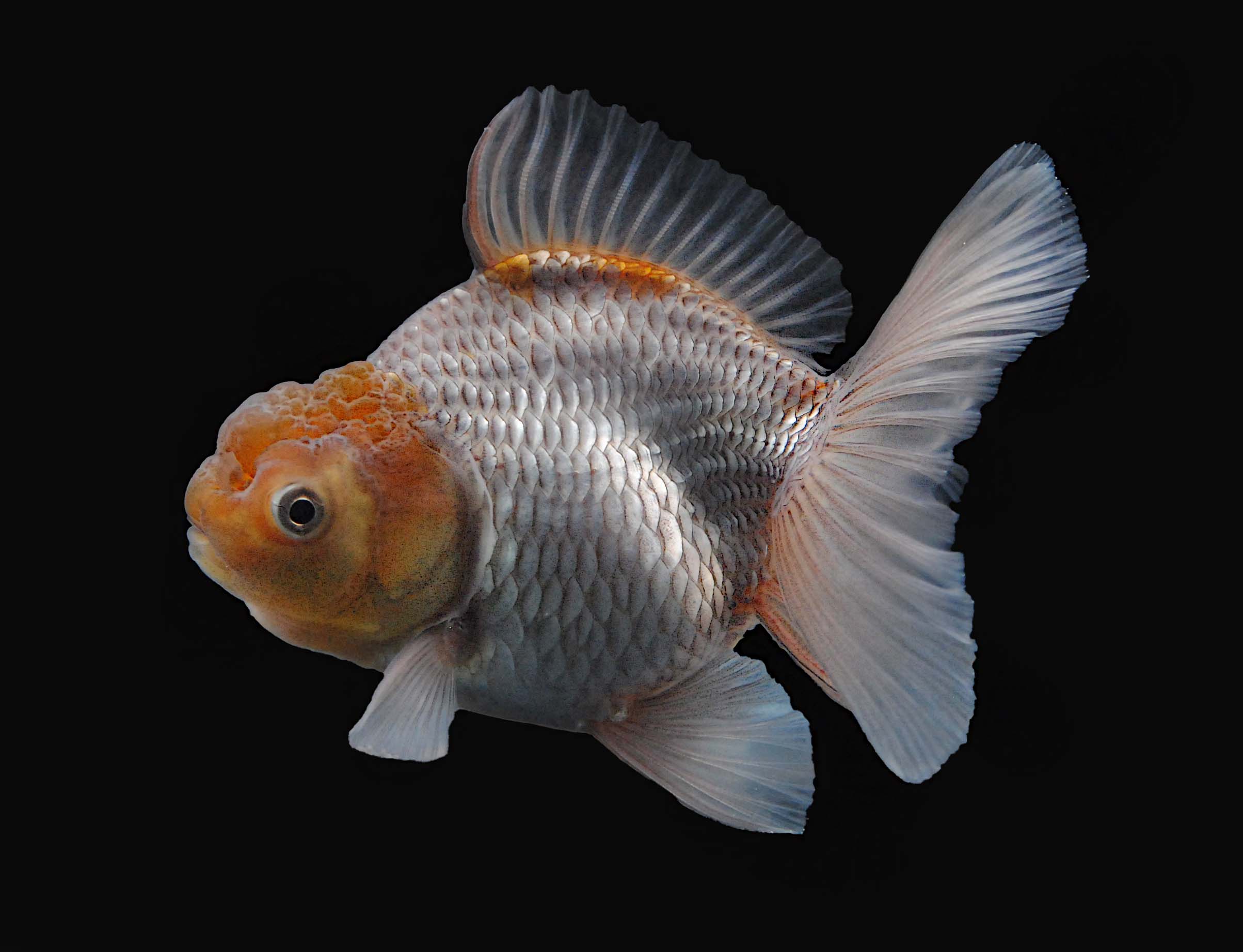
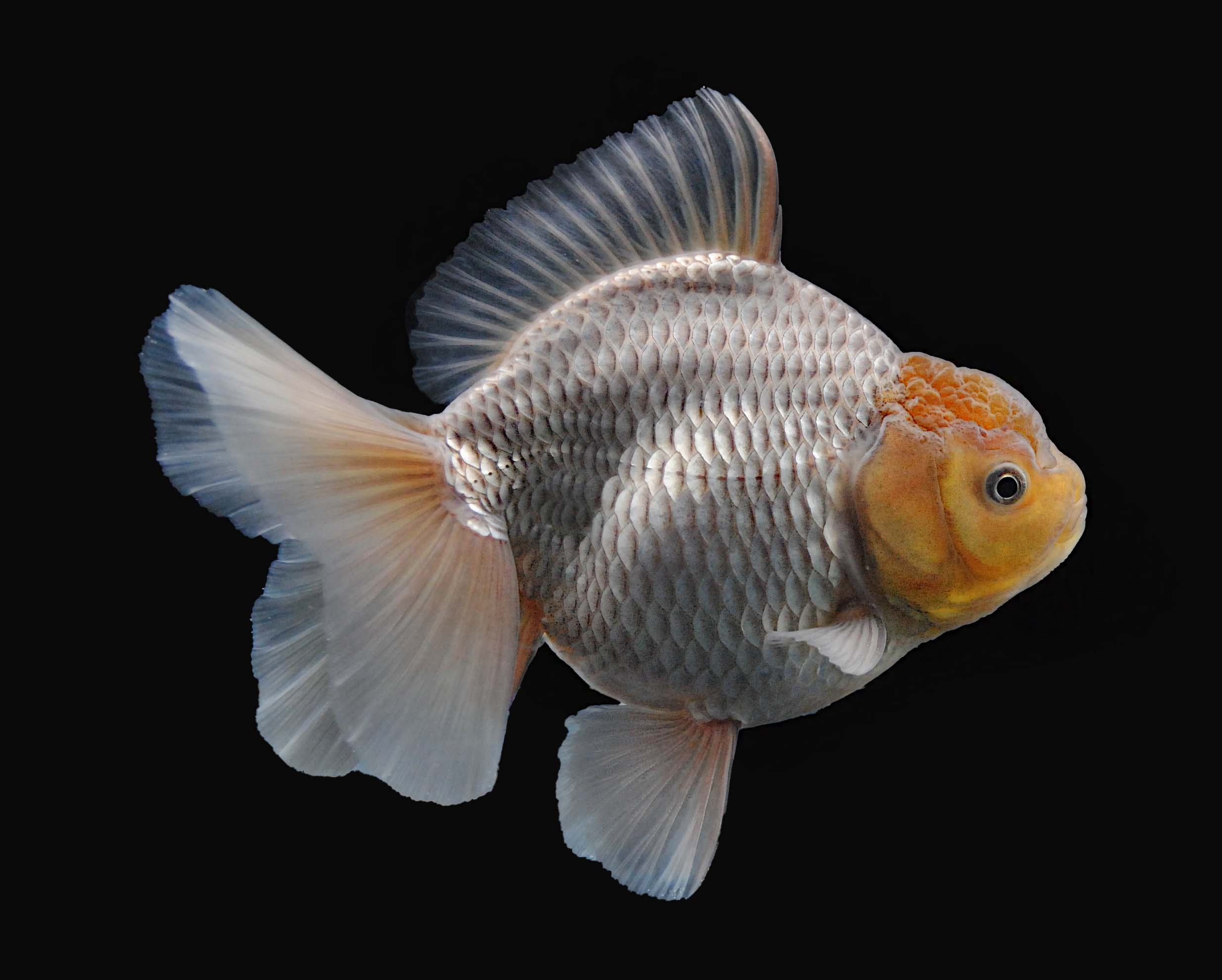
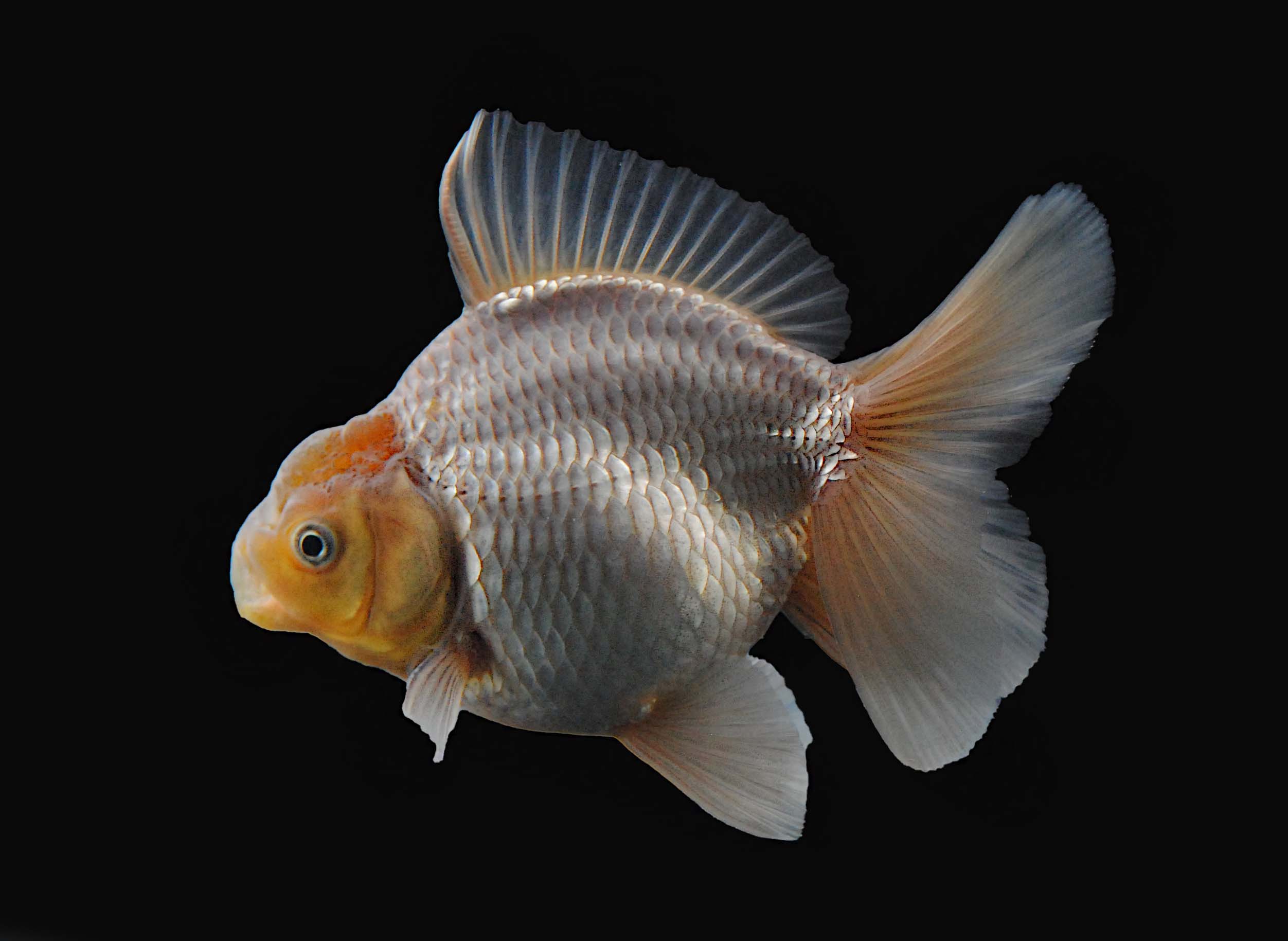
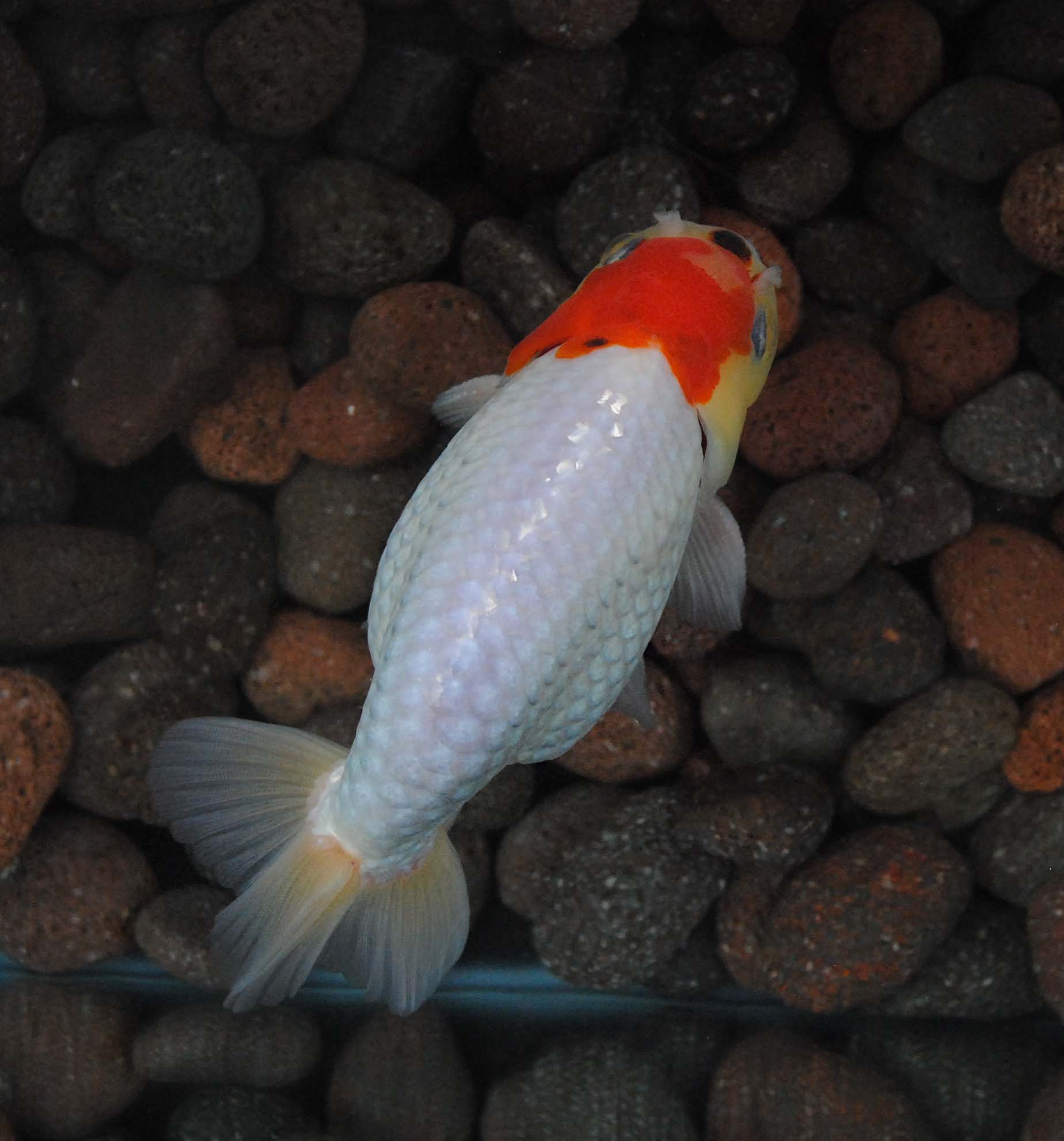
Well, the result of my Blue Oranda is satisfactory. But as a breeder, I need to anticipate the genetics being saturated due to inbreeding. So, I develop a cousin-line by crossing the female Blue Oranda parents (Diary 2022 #19) with an orange oranda of my own, which unfortunately I did not manage to take his picture. So, the phenotype of the offspring is orange / red white Oranda, while the genotype carries the blue genetics recessively. I keep only best three of them currently:

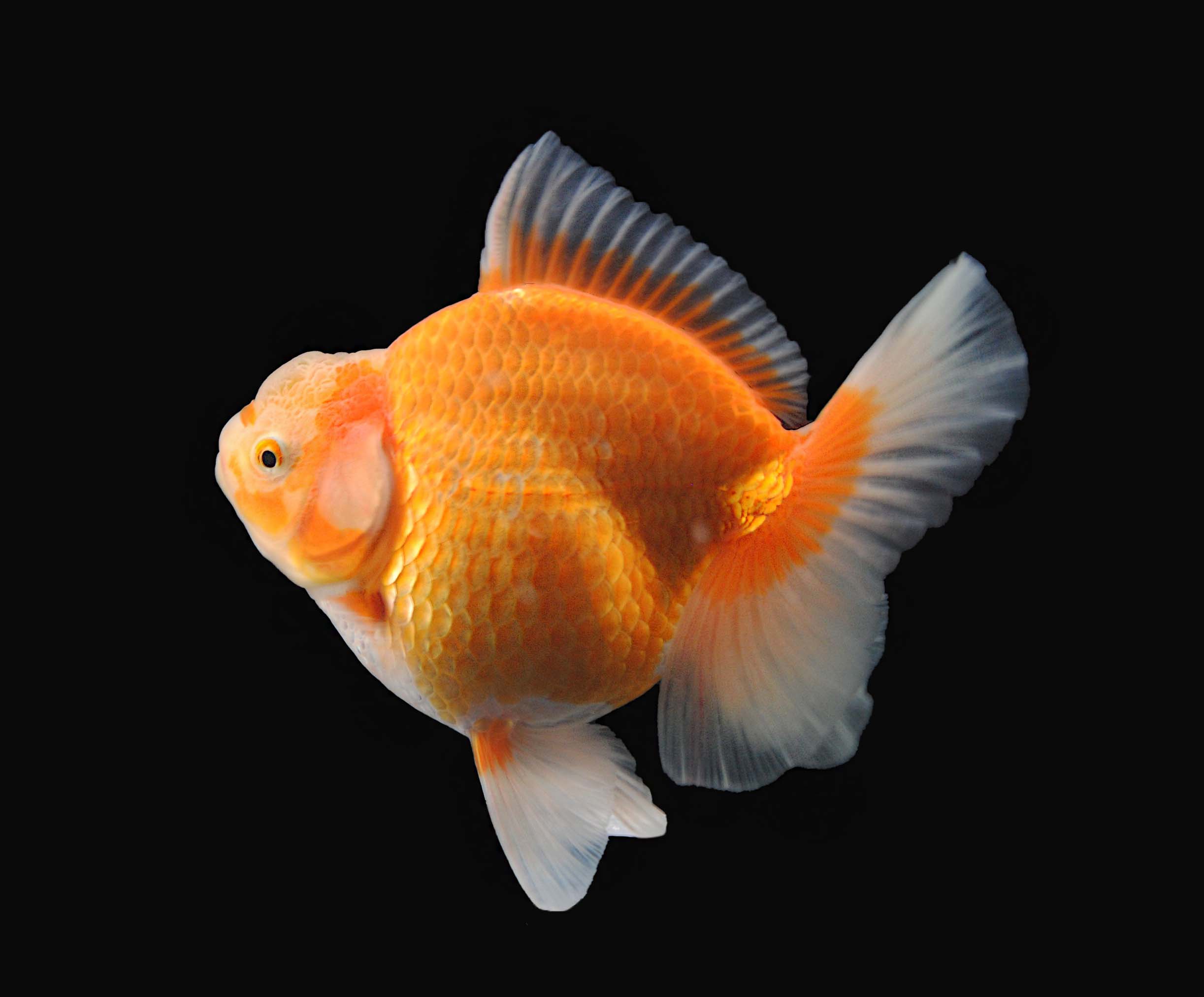
Let me analyze them.

Body-wise, the first fish is superb. It has depth and thickness. The length doesn’t seem to be short, more of a medium type, which is what I want. The curve has a good height. It will contribute to the bulky appearance of the fish even when the headgrowth grows higher. The headgrowth is a bit small right now, but I will not worry since I know the parents headgrowth type. It won’t be small, but it won’t be excessive, either. Just right. The tail has a good erect angle with no defects. Perfect! The only visible weakness is the dorsal fin with its curved first ray. This feature also appears in parts of my current Blue Oranda line. Well, it is not really a defect. It is just less desirable than the perfectly straight one. This fish seems to be a female.

What to make of her?

Of course I want to have Oranda with this shape, but with a better dorsal fin. If I use this to cross with my Blue line, then I must choose a male with a good dorsal fin. This will make my Blue Oranda lineage improved in terms of the dorsal fin, but I don’t think I will get 100% better dorsal fins directly from the crossing. It would be better if both parents have good dorsal fins!

Or I can use the first fish as my Basic Material fish. If I mate it with the second fish, which seems to be male, then I can develop a good quality line of orange / orange white Oranda. I can use the line to improve my other Oranda projects (see Diary 2022 #18 for list of my projects).

The body of the second fish is not as strong as the first one, but it might due to the gender difference. This fish has a strong erect dorsal fin. I am glad to have him since I have the needed material to further my projects.

The third fish is probaly a male also. But the body is not as strong as the second fish. And the dorsal is not desirable. So, I think I have no need of him.

For video, please see the youtube below:

Standard
purple oranda, The Diary of a Goldfish Breeder 2023

The Diary of a Goldfish Breeder 2023 (3)

Project #3: Purple Oranda / Lavender

Currently I have two lines of Purple Oranda. One comes from the Blue line, and another from the brown line. I will update only the first line at this moment.

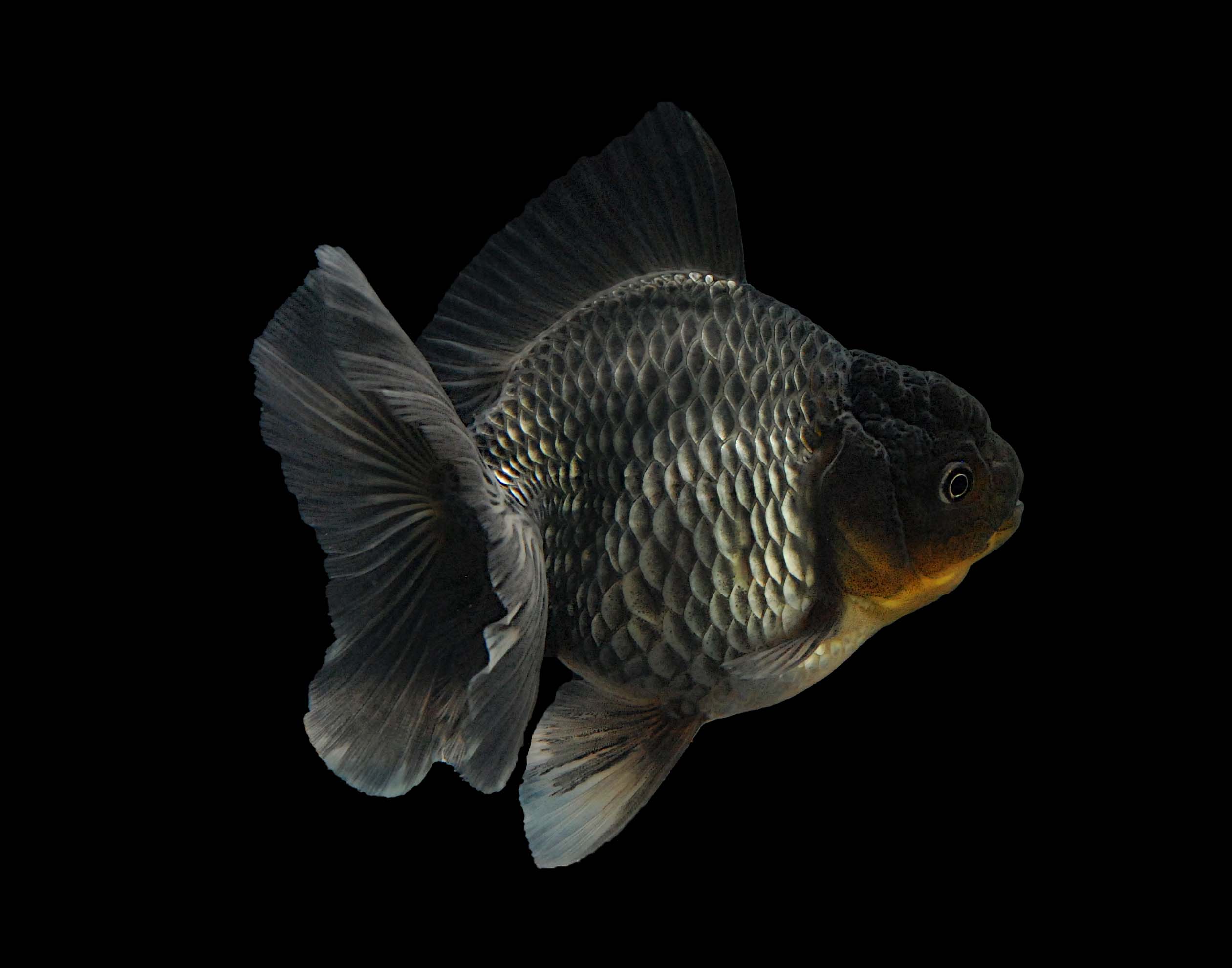
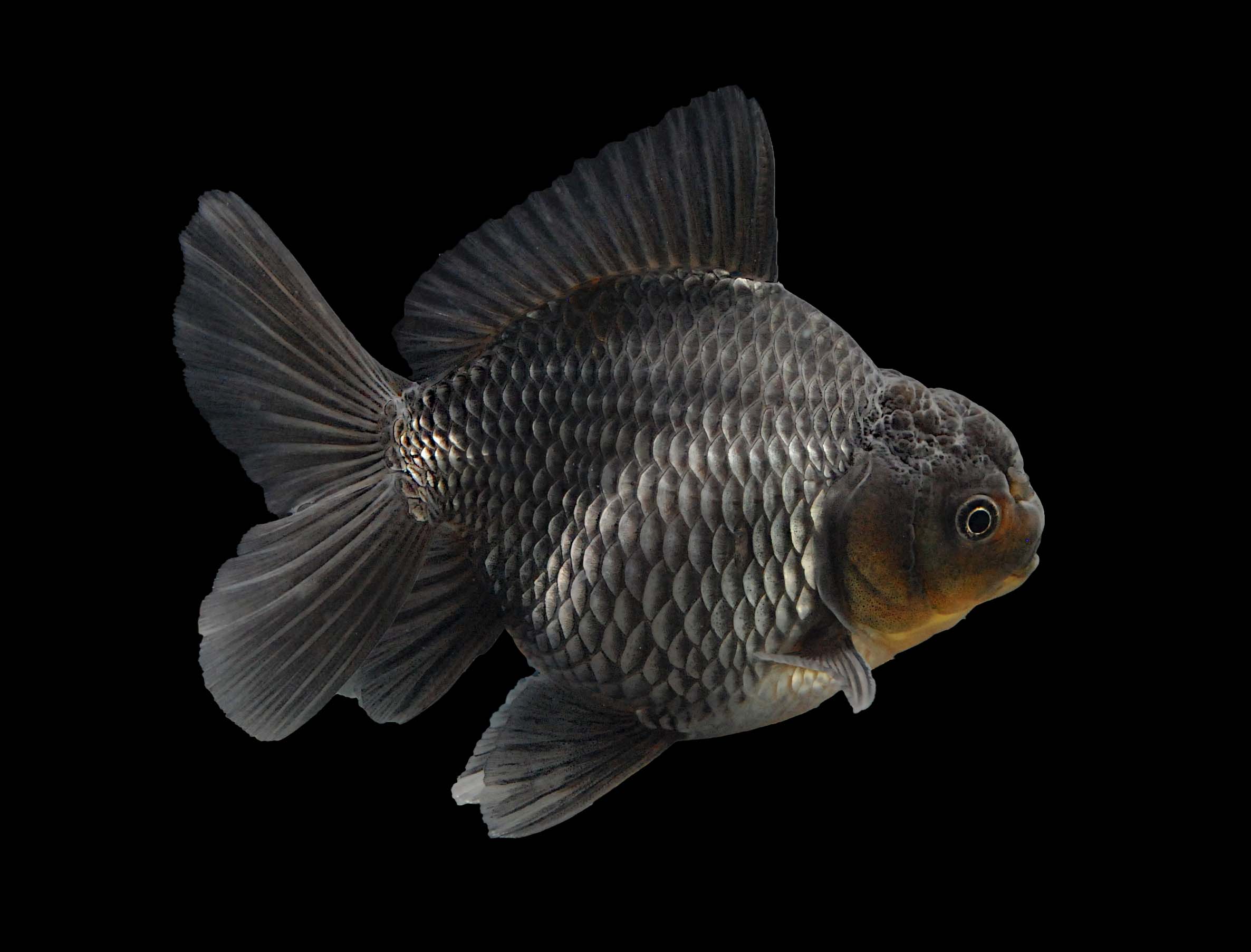
As you might have known, I have crossed purple and blue many times such that my blue oranda lineage carries the purple genetics recessively. The blue oranda parents I mentioned in the diary 2022 #19, which I thought were purely blue, turned out to produce a little percentage of purple! So, without any effort, my Project #1 to create blue oranda rewards me with a succesful outcome for Project #3. The quality of the purple oranda is roughly similar to their blue brothers and sisters.

These are five of them:

These are young fish. I am satisfied with their quality right now. I am sure they will turn into beautiful specimens several months to come. Two things I need to improve: the dorsal fin and the pattern. Some fish shows weakness in its dorsal fin, namely the first ray. Concerning the pattern, I am hoping to have more brown color staining the purple to make the ochiba patterns. I consider the ochiba pattern to be more desirable than plain purple.

I will update these fish again when they are mature in shape.

For those interested to see their video, please visit the youtube link below. Thank you.

Standard
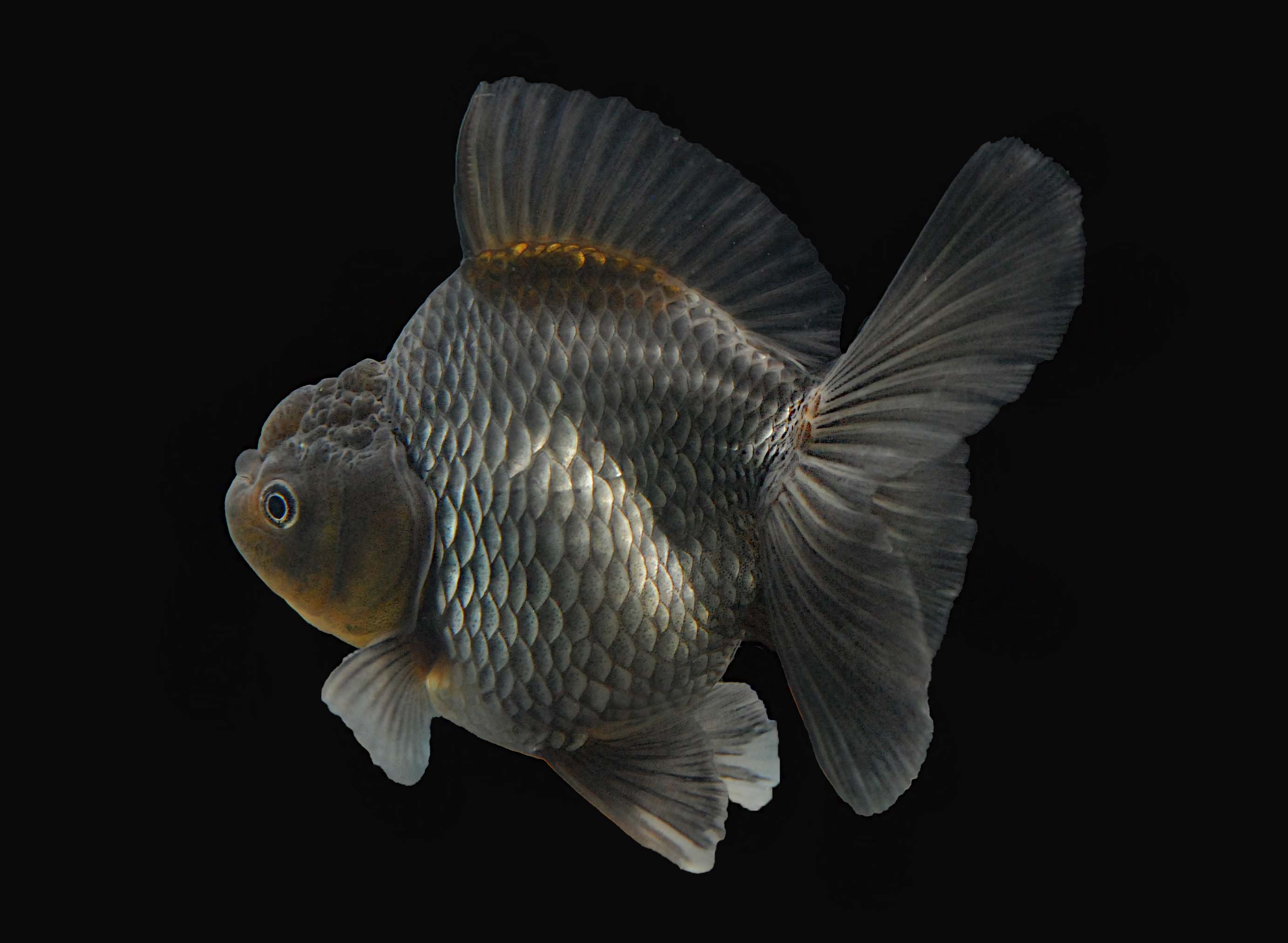
Blue Oranda, The Diary of a Goldfish Breeder 2023

The Diary of a Goldfish Breeder 2023 (2)

Update Project #1: Blue Oranda

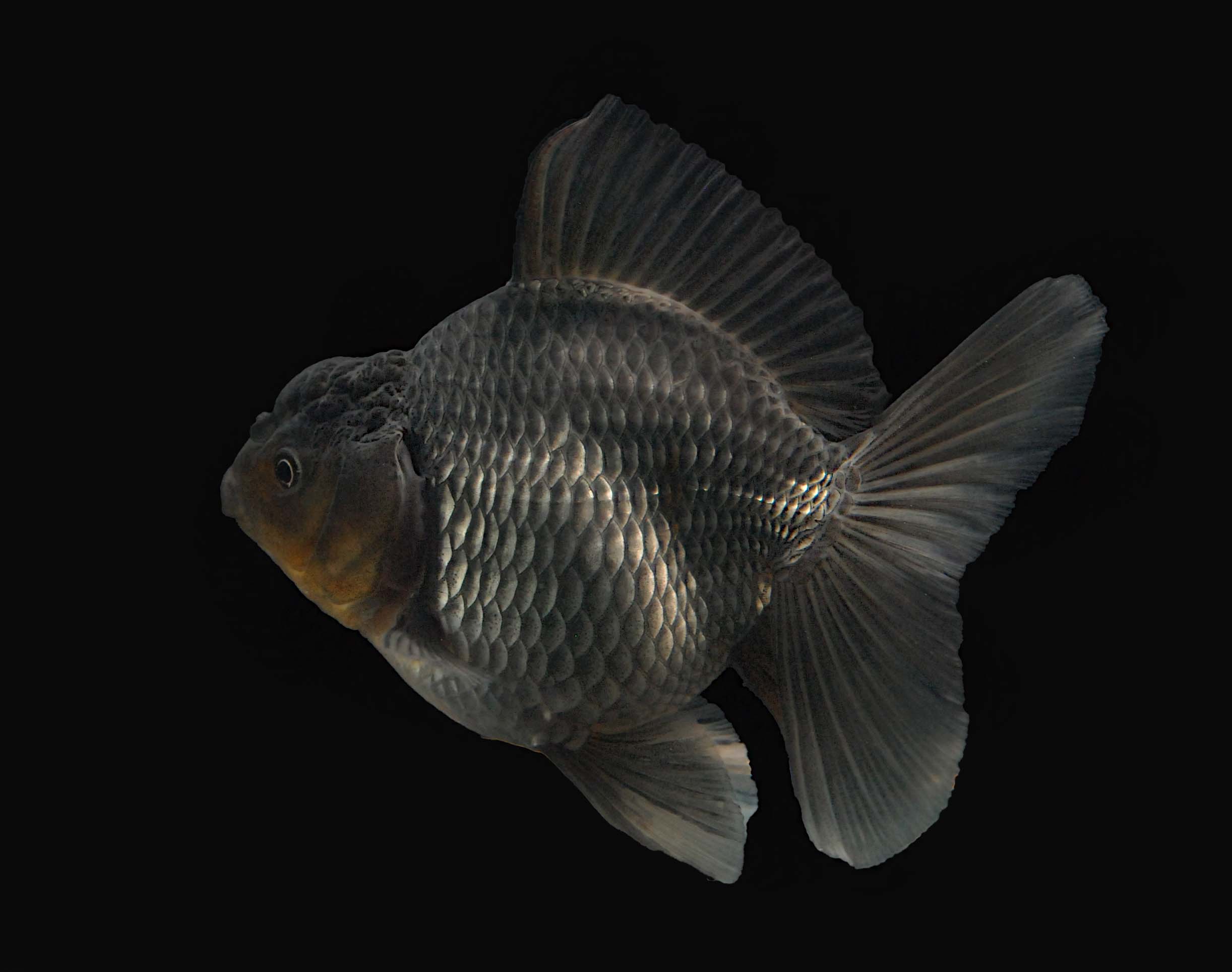
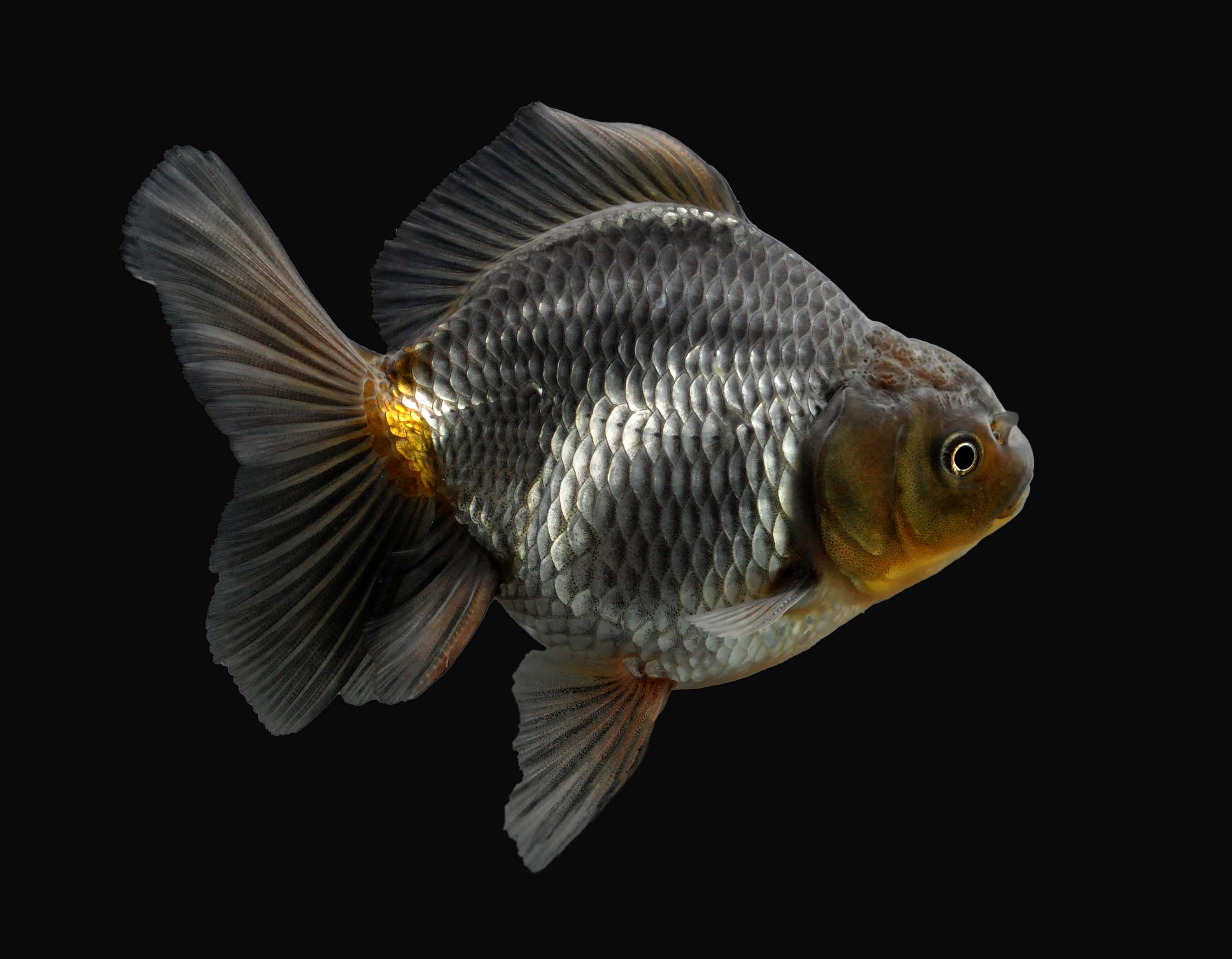
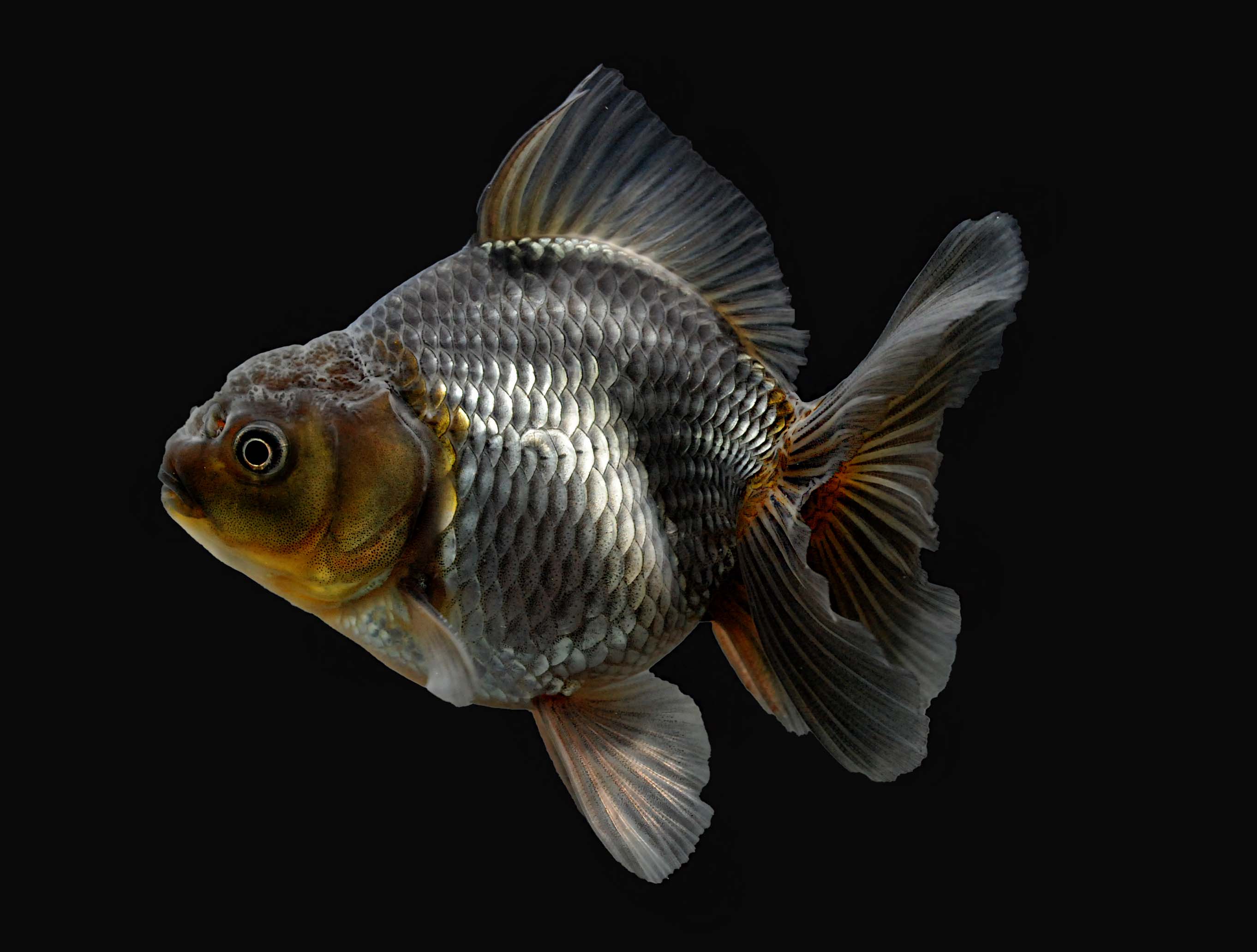
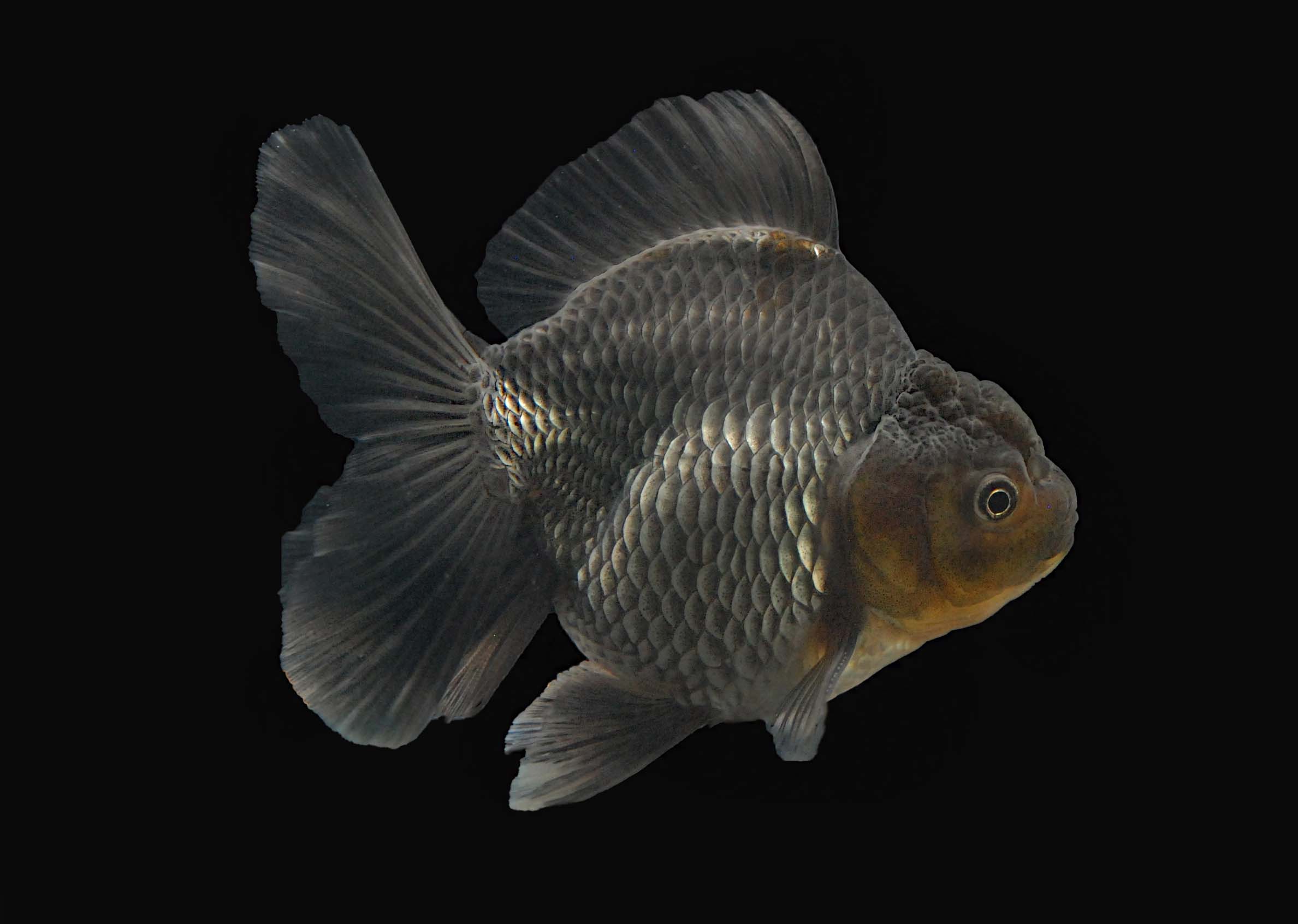
At the end of last year I wrote the progress of my Blue Oranda Project (Diary 2022 #19). These are their offspring:

One:

Two:

Three:

Four:

Five:

These are from the 1st batch. I kept six of them. Yet when I caught them for the purpose of taking these pictures, I only managed to catch five of them. I produced more in the 2nd batch for the purpose of Keeping Contest in our community with 23 participants.

Analyzing these offspring, I think this confirm the uniformity of the line. The body shape is relatively the same type. Yes, I must admit some have wider body and some a bit slimmer. But I think this might due to the sex. The slimmer ones I suspect are the male. The headgrowth is similar. The tail shape and the erect-angle is uniform enough. The obvious weakness I think in the dorsal fin, especially in the 4th specimen. Well, mostly have good dorsal fin, but some are weak. About the stability of the color, mostly are strongly blue. Yet, about 20% still turn into white.

Theses fishes are approximately three to four months old, so they still have lots of time to grow. Their current size is about 12cm.

I am satisfied with the current result. Perhaps I will breed true to this lineage for several years to come. Perhaps with improvisation on the dorsal and headgrowth a little bit.

Enjoy.

For the video link, see the youtube below:

Standard
ginrin ranchu, The Diary of a Goldfish Breeder 2023

The Diary of a Goldfish Breeder 2023 (1)

Topic: Ginrin Ranchu

I start this 2023 diary late due to many things to take care of in my daily life. I want to start this 1st diary not with the update of my breeding projects but with a unique phenomenon. Scalation in goldfish is an underrated subject. We know about metallic scale, transparent scale, and their combination. We also have pearlscale and “common” scale. Old books mentioned about hammer(ed?) scale, but I have no idea what it is. In my own experience, a unique scale type always emerges in my breed here and there. To describe it, I think I can use koi terminology which is ginrin scale.

Once in a while when examining my fishes in the pond, I noticed some fish glitter differently from the rest. This distinct shine is more visible on the white fish. It looks like the color of a pearl, but it is not a pearlscale fish. Sometimes that unusual scale covers the whole body but most of the time only partially. I wondered whether they can be sufficiently called as unique. I did not think to document them. But now, more and more of my breed are showing that luster completely covering the whole body. I think it is time to document them. Perhaps this discussion can enrich the goldfish world in the future.

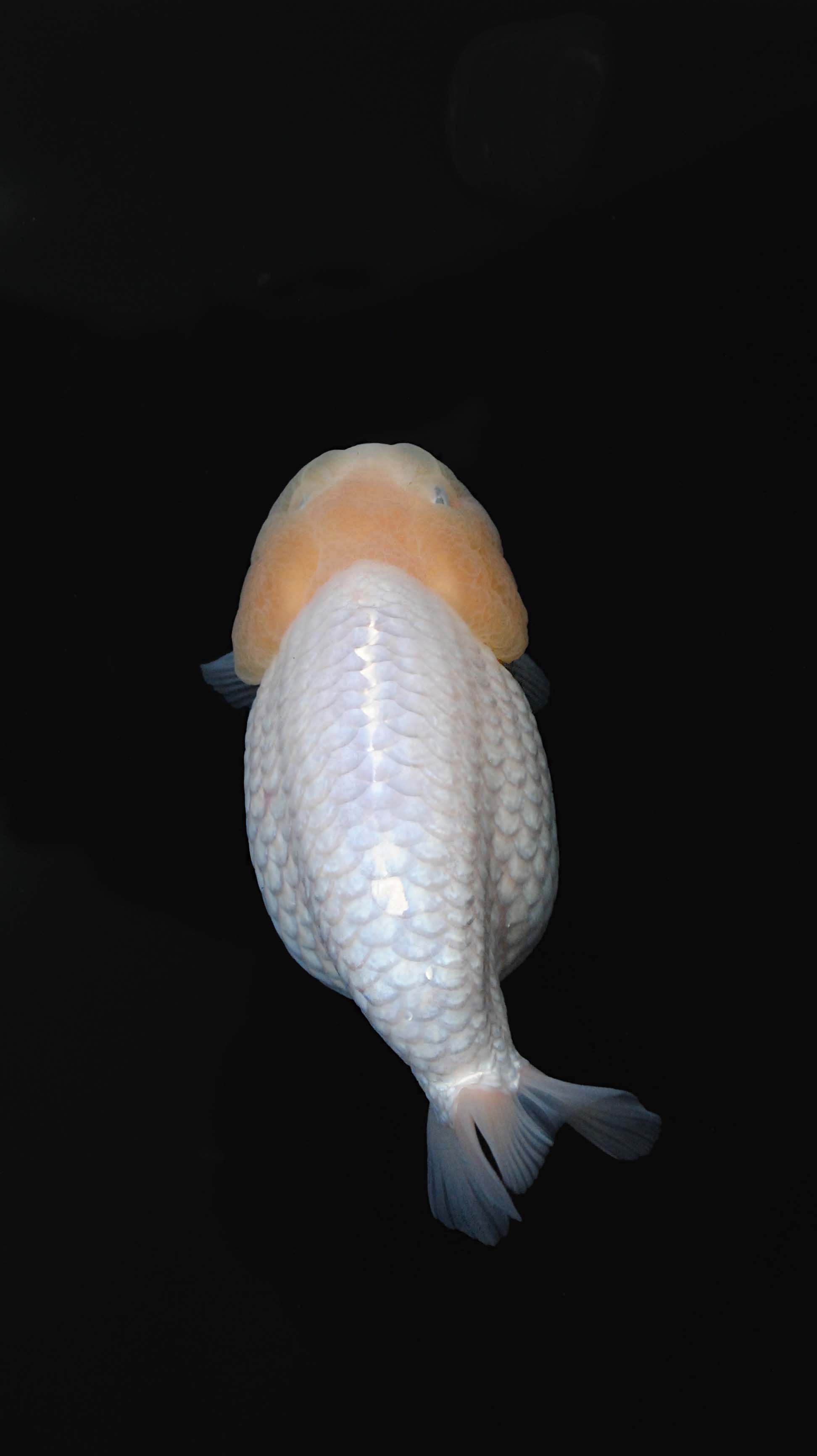
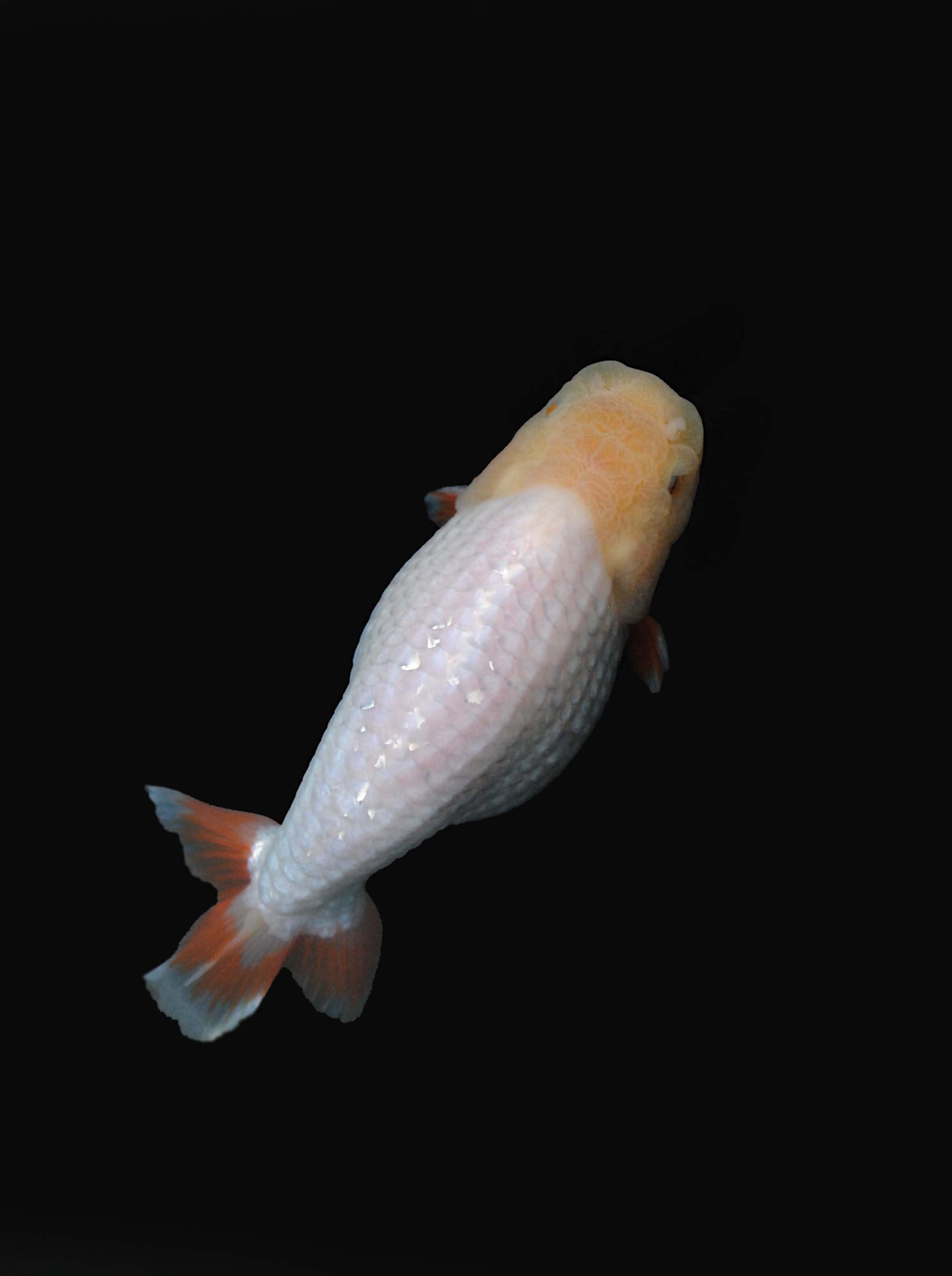
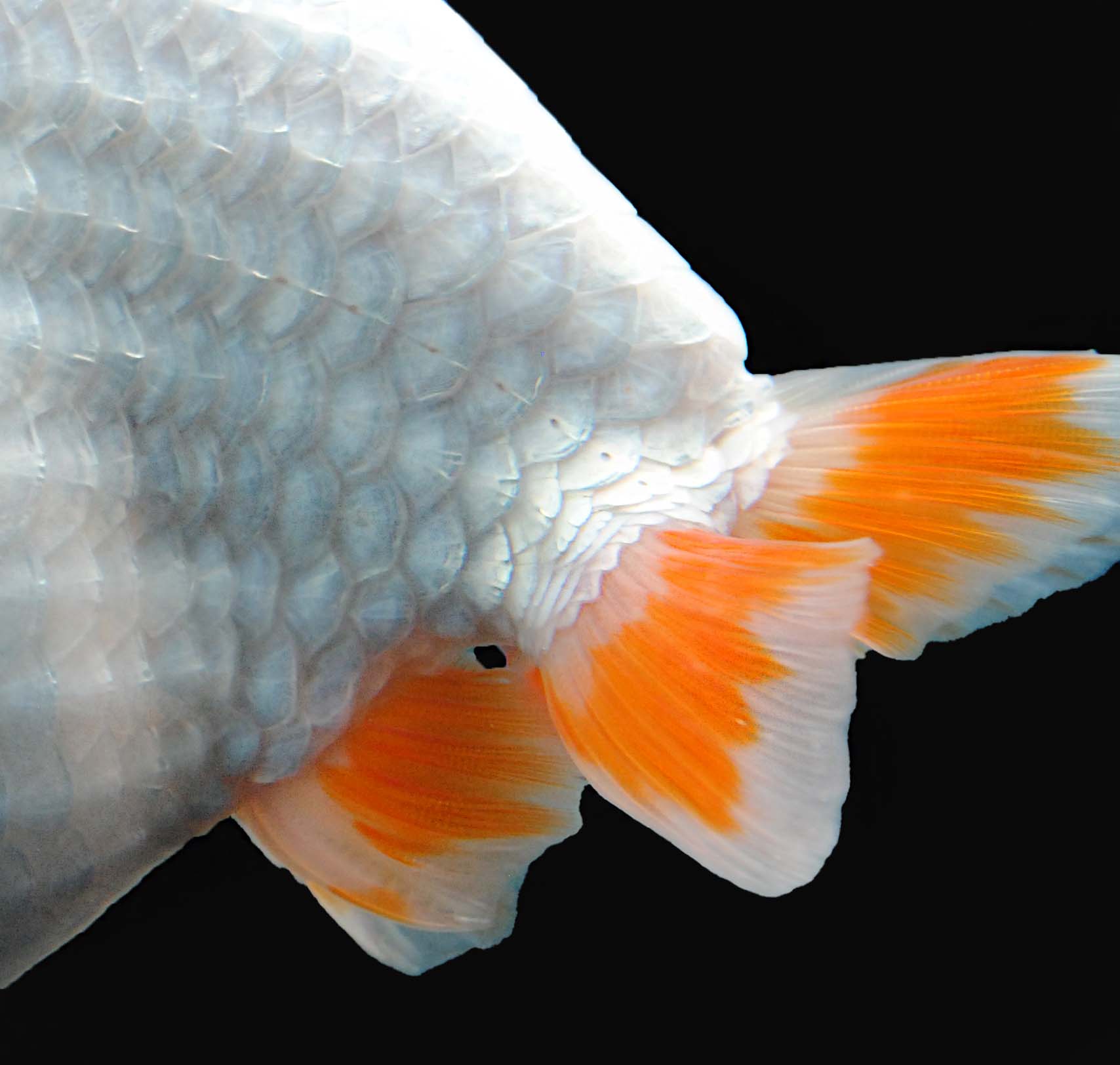
This fish is from my 2021 collection. I do not have it anymore. The special shine covers the whole body, but I think those in the peduncle area catches my attention directly. Do you see what I mean? The topviewing shows the shine more vividly compared to the sideviewing. When observing the fish side by side with the “common” white scale fish, the luster looks obviously different. But not so much when seeing from sideview.

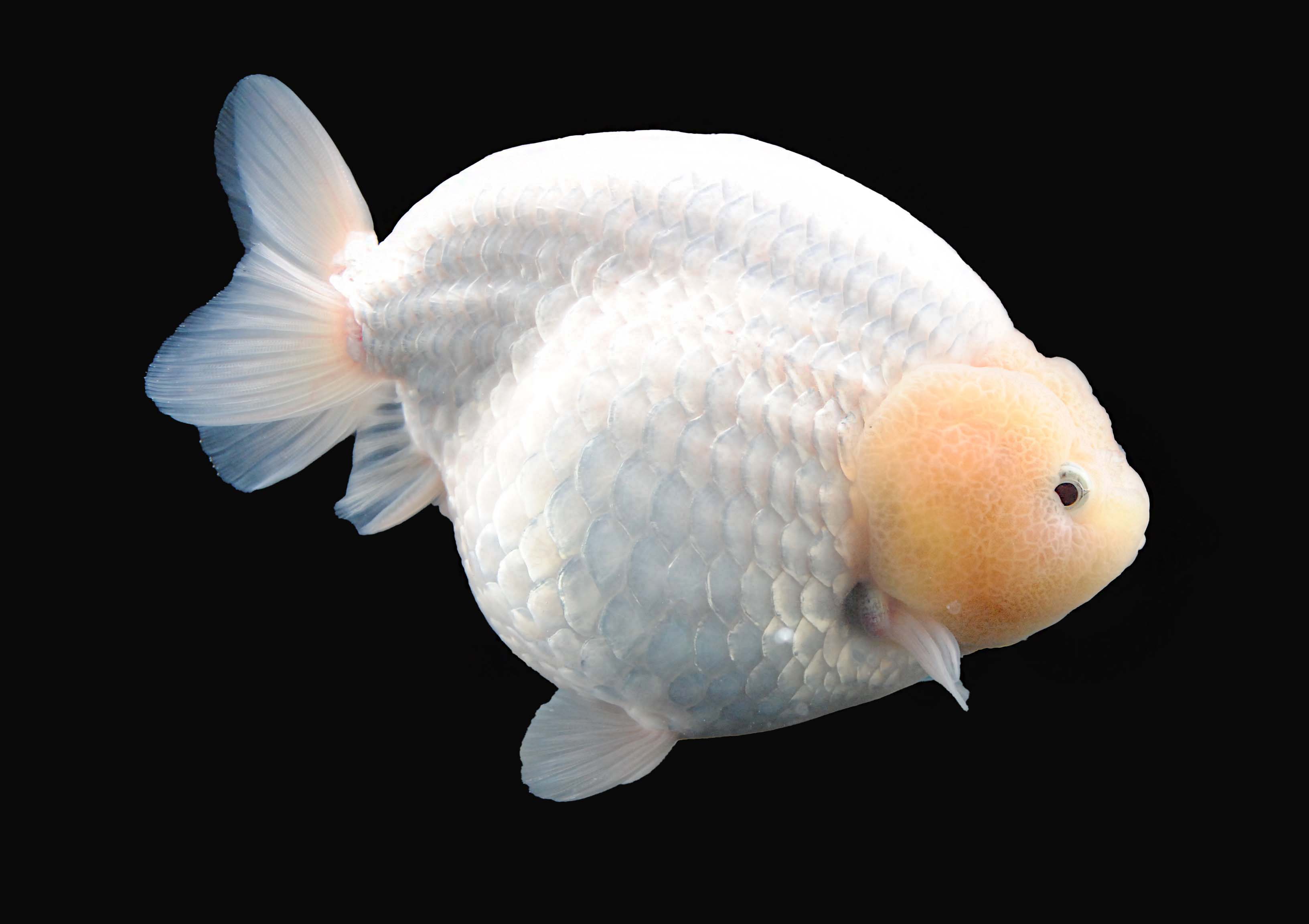
This year, I have at least two ginrin ranchu in my collection. Both have fully ginrin scalation, but somehow, one of them looks more fully. I still cannot specify what makes them different. Let me show you these two specimens with some close up pictures.

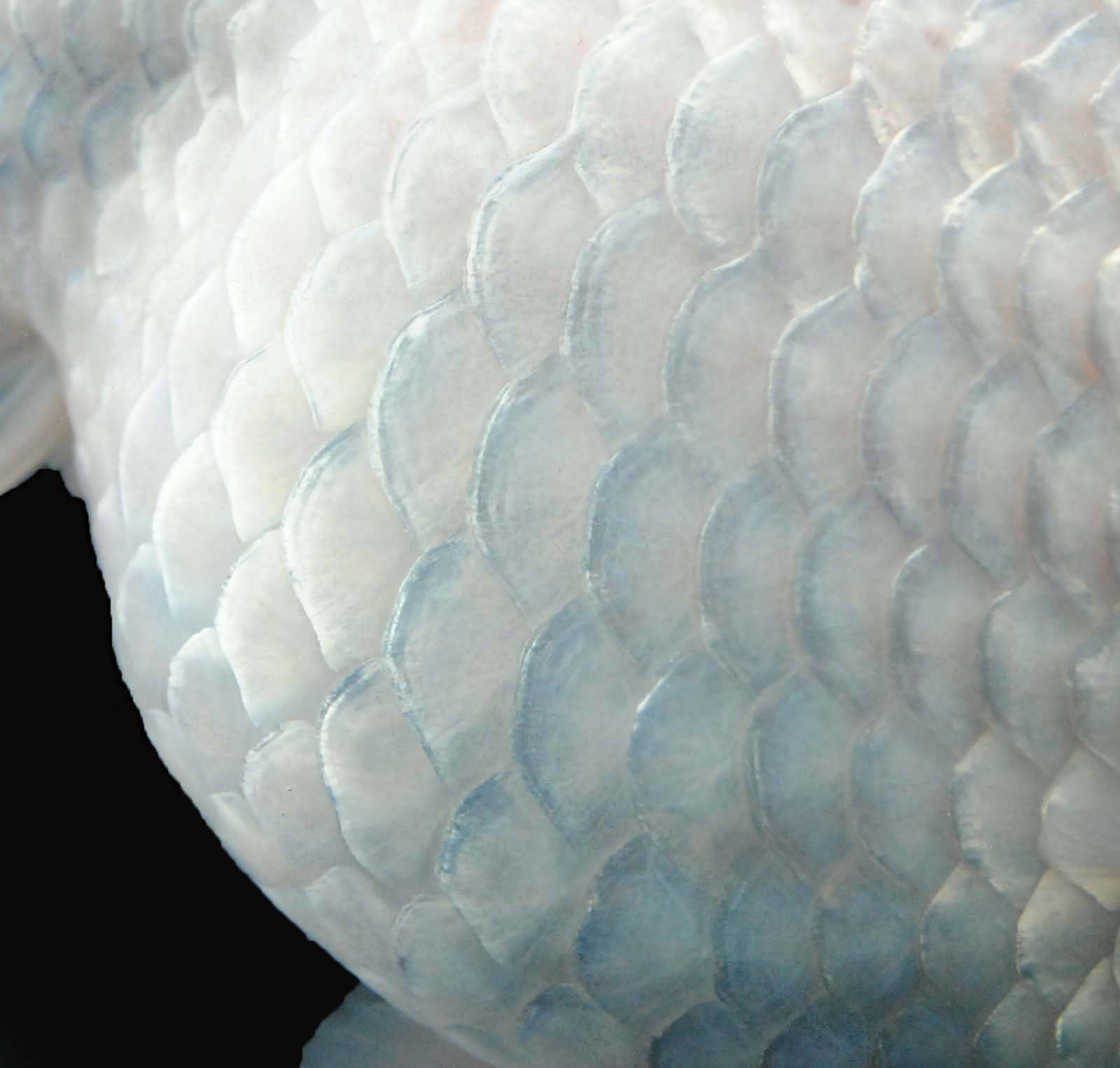
When we examine the scale, it seems that the white color (I suppose it is quanine) is more concentrated towards the center of the scale while the outer edge of the scale looks a bit less concentrated (almost transparent?)

This is the sideview of the fish:

It may look usual, no different from the “common” white scale. But as the fish moves, different angle gives different luster.

Do notice the unusually bright edges of the scales from this angle.

Upon closer look, the scale shows the concentrated quanine in its middle part:

Sometimes the edges looks brighter, sometimes looks darker, depending on the angle.

And this is the second fish:

The pearly color is more visible in the peduncle area in the left picture, but is more visible in the chest – abdoment area in the right picture.

So different from its white sibling, the ginrin scale looks visible in the peduncle area even from the sideview.

For video of the two fish above, do see in the link below:
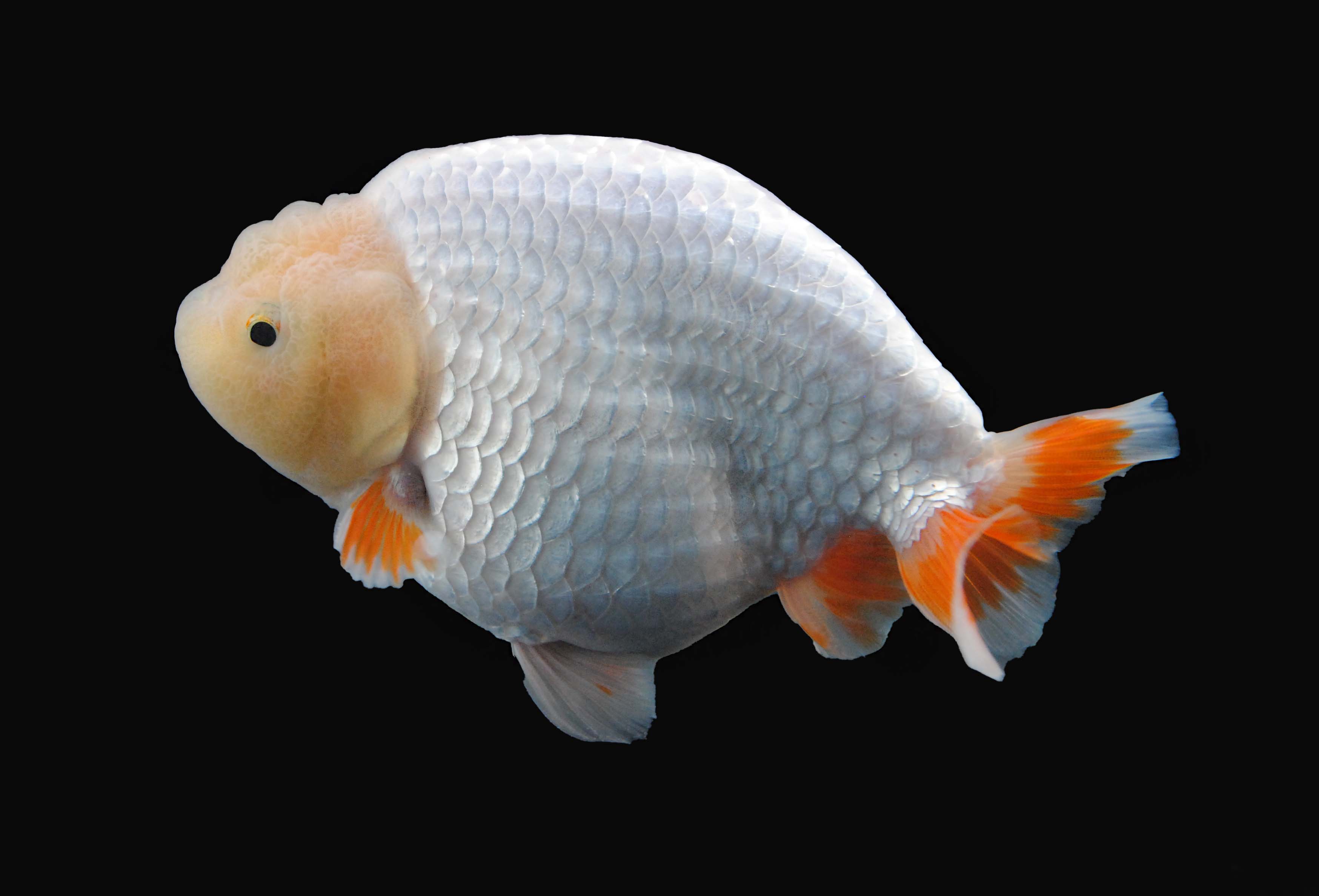
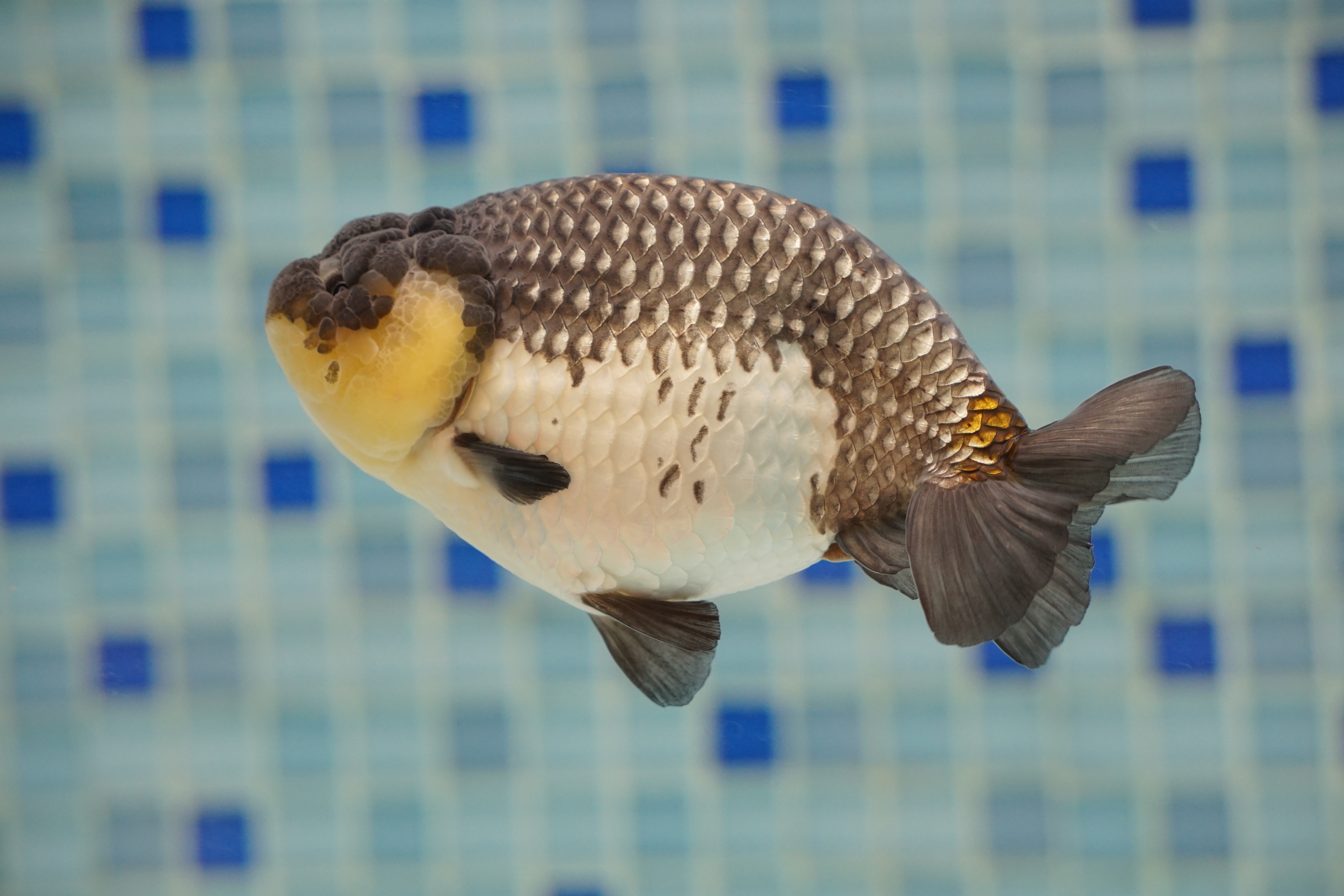
So far, I only found this ginrin scalation in ranchu. They came from my blue ranchu line. I think this scale type also appear in my blue ranchu, but I did not notice it before. Sometimes friends keeping my blue ranchu line told me that the shine of the fish looks different, but it did not ring any bell on me. Now I think they might be ginrin blue ranchu! Let me show you a picture of blue and white ranchu from my line taken (and raised) by my friend mr Yonathan from Malang:

And this is an old file of my blue ranchu. Do you think the scale is ginrin?

Standard