cow ranchu, The Diary of a Goldfish Breeder 2021

The Diary of a Goldfish Breeder 2021 (15)

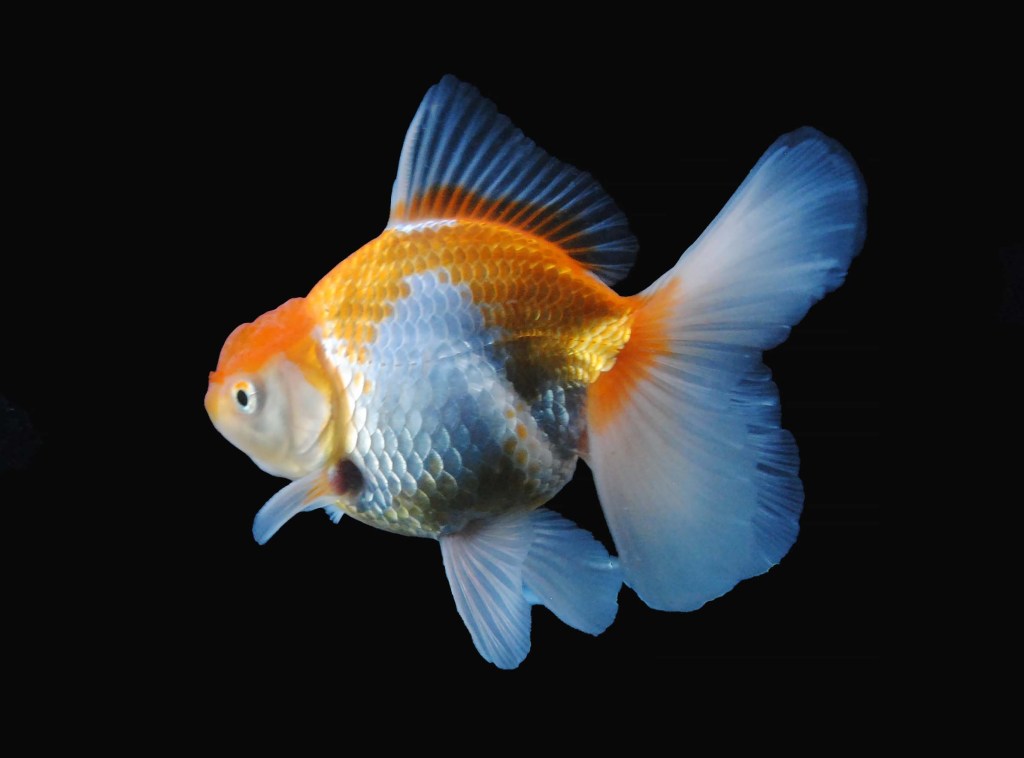
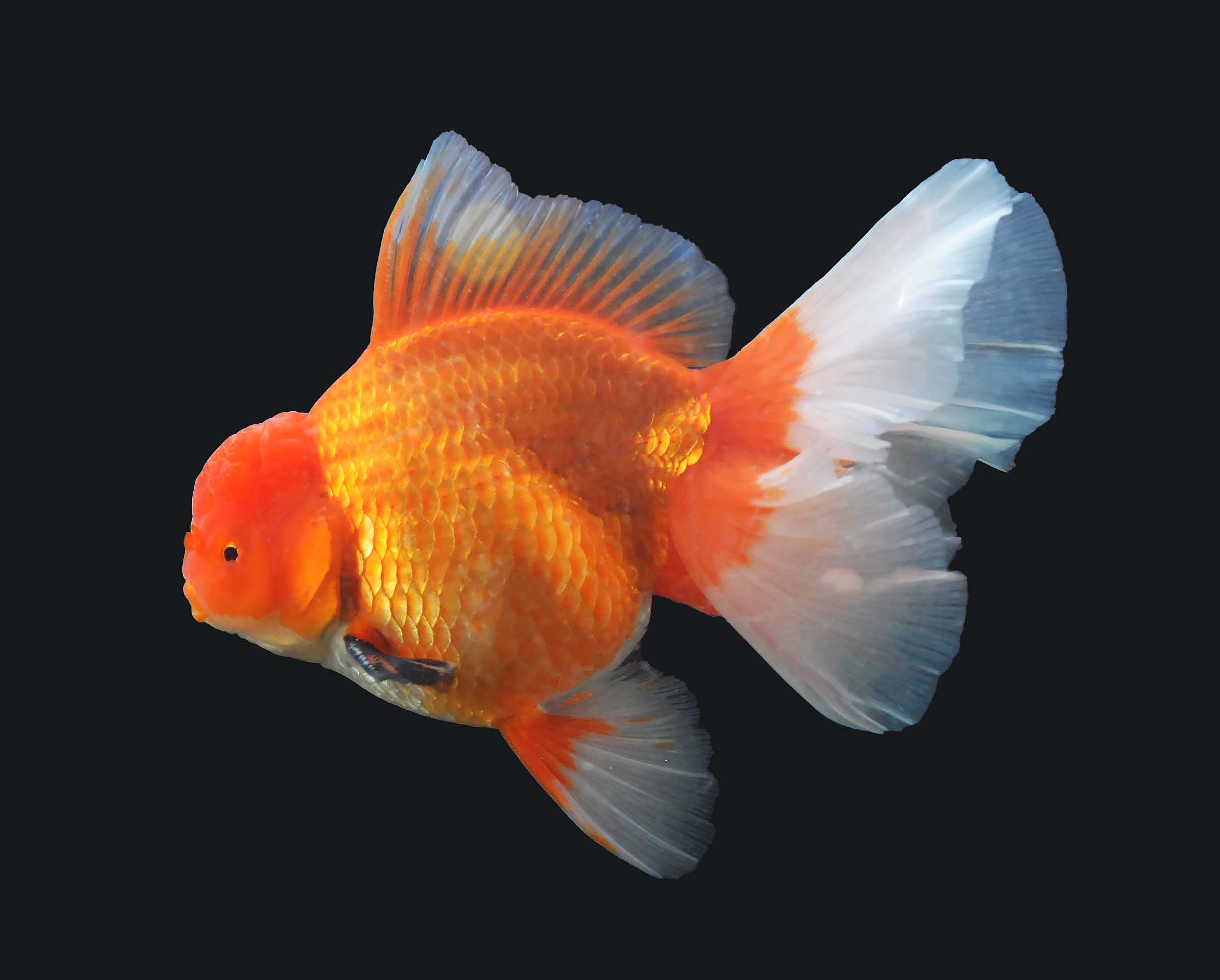
My Cow Ranchu babies that I mentioned in the Diary #10 this May have matured and are ready to spawn. This activity takes away a lot of time and space from my Oranda projects for the last several months.

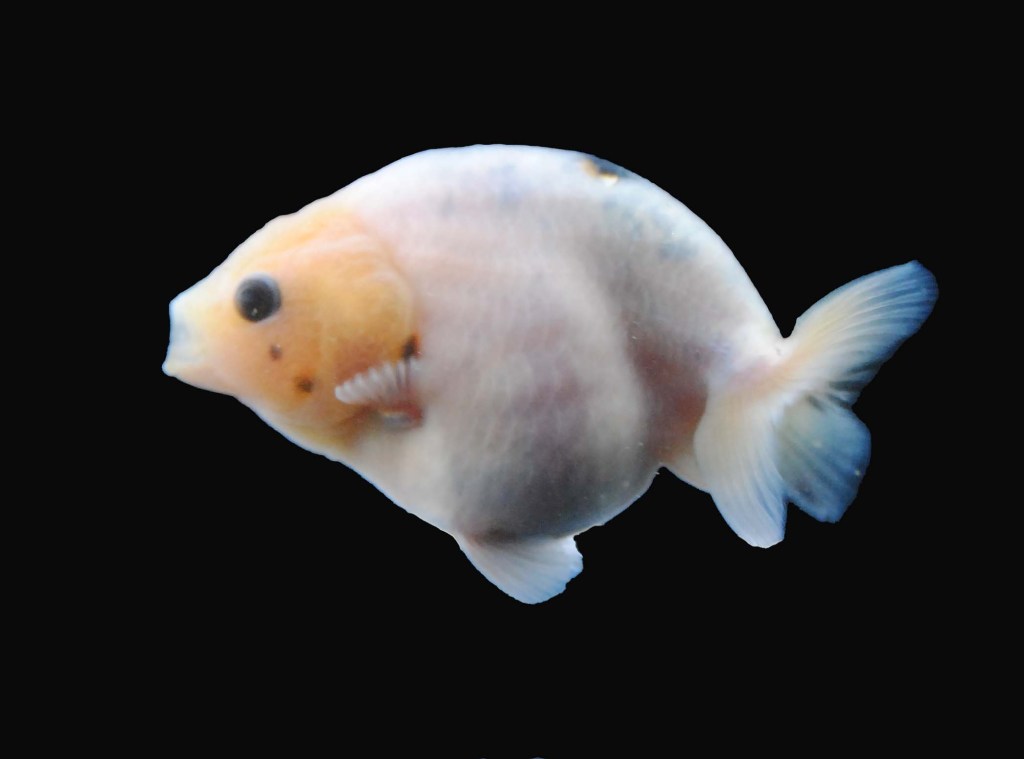
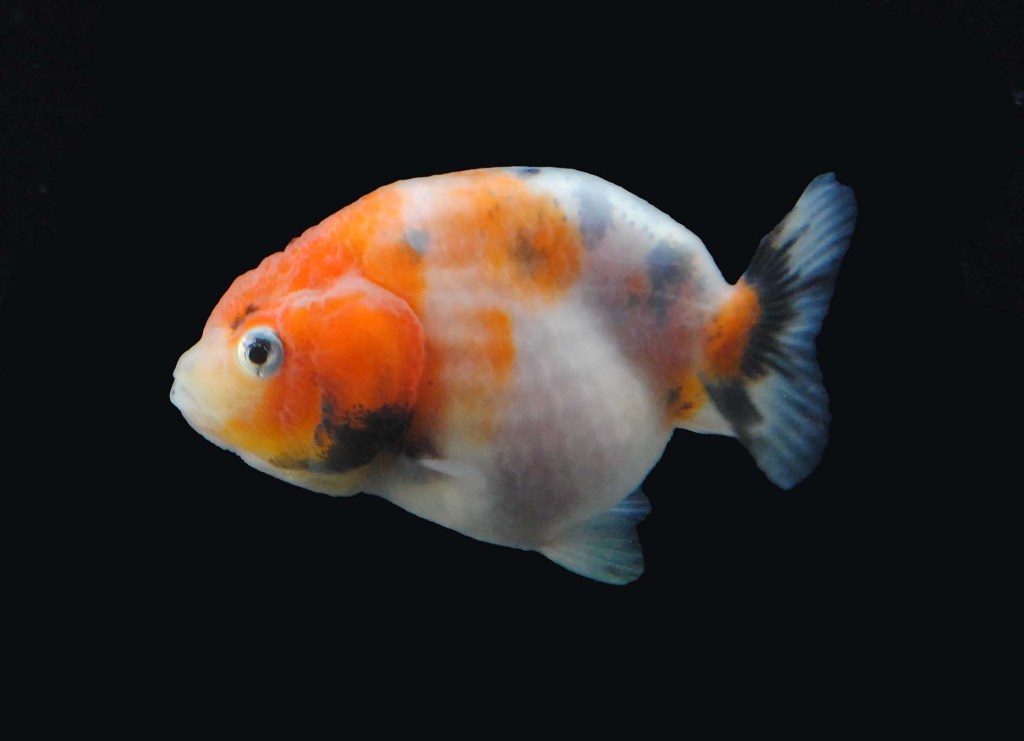
One surprising update is the transformation of one particular baby. As I looks back to his pictures in May, I marvel at his current transformation. These are the before and after pictures:
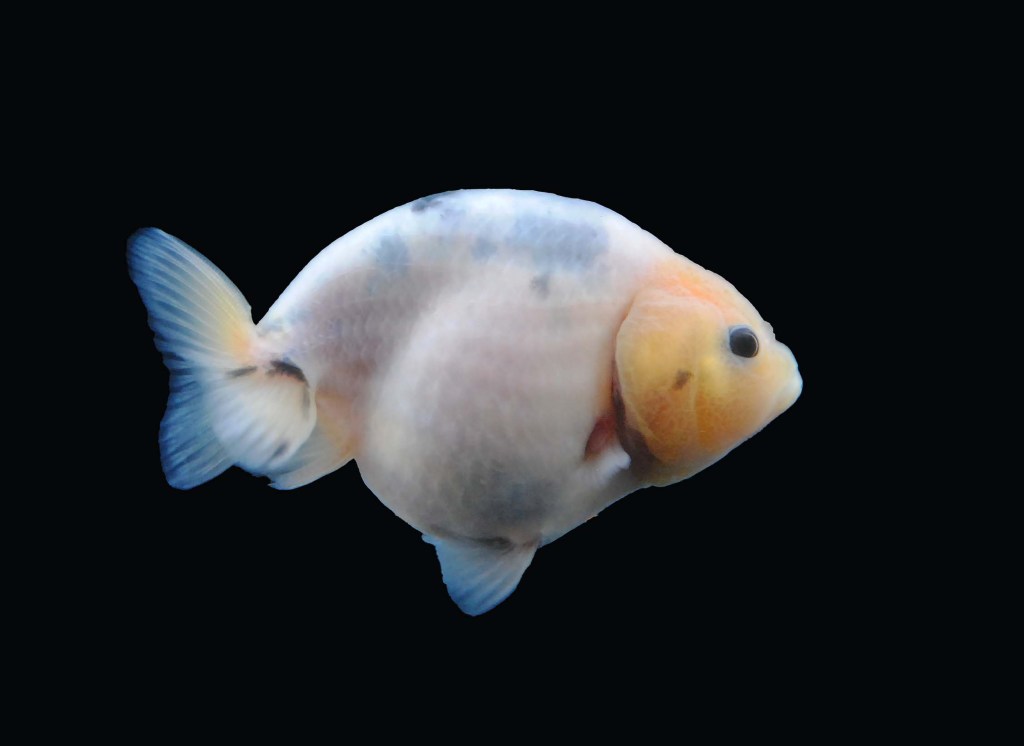
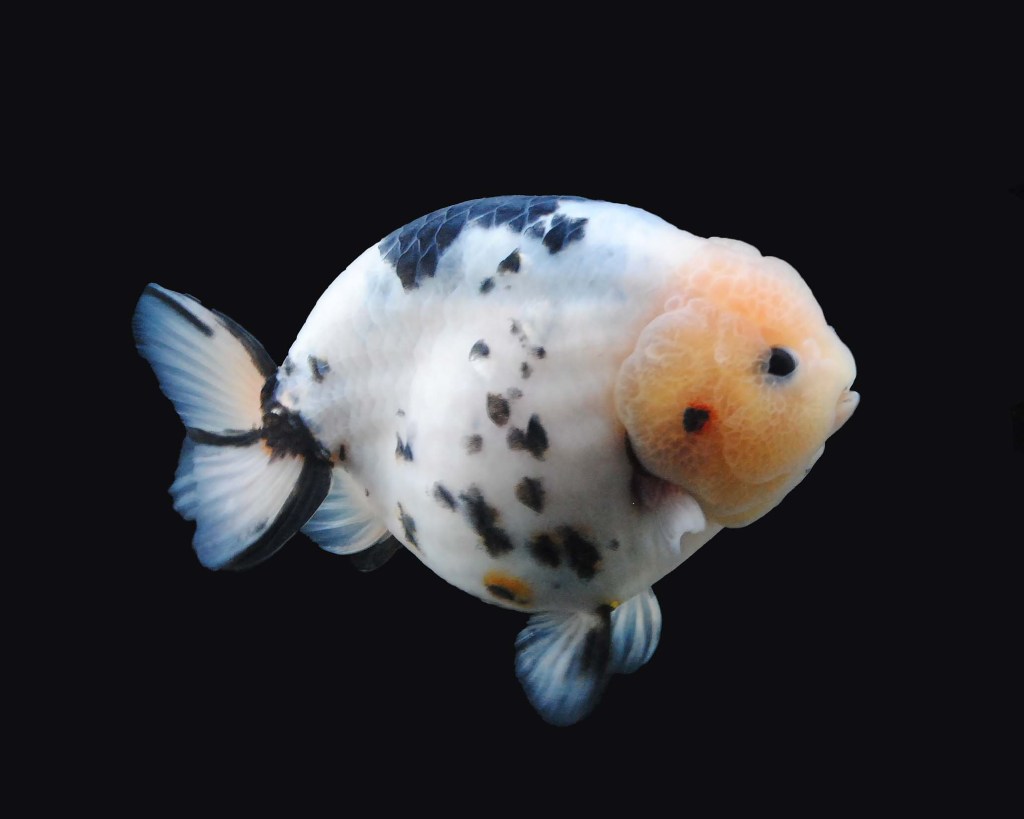
The black pigment has grown significantly in just several months. This transformation happened also in his father. (https://hermantogoldfish.com/2020/10/31/the-transformation-of-my-cow-ranchu-2019-2020/) I can confidently conclude right now that Cow Ranchu has the ability to grow their black color. This conclusion comes with a note. In my observation, when the young fish has black pigment, be it a black dot or a large black pattern, which exists on the surface of the skin, then the black pigment can grow. But if the fish is totally white without any melanin present in any layer of its skin (some call it Casper) as in Casper the ghost), or if the black pigment exists only under the skin (some call it blue-based / bluish color), my conclusion does not hold. I am not sure yet if the outer black pigments can emerge in such fish.

This cow is a male. There was another male I mentioned in the Diary #10. But since the tail was too widespread, I discard him as a male parent.

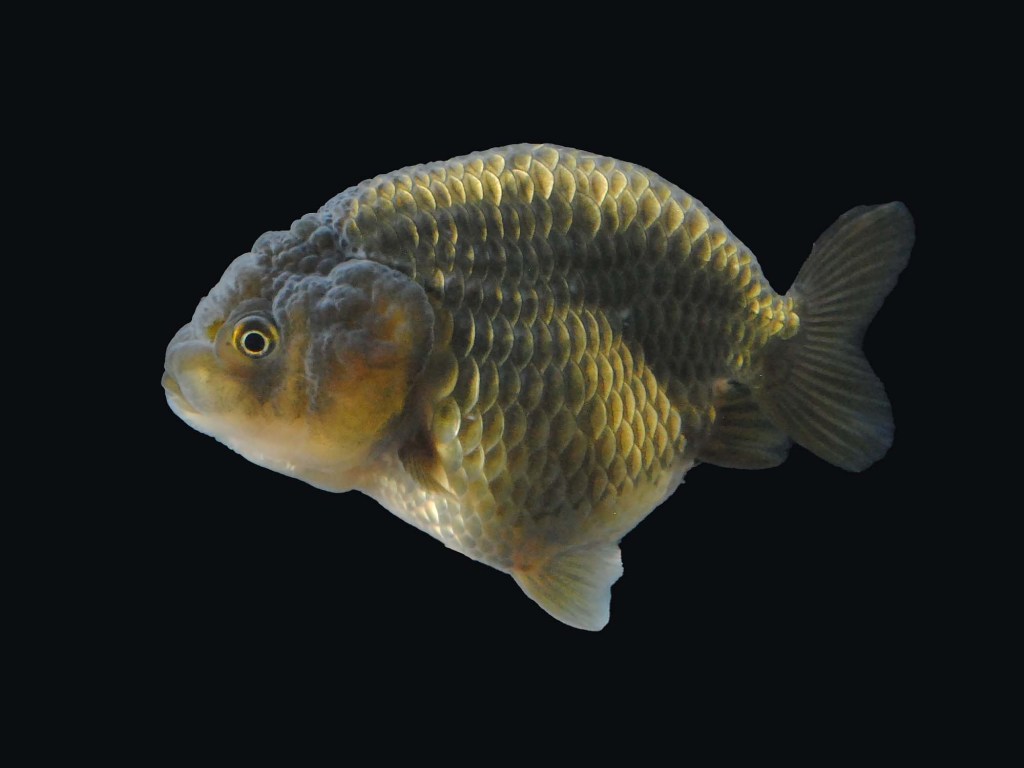
The female is the only grey one. She was the offspring of a different version of Cow Ranchu (which I have not documented well – sorry for that). She does not change her color. These are the before and after pics:

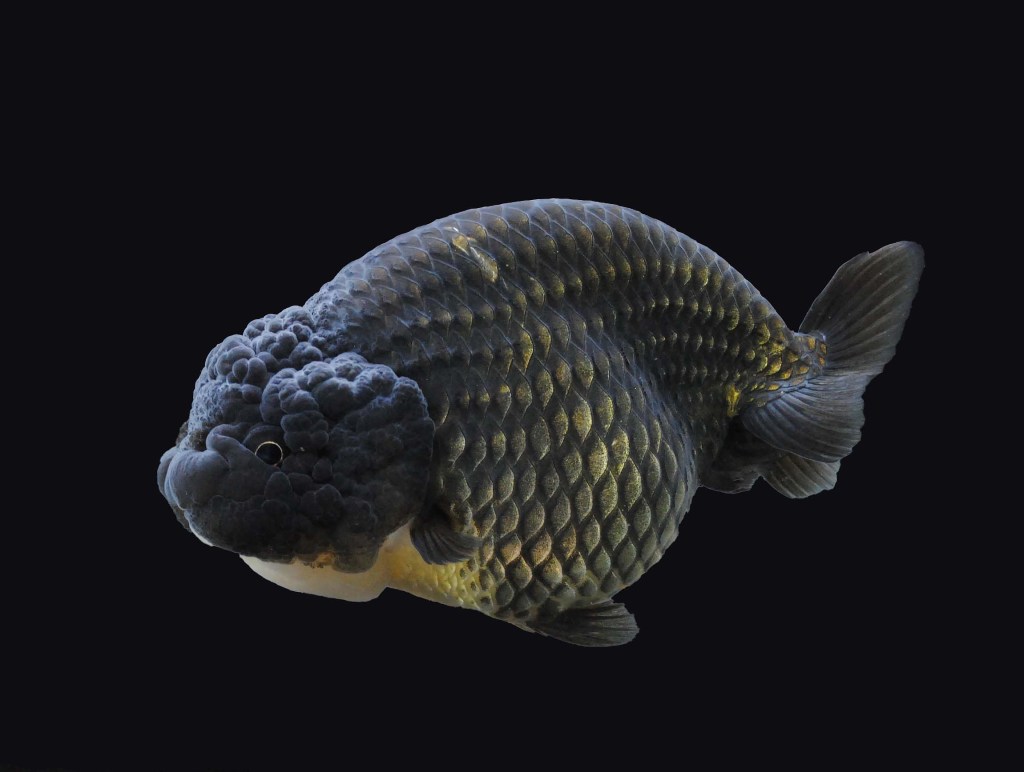
The tail is a bit widespread, but I still use her for lack of choice.

What is interesting in both fishes is the small tail size. The current market names it the Tiny Tail. And this feature carries forward to the next generation

I mated the Cow with the Grey several times. As happened many times before, the result is far from satisfying. All of them are calico (no cow color), and mostly come with all sorts of defects. Yet there is an improvement this time. From the first batch, I keep five of them. This is better than before where I discarded all of the offspring. From these five, only the first two I consider as my prize. The rest are just backups. Here they are:
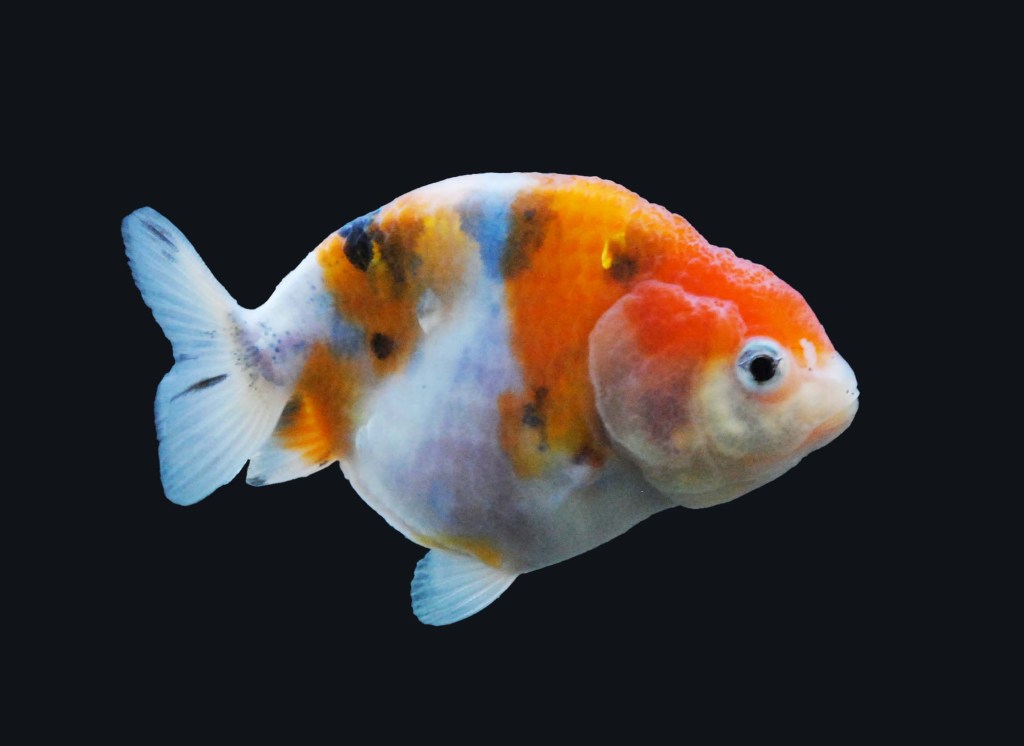
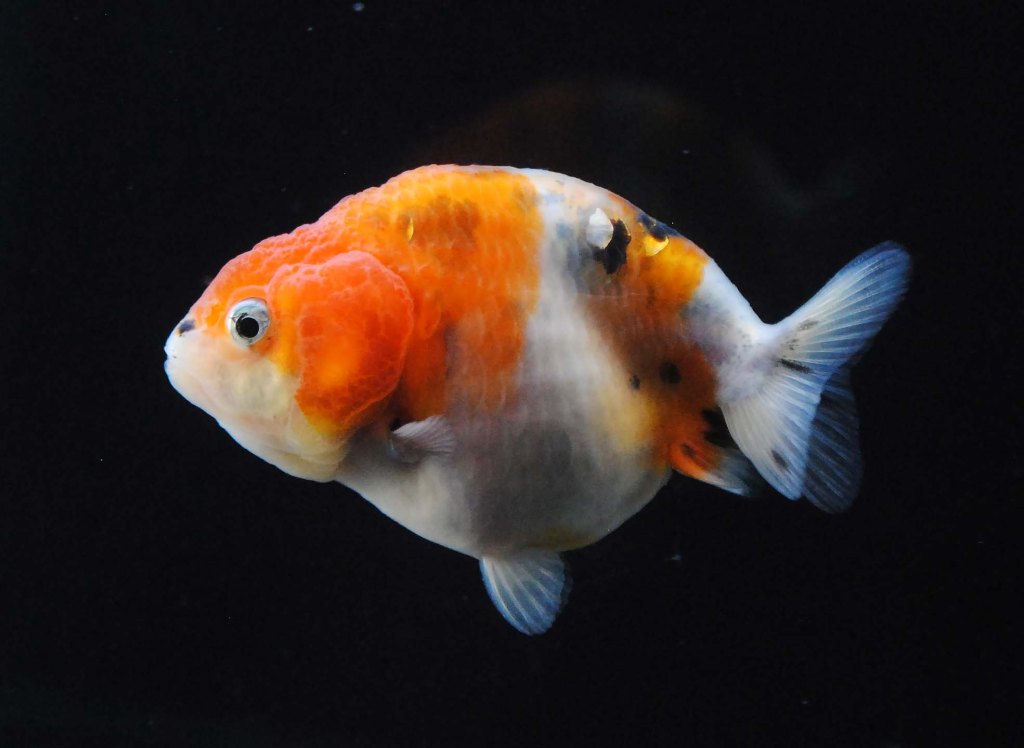
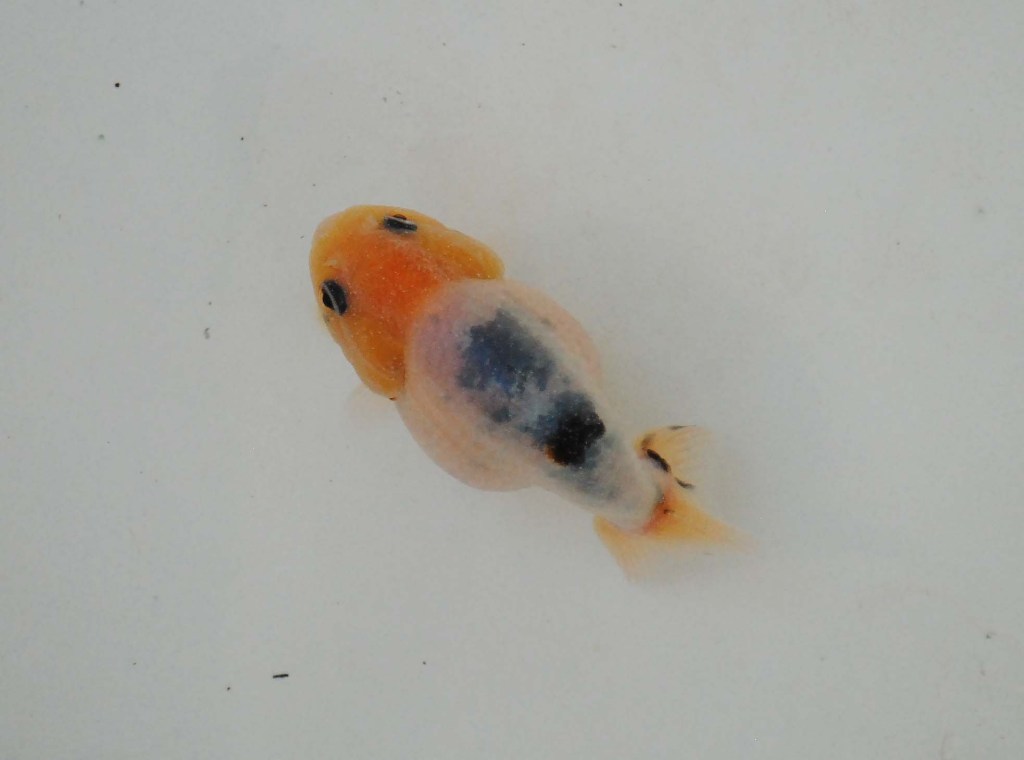
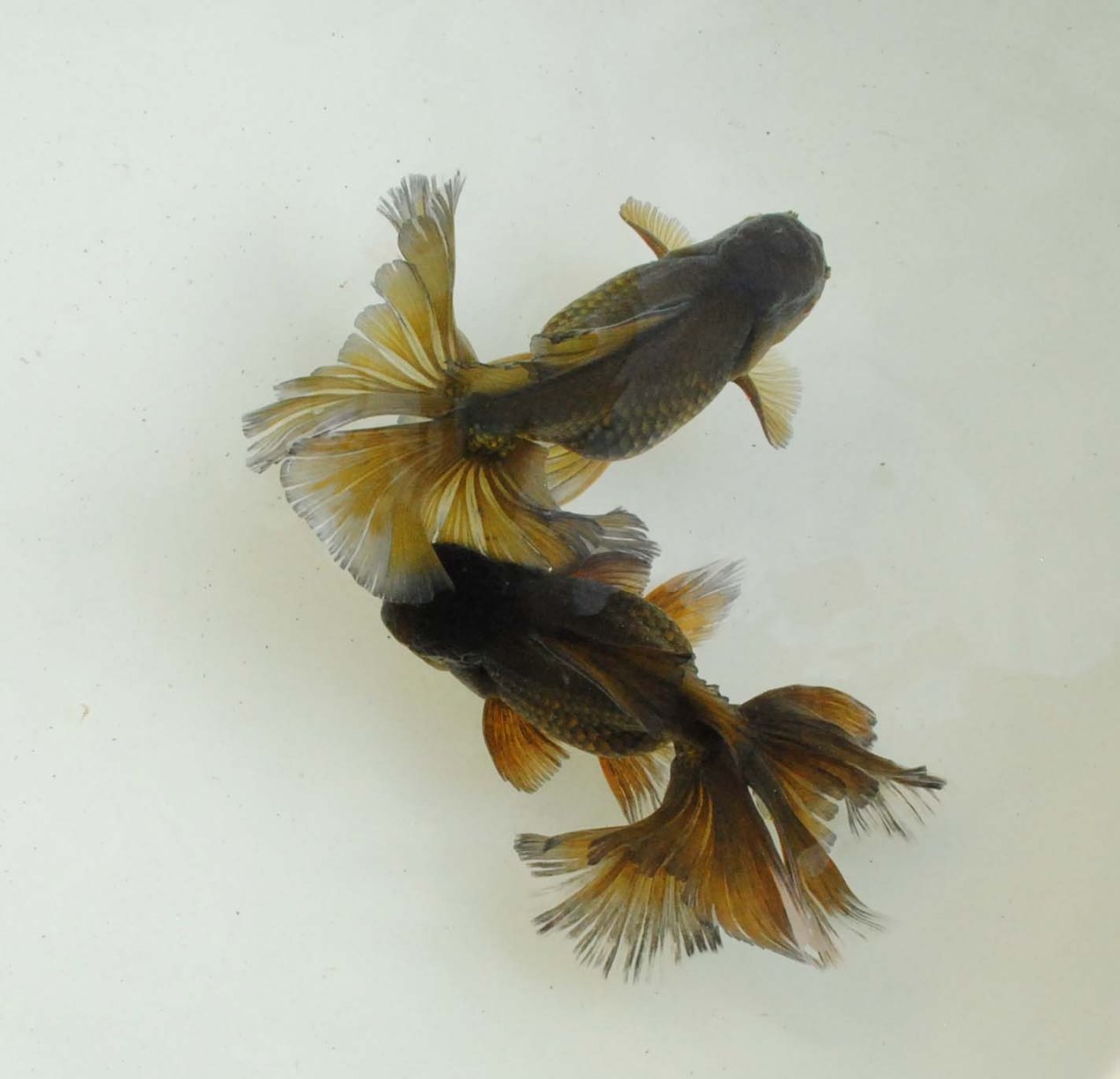
Though the back curves are not very smooth, the shape of the curve is good. There might be some improvement later on, I hope. And they already have black pigments on the outer skin. I hope to see the black pigment grow. I consider calicos with such quality (the growing black pigment) as an interesting quality. These are the pics from top view:
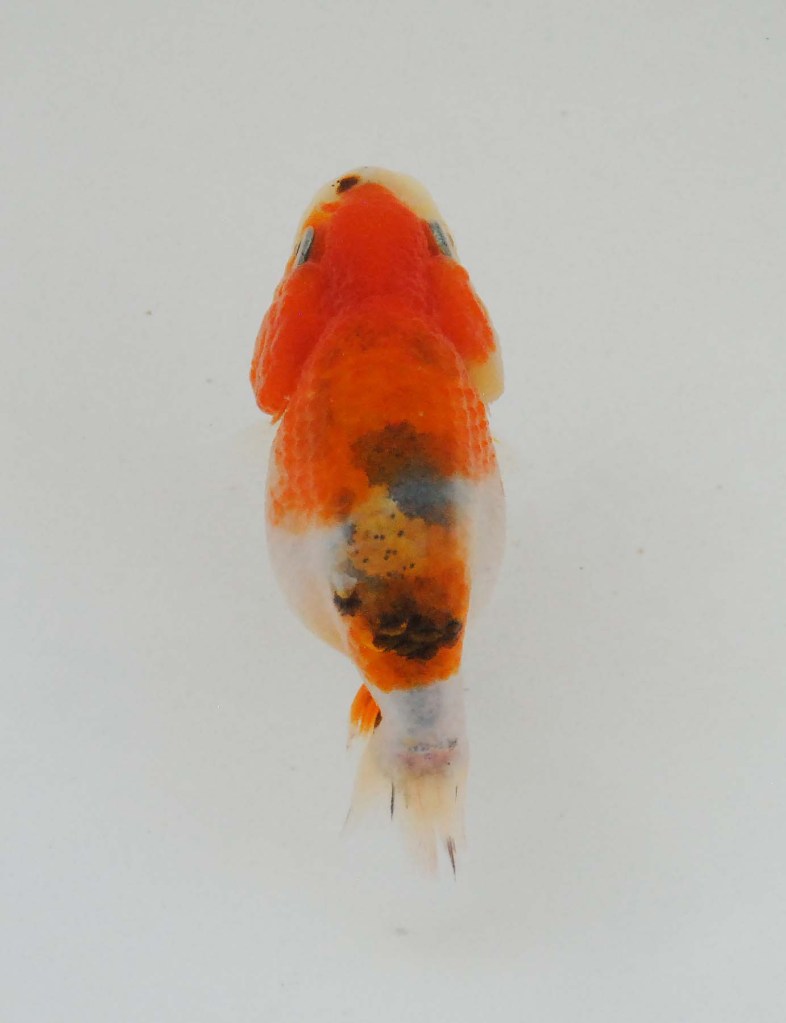
I will see how the fishes develop and decide later onwhat to make out of them. Perhaps they can be my line of Calico Ranchu. Perhaps I can use them in my Cow Ranchu Projects. I have not documented the younger batches, since they are too small to take picture. But the second and third batches are all calicos.

I would like to conclude this Diary with the pictures of the three backups. Have a good day.

These are the backups:

Standard
dancing queen, The Diary of a Goldfish Breeder 2021

The Diary of a Goldfish Breeder 2021 (14)

This is a tribute to my Dancing Queen. Several years ago I tried to create a side-view version of Tosakin. I nicknamed the fish as the Dancing Queen to appreciate the beautiful playfulness of the tail. I successfully created an erect tail with split, and the tosakin flips could be enjoyed from side-viewing.

The tail was really a beauty. Yet, the body was weak and plain. The color was just orange or grey. I tried to improve the body and the coloration with this result:

The body was improved. The orange and white color was certainly an improvement. The tail seemed to be slightly smaller, yet still a decent one. However, it seemed that the market did not respond well. Besides that, I have a lot of other projects on goldfish. So, I struggled hard to let the project go. This fish was the last (and best) Dancing Queen I had, and I let a friend adopted her without leaving any offspring.

Well, perhaps it is natural for a breeder to have a deep attachment to his creation. I was ready to let go. But I still mated the uncle of the last Dancing Queen (a grey one, and sorry I did not take any picture of it) with an Oranda. I did not even remember which Oranda I used. This was not a planned project. And I did not expect anything. Such a cross might yield nothing of any worth. So, this cross was an uncalculated project, ready to be discarded at any moment.

Surprisingly, something good came out of this project! I did not expect to be able to get a decent oranda with dancing queen tail from the first attempt of the crossing. It was almost impossible, I thought. But the fact speaks otherwise. I ends up with two decent oranda with very beautiful Dancing Queen tail style! Yes, the color was only grey, but I think they are lovely.

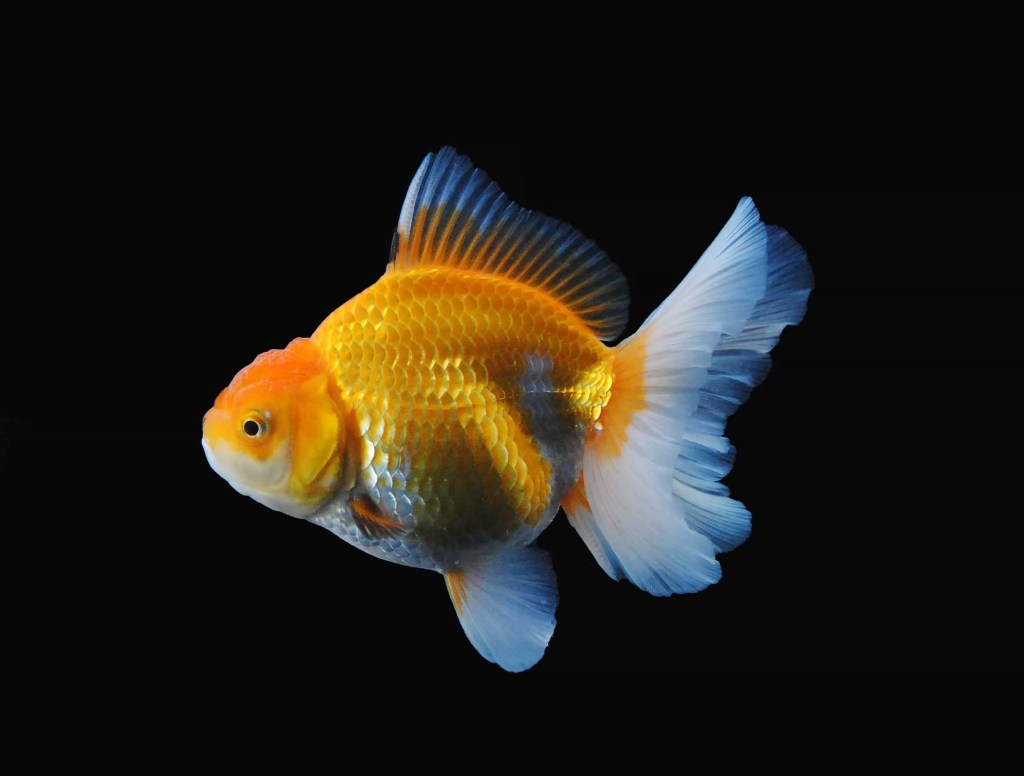
This one is the first fish:

And this is the second fish:

There are oranda with similar type of tail in the market produced by Thailand breeders. They named the tail as Orchid tail. I do not know about the history of it, but I might walk in the same path as them.

This is the topview appearance of the fishes:

The appearance of these two disrupted my current oranda project. I already had my Basic Material Oranda. But the tail was Rosetail type (wrinkle tail). Compared to this Dancing Queen tail style, I think I face a great temptation to incorporate this type of tail into my Oranda. There is no way I ignore such a beauty.

So, last week I mated Helen the Oranda with these two 😊

Remember Helen?

Sometimes Helen shows a bit of tail flips similar to the Dancing Queen, though not always. I think this is a good sign. The mating between these fishes might yield an outstanding result.

This is Helen doing her flips

I am enthusiastic to see the results 😊 Perhaps my Dancing Queen will evolve into Oranda with Dancing Queen tail shape.

Standard
The Diary of a Goldfish Breeder 2021

The Diary of a Goldfish Breeder 2021 (13)

My helper takes a week leave to attend a business in his village. I am all alone to take care of all these goldfish. Yes, it will be a tiring week for me. Yet, I am very excited to have this occasion once in a while.

This morning, as usual, I woke up at 05.00. I took a time to read the Scripture accompanied by a cup of hot Milo (half dose to reduce my sugar consumption, of course). Then I did my routine exercises to prevent muscle injury when working on the ponds, especially when I must do the works alone. At 06.00 I went to my ponds which is just 5 minutes walking from my house.

The first thing I did was to check which goldfish was laying eggs. The one mating this morning was the Cow Ranchu. This was before the schedule. I was expecting her to lay eggs tomorrow. Since the eggs came out prematurely, there was only few of them. I think I know my mistake. The fish is a productive one. Feeding her solely with wheatgerm pellets is enough to keep her productive. Yet, yesterday I gave them frozen bloodworm and live daphnia. That was an unnecessary move for a productive fish. Those diets might be responsible to induce the breeding before its time. Anyway, I collected the eggs and determined to feed pellets only for now.

Next, I did the water change for all tubs without filtration. I siphoned some of them and change the water up to 90%. I did total water change for the rest and scrub them clean. I usually leave the latter to my helper. But today I did it myself. I did it cautiously to avoid back pain.

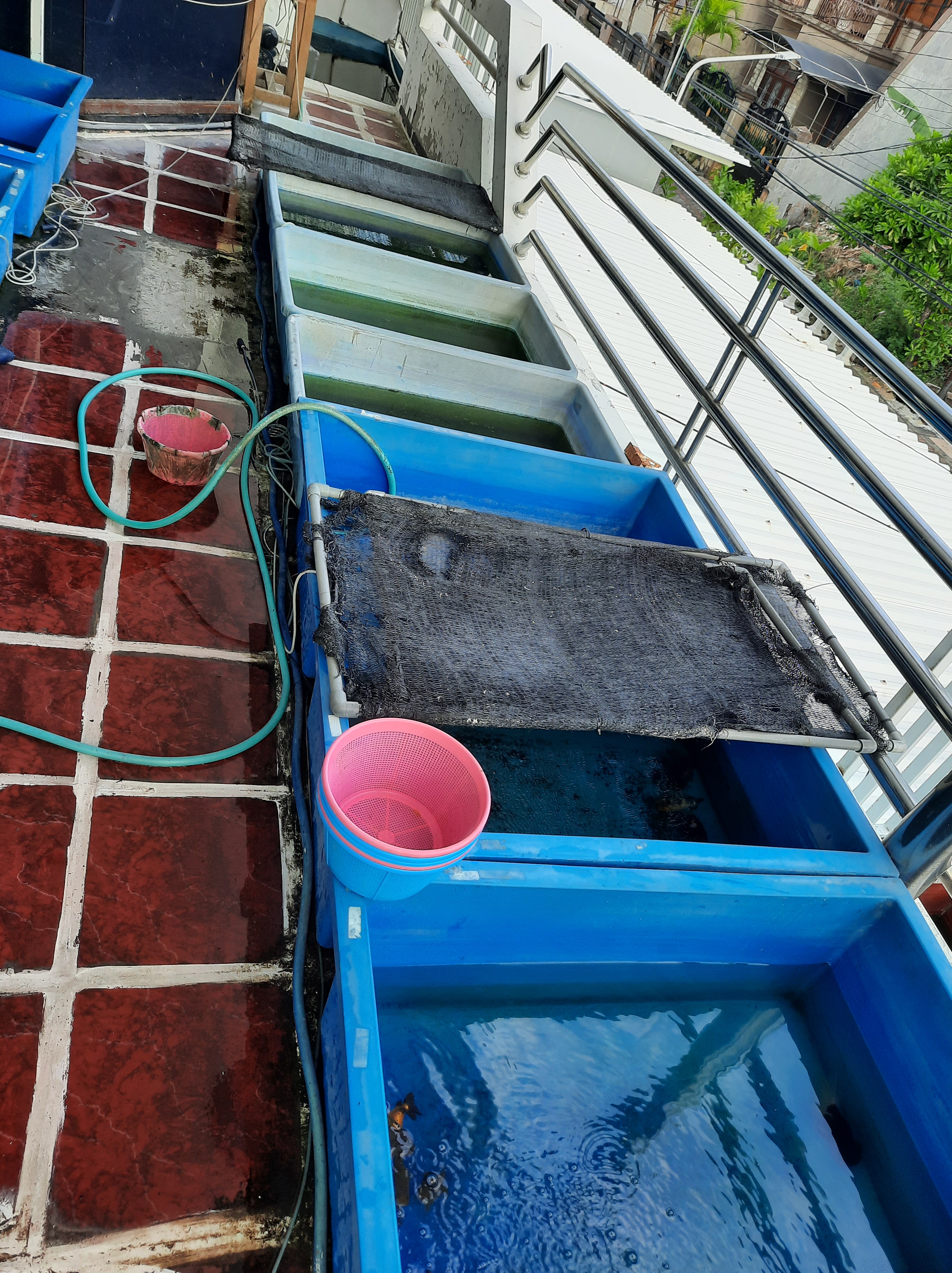
The tubs in the top shelf (from the right) contain the cross between telescope butterfly and celestial, daphnia culture, newly hatched brown oranda, and a weeks old blue ranchu. The bottom shelf contains the cross between tricolor oranda and purple ranchu (the first from the right). The three other tubs are daphnia culture.

Three of these tubs are the home for the topview ranchu, blue and purple ranchu, and the cross between tricolor oranda and purple ranchu that have come of age. Others are daphnia culture. I water change all of the tubs except the daphnia culture.

These nine tubs are the home of young blue oranda, blue pompom, young topview ranchu, and newly hatced cow ranchu (occupying 5 tubs of its own). Yes, I am concentrating on the cow ranchu at this time. All the tubs on the top shelf need water change, and all on the bottom need to be scrubbed.

I guess the hardest part was to scrub a big fiber tub 1.5 meter x 1.5 meter. I keep four large topview ranchu there and do a total water change every four days.

It is noticeable that I did not scrub them hard enough. I did not have enough energy to scrub it super clean. My helper usually did a better job. Well, he is a lot younger than me. Pardon my age.

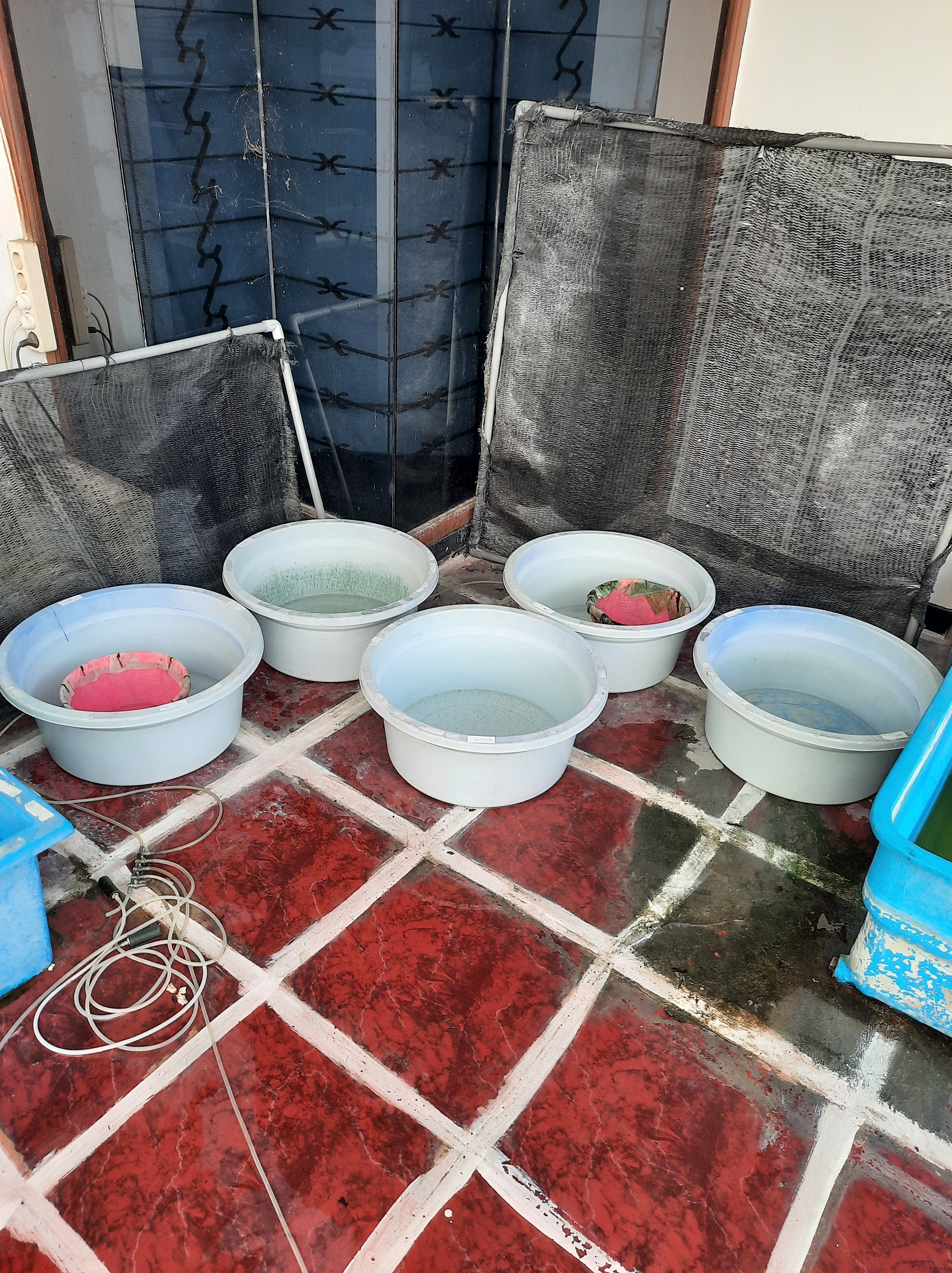
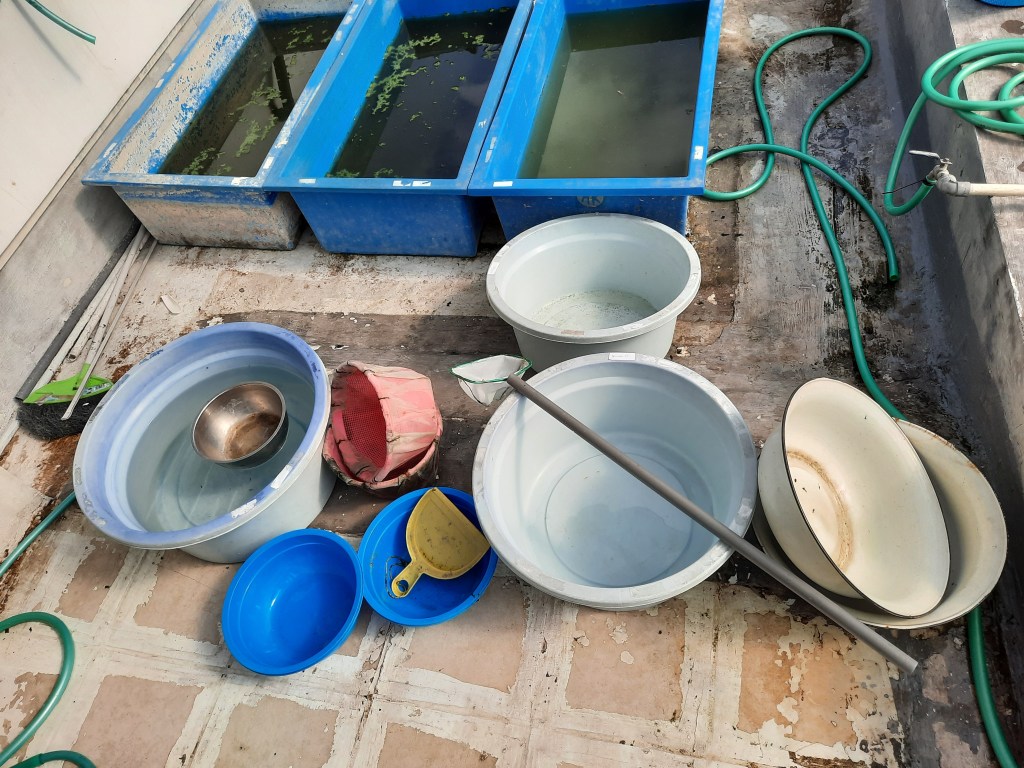
While I scrub the tub, I put the fishes temporarily on these small containers.

Since today is Sunday, it is time to change the water of a special pond:

This 1 meter x 60 centimeter pond was meant as a filtration area. But I changed the function into a deep pond without any filtration. Somehow, the fishes I kept there can grow fast. The ranchu in the blue container is the resident, accompanied by her small friend. This ranchu is in the middle of a Keeping Contest which just starts and will ends on January next year. Keeping Contest is a routine occasion held by our Surabaya Goldfish Community (SGC).

Then I attended the eggs I collected from the day before. I checked the water. If there was any sign of foulness, I did the water change for the eggs:

After all these water change activities. I still had things to do. There were three bowls of cow ranchu (age: one week) to cull.

After culling, I fed my goldfishes their breakfast. The diets include frozen bloodworm, live daphnia, and many types of pellets from different brands.

Then I feed the daphnia culture:

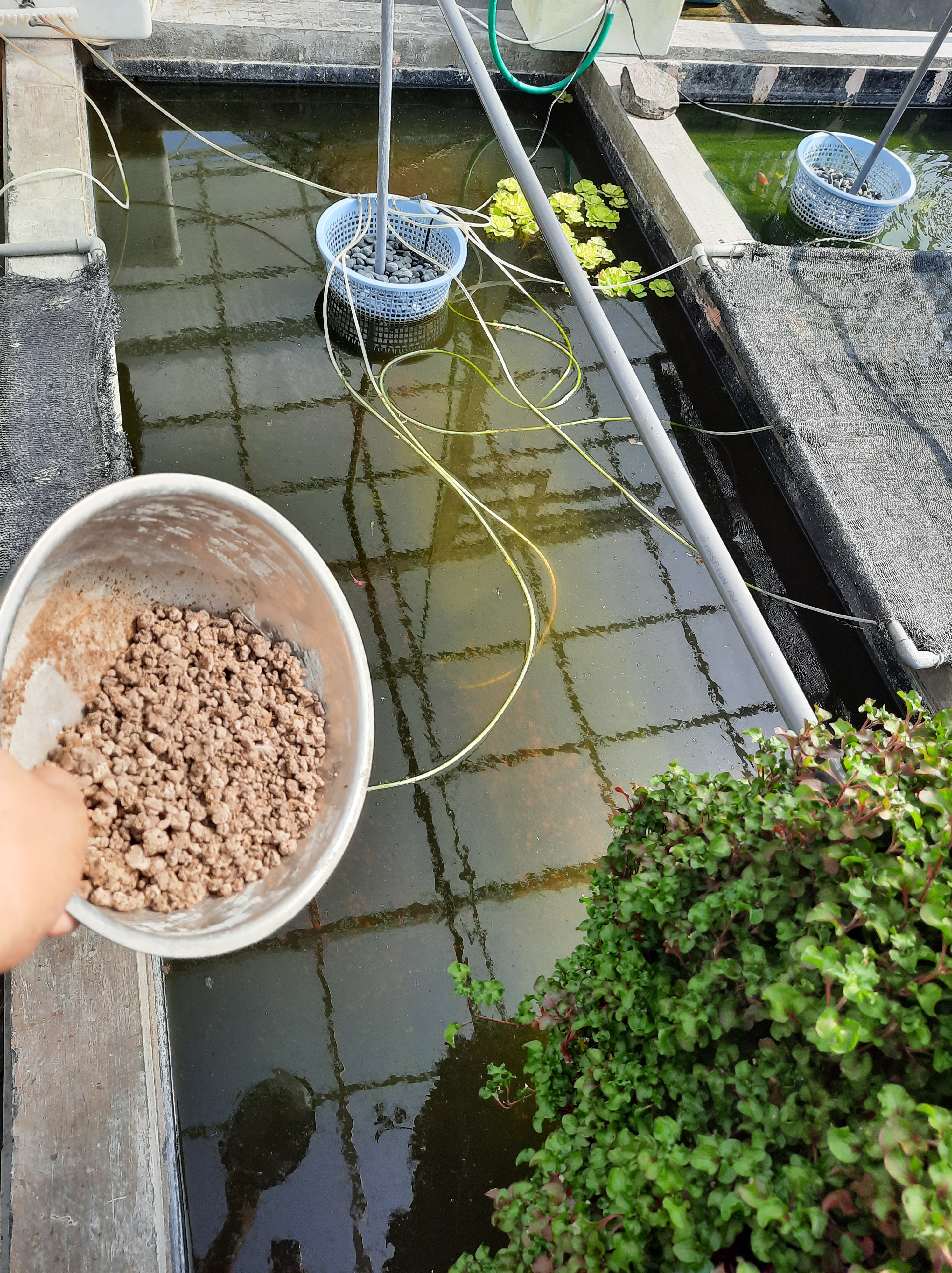
I dedicate this large pond and many tubs to culture daphnia. I feed them with dried quail dung.

Last but not least, I must wash clean all the tools I use and clean the floor.

After putting the nets on top of some tubs that need shading, I went home. All these took two and a half hour. I was exhausted, thirsty, and hungry. Back at home, I need to water my garden first, and feeding the goldfish I kept in my house. Then I enjoyed a glass of cold apple cider vinegar with honey (my favorite drink) and porridge breakfast with my lovely wife. After taking my bath, I joined the Sunday Service of my Church via online. That was my morning.

Standard
Blue Oranda, Purple goldfish, The Diary of a Goldfish Breeder 2021

The Diary of a Goldfish Breeder 2021 (12)

It seems that my writing activity is not as active as my breeding activity. There has been a lot of progress in my breeding projects that I have not updated here. Let me try to catch it up.

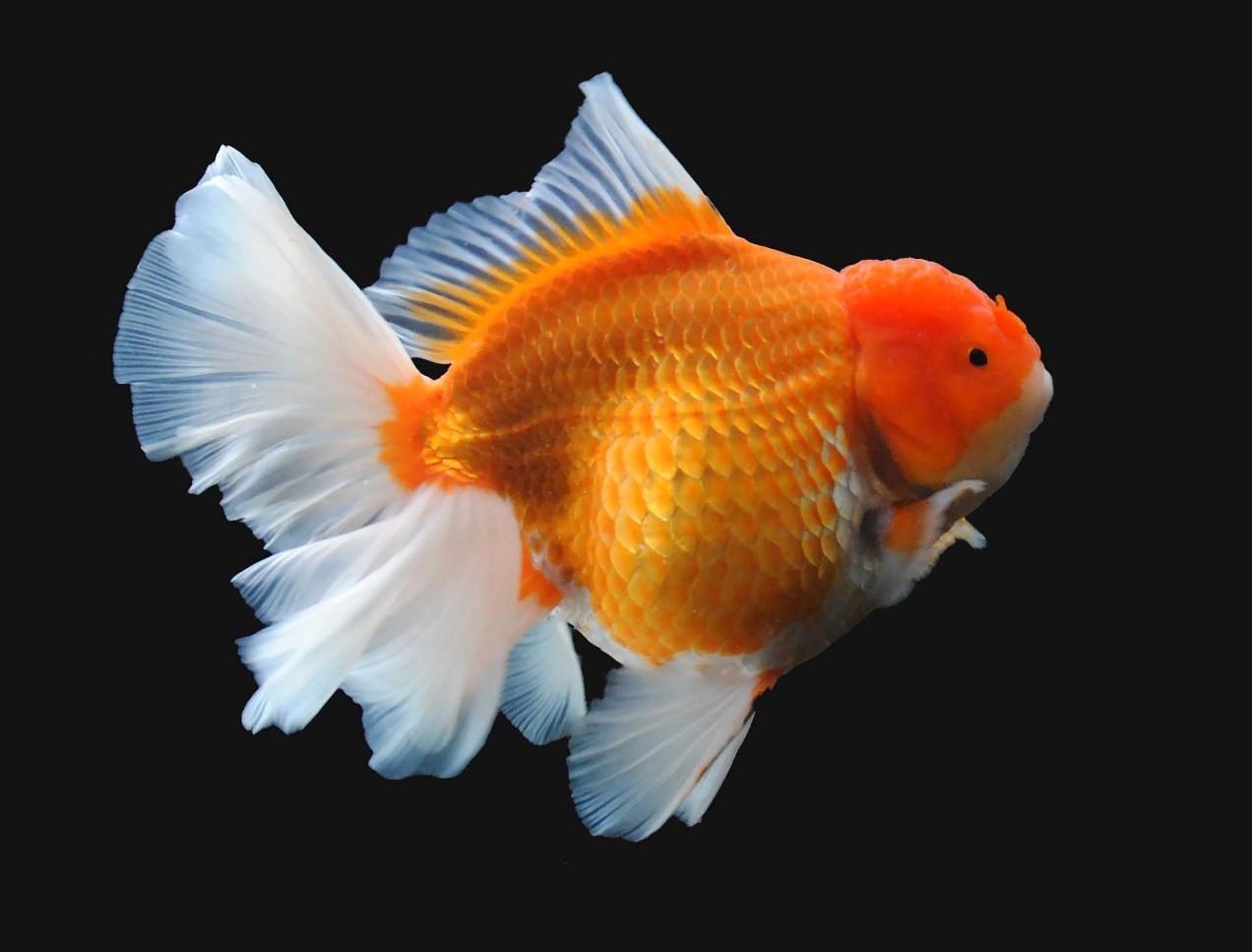
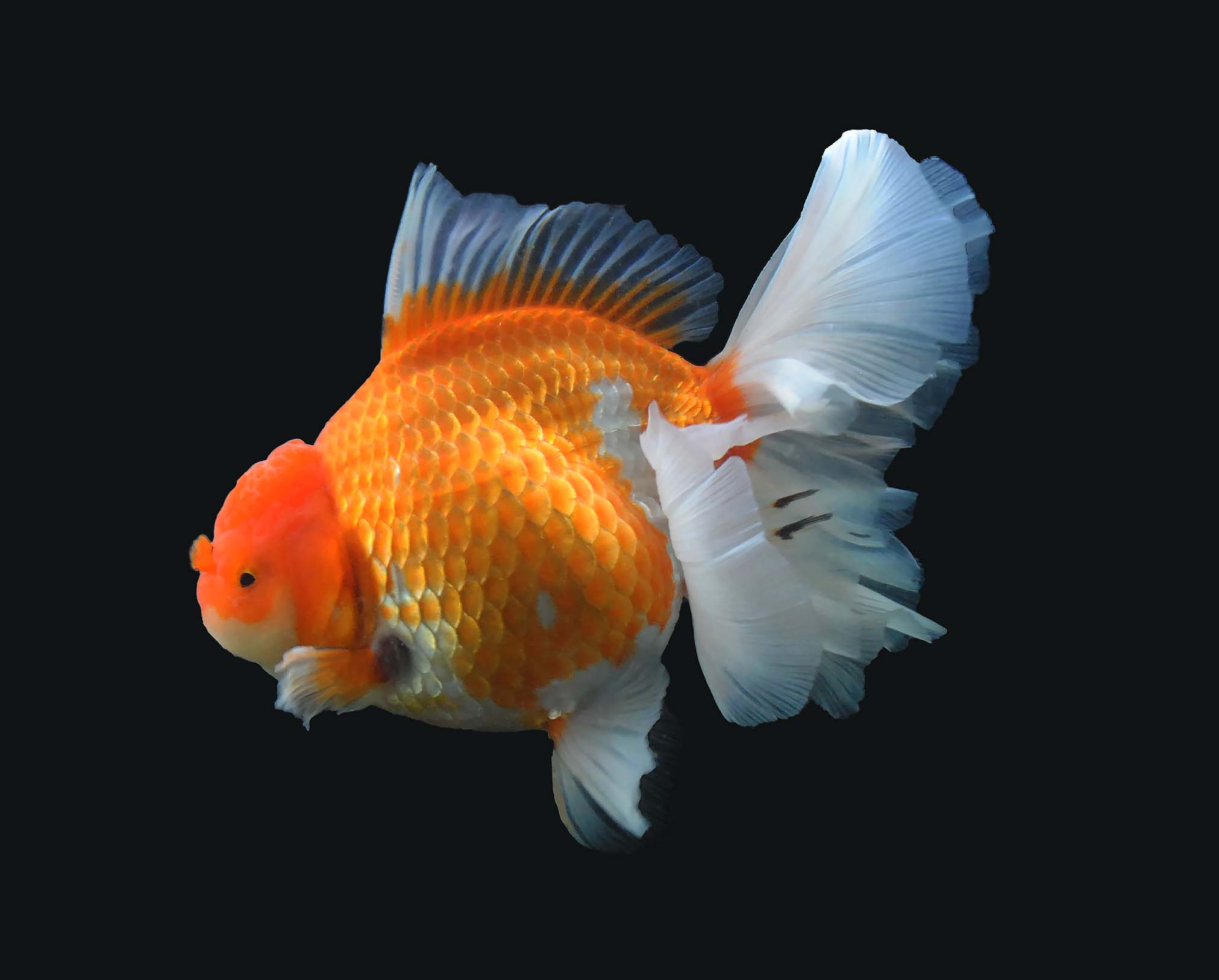
In this occasion, I would like to update my Oranda breeding project since it is my main priority this year. To continue the Diary number 7 about the cross between Purple Oranda and my Basic Oranda Material in order to improve the quality of my purple oranda, I have selected a pair of offspring (semi purple Oranda) as the main parent fish. They are mature right now and have been bred several times. These are their pictures (before and after):

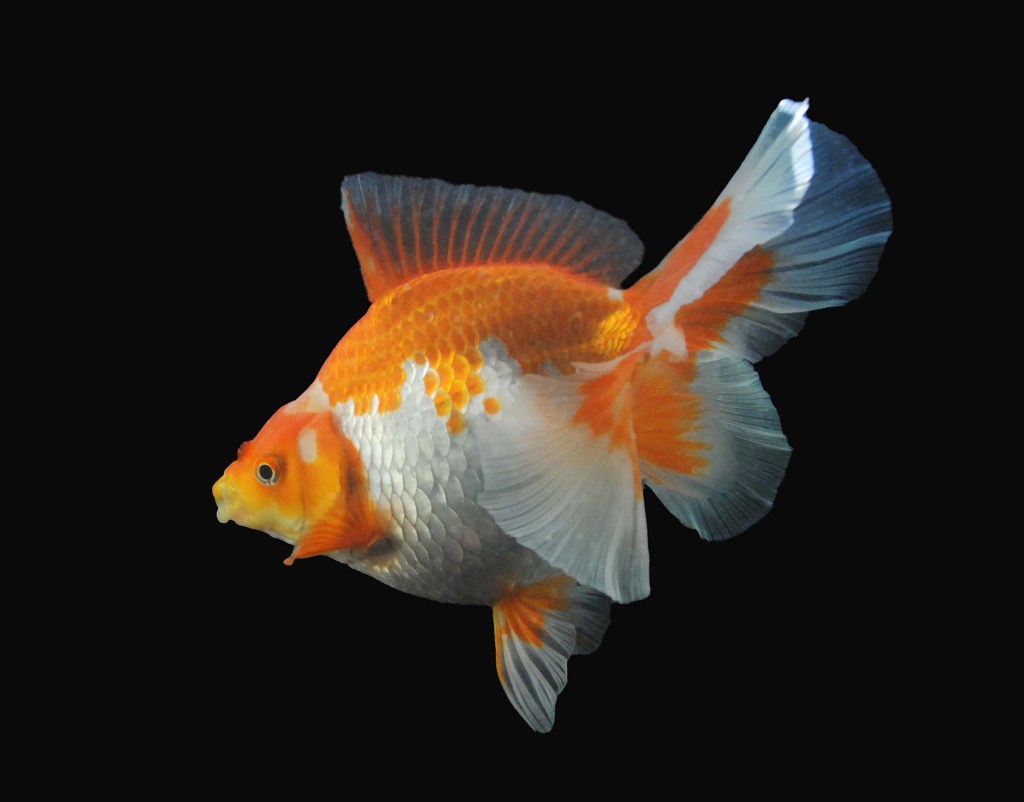
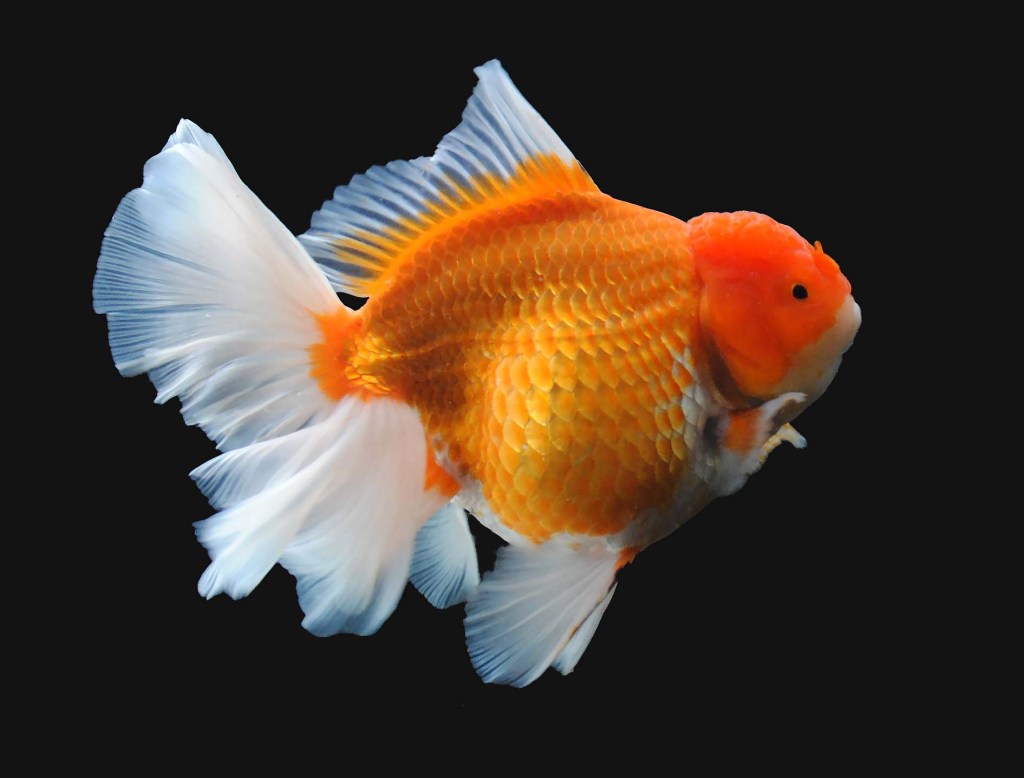
The fish above has grown big and becomes difficult to handle during hand-spawning. The body is strongly built. The tail wrinkles beautifully displaying the rose-tail style. The headgrowth has grown a little bit, but not impressive enough. This is the part that need to be improved still. Anyway, at this stage, I am satisfied with the quality so far. This female is productive. She is the main star during this year. I use her in several different projects. Let’s call her Helen the Oranda.

After

This male is from the same batch as the female one. Strangely his red and black pigments grow. At first, I thought he was in a stressful condition. But that was not the case. I mated this male with the main female to produce improved Purple Oranda. But complication arose. Most of the purple oranda produced lost their purple color and turned into white fish. I must discard them. Right now I am left with only two purple offspring which seem to retain their color. Right now the offspring is seven centimeters in size. I will post them later when they are bigger. So, with only two purple offspring left, I cannot say that this project is succesful. I plan to redo this mating once again to see if I can get more purple ones.

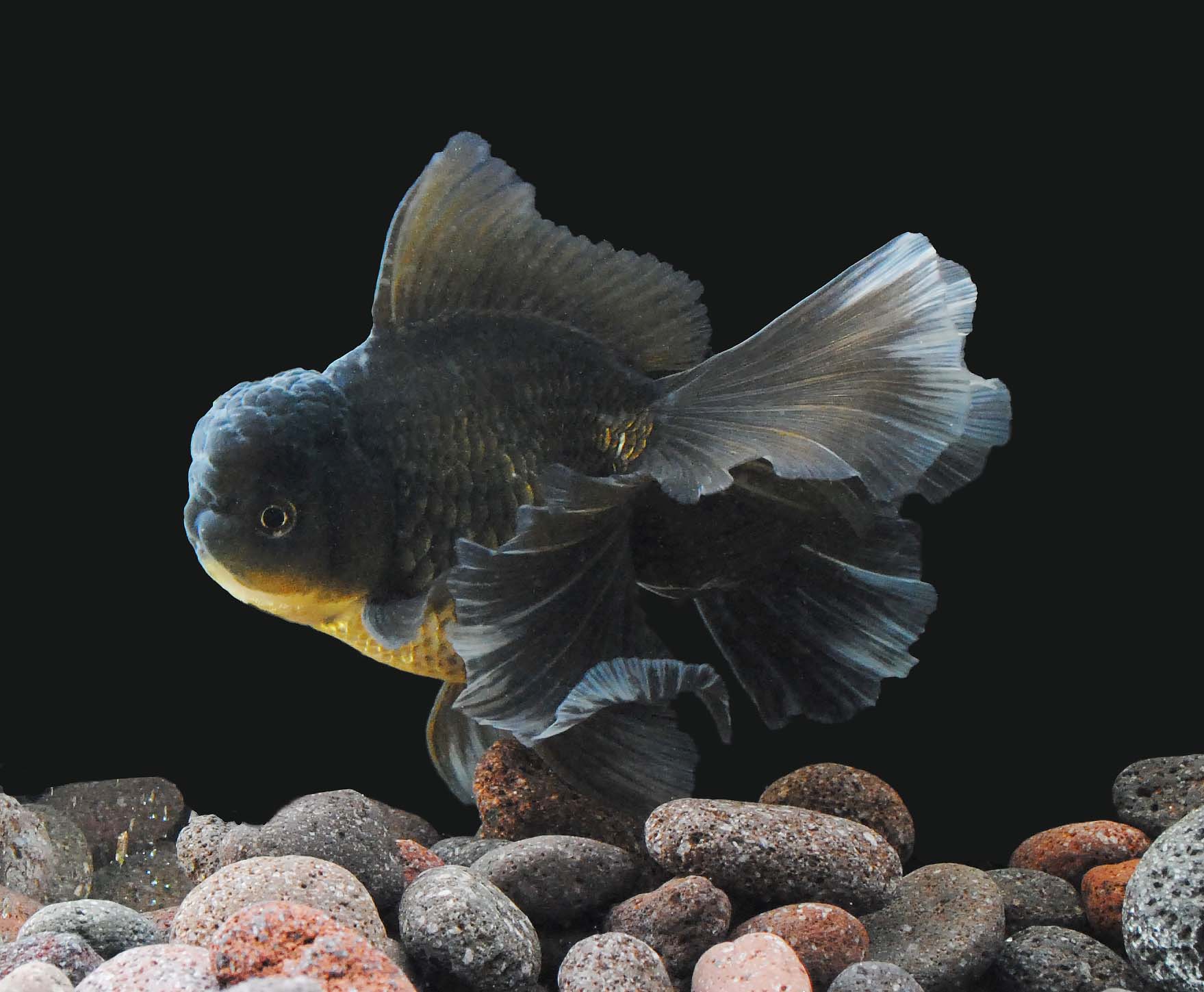
From my crossing of the Basic Oranda Material with my blue oranda of the same age as above fishes, I am blessed with one male semi blue oranda. Its phenotype is red, of course. I mentioned this project in my previous posts but had never posted any picture. So, I do not have the “before” picture. This is the recent picture of him:

The body is stout. The tail has some wrinkle genetics but it is not quite the same as the Helen the Oranda (the semi purple one). The headgrowth is slightly better than the result of the semi purple project. I mention this male because he is significant in producing my improved blue oranda. I mated this male with Helen which successfully resulted in improved version of my blue oranda. A small percentage of the offspring loses its blue pigmen but the majority are good. So, excitingly, the cross between the semi blue oranda and the semi purple oranda results in good blue oranda offspring. They are still young right now, roughly seven centimeters in size. I will update them later when they are bigger.

Concerning my brown oranda project, I mentioned my failure before. But this week, I have successfully crossed my previous version of brown oranda with Helen. I have lots of confidence of being successful, but it is too early now to claim that. I will update the result in the next several months.

One more thing. I have another female semi purple Oranda besides Helen. The color was grey, and now she turns totally black. I did not include her in my post number 7 at that time since I was not aware of her presence. I thought all have been mutated into red or red-white fishes. Only when I did the total water change I realize that there was one grey fish left. I was planning to cull her out, but right now she ends up as the only back up female from the semi purple project. Considering her strong black pigment, she might be a better candidate to produce purple color than Helen. Yet, she has slender body and weaker tail than Helen. I do not take her picture. I just think I need to mention her in case I use her in my project one day.

So, to conclude, the successful one at this point is the improved blue oranda project. The purple and brown ones still need to be repeated again. And another interesting side project involving Helen comes to mind which I will report in the next post. Please wait 😊

Standard