
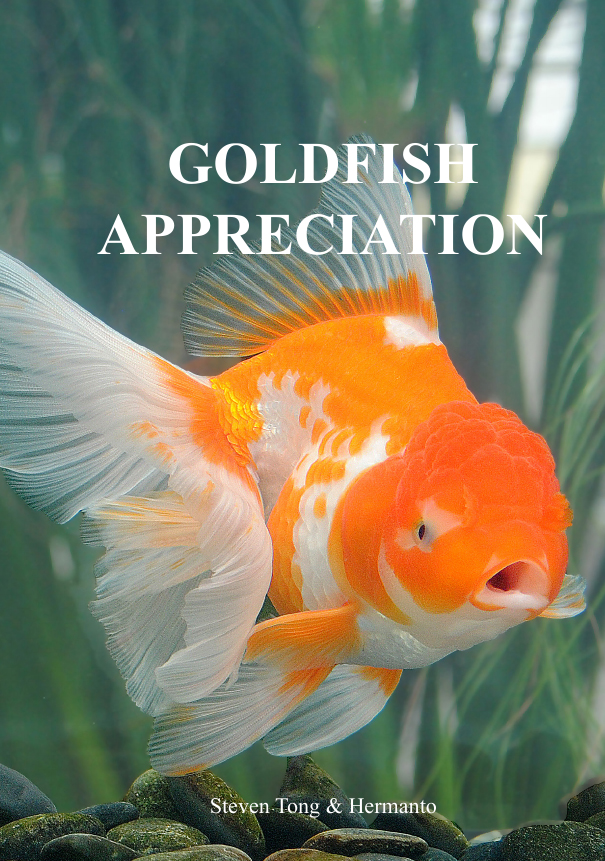
“Who is Wolverine?” I asked.
“How come you do not know him?” exclaimed a friend. “He is a famous person in the goldfish world!”
Well, that answer was not helpful. I still did not know about him other than a goldfish enthusiast replying to every request to analyze goldfish quality in Fynnmood forum – a famous goldfish forum a long time ago. I remembered eagerly connecting my laptop to the phone line via a modem and wait for the connection to establish just to read any news in that forum after office. But I never made any personal contact with Wolverine.
One day, I got a chance to visit the prestigious Aquarama event held in Singapore. I did not know why, there was an urge to meet him. I was a shy person – well, I am still one. I did not usually made the first contact. But at that time, I took the initiative to make an appointment. We agreed to meet at the Aquarama.
We finally met.
He introduced his name as Steven Tong, the former president of Fynnmood. I never thought he was such an important person. We walked together from aisle to aisle browsing through all the goldfish displayed in the tanks, discussing their strong points and weaknesses. We felt close to each other right from the start as if we already knew each other for a long time. A couple of hours seemed very brief. Steven must go home. Yet, it was obvious that we did not really want to part. So, we scheduled a impromptu dinner that night.
We dined in at a Japanese noodle house somewhere in the Somerset area. We talked a lot about goldfish. One particular thing that interest me was him talking about goldfish information I never heard of. You see, I already bred goldfish for about ten years at that time. And I have kept goldfish more than twenty years. My pride was to be a self-taught goldfish enthusiast and breeder (hobbyist breeder, not focused on commercial purpose.) I was not a novice. Yet, he talked new things to me about goldfish! Some were hard to comprehend. And he could always answer the questions haunted my mind so far, which were not beginner’s question for sure. I already learned a lot from him in such a short meeting. He even drew the Japanese Ranchu standard on a napkin to clarify his explanation to me. Our conversation went on even after the noodles – the second servings – were long finished. But we still did not want to part.
So, our discussion continued in a coffee shop. I catched a sense that he had a very refined grasp on the goldfish appreciation, which I did not have. On the other hand, he admired me as a breeder – an experience he did not have. Another hour passed and the time was already late, but we still did not want to part. So we took a stroll along the Orchad Road without any particular destination. We were so engrossed in our conversation and lost count of how many times we had walked back and fro. That night we parted and made a promise to continue our conversation through email, since I must continue with the Aquarama tour the next day and went back to Indonesia.
That was how we met. I humbled myself that I still have a lot to learn from him.
The communication through emails was intense. I learned that he gained his knowledge from the late Mr. Ma, a goldfish master in China, whom he met during his one year work assignment in China. Mr. Ma considered him as his youngest pupil and charged him with the task to promote goldfish appreciation to the whole world. That was the reason Steven launched the Fynnmood forum when he went back to Singapore and organize many goldfish event and imports. He also learned from a certain highly respected master during his one year stay in Japan who wished to remain anonymous. All these intensive lessons combined with his ability to understand refined things (and I must add his engineering background) combined into a solid knowledge of goldfish appreciation.
His mission to promote goldfish was hindered by personal circumstances at that time. I was sorry for that. Actually, I was in the same mission – self-proclaimed mission so far – to promote goldfish among the Indonesian. After Steven mentioned his passion to promote goldfish to the world, out of the blue, I suggested him to write a book on goldfish appreciation. Sadly, his hands were tied up. He asked me if I could help him. I agreed, neglecting that I had no experience in writing a book.
The rest was history. We exchanged hundreds of emails, perhaps more, just for me to learn from him. I proposed the basic concept of the book. Then I wrote the drafts for each chapter. Steven would revised it, and I made the necessary changes until we reached the final form. This whole process obliged me to learn Adobe Indesign by myself. It was a painstaking activity for a person with zero background in graphic design and non English native speaker like me.
Another important problem to solve was to provide illustrations for the book. I was thinking about breeding all the fishes for the illustration by myself. I was not aware that it would take years for me to do so. It was a hard and slow process which almost break our spirit to continue. Glad that friends come to help and cheer me up along the way. Even when the fish are available, my task was not finished. I must learn photography. This was an area foreign to me. I learned from scratch with my newly bought Nikon D3000 digital camera. The book became a witness to my photography skill progress as the pictures quality varied. I also spent hundred of hours to learn Adobe Photoshop to develop better pictures.
Eight years passed. We had finished the main chapters. But we have not been able to cover other less popular types of goldfish sufficiently. Unfortunately, time did not permit us to do so. We must stop at some point or else the process would go on forever. Finally, it took nine years for us to complete the book. Nine years of friendship, perhaps more. We were quite satisfied.
The last problem was how to publish the book. This was quite a challenge in itself. Steven contacted several publishers, some were suspicious. At last, we settled on self-publishing the book. The hardcopy of the book might be hard to find since I printed the book myself in Indonesia and would be expensive to distribute it overseas. But the e-book version is easily accessible in Amazon in this link Goldfish Appreciation eBook : Tong, Steven CS, Hermanto, Hermanto: Amazon.in: Kindle Store
This was the story behind the book. It will be our joy to find the book informative and enjoyable to goldfish enthusiasts around the world. Thank you for helping us spread the joy of goldfish keeping.


 hermantogoldfish